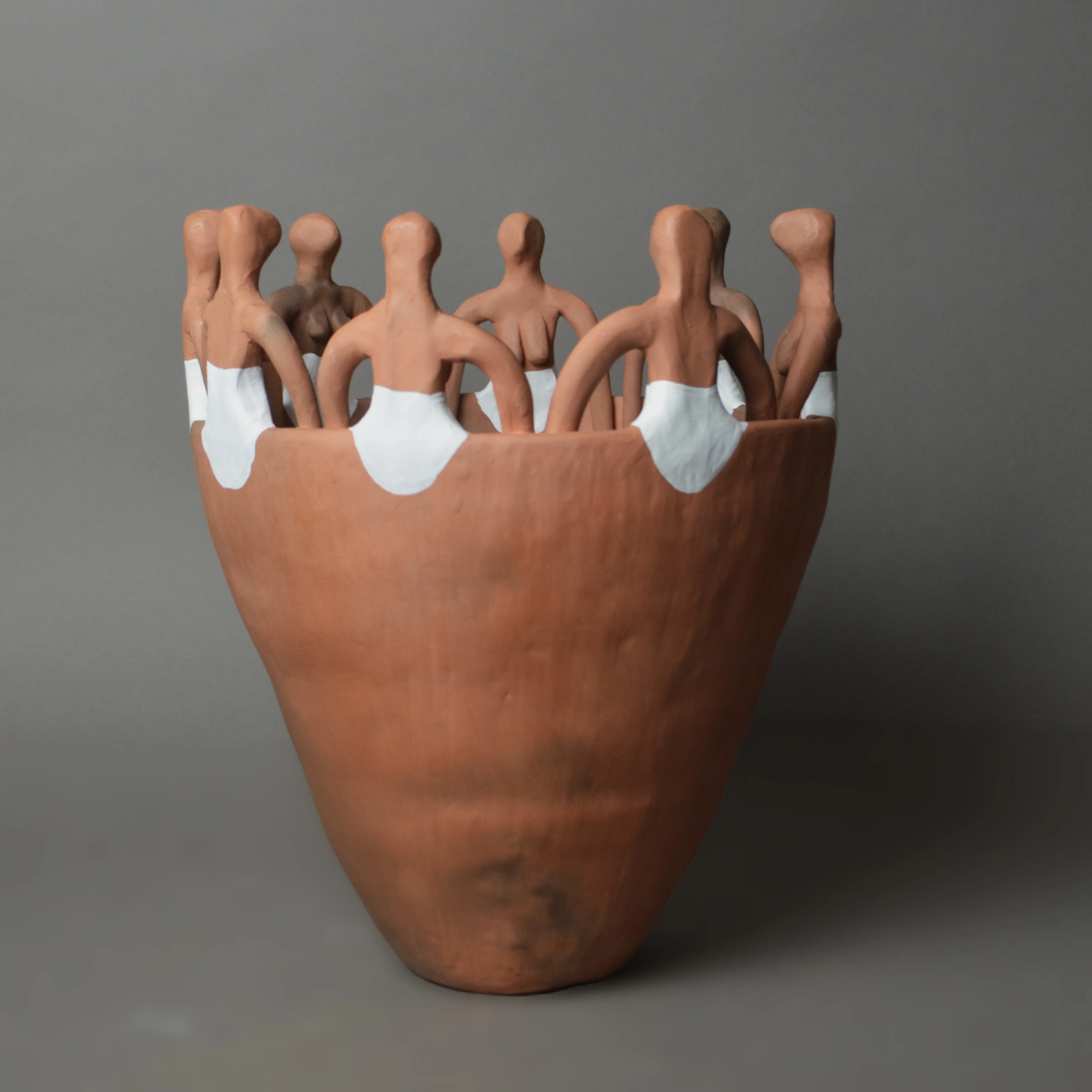
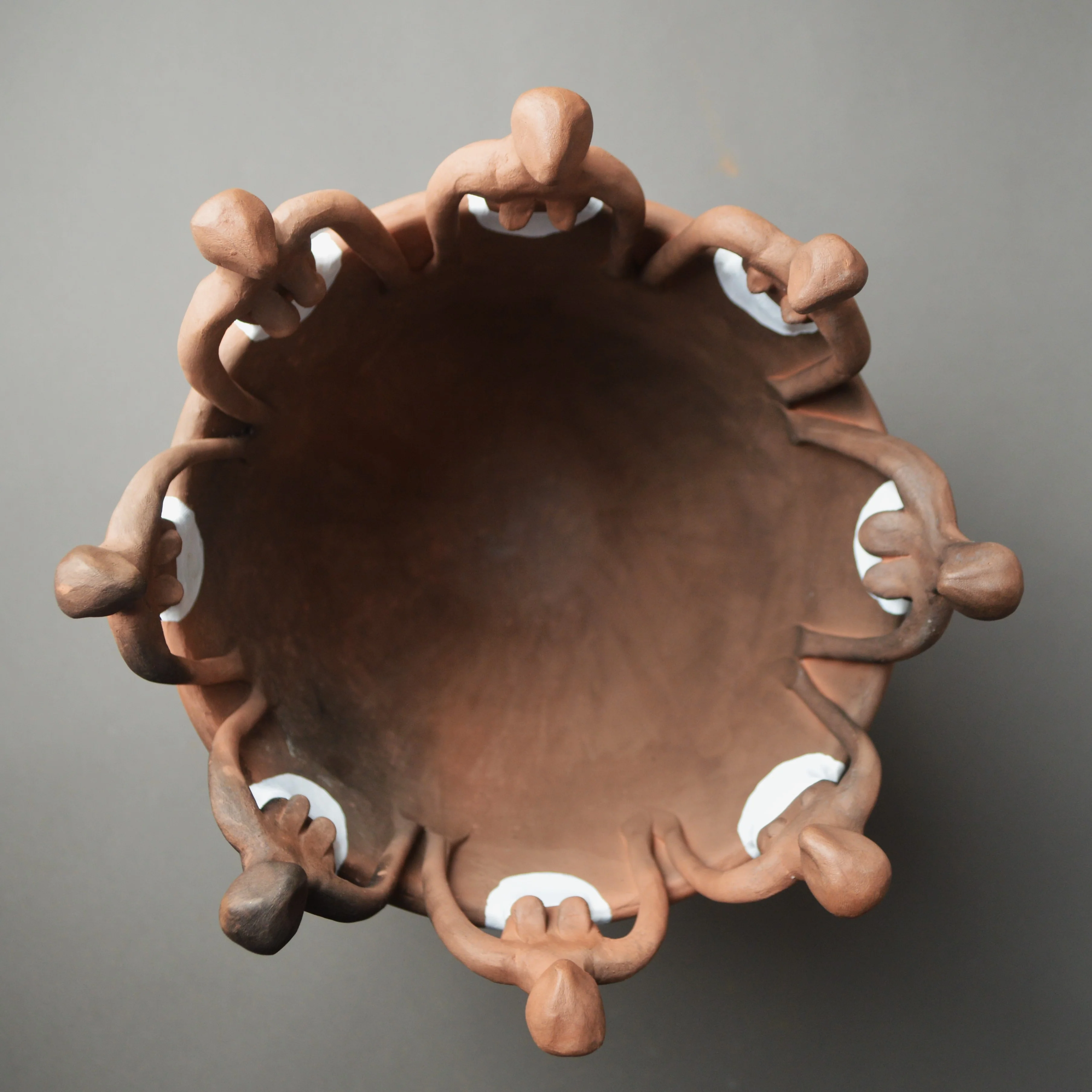
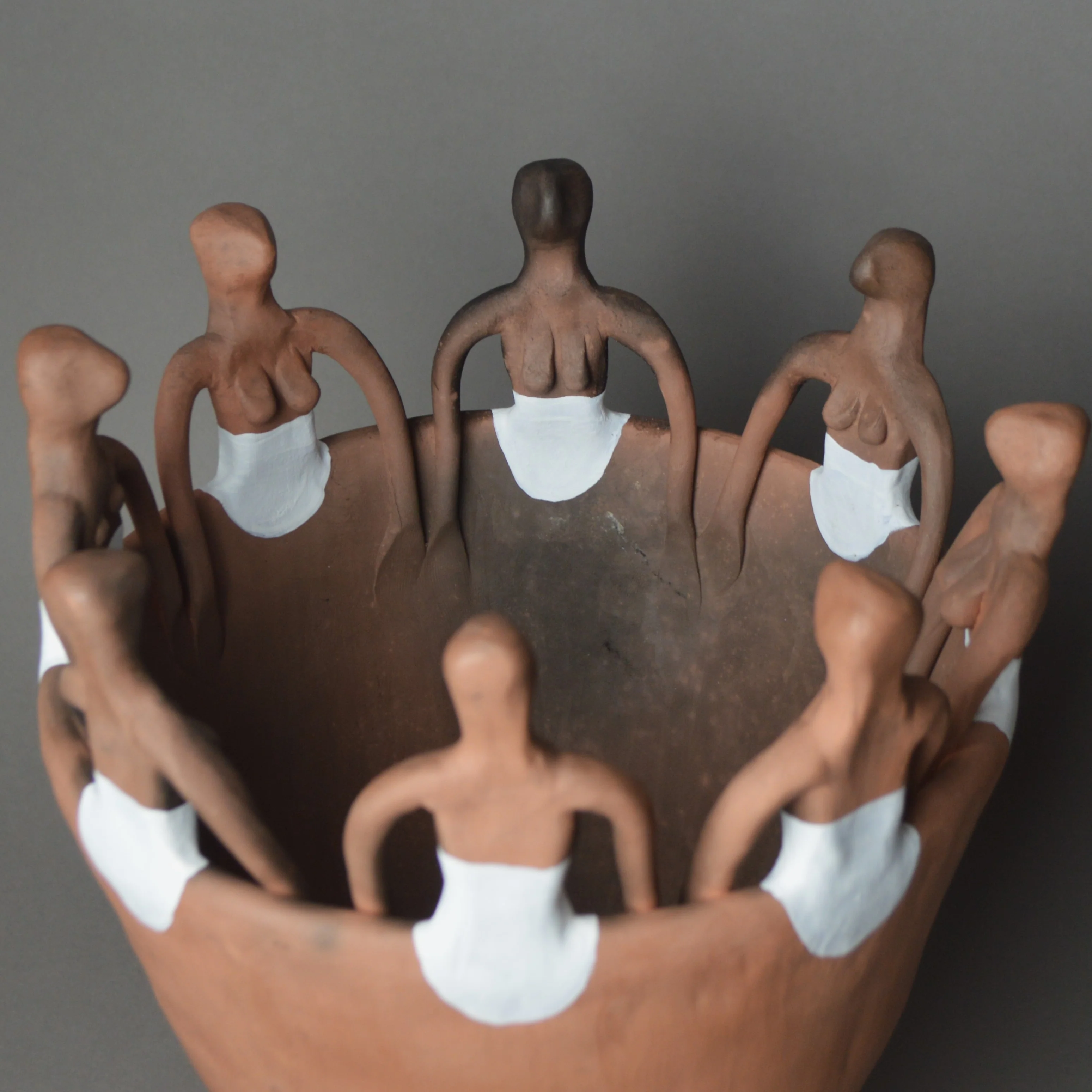

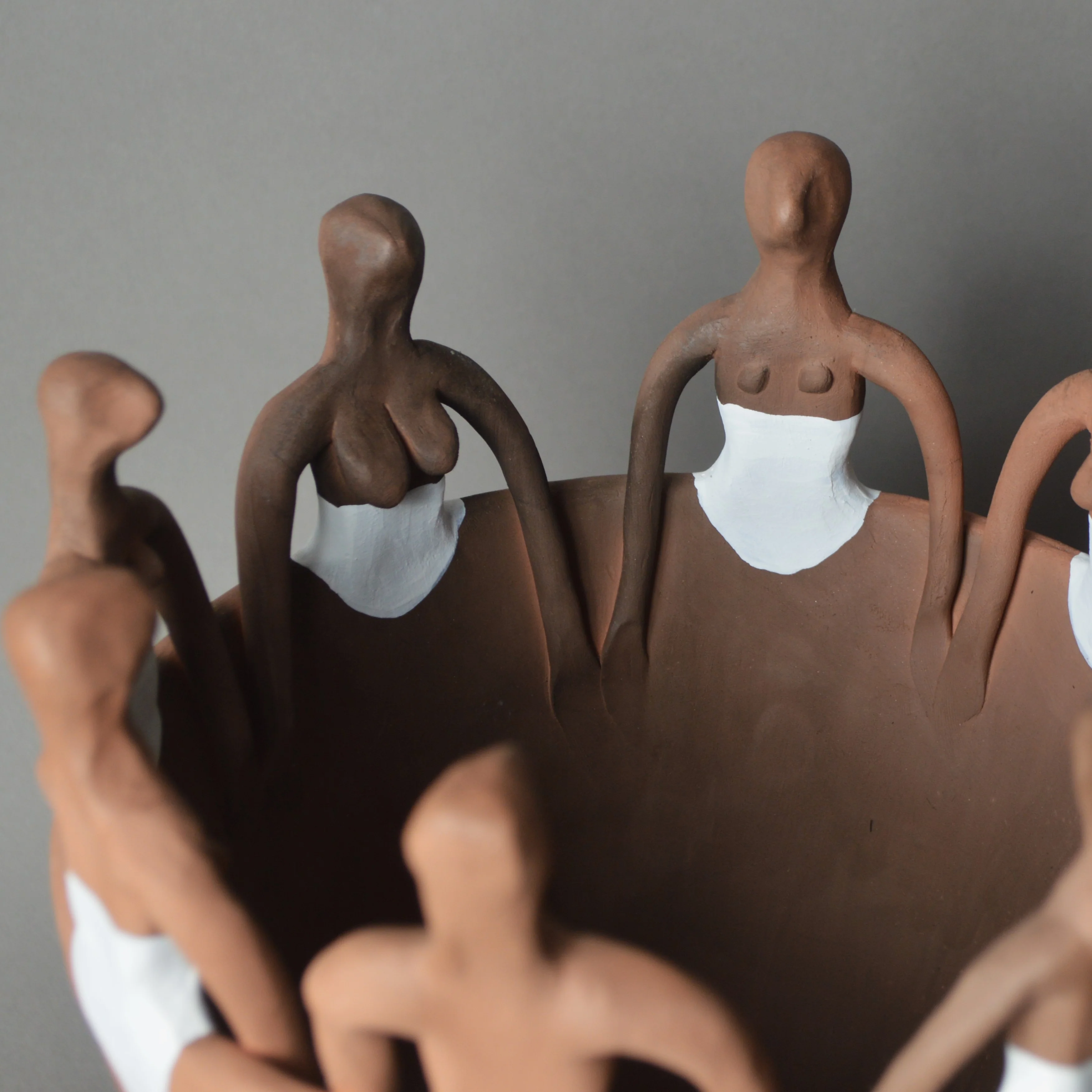
Circle of Women Bowl , Naqada I
Handcrafted Replica Predynastic Egyptian Ritual Vessel
Details
The original of this stunning vessel is part of the collection at the Museum of Cairo and dates to around 3700 BCE, placing it in the Predynastic period of Egyptian history, specifically the Naqada I period.
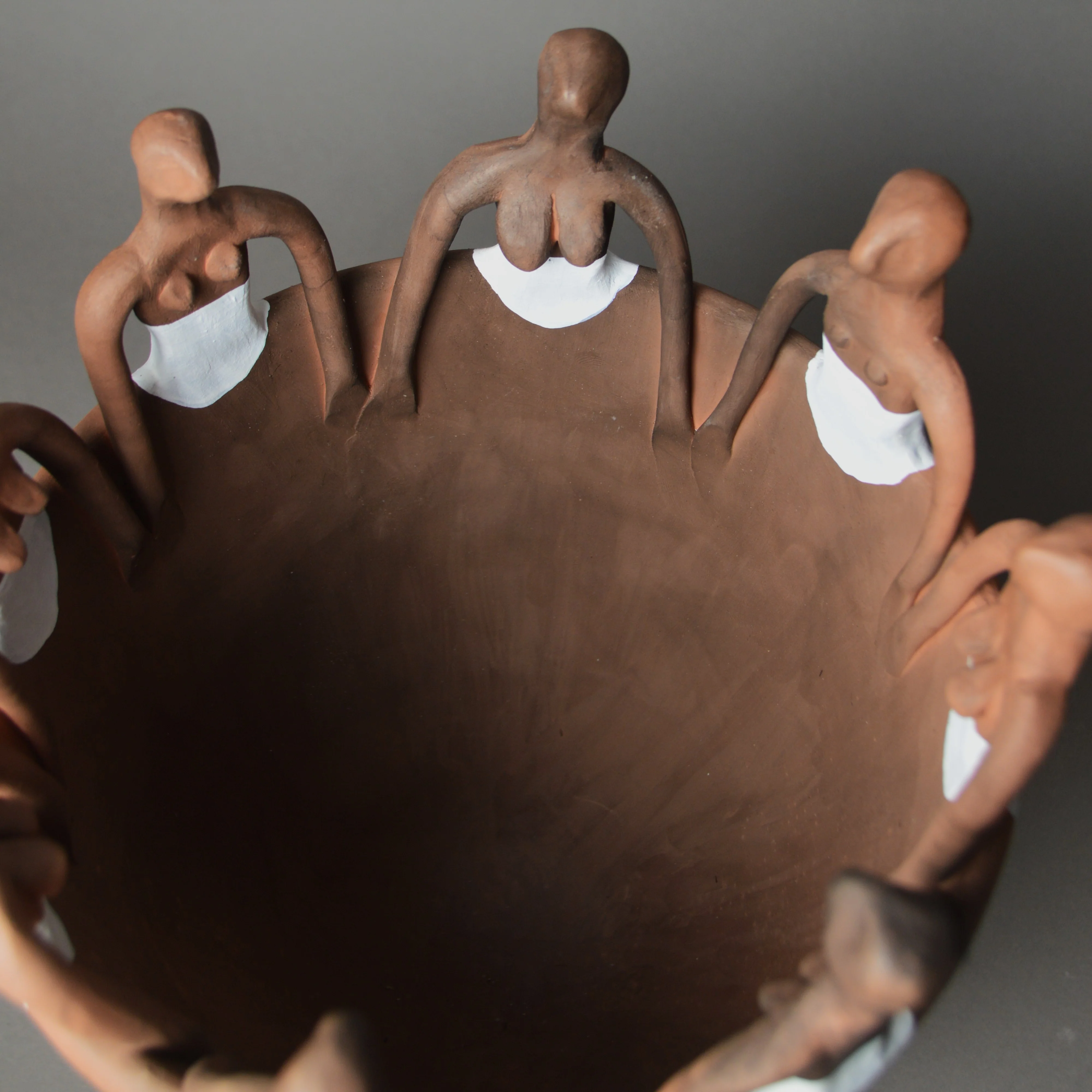
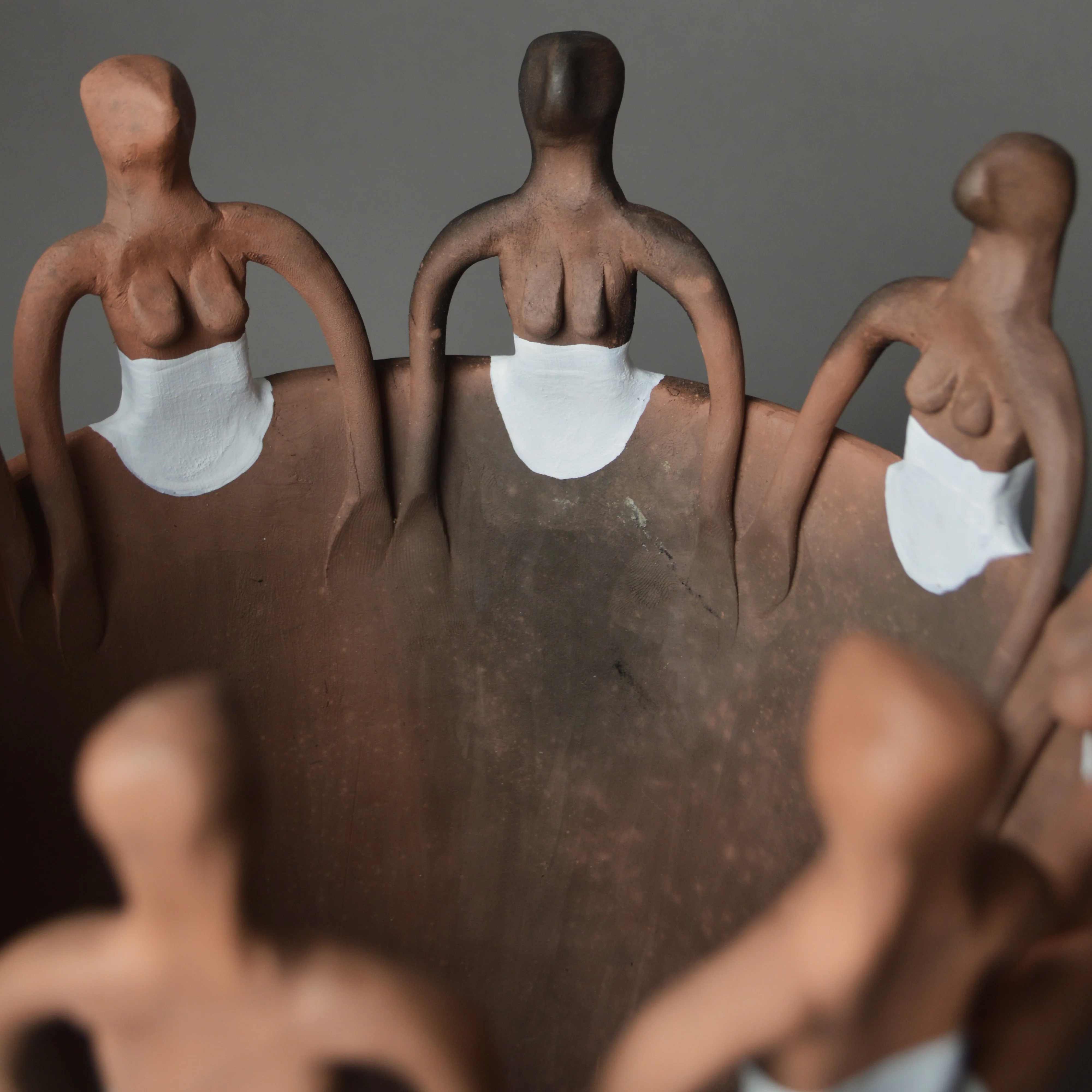
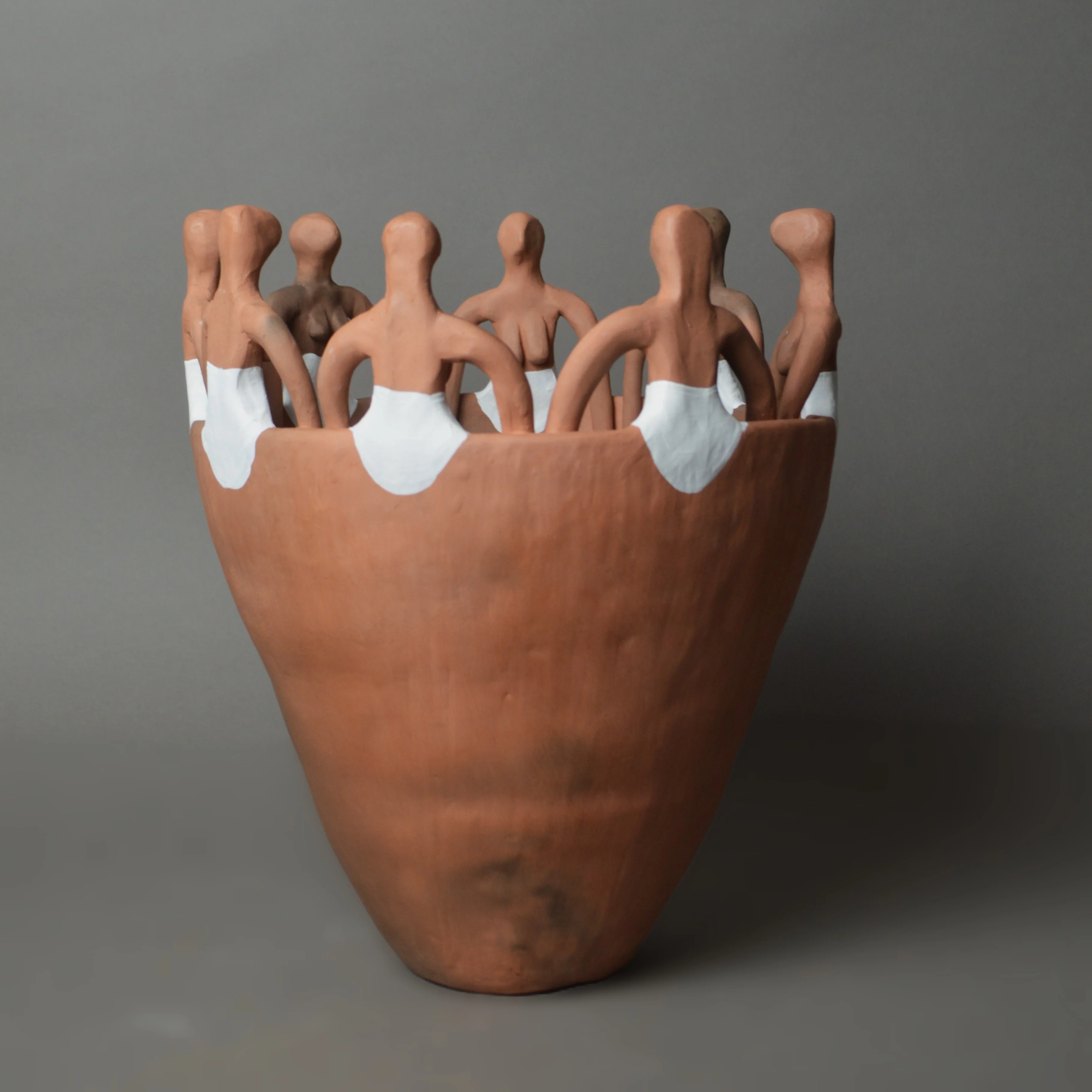
This intriguing piece features a circle of women holding hands, their white skirts contrasting against the vessel’s surface. The significance of these figures remains mysterious, but evidence suggests that they represent women involved in ritual practices that played a vital role in early Egyptian culture.
The Symbolism of the Women’s Dance
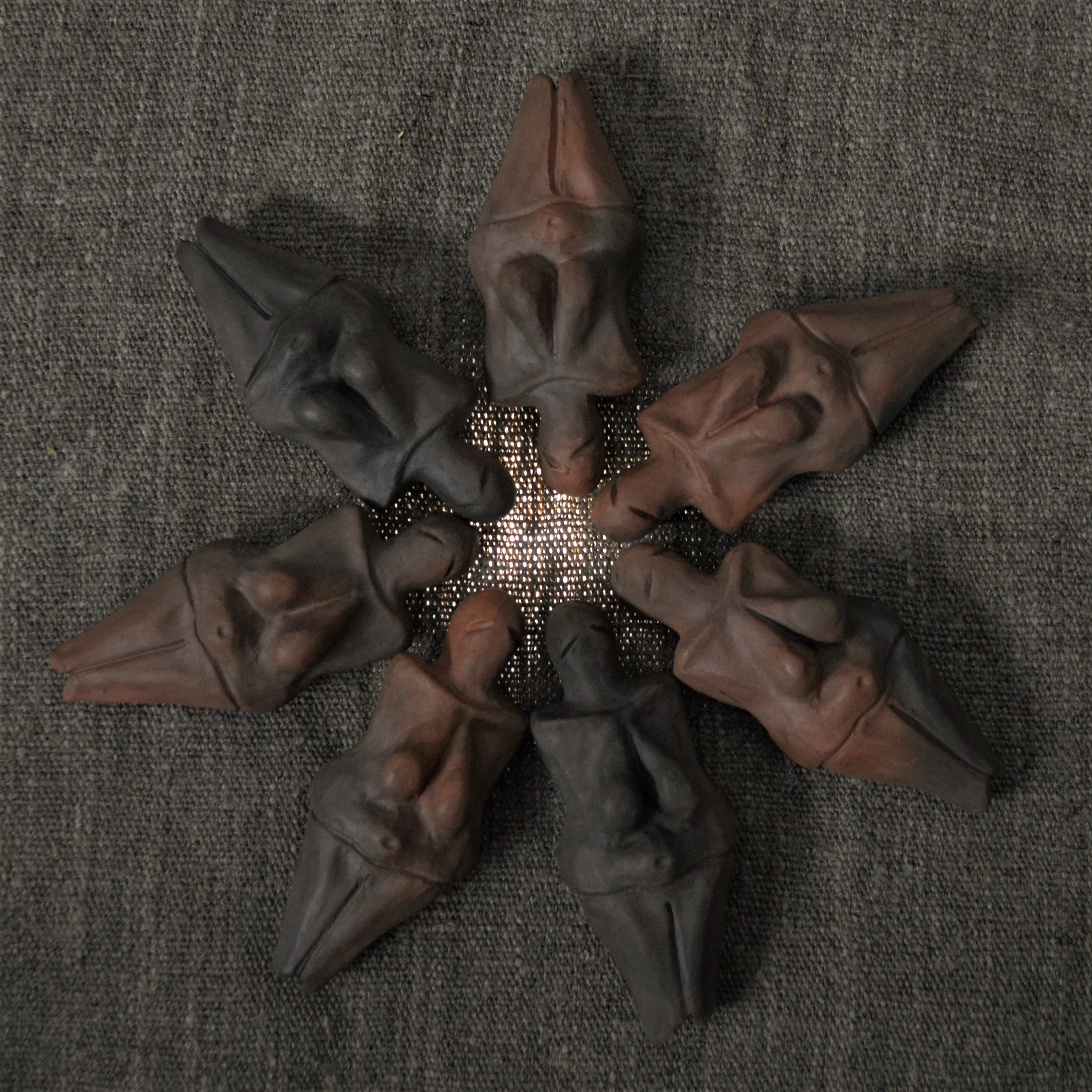
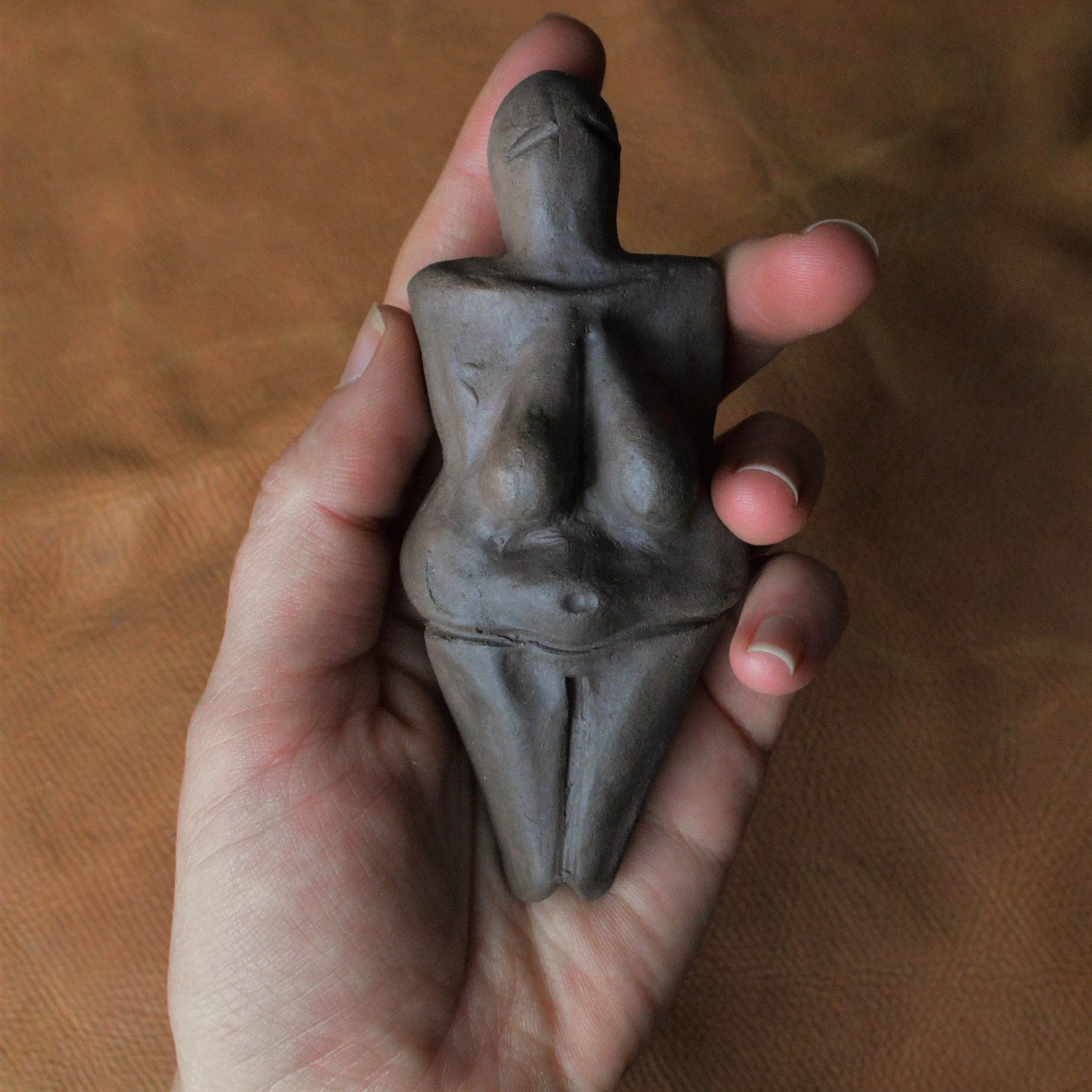
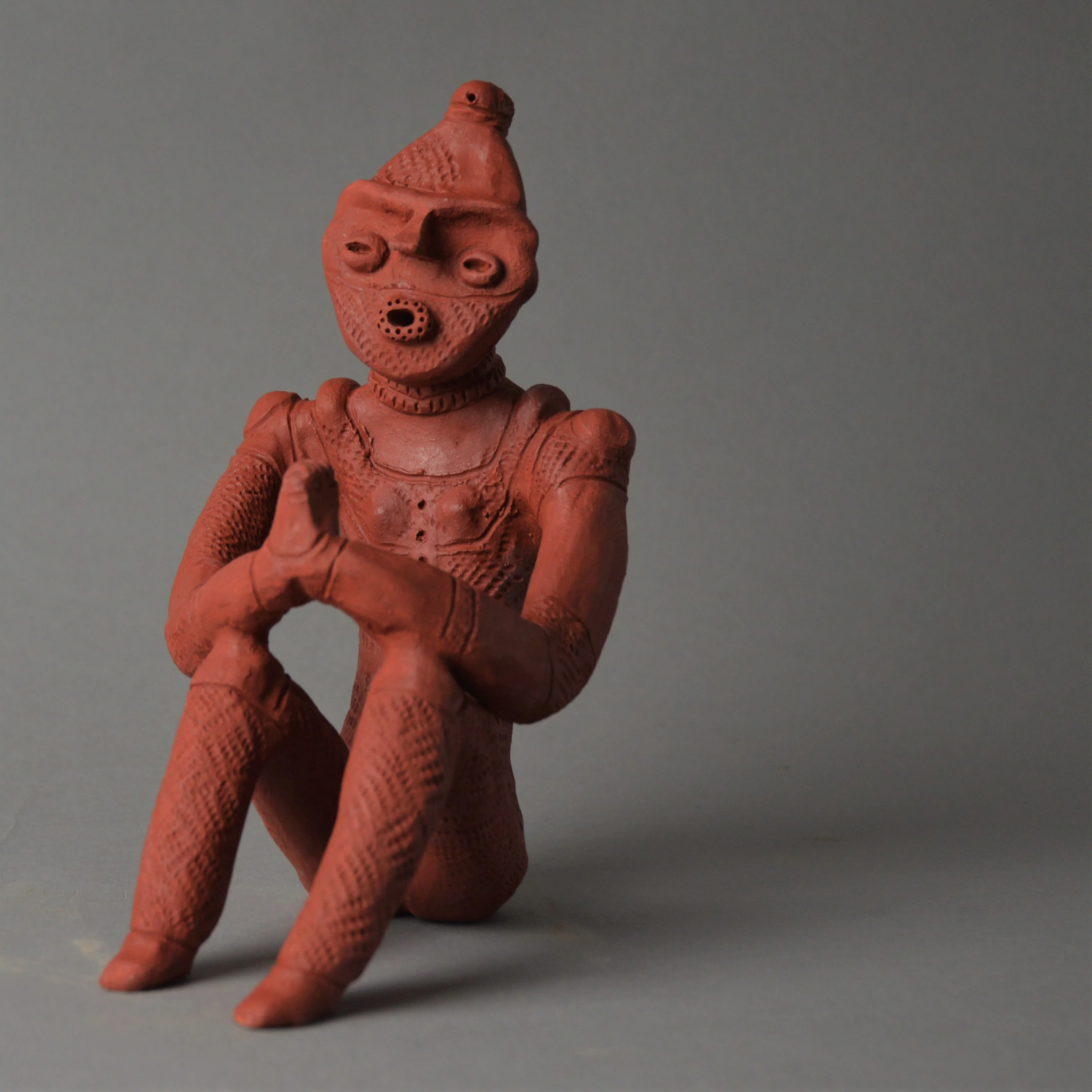
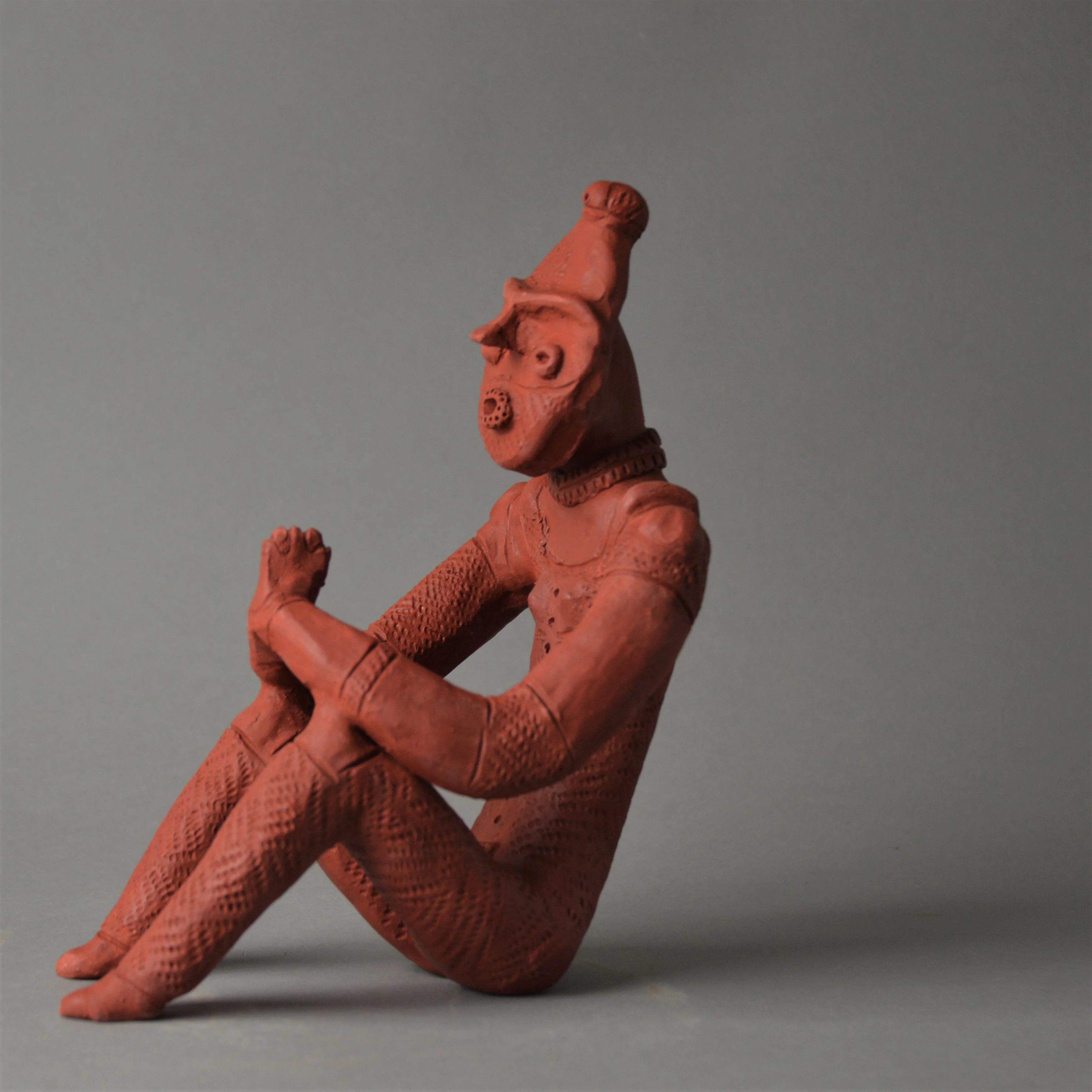
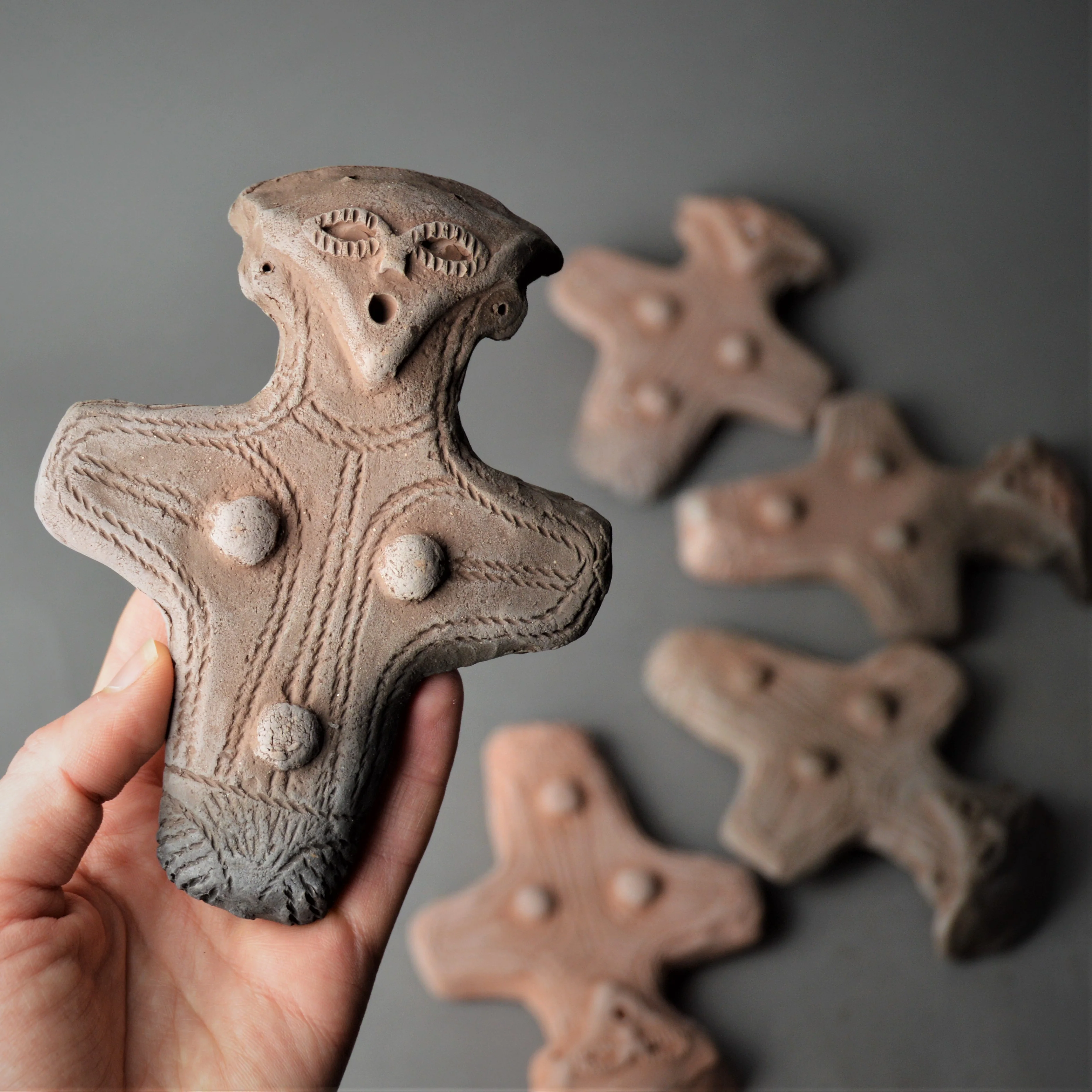
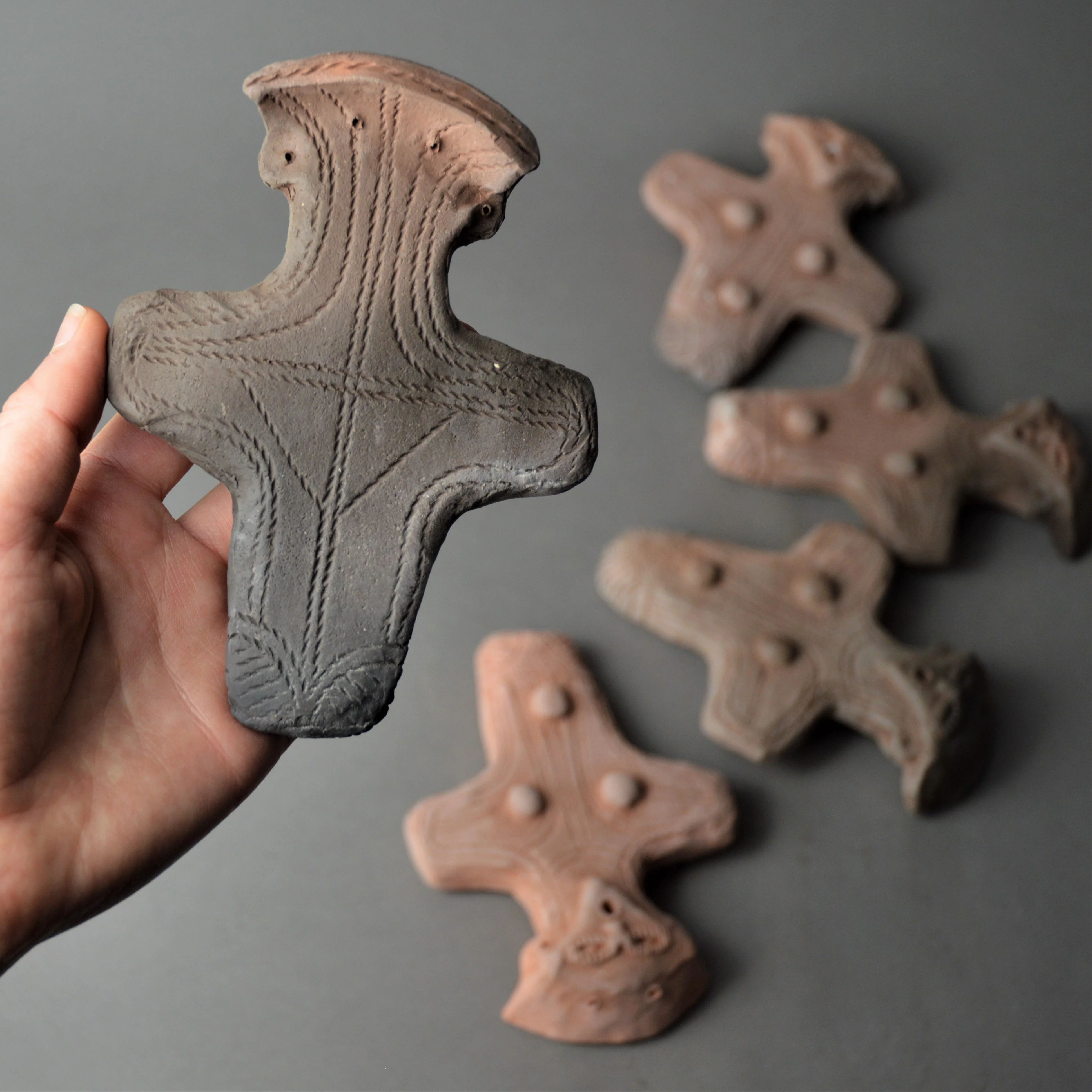
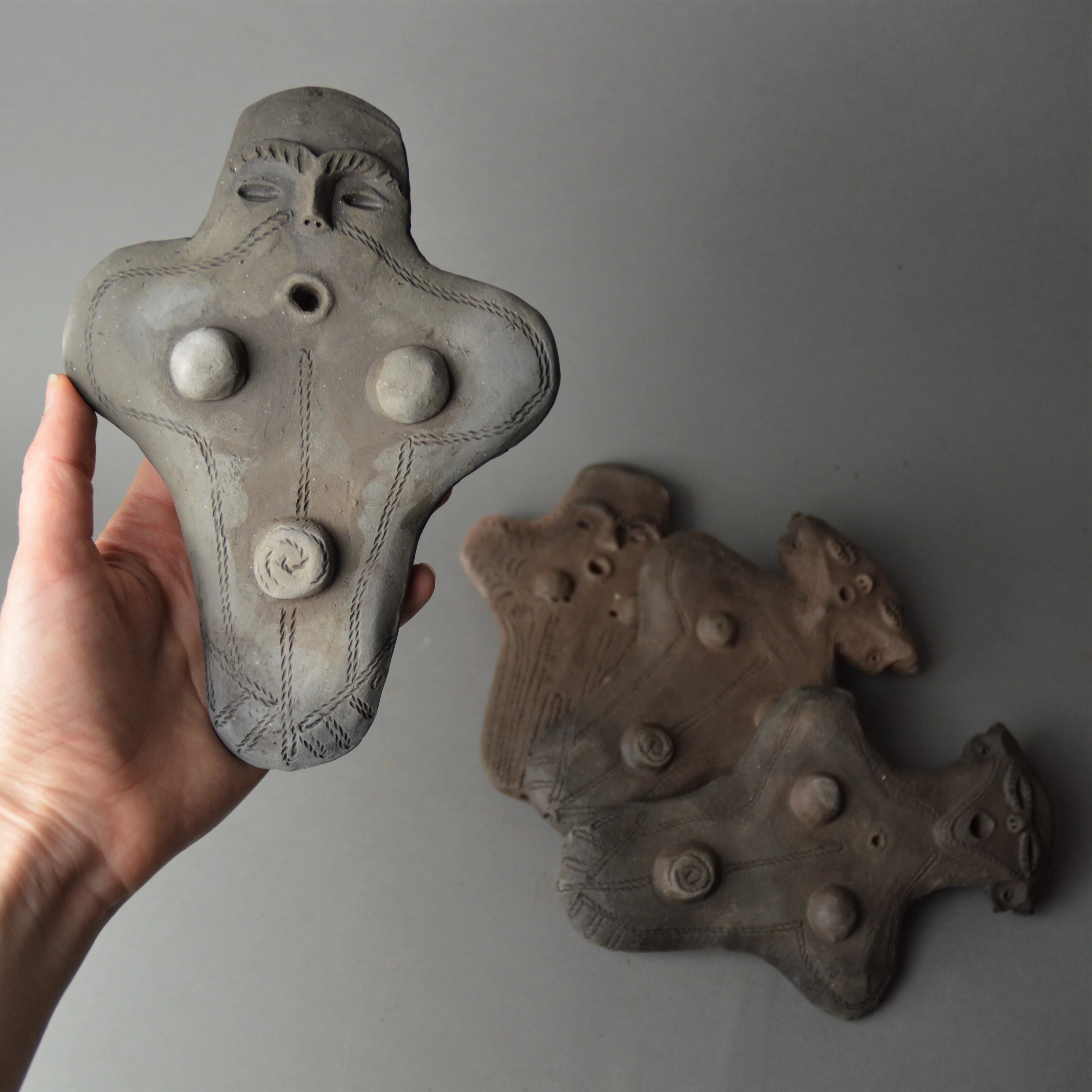
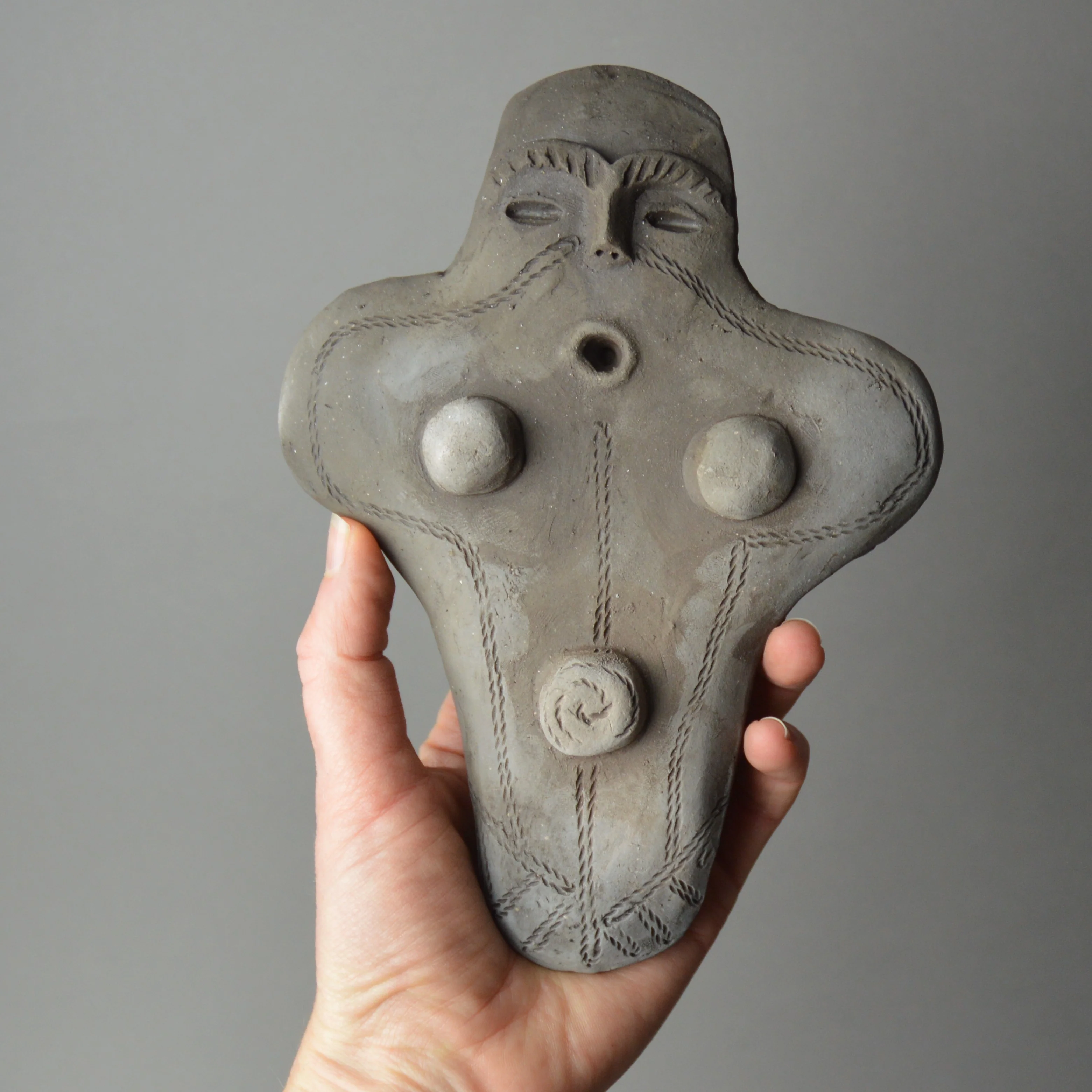
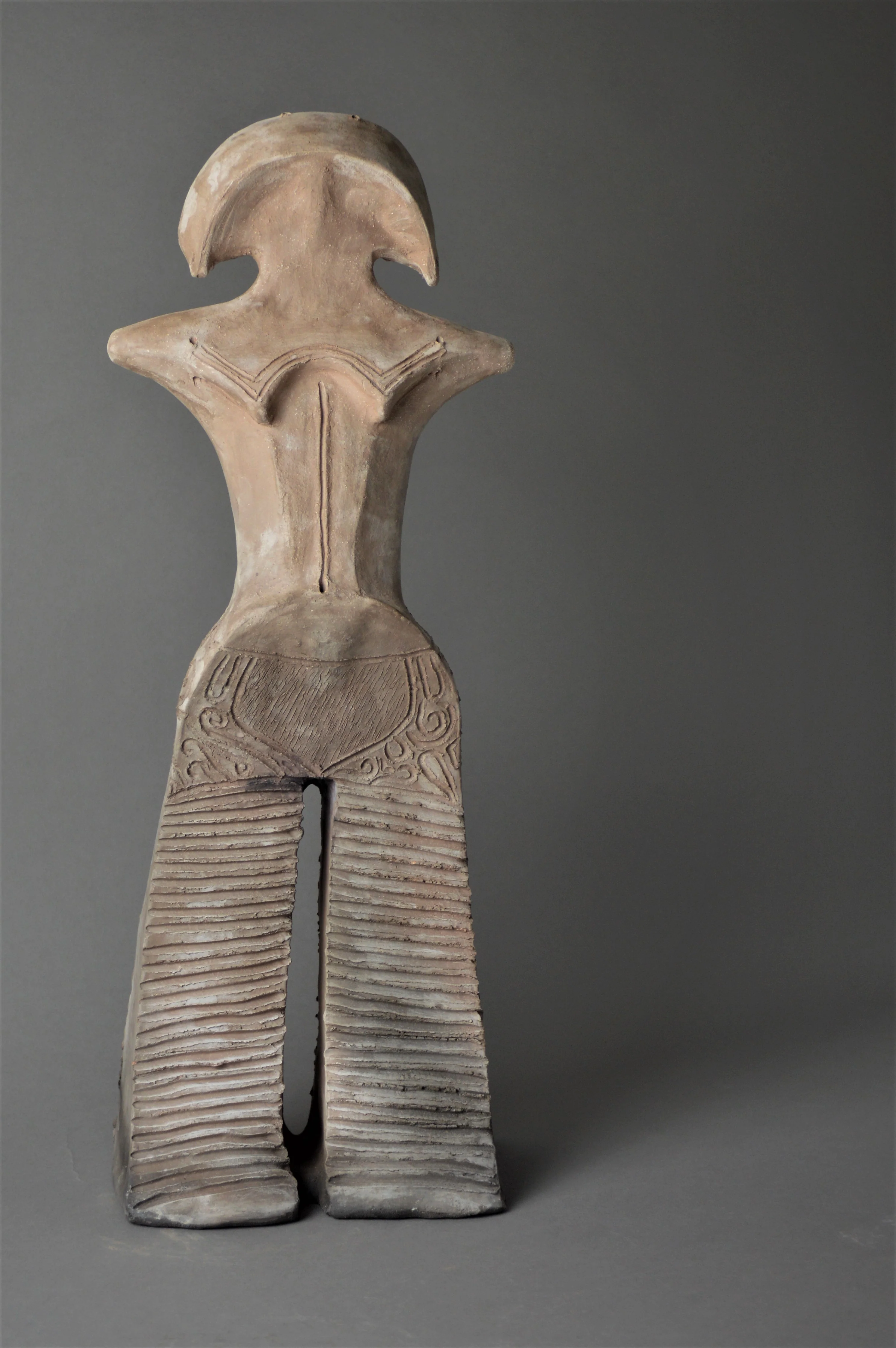
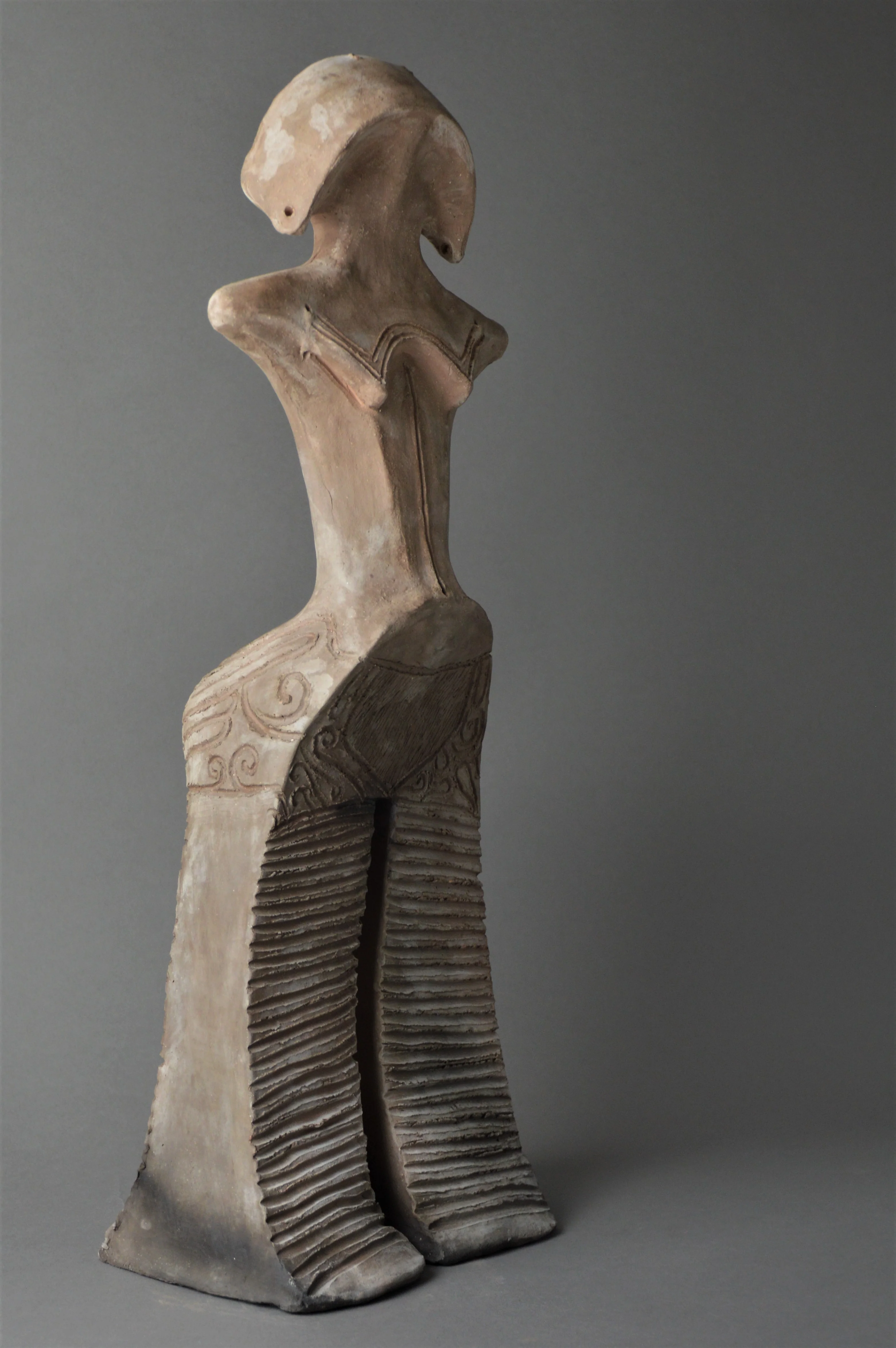
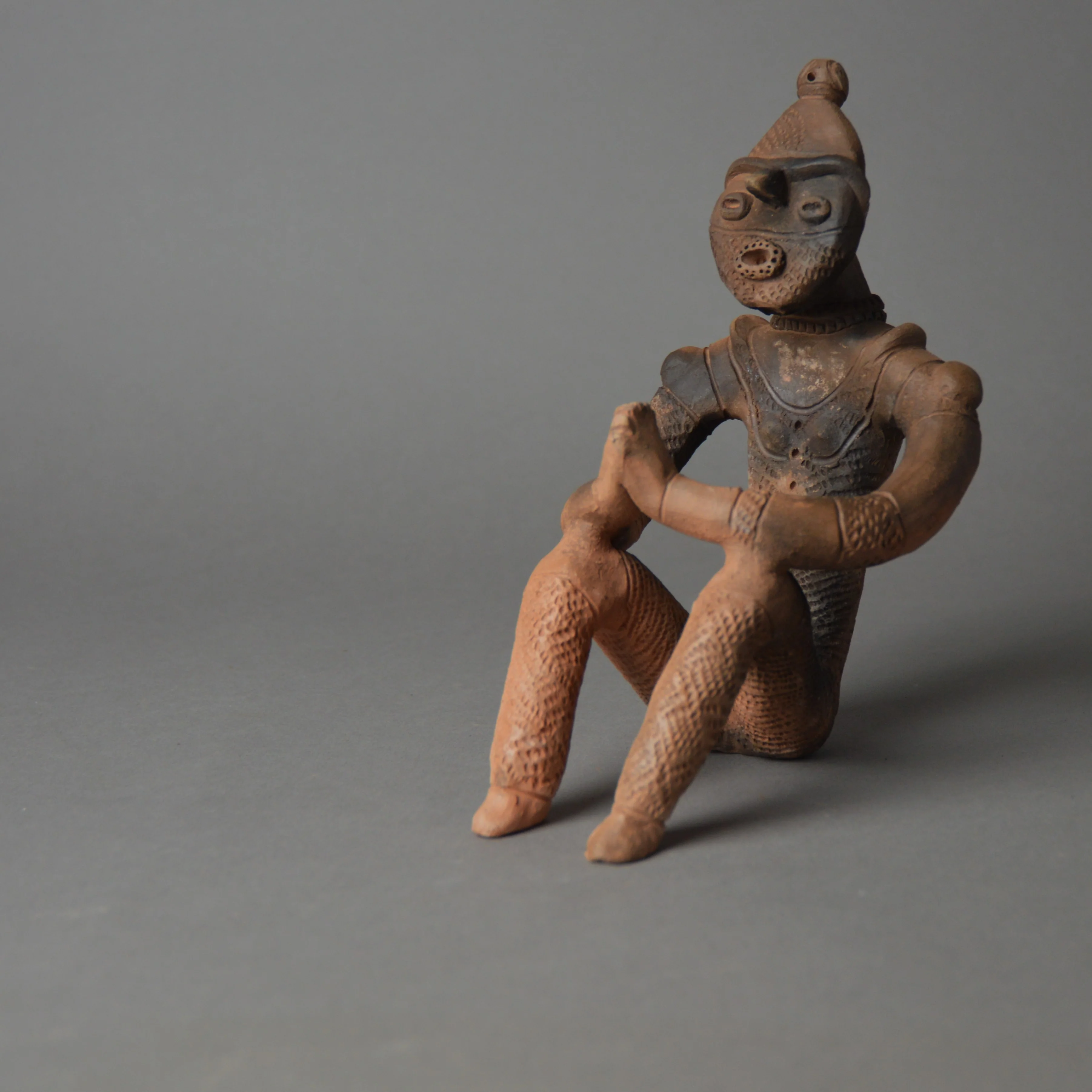
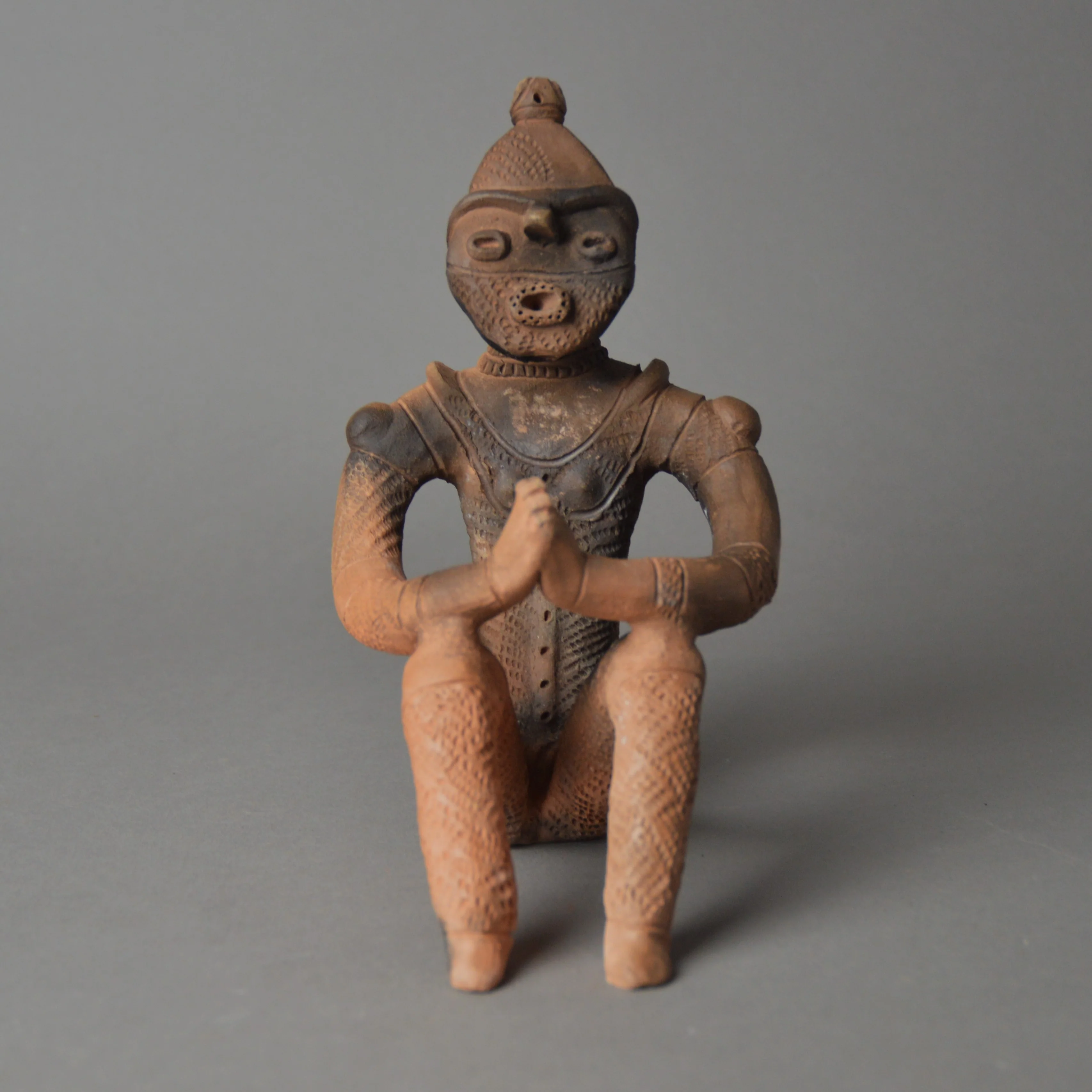
The figures adorning the rim of this bowl bear a striking resemblance to clay figurines from the Naqada I period. While the figures on the vessel hold hands in a connected circle, the clay figurines raise their arms, a gesture often linked to power and ritual significance.
Similar painted figures appear in hunting scenes on Naqada II pottery, suggesting a connection between women and early ritual practices—especially those linked to animal sacrifice and hunting traditions. When depicted with arms raised like the horns of a bull, these figures are thought to be invoking power in a sacred ceremony.
This theory gains further weight when we compare these Predynastic figures with the female dancers and musicians of 'The Acacia House' during the 4th Dynasty (c. 2625 BCE - 2500 BCE). These women, known as ḫnrt or ḫnrw (a pronunciation challenge for even the most seasoned linguists!), were priestesses and ritual dancers associated with butchery, funerary rites, and sacred performances.
It is likely that the earlier Naqada figures were precursors to these later powerful female figures, marking an important lineage of women in Egyptian spiritual and ritual traditions.
Context
The Predynastic period in Egypt spans the time before recorded history, bridging the Paleolithic and Neolithic Ages and culminating in the rise of the First Dynasty. It is generally recognised as covering 6000 BCE to 3150 BCE, with the Naqada period (4000 BCE - 3000 BCE) marking a critical phase in Egypt’s transition from scattered farming communities to one of the world’s first great civilisations.
During this time, Egypt saw the development of urban centres, artistic traditions, and religious practices that would lay the foundation for millennia of Pharaonic rule.
Materials
- Terracotta
- Reduction fired
- Gesso finish
Dimensions
- Height: Approx. 260 mm
- Diameter: Approx. 215 mm
Production
As with all our Museum Quality Replicas, this pot has been handcrafted using authentic ancient techniques, just as the original Egyptian artisans would have done over 5,000 years ago.
- Individually made from natural clay
- Hand-formed and finished using traditional tools
- Each piece is unique, with subtle variations caused by the firing process, making every vessel a one-of-a-kind historical treasure
Ordering Information
- 'Add to Basket' Items: Ready to ship immediately.
- 'Pre-order' Items: Handmade to order within 90 days (longer for international orders). If your order includes both 'Add to Basket' and 'Pre-order' items, they will be shipped together once all items are ready.
Shipping
- Standard shipping: Sent via second-class postal service.
- Faster delivery: If you require first-class shipping, please contact us for a custom quote.
Hold history in your hands – add this timeless piece to your collection now! Order today!
Original: $488.32
-70%$488.32
$146.50Product Information
Product Information
Shipping & Returns
Shipping & Returns
Description
Handcrafted Replica Predynastic Egyptian Ritual Vessel
Details
The original of this stunning vessel is part of the collection at the Museum of Cairo and dates to around 3700 BCE, placing it in the Predynastic period of Egyptian history, specifically the Naqada I period.
This intriguing piece features a circle of women holding hands, their white skirts contrasting against the vessel’s surface. The significance of these figures remains mysterious, but evidence suggests that they represent women involved in ritual practices that played a vital role in early Egyptian culture.
The Symbolism of the Women’s Dance
The figures adorning the rim of this bowl bear a striking resemblance to clay figurines from the Naqada I period. While the figures on the vessel hold hands in a connected circle, the clay figurines raise their arms, a gesture often linked to power and ritual significance.
Similar painted figures appear in hunting scenes on Naqada II pottery, suggesting a connection between women and early ritual practices—especially those linked to animal sacrifice and hunting traditions. When depicted with arms raised like the horns of a bull, these figures are thought to be invoking power in a sacred ceremony.
This theory gains further weight when we compare these Predynastic figures with the female dancers and musicians of 'The Acacia House' during the 4th Dynasty (c. 2625 BCE - 2500 BCE). These women, known as ḫnrt or ḫnrw (a pronunciation challenge for even the most seasoned linguists!), were priestesses and ritual dancers associated with butchery, funerary rites, and sacred performances.
It is likely that the earlier Naqada figures were precursors to these later powerful female figures, marking an important lineage of women in Egyptian spiritual and ritual traditions.
Context
The Predynastic period in Egypt spans the time before recorded history, bridging the Paleolithic and Neolithic Ages and culminating in the rise of the First Dynasty. It is generally recognised as covering 6000 BCE to 3150 BCE, with the Naqada period (4000 BCE - 3000 BCE) marking a critical phase in Egypt’s transition from scattered farming communities to one of the world’s first great civilisations.
During this time, Egypt saw the development of urban centres, artistic traditions, and religious practices that would lay the foundation for millennia of Pharaonic rule.
Materials
- Terracotta
- Reduction fired
- Gesso finish
Dimensions
- Height: Approx. 260 mm
- Diameter: Approx. 215 mm
Production
As with all our Museum Quality Replicas, this pot has been handcrafted using authentic ancient techniques, just as the original Egyptian artisans would have done over 5,000 years ago.
- Individually made from natural clay
- Hand-formed and finished using traditional tools
- Each piece is unique, with subtle variations caused by the firing process, making every vessel a one-of-a-kind historical treasure
Ordering Information
- 'Add to Basket' Items: Ready to ship immediately.
- 'Pre-order' Items: Handmade to order within 90 days (longer for international orders). If your order includes both 'Add to Basket' and 'Pre-order' items, they will be shipped together once all items are ready.
Shipping
- Standard shipping: Sent via second-class postal service.
- Faster delivery: If you require first-class shipping, please contact us for a custom quote.
Hold history in your hands – add this timeless piece to your collection now! Order today!