Counting Dogu
Handcrafted Replica Jomon Counting Dogu
Details
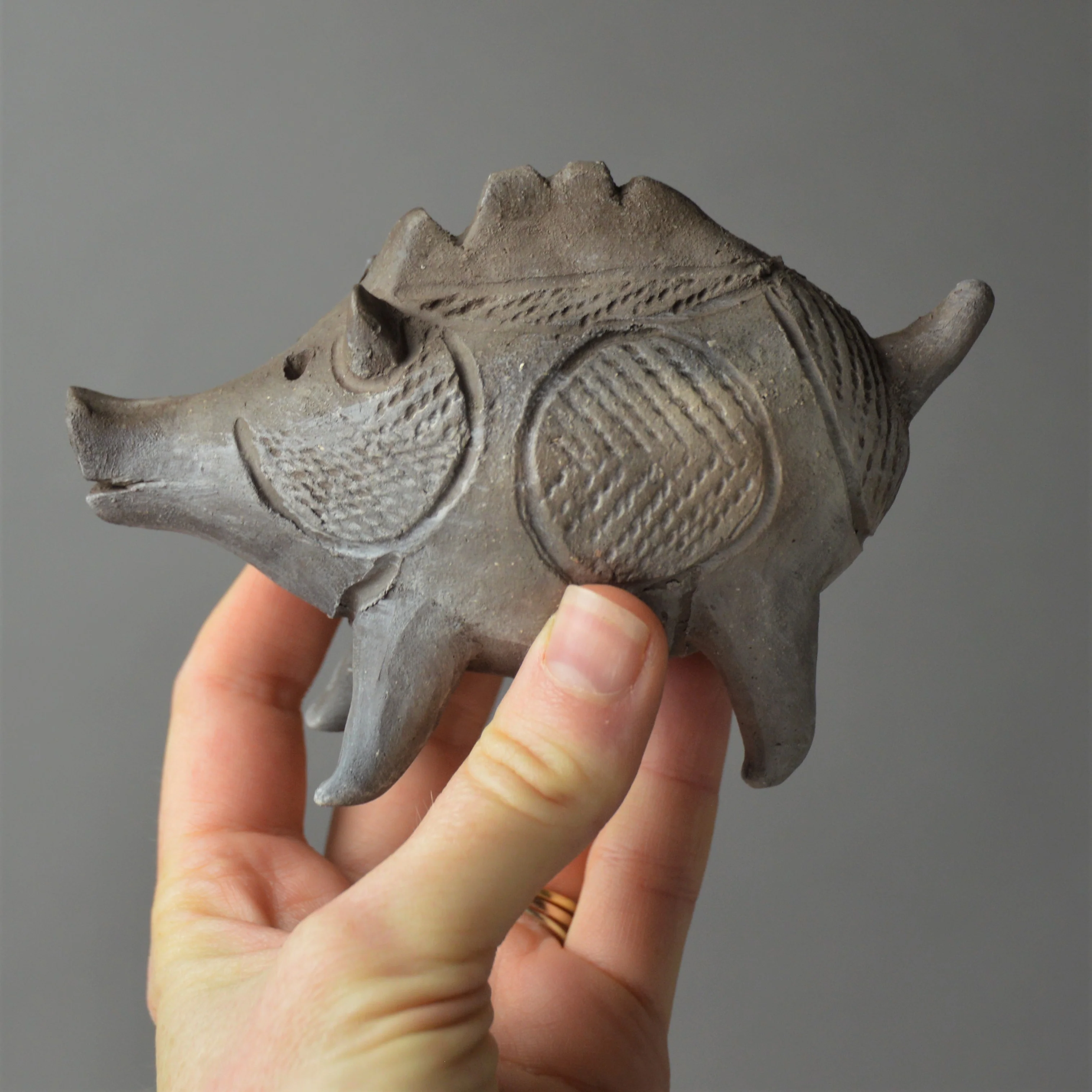
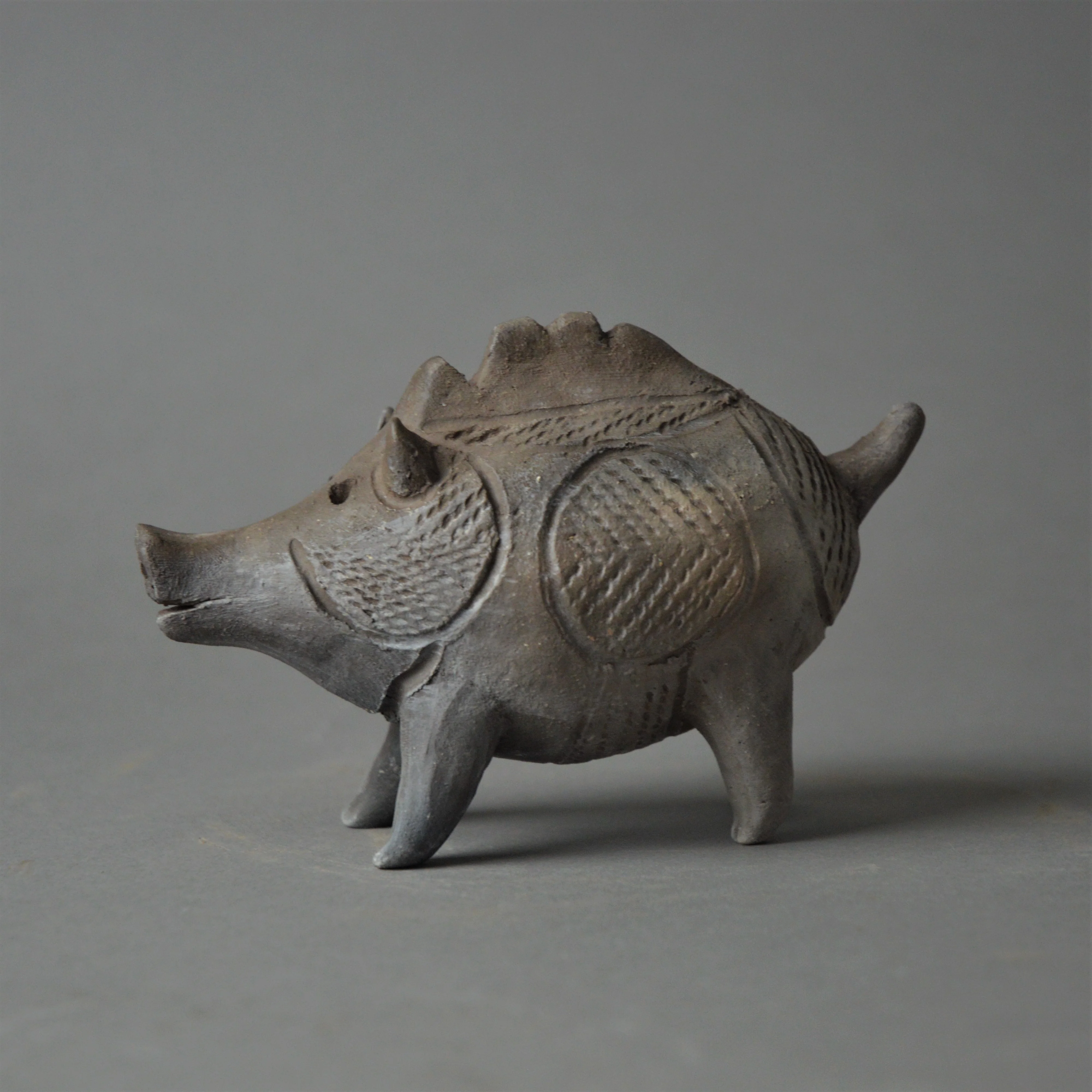
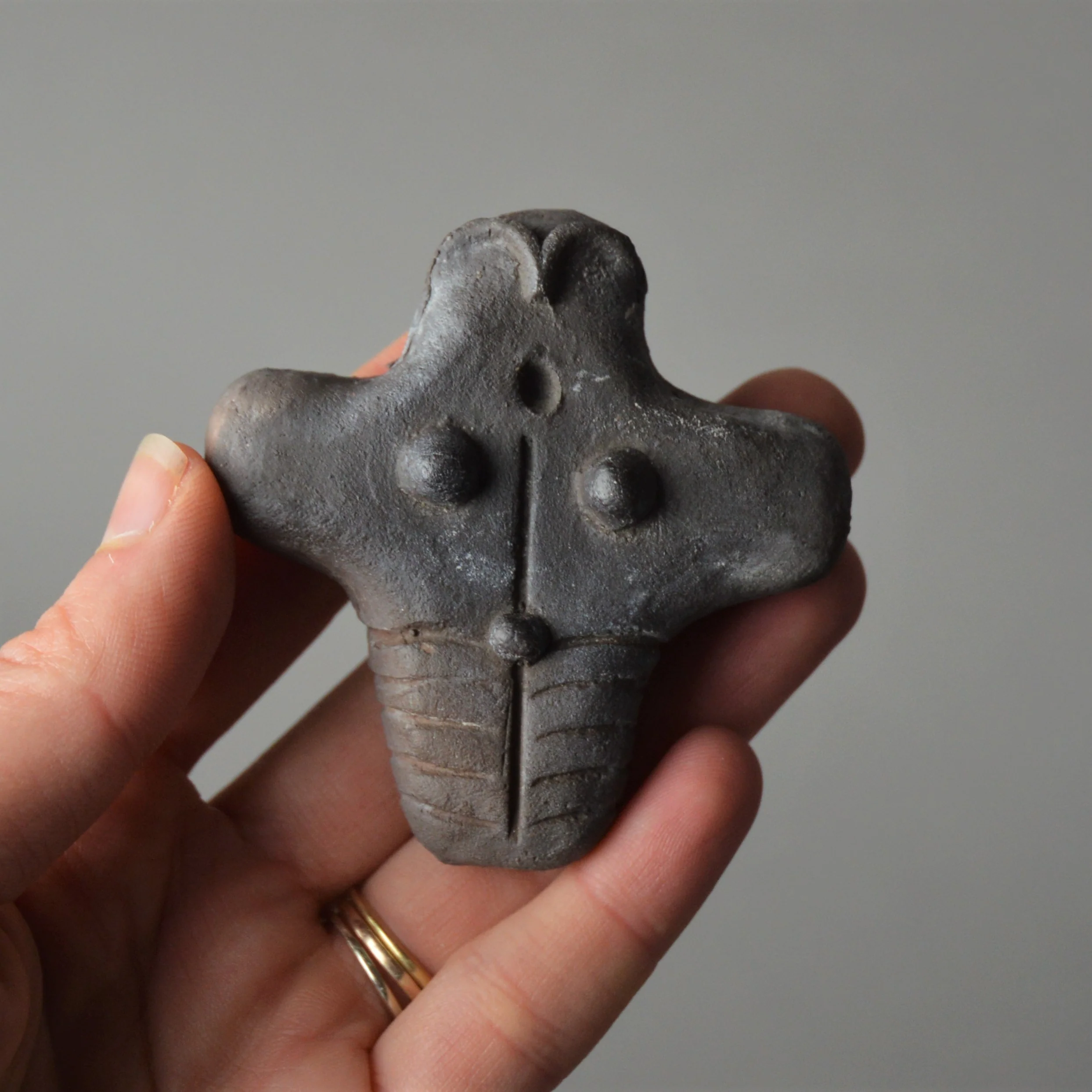
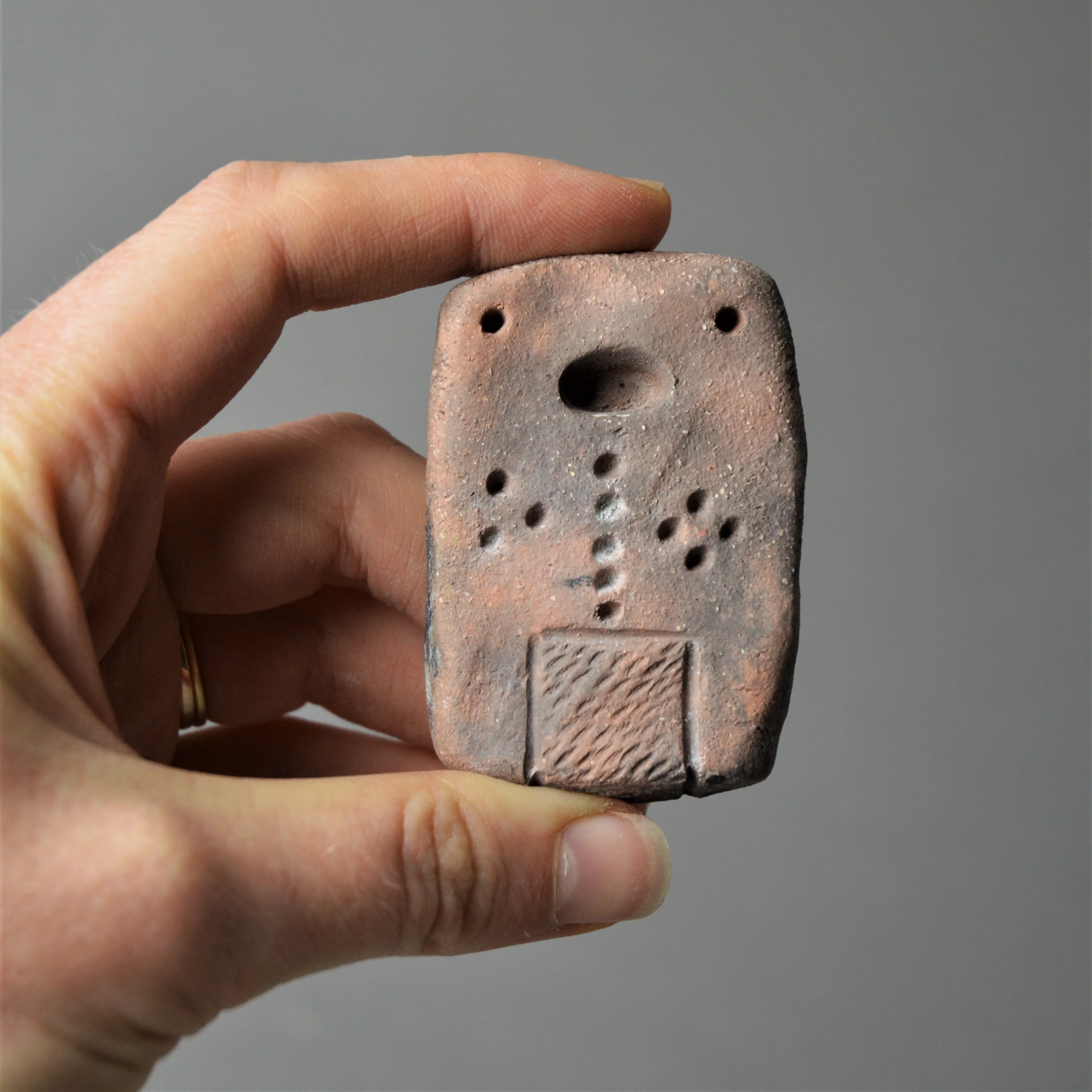
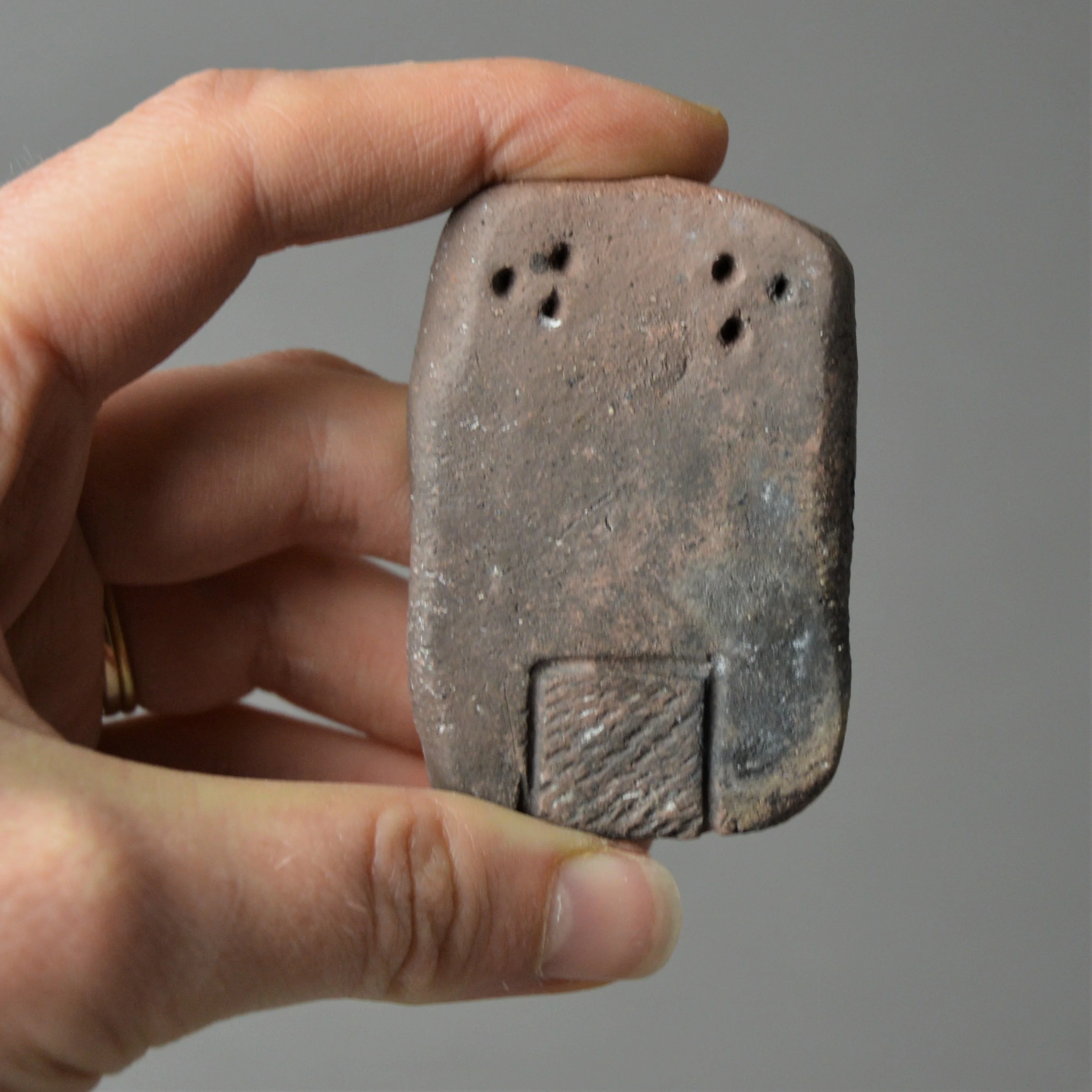
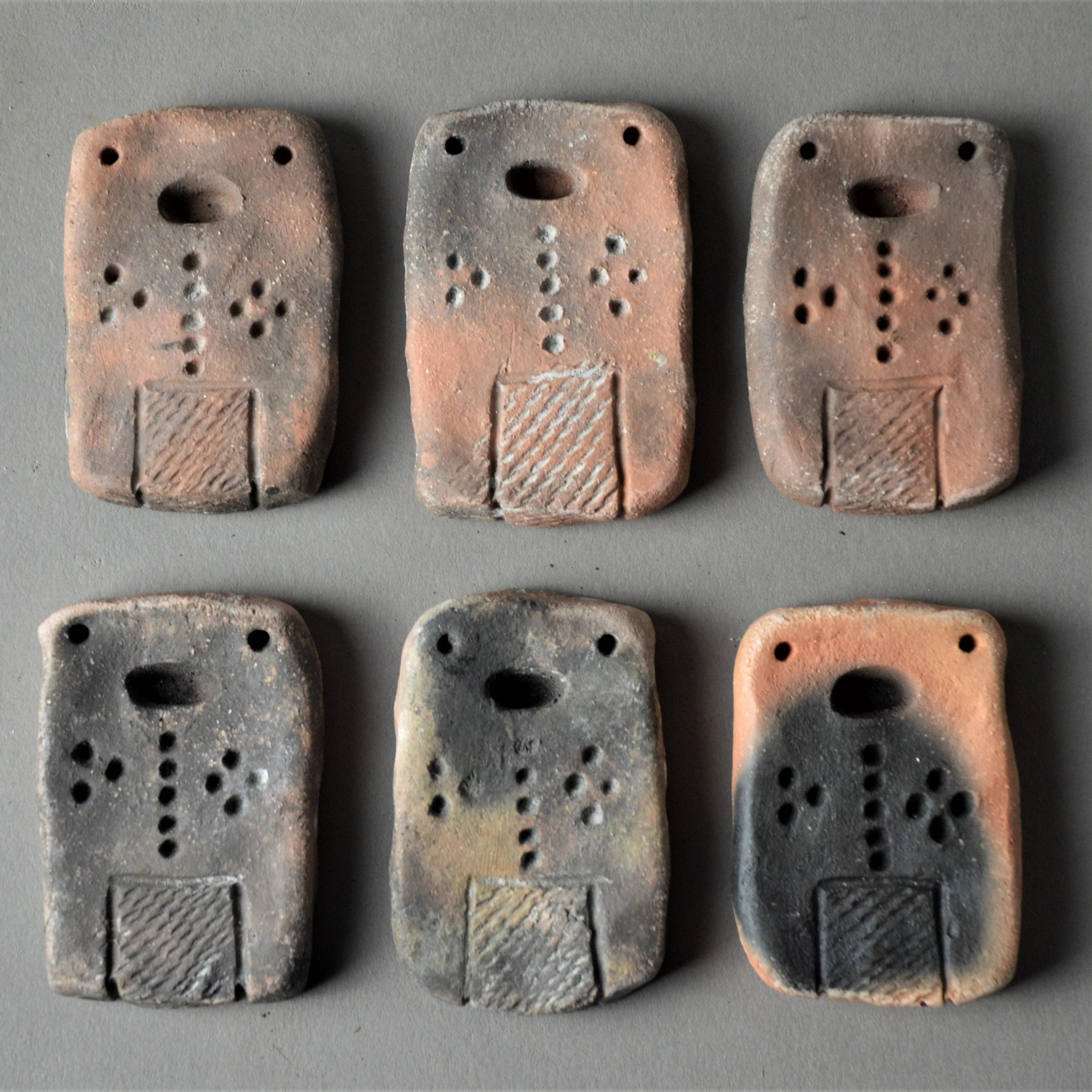
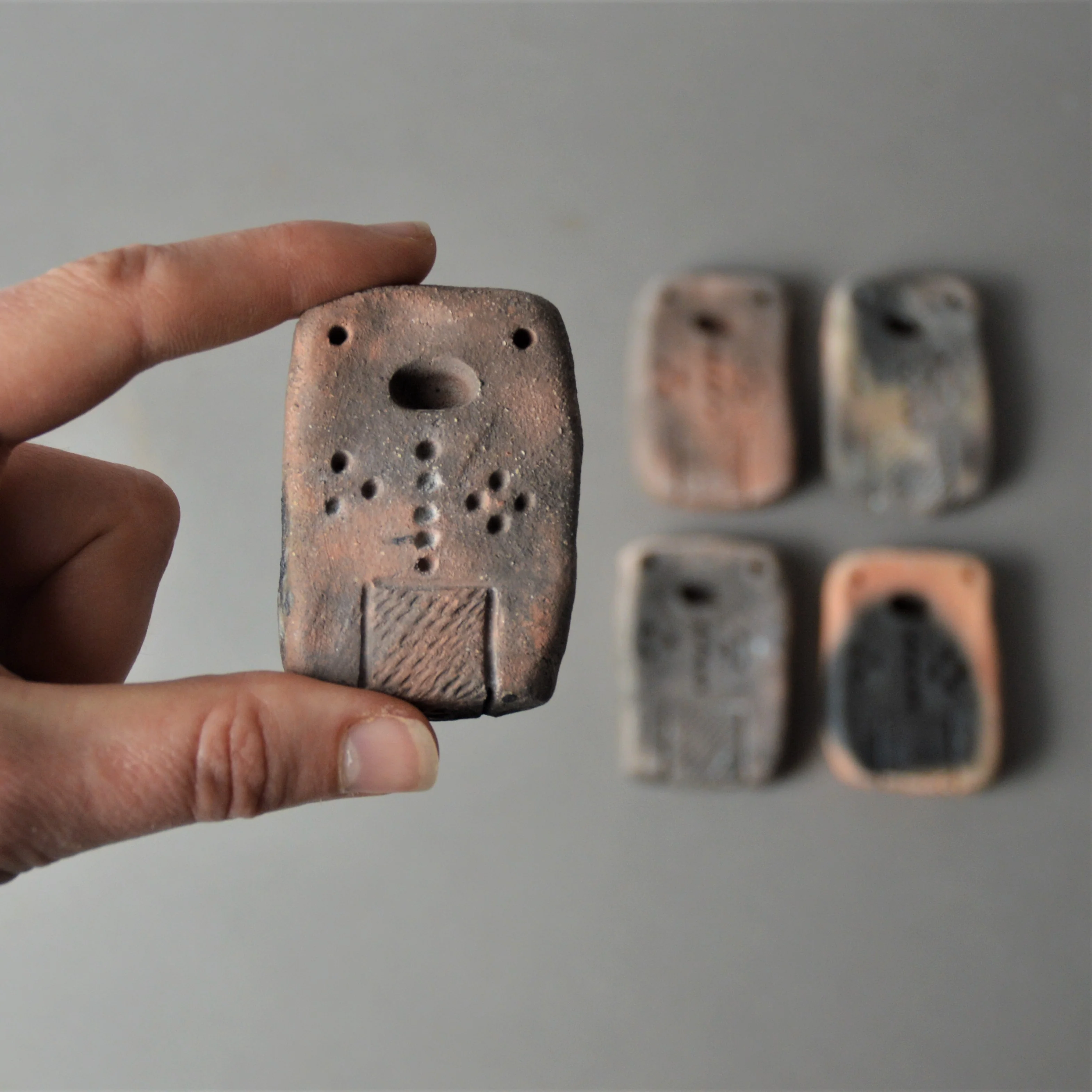
This charming, palm-sized Dogu has been given the name "Counting Dogu" due to the intriguing number sequence etched onto its face, chest, and back. This suggests it may have played a role in early counting systems or ritual practices.
- One mouth
- Two eyes
- Three dots on the right side of the chest
- Four dots on the left side of the chest
- Five dots down the centre of the chest
- Six dots on the back
This museum-quality replica was created as part of our work for the Circle of Stones Exhibition at Stonehenge, where it sits among other remarkable Jomon artefacts on loan from Isedotai and Oyu stone circles, as well as the settlement at Sannai-Maruyama.
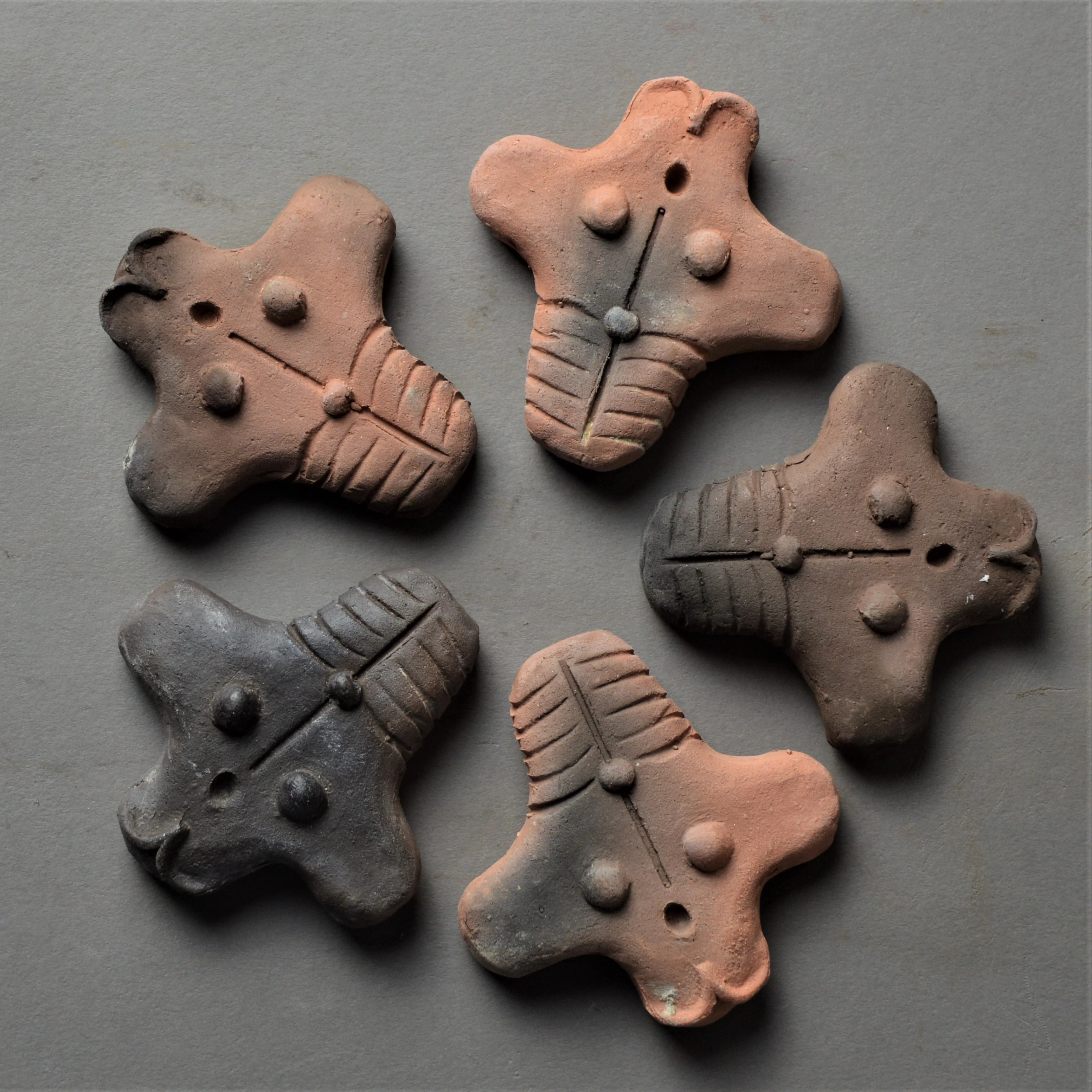
As each Dogu is smoke-fired, no two are alike. Your Dogu will be unique, marked by the fire and smoke that forged it, just as the originals were over 4,000 years ago.
Historical Context
What are Dogu Figures?
The word Dogu combines two characters meaning “earth” and “spirit” or “soil” and “doll”, depending on interpretation. These captivating clay figures, crafted between 2500 BCE - 1500 BCE, are among the most evocative prehistoric artefacts of Japan.
Though most Dogu represent human forms, some depict animals or even plants. Many researchers believe they were symbols of fertility, protection, or ritual objects linked to Jomon spirituality.
Why were Dogu made?
The purpose of Dogu remains a mystery, but their distribution and fragmented condition suggest they were ritually broken. More than 18,000 Dogu have been found, often in houses, burials, and midden pits, spanning the vast timeline of the Jomon period.
Life in the Jomon Period
Unlike many other prehistoric cultures, the Jomon people thrived without agriculture, living in harmony with nature as hunters, fishers, and gatherers. Their rich artistic traditions and impressive population density make the Jomon period one of the most fascinating chapters of human history.
What is the Circle of Stones Exhibition?
The Circles of Stone: Stonehenge and Prehistoric Japan Exhibition explores the connections between Jomon culture and Neolithic Britain, bringing together two ancient civilisations that, though separated by thousands of miles, left a profound mark on history.
Many thanks to Susan Greaney and Simon Kaner for their assistance in facilitating our research at the British Museum and providing valuable insights throughout this project.
Materials
- Smoke-fired Terracotta
Dimensions
- Height: Approx. 65 mm
- Width across shoulders: Approx. 45 mm
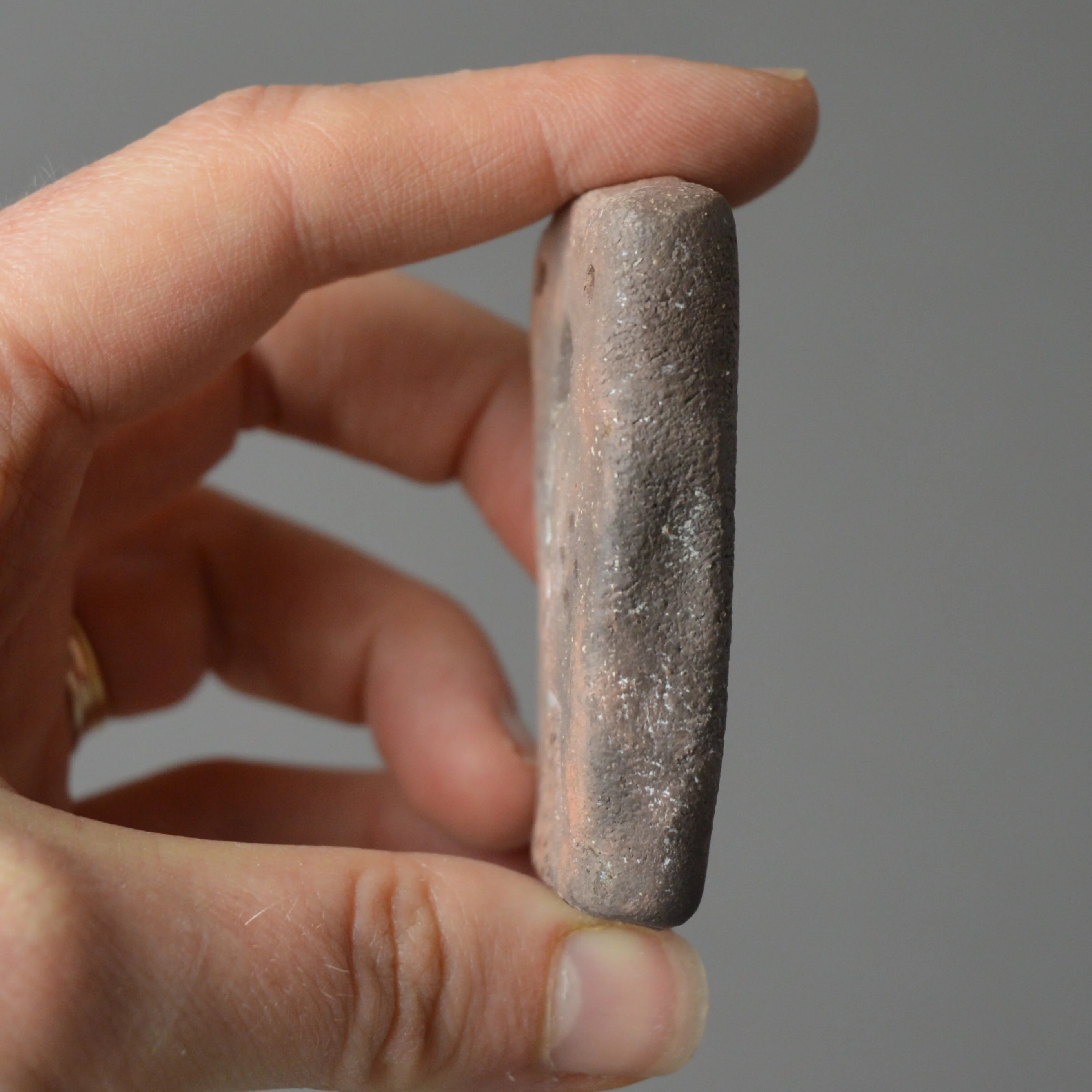
- Depth: Approx. 13 mm
Production
As with all our Museum Quality Replicas, this Dogu has been handcrafted using authentic techniques, ensuring an accurate representation of the Jomon original.
- Completely hand-built using clays similar to those used by the original Jomon potters
- Fired in an open wood fire to replicate the ancient surface colouration
- Tool marks recreated using natural materials, including stone, wood, shell, bone, and antler
Firing Process
This figure has been fired to emulate ancient techniques. The original Dogu would have been fired in an open wood fire, surrounded by embers, a process that creates surface variations and unique markings.
To strengthen this replica while maintaining an authentic appearance, we have fired it at a somewhat higher temperature—preserving the delicate artistry while enhancing durability.
Ordering Information
- 'Add to Basket' Items: Ready to ship immediately.
- 'Pre-order' Items: Handmade to order within 90 days (longer for international orders). If your order includes both 'Add to Basket' and 'Pre-order' items, they will be shipped together once all items are ready.
Shipping
- Standard shipping: Sent via second-class postal service.
- Faster delivery: If you require first-class shipping, please contact us for a custom quote.
Step into Japan’s prehistoric past – own a piece of Jomon history today!
Product Information
Product Information
Shipping & Returns
Shipping & Returns
Description
Handcrafted Replica Jomon Counting Dogu
Details
This charming, palm-sized Dogu has been given the name "Counting Dogu" due to the intriguing number sequence etched onto its face, chest, and back. This suggests it may have played a role in early counting systems or ritual practices.
- One mouth
- Two eyes
- Three dots on the right side of the chest
- Four dots on the left side of the chest
- Five dots down the centre of the chest
- Six dots on the back
This museum-quality replica was created as part of our work for the Circle of Stones Exhibition at Stonehenge, where it sits among other remarkable Jomon artefacts on loan from Isedotai and Oyu stone circles, as well as the settlement at Sannai-Maruyama.
As each Dogu is smoke-fired, no two are alike. Your Dogu will be unique, marked by the fire and smoke that forged it, just as the originals were over 4,000 years ago.
Historical Context
What are Dogu Figures?
The word Dogu combines two characters meaning “earth” and “spirit” or “soil” and “doll”, depending on interpretation. These captivating clay figures, crafted between 2500 BCE - 1500 BCE, are among the most evocative prehistoric artefacts of Japan.
Though most Dogu represent human forms, some depict animals or even plants. Many researchers believe they were symbols of fertility, protection, or ritual objects linked to Jomon spirituality.
Why were Dogu made?
The purpose of Dogu remains a mystery, but their distribution and fragmented condition suggest they were ritually broken. More than 18,000 Dogu have been found, often in houses, burials, and midden pits, spanning the vast timeline of the Jomon period.
Life in the Jomon Period
Unlike many other prehistoric cultures, the Jomon people thrived without agriculture, living in harmony with nature as hunters, fishers, and gatherers. Their rich artistic traditions and impressive population density make the Jomon period one of the most fascinating chapters of human history.
What is the Circle of Stones Exhibition?
The Circles of Stone: Stonehenge and Prehistoric Japan Exhibition explores the connections between Jomon culture and Neolithic Britain, bringing together two ancient civilisations that, though separated by thousands of miles, left a profound mark on history.
Many thanks to Susan Greaney and Simon Kaner for their assistance in facilitating our research at the British Museum and providing valuable insights throughout this project.
Materials
- Smoke-fired Terracotta
Dimensions
- Height: Approx. 65 mm
- Width across shoulders: Approx. 45 mm
- Depth: Approx. 13 mm
Production
As with all our Museum Quality Replicas, this Dogu has been handcrafted using authentic techniques, ensuring an accurate representation of the Jomon original.
- Completely hand-built using clays similar to those used by the original Jomon potters
- Fired in an open wood fire to replicate the ancient surface colouration
- Tool marks recreated using natural materials, including stone, wood, shell, bone, and antler
Firing Process
This figure has been fired to emulate ancient techniques. The original Dogu would have been fired in an open wood fire, surrounded by embers, a process that creates surface variations and unique markings.
To strengthen this replica while maintaining an authentic appearance, we have fired it at a somewhat higher temperature—preserving the delicate artistry while enhancing durability.
Ordering Information
- 'Add to Basket' Items: Ready to ship immediately.
- 'Pre-order' Items: Handmade to order within 90 days (longer for international orders). If your order includes both 'Add to Basket' and 'Pre-order' items, they will be shipped together once all items are ready.
Shipping
- Standard shipping: Sent via second-class postal service.
- Faster delivery: If you require first-class shipping, please contact us for a custom quote.
Step into Japan’s prehistoric past – own a piece of Jomon history today!