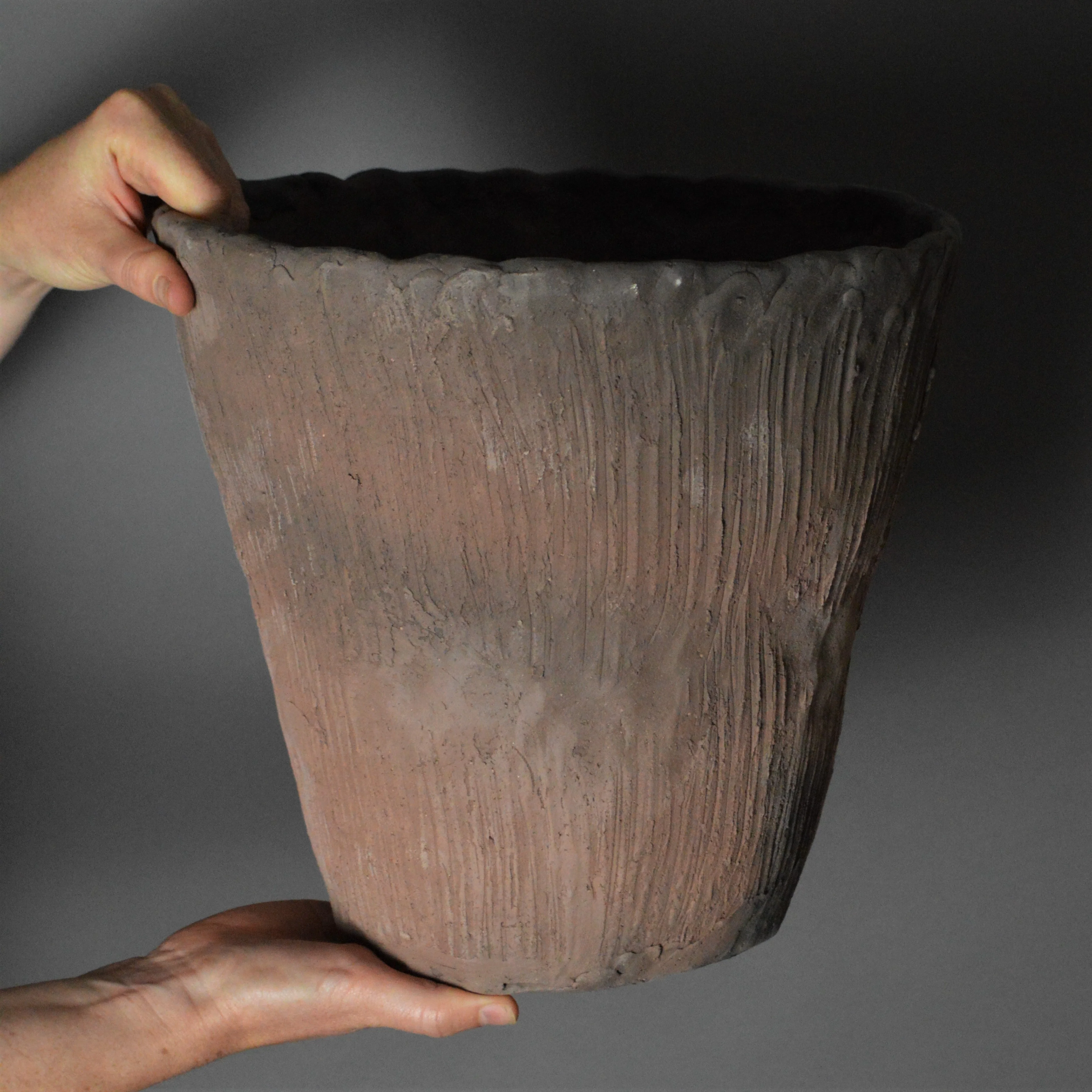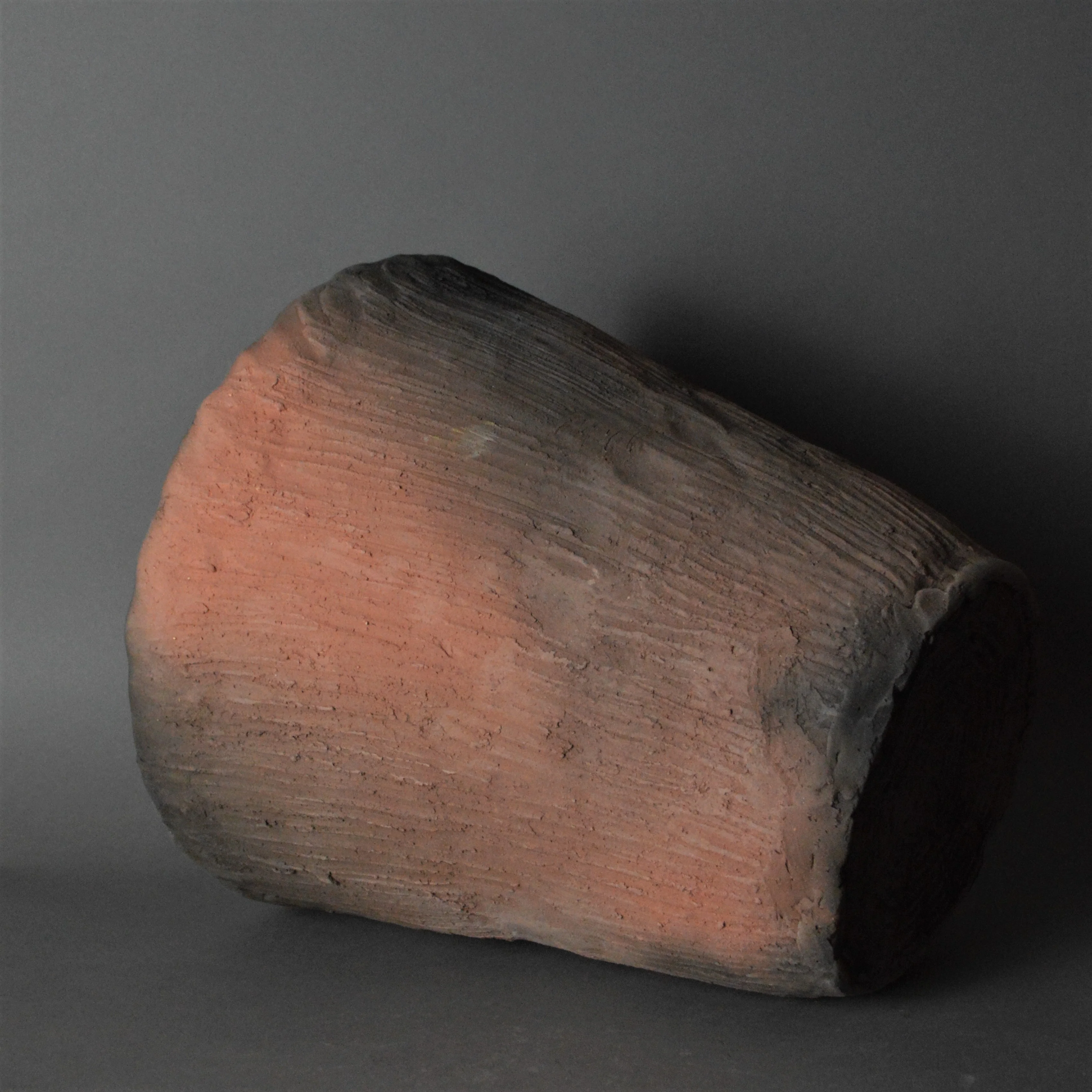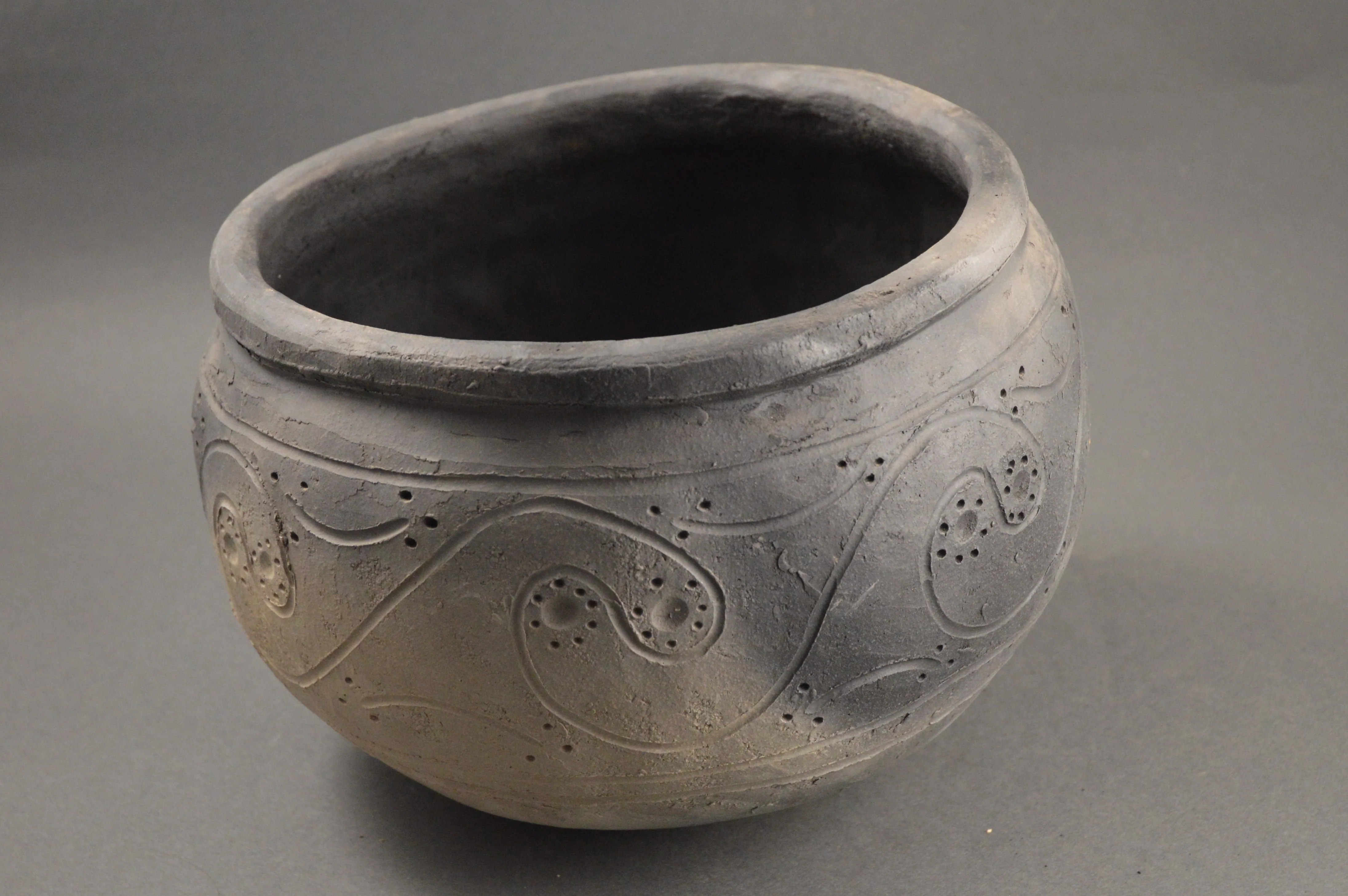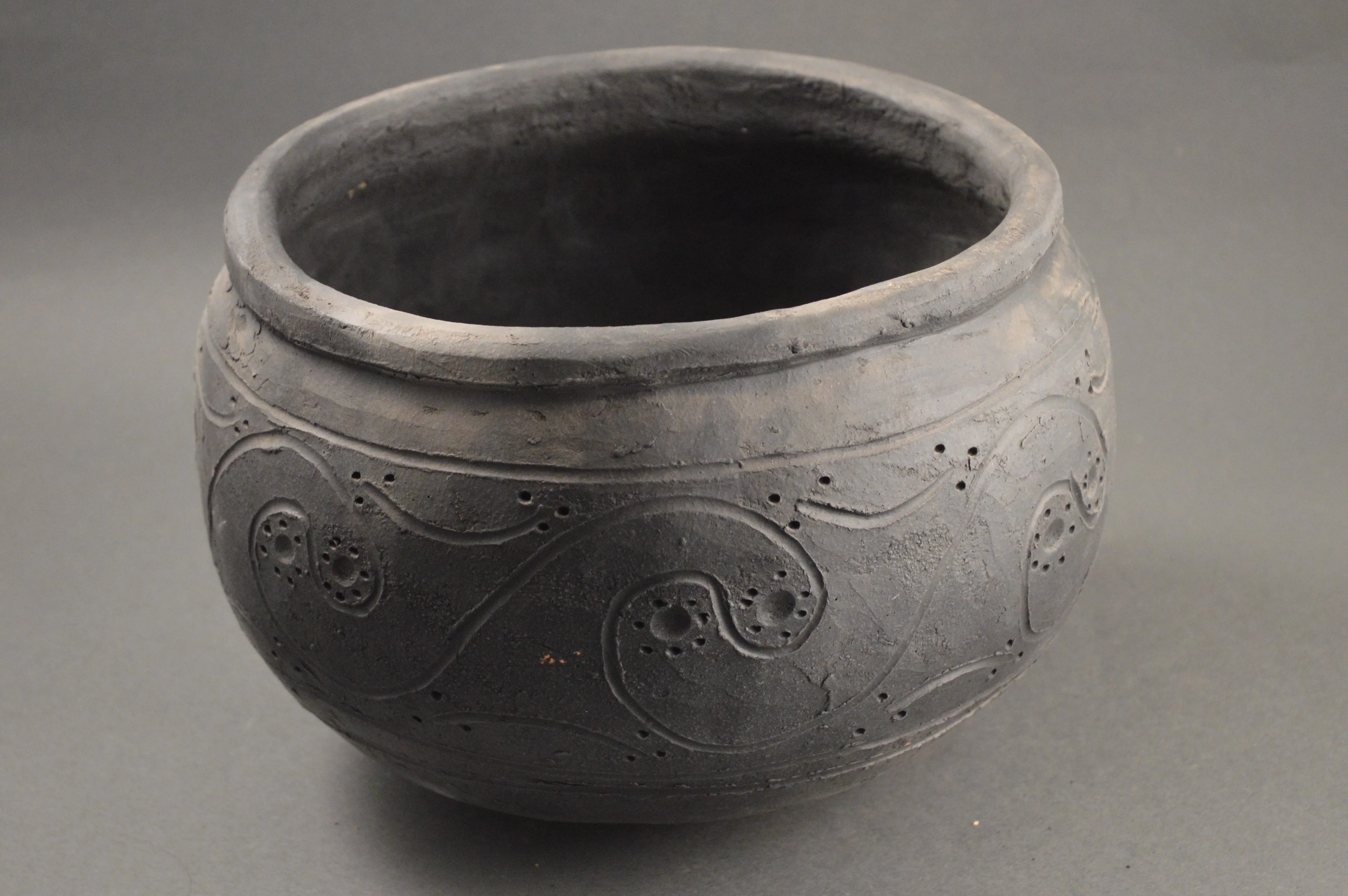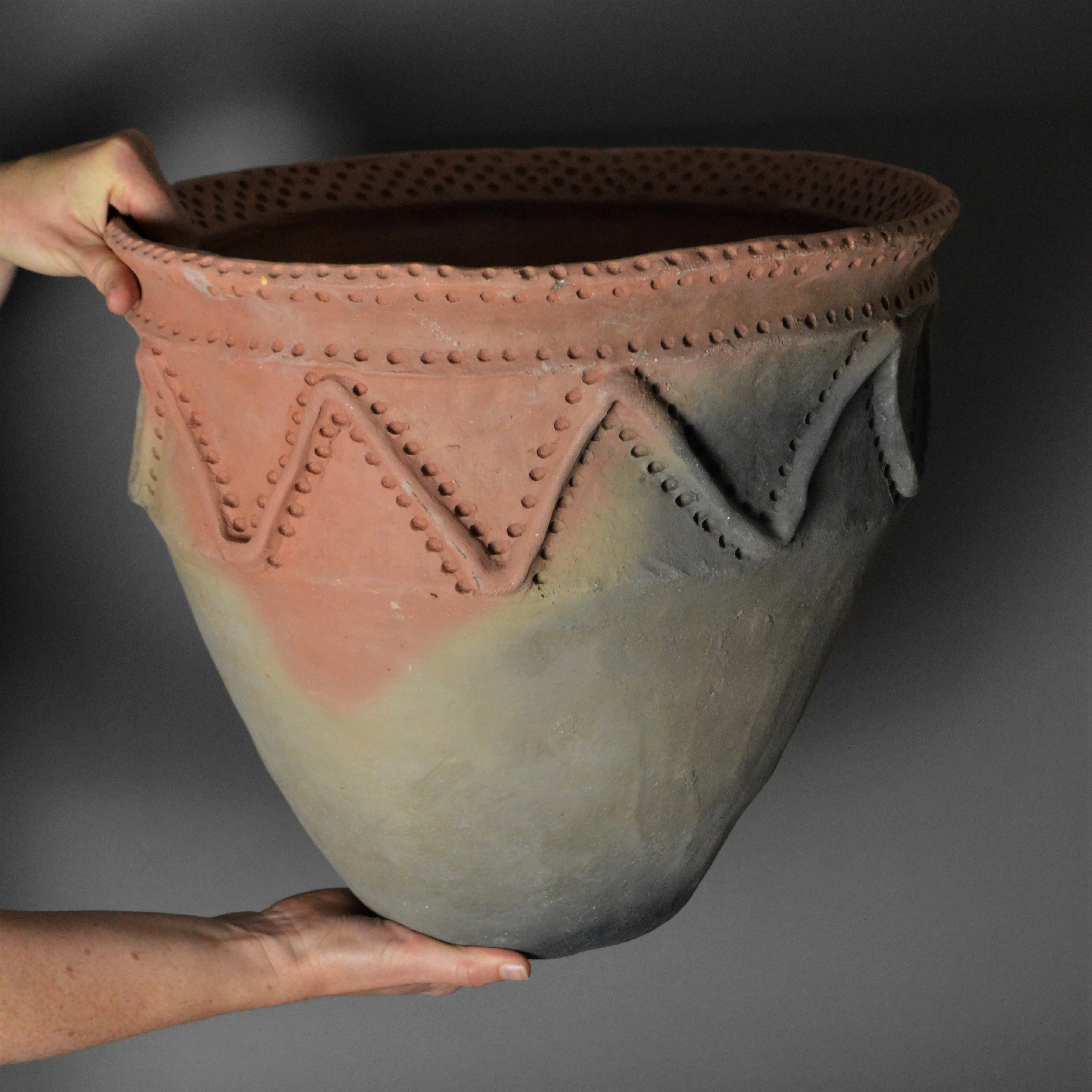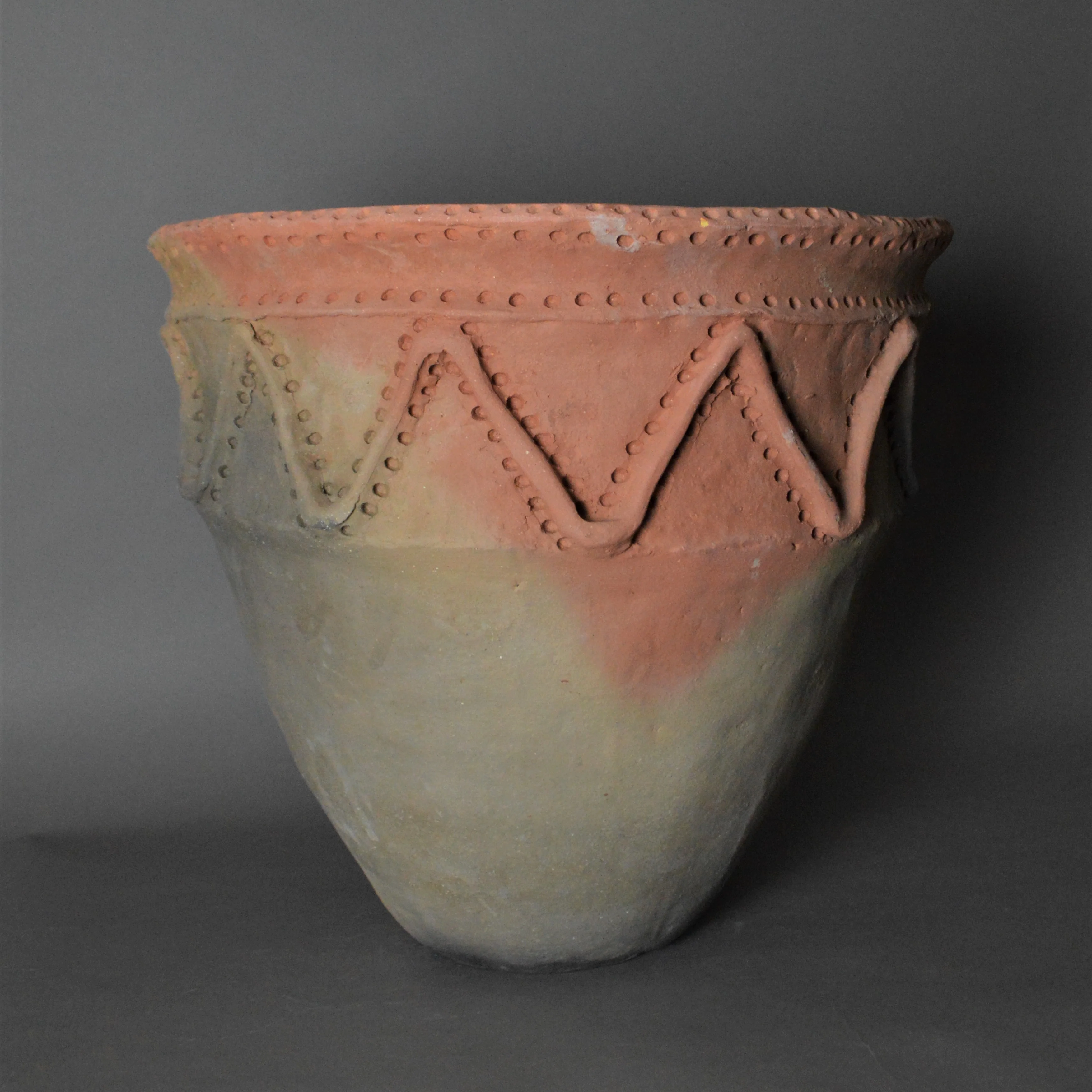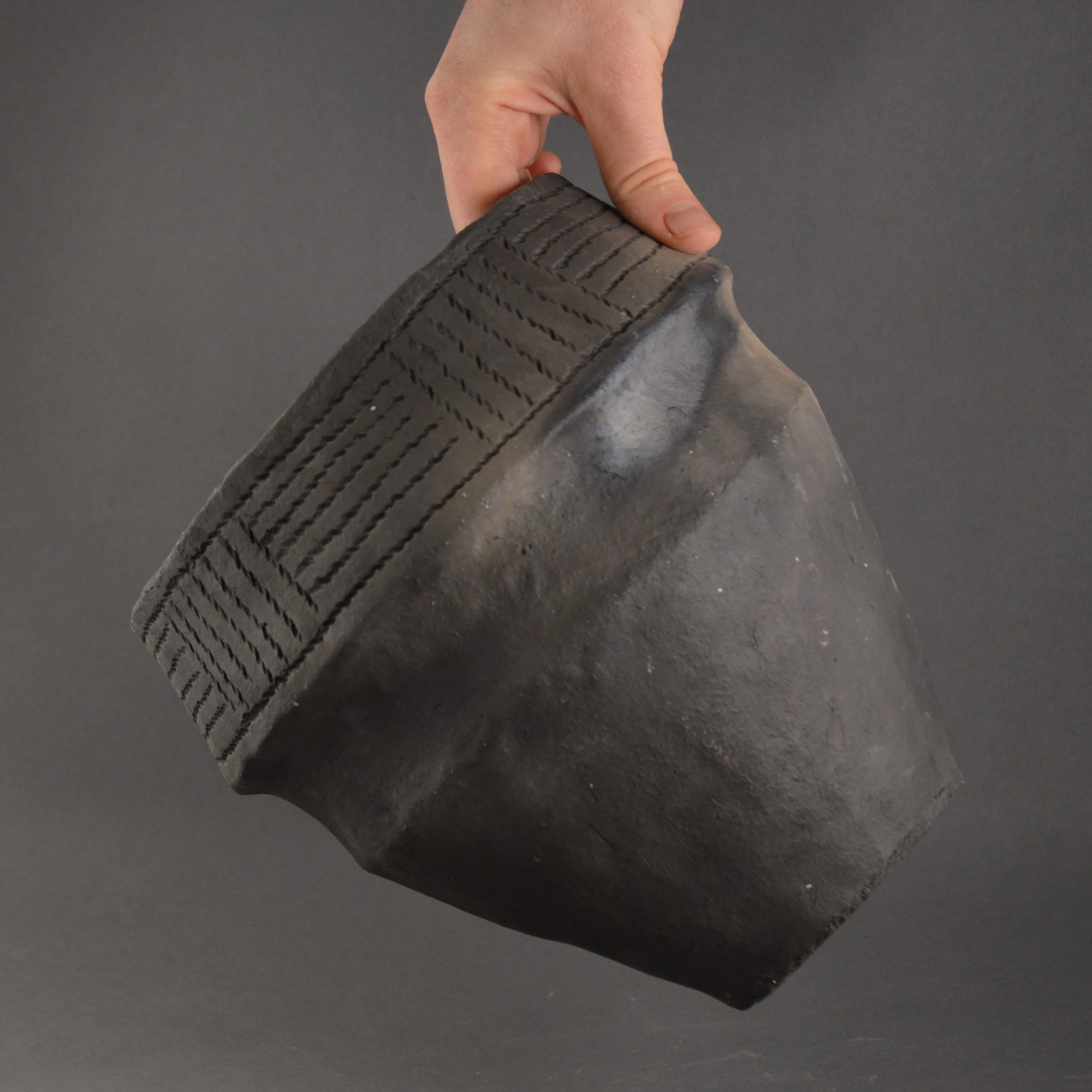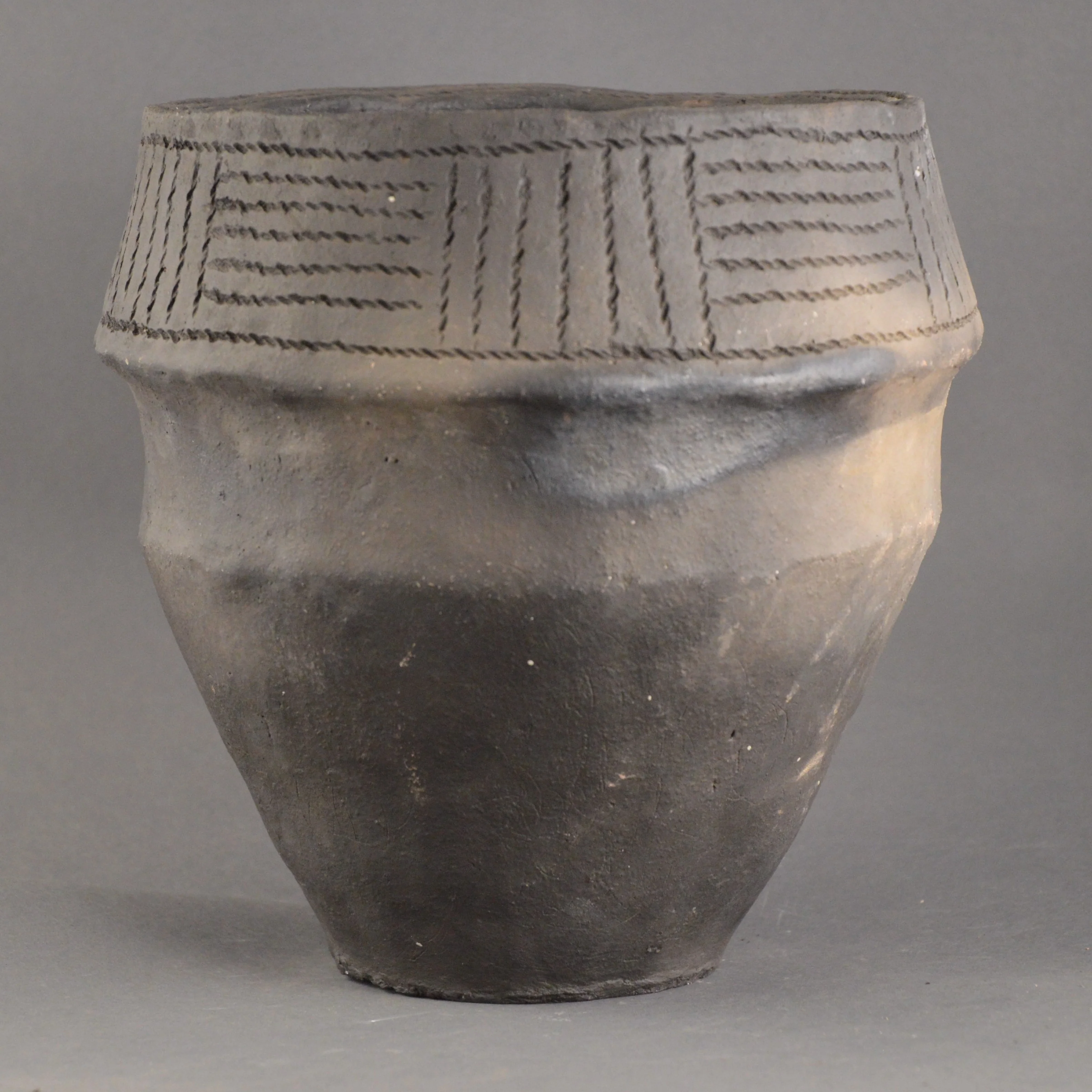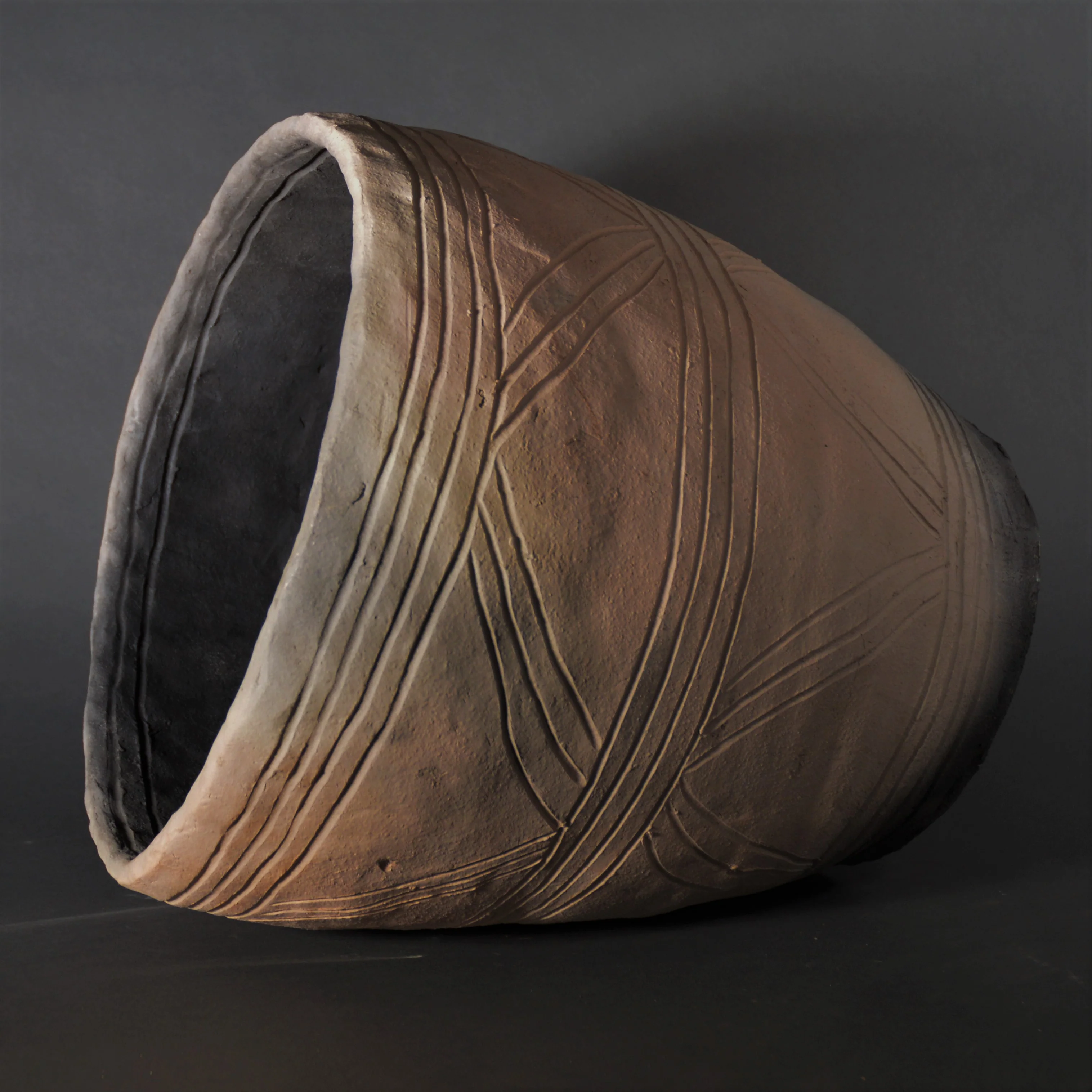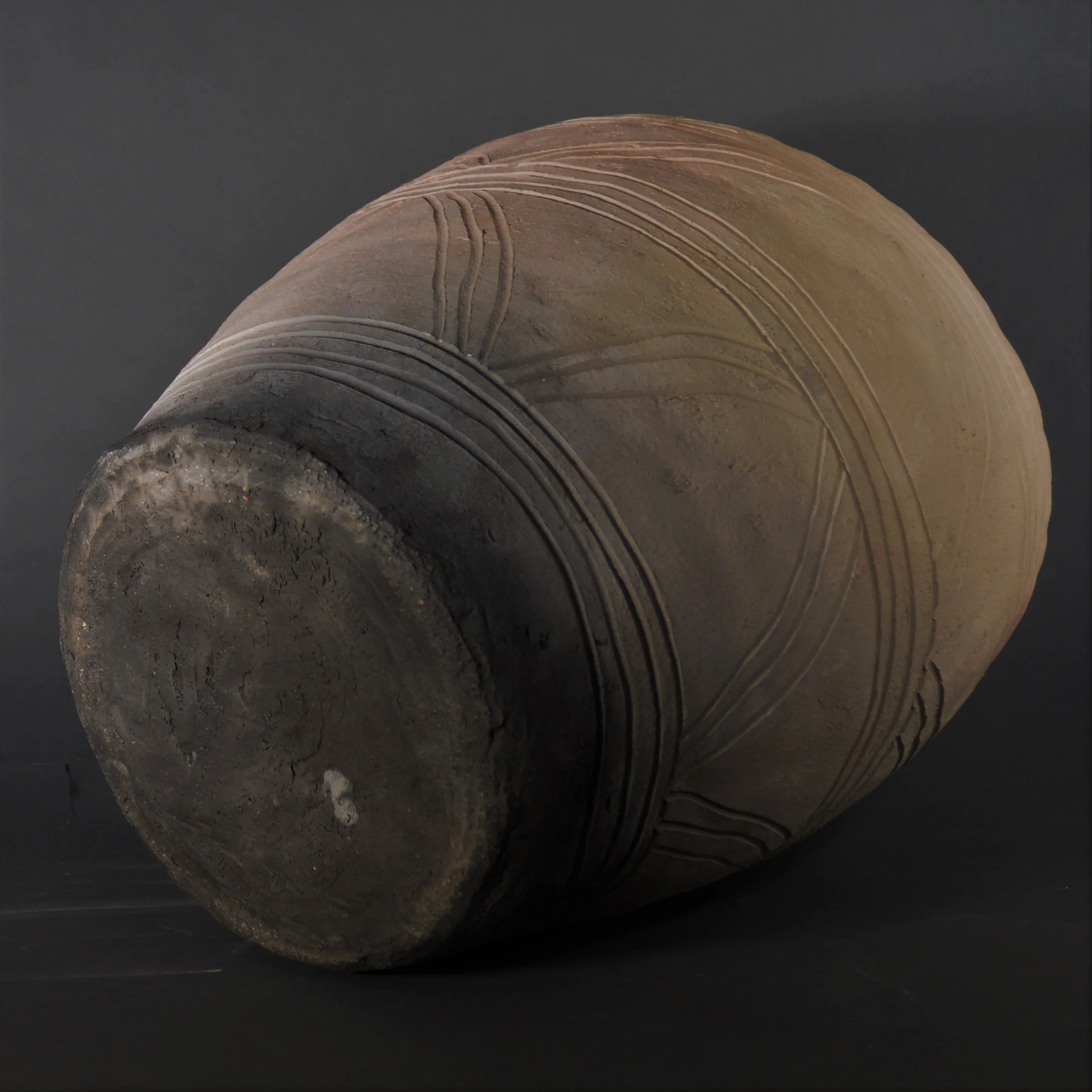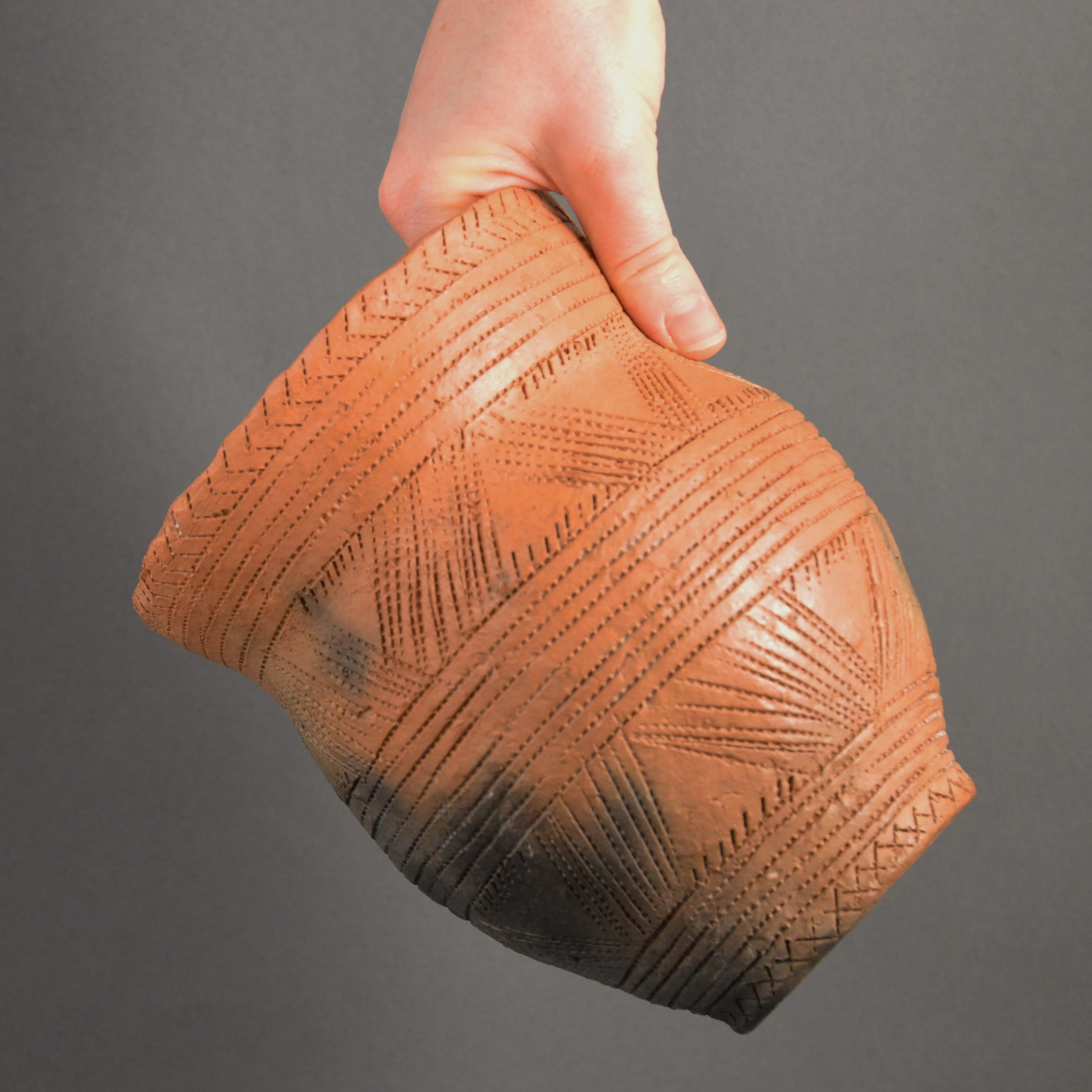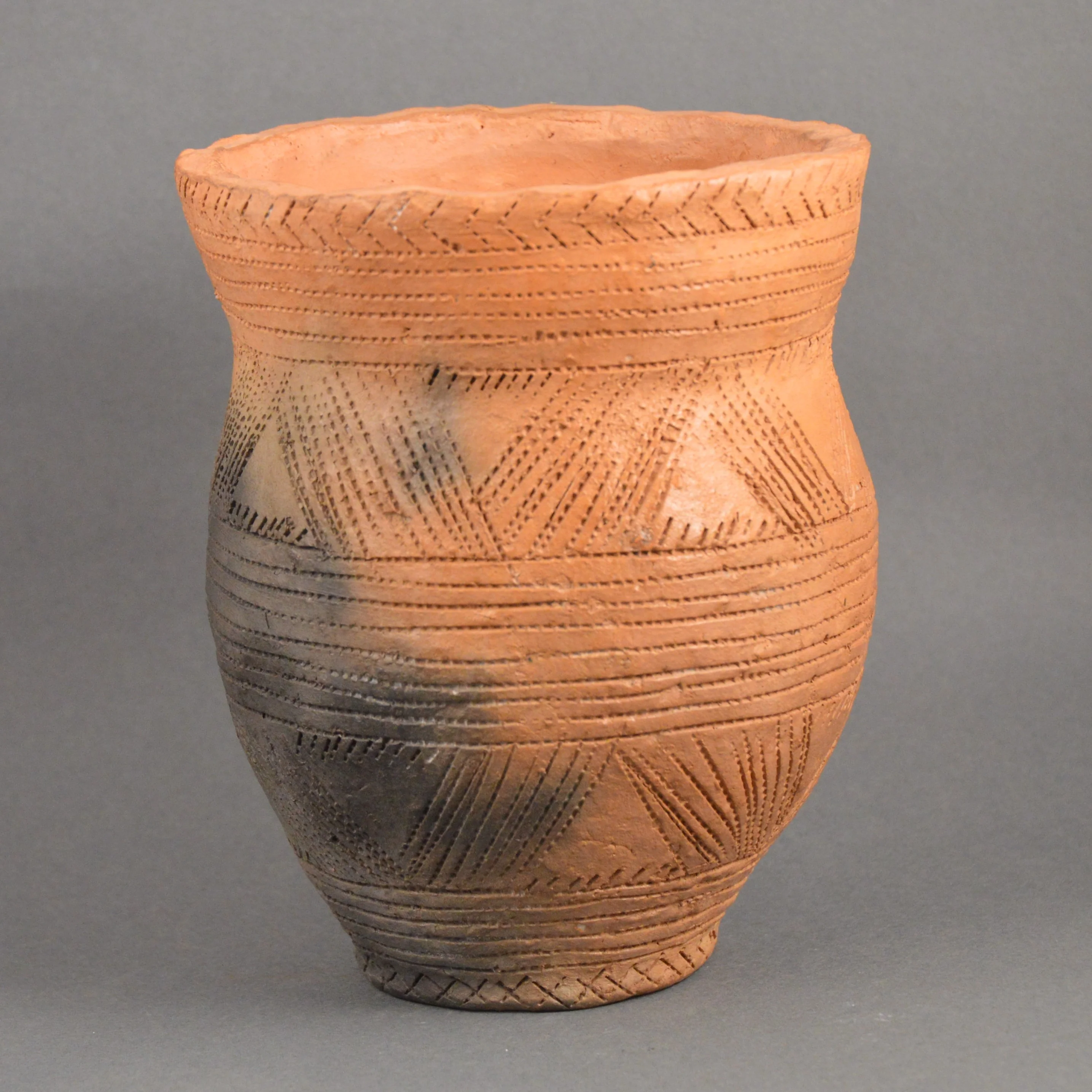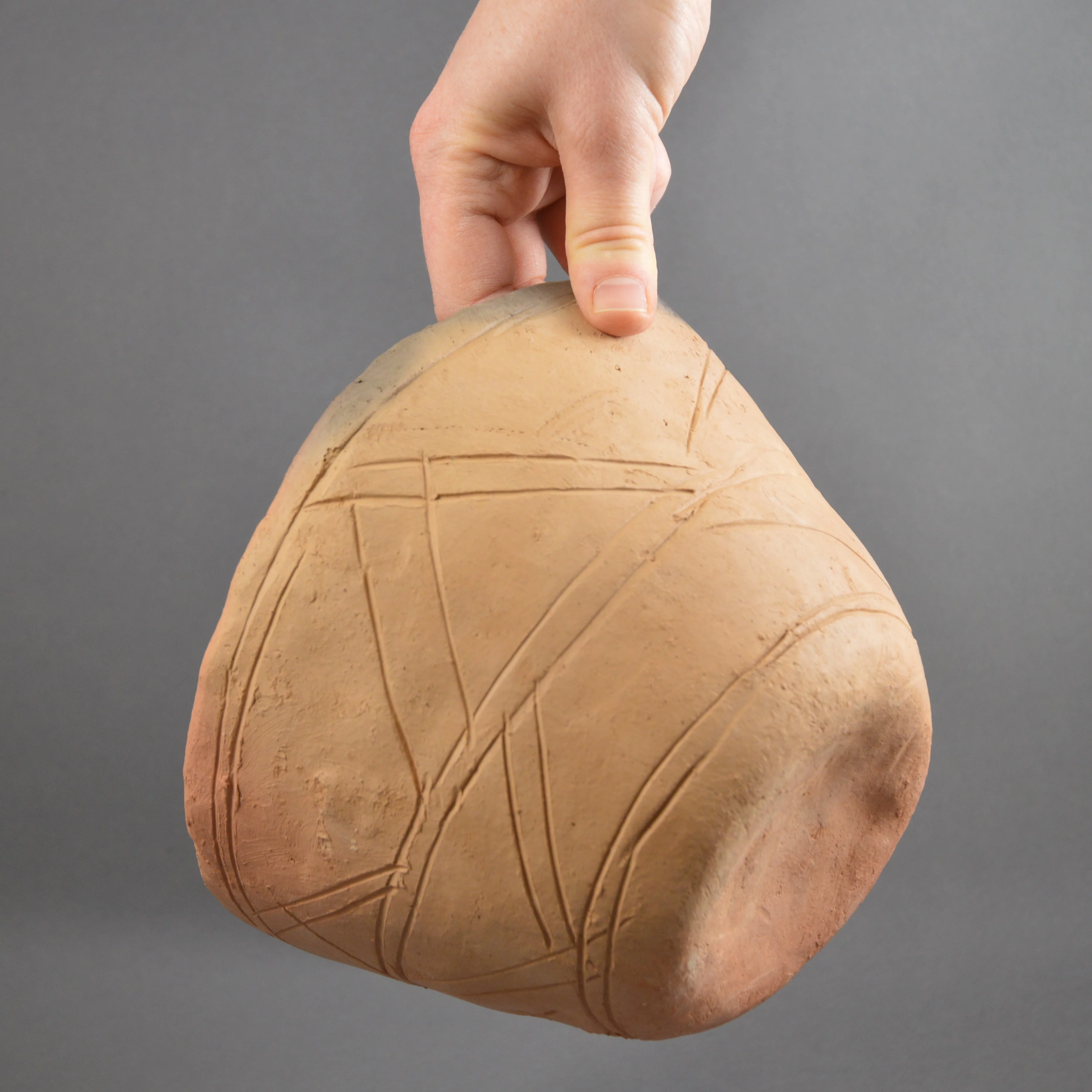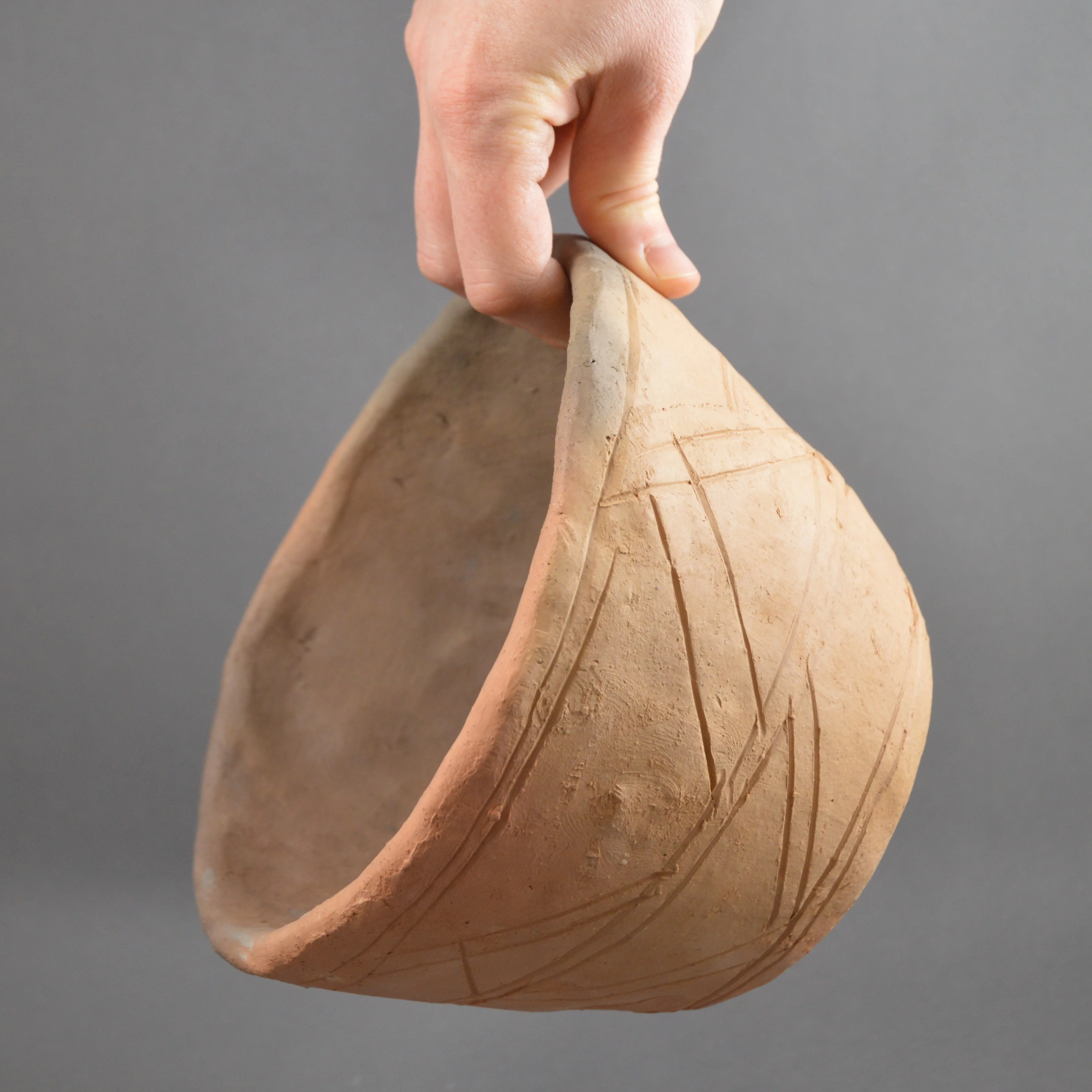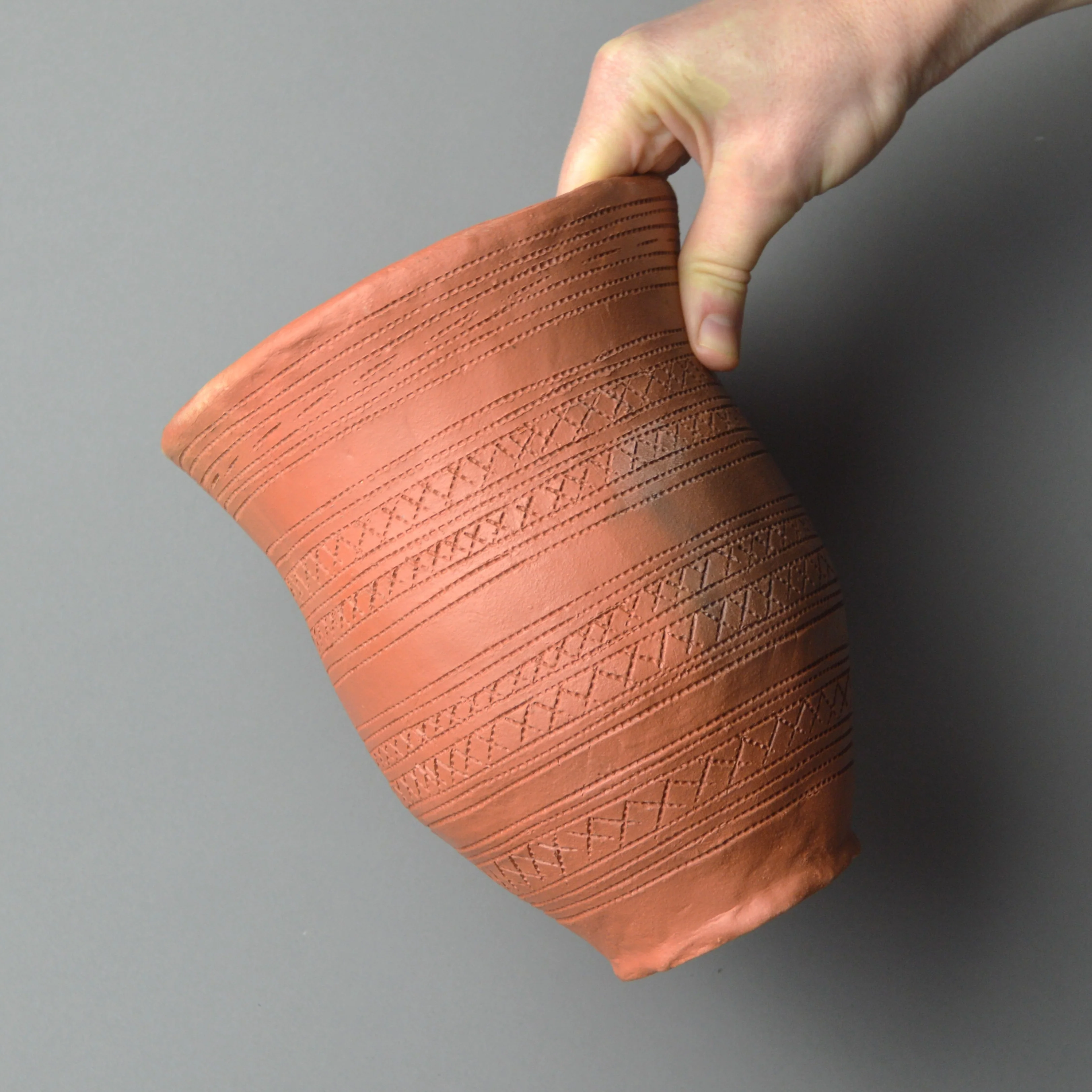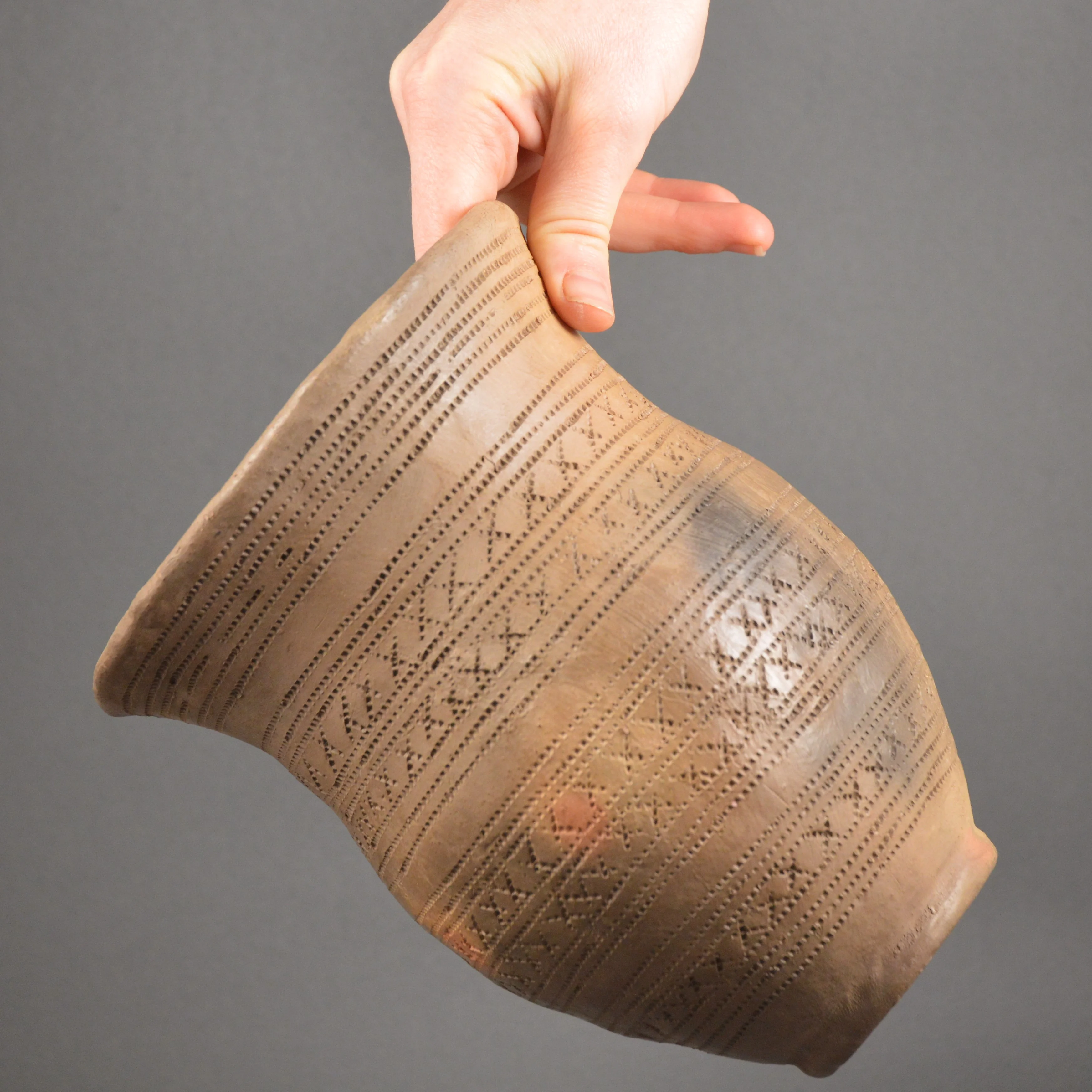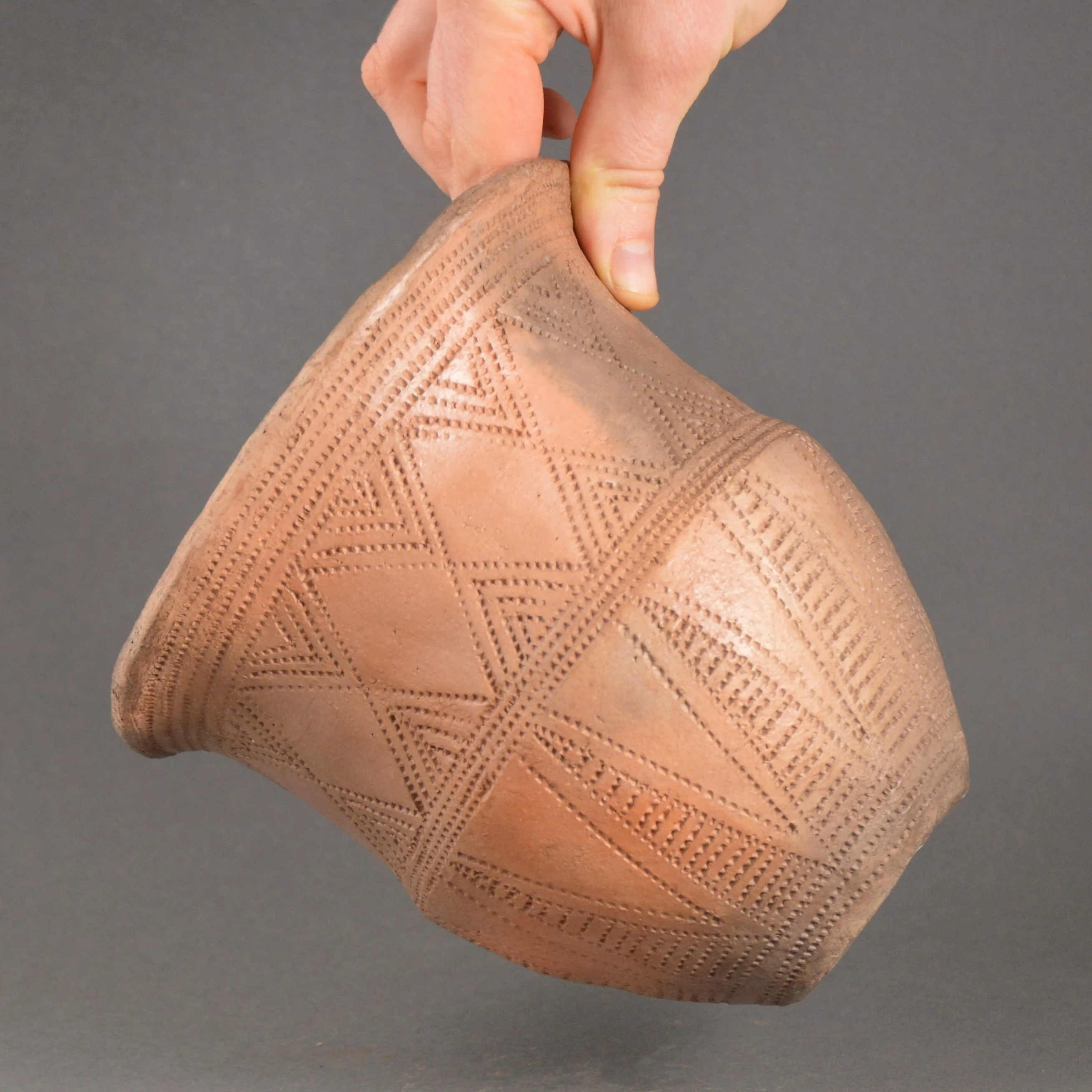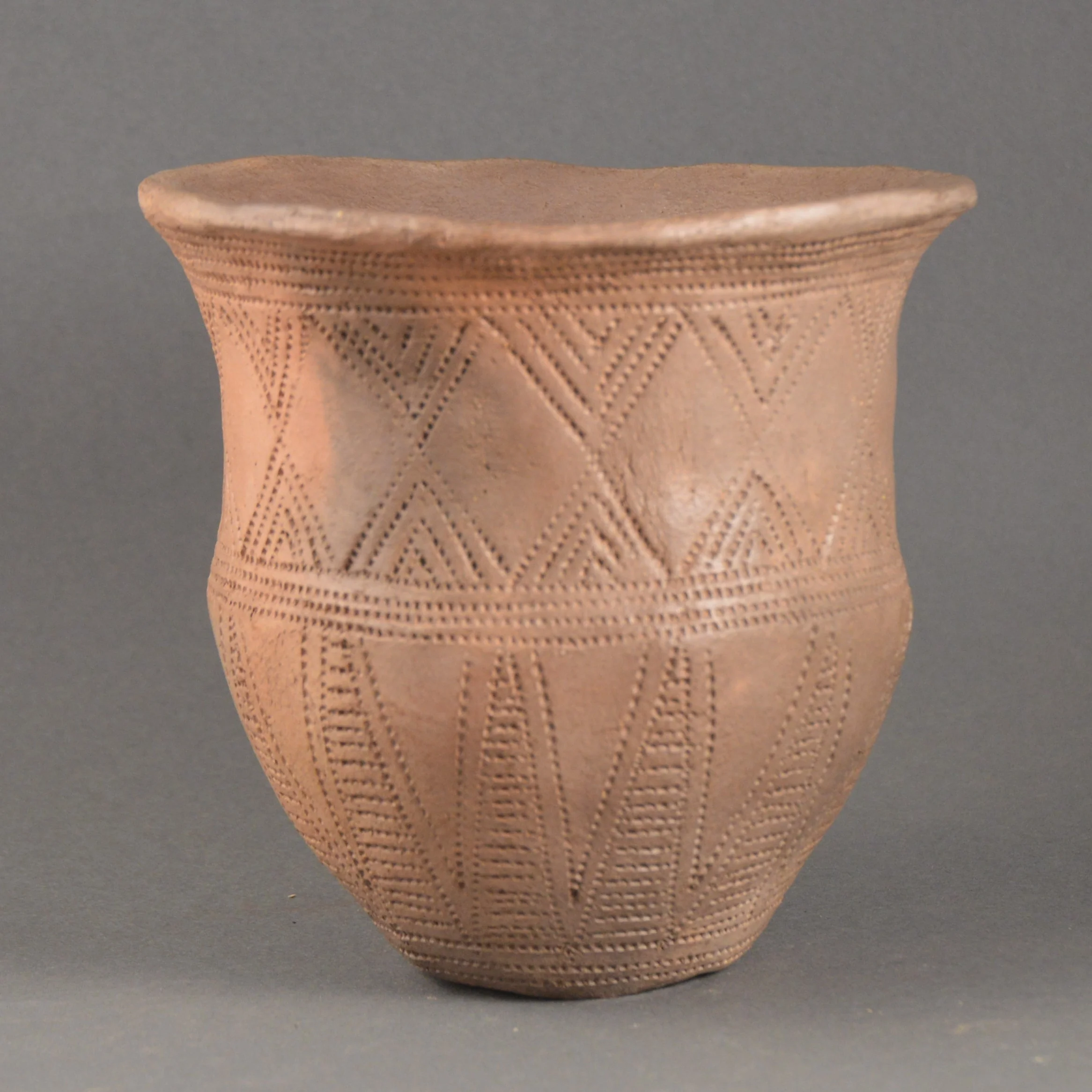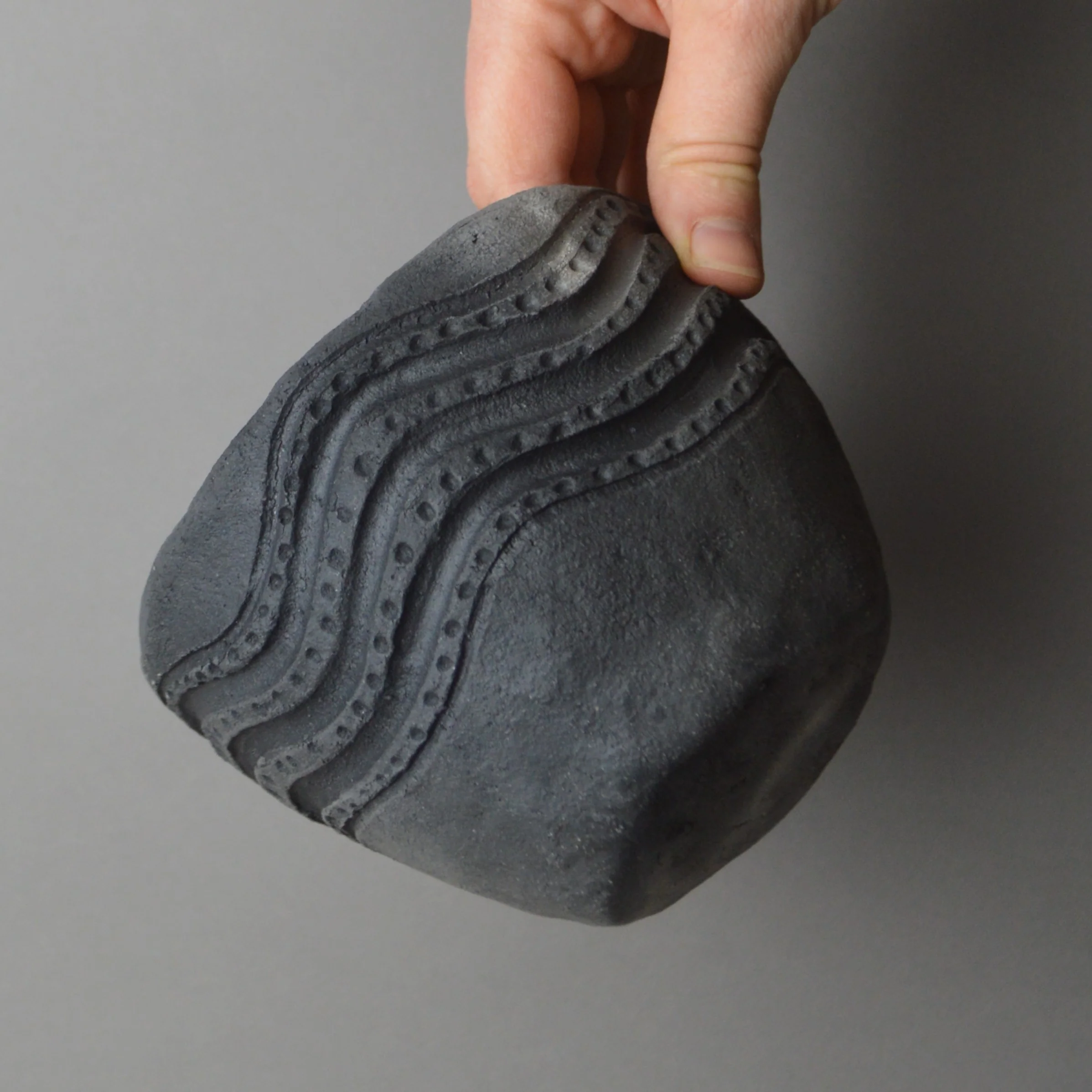
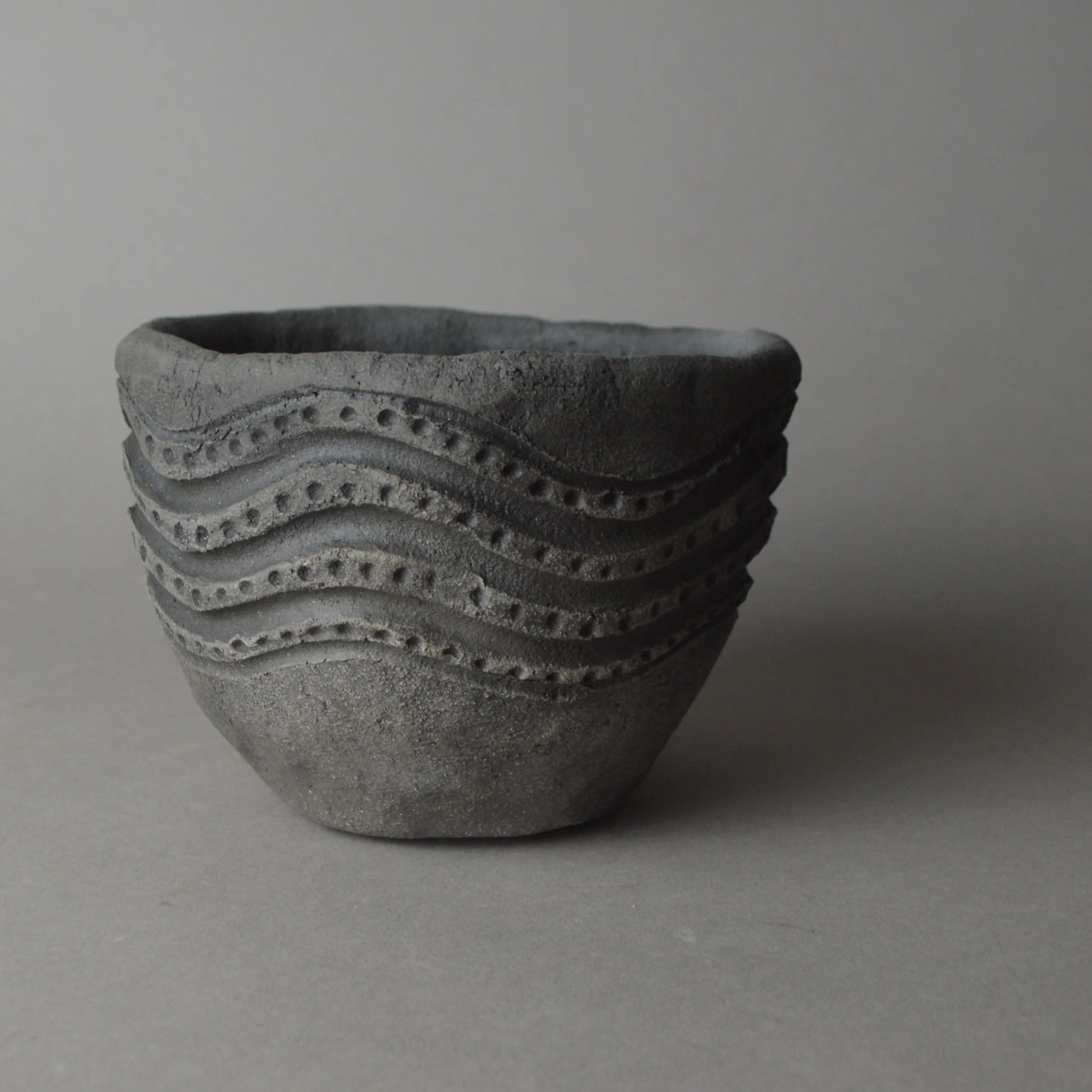
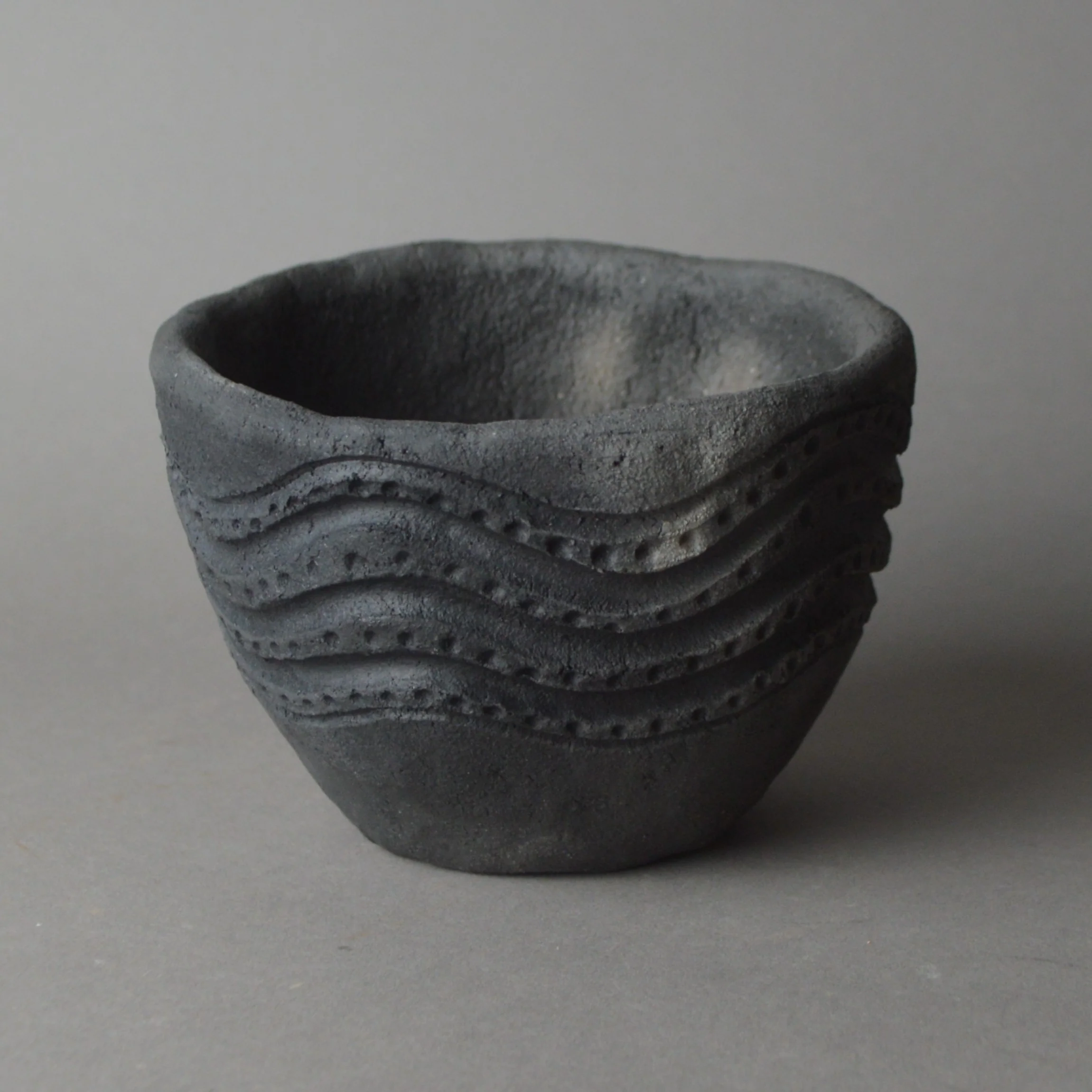
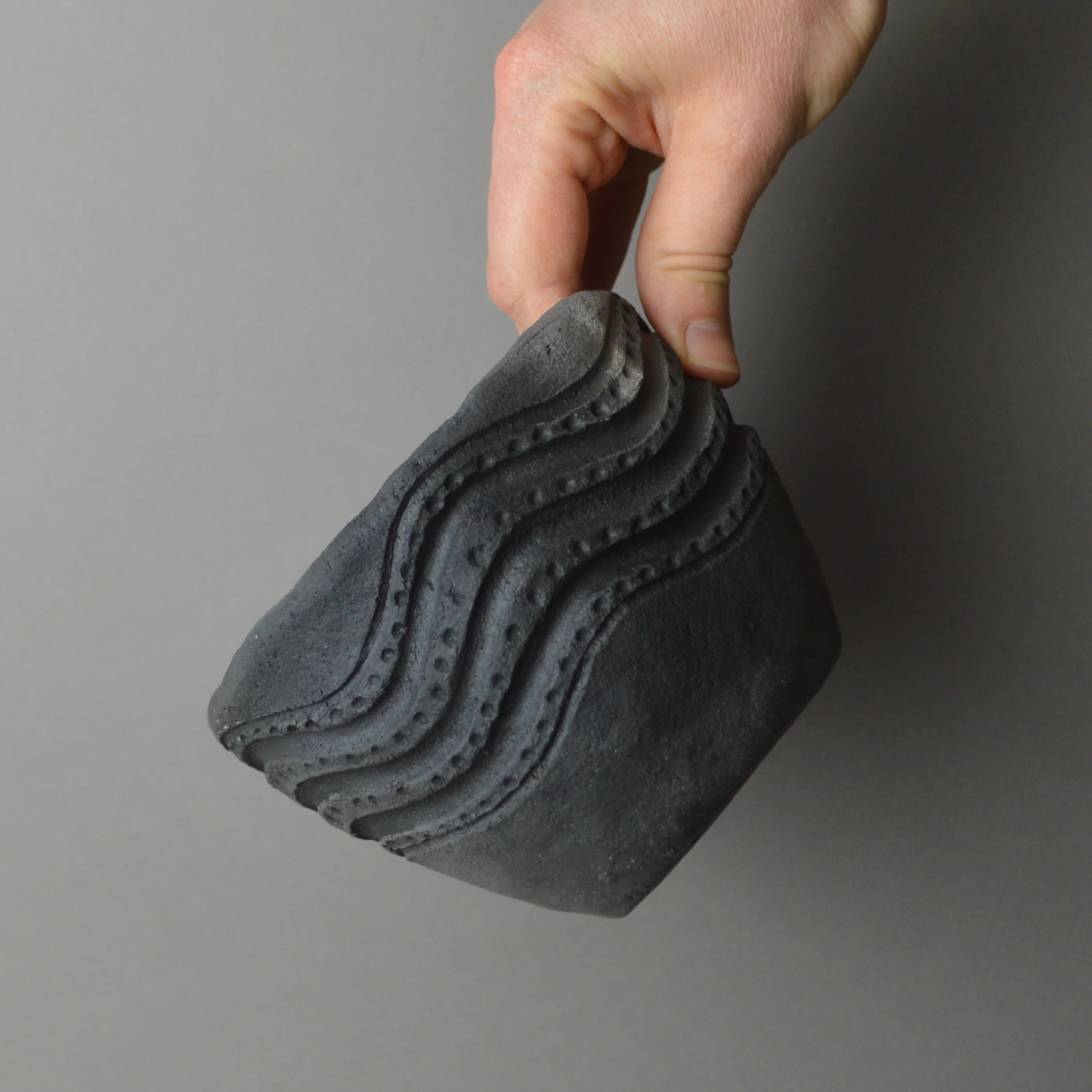
Tregele, Anglesey Grooved Ware.
Handcrafted Replica Neolithic Pot – A Fragment of Welsh History
Details
This museum-quality replica is inspired by a remarkable Neolithic discovery near the village of Tregele, in north Anglesey, Wales, where excavations during the Wylfa Newydd nuclear development revealed traces of life dating back over 4,000 years.
Among the most exciting finds was a pit containing sherds of Grooved Ware pottery—a rare and significant discovery in Wales. These pots, found alongside a reworked flint flake, were interpreted by archaeologists as possibly used in ceremonial or ritual contexts, aligning with patterns observed at other Neolithic sites across Britain. Whether for cooking communal meals, serving drinks during feasts, or making ritual offerings, Grooved Ware vessels played a central role in Neolithic life.
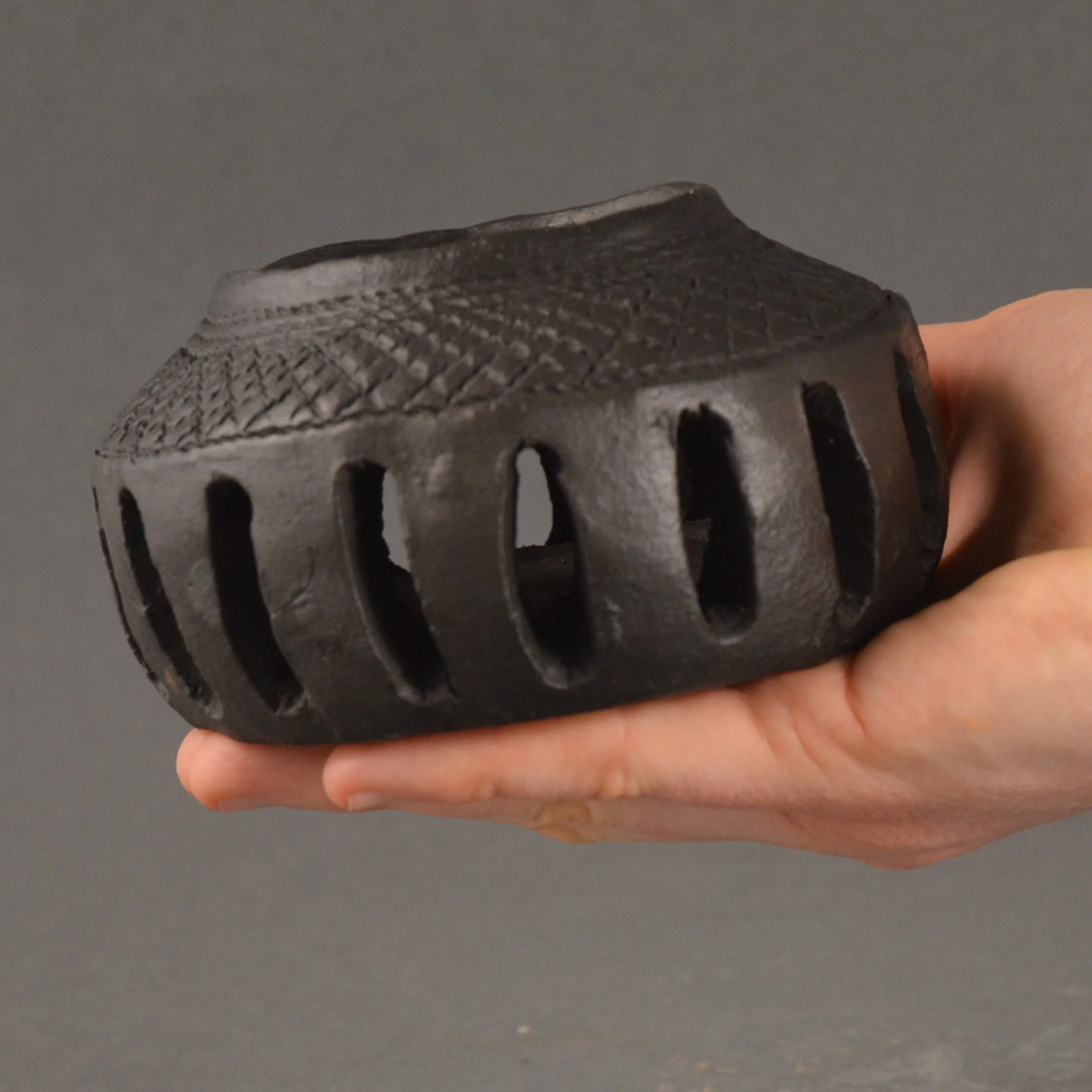
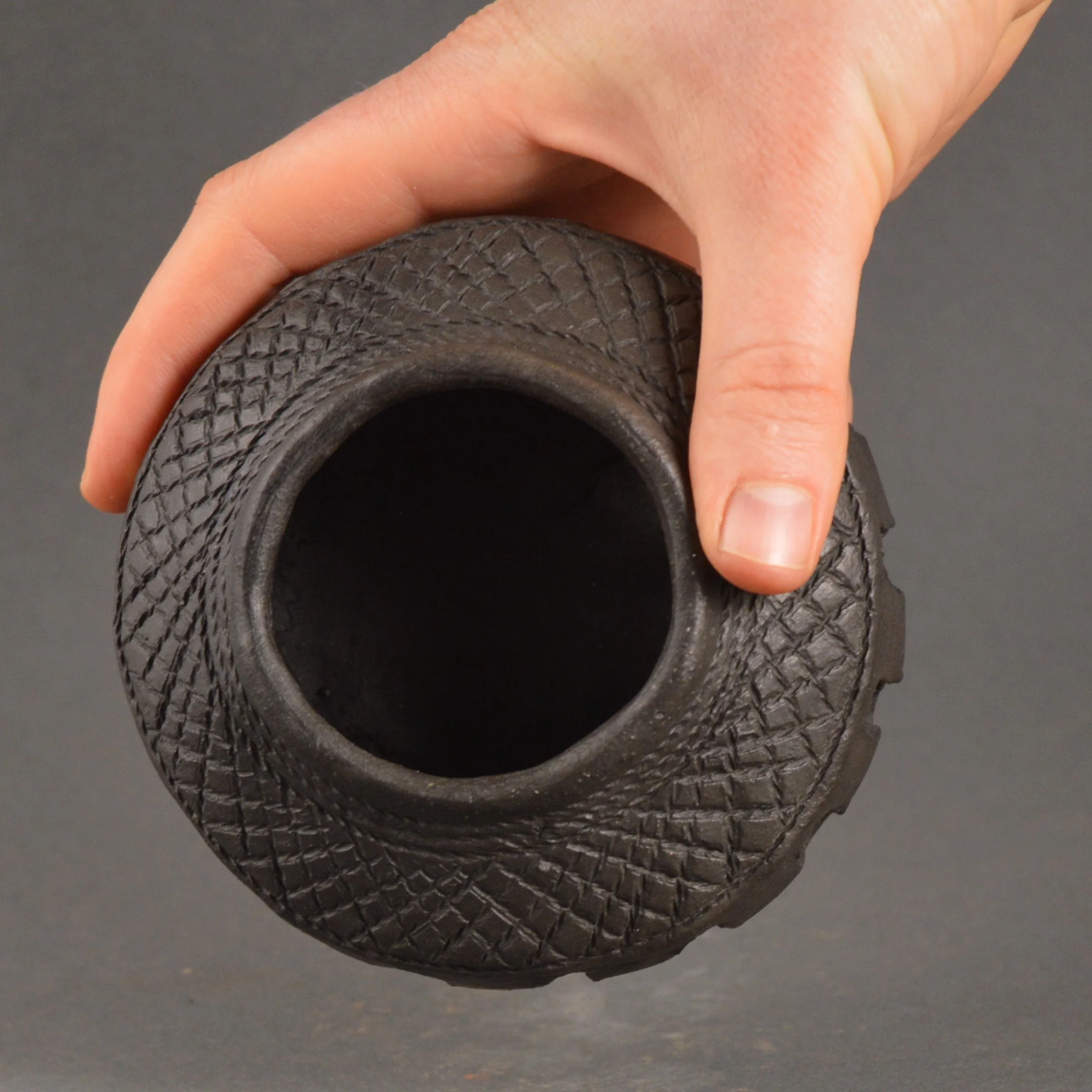
The form of pottery found at Tregele belongs to the Woodlands style, a distinctive type of Grooved Ware noted for its refined craftsmanship, thin walls, and elegant surface decoration. This style often features repeating bands of incised patterns that form a lattice or net-like design, thought by some to represent woven basketry. At the intersections of these lines, potters would sometimes press small clay knobs—possibly symbolising knots or joints in a basket weave.
While we may never know the full symbolism behind these designs, they hint at a deep cultural meaning—perhaps referencing ideas of unity, abundance, or the harvest. The artistry of Grooved Ware and its spread across the British Isles suggests a shared symbolic or social language that was emerging during the Late Neolithic period.
Grooved Ware dates to around 3000–2400 BCE, and is believed to have originated in Orkney, later spreading south into England, Wales, and Ireland. Unlike earlier Neolithic styles such as Peterborough Ware, which were largely region-specific, Grooved Ware marks a shift toward a more unified ceramic tradition, hinting at increasingly connected communities and shared practices across prehistoric Britain.
The discovery at Tregele adds to our understanding of Neolithic Wales's participation in this wider cultural movement, and with this replica, we hope to honour that connection.
Materials
Hand-built terracotta clay, reduction fired
Dimensions
Approx. 100 mm tall, 140 mm diameter
Production & Firing
This pot has been hand-built from natural clay using replica Neolithic tools, including implements made from bone, wood, antler, and stone. Its decorative patterns were applied using techniques that replicate the skilled work of Grooved Ware potters 4000 years ago.
It has been fired in a wood-fuelled environment to replicate the appearance of open fire pits used in Neolithic times. While ancient pots were typically fired at low temperatures, making them fragile, this replica has been fired at a slightly higher temperature to improve durability while maintaining an authentic surface finish. Variations in tone and texture are a natural result of this process, ensuring that each vessel is unique.
Health & Safety
Museum-Quality Replica: Made using the tools and techniques that would have been used during the Neolithic era.
Not food safe: This is an unglazed and porous vessel, meaning it will absorb the flavours, oils, and moisture of its contents. As such, it does not meet modern health and safety standards for food or drink use.
For display and experimental archaeology use only: Some enthusiasts may choose to use this pot for reenactment or experimental cooking, but do so at their own risk.
In Neolithic households, food safety was ensured by heating the pot and its contents to over 70°C for at least 10 minutes, with 100°C or more providing even greater protection.
Ordering Information
'Add to Basket' Items: Ready to ship immediately.
'Pre-order' Items: Handmade to order within 90 days (longer for international orders). If your order includes both 'Add to Basket' and 'Pre-order' items, they will be shipped together once all items are ready.
Shipping
All items are sent via second-class postal service as standard.
If you require first-class shipping, please get in touch with us for a custom quote.
Postage Note: All items are carefully packaged to ensure they arrive in perfect condition.
A beautifully crafted tribute to a shared prehistoric heritage, this Tregele-inspired Grooved Ware bowl brings the ceremonial life of Late Neolithic Wales into your hands.
Product Information
Product Information
Shipping & Returns
Shipping & Returns
Description
Handcrafted Replica Neolithic Pot – A Fragment of Welsh History
Details
This museum-quality replica is inspired by a remarkable Neolithic discovery near the village of Tregele, in north Anglesey, Wales, where excavations during the Wylfa Newydd nuclear development revealed traces of life dating back over 4,000 years.
Among the most exciting finds was a pit containing sherds of Grooved Ware pottery—a rare and significant discovery in Wales. These pots, found alongside a reworked flint flake, were interpreted by archaeologists as possibly used in ceremonial or ritual contexts, aligning with patterns observed at other Neolithic sites across Britain. Whether for cooking communal meals, serving drinks during feasts, or making ritual offerings, Grooved Ware vessels played a central role in Neolithic life.
The form of pottery found at Tregele belongs to the Woodlands style, a distinctive type of Grooved Ware noted for its refined craftsmanship, thin walls, and elegant surface decoration. This style often features repeating bands of incised patterns that form a lattice or net-like design, thought by some to represent woven basketry. At the intersections of these lines, potters would sometimes press small clay knobs—possibly symbolising knots or joints in a basket weave.
While we may never know the full symbolism behind these designs, they hint at a deep cultural meaning—perhaps referencing ideas of unity, abundance, or the harvest. The artistry of Grooved Ware and its spread across the British Isles suggests a shared symbolic or social language that was emerging during the Late Neolithic period.
Grooved Ware dates to around 3000–2400 BCE, and is believed to have originated in Orkney, later spreading south into England, Wales, and Ireland. Unlike earlier Neolithic styles such as Peterborough Ware, which were largely region-specific, Grooved Ware marks a shift toward a more unified ceramic tradition, hinting at increasingly connected communities and shared practices across prehistoric Britain.
The discovery at Tregele adds to our understanding of Neolithic Wales's participation in this wider cultural movement, and with this replica, we hope to honour that connection.
Materials
Hand-built terracotta clay, reduction fired
Dimensions
Approx. 100 mm tall, 140 mm diameter
Production & Firing
This pot has been hand-built from natural clay using replica Neolithic tools, including implements made from bone, wood, antler, and stone. Its decorative patterns were applied using techniques that replicate the skilled work of Grooved Ware potters 4000 years ago.
It has been fired in a wood-fuelled environment to replicate the appearance of open fire pits used in Neolithic times. While ancient pots were typically fired at low temperatures, making them fragile, this replica has been fired at a slightly higher temperature to improve durability while maintaining an authentic surface finish. Variations in tone and texture are a natural result of this process, ensuring that each vessel is unique.
Health & Safety
Museum-Quality Replica: Made using the tools and techniques that would have been used during the Neolithic era.
Not food safe: This is an unglazed and porous vessel, meaning it will absorb the flavours, oils, and moisture of its contents. As such, it does not meet modern health and safety standards for food or drink use.
For display and experimental archaeology use only: Some enthusiasts may choose to use this pot for reenactment or experimental cooking, but do so at their own risk.
In Neolithic households, food safety was ensured by heating the pot and its contents to over 70°C for at least 10 minutes, with 100°C or more providing even greater protection.
Ordering Information
'Add to Basket' Items: Ready to ship immediately.
'Pre-order' Items: Handmade to order within 90 days (longer for international orders). If your order includes both 'Add to Basket' and 'Pre-order' items, they will be shipped together once all items are ready.
Shipping
All items are sent via second-class postal service as standard.
If you require first-class shipping, please get in touch with us for a custom quote.
Postage Note: All items are carefully packaged to ensure they arrive in perfect condition.
A beautifully crafted tribute to a shared prehistoric heritage, this Tregele-inspired Grooved Ware bowl brings the ceremonial life of Late Neolithic Wales into your hands.