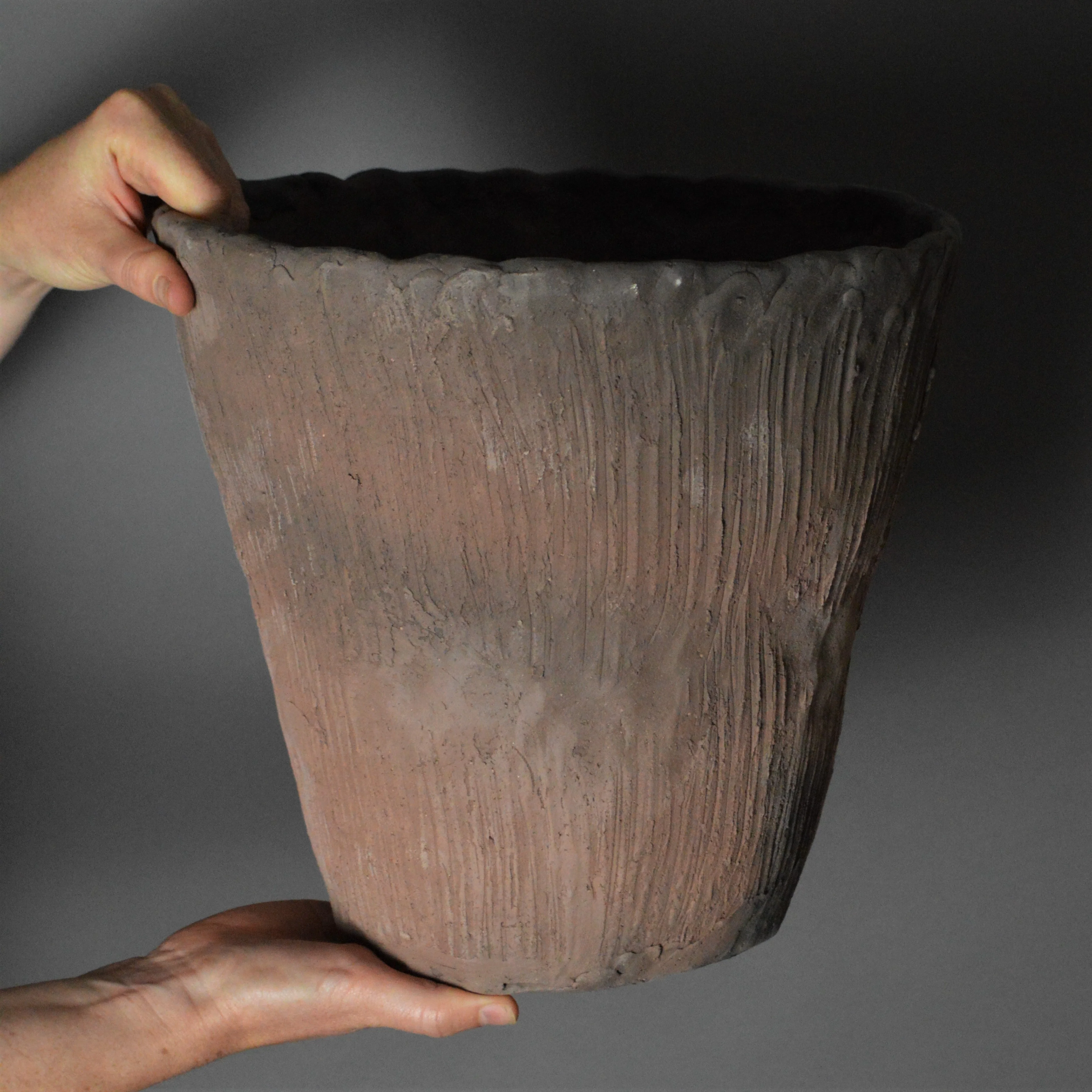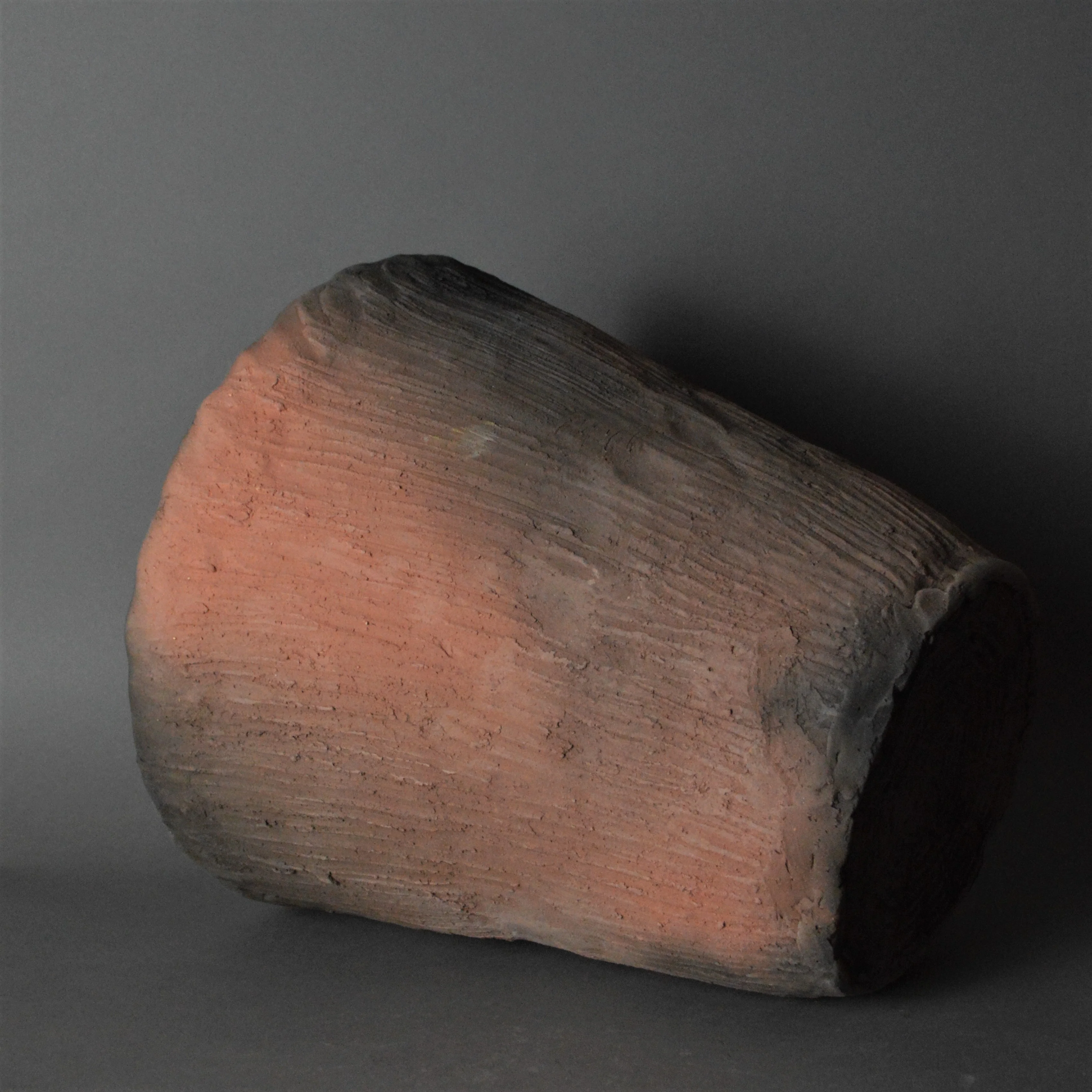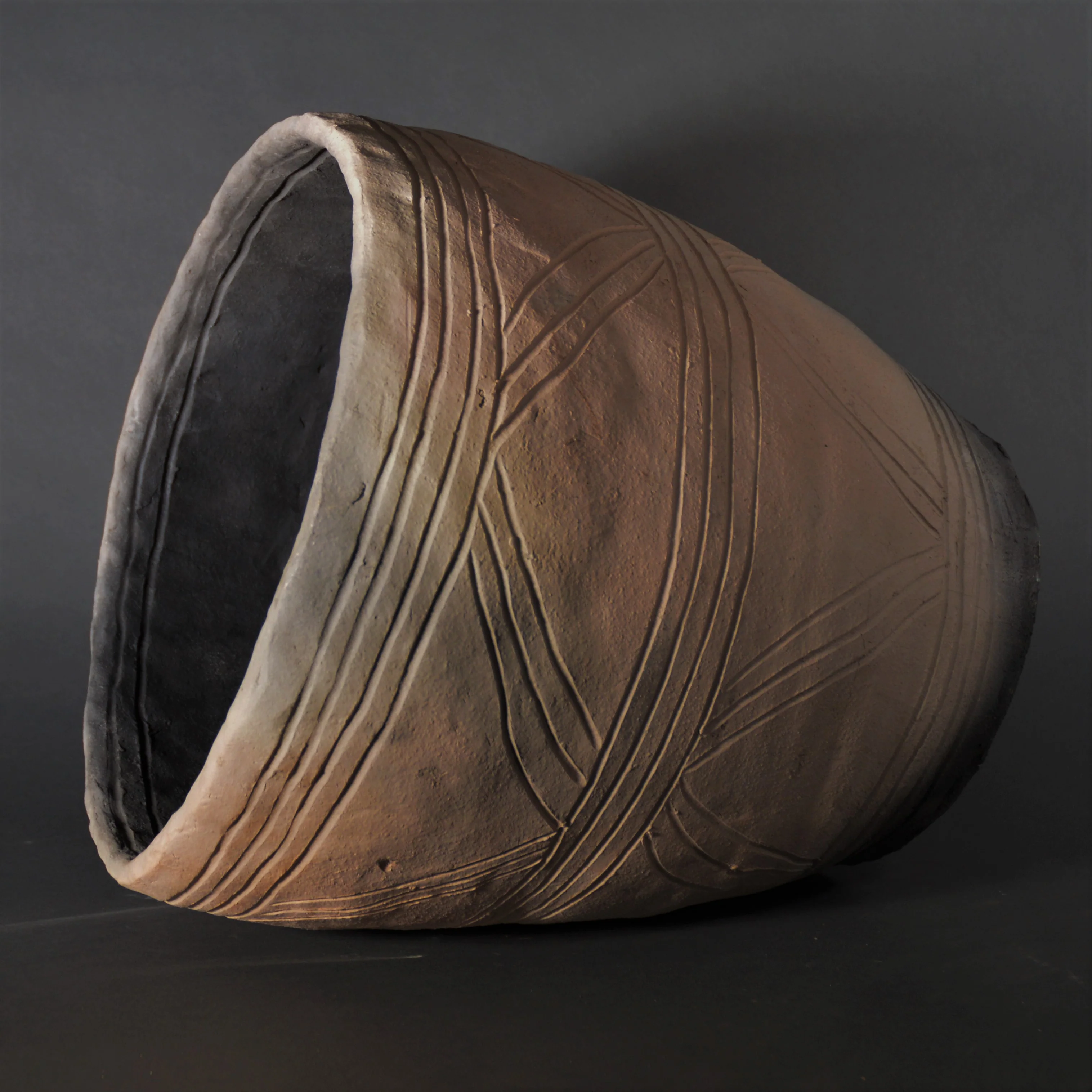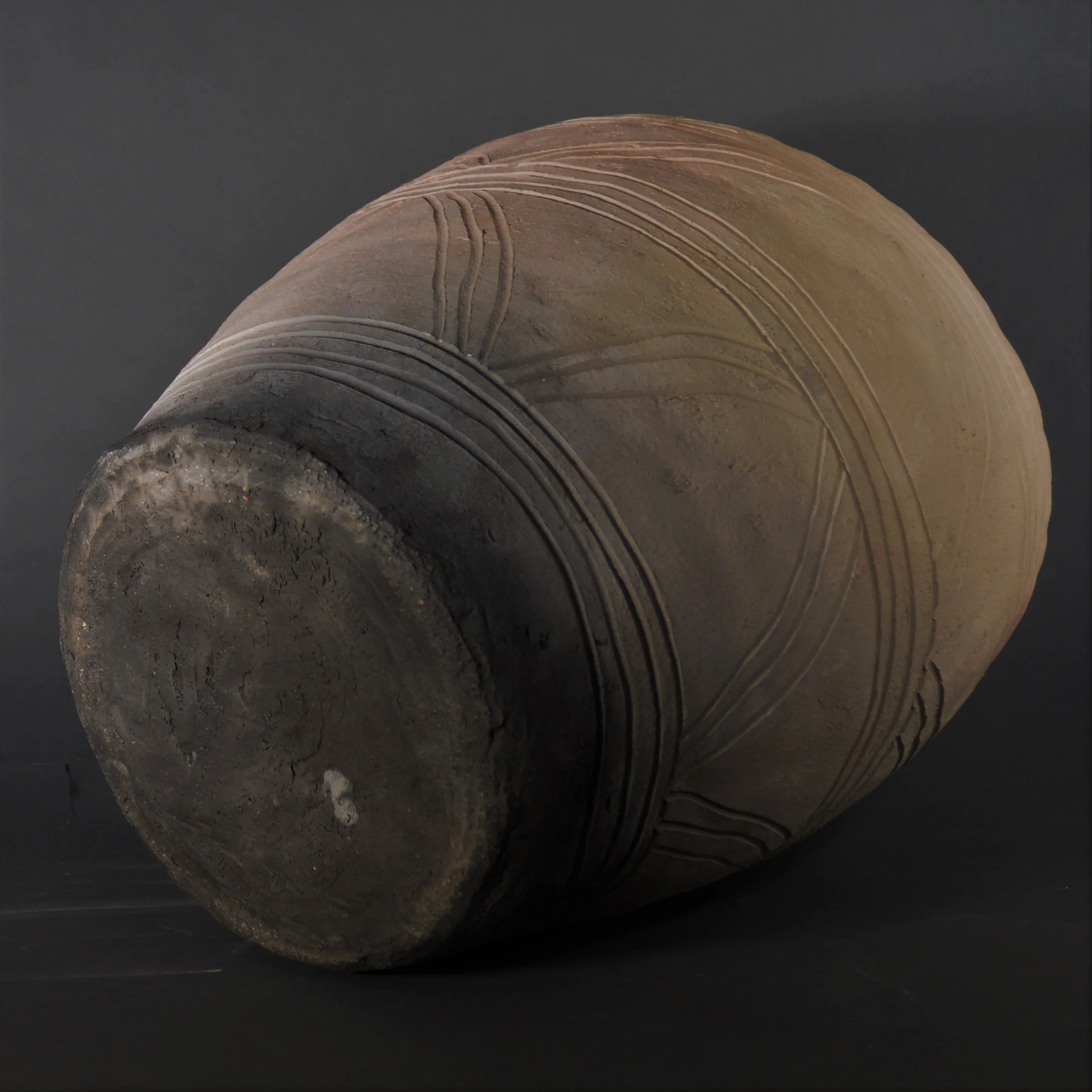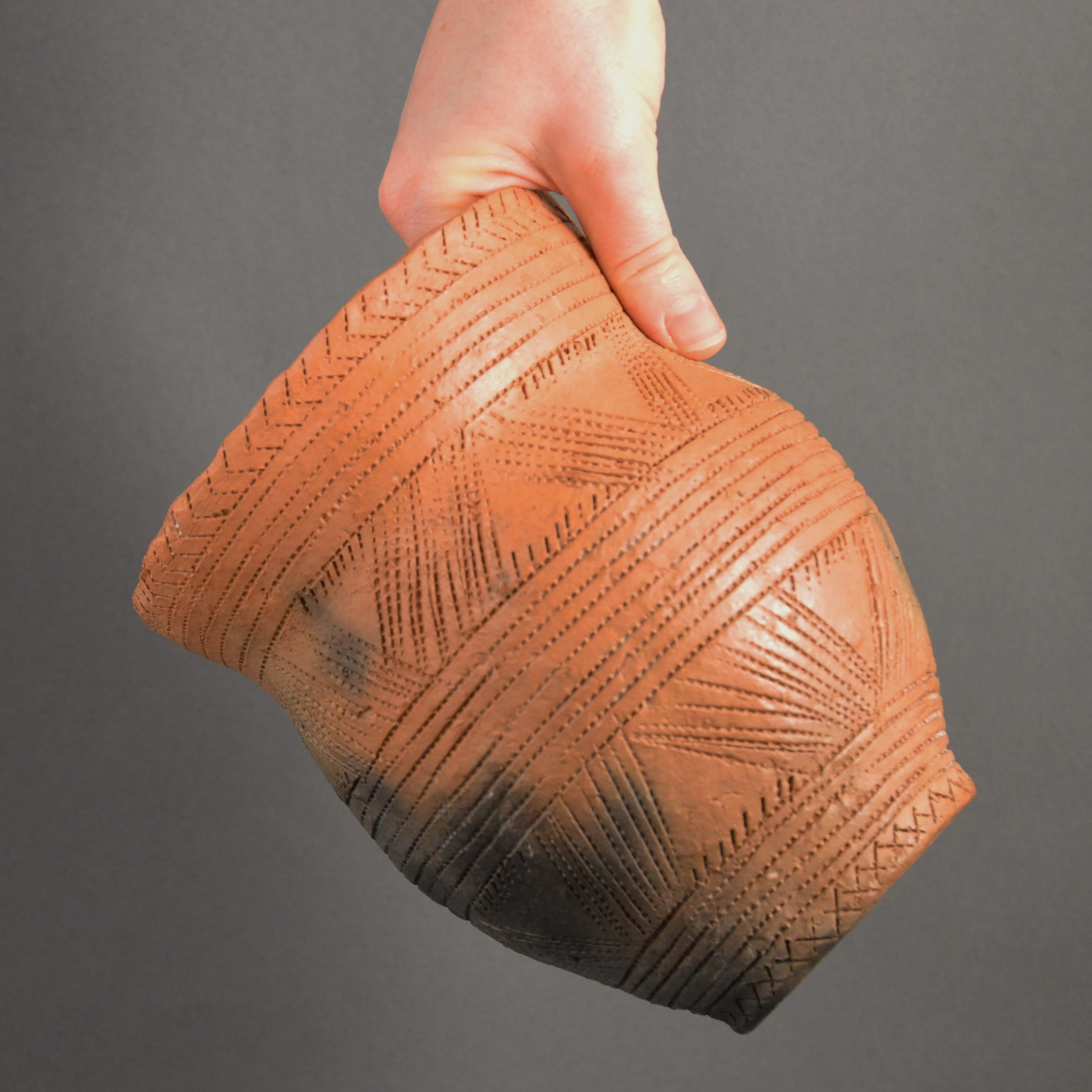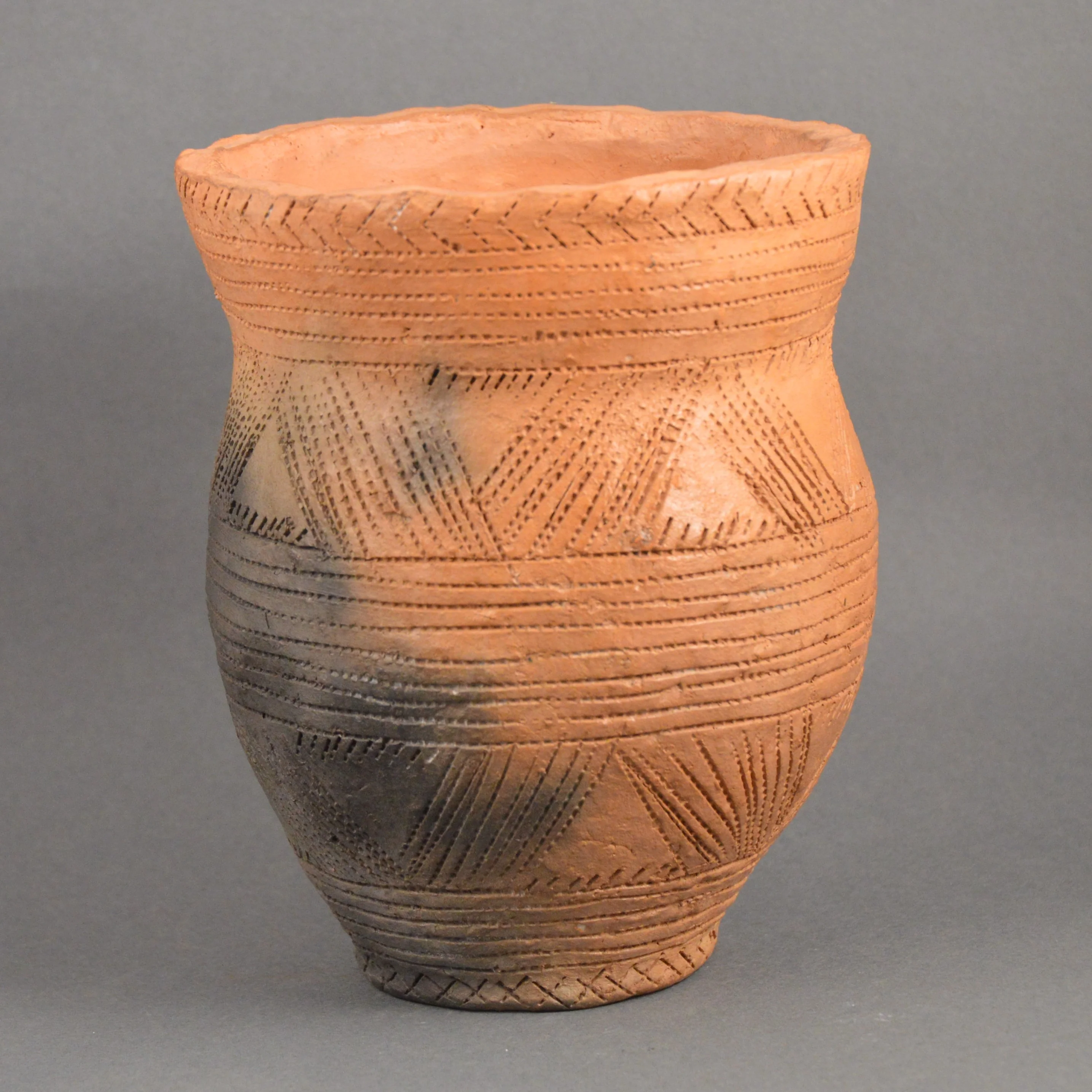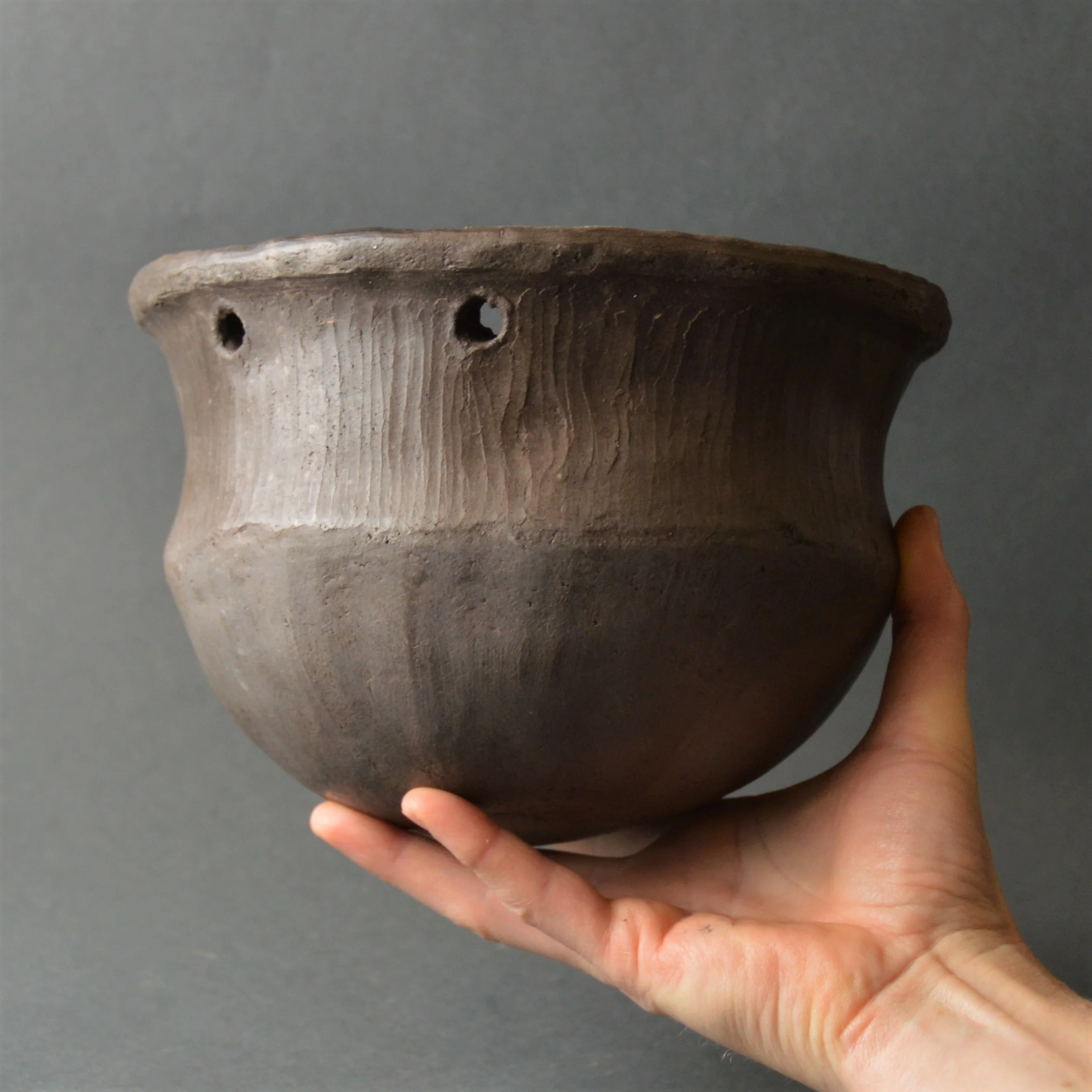
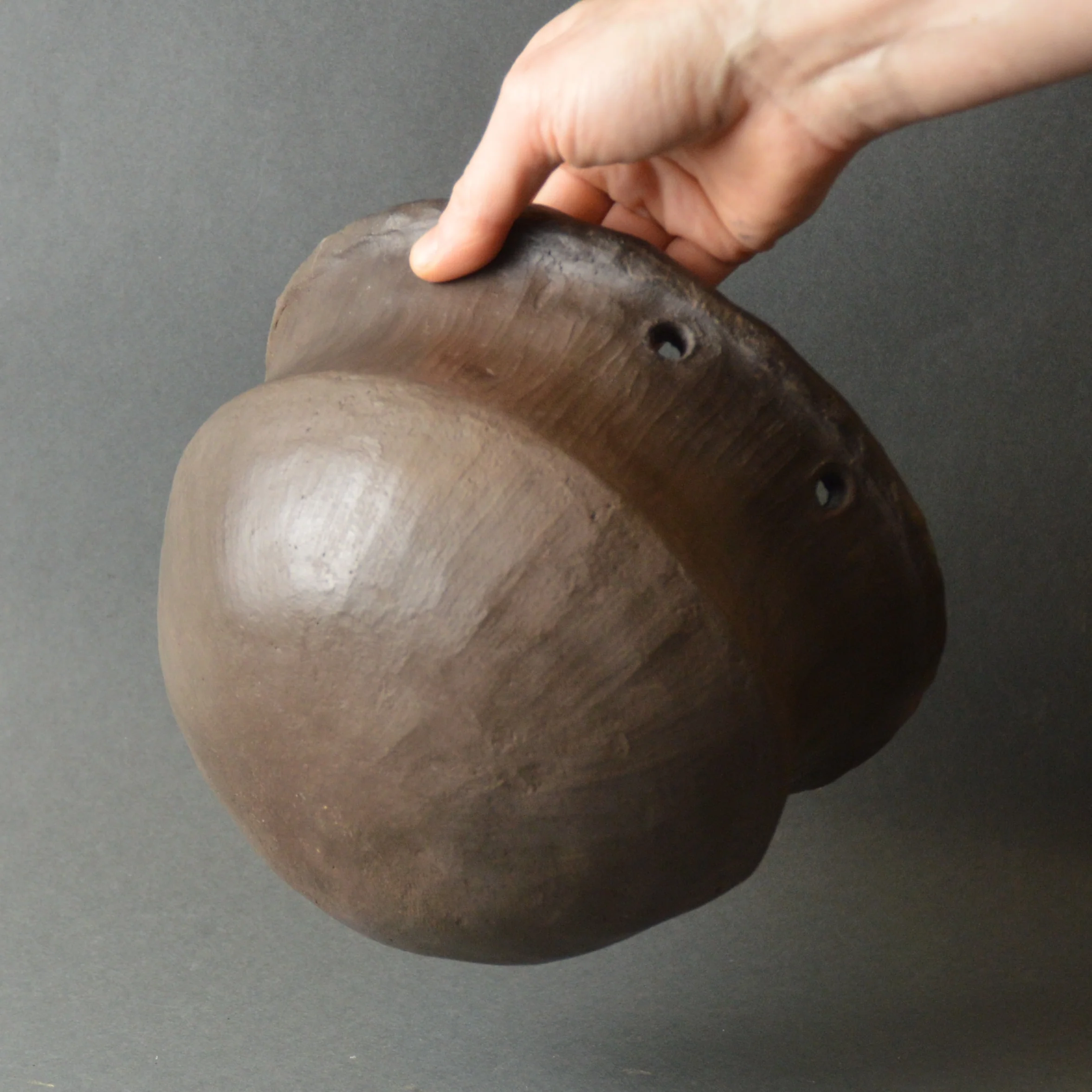
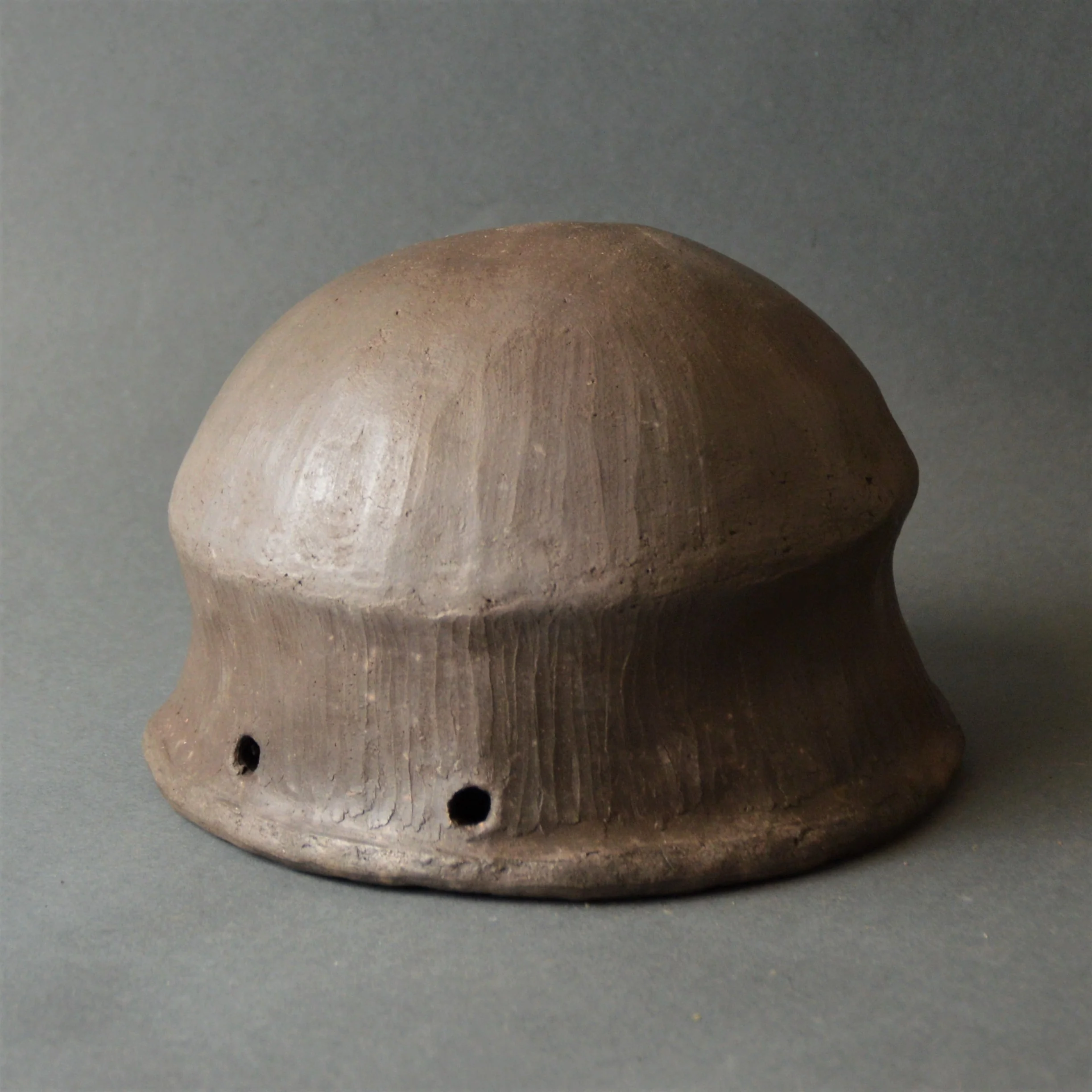
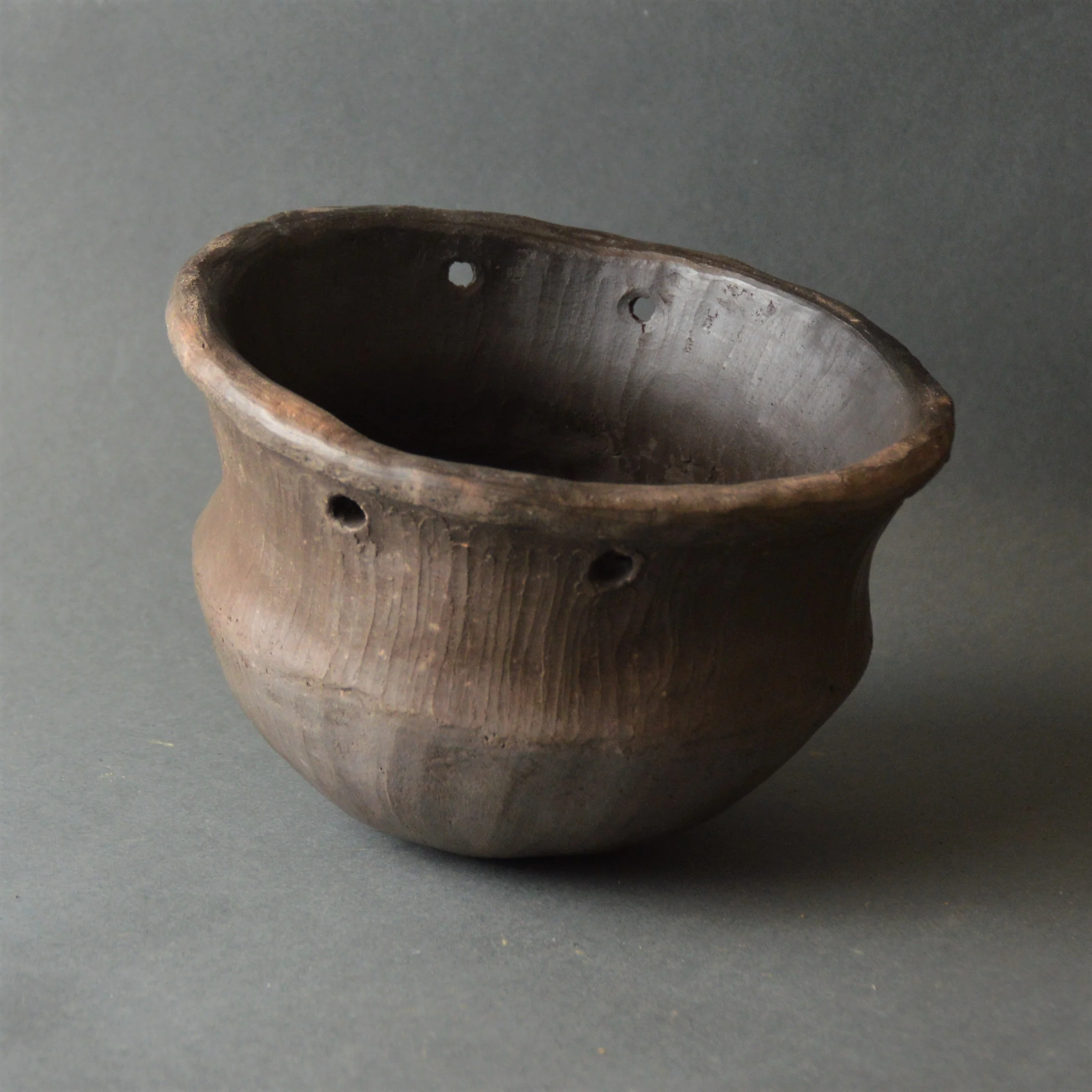
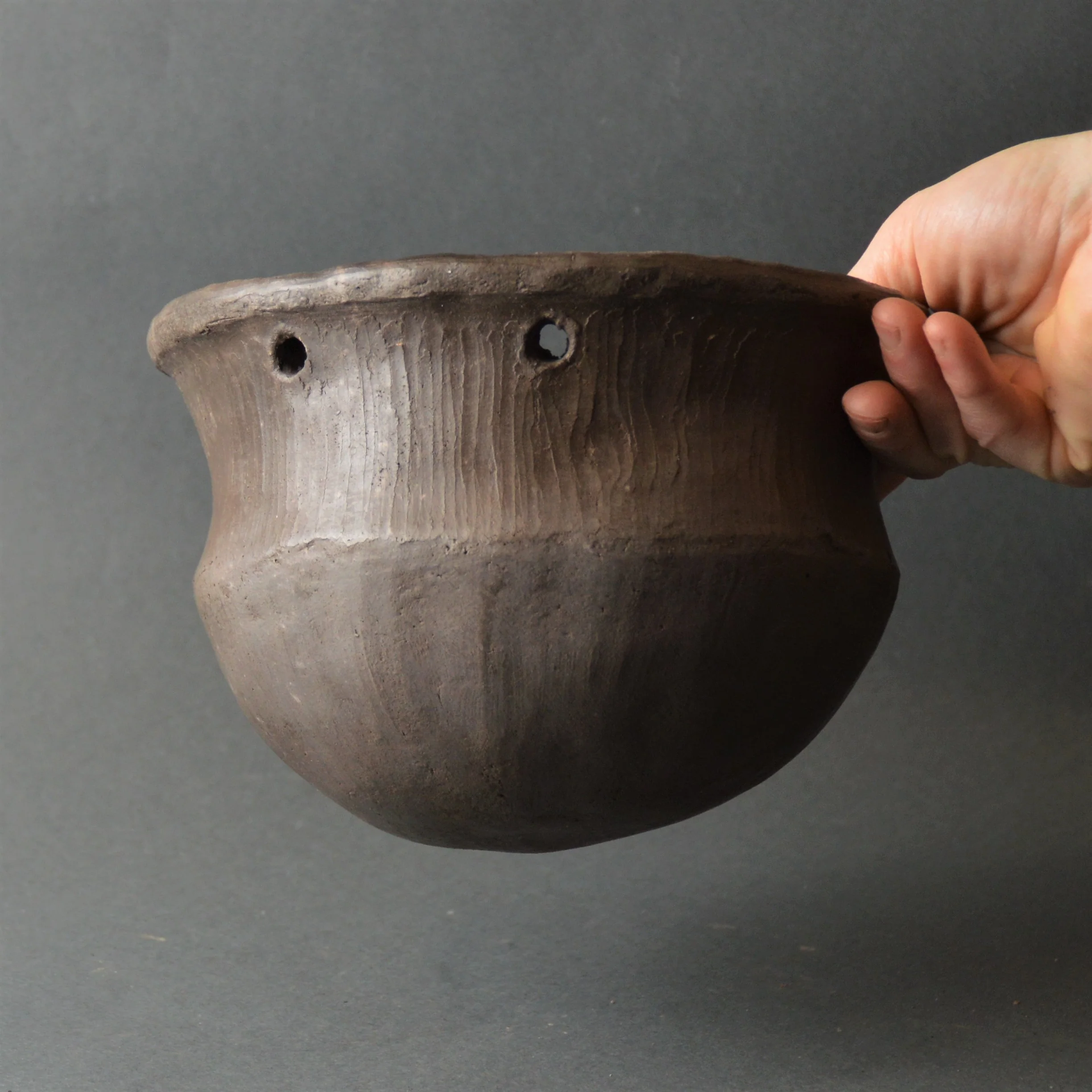
Grimston Bowl
Handcrafted Replica Neolithic Grimston-Style Carinated Bowl – Inspired by the Earliest British Pottery
Details
The population of Britain has seen many changes throughout human history, with various groups settling, thriving, and eventually assimilating or being replaced by new waves of inhabitants eager to take advantage of the riches of the British Isles.
Around 6,000 years ago, people began to settle into communities and farm the land for the first time in British history. With these Neolithic communities came the introduction of beautifully handcrafted ceramic vessels for cooking and storing food supplies.
One significant region that has revealed early pottery evidence is Hanging Grimston, North Yorkshire, where some of the first pots known in Britain have been discovered. This distinctive pottery style, named Grimston Ware, takes its name from this invaluable archaeological site (though it is not to be confused with the medieval style of Grimston Ware—a testament to the site’s long history of human habitation).
Grimston Ware, along with Windmill Hill Ware and Carinated Bowls, began to appear around 4000-3500 BCE, influencing the development of other round-bottomed Neolithic pottery styles, such as:
- Mortlake Bowls
- Unstan Ware
- Abingdon Ware
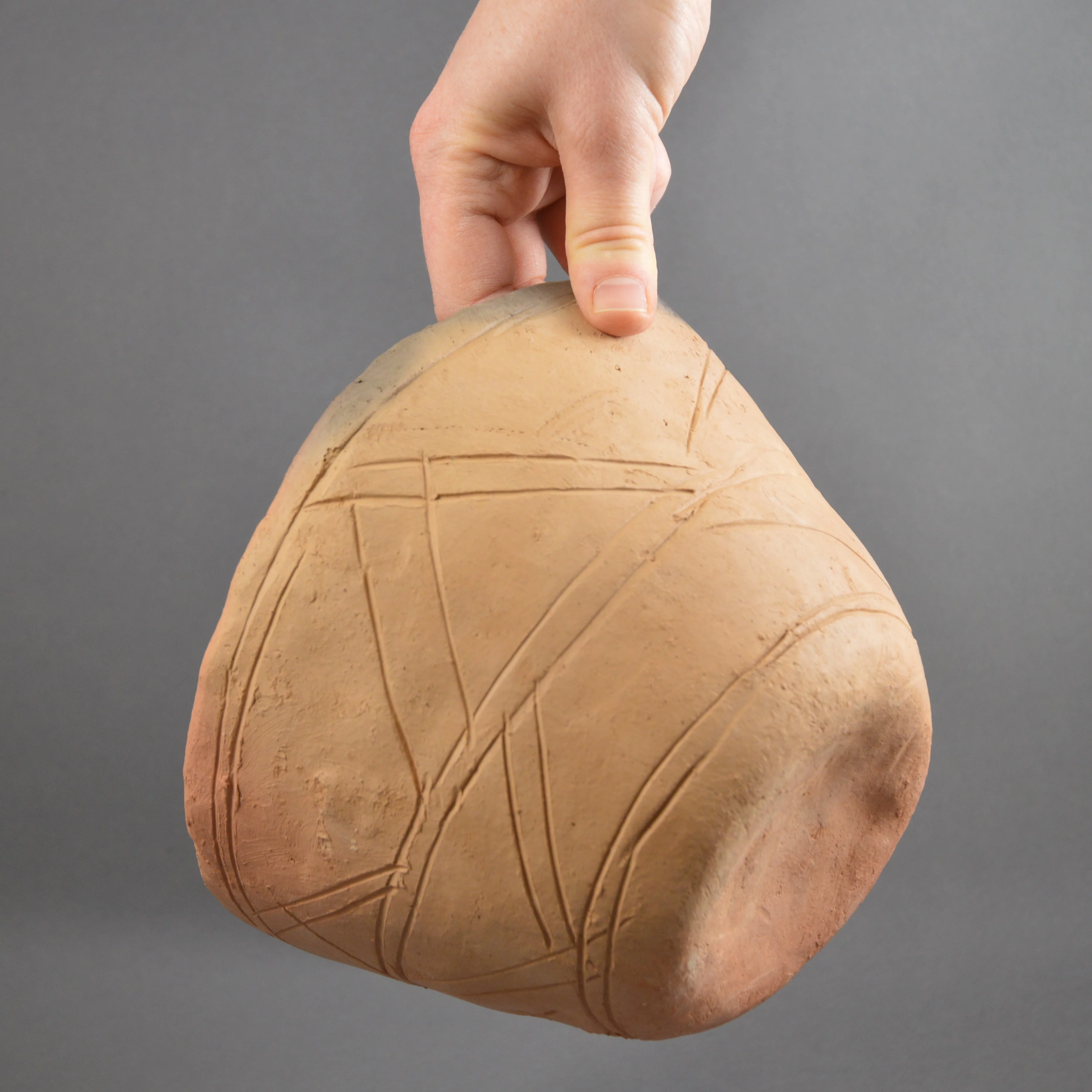
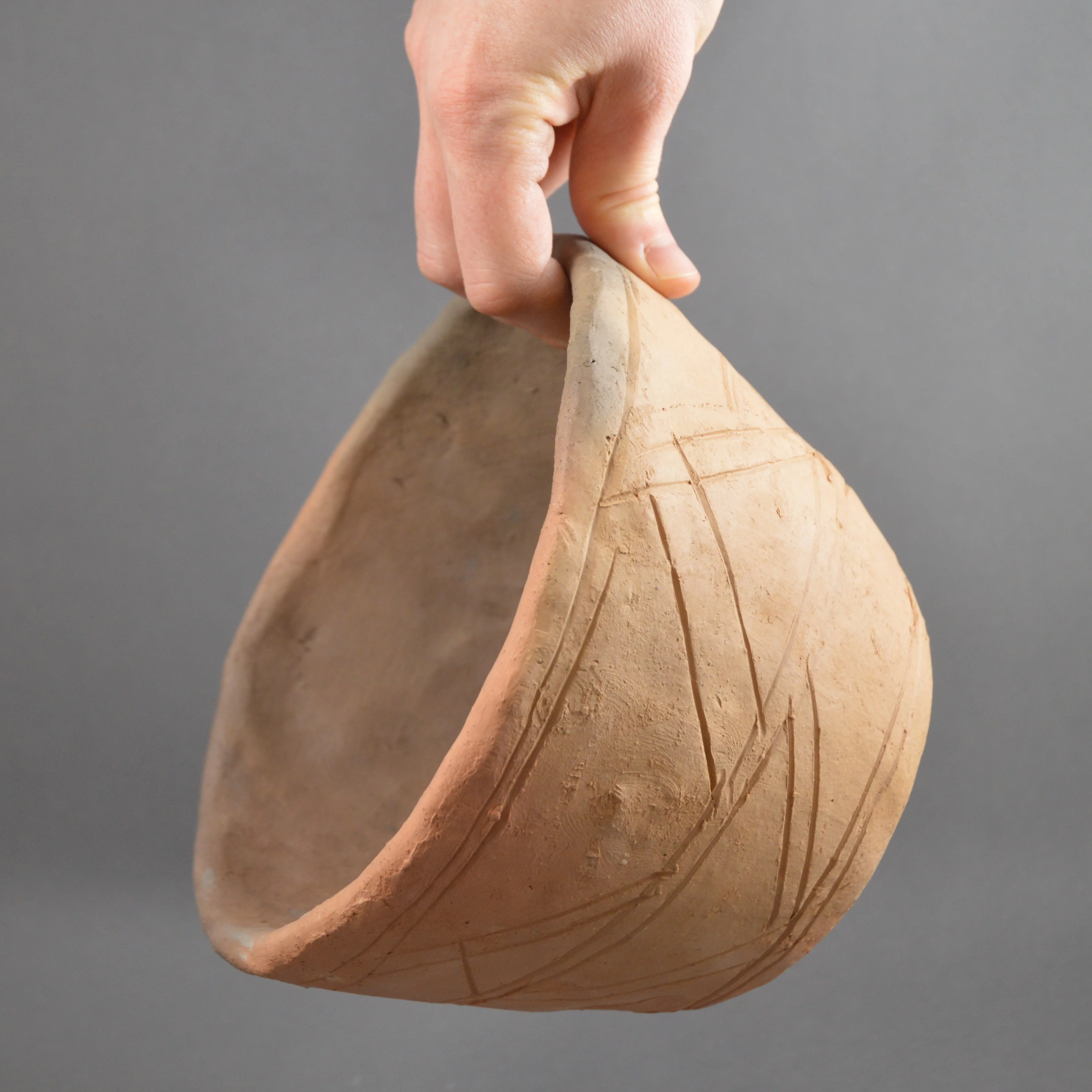
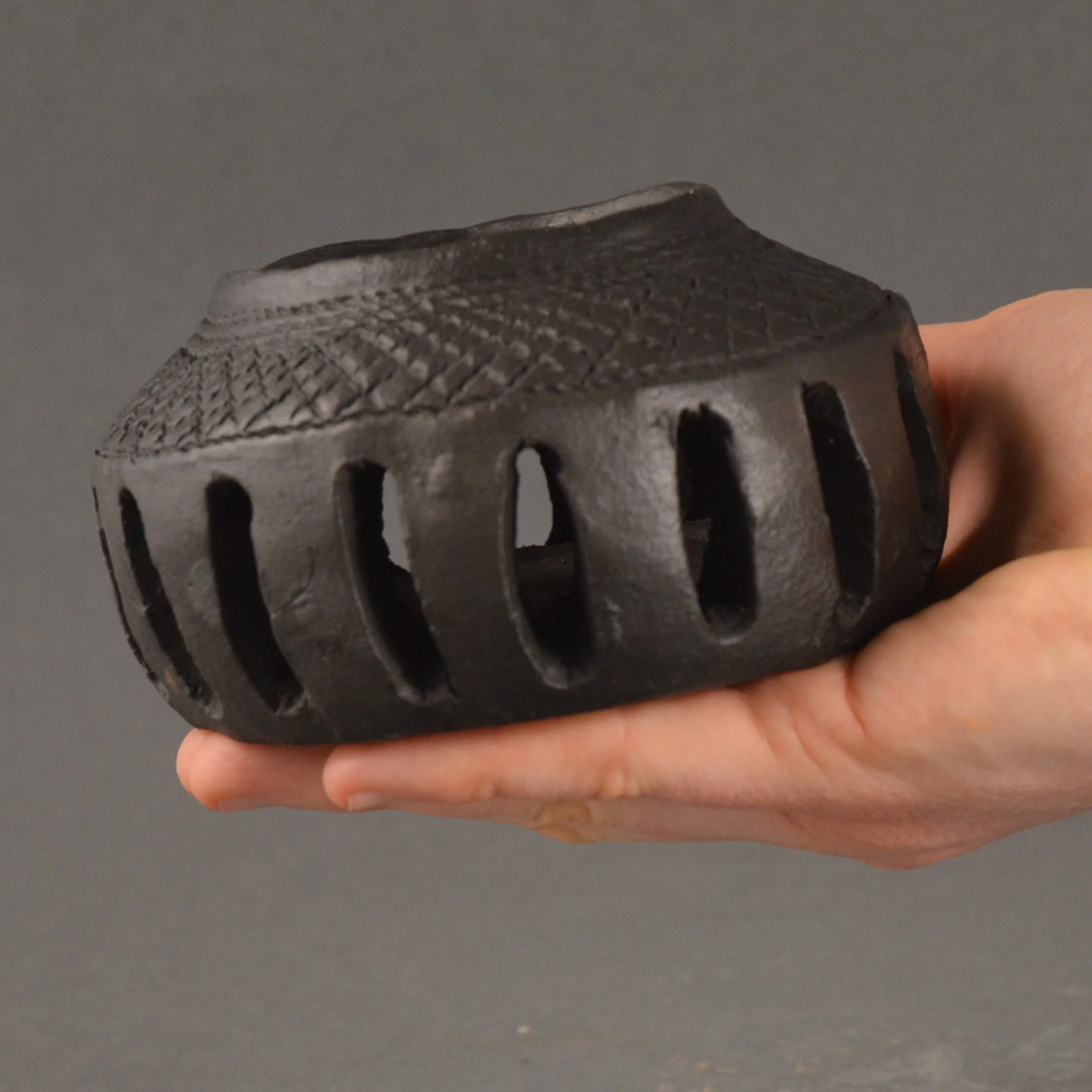
These early pottery forms are distinctive for their minimal decoration and curved bottoms, lending them a simple yet elegant aesthetic. Their rounded bases allowed them to sit comfortably in the embers of an open fire or on uneven surfaces, making them a perfect marriage of form and function.
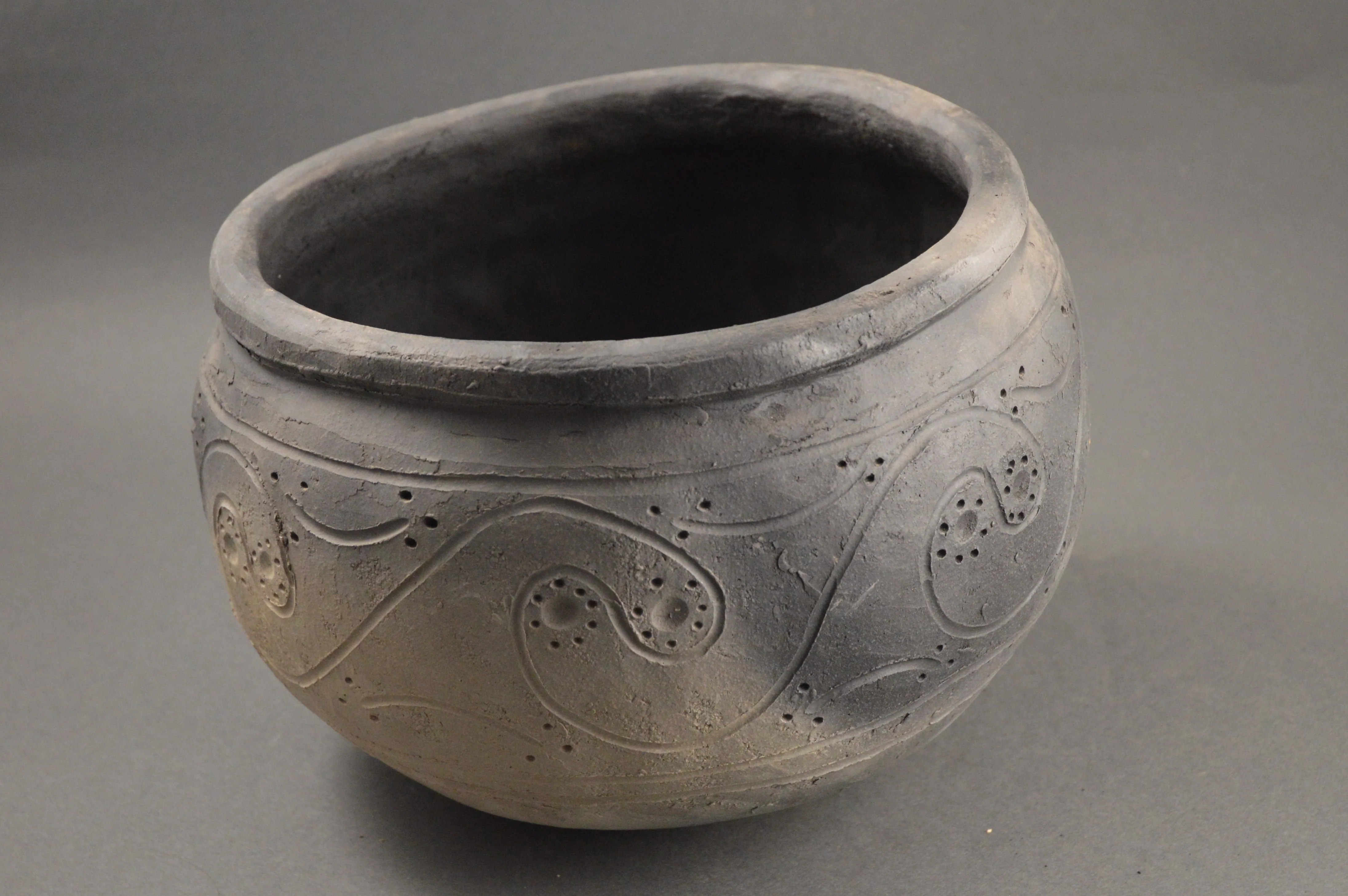
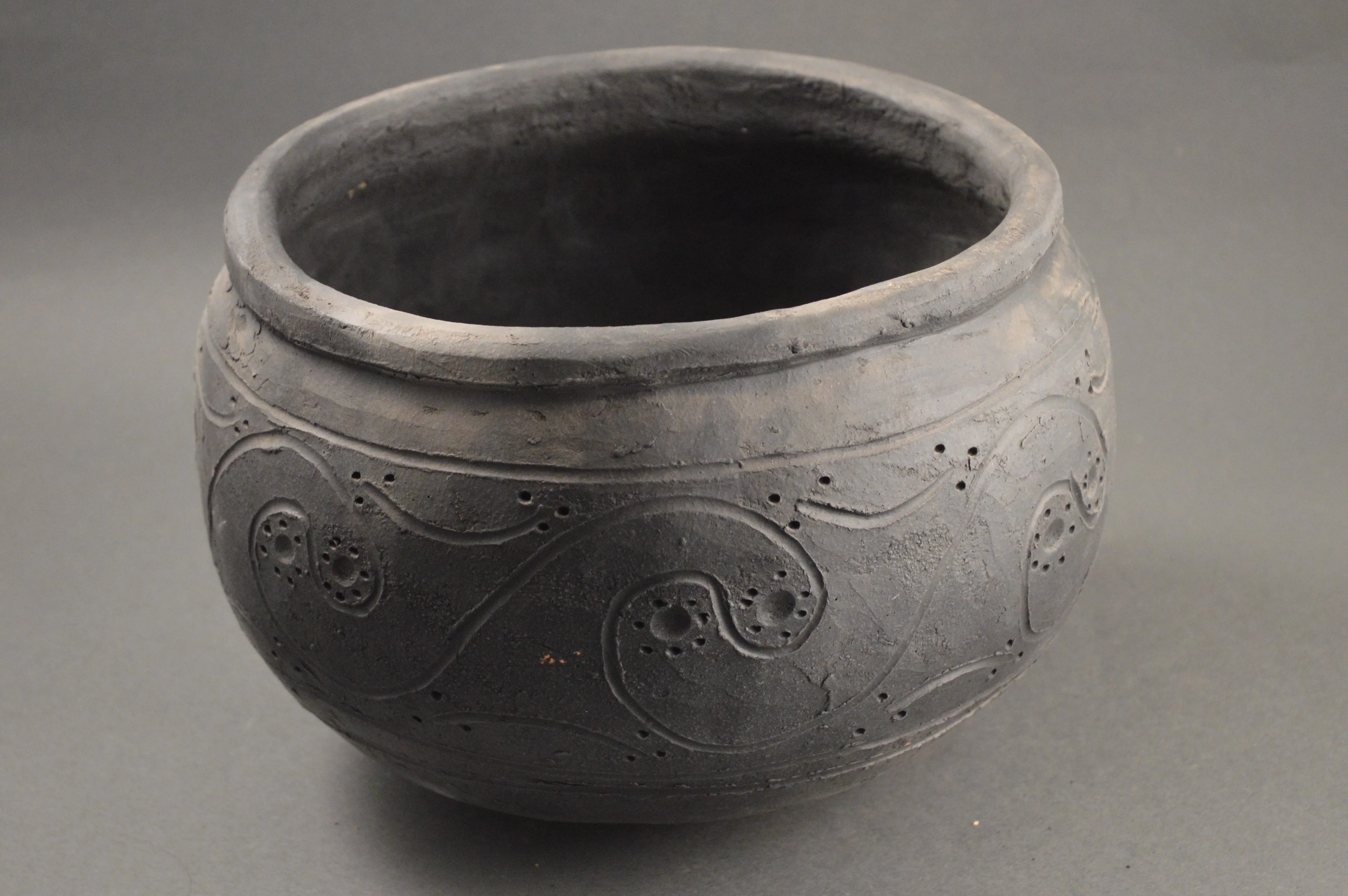
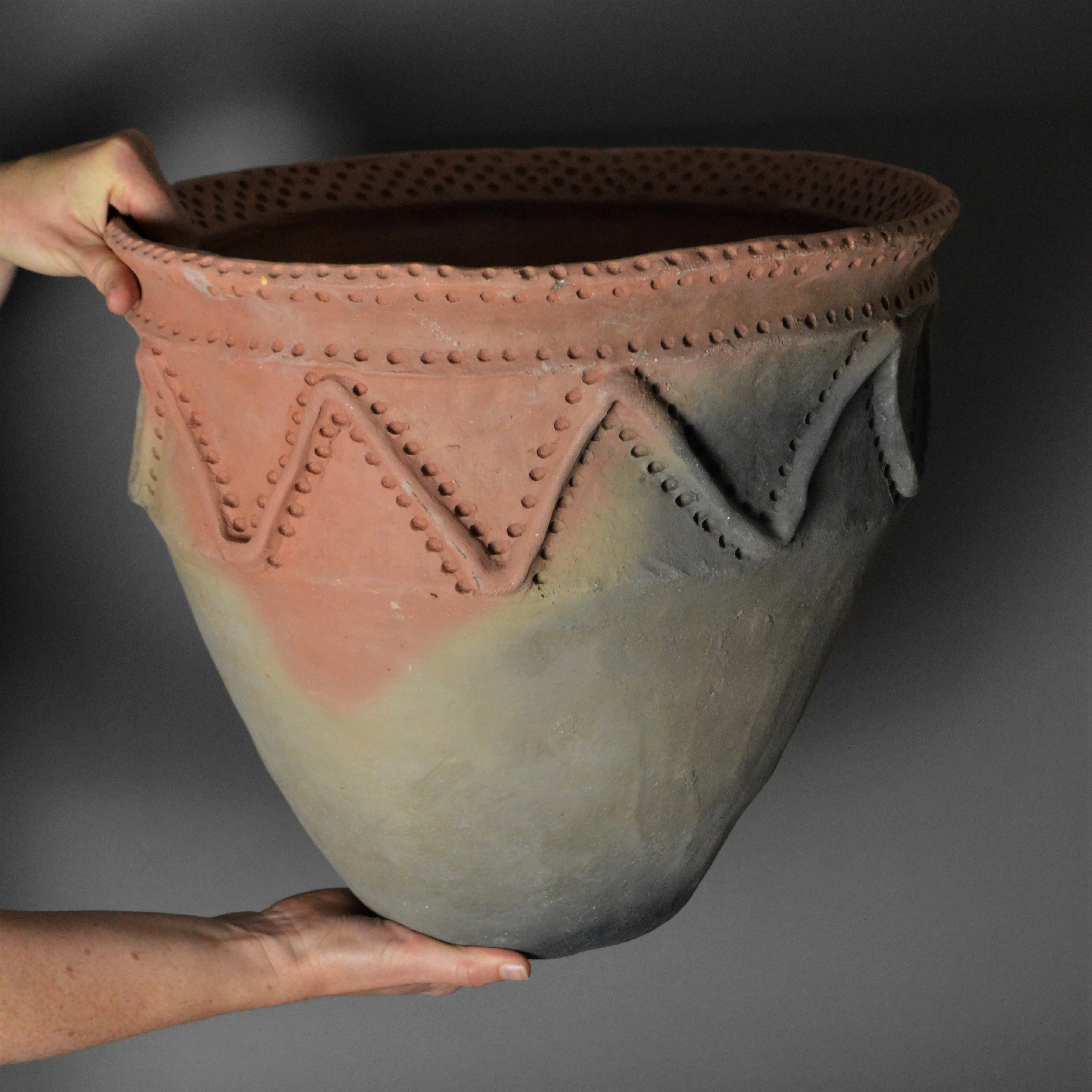
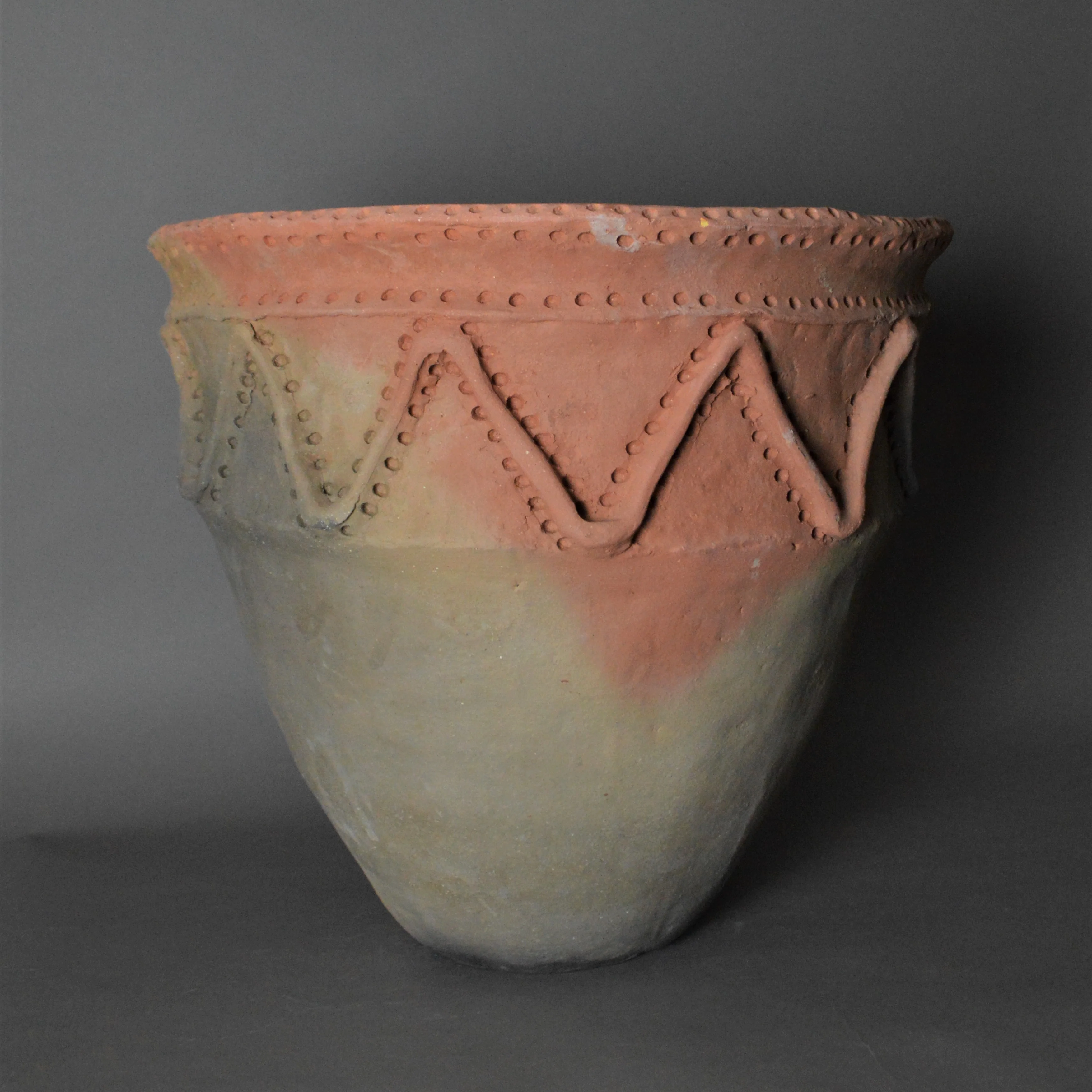
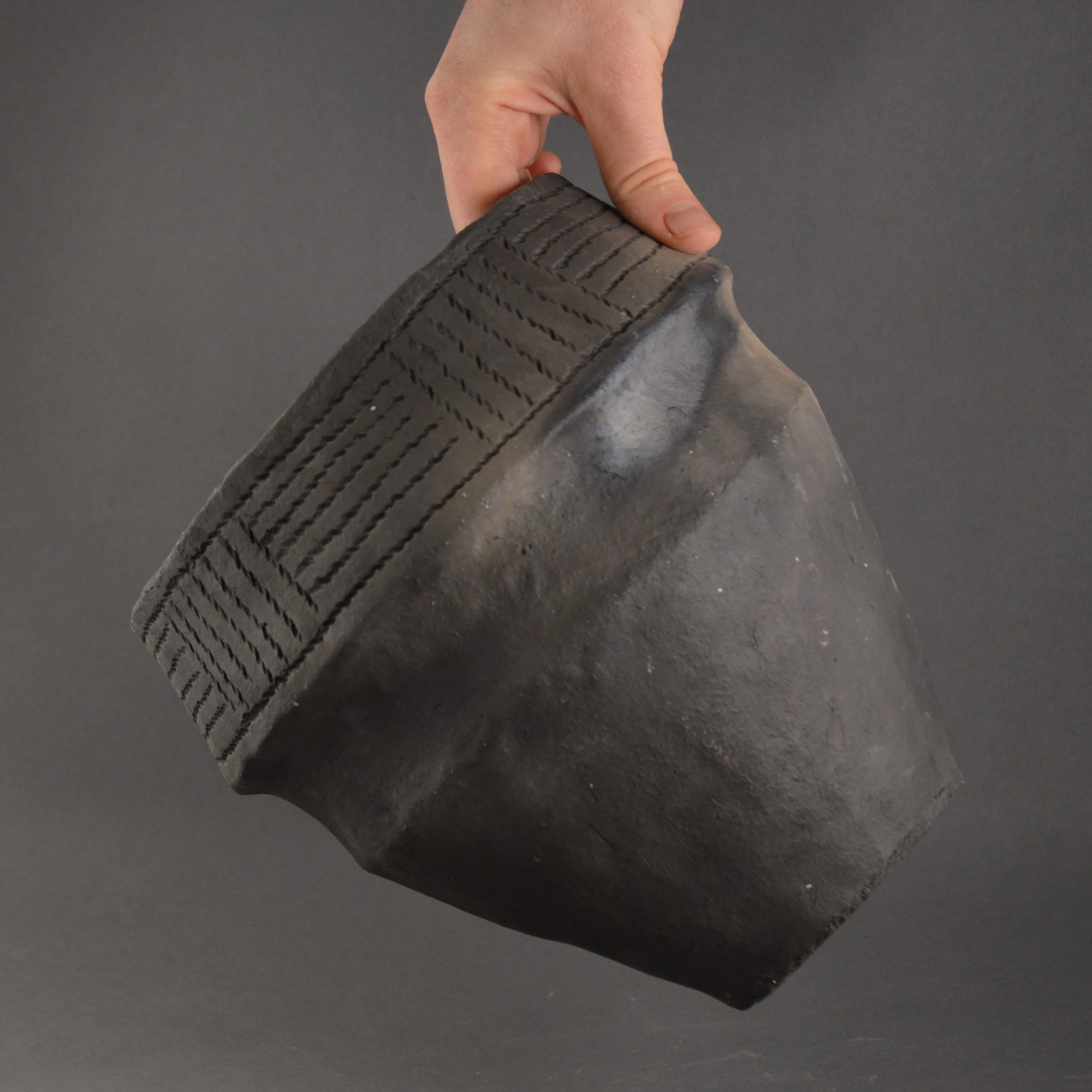
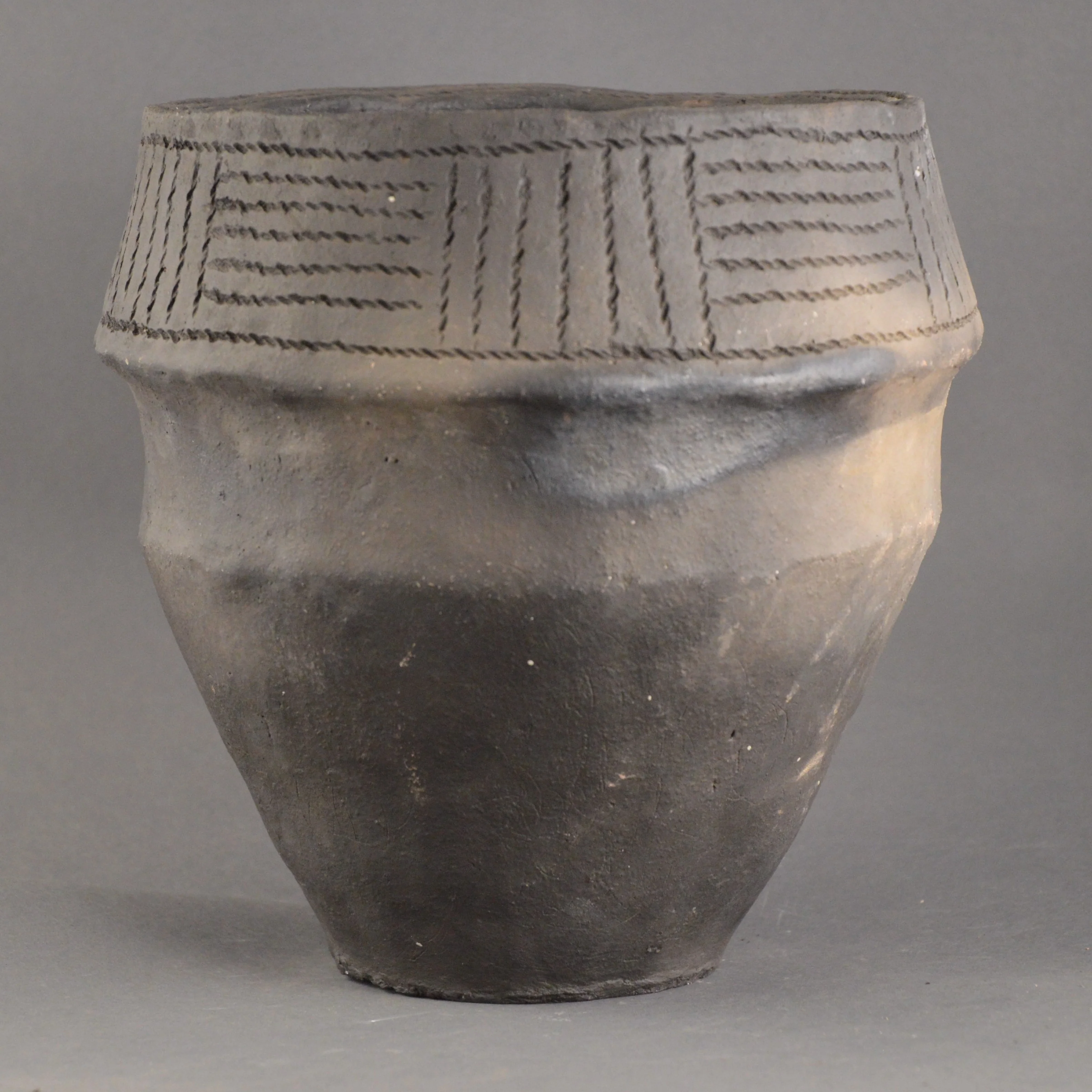
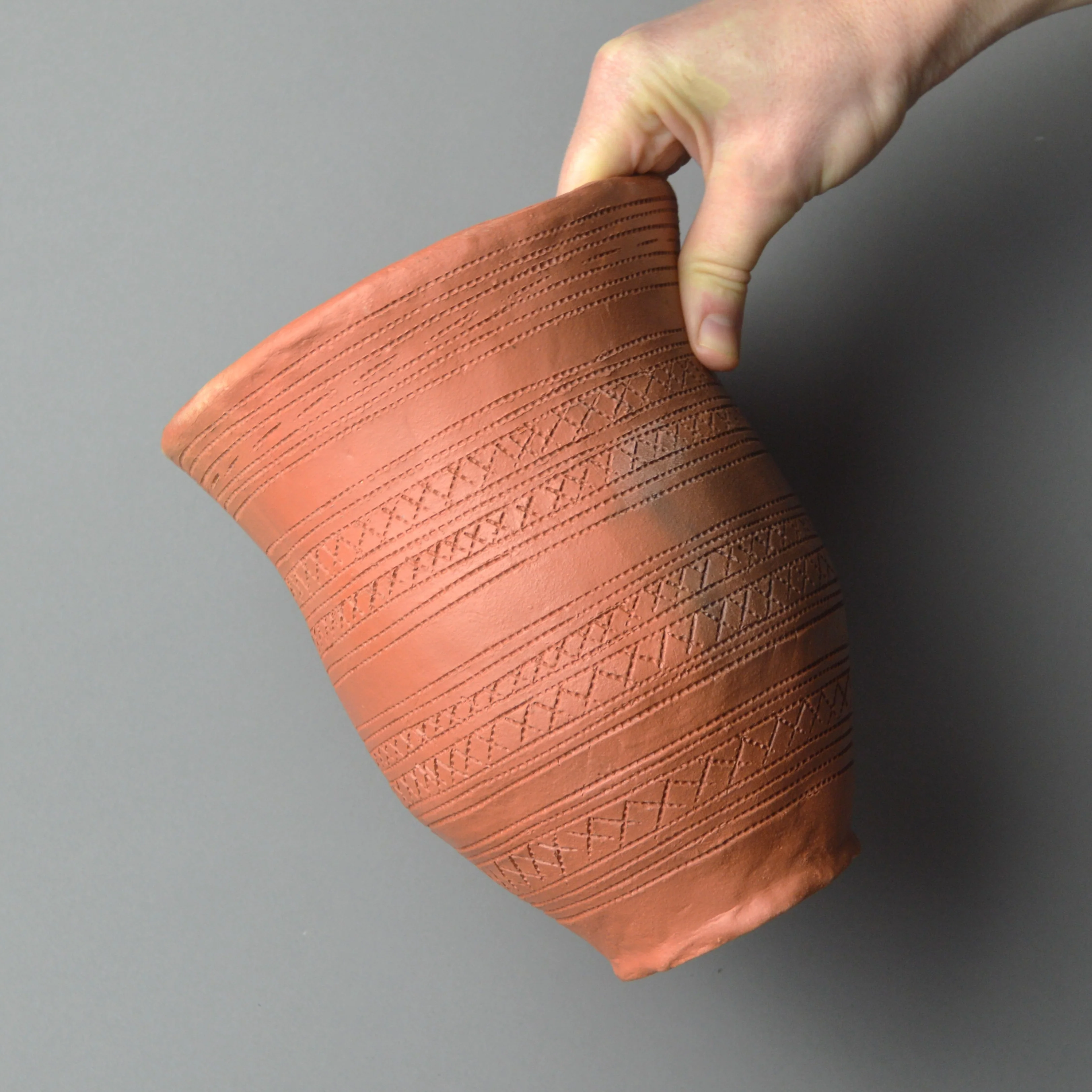
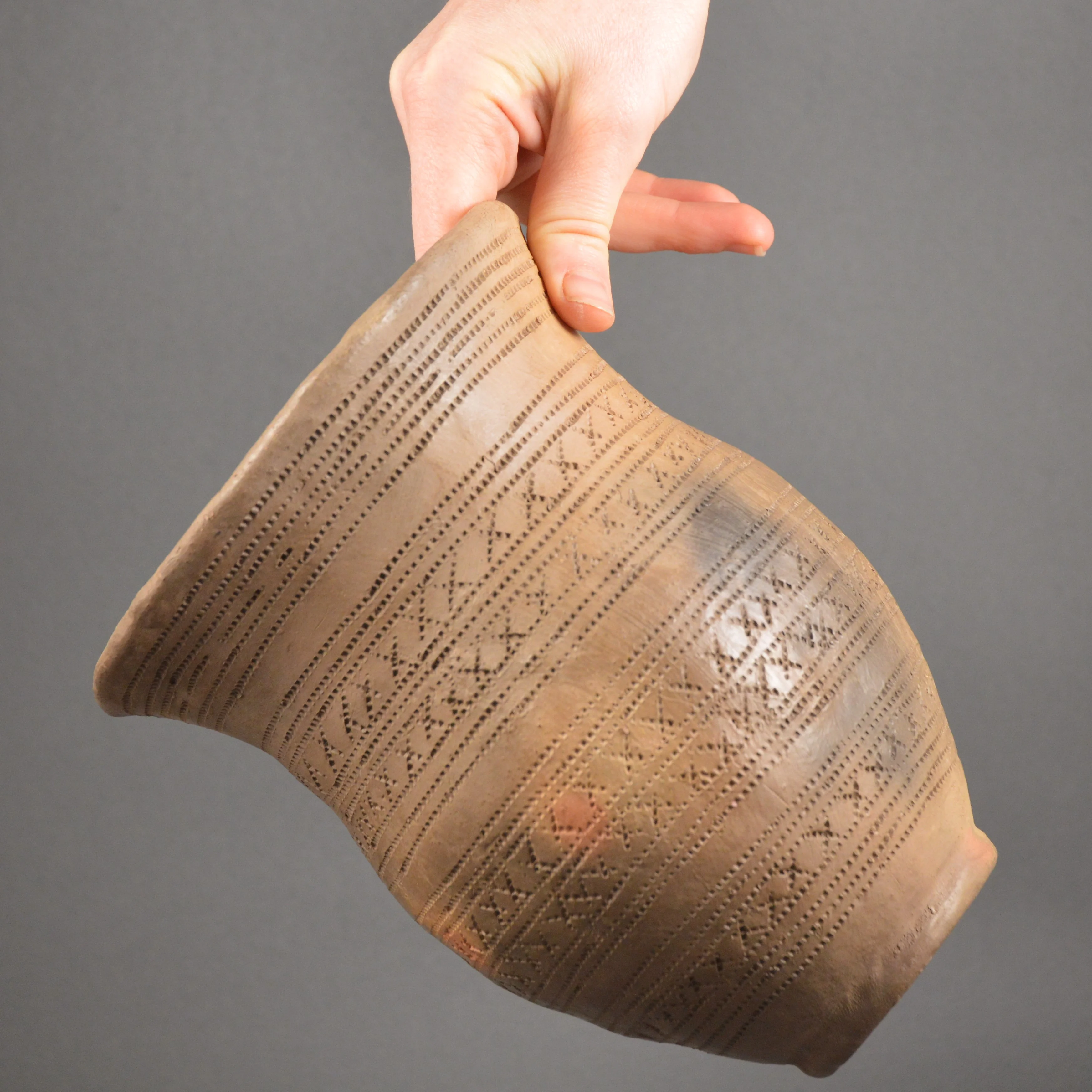
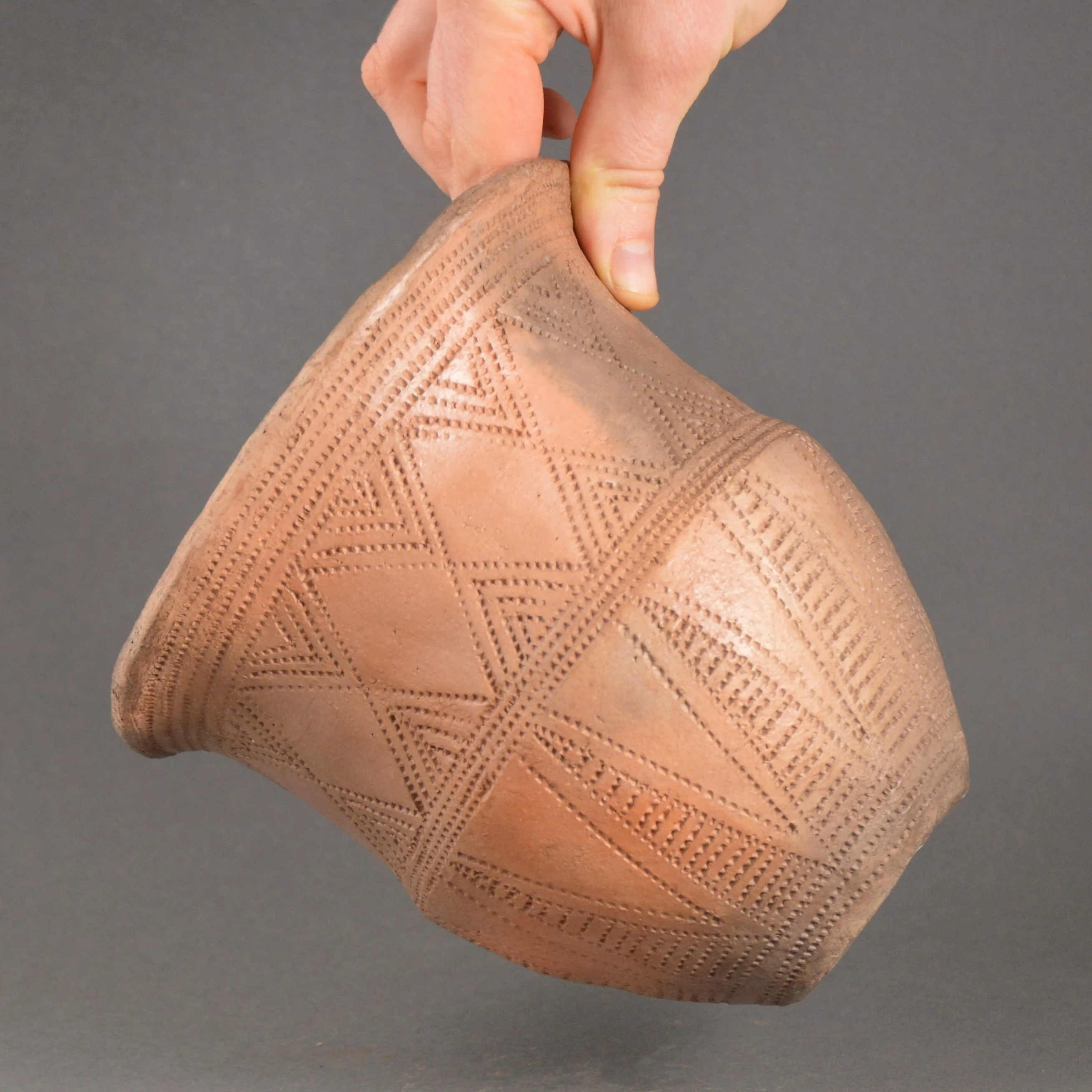
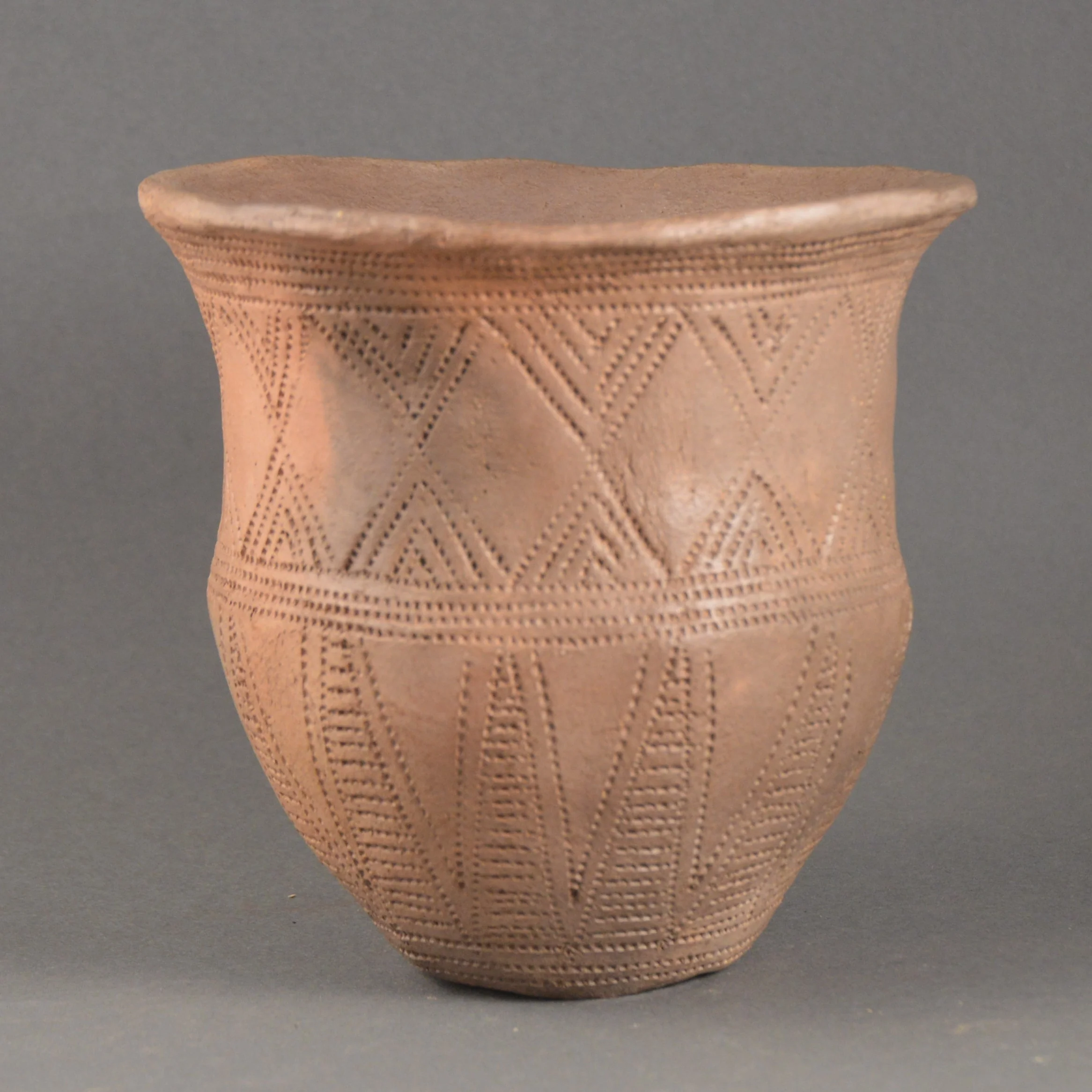
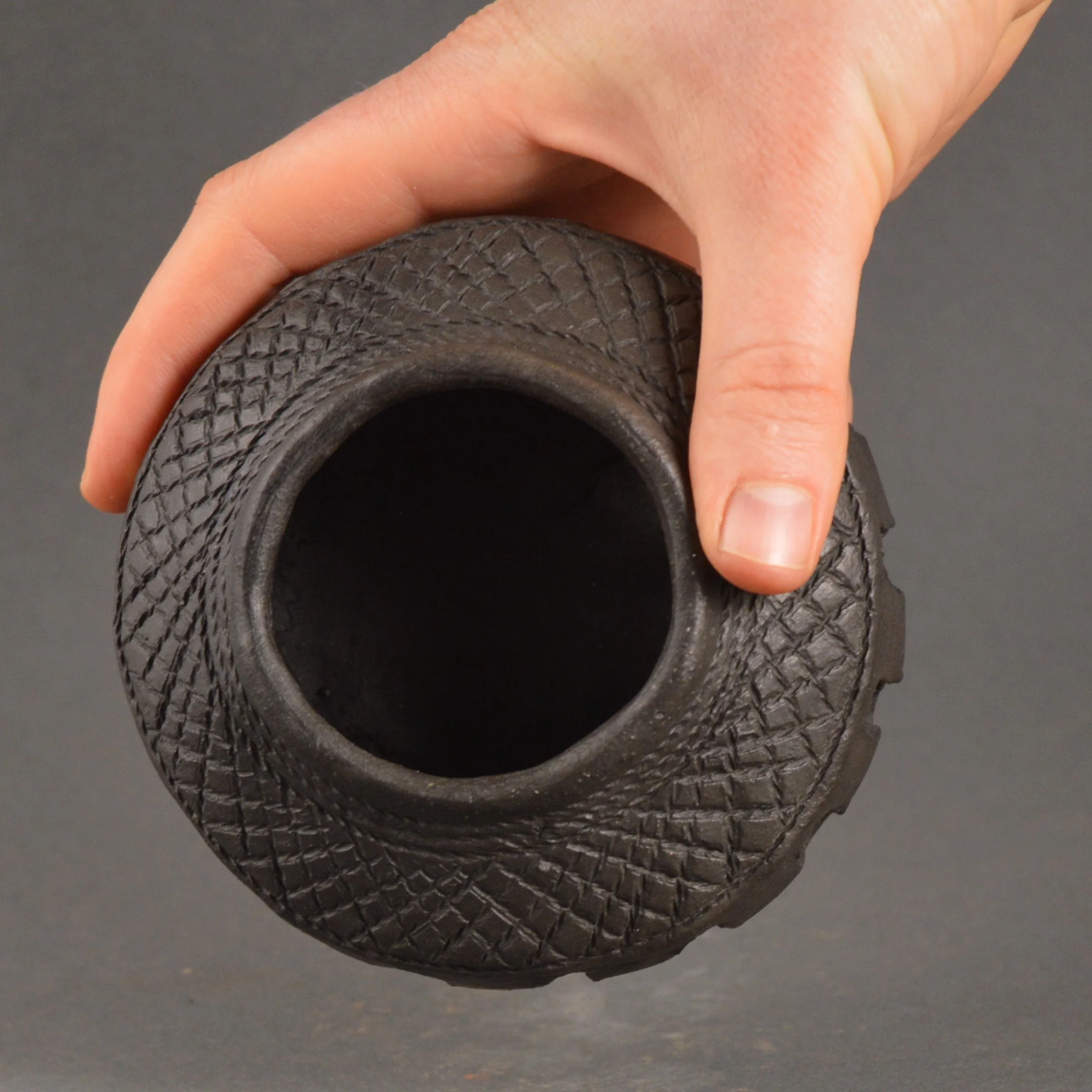
This replica Carinated Bowl is based on Grimston-style pottery and is sometimes referred to as a Hanging Grimston Bowl. The original was excavated in North Yorkshire.
Materials
Smoke-fired Terracotta
Dimensions
Height: Approx. 140 mm
Diameter: Approx. 180 mm
Production
This museum-quality replica has been entirely handmade in Northumberland by Potted History, using authentic Neolithic techniques.
- Handcrafted from natural clay
- Created using replicas of Neolithic tools
- Decorated using a bone, just as the original potters would have done
Firing Process
This replica has been fired to emulate ancient conditions.
- The original pots would have been fired in an open wood fire, in close contact with the fuel, leaving surface colour variations.
- However, open firings produce relatively weak pots.
- To strengthen this replica, it has been fired at a slightly higher temperature while still achieving an authentic Neolithic appearance.
Since each pot is unique, you may not receive the exact bowl in the image, but the variations in firing ensure that your pot will be one of a kind.
Health & Safety
This museum-quality replica was made using authentic Neolithic tools and techniques.
- This is an unglazed pot with a porous surface, meaning it will absorb some of the flavours of food cooked within it, enhancing future dishes.
- However, this also means that the pot does not meet modern food safety standards, so we do not advise using it for cooking.
- In ancient times, Neolithic cooks relied on high temperatures to eliminate bacteria in their pots.
- Heating to over 70°C for at least 10 minutes would have killed most harmful bacteria.
- Boiling at 100°C would have been even more effective.
- If you choose to use this item for Experimental Archaeology, you do so at your own risk.
Ordering Information
- 'Add to Basket' Items: Ready to ship immediately.
- 'Pre-order' Items: Handmade to order within 90 days (longer for international orders). If your order includes both 'Add to Basket' and 'Pre-order' items, they will be shipped together once all items are ready.
Shipping
- Standard shipping: Sent via second-class postal service.
- Faster delivery: If you require first-class shipping, please contact us for a custom quote.
Experience the craftsmanship of Britain’s earliest potters – order your replica Grimston-Style Carinated Bowl today
Product Information
Product Information
Shipping & Returns
Shipping & Returns
Description
Handcrafted Replica Neolithic Grimston-Style Carinated Bowl – Inspired by the Earliest British Pottery
Details
The population of Britain has seen many changes throughout human history, with various groups settling, thriving, and eventually assimilating or being replaced by new waves of inhabitants eager to take advantage of the riches of the British Isles.
Around 6,000 years ago, people began to settle into communities and farm the land for the first time in British history. With these Neolithic communities came the introduction of beautifully handcrafted ceramic vessels for cooking and storing food supplies.
One significant region that has revealed early pottery evidence is Hanging Grimston, North Yorkshire, where some of the first pots known in Britain have been discovered. This distinctive pottery style, named Grimston Ware, takes its name from this invaluable archaeological site (though it is not to be confused with the medieval style of Grimston Ware—a testament to the site’s long history of human habitation).
Grimston Ware, along with Windmill Hill Ware and Carinated Bowls, began to appear around 4000-3500 BCE, influencing the development of other round-bottomed Neolithic pottery styles, such as:
- Mortlake Bowls
- Unstan Ware
- Abingdon Ware
These early pottery forms are distinctive for their minimal decoration and curved bottoms, lending them a simple yet elegant aesthetic. Their rounded bases allowed them to sit comfortably in the embers of an open fire or on uneven surfaces, making them a perfect marriage of form and function.
This replica Carinated Bowl is based on Grimston-style pottery and is sometimes referred to as a Hanging Grimston Bowl. The original was excavated in North Yorkshire.
Materials
Smoke-fired Terracotta
Dimensions
Height: Approx. 140 mm
Diameter: Approx. 180 mm
Production
This museum-quality replica has been entirely handmade in Northumberland by Potted History, using authentic Neolithic techniques.
- Handcrafted from natural clay
- Created using replicas of Neolithic tools
- Decorated using a bone, just as the original potters would have done
Firing Process
This replica has been fired to emulate ancient conditions.
- The original pots would have been fired in an open wood fire, in close contact with the fuel, leaving surface colour variations.
- However, open firings produce relatively weak pots.
- To strengthen this replica, it has been fired at a slightly higher temperature while still achieving an authentic Neolithic appearance.
Since each pot is unique, you may not receive the exact bowl in the image, but the variations in firing ensure that your pot will be one of a kind.
Health & Safety
This museum-quality replica was made using authentic Neolithic tools and techniques.
- This is an unglazed pot with a porous surface, meaning it will absorb some of the flavours of food cooked within it, enhancing future dishes.
- However, this also means that the pot does not meet modern food safety standards, so we do not advise using it for cooking.
- In ancient times, Neolithic cooks relied on high temperatures to eliminate bacteria in their pots.
- Heating to over 70°C for at least 10 minutes would have killed most harmful bacteria.
- Boiling at 100°C would have been even more effective.
- If you choose to use this item for Experimental Archaeology, you do so at your own risk.
Ordering Information
- 'Add to Basket' Items: Ready to ship immediately.
- 'Pre-order' Items: Handmade to order within 90 days (longer for international orders). If your order includes both 'Add to Basket' and 'Pre-order' items, they will be shipped together once all items are ready.
Shipping
- Standard shipping: Sent via second-class postal service.
- Faster delivery: If you require first-class shipping, please contact us for a custom quote.
Experience the craftsmanship of Britain’s earliest potters – order your replica Grimston-Style Carinated Bowl today