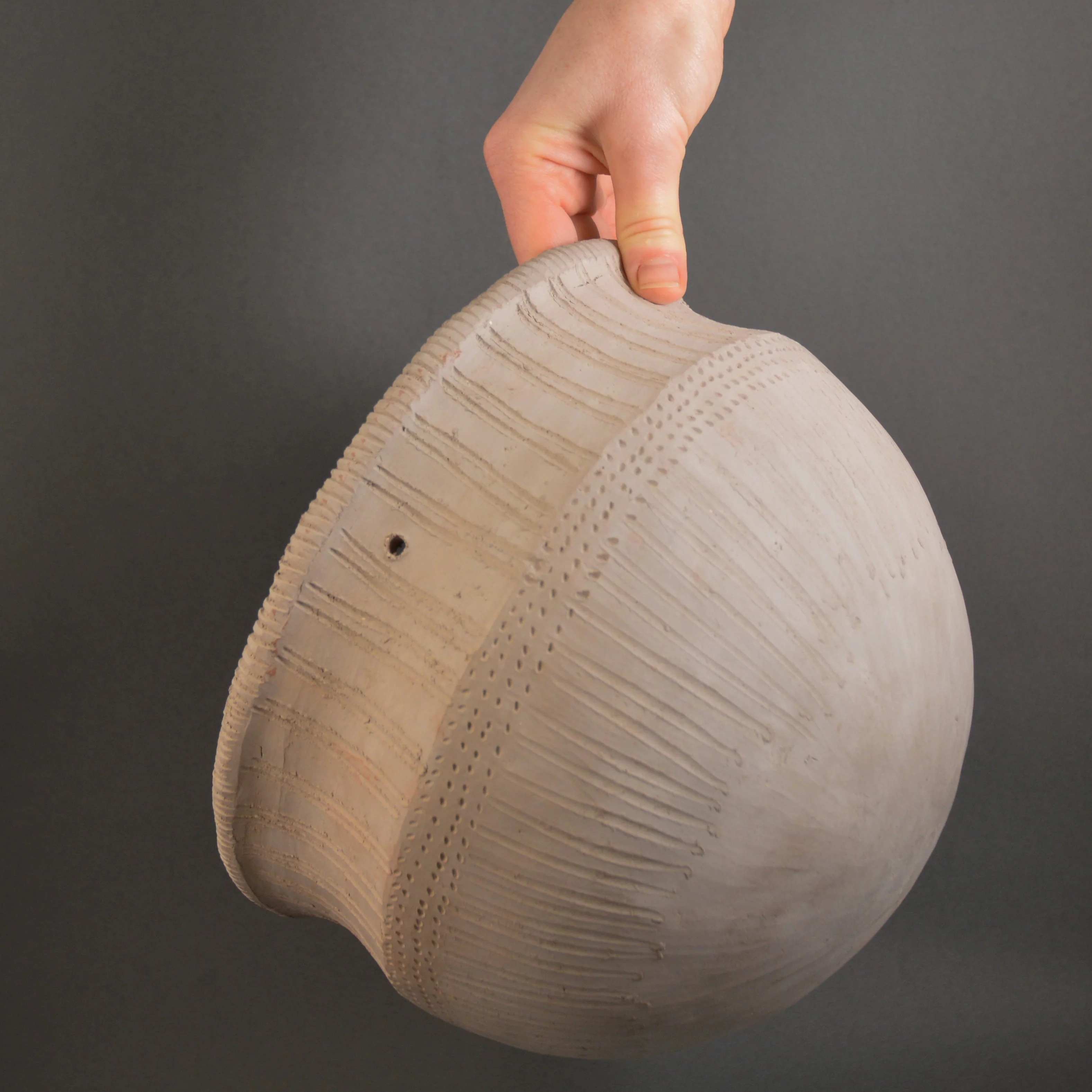
Hurst Fen, Mildenhall Bowl
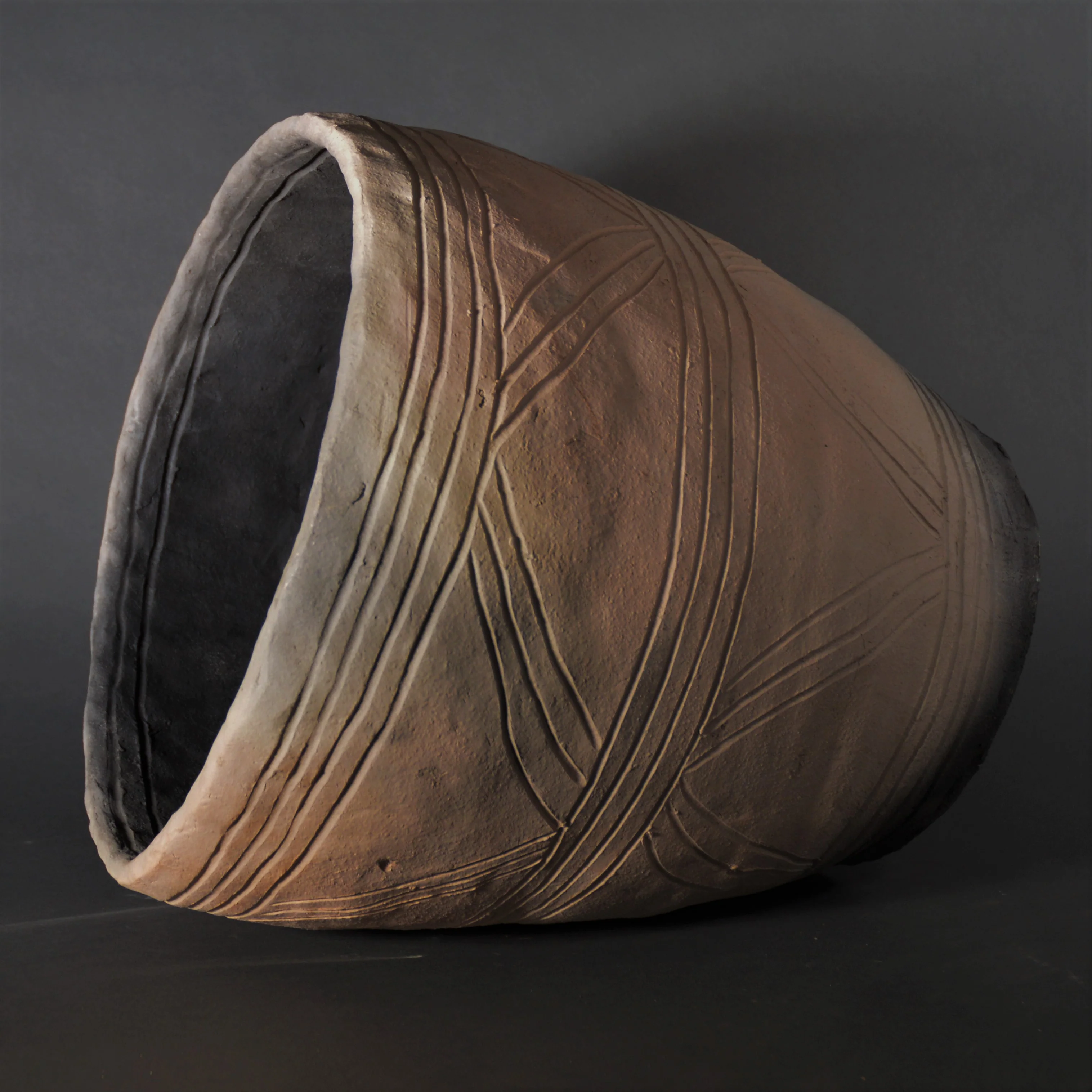
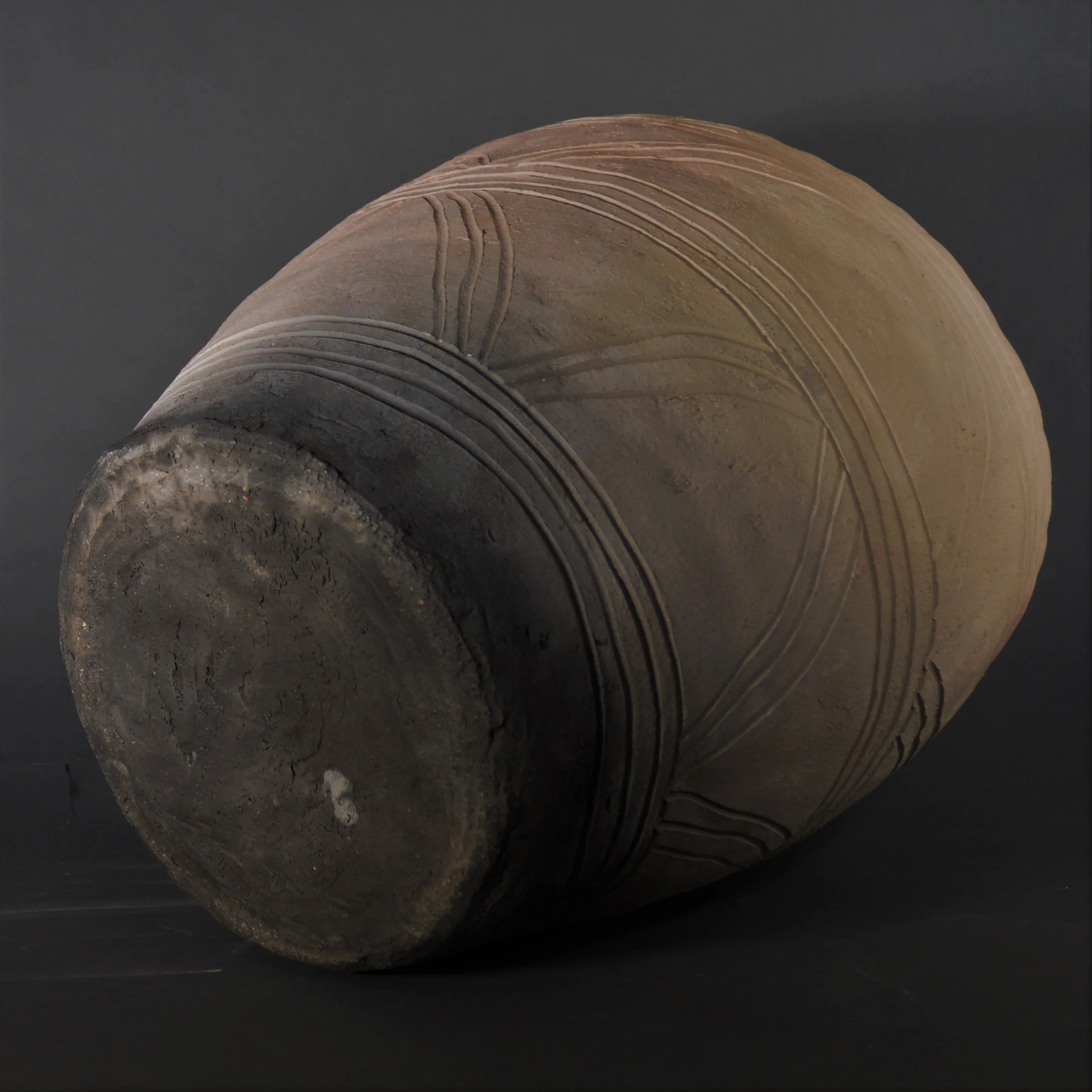
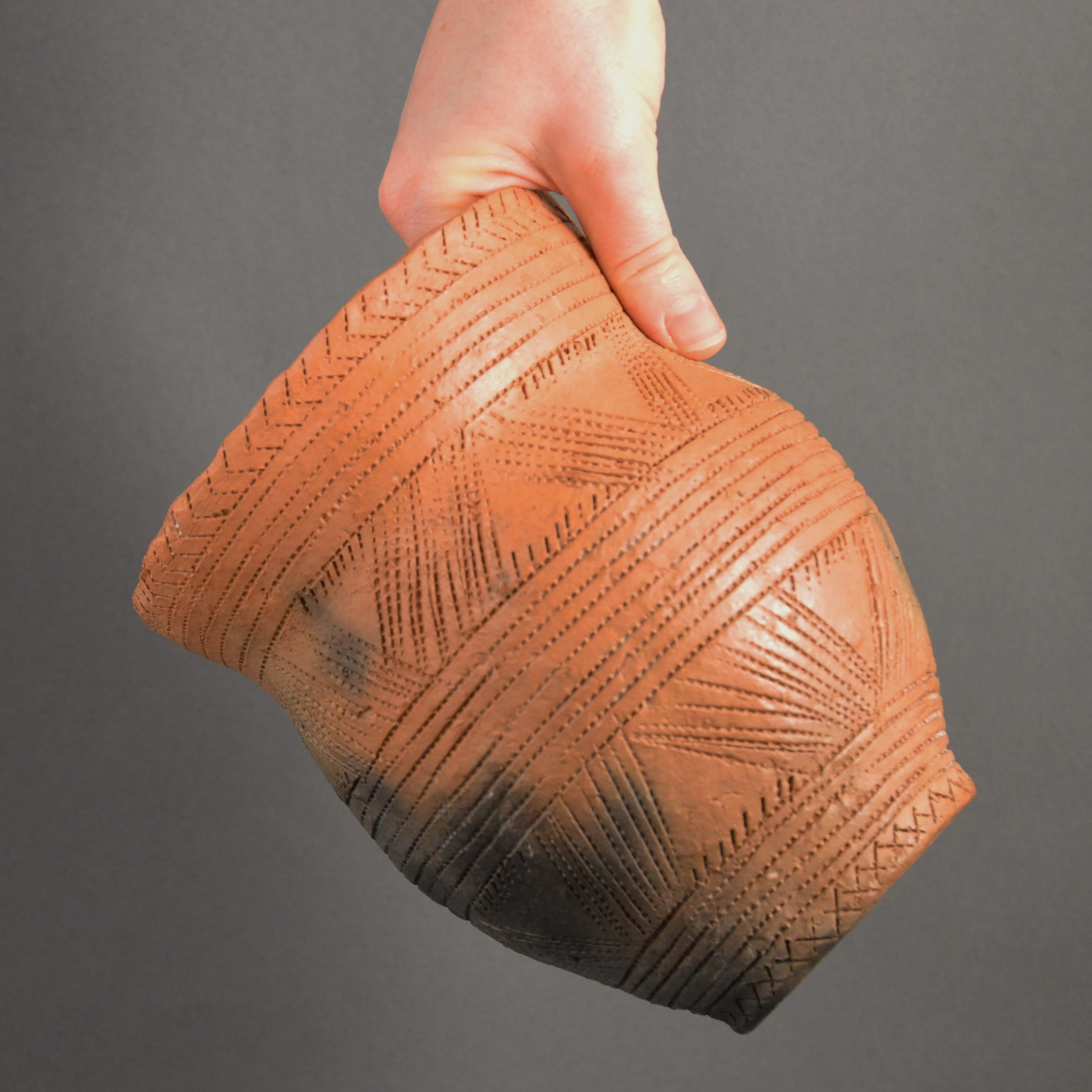
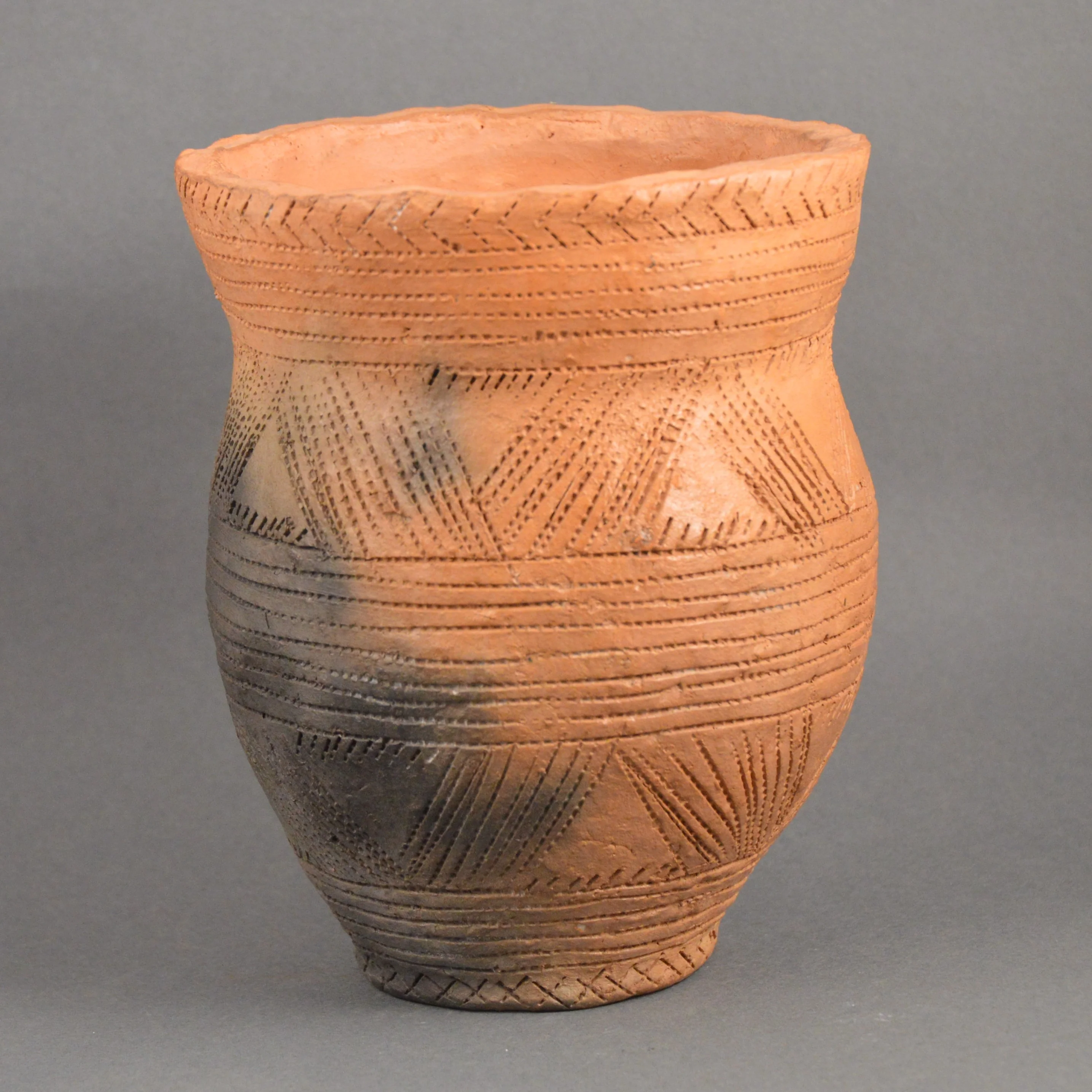
Handcrafted Neolithic Cooking Pot – Hurst Fen (Mildenhall) Style
Details
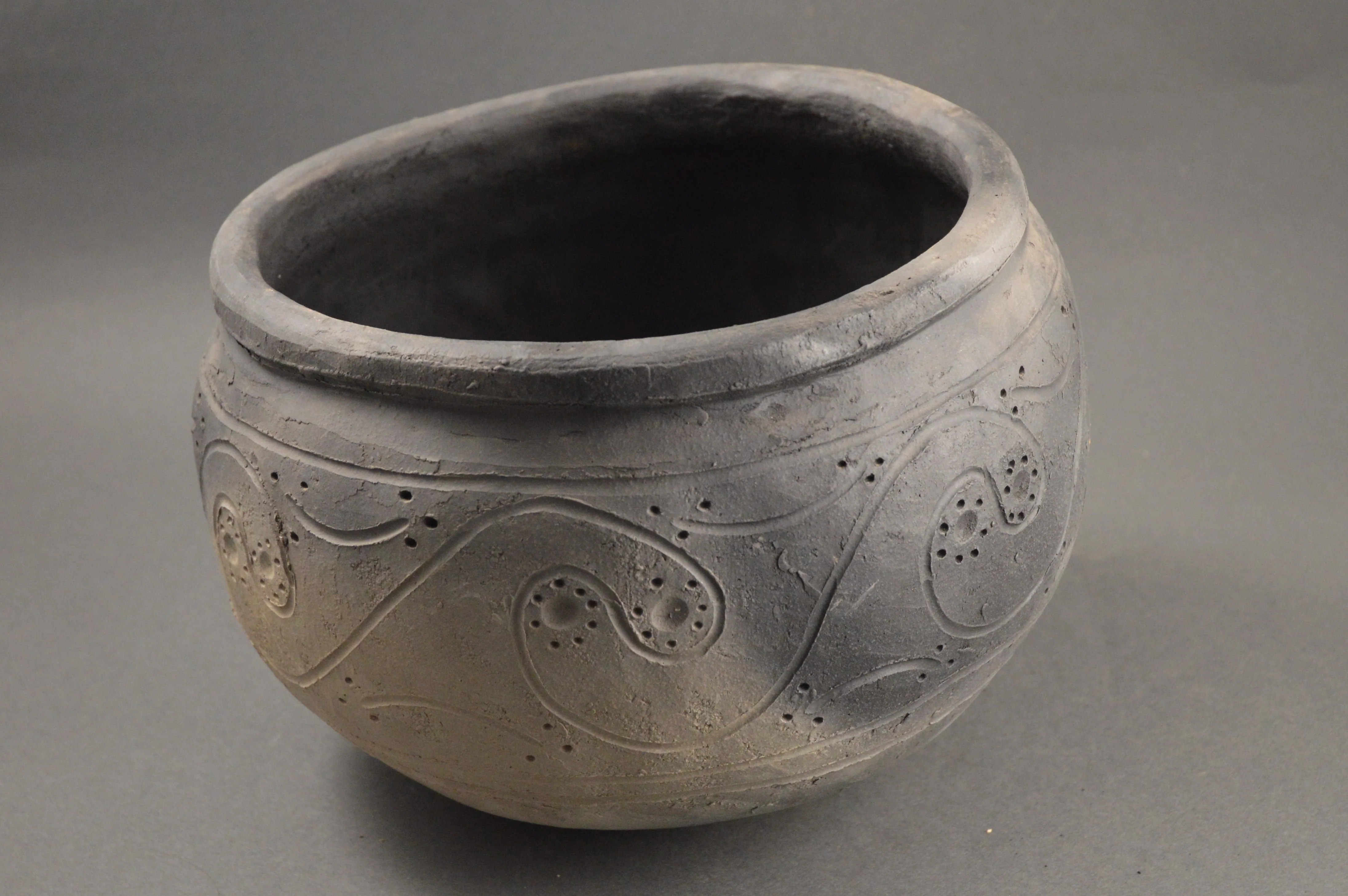
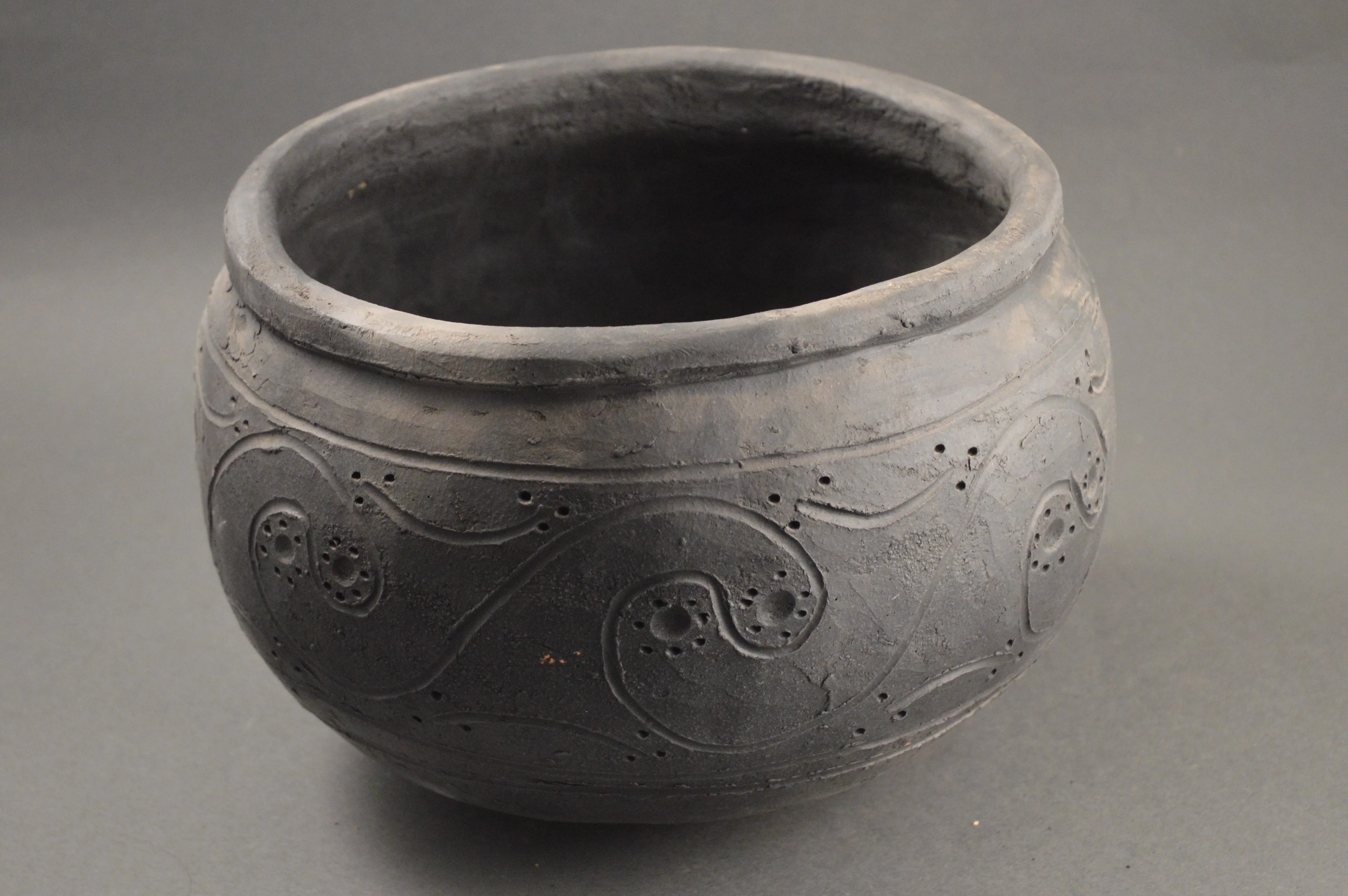
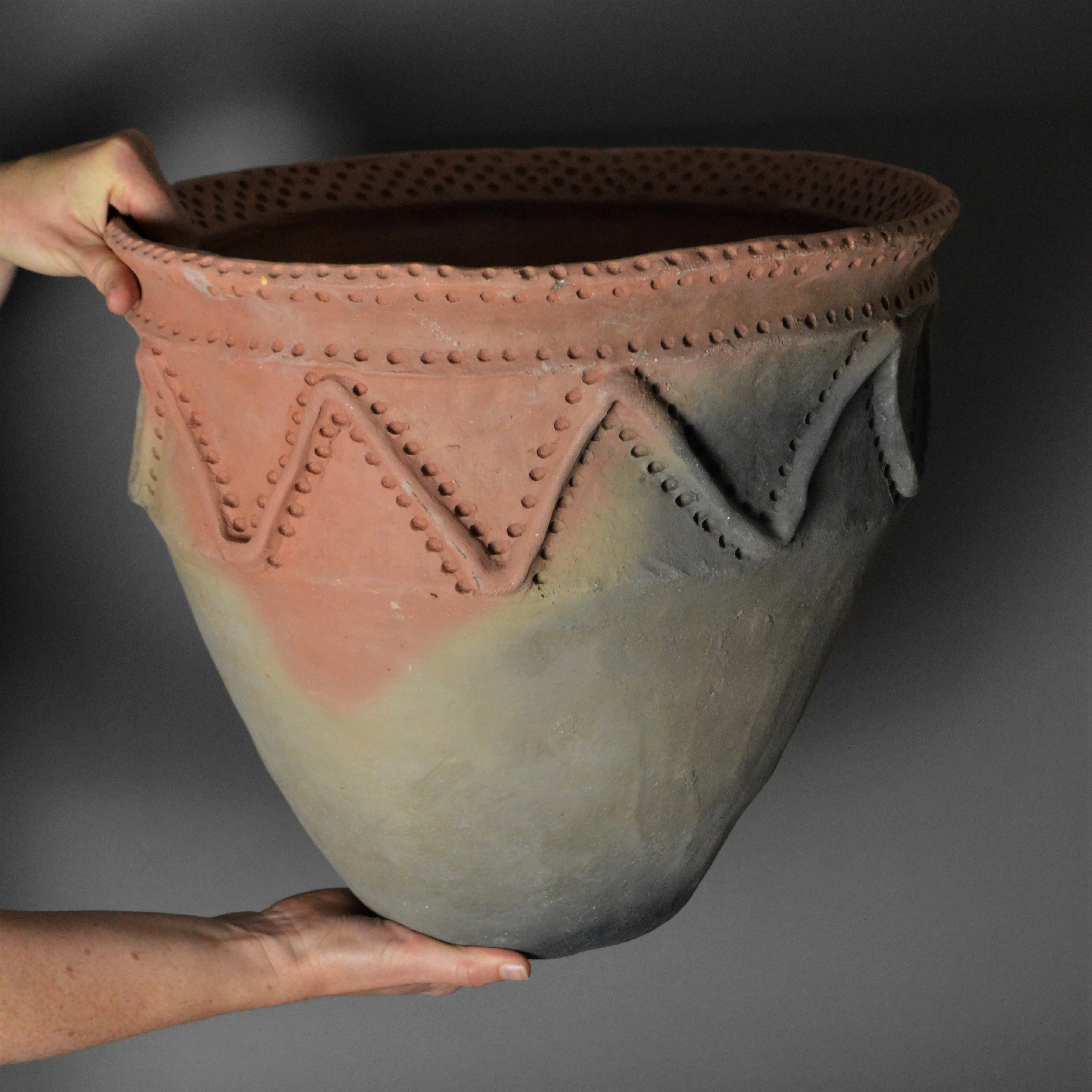
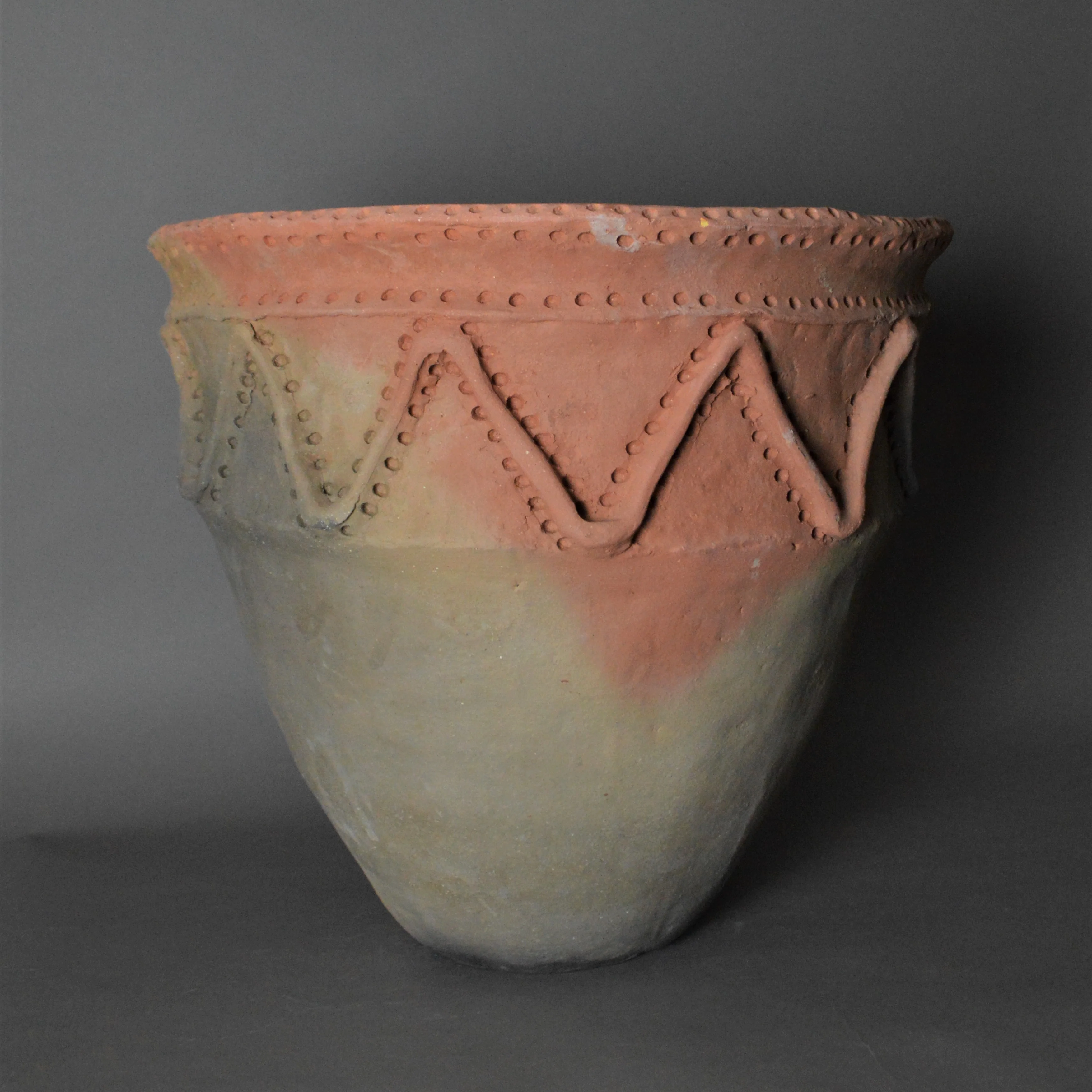
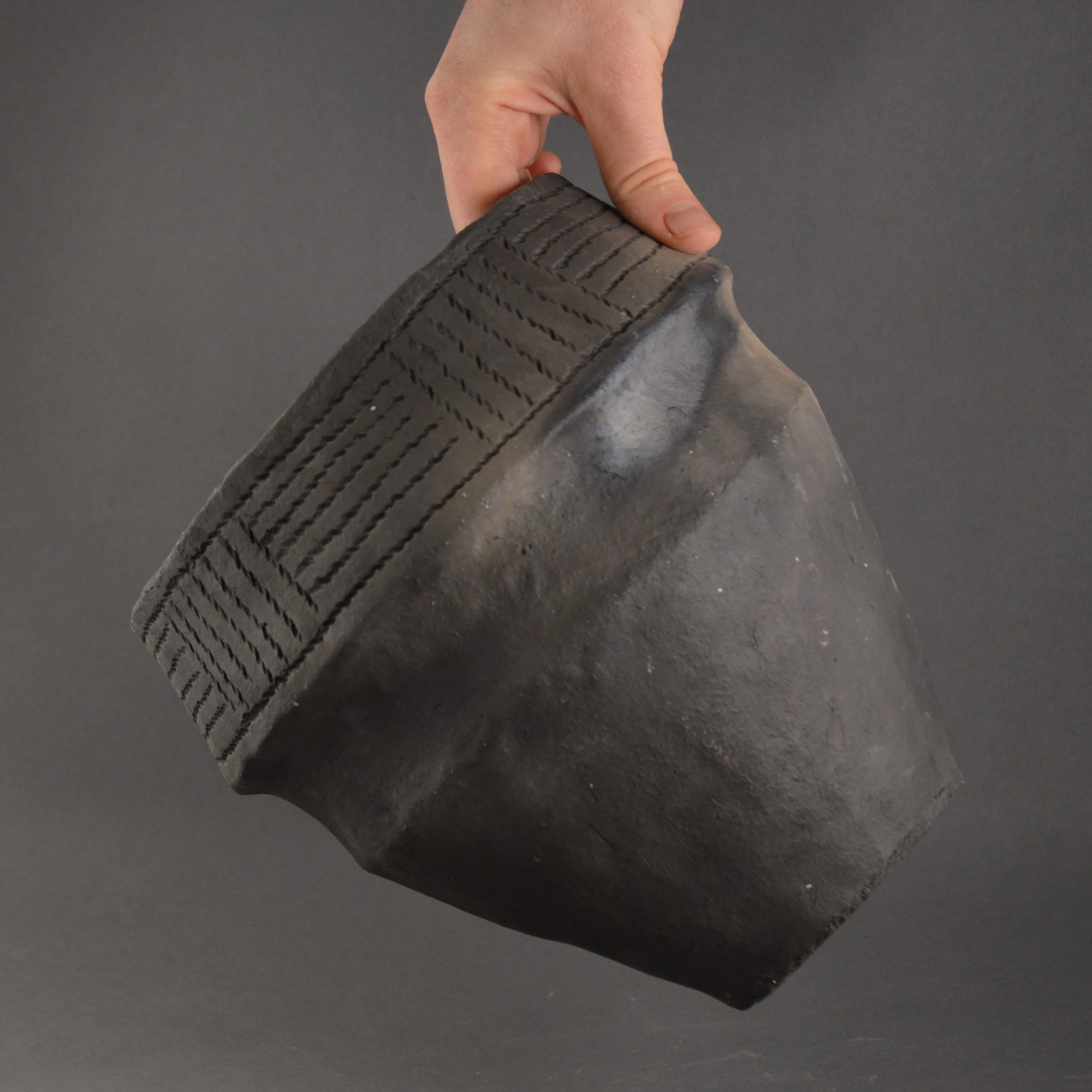
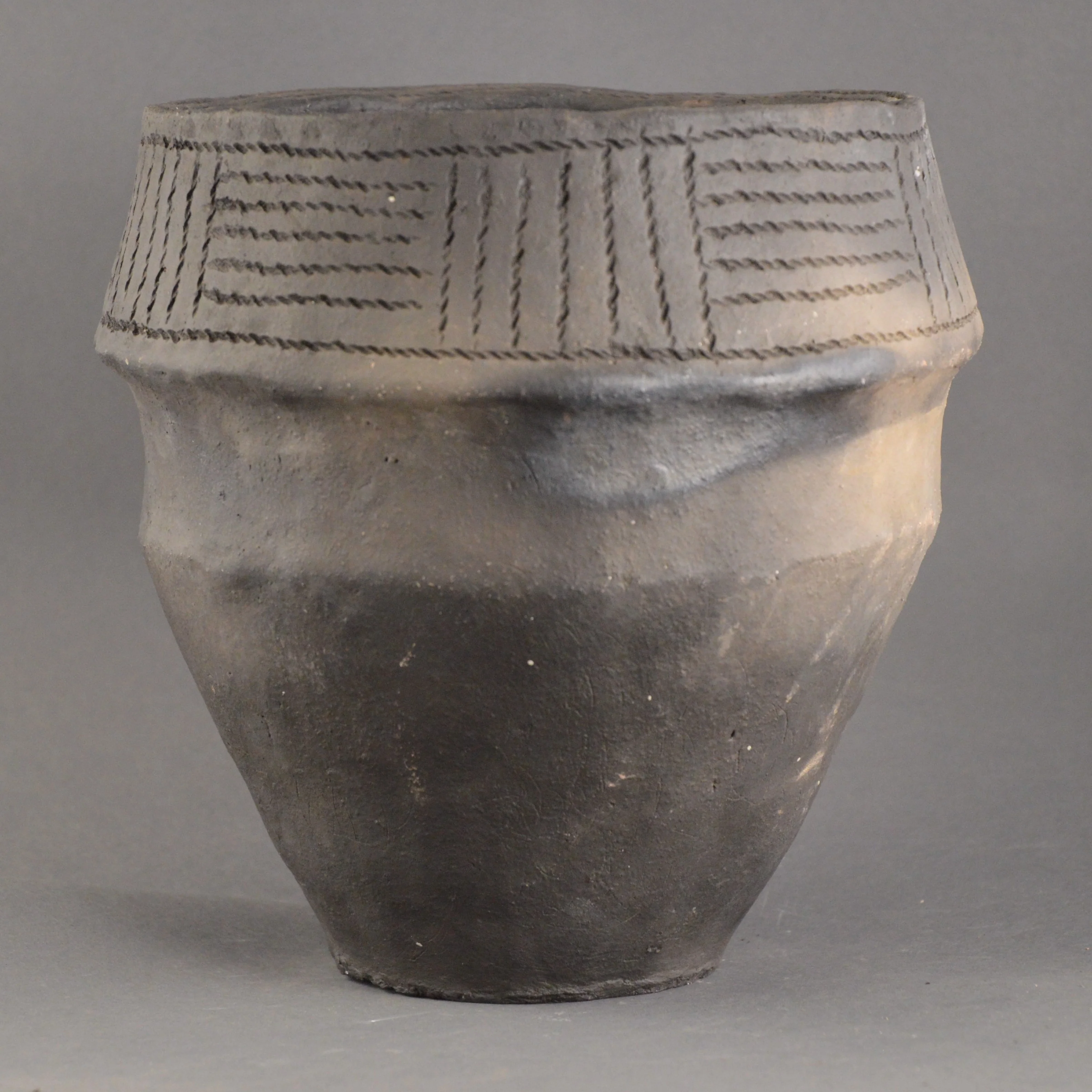
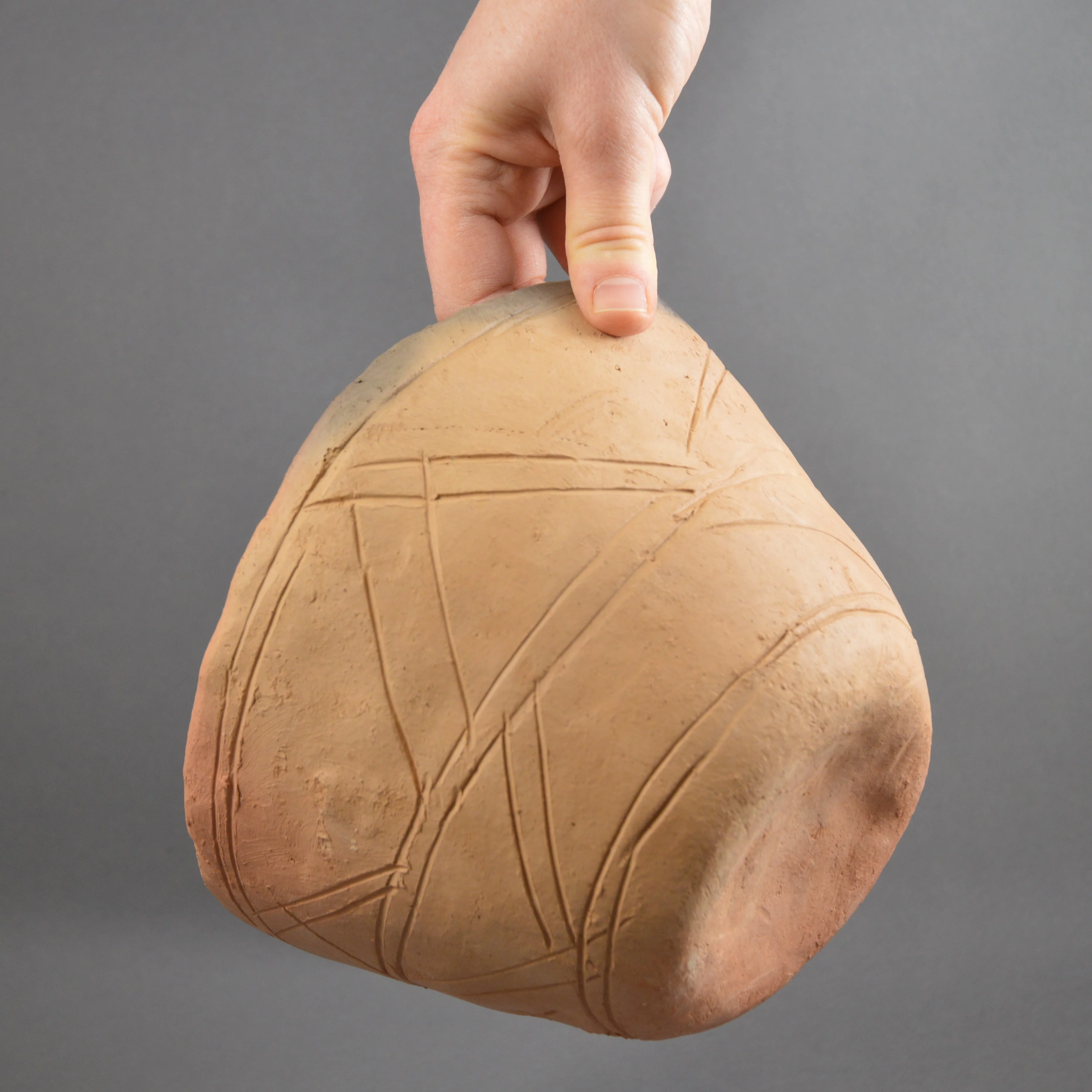
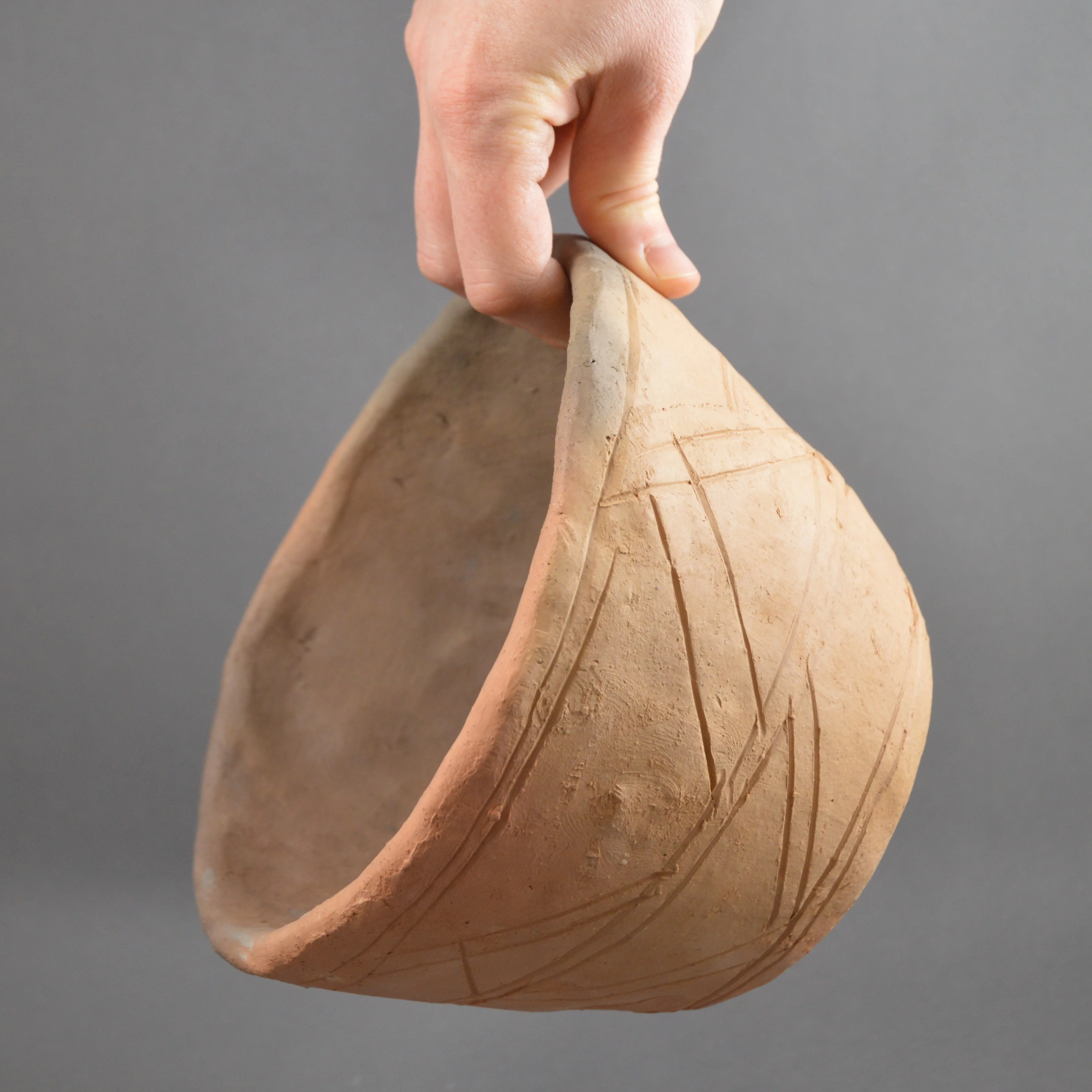
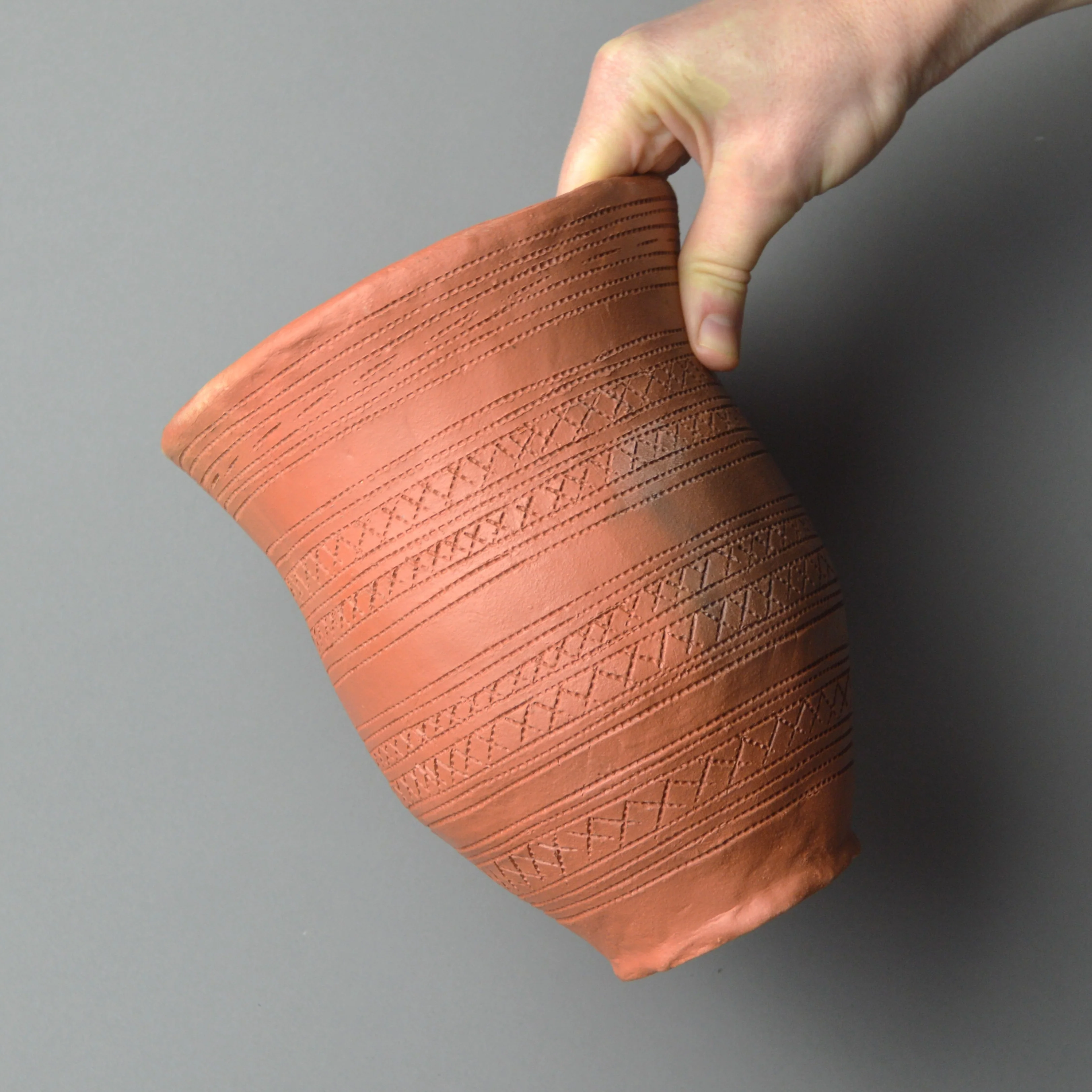
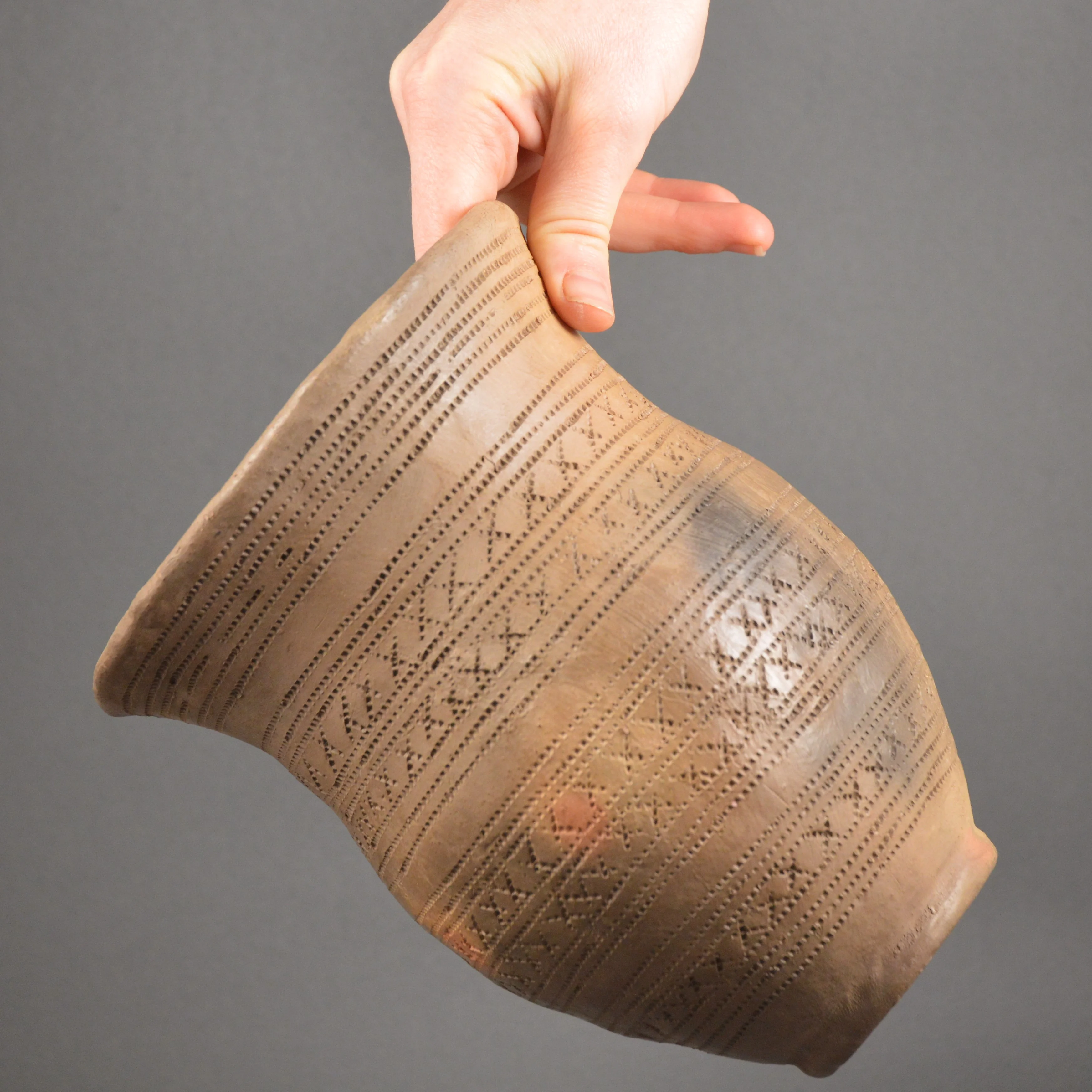
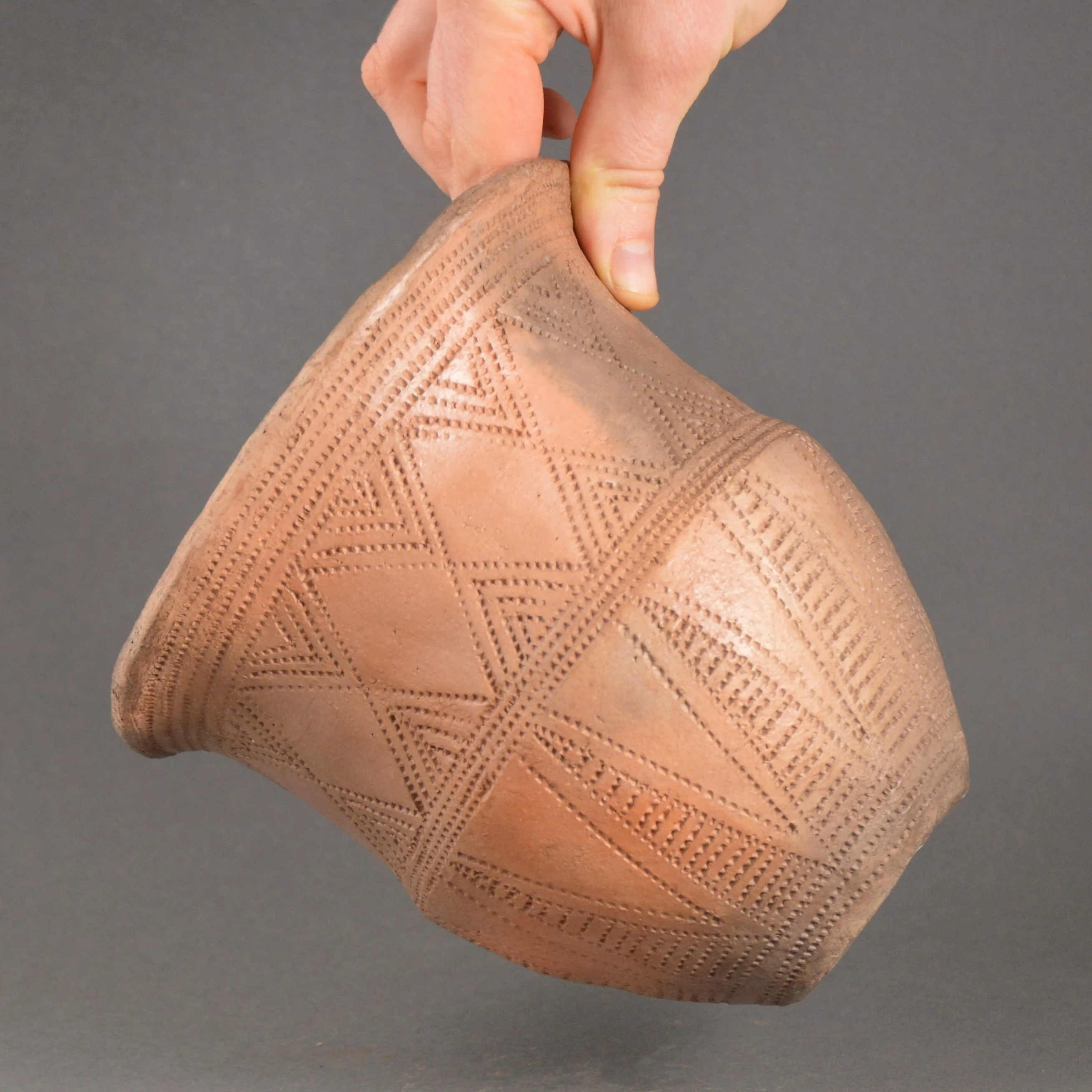
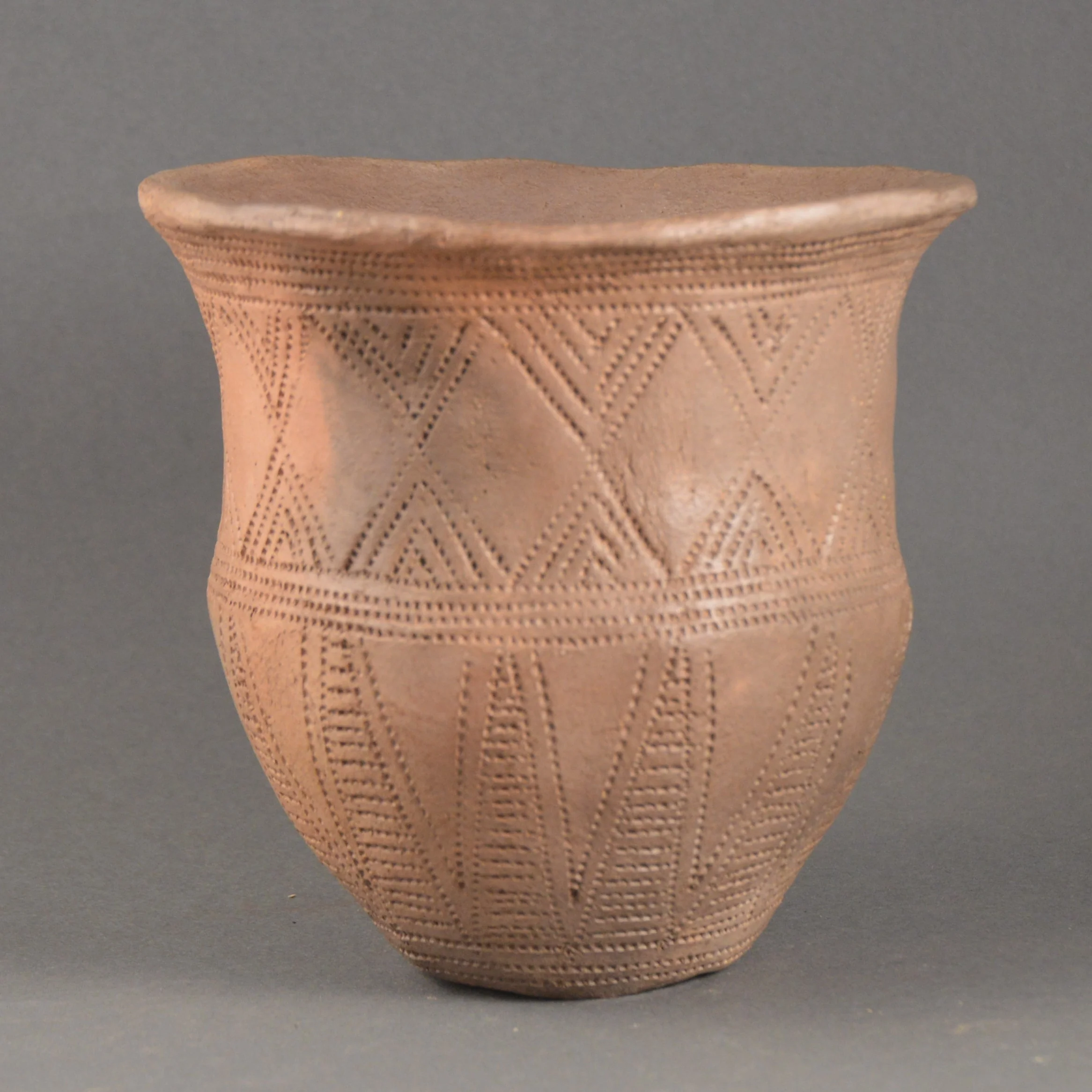
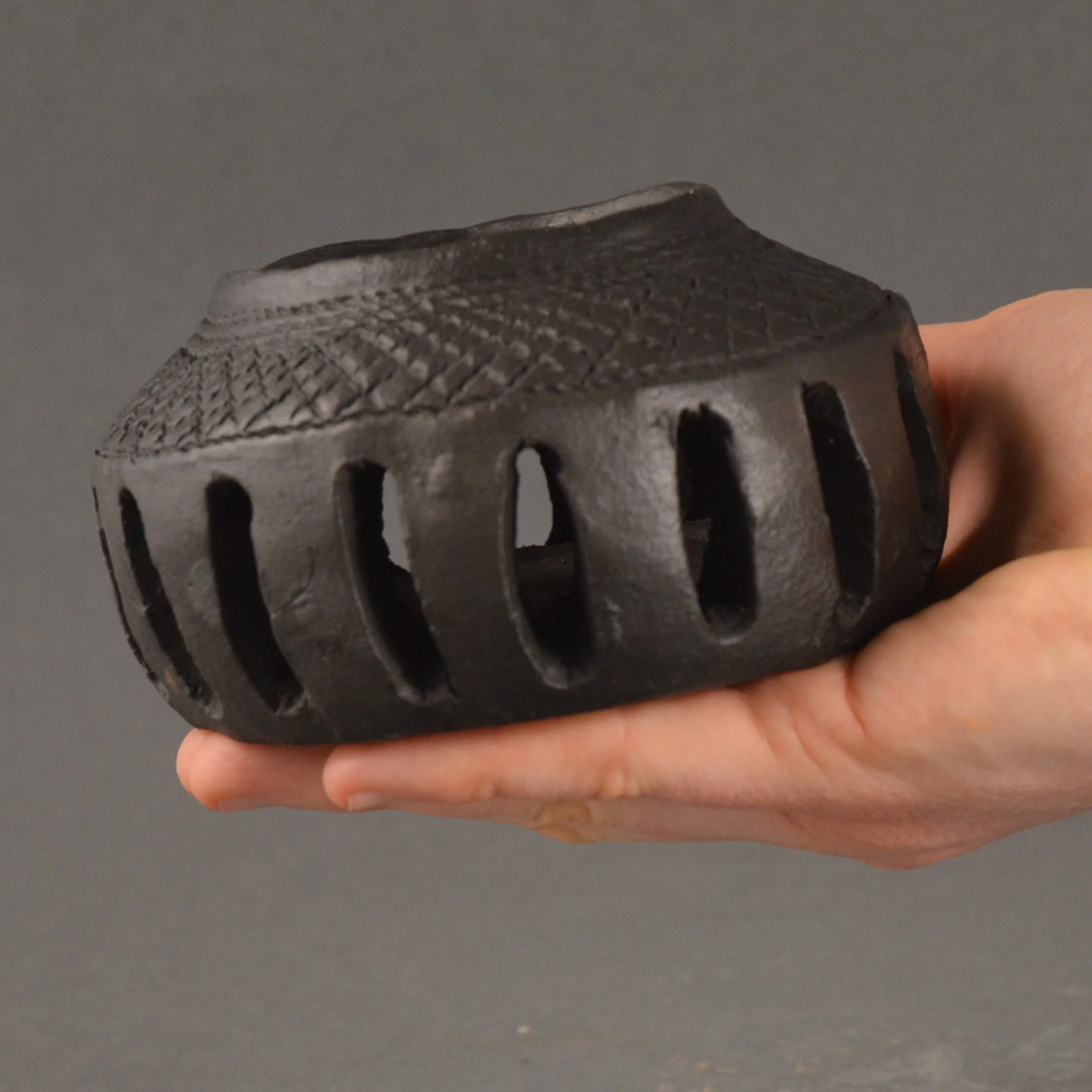
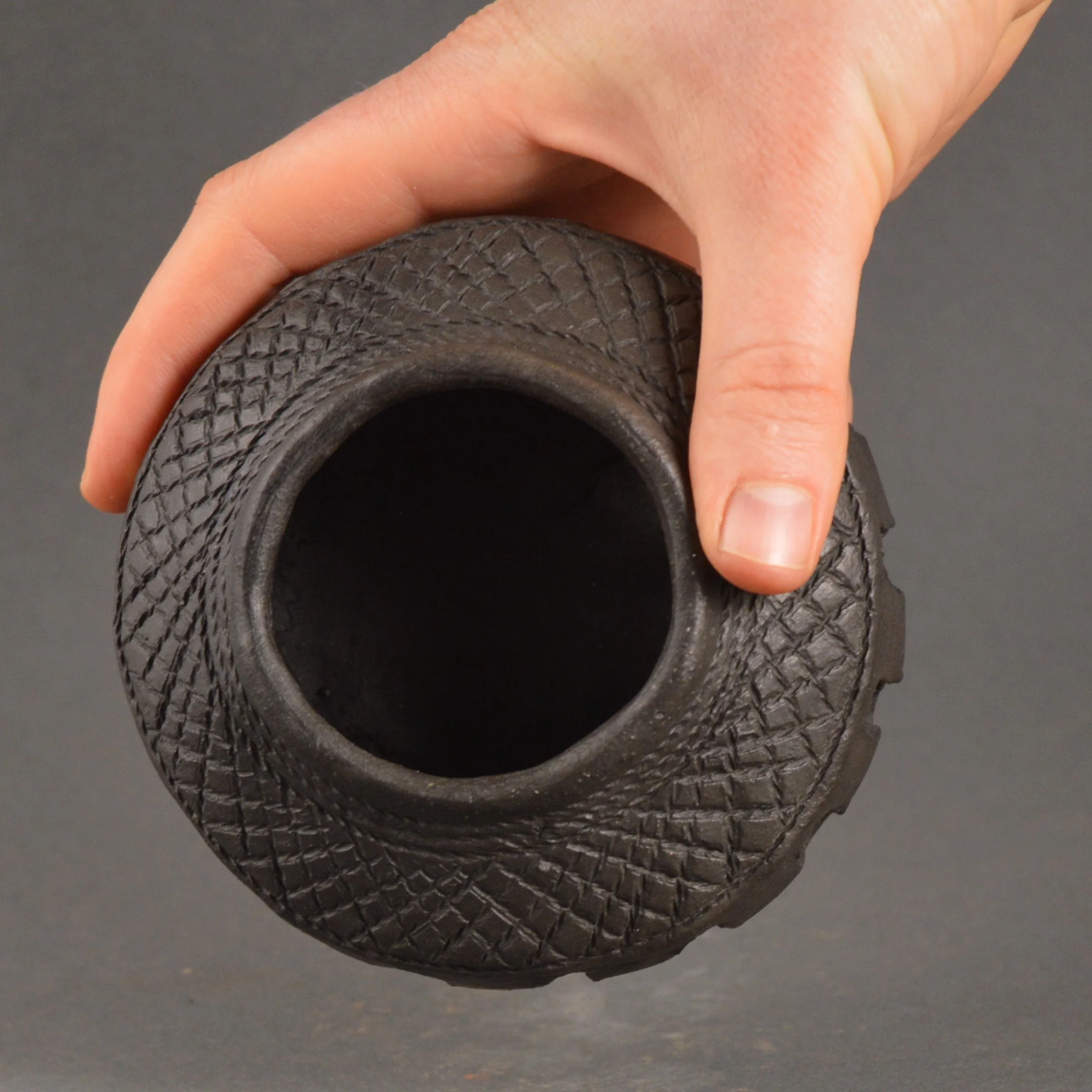
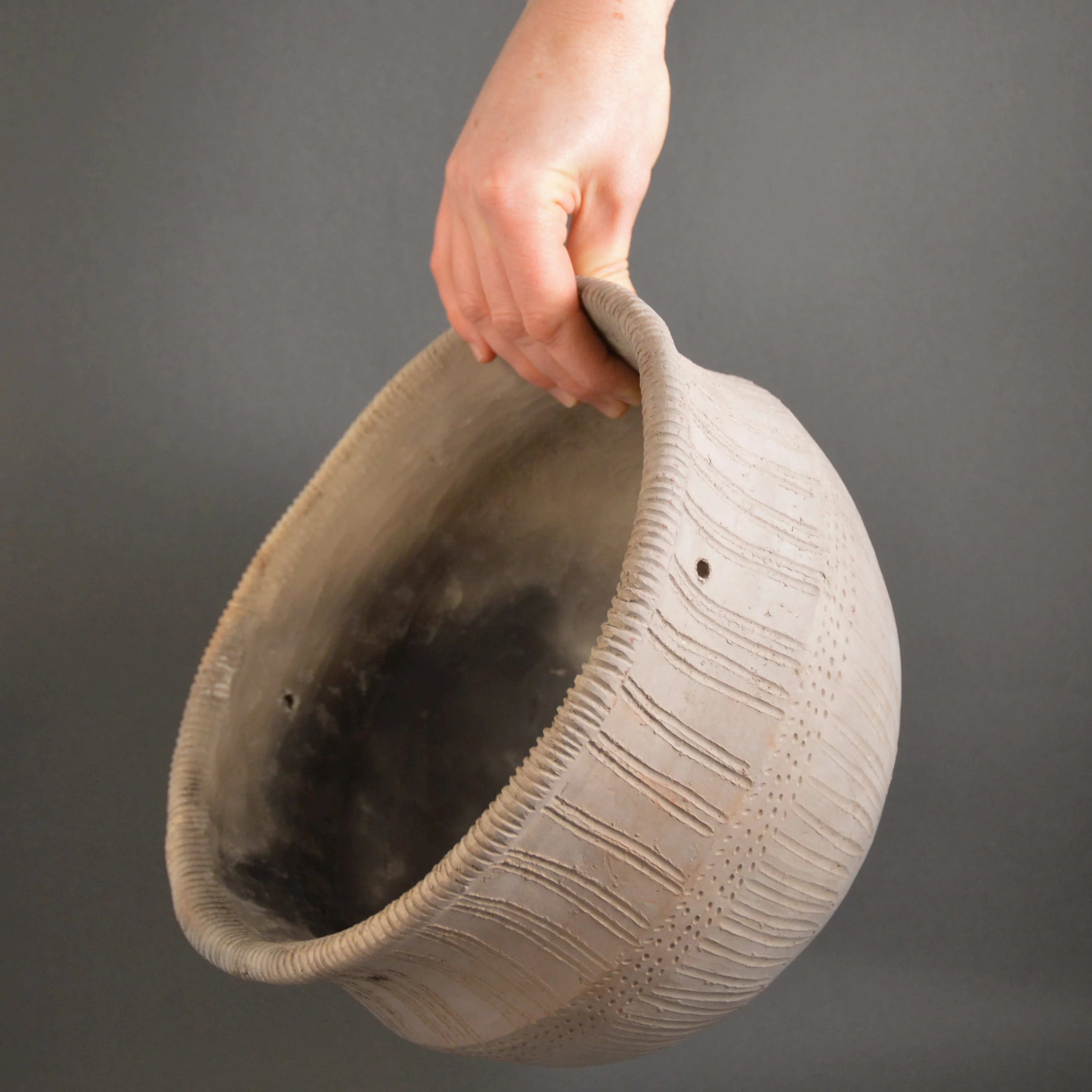
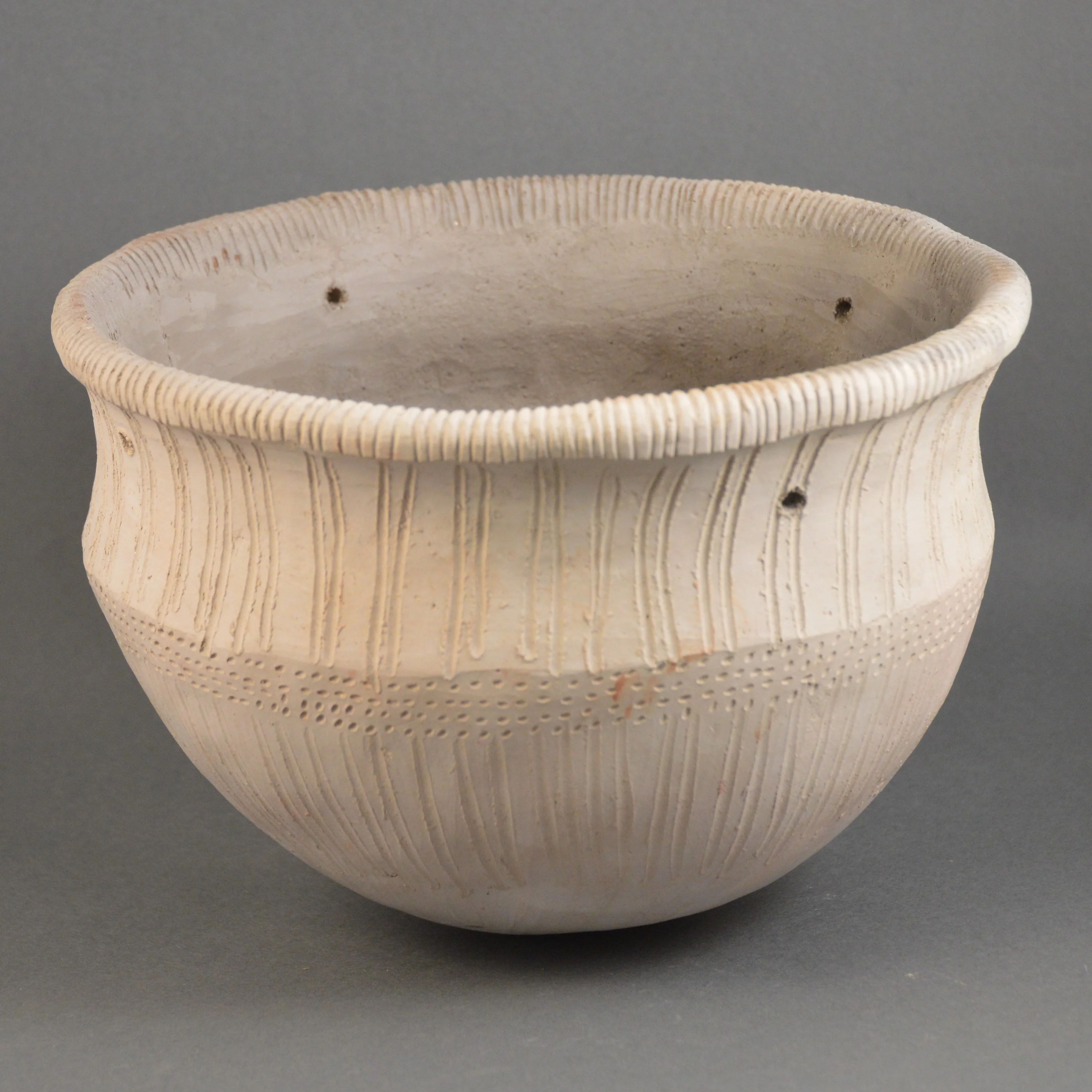
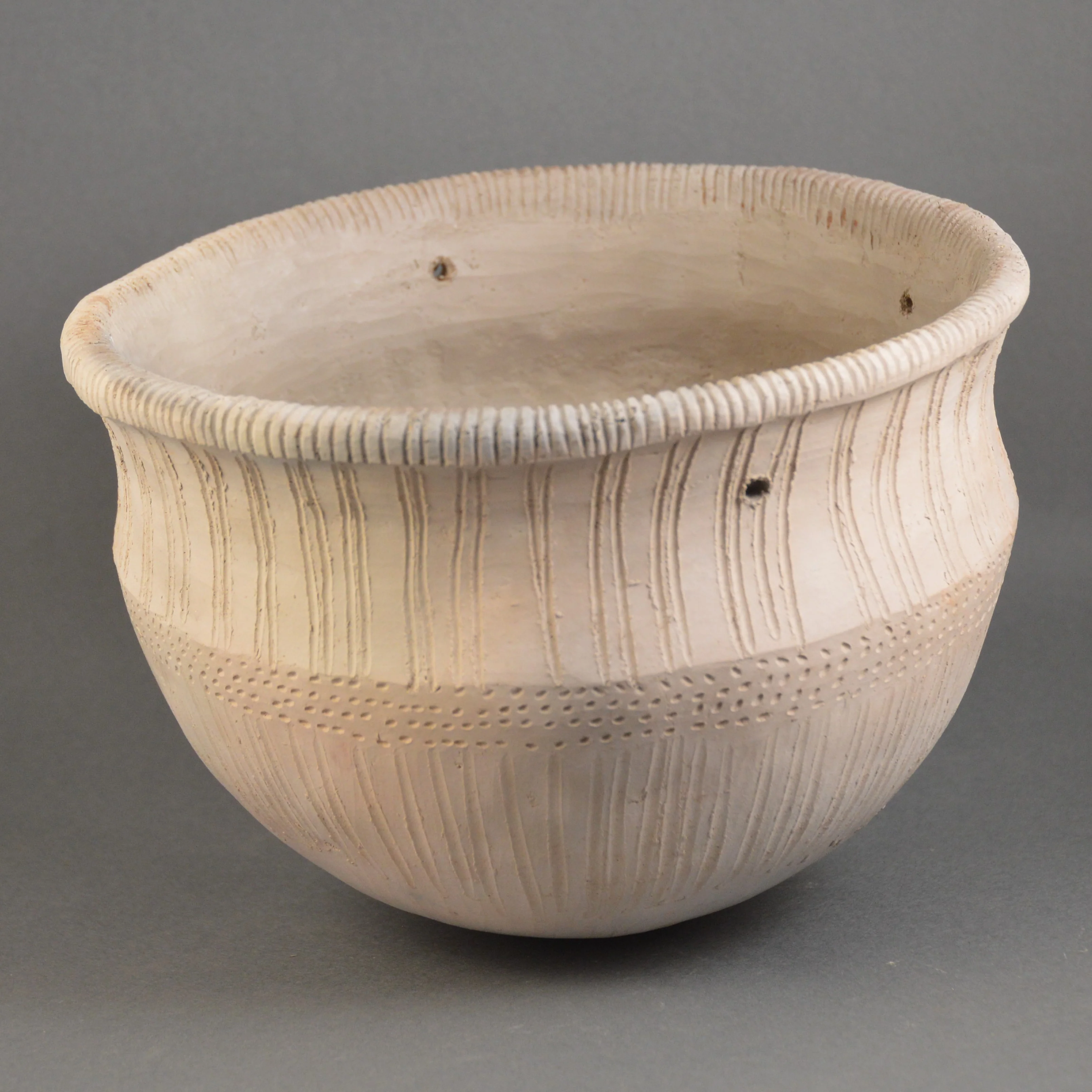
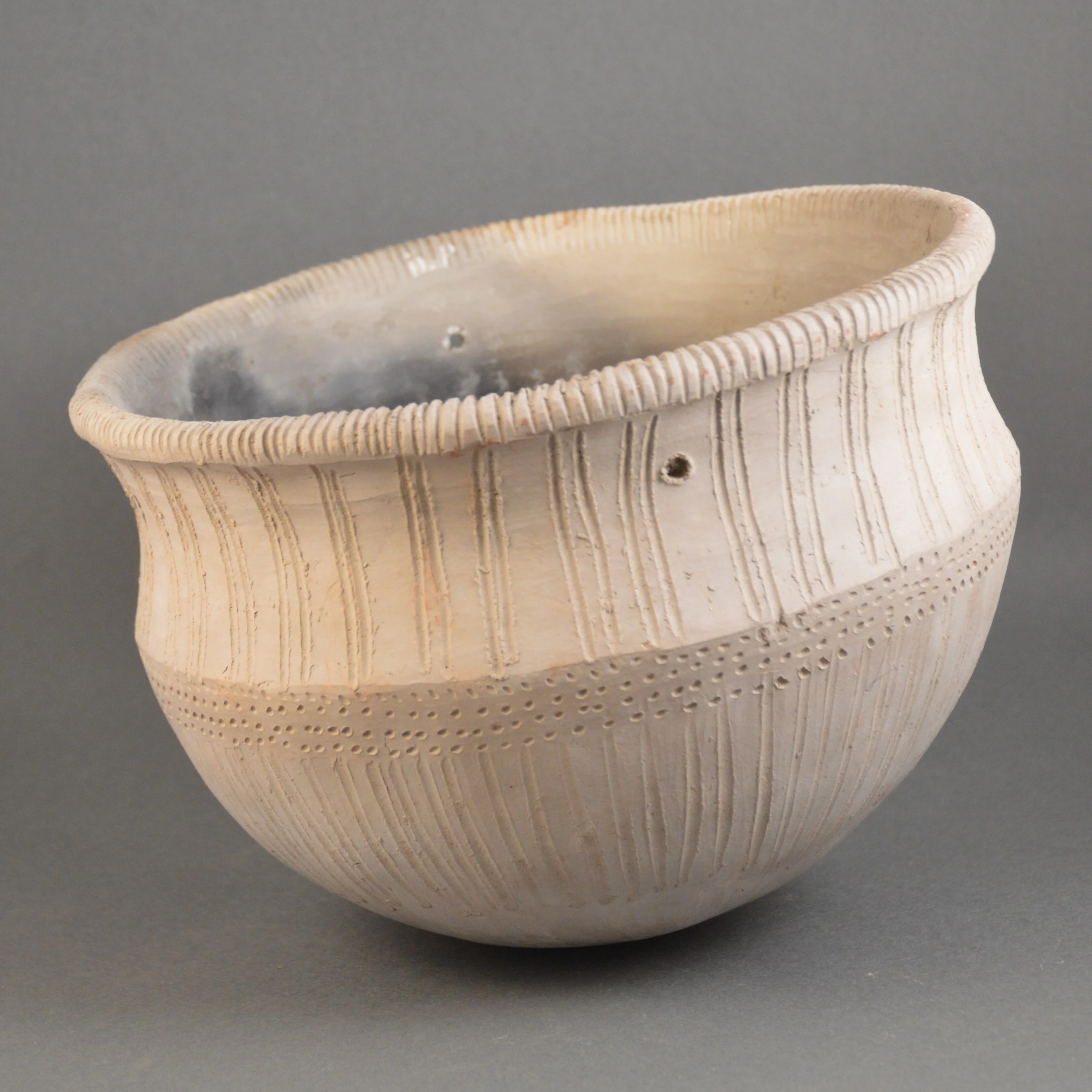
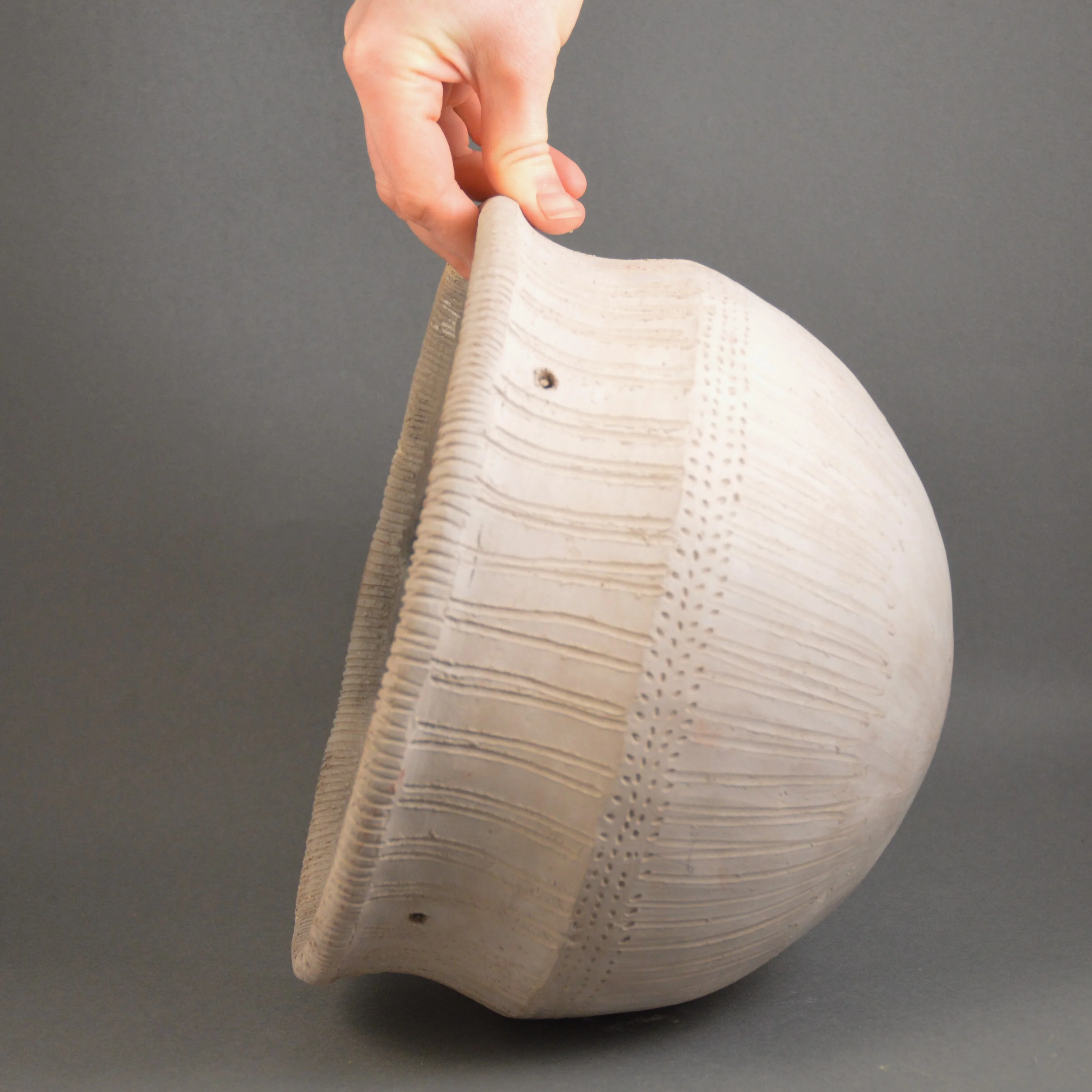
This replica is based on a Neolithic Hurst Fen bowl, also referred to as a Mildenhall bowl, discovered in the parish of Mildenhall, Suffolk. This area was the site of a large Neolithic settlement in use between c. 3700 BC and 3400 BC.
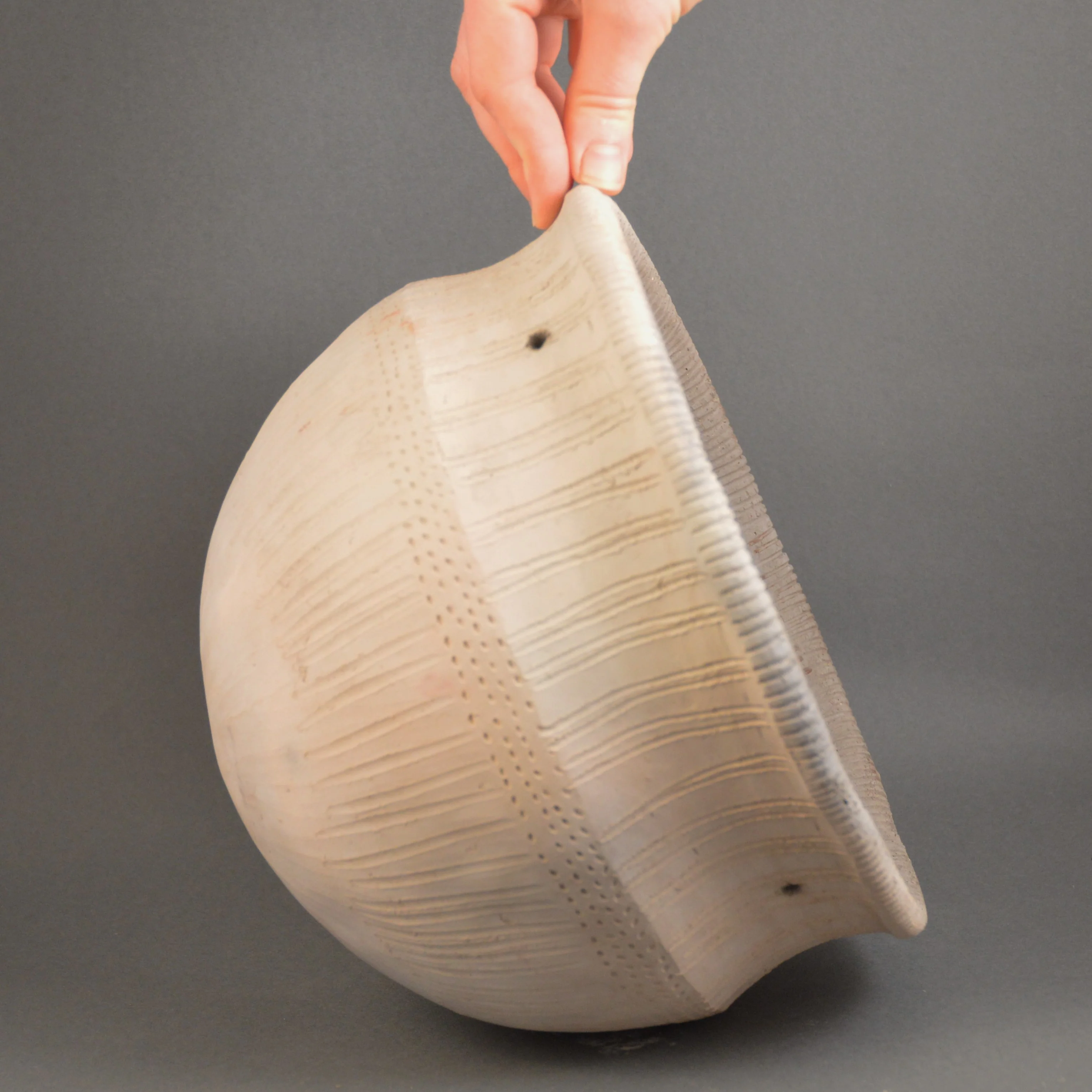
While much early Neolithic pottery in Britain was plain and undecorated—such as carinated bowls—the elaborately patterned Hurst Fen bowl stands out as a distinctive and more complex form. It is also considered to represent a regional style associated with southeast England.
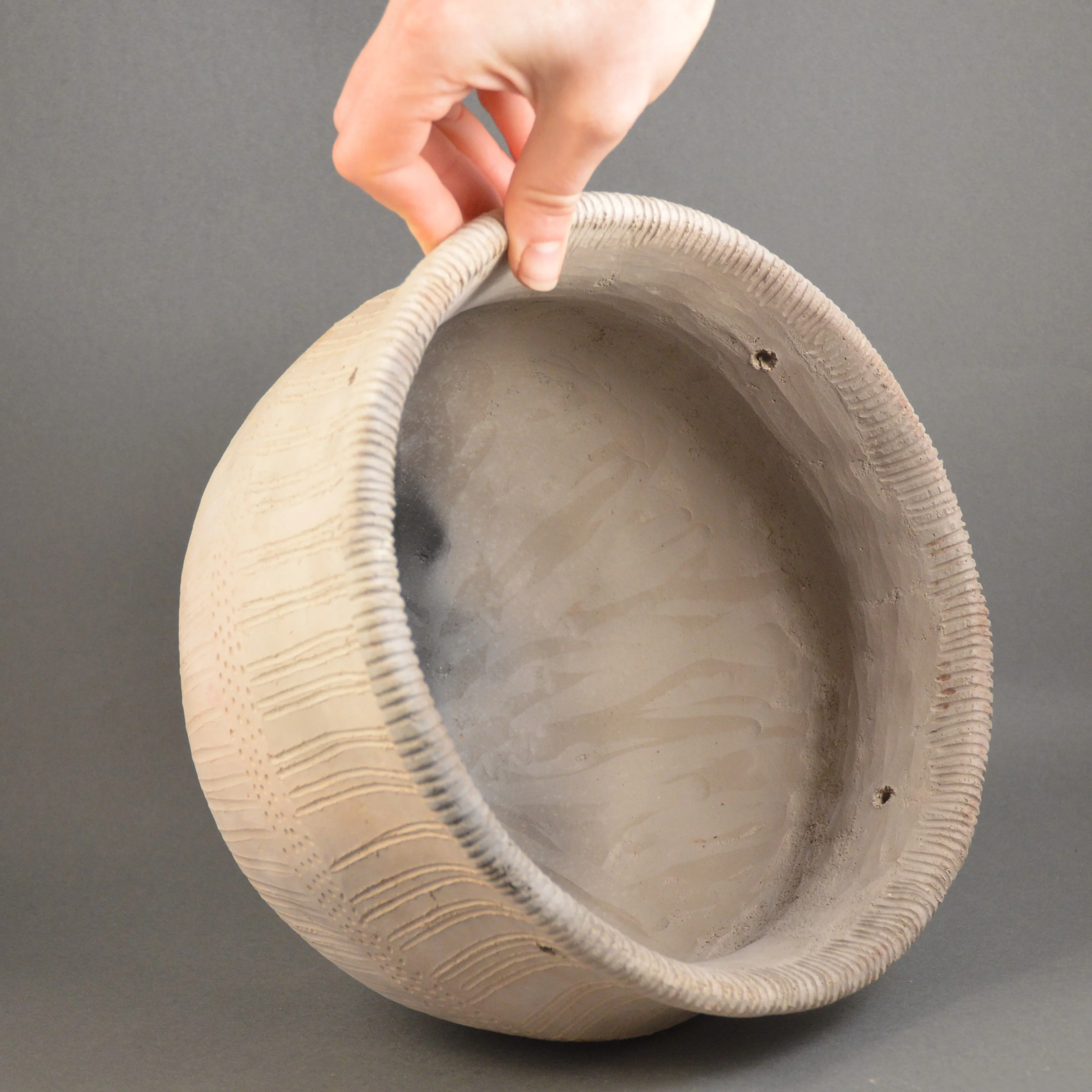
With four perforations just below the rim, it is possible that the original vessel was suspended using cord or leather straps, perhaps for hanging over a fire.
Materials
Smoke-fired terracotta
Dimensions
Height: Approx. 200 mm
Diameter: Approx. 260 mm
Firing
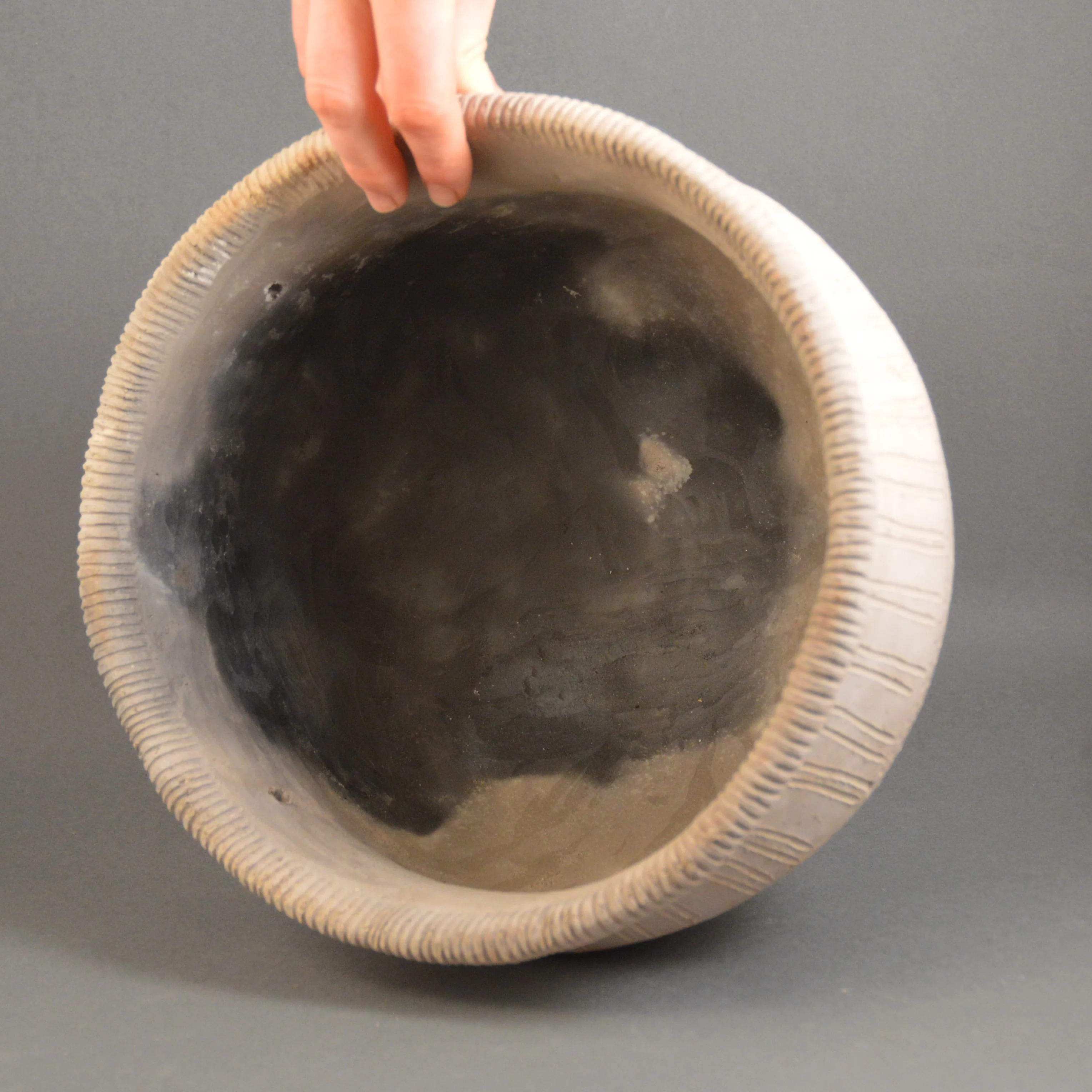
This pot has been fired to emulate ancient firing conditions. The original would have been fired in an open wood fire, in close contact with the fuel, creating natural surface colour variations. To strengthen the replica while retaining its authenticity, it has been fired to a higher temperature using a special process. The exterior has been finished with beeswax, a material identified in residue analysis of original vessels.
Production
This piece is entirely hand-built, using clay similar in character to that used by Neolithic potters. It has been wood-fired to match the surface colouration of the original. Where hand tools are used, these are crafted from stone, wood, shell, bone, and antler, based on artefactual evidence or tool marks found on original pottery.
Health & Safety
Museum-Quality Replica: Made using authentic Roman tools and techniques.
Not food safe: This piece is unglazed and porous, meaning it absorbs liquids and does not meet modern health and safety standards for food use.
For display purposes only: While some enthusiasts use replicas for experimental archaeology, doing so is at your own risk.
Ancient users ensured food safety by heating their pots and contents above 70°C for at least 10 minutes to kill bacteria, with 100°C or higher offering additional protection.
Ordering Information
'Add to Basket' Items: Ready to ship immediately.
'Pre-order' Items: Handmade to order within 90 days (longer for international orders). If your order includes both 'Add to Basket' and 'Pre-order' items, they will be shipped together once all items are ready.
Shipping
All items are sent via second-class postal service as standard.
If you require first-class shipping, please contact us for a custom quote.
Postage Note: All items are carefully packaged to ensure they arrive in perfect condition.
Bring the ingenuity of Neolithic craft into your home. Order your Hurst Fen-inspired cooking pot today and experience the beauty of ancient design
Product Information
Product Information
Shipping & Returns
Shipping & Returns
Description
Handcrafted Neolithic Cooking Pot – Hurst Fen (Mildenhall) Style
Details
This replica is based on a Neolithic Hurst Fen bowl, also referred to as a Mildenhall bowl, discovered in the parish of Mildenhall, Suffolk. This area was the site of a large Neolithic settlement in use between c. 3700 BC and 3400 BC.
While much early Neolithic pottery in Britain was plain and undecorated—such as carinated bowls—the elaborately patterned Hurst Fen bowl stands out as a distinctive and more complex form. It is also considered to represent a regional style associated with southeast England.
With four perforations just below the rim, it is possible that the original vessel was suspended using cord or leather straps, perhaps for hanging over a fire.
Materials
Smoke-fired terracotta
Dimensions
Height: Approx. 200 mm
Diameter: Approx. 260 mm
Firing
This pot has been fired to emulate ancient firing conditions. The original would have been fired in an open wood fire, in close contact with the fuel, creating natural surface colour variations. To strengthen the replica while retaining its authenticity, it has been fired to a higher temperature using a special process. The exterior has been finished with beeswax, a material identified in residue analysis of original vessels.
Production
This piece is entirely hand-built, using clay similar in character to that used by Neolithic potters. It has been wood-fired to match the surface colouration of the original. Where hand tools are used, these are crafted from stone, wood, shell, bone, and antler, based on artefactual evidence or tool marks found on original pottery.
Health & Safety
Museum-Quality Replica: Made using authentic Roman tools and techniques.
Not food safe: This piece is unglazed and porous, meaning it absorbs liquids and does not meet modern health and safety standards for food use.
For display purposes only: While some enthusiasts use replicas for experimental archaeology, doing so is at your own risk.
Ancient users ensured food safety by heating their pots and contents above 70°C for at least 10 minutes to kill bacteria, with 100°C or higher offering additional protection.
Ordering Information
'Add to Basket' Items: Ready to ship immediately.
'Pre-order' Items: Handmade to order within 90 days (longer for international orders). If your order includes both 'Add to Basket' and 'Pre-order' items, they will be shipped together once all items are ready.
Shipping
All items are sent via second-class postal service as standard.
If you require first-class shipping, please contact us for a custom quote.
Postage Note: All items are carefully packaged to ensure they arrive in perfect condition.
Bring the ingenuity of Neolithic craft into your home. Order your Hurst Fen-inspired cooking pot today and experience the beauty of ancient design