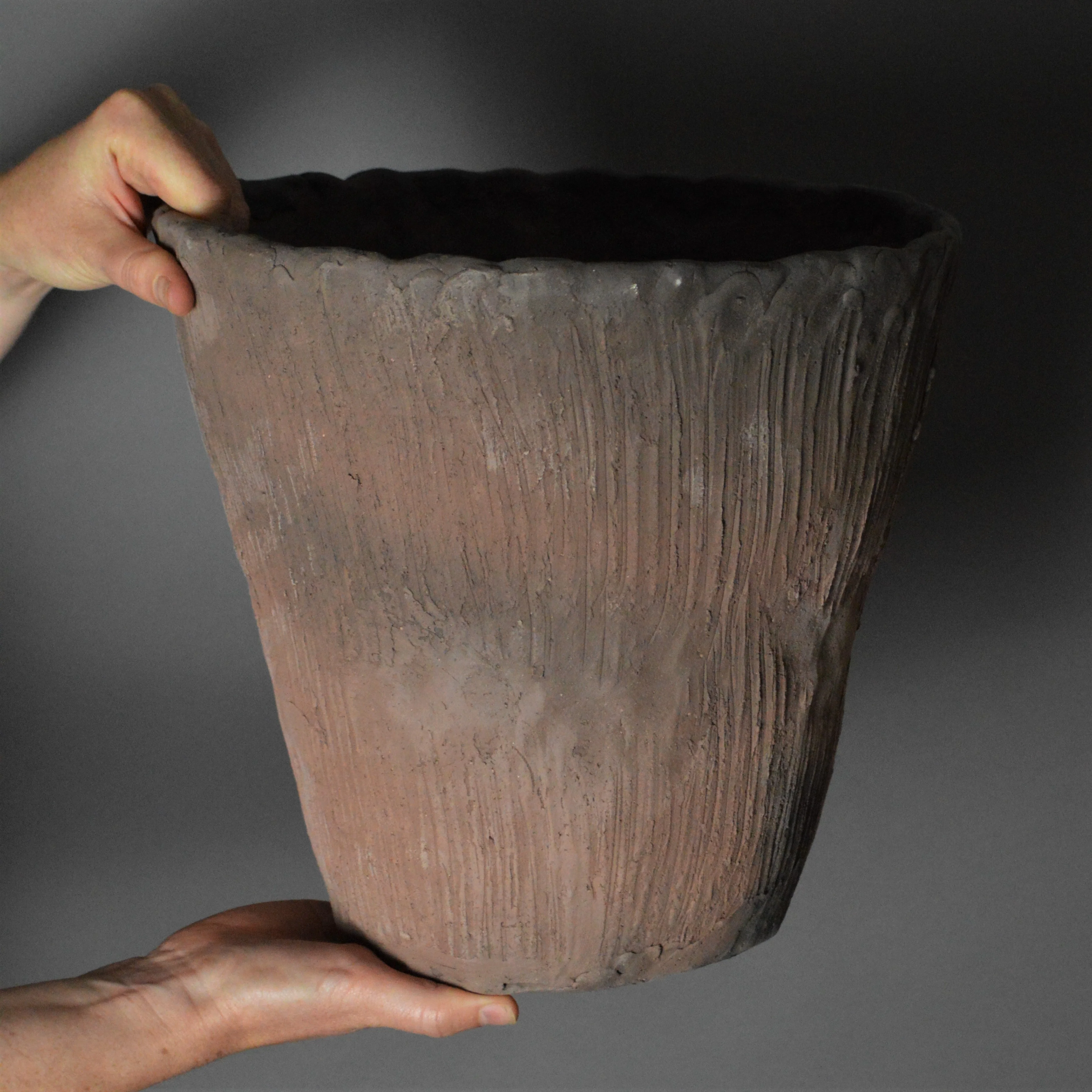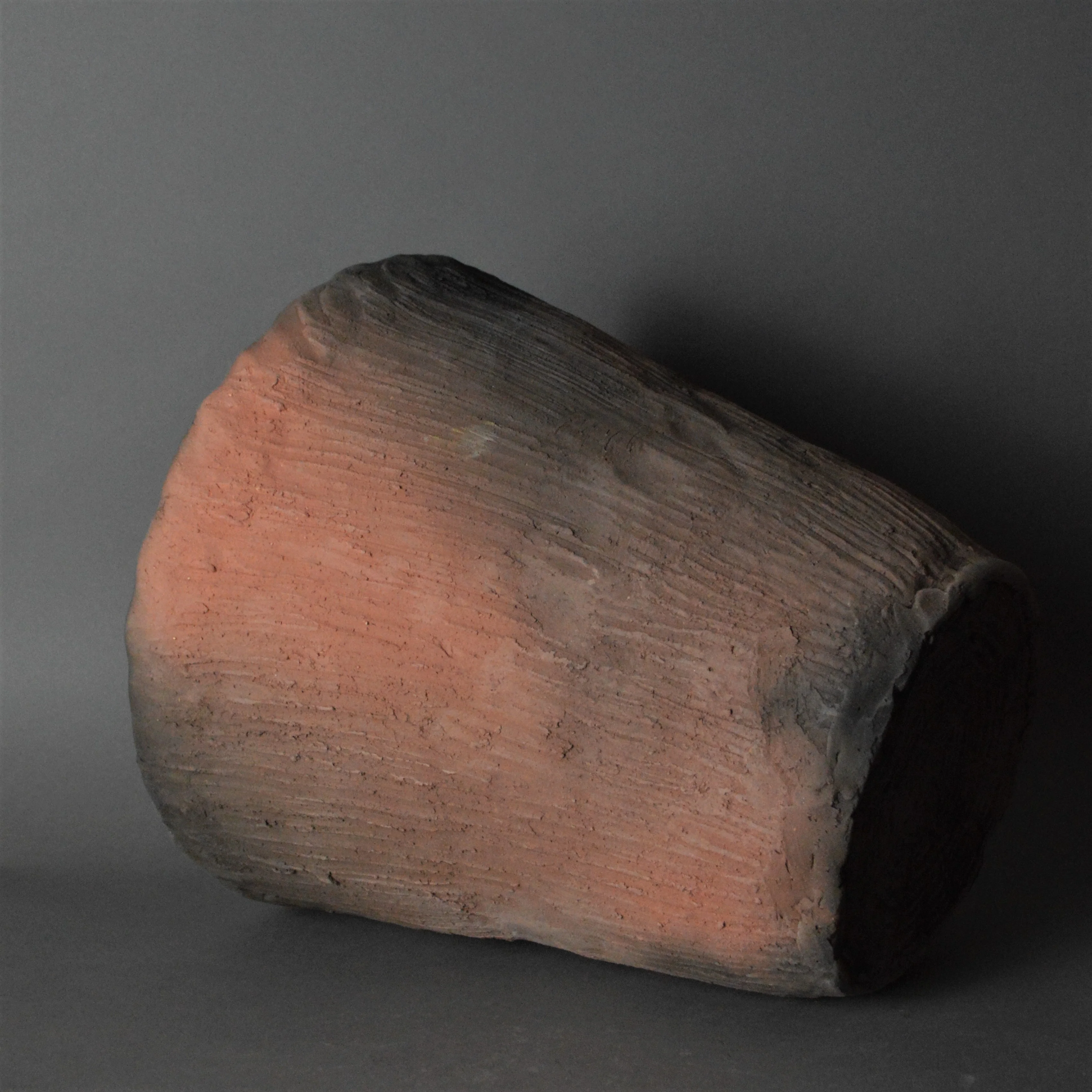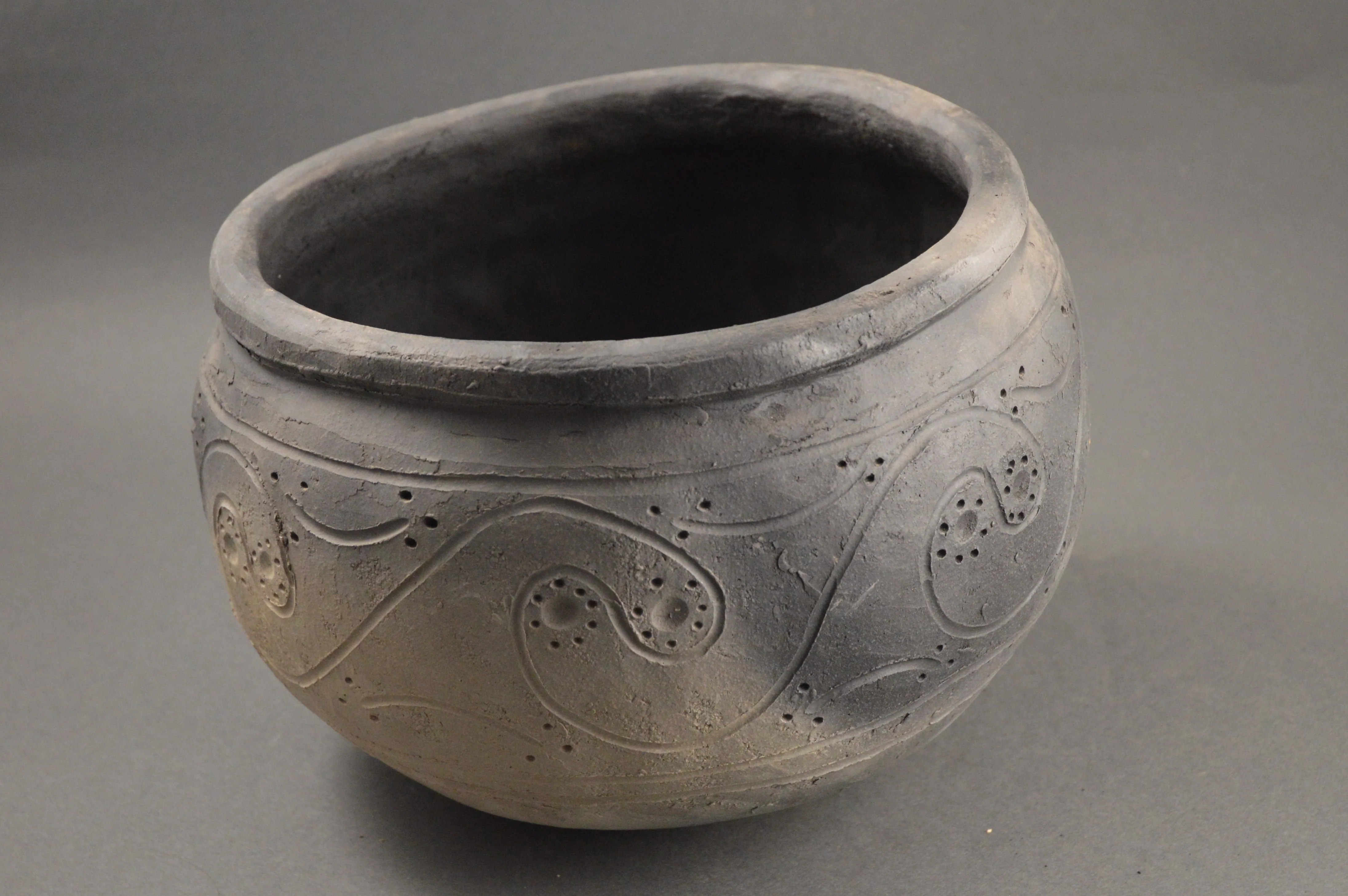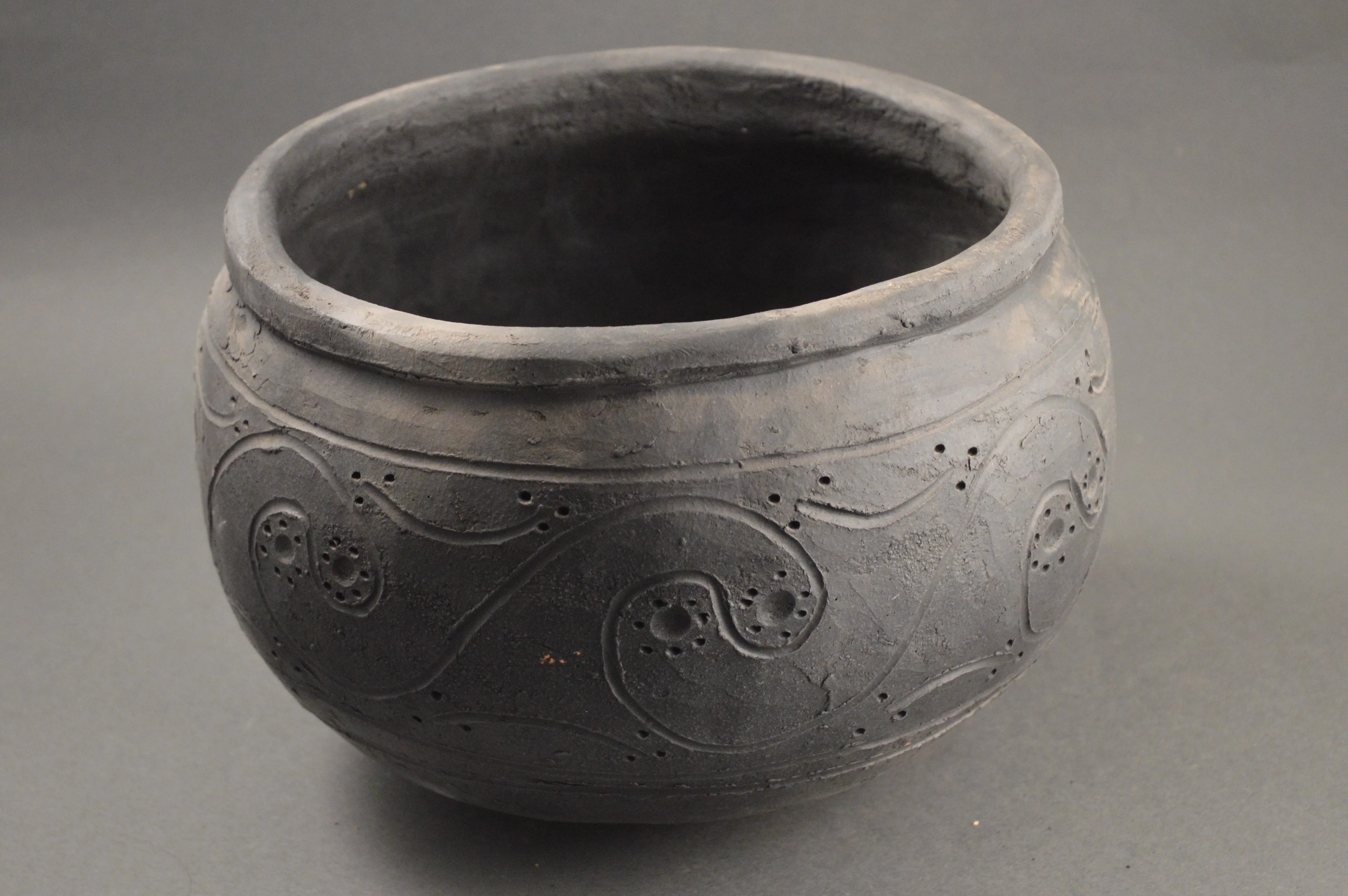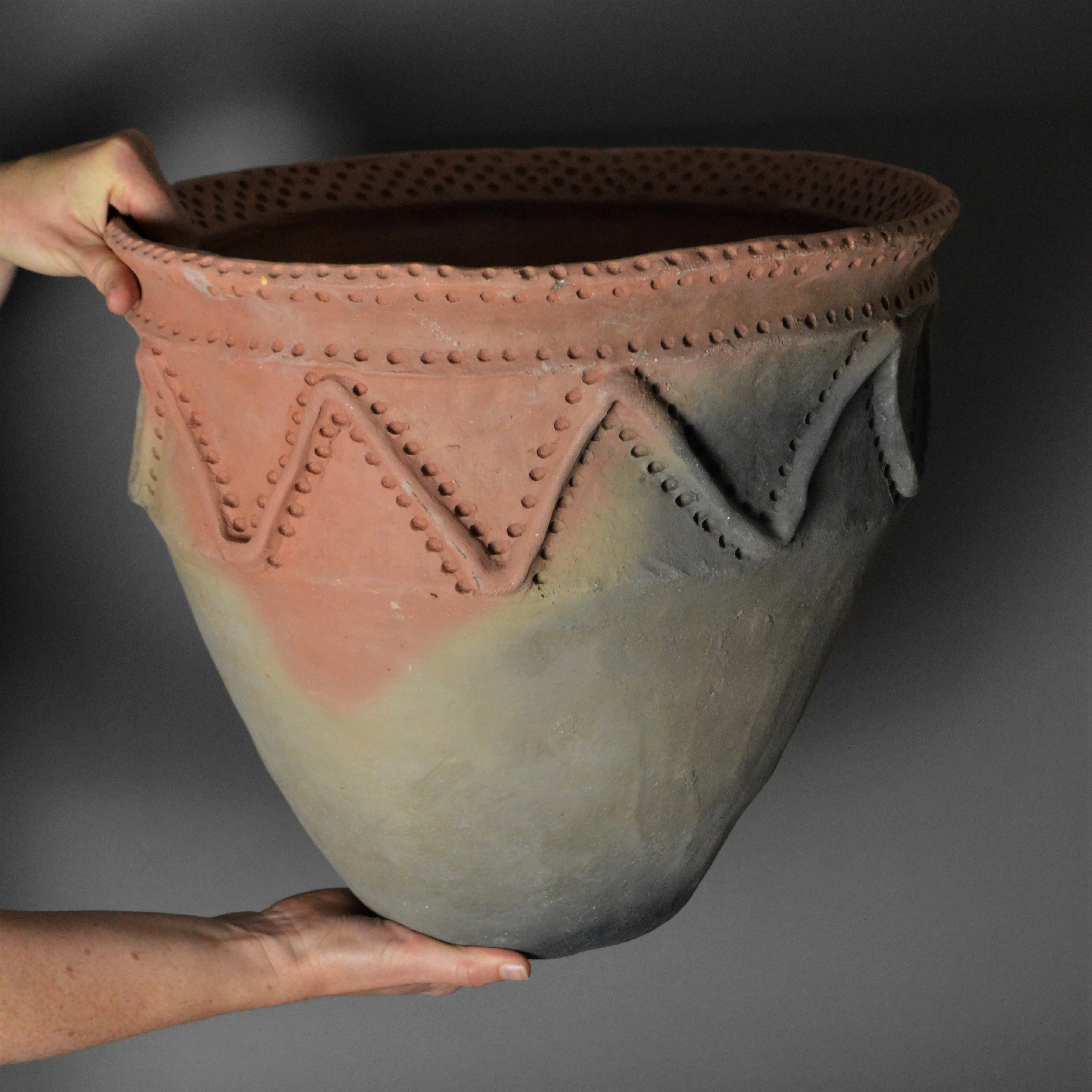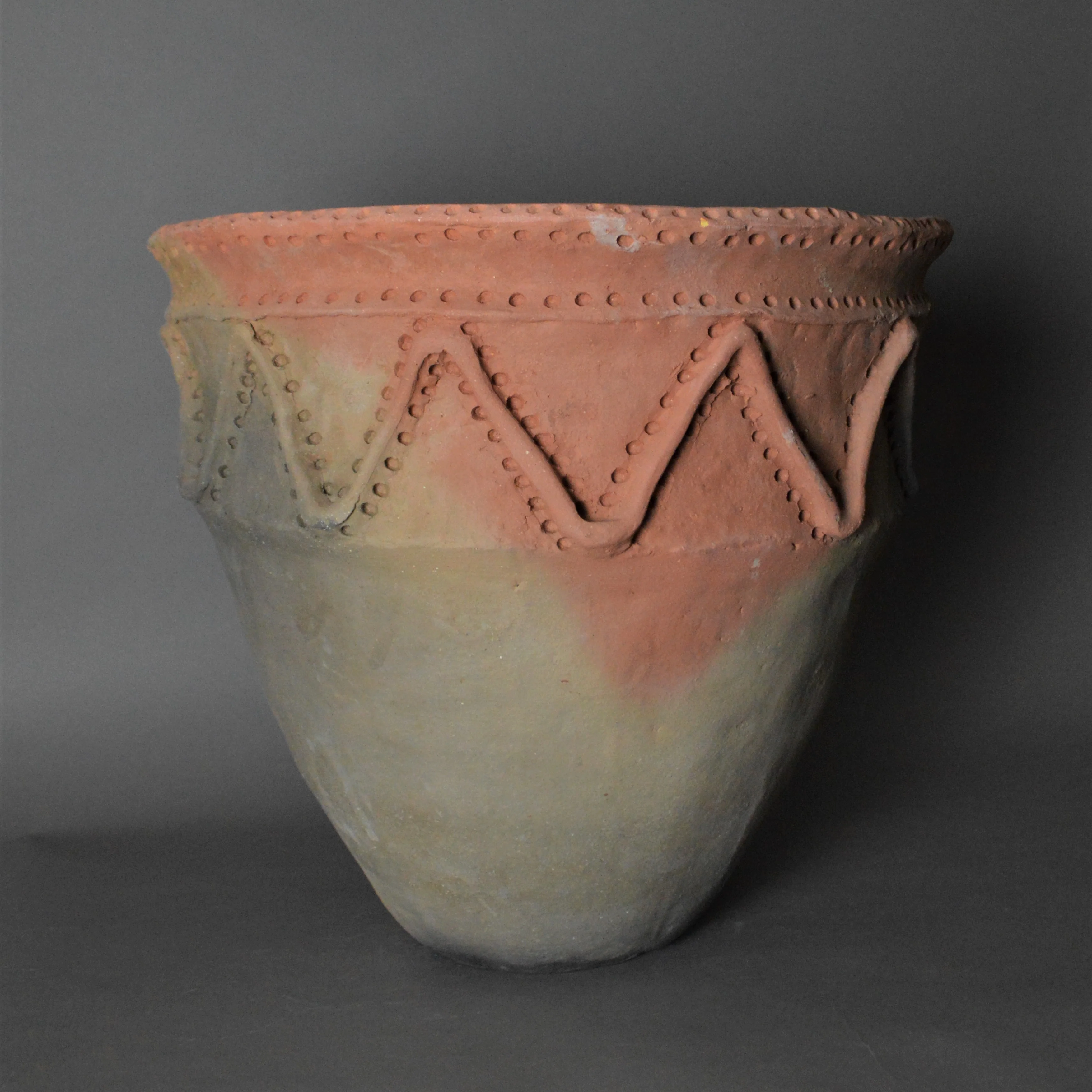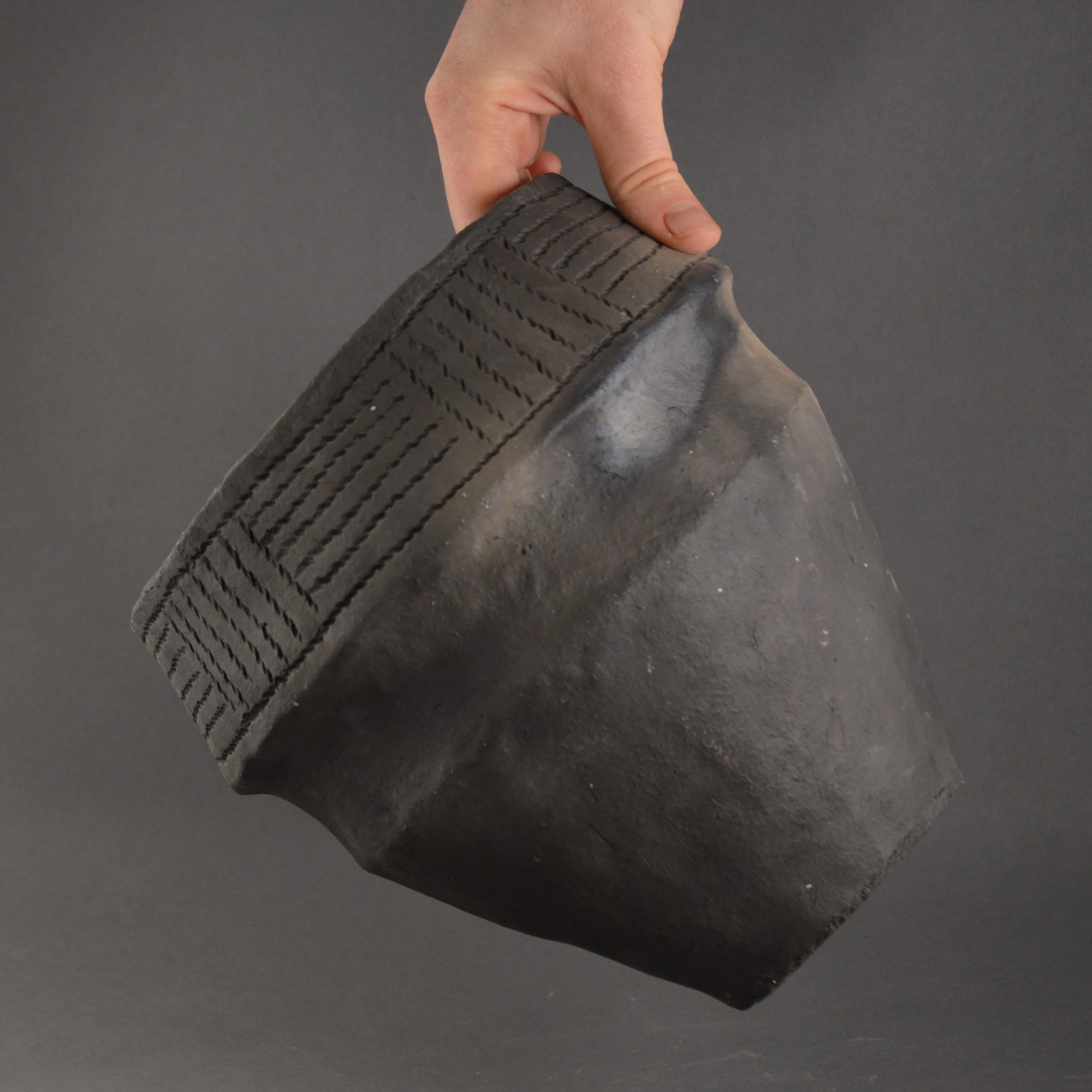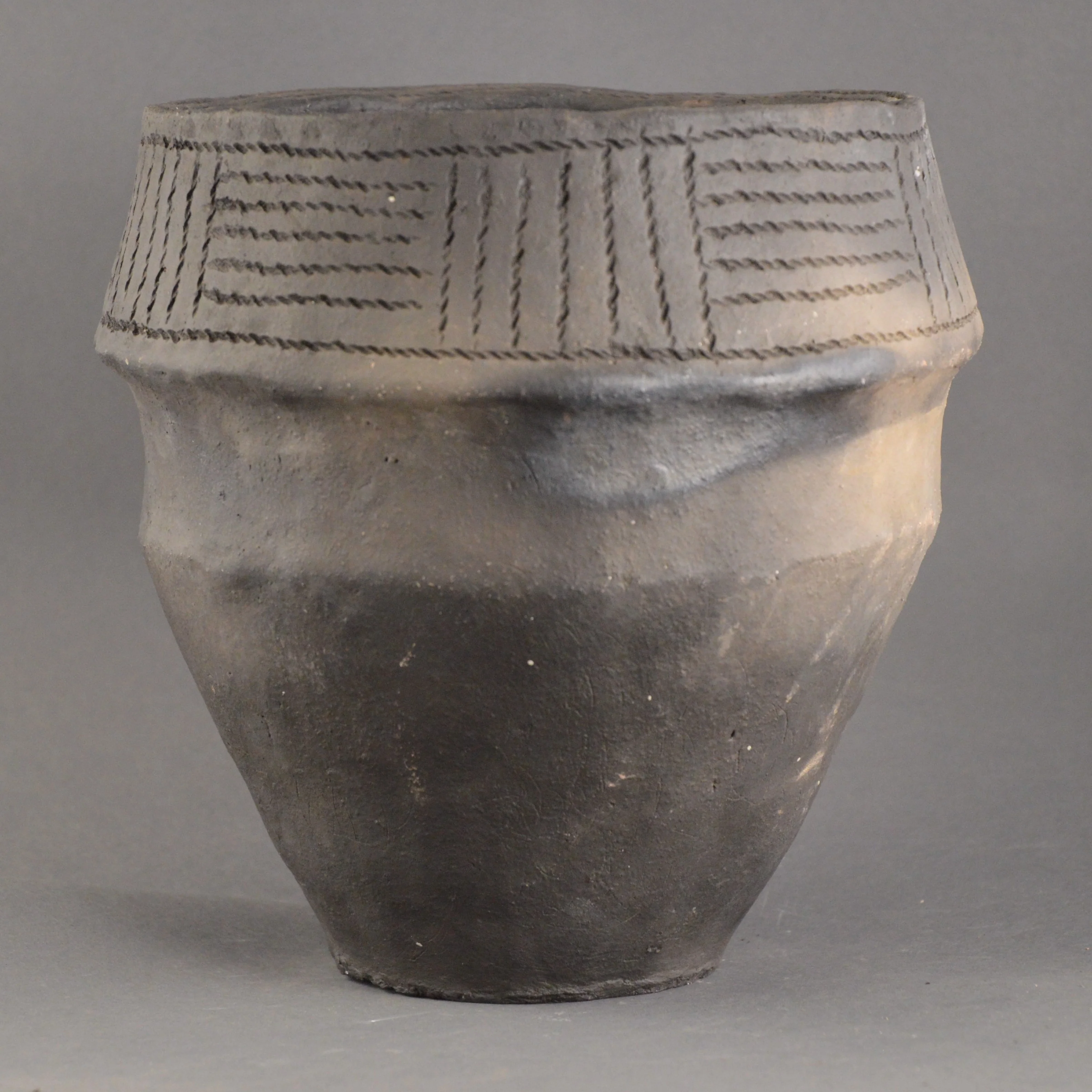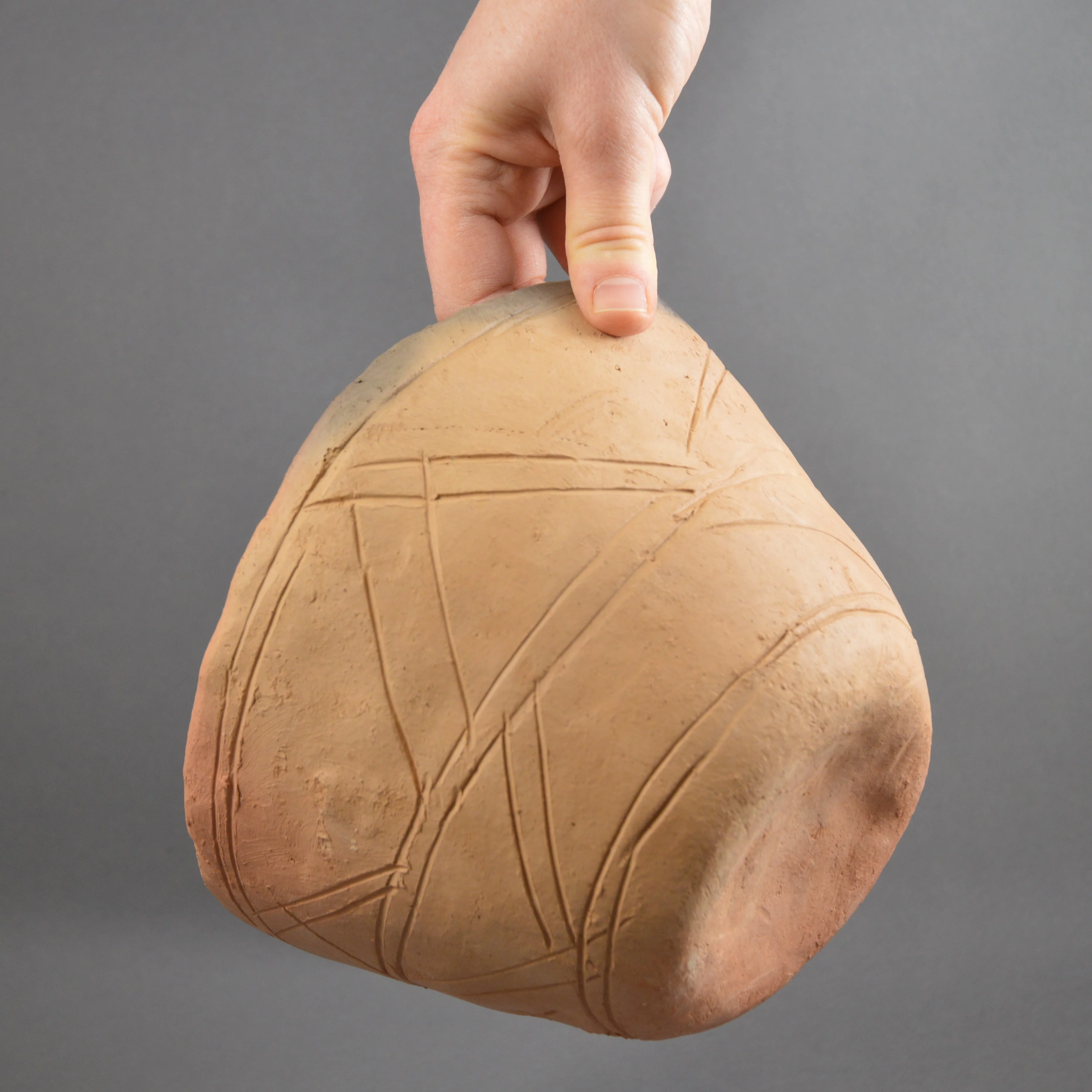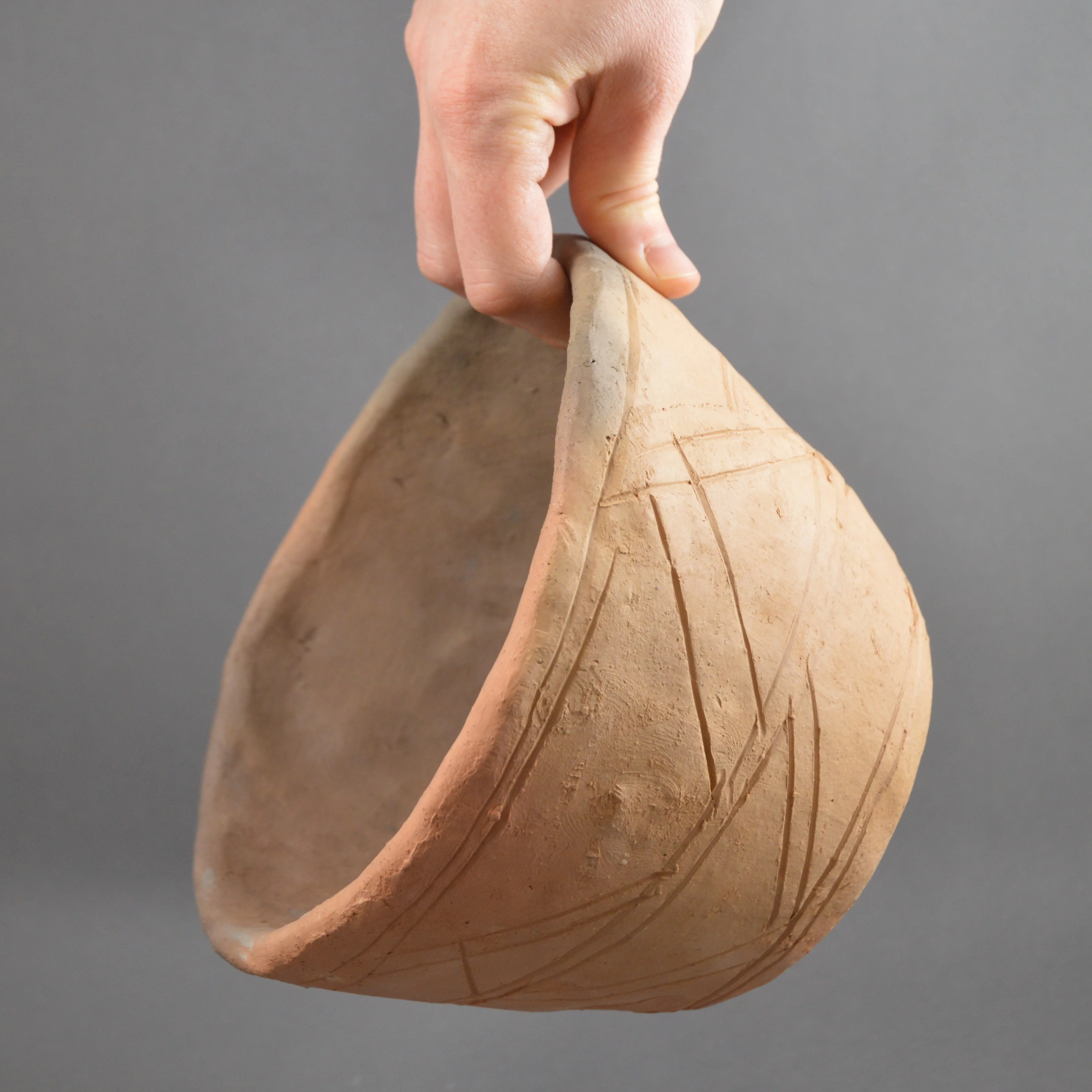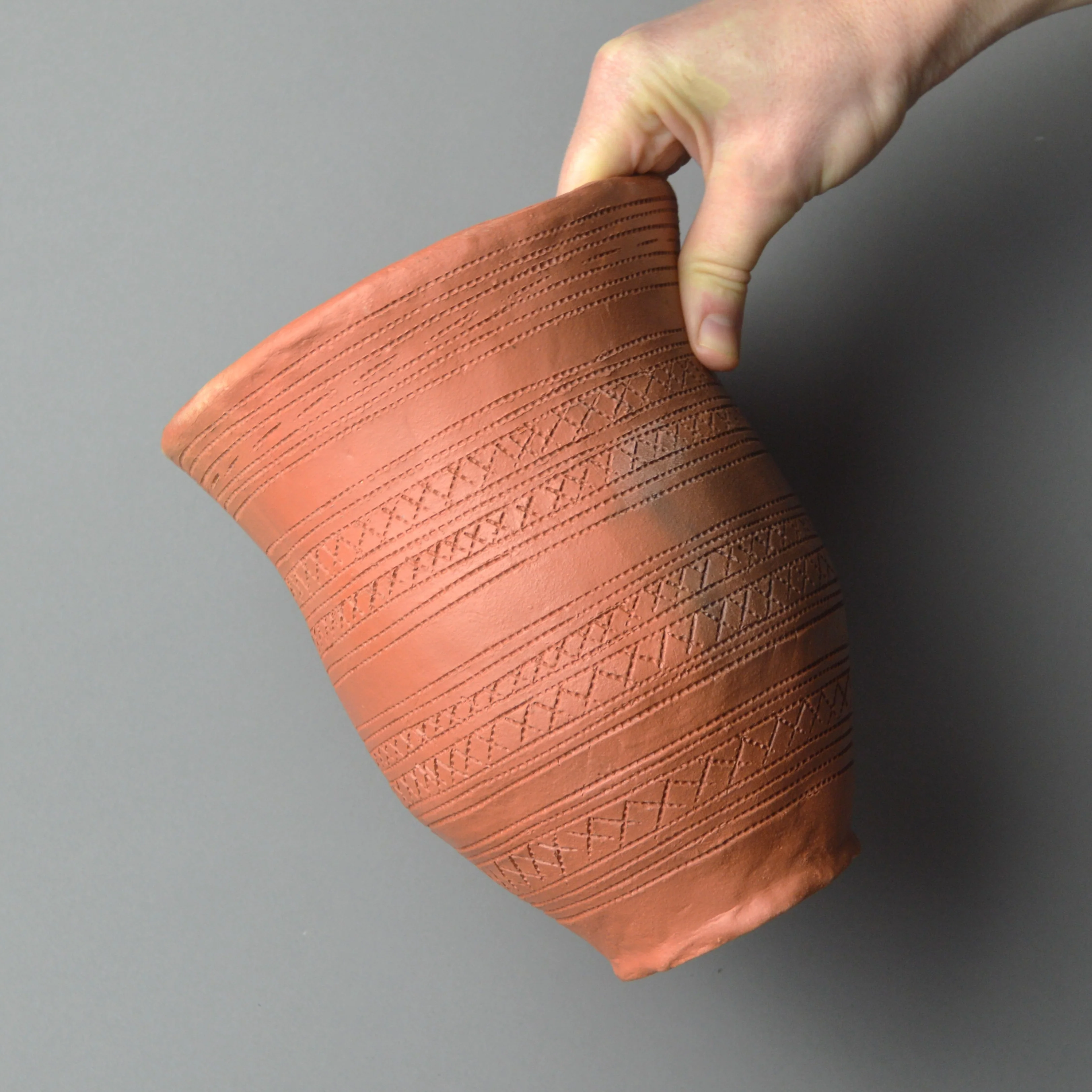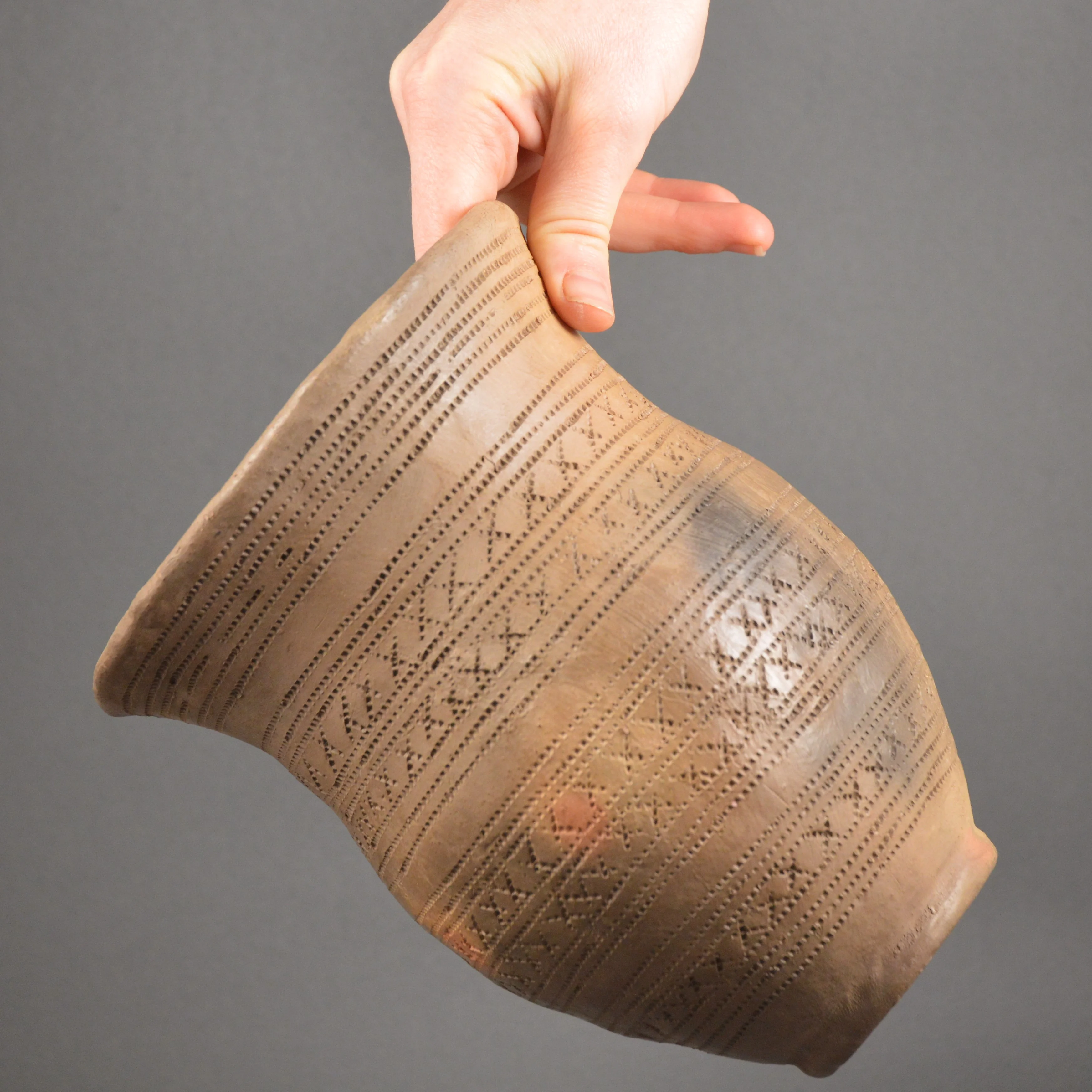
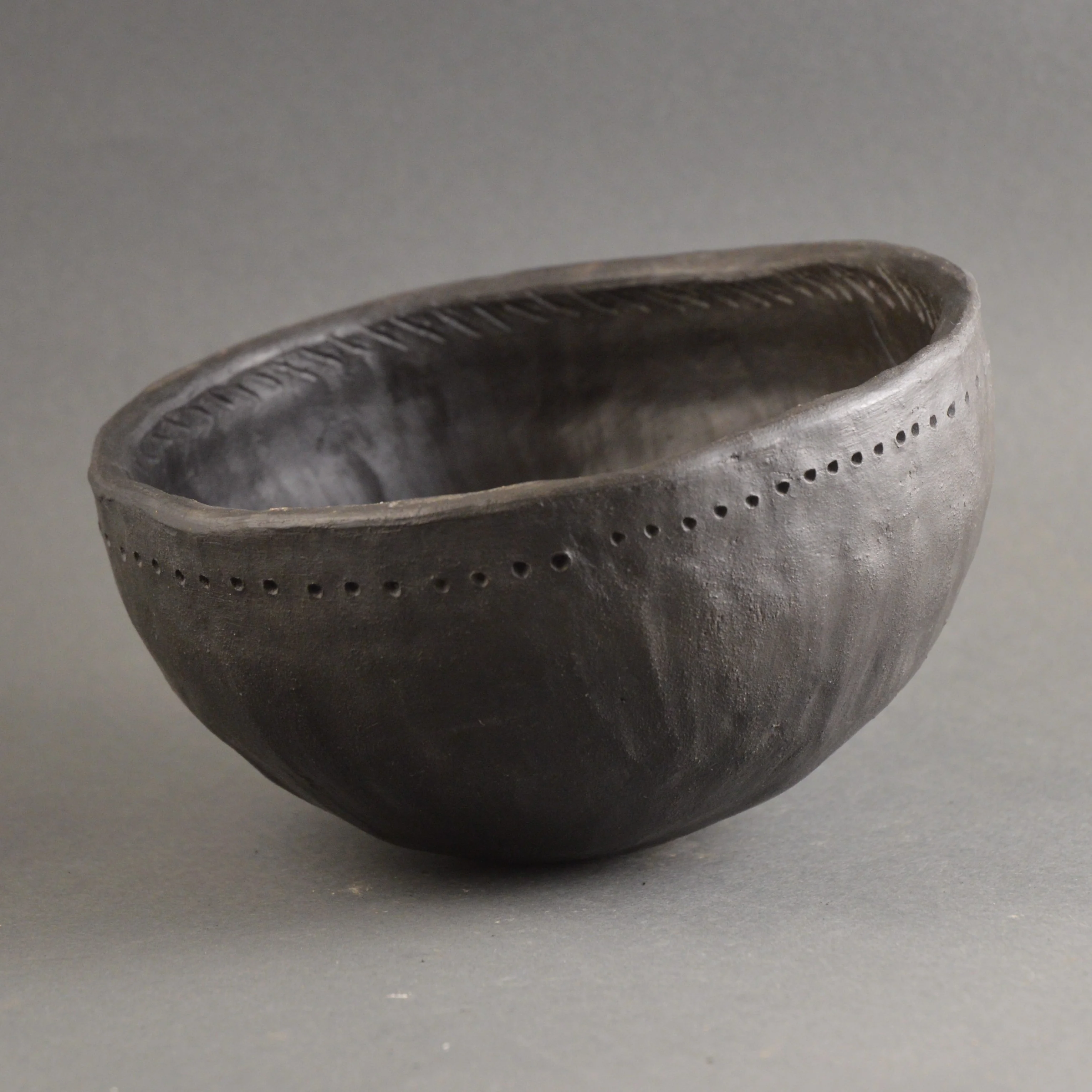
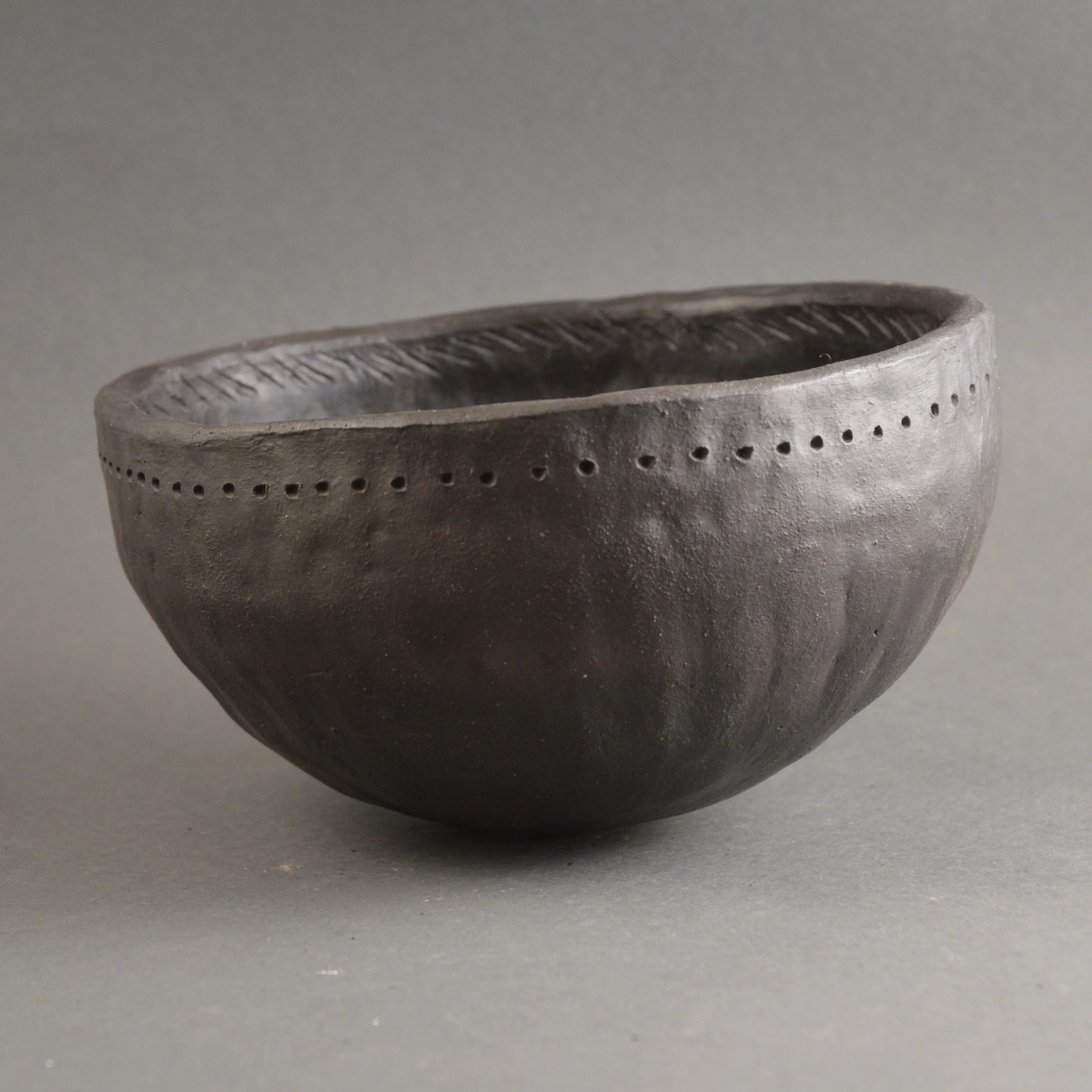
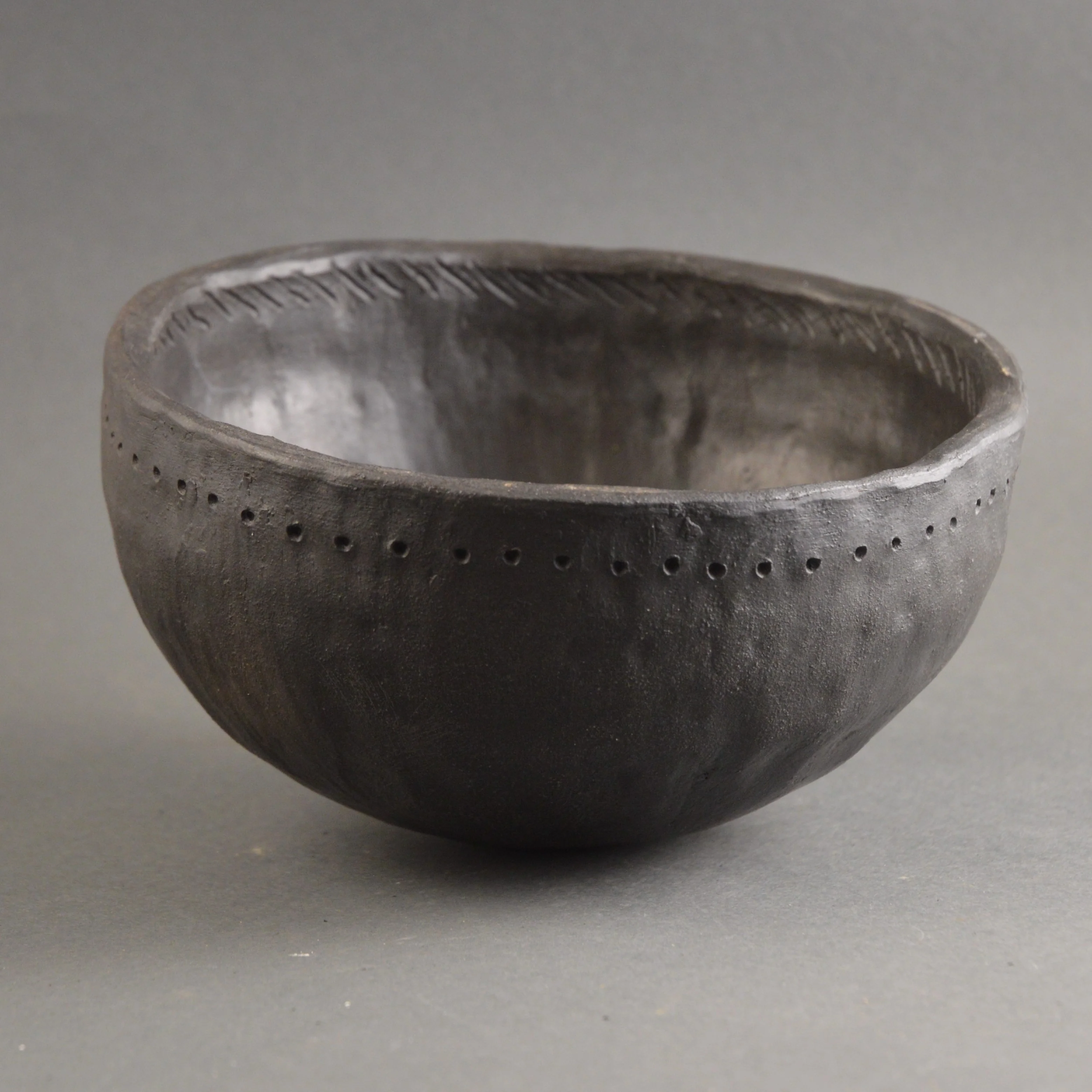
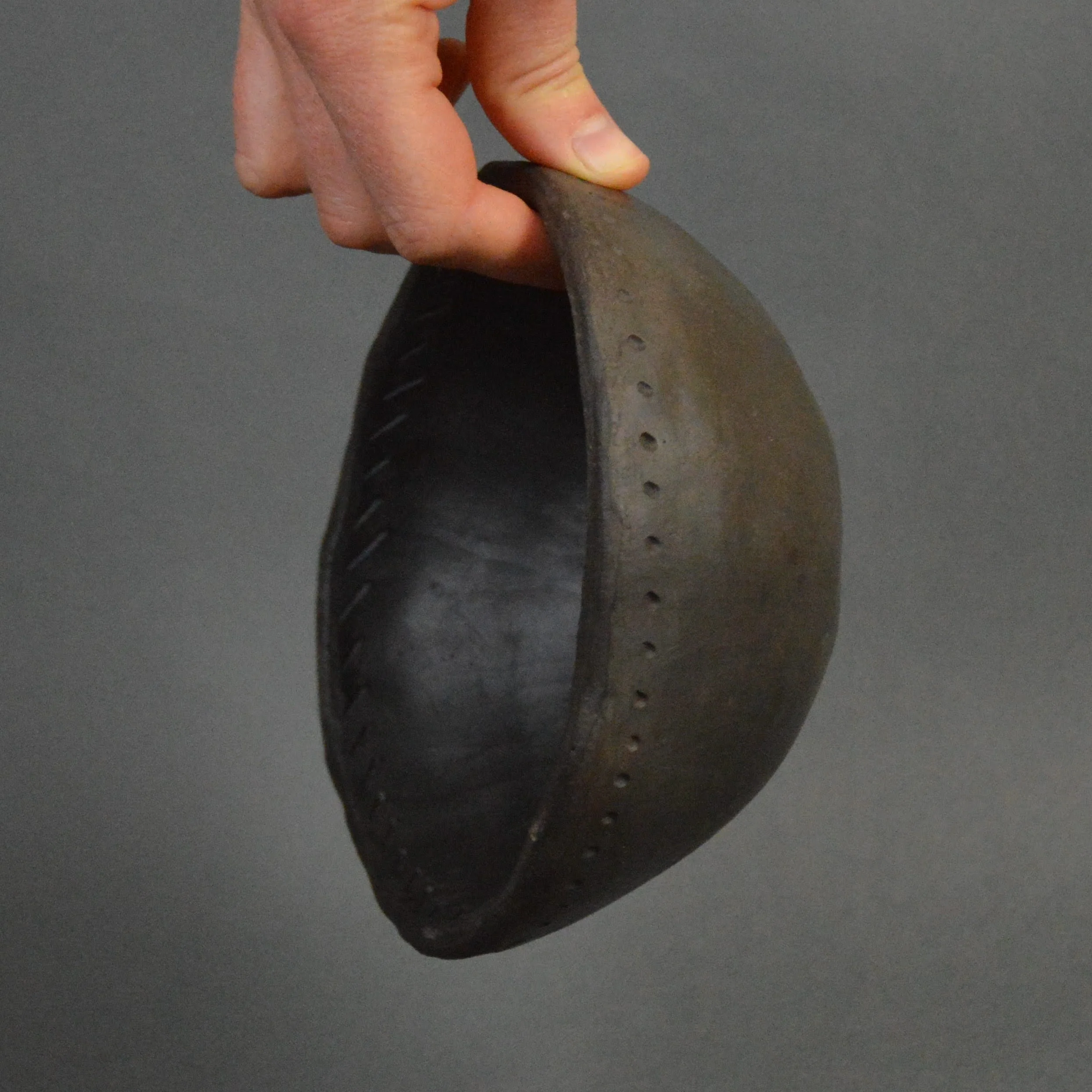
Neolithic Bowl, Windmill Hill Style
Handcrafted Neolithic Bowl – Windmill Hill Style
Details
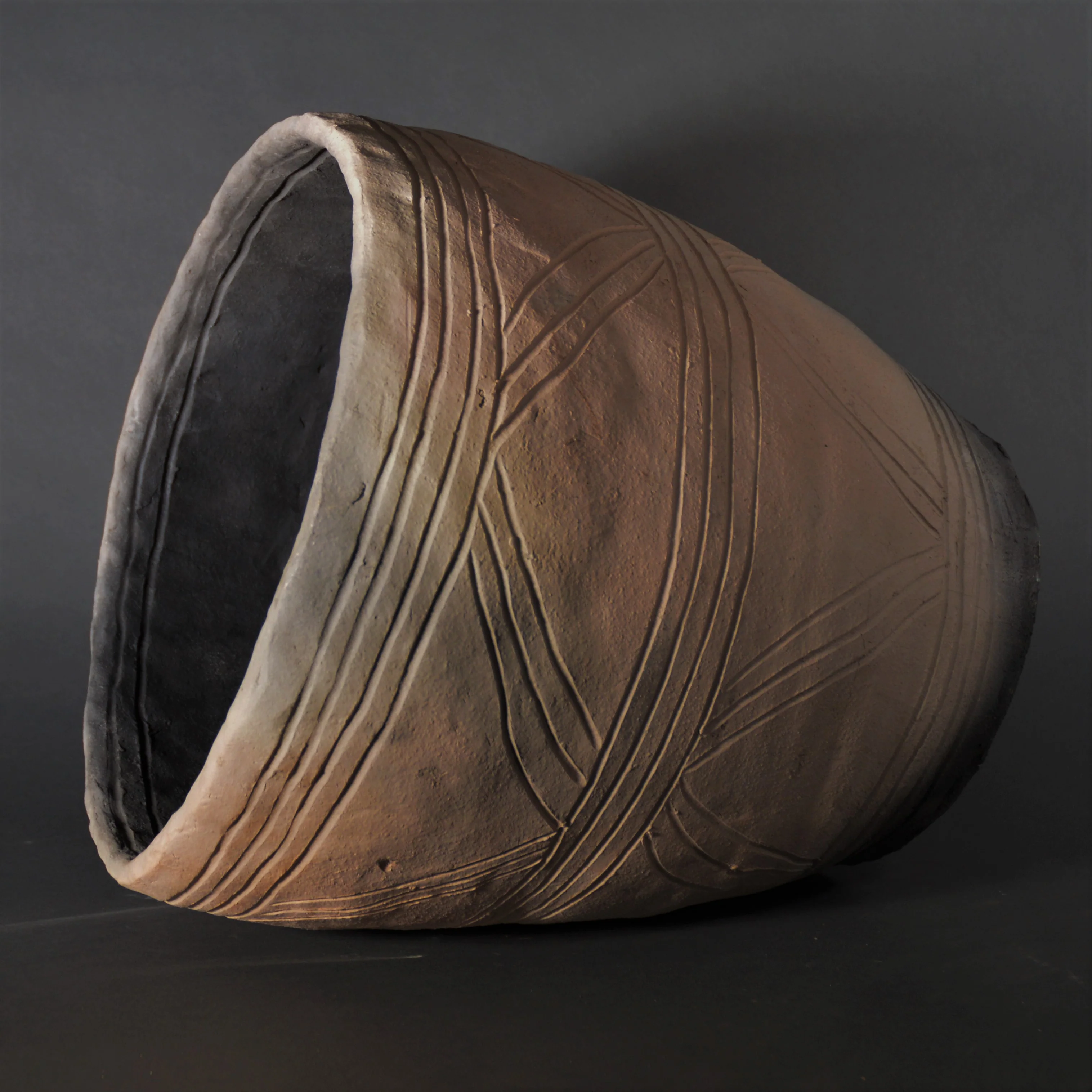
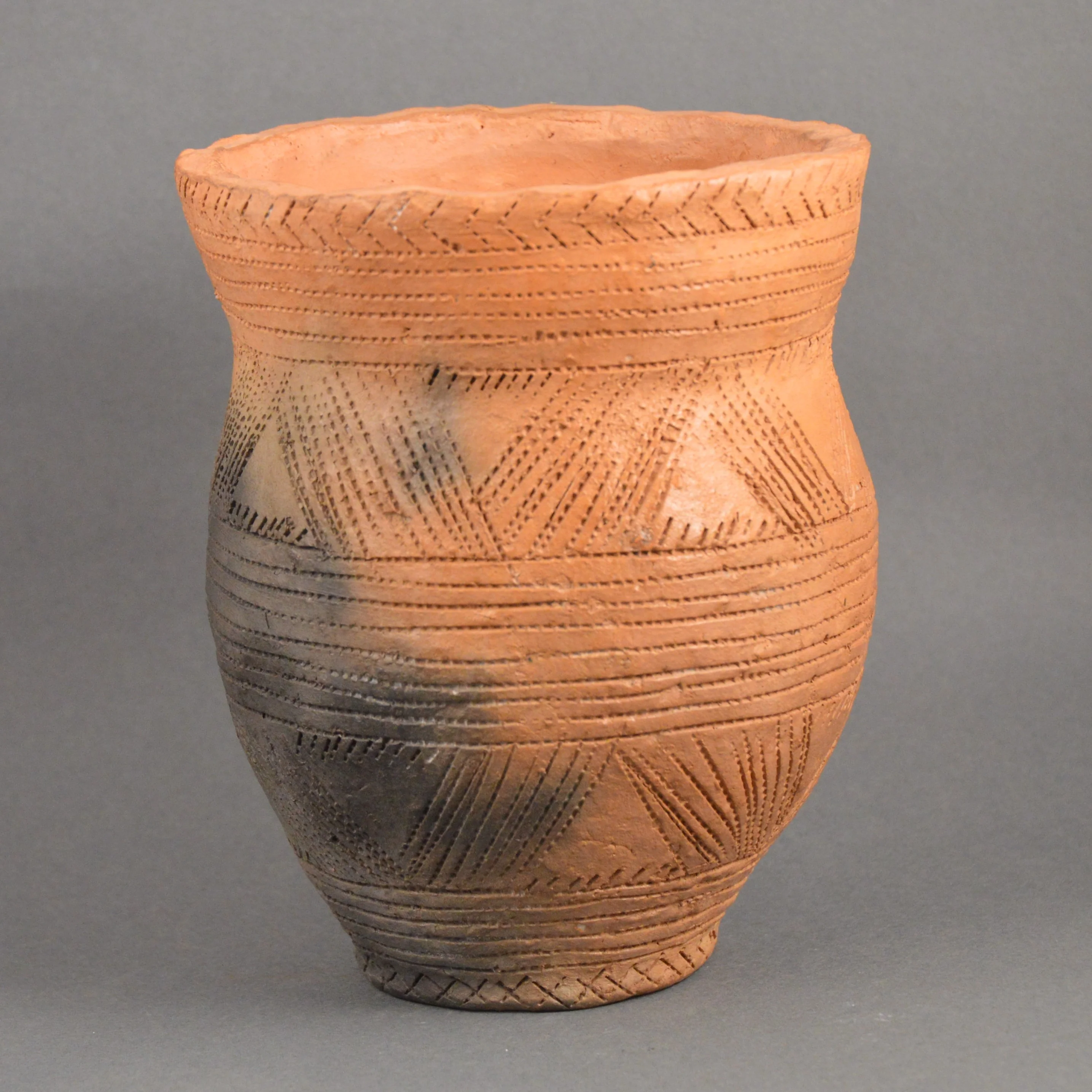
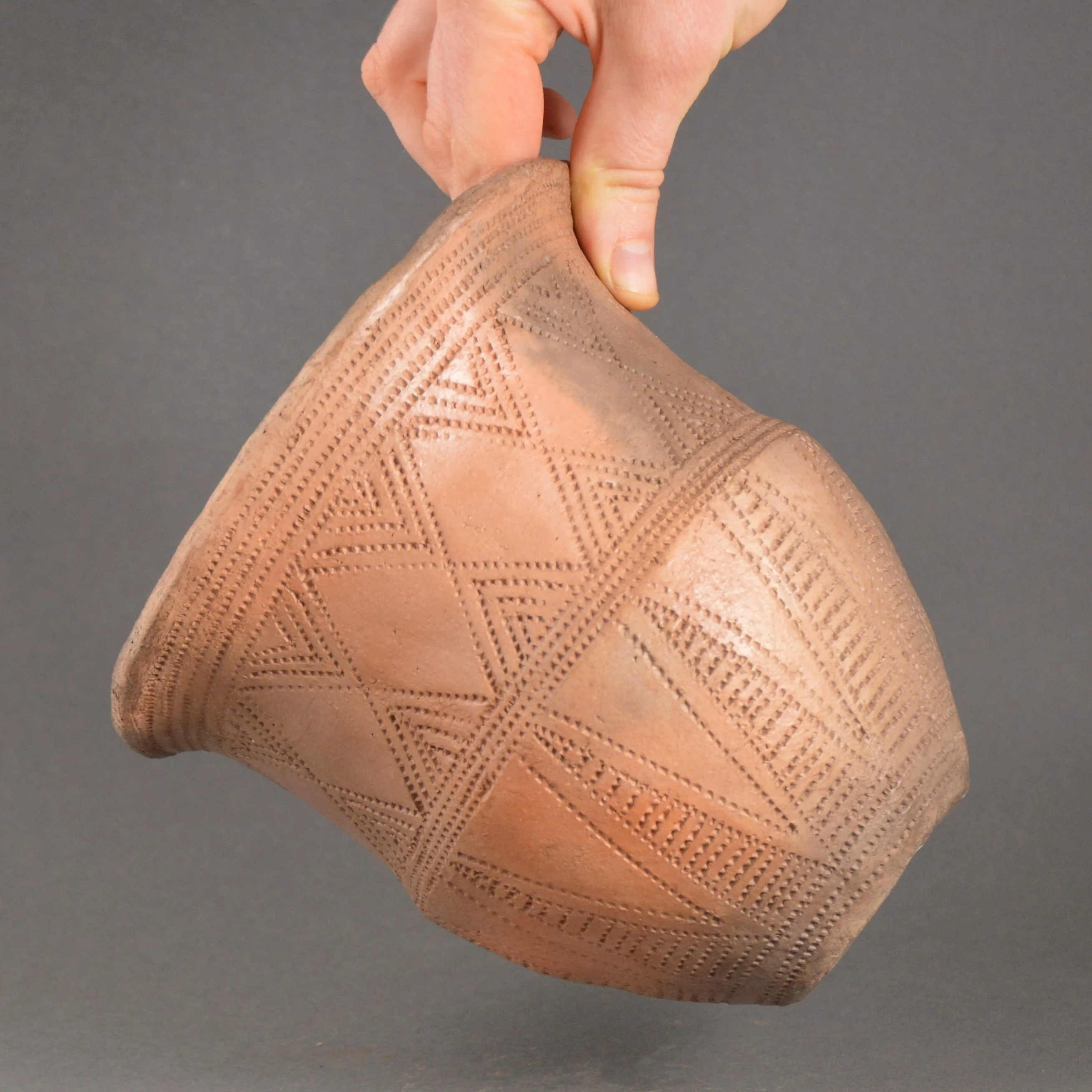
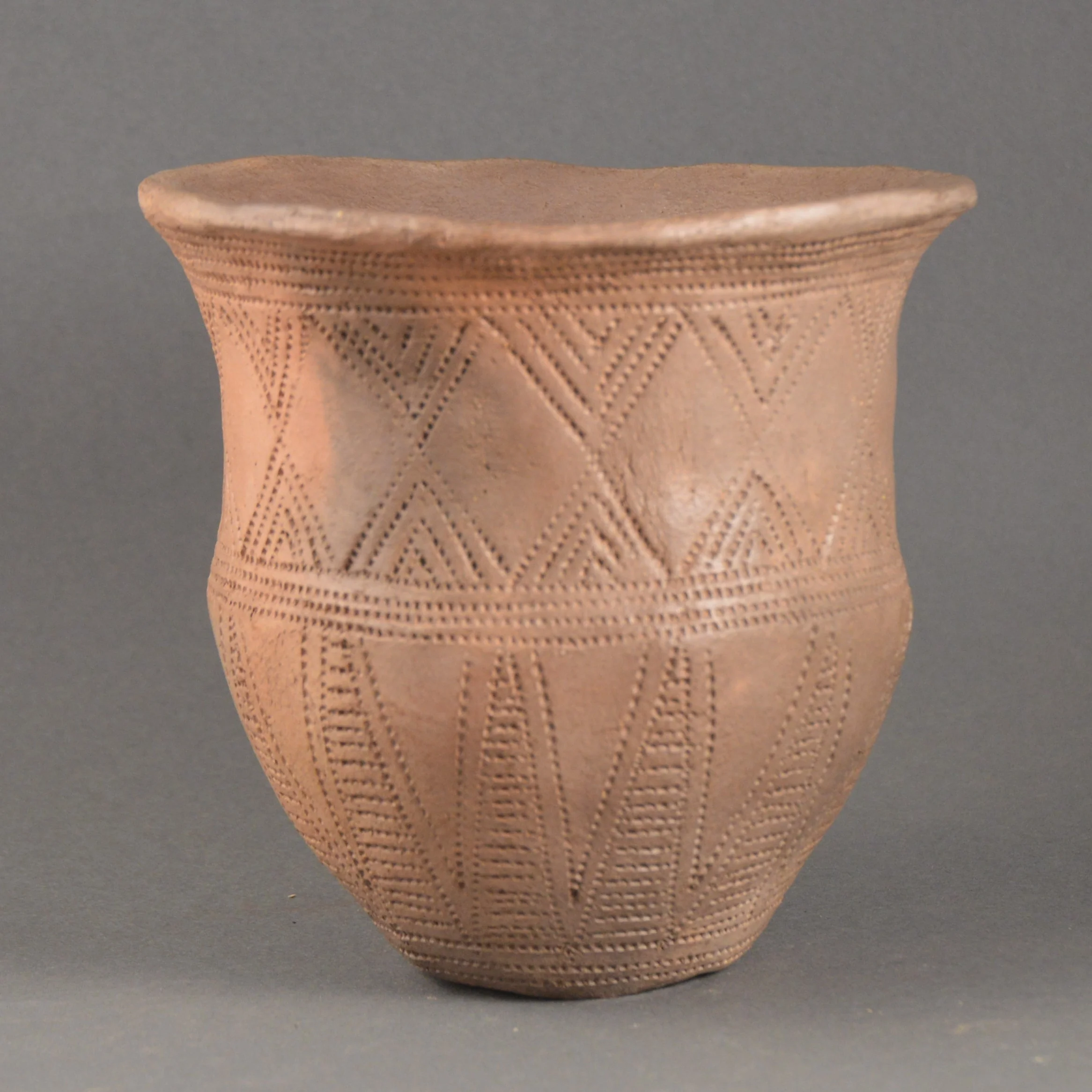
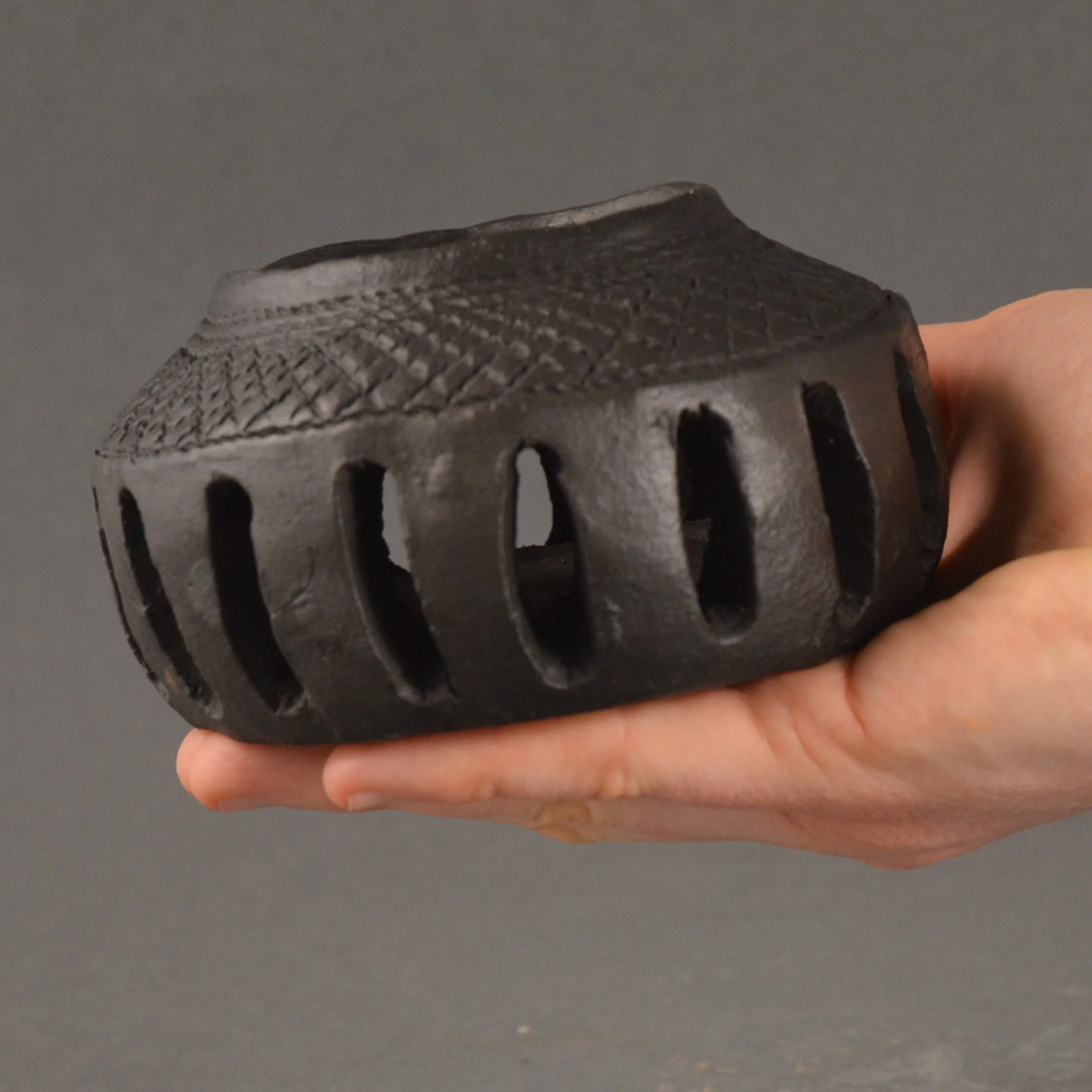
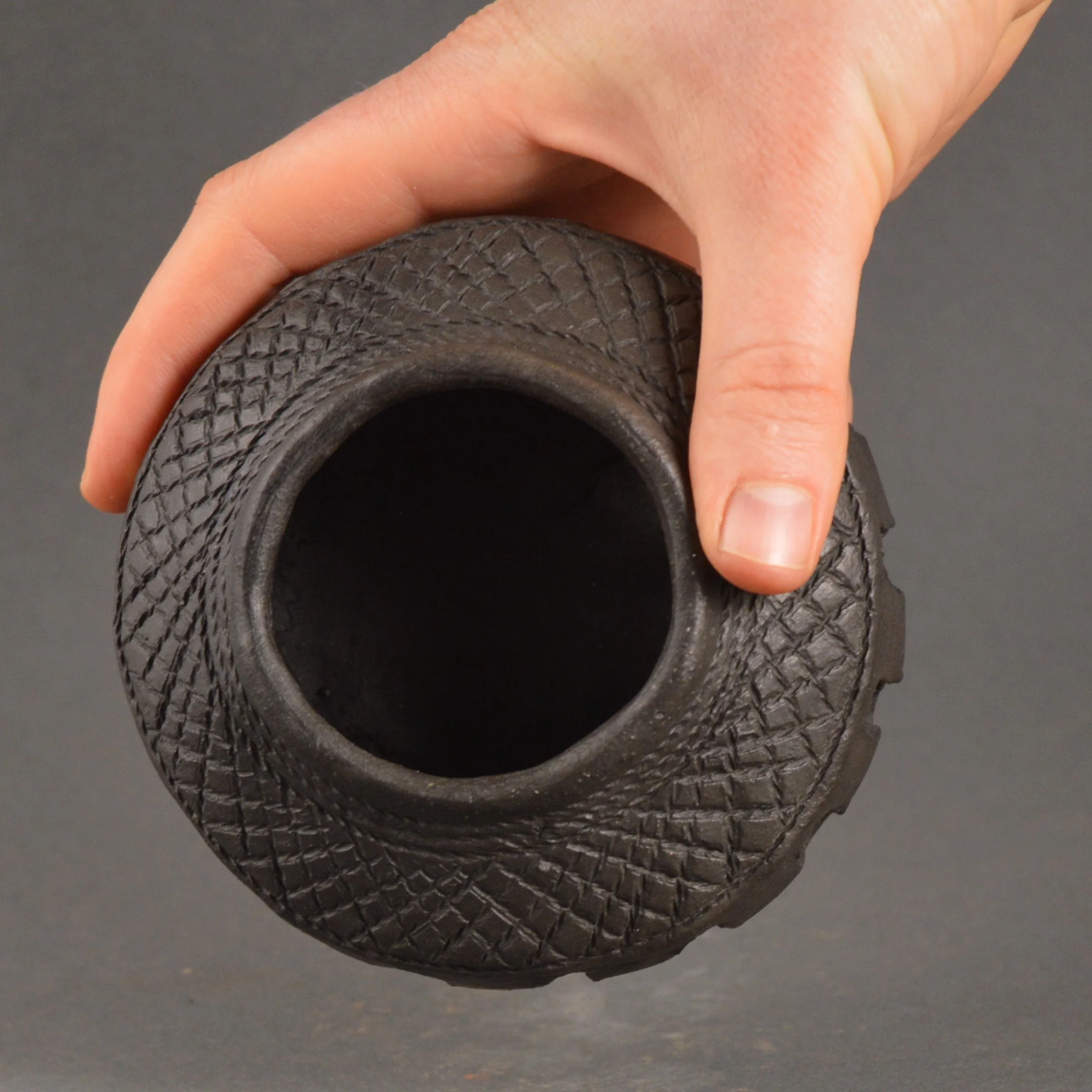
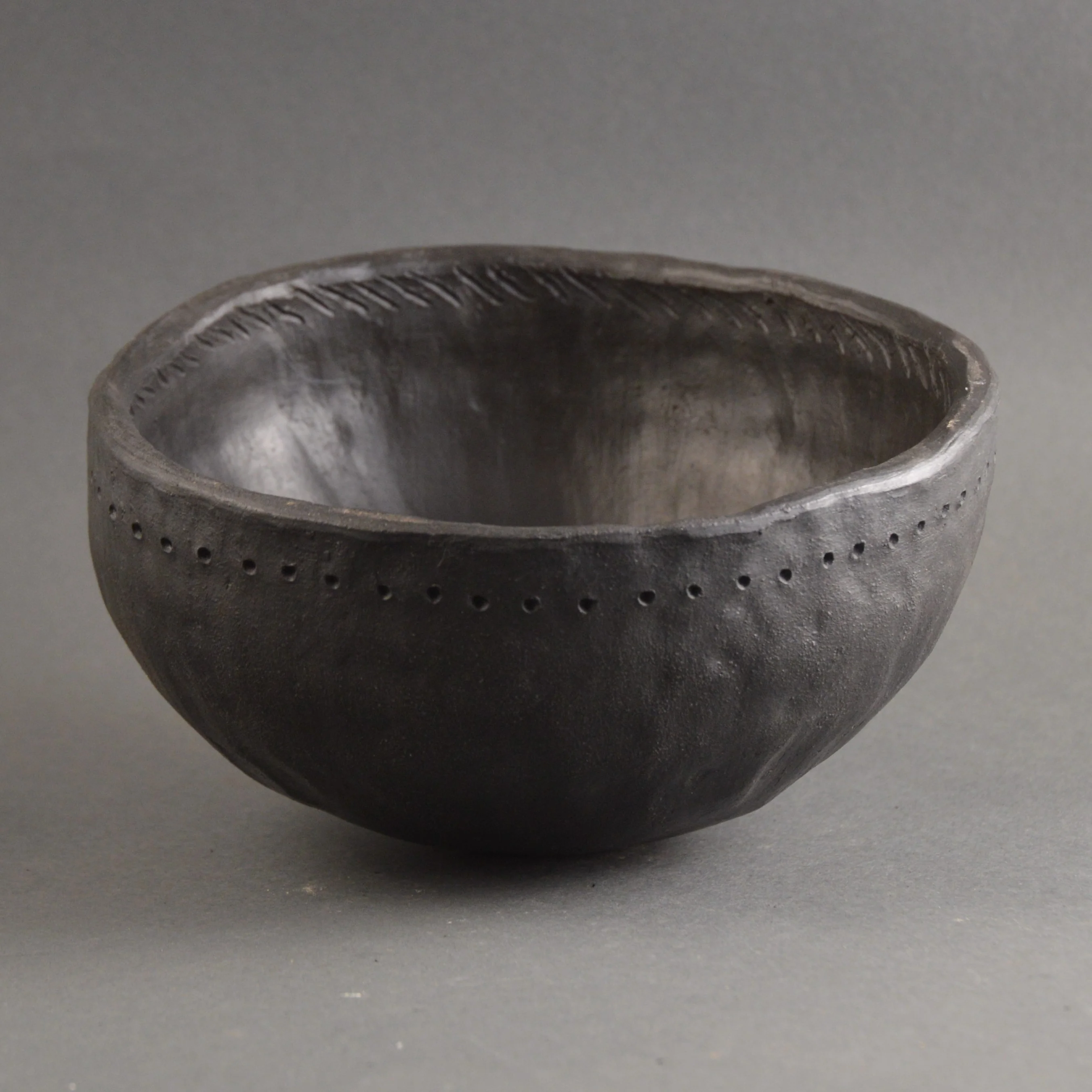
This is a faithful replica of a Neolithic bowl in the "Windmill Hill" style, named after one of the first sites where it was recognised: the Causewayed Enclosure at Windmill Hill, about a mile northwest of Avebury in Wiltshire.
It was here, during archaeological excavations in the 1920s, that some of the earliest pottery in the British Isles was uncovered. These simple yet powerful vessels mark a transformative moment in human history—the arrival of farming from the continent, and with it, the first use of fired clay pots in Britain.
Before pottery, early communities may have dropped hot stones into wooden or leather containers to warm their food or drink. But with the introduction of pottery, people could now heat liquid directly over a fire, ushering in a new era of food preparation, shared meals, and settled life.
Imagine a dark, smoky roundhouse, the scent of woodsmoke heavy in the air, and this bowl nestled in the embers—its contents gently bubbling as families gathered close. These pots were more than just practical—they were part of the daily rhythm of survival, innovation, and the growing complexity of Neolithic life.
Materials
Smoke-fired terracotta
Dimensions
Made to approximate size of the original:
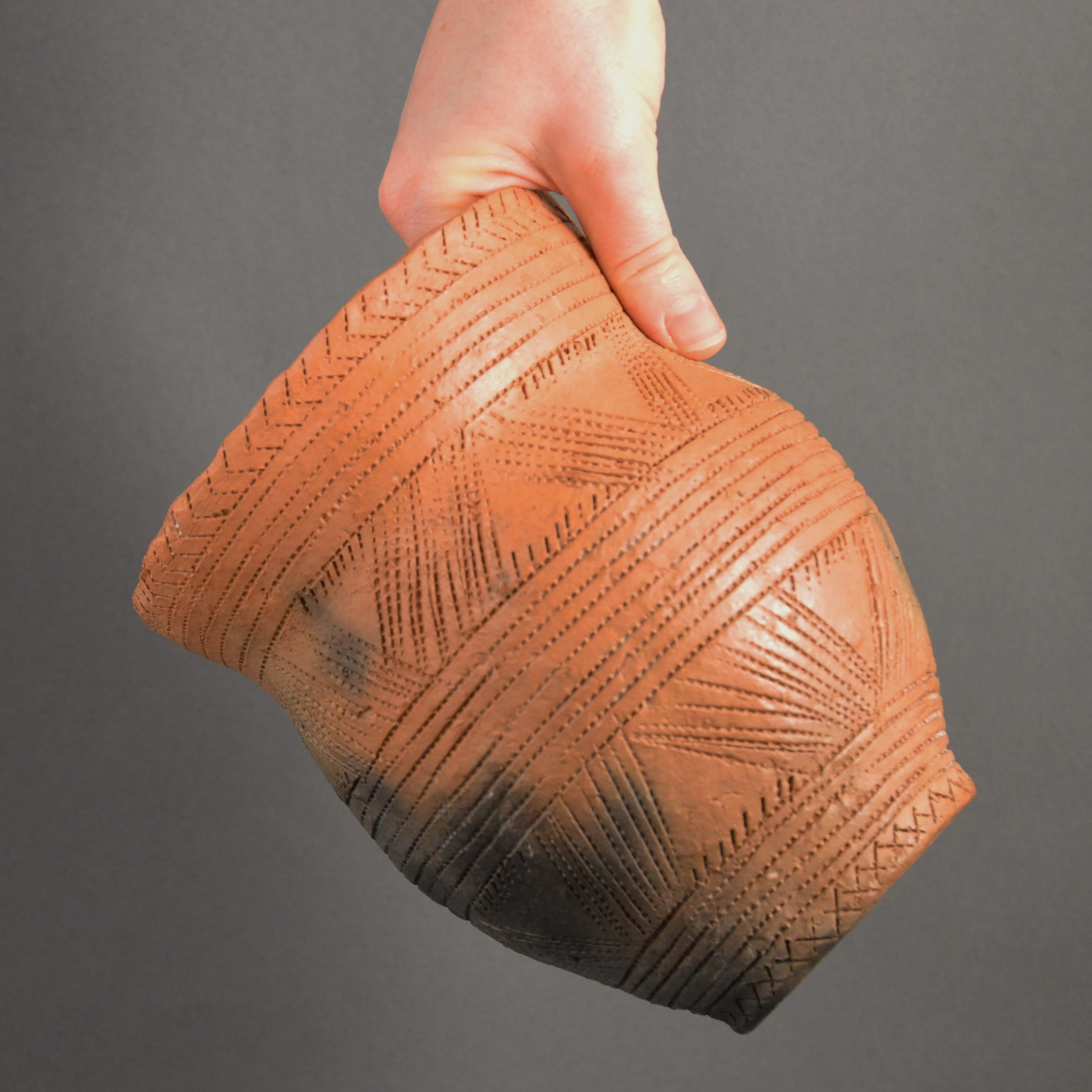
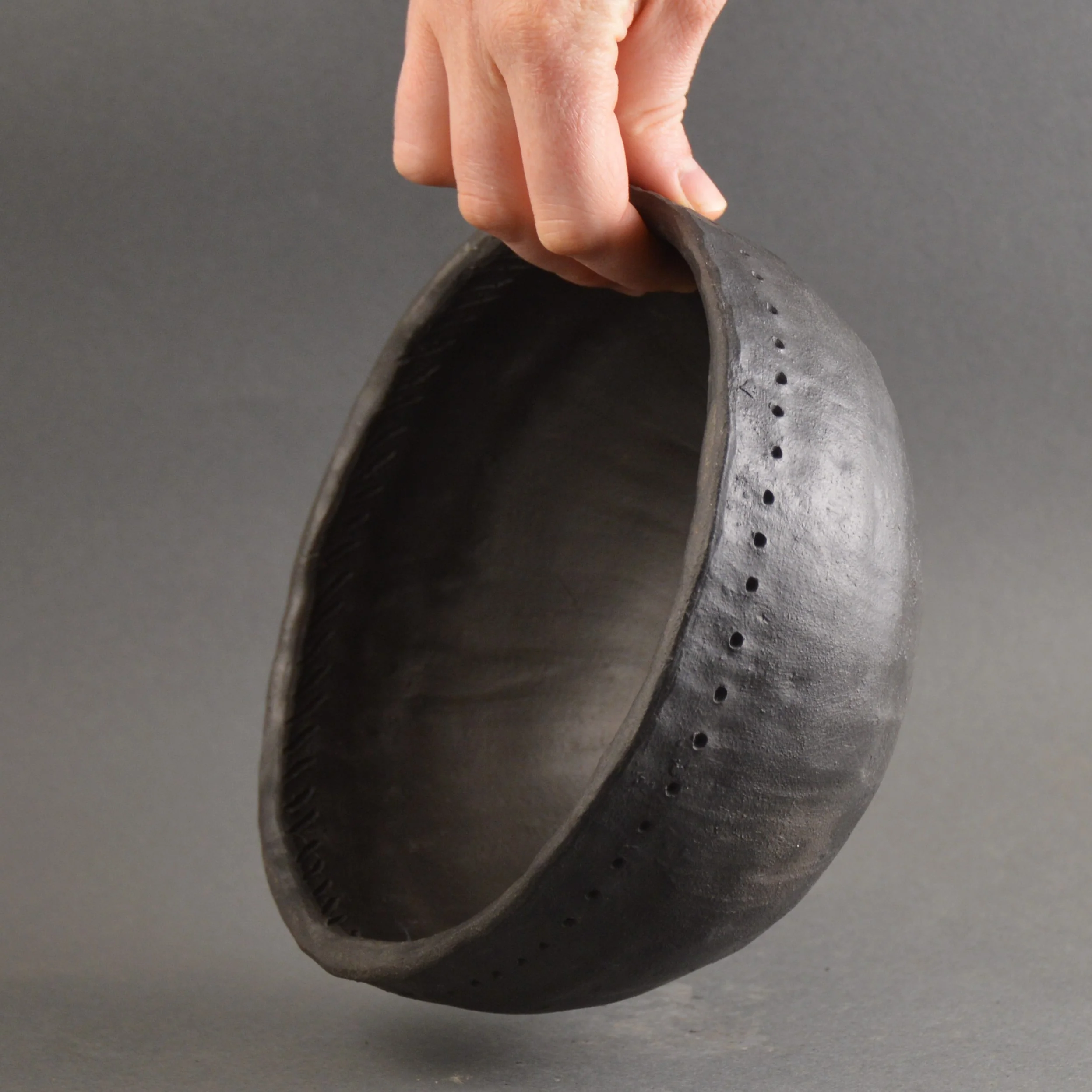
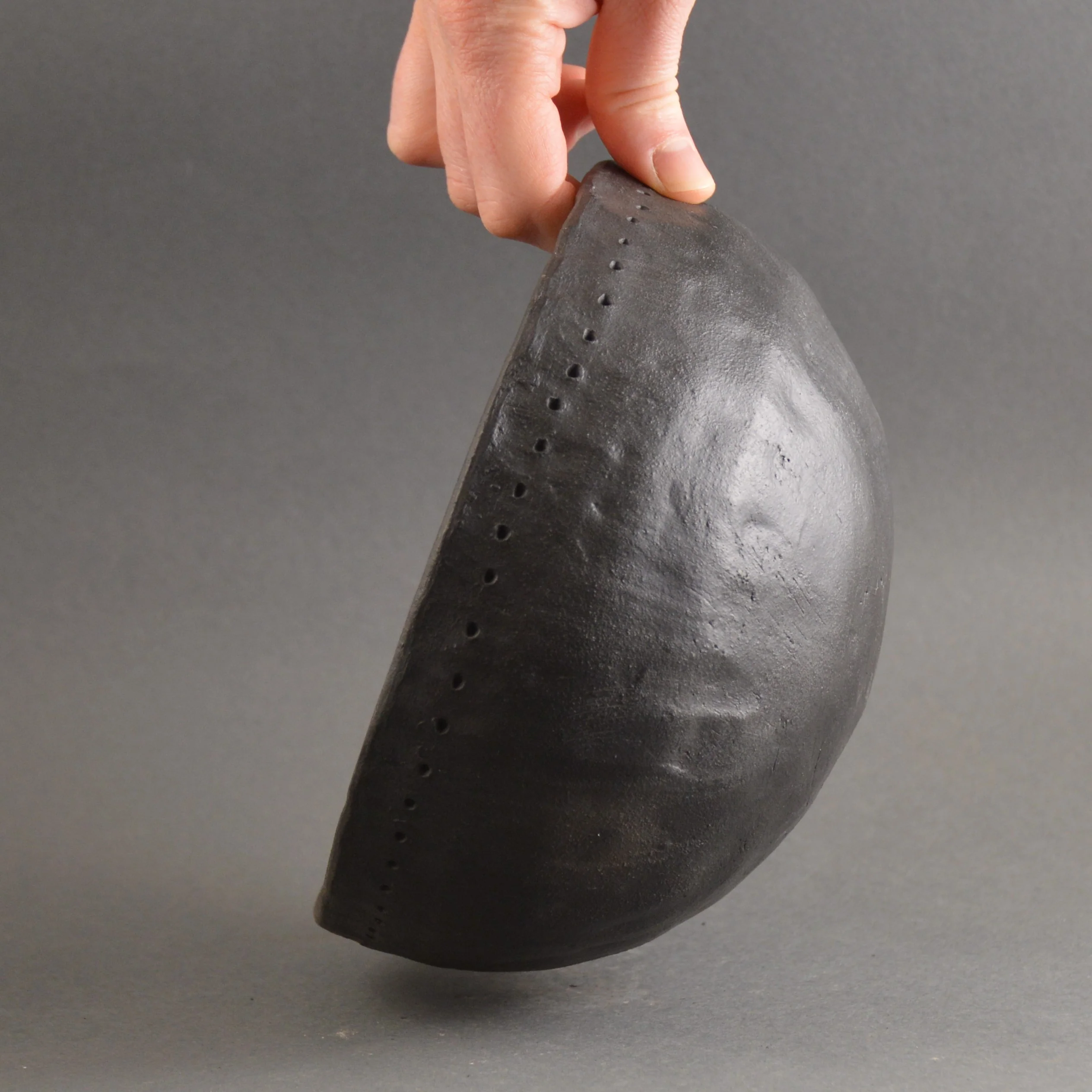
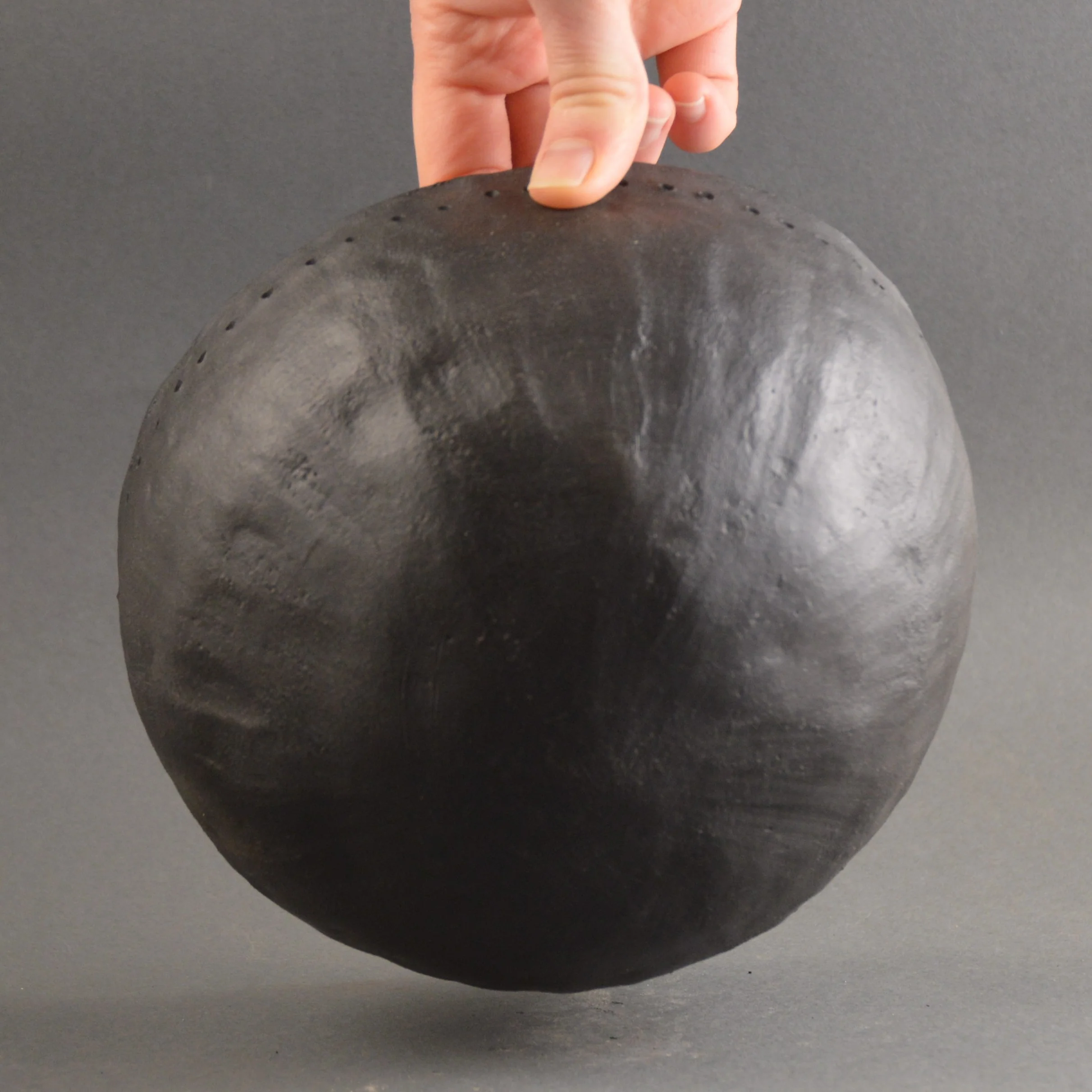
Standard Bowl – Approx. 115 mm tall, 185 mm diameter
Firing
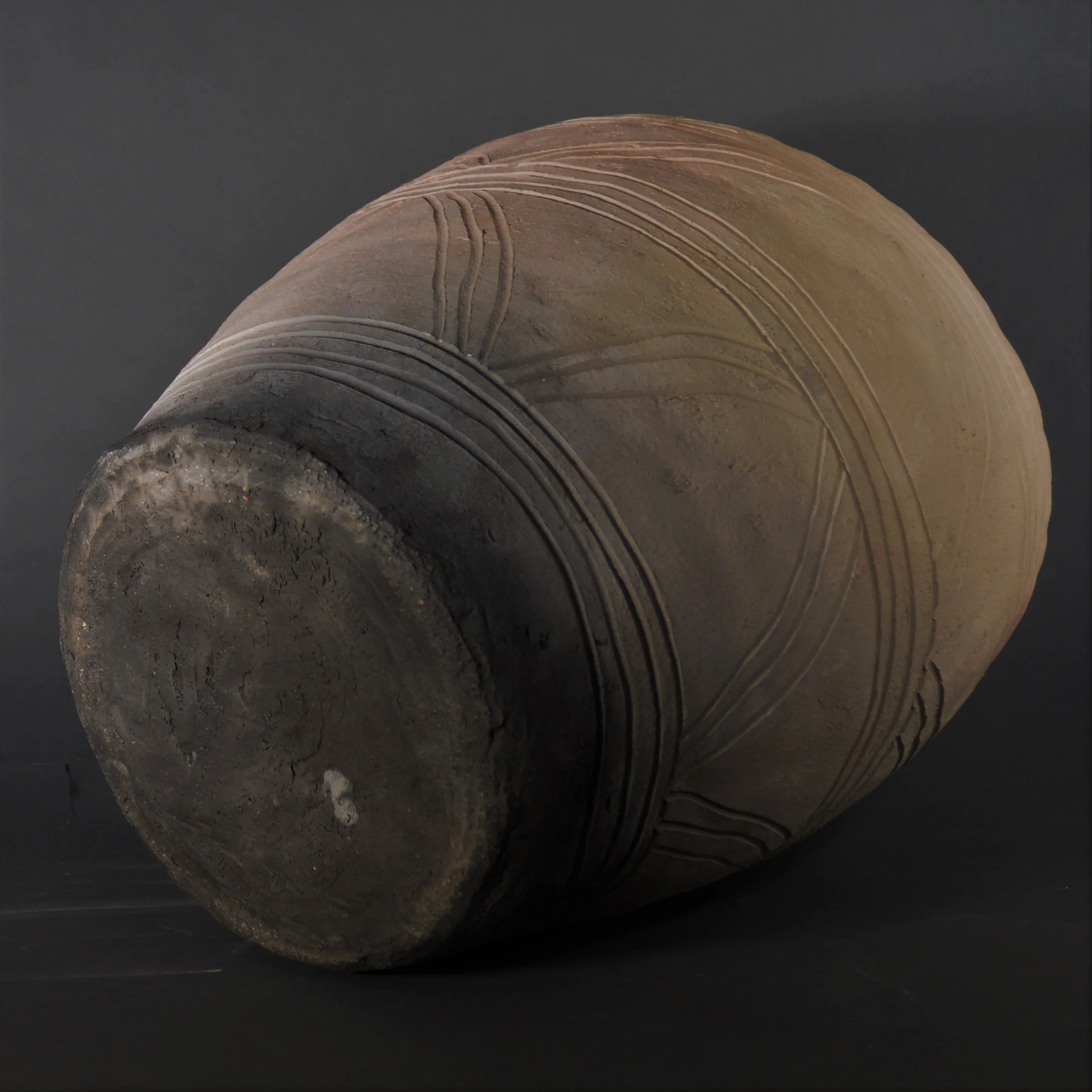
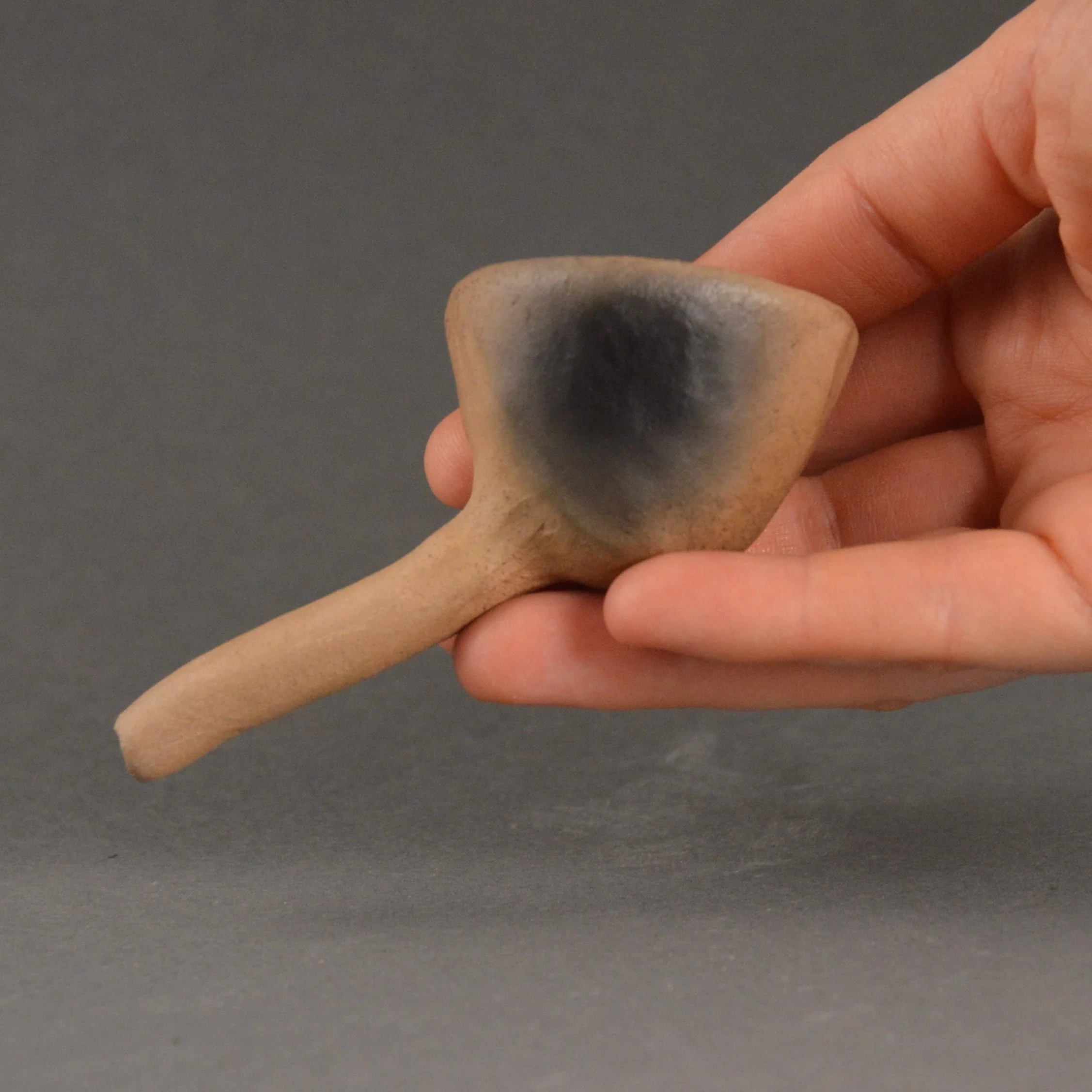
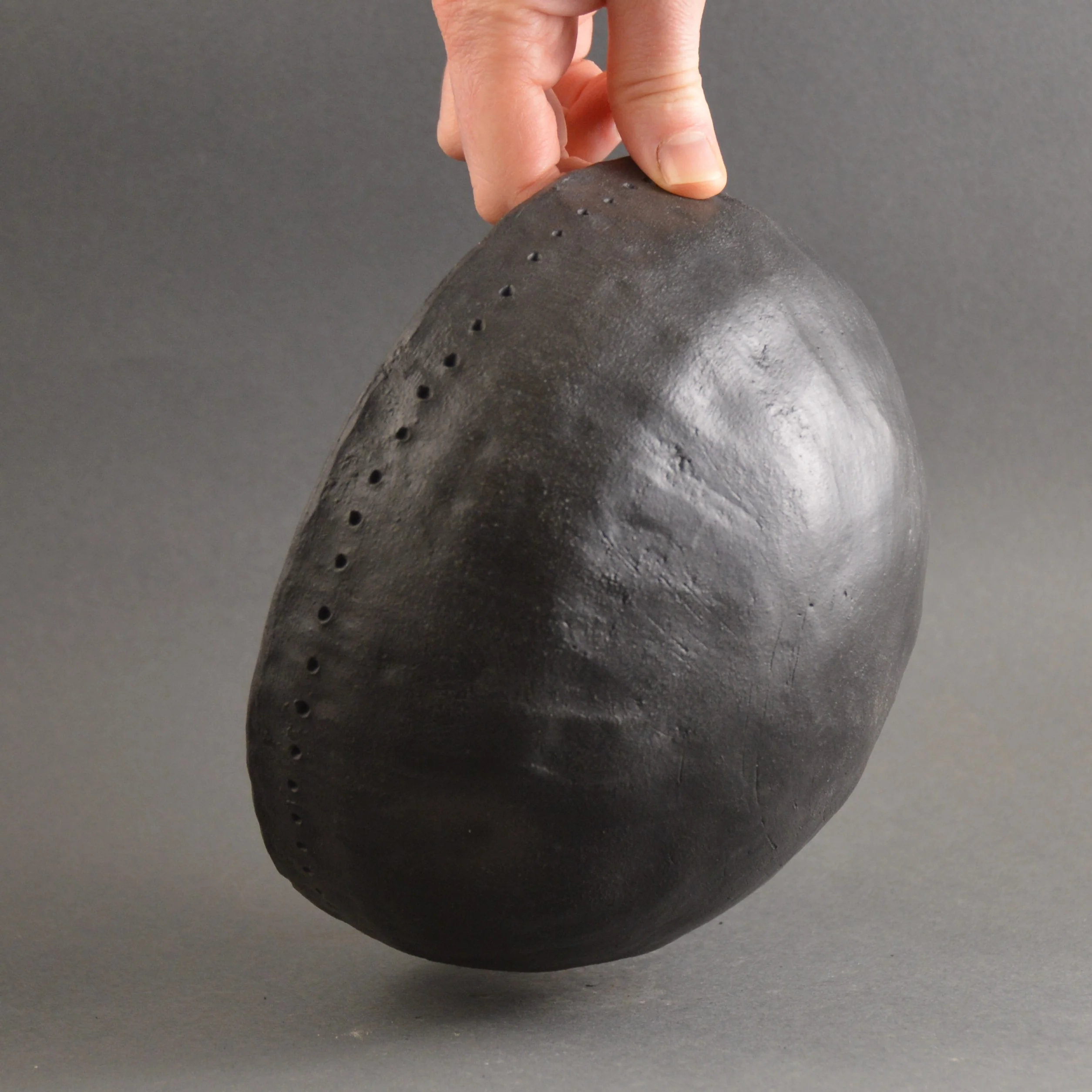
This bowl has been fired to emulate ancient firing conditions. The original vessels would have been fired in open wood fires, in direct contact with the fuel—a process that leaves behind natural colour variation and mottling in the clay.
To increase strength and durability, this replica has been fired at a slightly higher temperature, achieving a realistic appearance while allowing for long-term handling and display.
Production
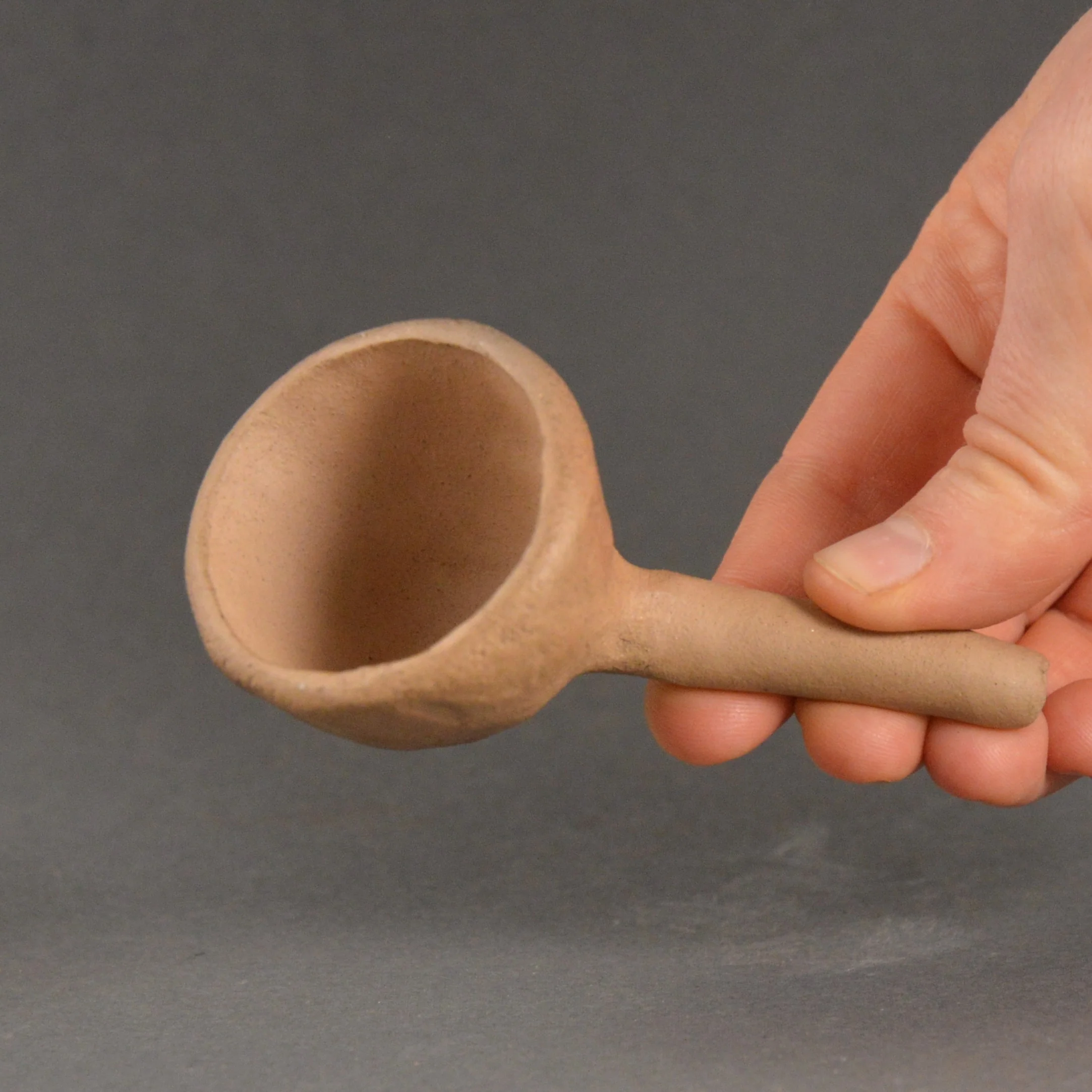
Each bowl has been hand-built from clays with characteristics similar to those used by Neolithic potters. It has been wood-fired, and finished with a light coating of beeswax, a material also identified in residue analysis of the originals.
Where tools are used, they are handcrafted from bone, antler, stone, wood, and shell, based on archaeological evidence or wear marks on excavated artefacts. The result is a piece that feels as close to the original as possible—not just in appearance, but in spirit.
Health & Safety
Museum-Quality Replica: Made using the tools and techniques that would have been used during the Neolithic era.
Not food safe: This is an unglazed pot with a porous surface, meaning it will absorb flavours and moisture from its contents. While this can add depth to traditional cooking, it also means the vessel does not meet modern health and safety standards.
For display purposes only: While some experimental archaeologists choose to use replicas like this for recreating ancient recipes, they do so at their own risk.
In Neolithic cooking, safety was achieved by heating pots and their contents to above 70°C for at least 10 minutes to kill harmful bacteria. Temperatures of 100°C or more provided greater protection.
Ordering Information
'Add to Basket' Items: Ready to ship immediately.
'Pre-order' Items: Handmade to order within 90 days (longer for international orders). If your order includes both 'Add to Basket' and 'Pre-order' items, they will be shipped together once all items are ready.
Shipping
All items are sent via second-class postal service as standard.
If you require first-class shipping, please contact us for a custom quote.
Postage Note: All items are carefully packaged to ensure they arrive in perfect condition.
A humble and beautiful vessel that tells the story of the first farmers of Britain—this Windmill Hill-style bowl is a tangible link to the dawn of pottery and the quiet revolution it brought to human life.
Product Information
Product Information
Shipping & Returns
Shipping & Returns
Description
Handcrafted Neolithic Bowl – Windmill Hill Style
Details
This is a faithful replica of a Neolithic bowl in the "Windmill Hill" style, named after one of the first sites where it was recognised: the Causewayed Enclosure at Windmill Hill, about a mile northwest of Avebury in Wiltshire.
It was here, during archaeological excavations in the 1920s, that some of the earliest pottery in the British Isles was uncovered. These simple yet powerful vessels mark a transformative moment in human history—the arrival of farming from the continent, and with it, the first use of fired clay pots in Britain.
Before pottery, early communities may have dropped hot stones into wooden or leather containers to warm their food or drink. But with the introduction of pottery, people could now heat liquid directly over a fire, ushering in a new era of food preparation, shared meals, and settled life.
Imagine a dark, smoky roundhouse, the scent of woodsmoke heavy in the air, and this bowl nestled in the embers—its contents gently bubbling as families gathered close. These pots were more than just practical—they were part of the daily rhythm of survival, innovation, and the growing complexity of Neolithic life.
Materials
Smoke-fired terracotta
Dimensions
Made to approximate size of the original:
Standard Bowl – Approx. 115 mm tall, 185 mm diameter
Firing
This bowl has been fired to emulate ancient firing conditions. The original vessels would have been fired in open wood fires, in direct contact with the fuel—a process that leaves behind natural colour variation and mottling in the clay.
To increase strength and durability, this replica has been fired at a slightly higher temperature, achieving a realistic appearance while allowing for long-term handling and display.
Production
Each bowl has been hand-built from clays with characteristics similar to those used by Neolithic potters. It has been wood-fired, and finished with a light coating of beeswax, a material also identified in residue analysis of the originals.
Where tools are used, they are handcrafted from bone, antler, stone, wood, and shell, based on archaeological evidence or wear marks on excavated artefacts. The result is a piece that feels as close to the original as possible—not just in appearance, but in spirit.
Health & Safety
Museum-Quality Replica: Made using the tools and techniques that would have been used during the Neolithic era.
Not food safe: This is an unglazed pot with a porous surface, meaning it will absorb flavours and moisture from its contents. While this can add depth to traditional cooking, it also means the vessel does not meet modern health and safety standards.
For display purposes only: While some experimental archaeologists choose to use replicas like this for recreating ancient recipes, they do so at their own risk.
In Neolithic cooking, safety was achieved by heating pots and their contents to above 70°C for at least 10 minutes to kill harmful bacteria. Temperatures of 100°C or more provided greater protection.
Ordering Information
'Add to Basket' Items: Ready to ship immediately.
'Pre-order' Items: Handmade to order within 90 days (longer for international orders). If your order includes both 'Add to Basket' and 'Pre-order' items, they will be shipped together once all items are ready.
Shipping
All items are sent via second-class postal service as standard.
If you require first-class shipping, please contact us for a custom quote.
Postage Note: All items are carefully packaged to ensure they arrive in perfect condition.
A humble and beautiful vessel that tells the story of the first farmers of Britain—this Windmill Hill-style bowl is a tangible link to the dawn of pottery and the quiet revolution it brought to human life.