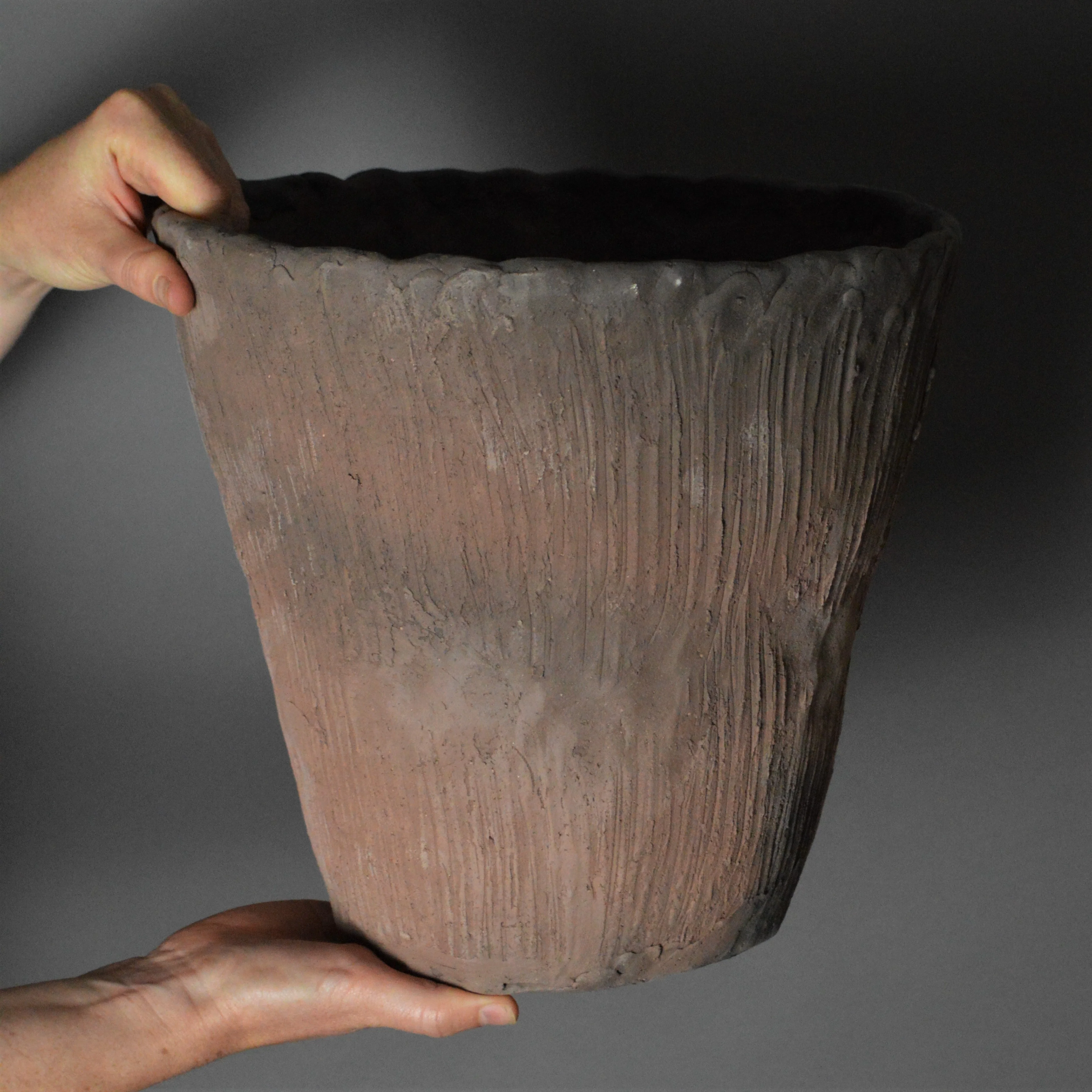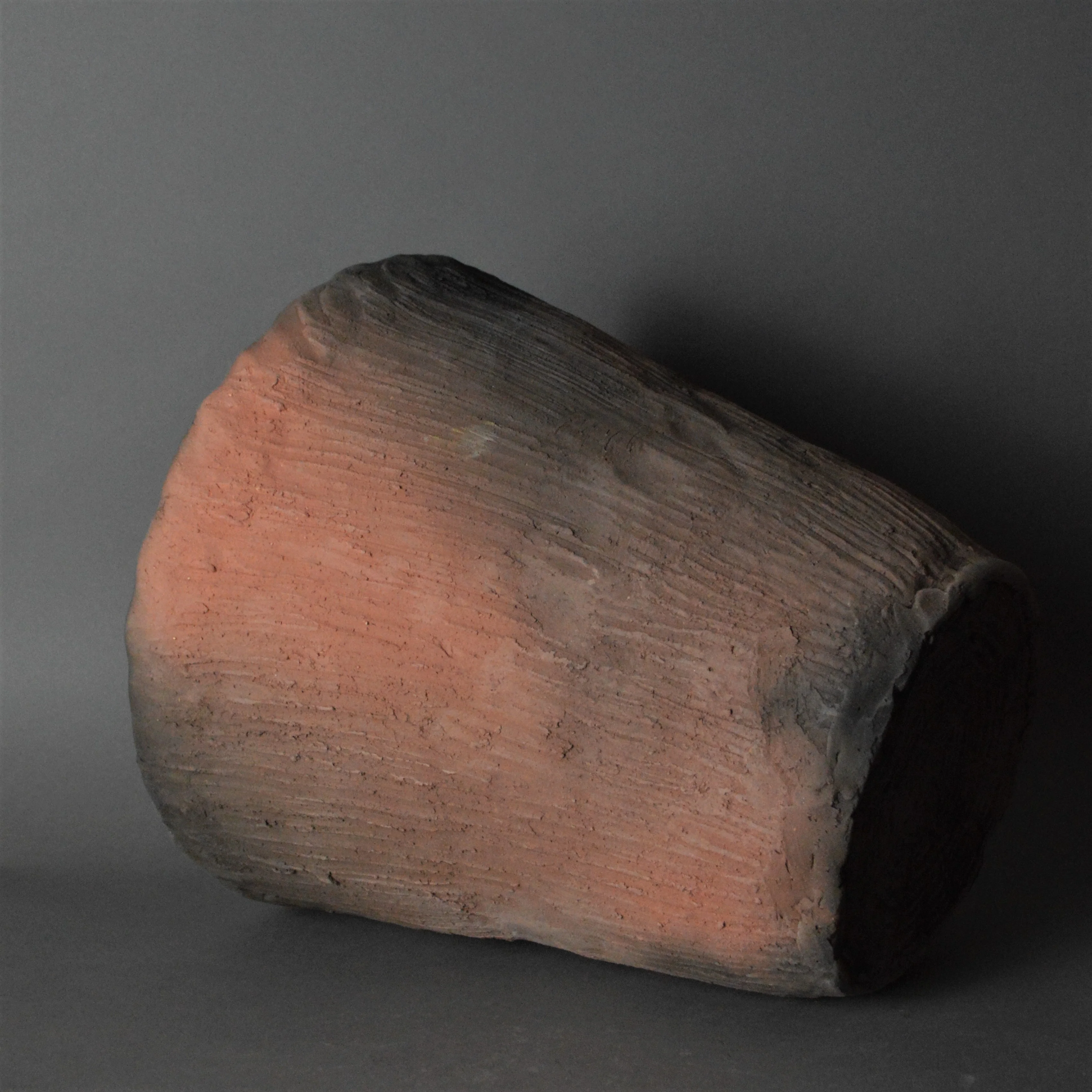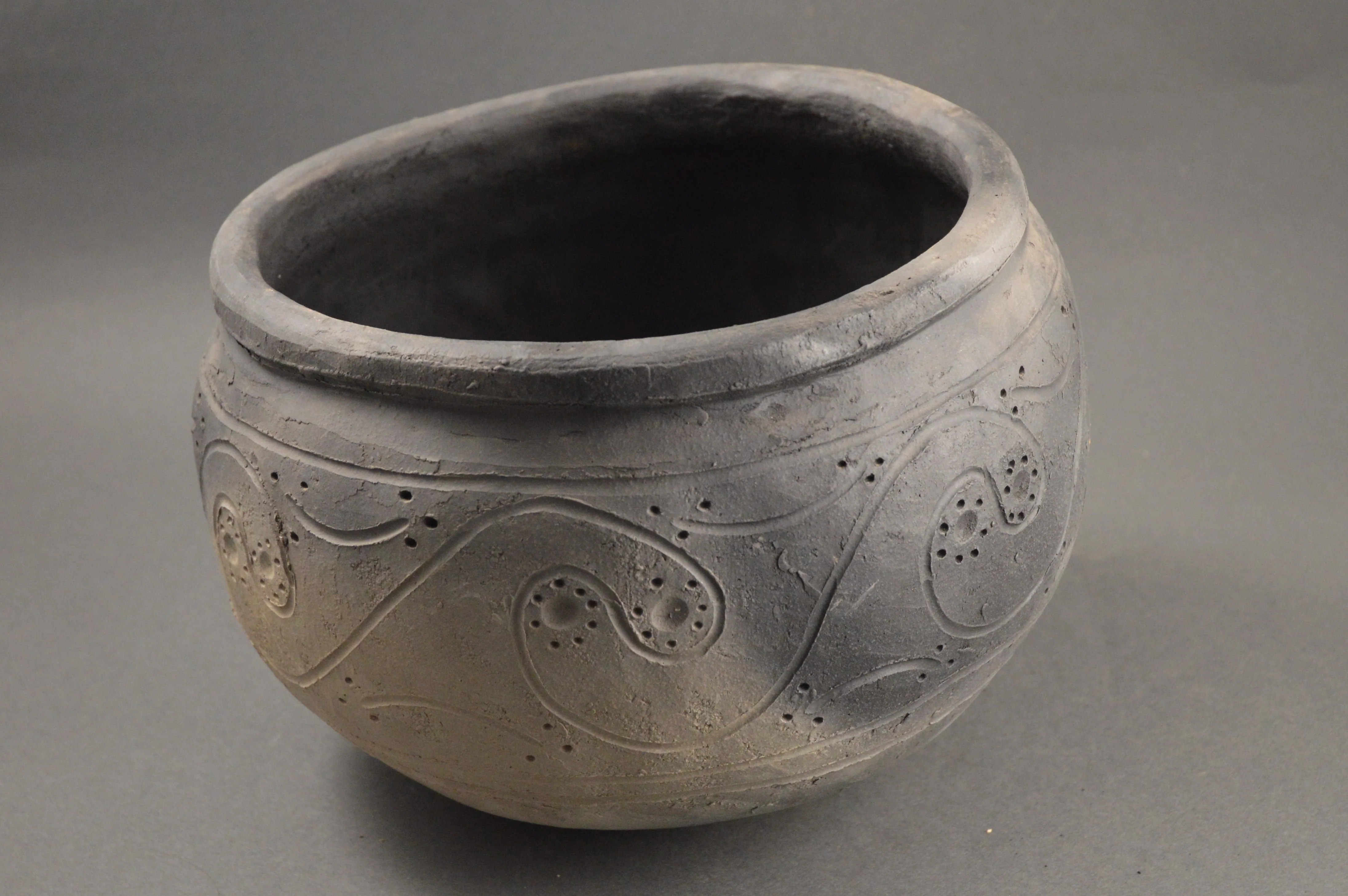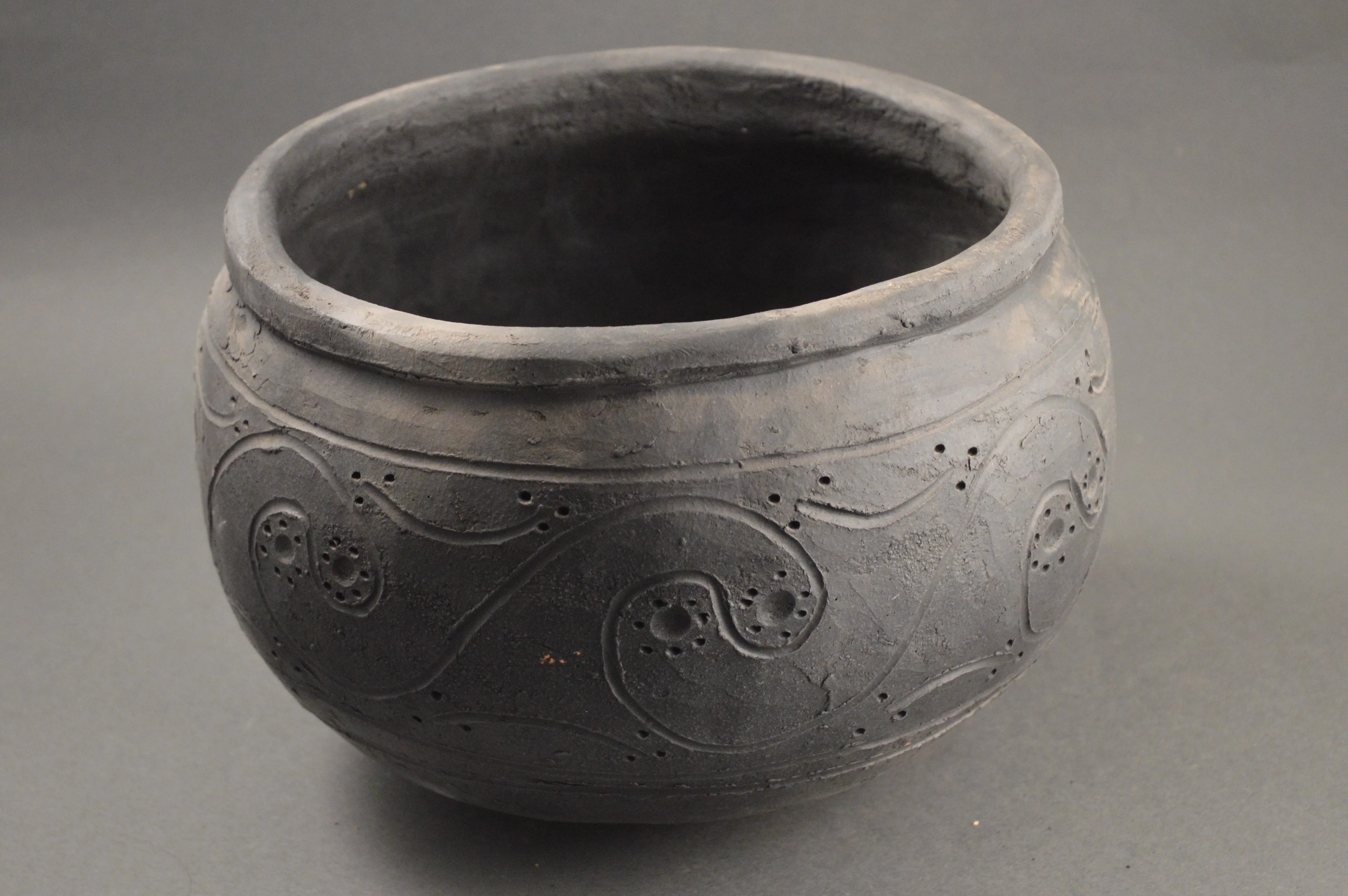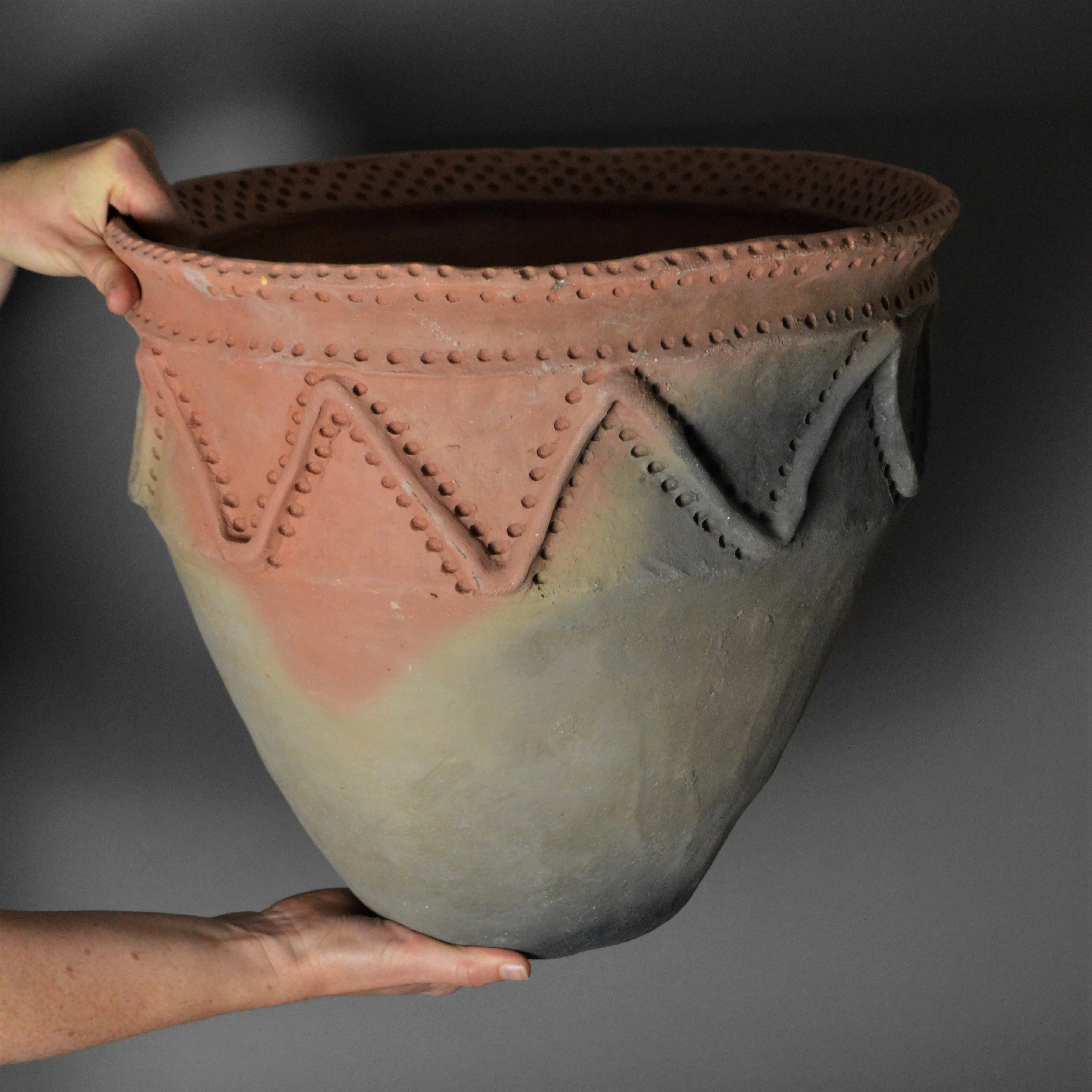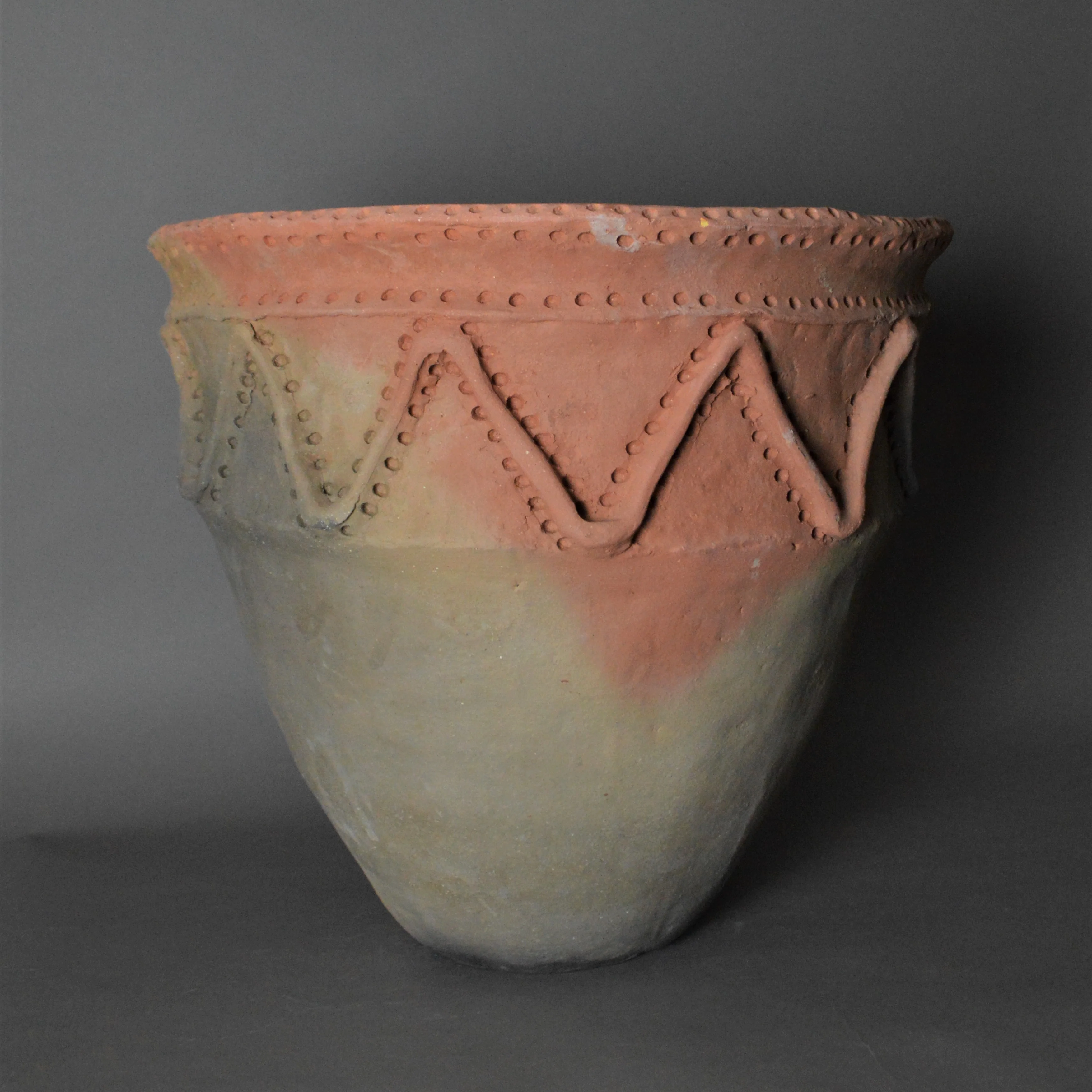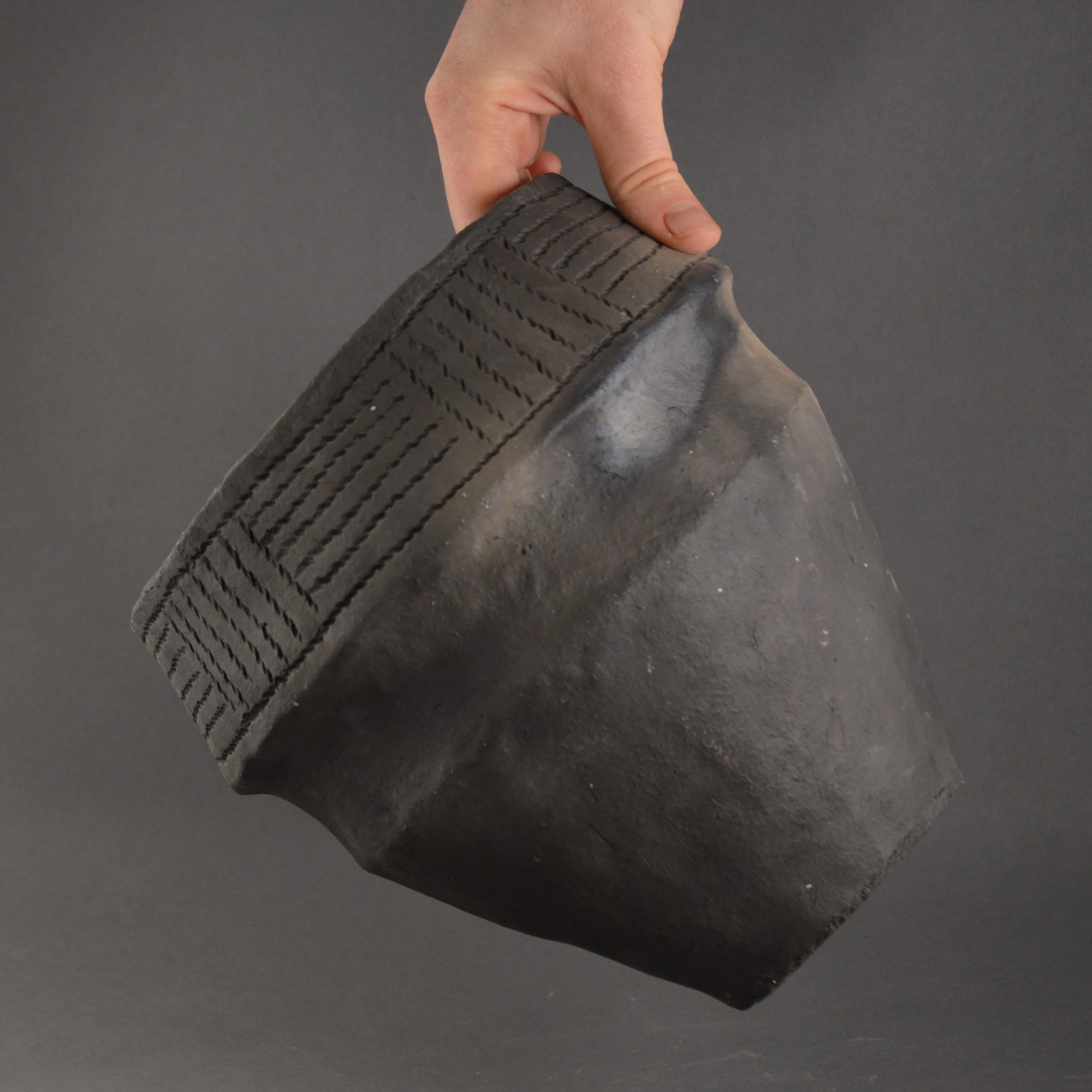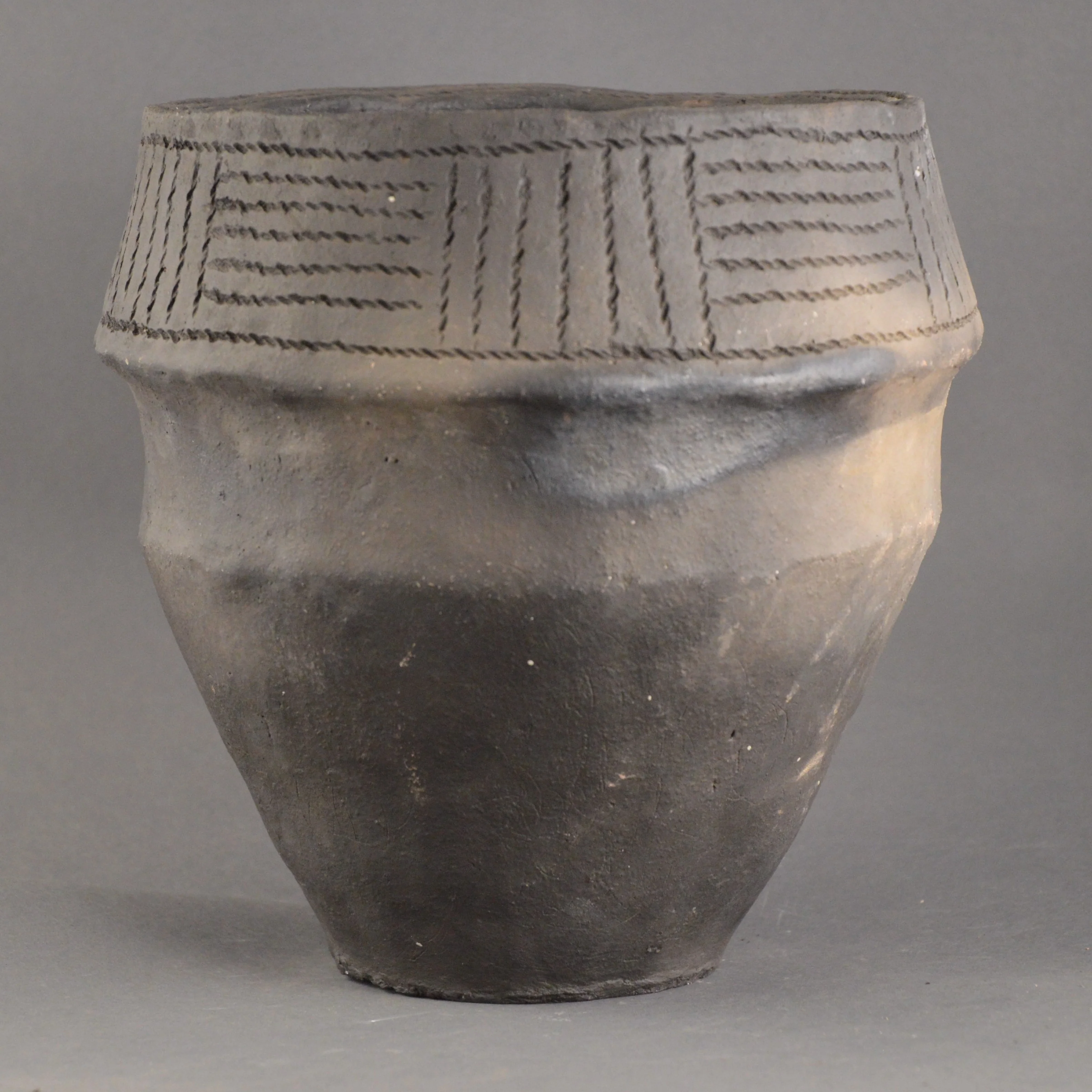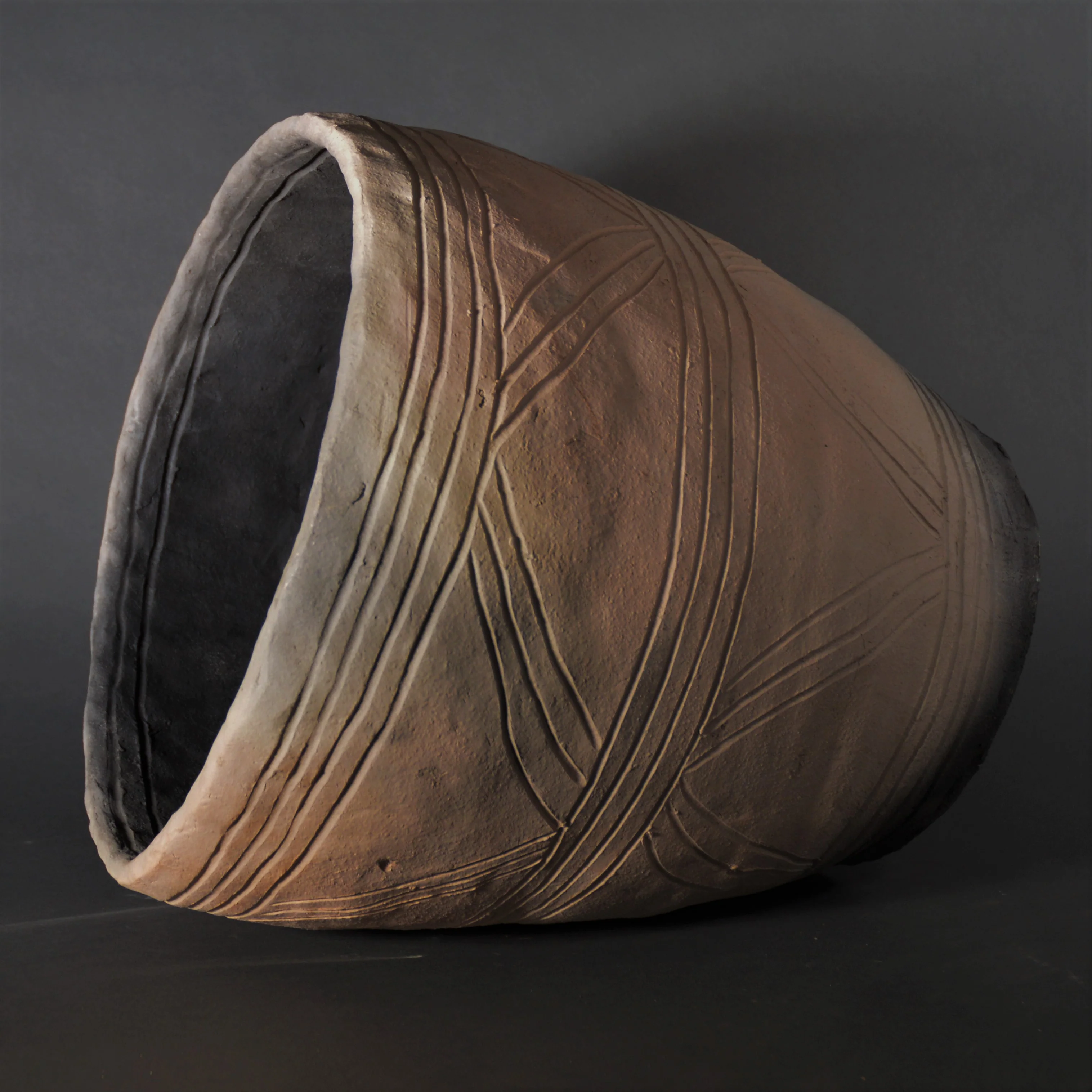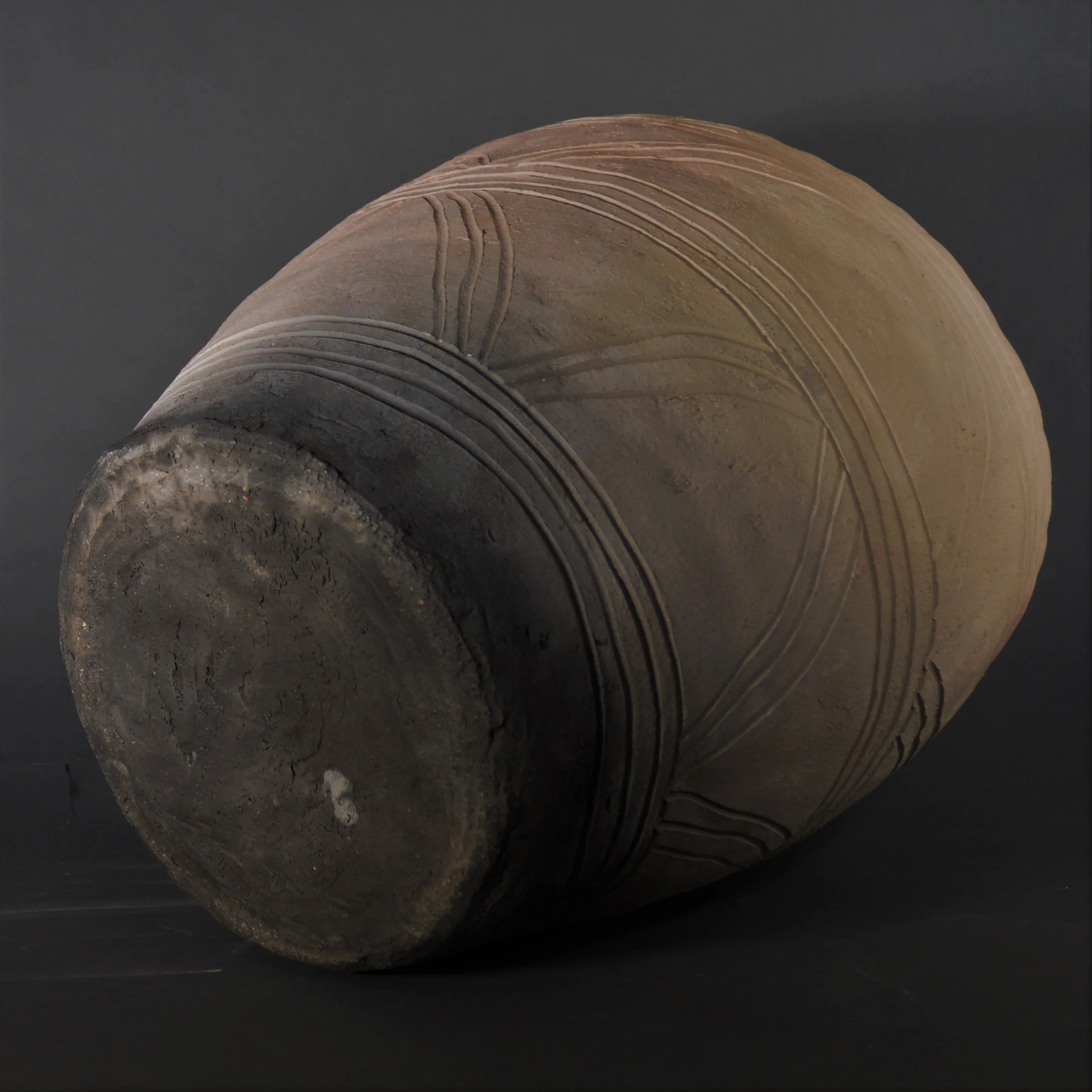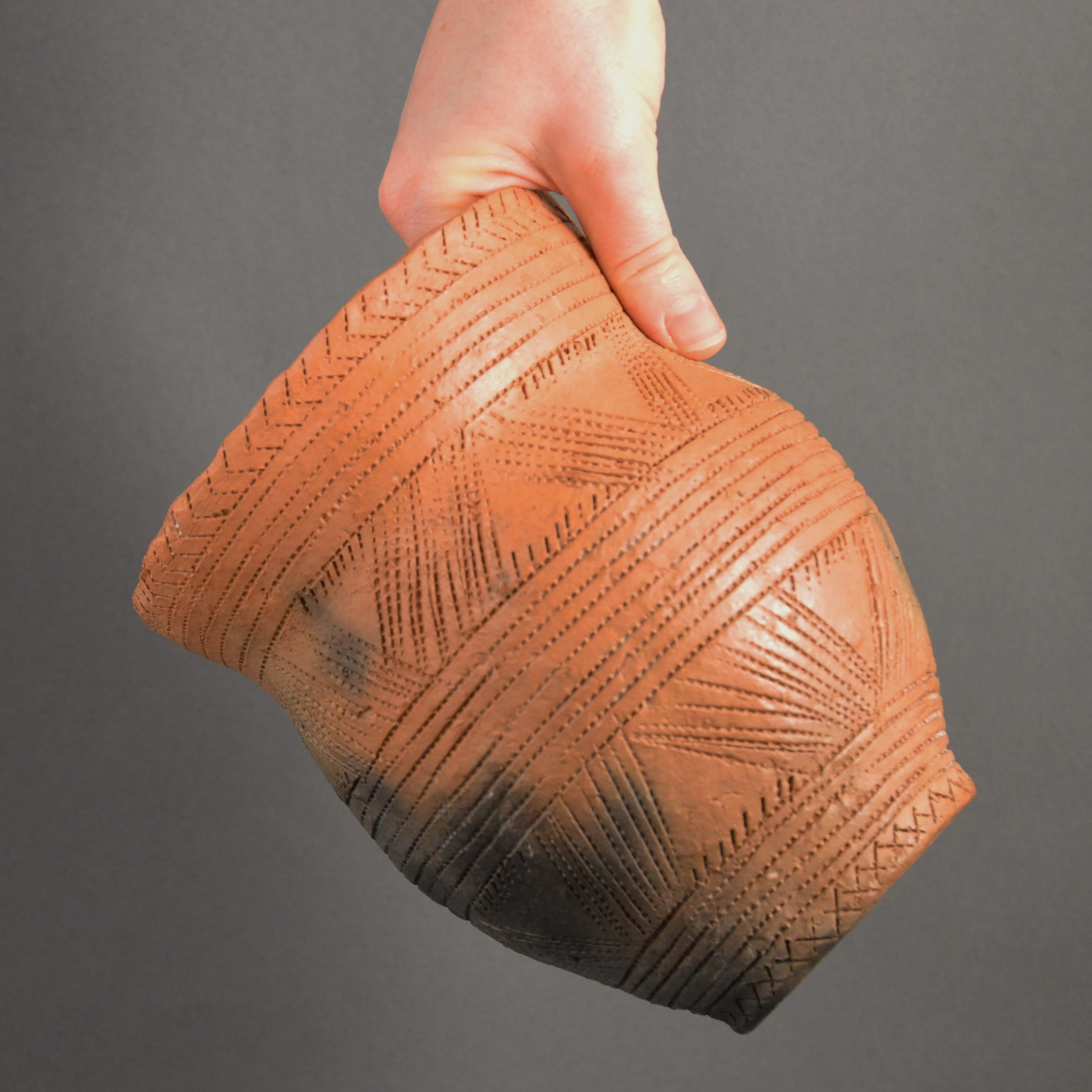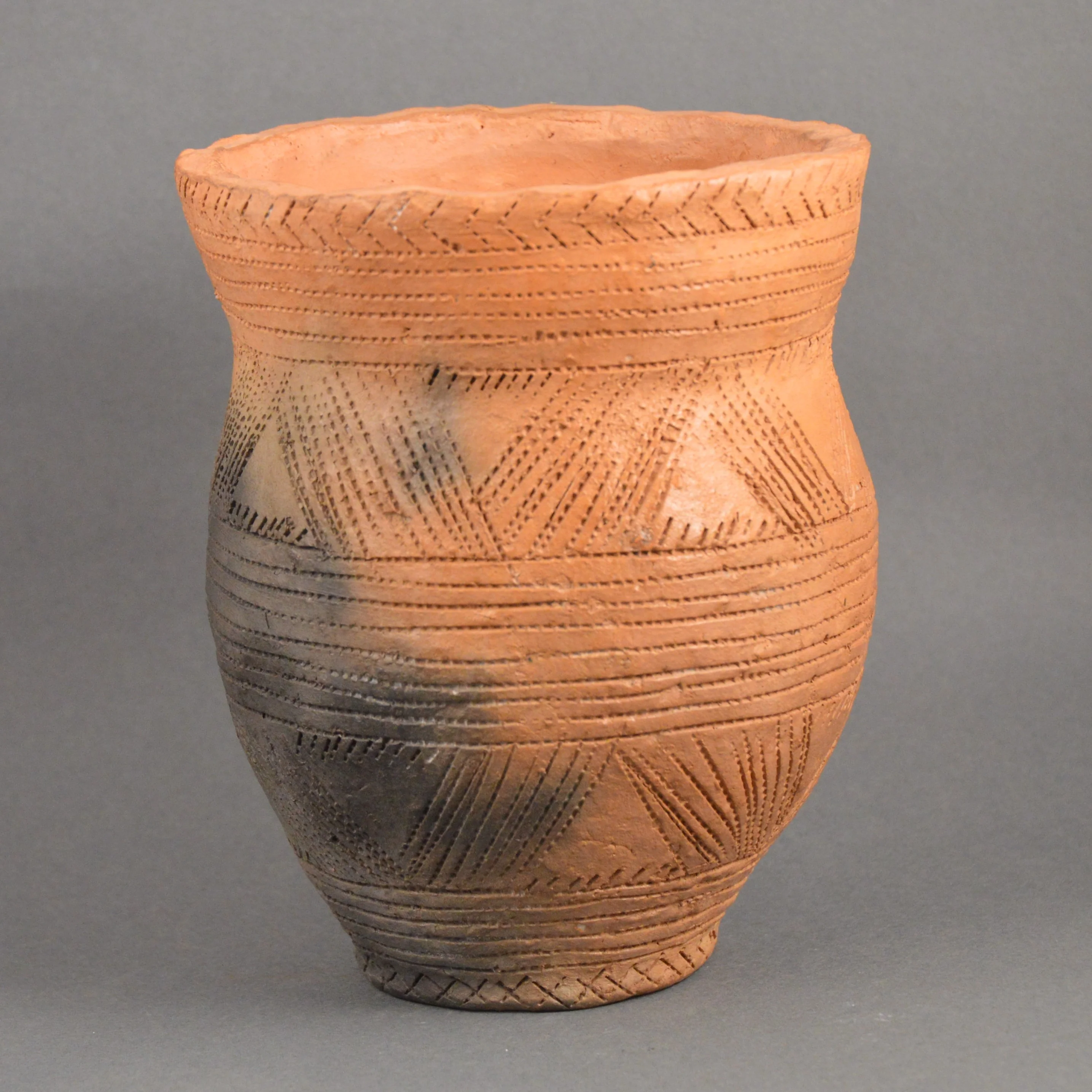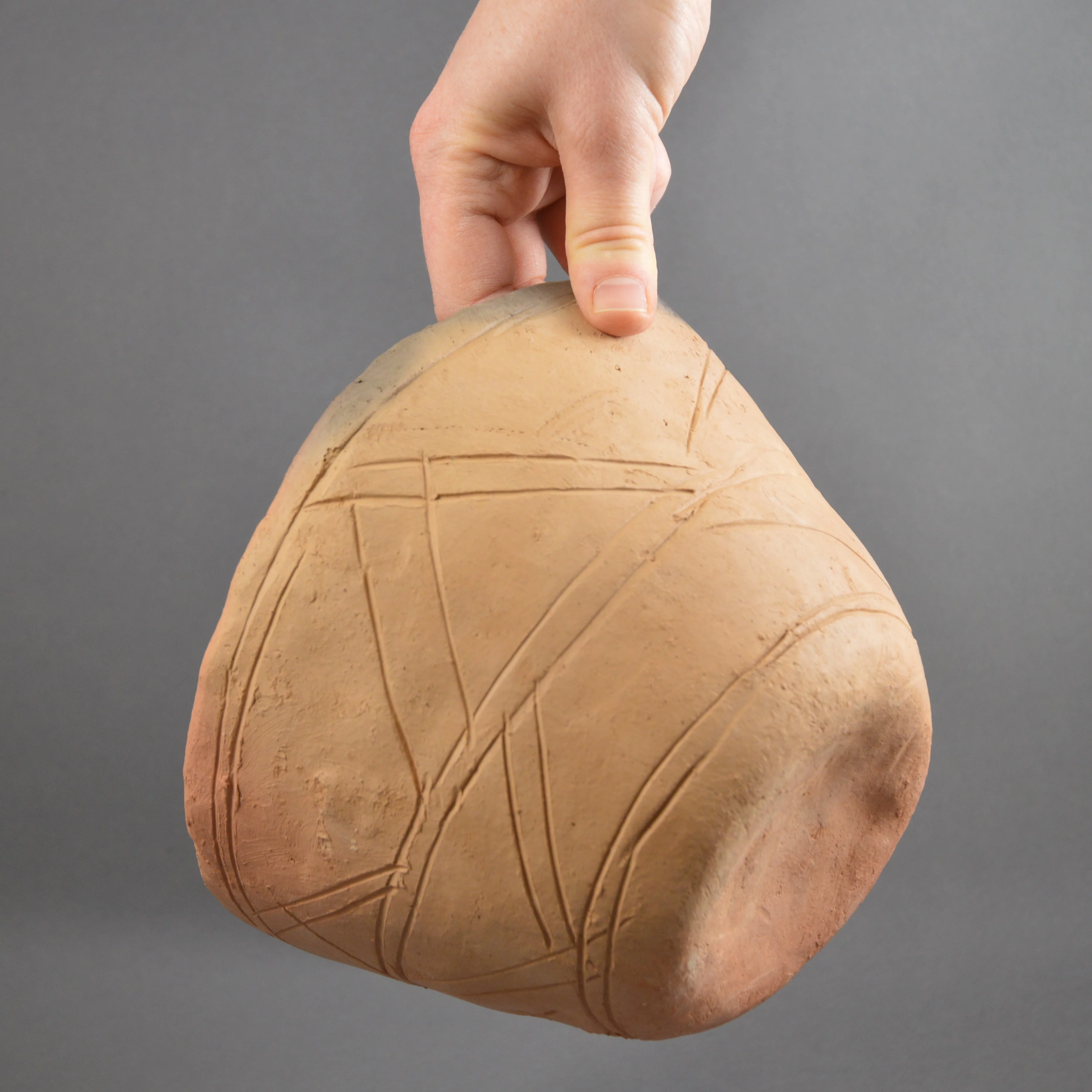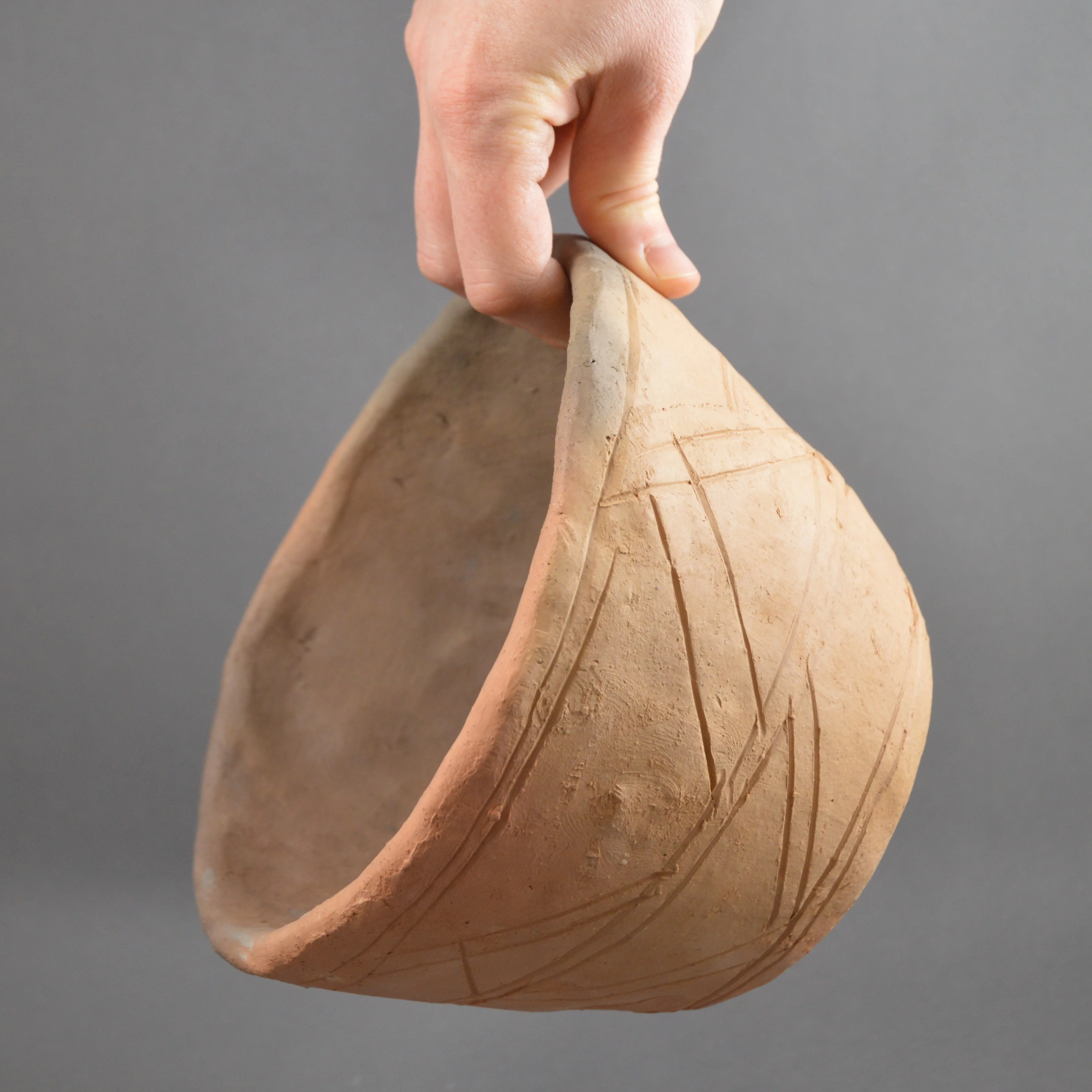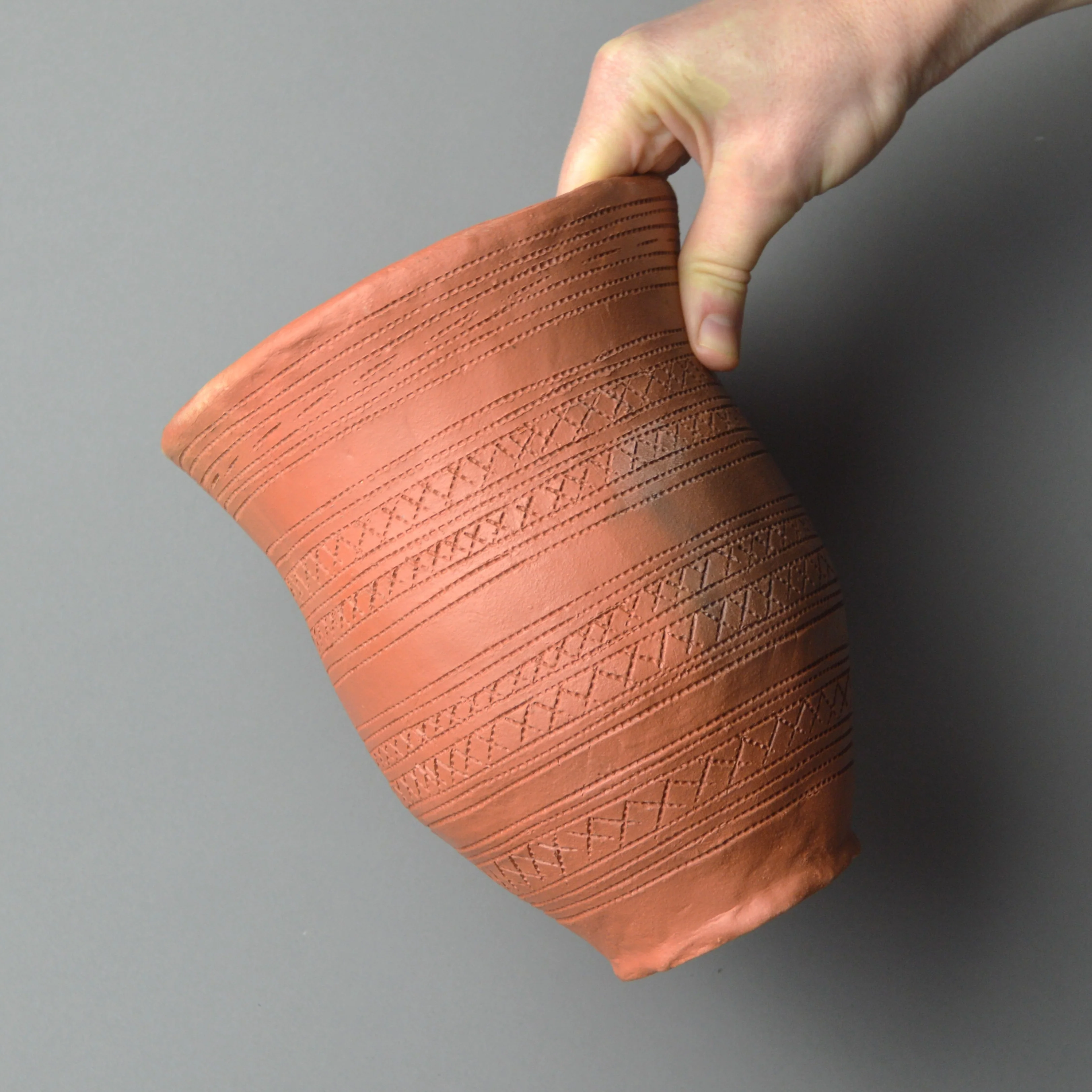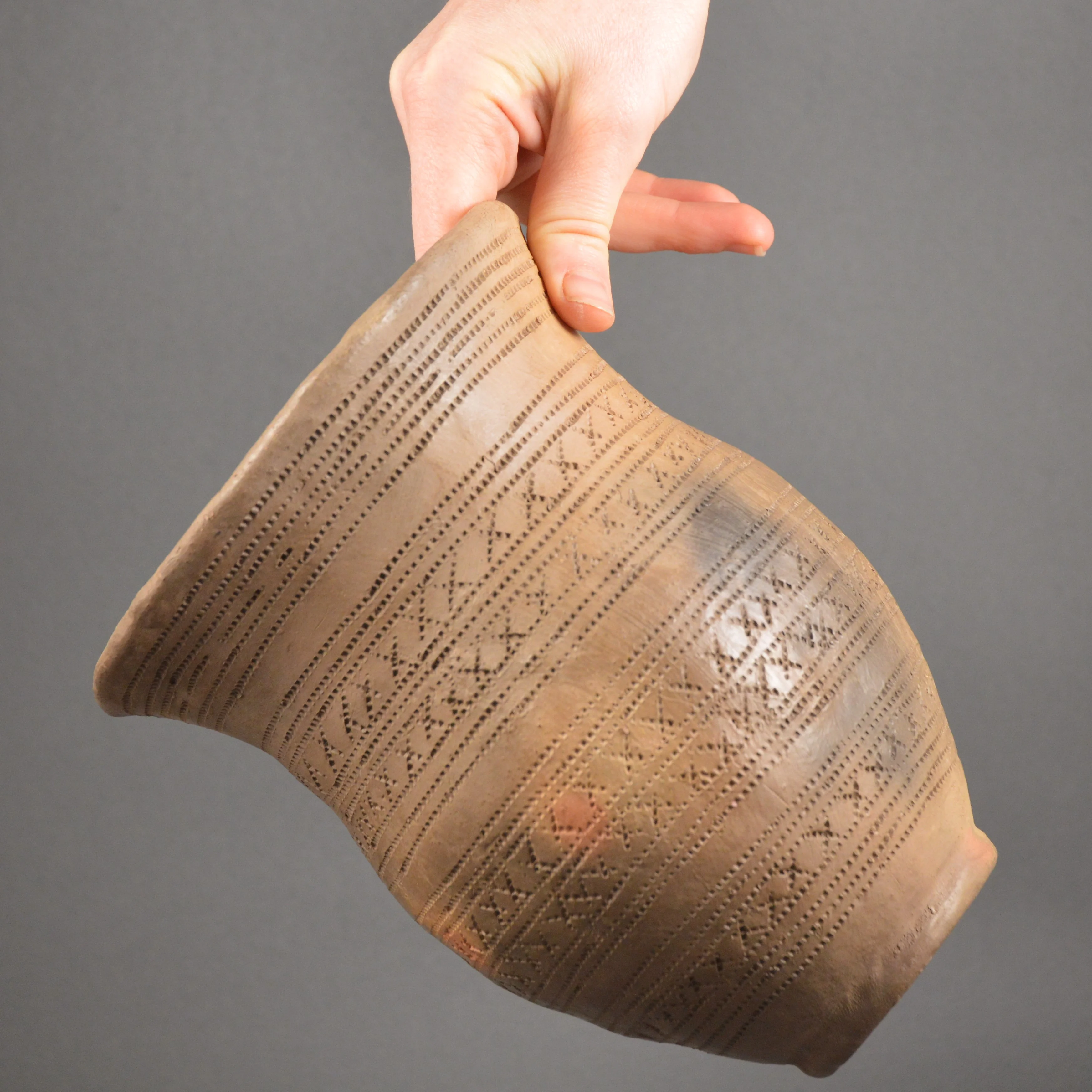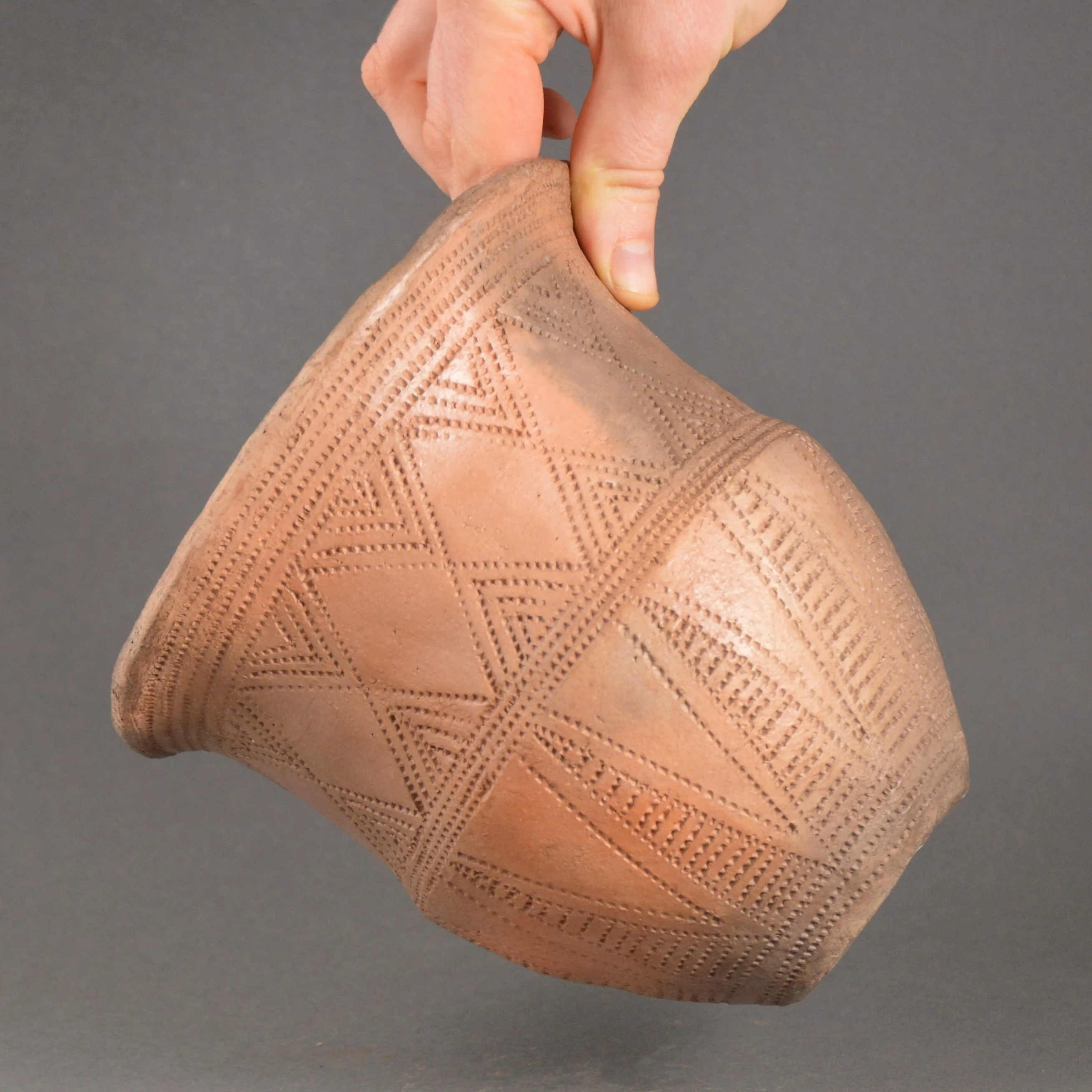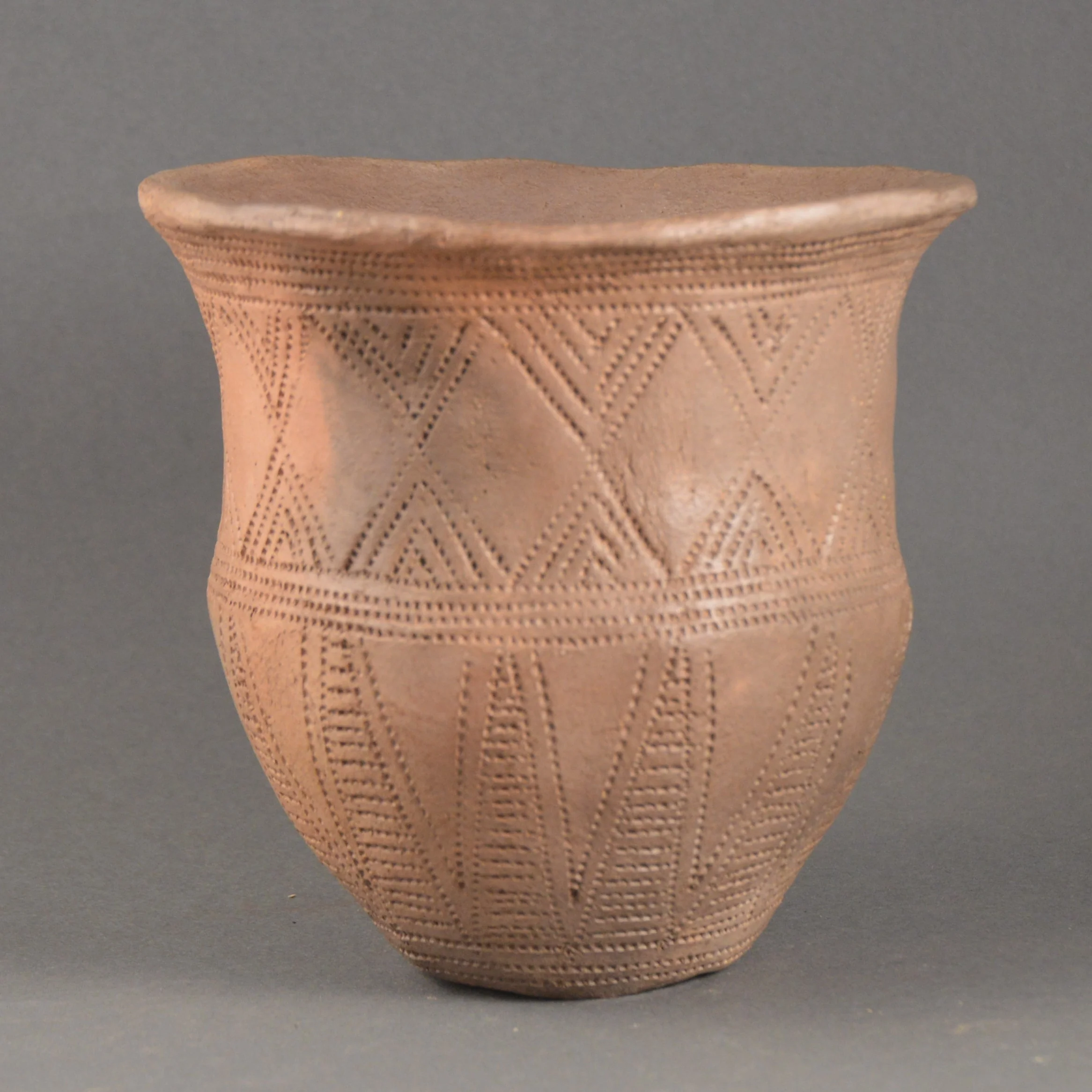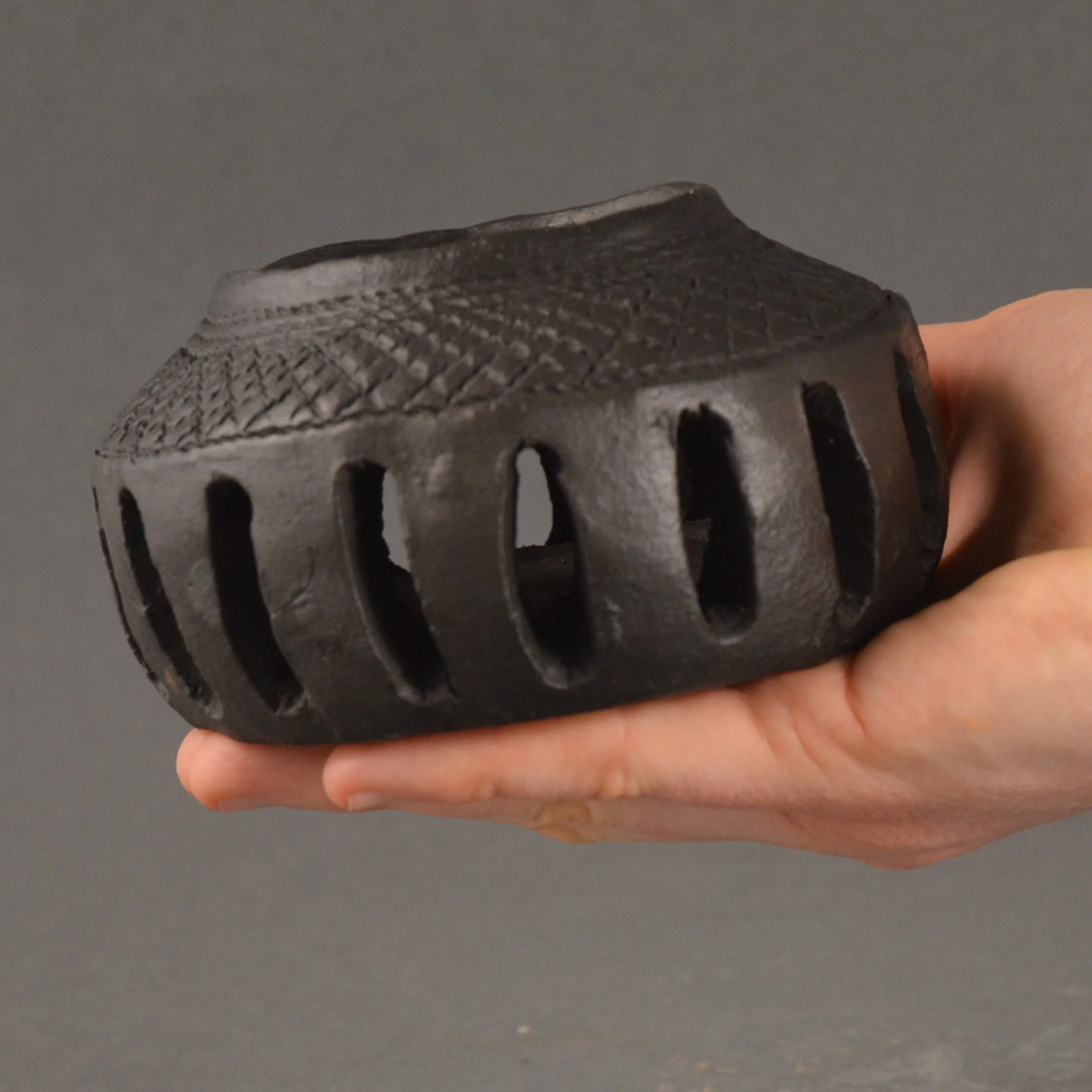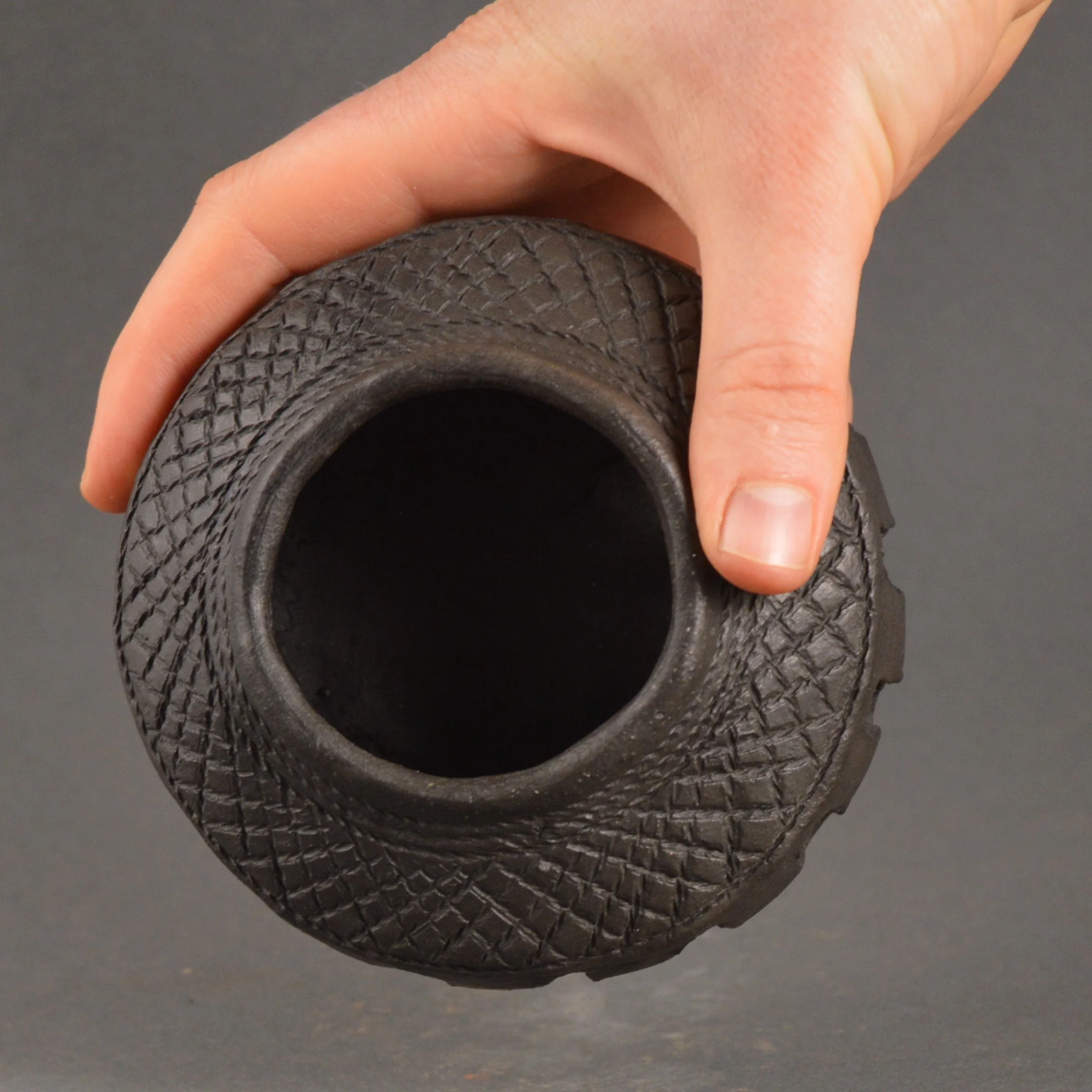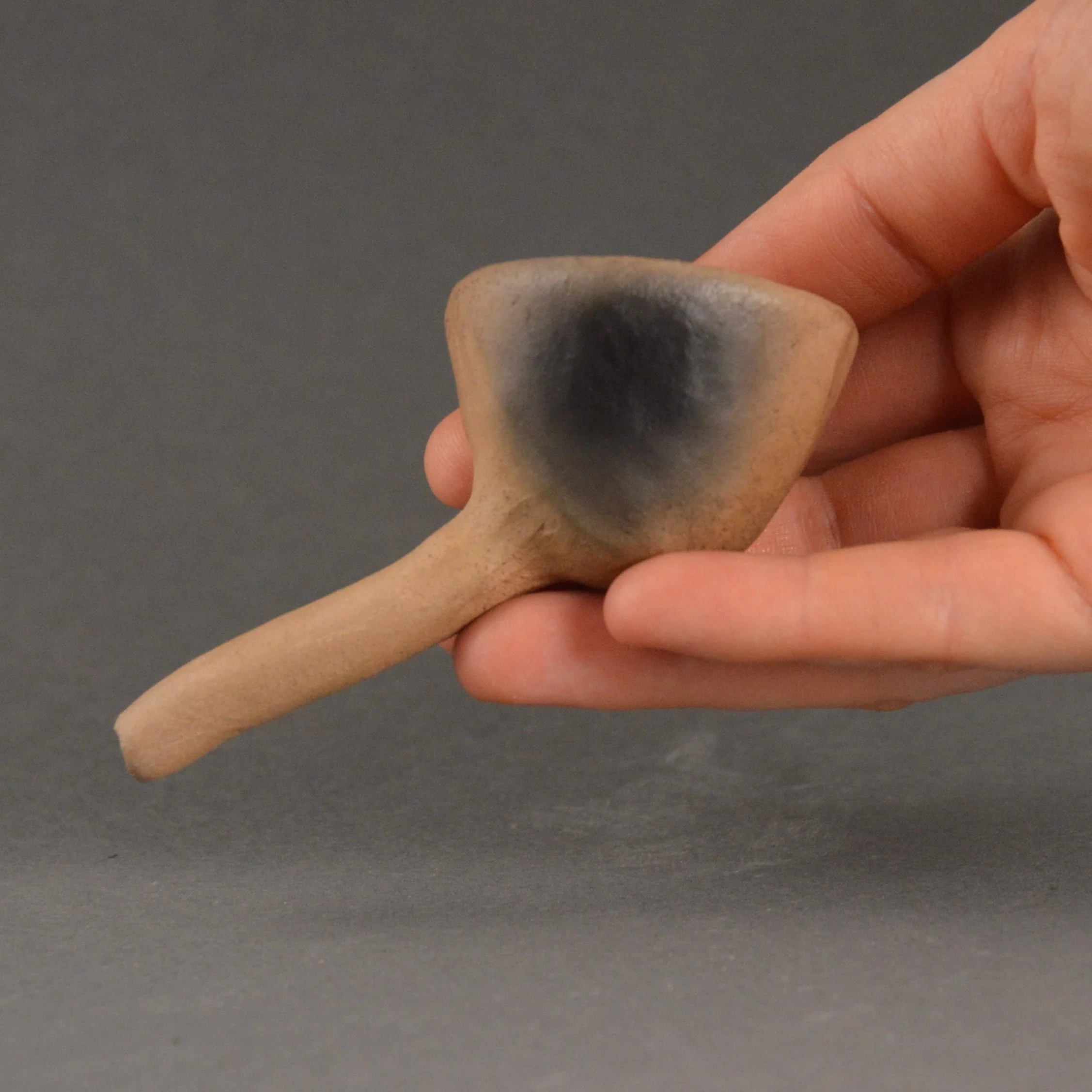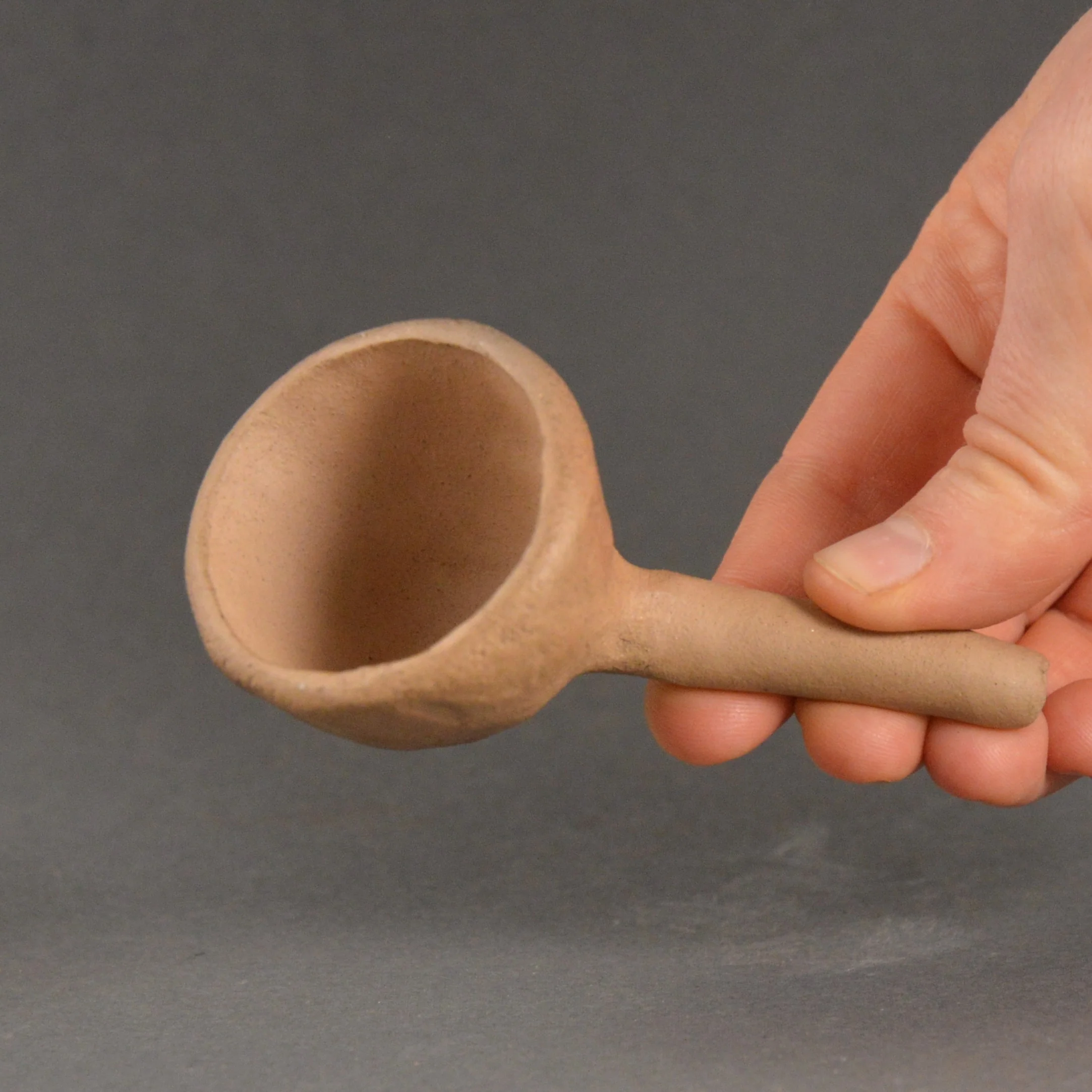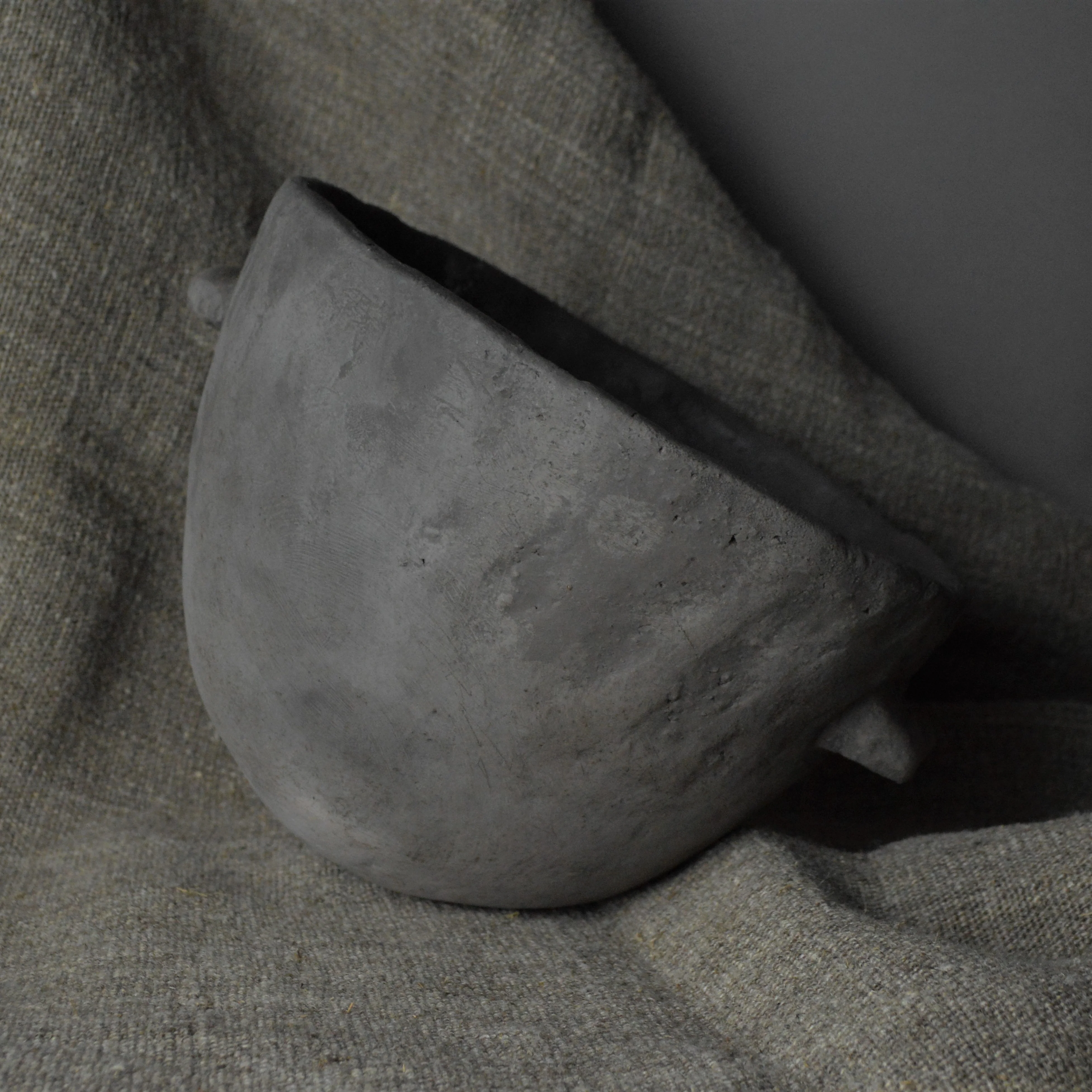
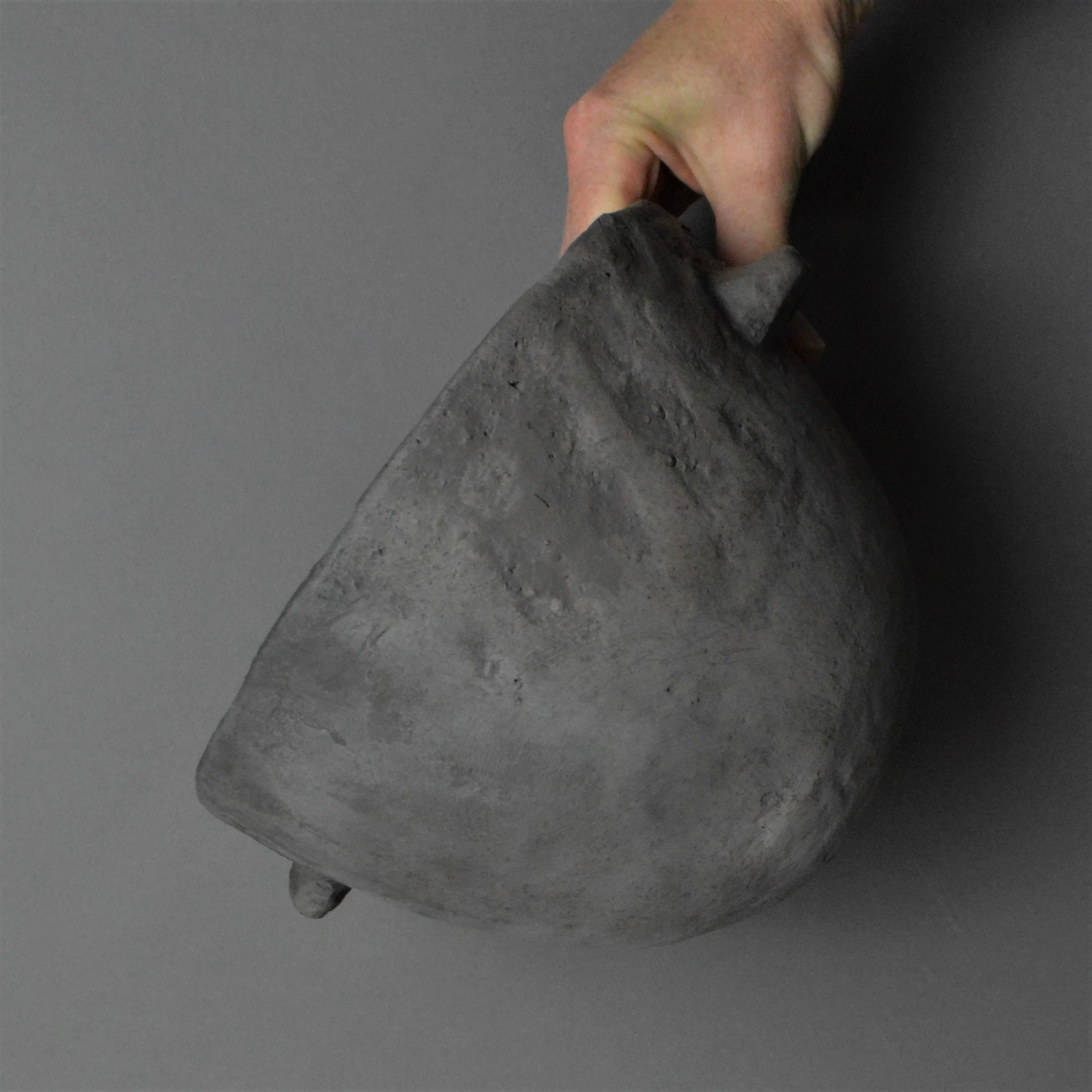
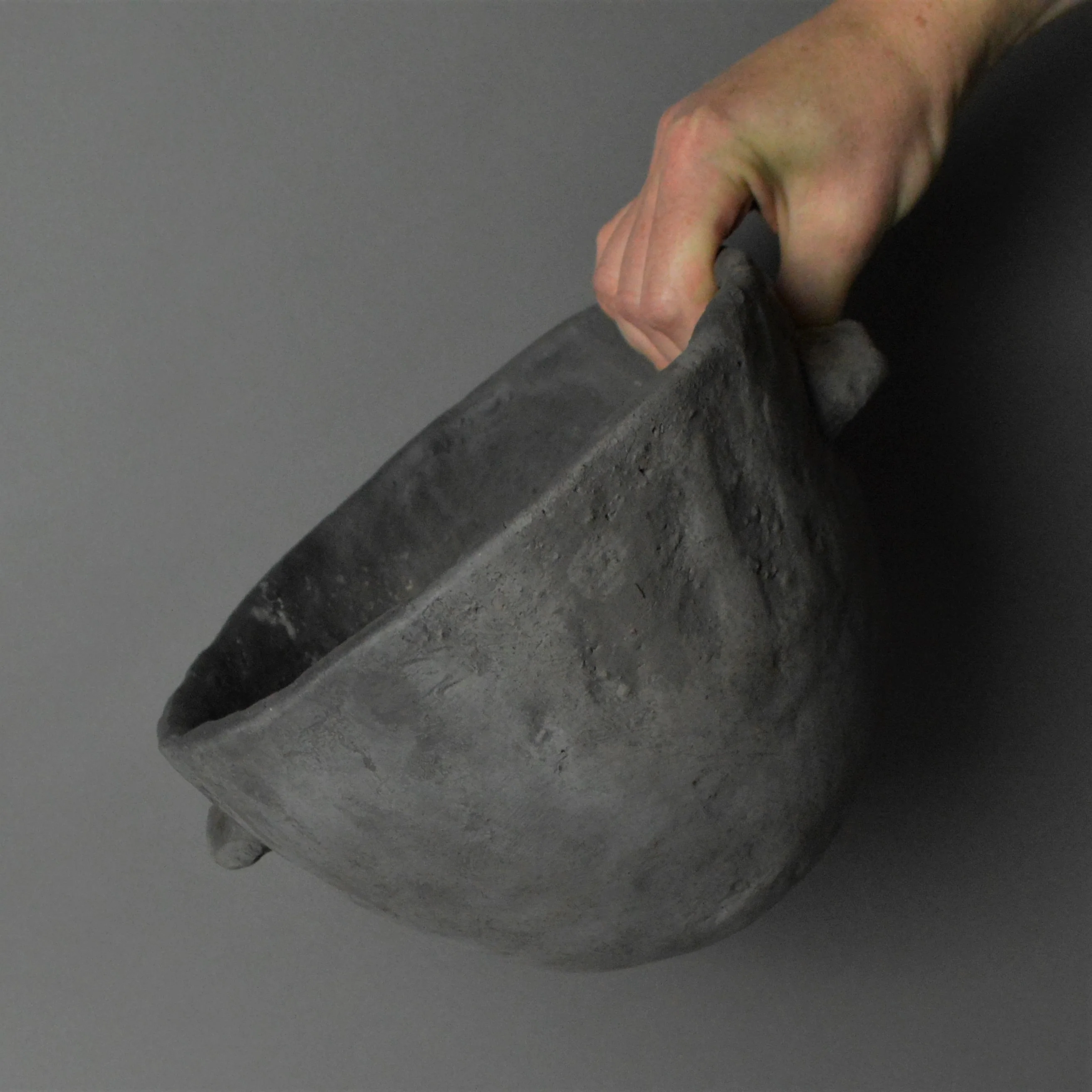
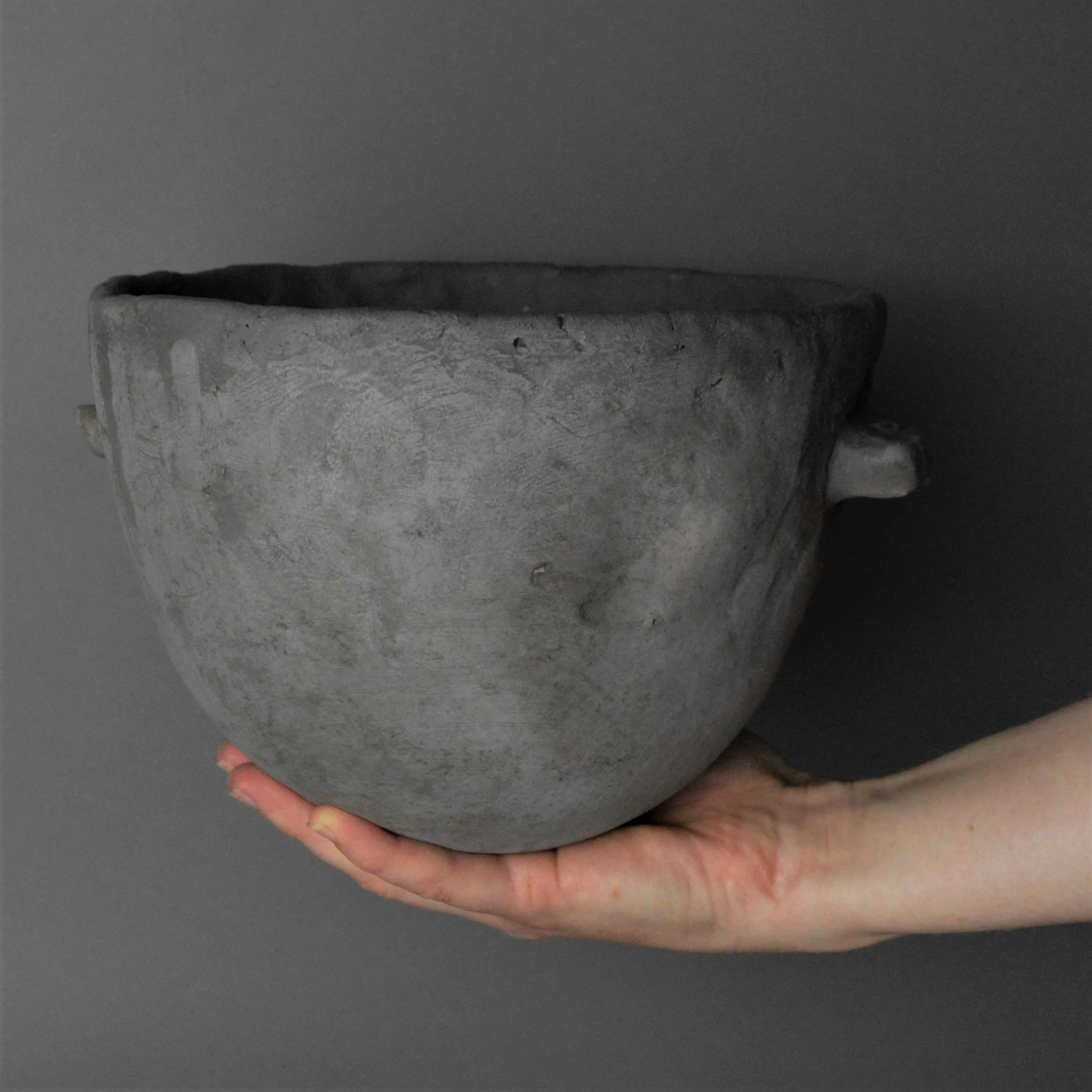
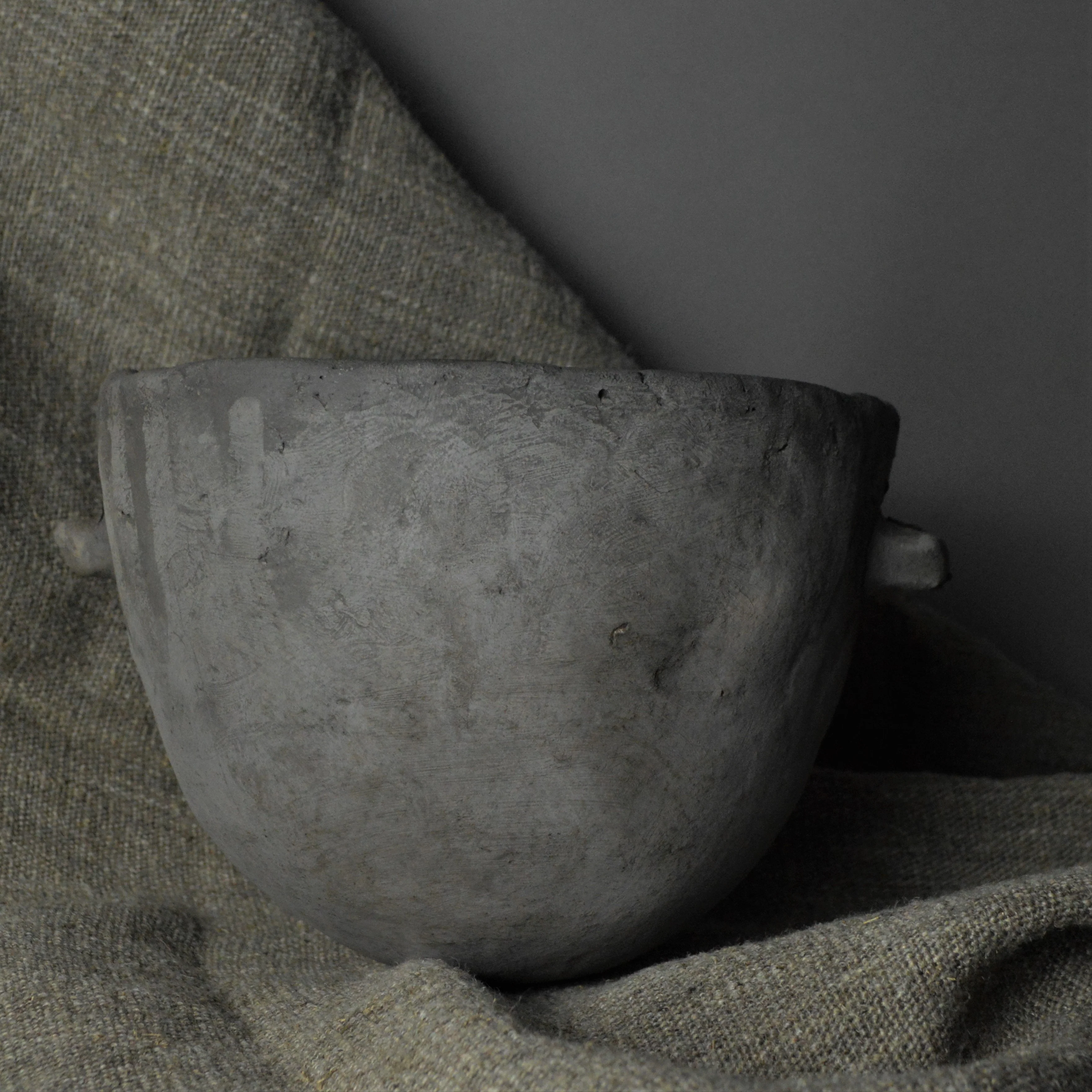
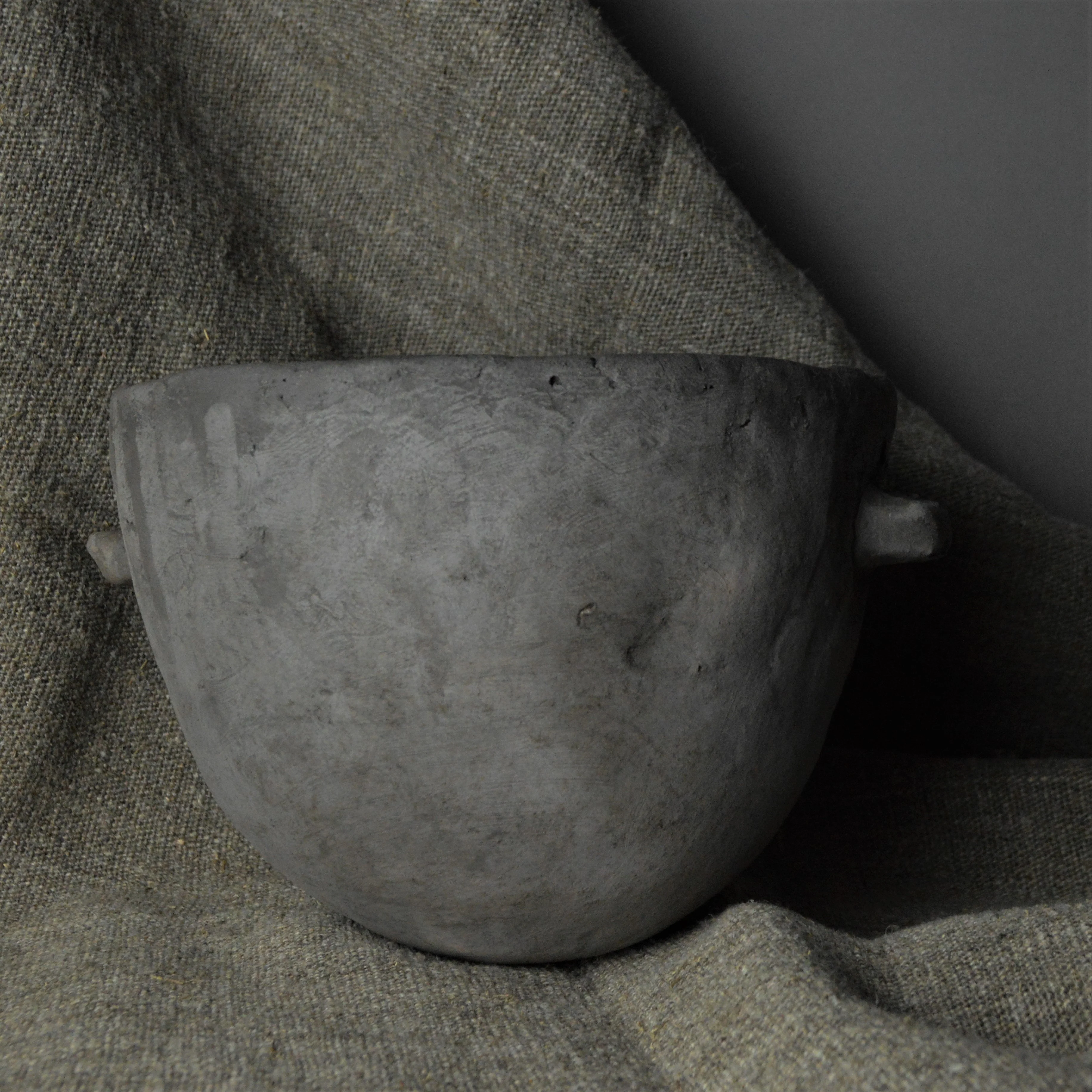
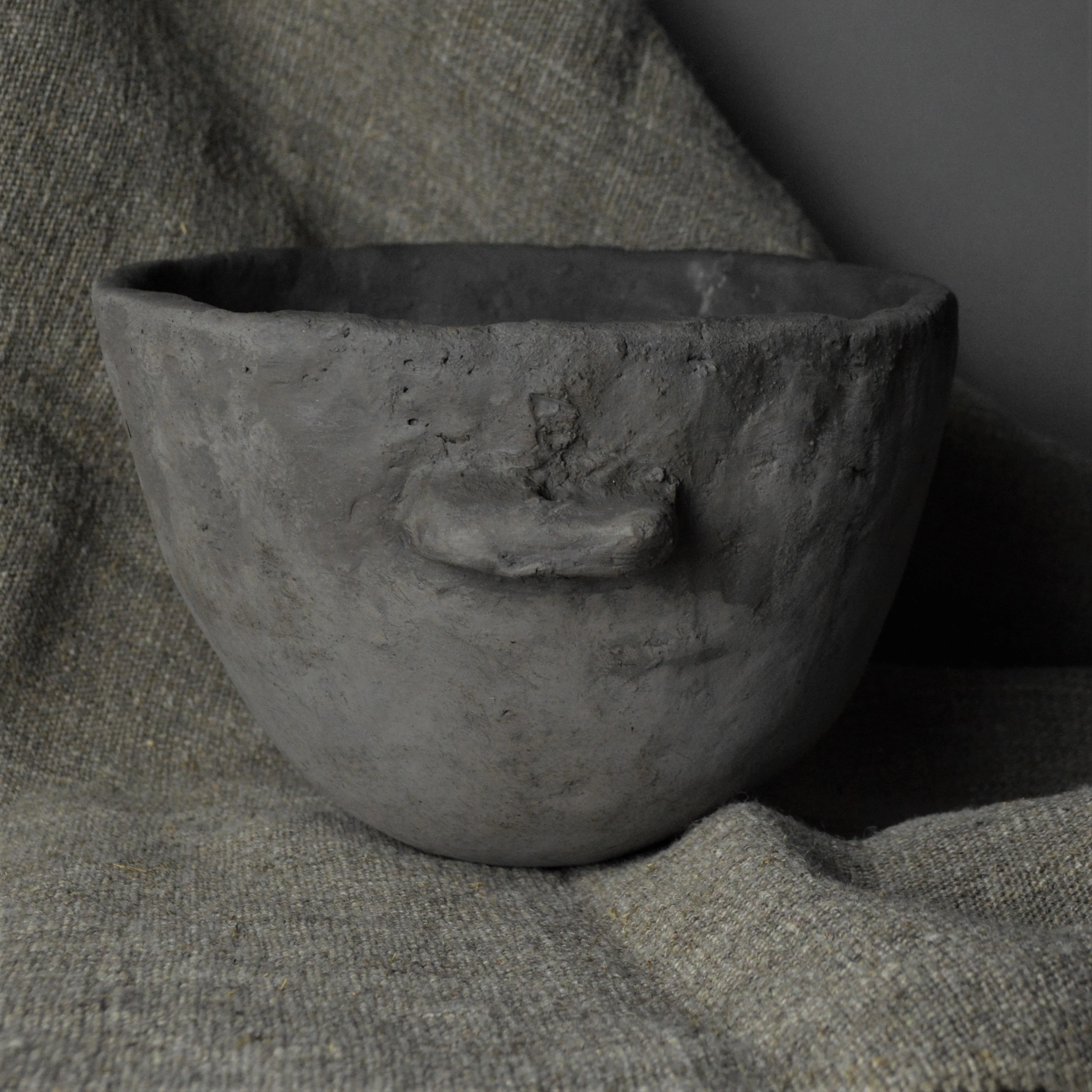
Neolithic Windmill Hill Style Bowl with Two Lugs
Handcrafted Neolithic Pot – Windmill Hill Style
Details
The history of human occupation in the British Isles is a long and dramatic story—one shaped by shifting climates, rising seas, and repeated waves of migration and retreat. This makes the discovery of some of the earliest pottery ever found in Britain especially remarkable.
Around 6,000 years ago, during the Neolithic period, communities began to settle and farm the land for the very first time in British history. With this new way of life came a major innovation: the appearance of beautifully handcrafted ceramic vessels, designed for cooking, storing crops, and preserving precious supplies.
One of the most significant sites from this period is Windmill Hill, a Causewayed Enclosure located about a mile northwest of Avebury in Wiltshire. Archaeological excavations at Windmill Hill have revealed a treasure trove of early Neolithic pottery, and it is from this site that Windmill Hill ware—a distinctive style within the western Neolithic pottery tradition—takes its name.
With their rounded bases and generous proportions, these pots were not just utilitarian; they were meant to be handled, admired, and passed down. They speak to the artistry and everyday resilience of our earliest settled ancestors.
This replica is based on a rim sherd from one such vessel uncovered at Windmill Hill. It has been carefully hand-built using traditional techniques and tools authentic to the Neolithic period, including pebbles and antler tools. Every step in its making aims to honour the skill and spirit of the original potters.
Materials
Smoke-fired terracotta
Dimensions
Height: Approx. 170 mm
Diameter: Approx. 210 mm
Width (including handle): Approx. 230 mm
Production
This vessel has been hand-built in Northumberland using natural clay with properties similar to those used by Neolithic potters. It has been fired in a wood fire, just as the originals would have been, resulting in natural colour variations and texture across the surface. No two pieces are alike.
A light finish of beeswax has been applied—consistent with residue analysis of original Neolithic pots.
Where hand tools are used, they are carefully crafted from stone, wood, antler, bone, and shell, based on archaeological finds or evidence of tool marks left on ancient sherds. The decoration and shaping are done using these handmade tools to preserve the integrity of the original technique.
Firing
Fired using techniques that mirror ancient open firing conditions, each pot bears the hallmarks of wood-fired pottery—subtle surface markings and shifts in colour caused by direct contact with flames and ash.
Because of this process, you may not receive the exact vessel shown in the image, but you can be assured that each one is a unique, one-of-a-kind creation.
Health & Safety
Museum-Quality Replica: Made using the tools and techniques that would have been used during the Neolithic era.
Not food safe: This vessel is unglazed and porous, meaning it will absorb the flavours and moisture of anything stored or cooked in it. While this could enhance the flavour of traditional dishes, it also means the pot does not meet modern health and safety standards for food use.
For display purposes only: While some choose to use replicas like this in experimental archaeology or historical demonstration, this is done at their own risk.
Neolithic people ensured food safety by heating vessels and contents to above 70°C for at least 10 minutes, with temperatures of 100°C or more offering further protection.
Ordering Information
'Add to Basket' Items: Ready to ship immediately.
'Pre-order' Items: Handmade to order within 90 days (longer for international orders). If your order includes both types, your order will be shipped when all items are ready.
Shipping
All items are sent via second-class postal service as standard.
If you require first-class shipping, please contact us for a custom quote.
Postage Note: All items are carefully packaged to ensure they arrive in perfect condition.
A vessel shaped by ancient hands, reimagined for modern appreciation—this Windmill Hill pot offers a tactile, timeless connection to the earliest pottery makers of Britain.
Product Information
Product Information
Shipping & Returns
Shipping & Returns
Description
Handcrafted Neolithic Pot – Windmill Hill Style
Details
The history of human occupation in the British Isles is a long and dramatic story—one shaped by shifting climates, rising seas, and repeated waves of migration and retreat. This makes the discovery of some of the earliest pottery ever found in Britain especially remarkable.
Around 6,000 years ago, during the Neolithic period, communities began to settle and farm the land for the very first time in British history. With this new way of life came a major innovation: the appearance of beautifully handcrafted ceramic vessels, designed for cooking, storing crops, and preserving precious supplies.
One of the most significant sites from this period is Windmill Hill, a Causewayed Enclosure located about a mile northwest of Avebury in Wiltshire. Archaeological excavations at Windmill Hill have revealed a treasure trove of early Neolithic pottery, and it is from this site that Windmill Hill ware—a distinctive style within the western Neolithic pottery tradition—takes its name.
With their rounded bases and generous proportions, these pots were not just utilitarian; they were meant to be handled, admired, and passed down. They speak to the artistry and everyday resilience of our earliest settled ancestors.
This replica is based on a rim sherd from one such vessel uncovered at Windmill Hill. It has been carefully hand-built using traditional techniques and tools authentic to the Neolithic period, including pebbles and antler tools. Every step in its making aims to honour the skill and spirit of the original potters.
Materials
Smoke-fired terracotta
Dimensions
Height: Approx. 170 mm
Diameter: Approx. 210 mm
Width (including handle): Approx. 230 mm
Production
This vessel has been hand-built in Northumberland using natural clay with properties similar to those used by Neolithic potters. It has been fired in a wood fire, just as the originals would have been, resulting in natural colour variations and texture across the surface. No two pieces are alike.
A light finish of beeswax has been applied—consistent with residue analysis of original Neolithic pots.
Where hand tools are used, they are carefully crafted from stone, wood, antler, bone, and shell, based on archaeological finds or evidence of tool marks left on ancient sherds. The decoration and shaping are done using these handmade tools to preserve the integrity of the original technique.
Firing
Fired using techniques that mirror ancient open firing conditions, each pot bears the hallmarks of wood-fired pottery—subtle surface markings and shifts in colour caused by direct contact with flames and ash.
Because of this process, you may not receive the exact vessel shown in the image, but you can be assured that each one is a unique, one-of-a-kind creation.
Health & Safety
Museum-Quality Replica: Made using the tools and techniques that would have been used during the Neolithic era.
Not food safe: This vessel is unglazed and porous, meaning it will absorb the flavours and moisture of anything stored or cooked in it. While this could enhance the flavour of traditional dishes, it also means the pot does not meet modern health and safety standards for food use.
For display purposes only: While some choose to use replicas like this in experimental archaeology or historical demonstration, this is done at their own risk.
Neolithic people ensured food safety by heating vessels and contents to above 70°C for at least 10 minutes, with temperatures of 100°C or more offering further protection.
Ordering Information
'Add to Basket' Items: Ready to ship immediately.
'Pre-order' Items: Handmade to order within 90 days (longer for international orders). If your order includes both types, your order will be shipped when all items are ready.
Shipping
All items are sent via second-class postal service as standard.
If you require first-class shipping, please contact us for a custom quote.
Postage Note: All items are carefully packaged to ensure they arrive in perfect condition.
A vessel shaped by ancient hands, reimagined for modern appreciation—this Windmill Hill pot offers a tactile, timeless connection to the earliest pottery makers of Britain.