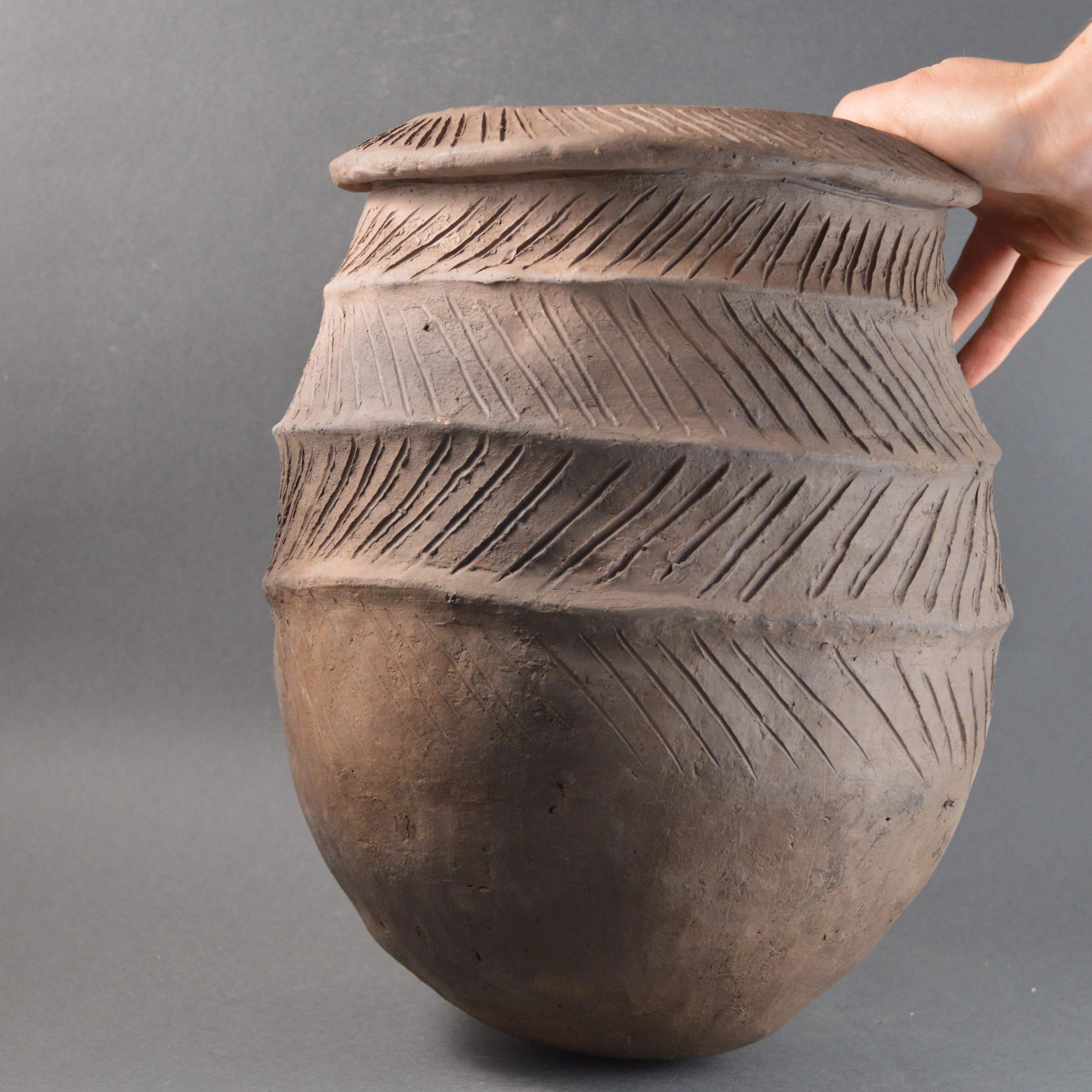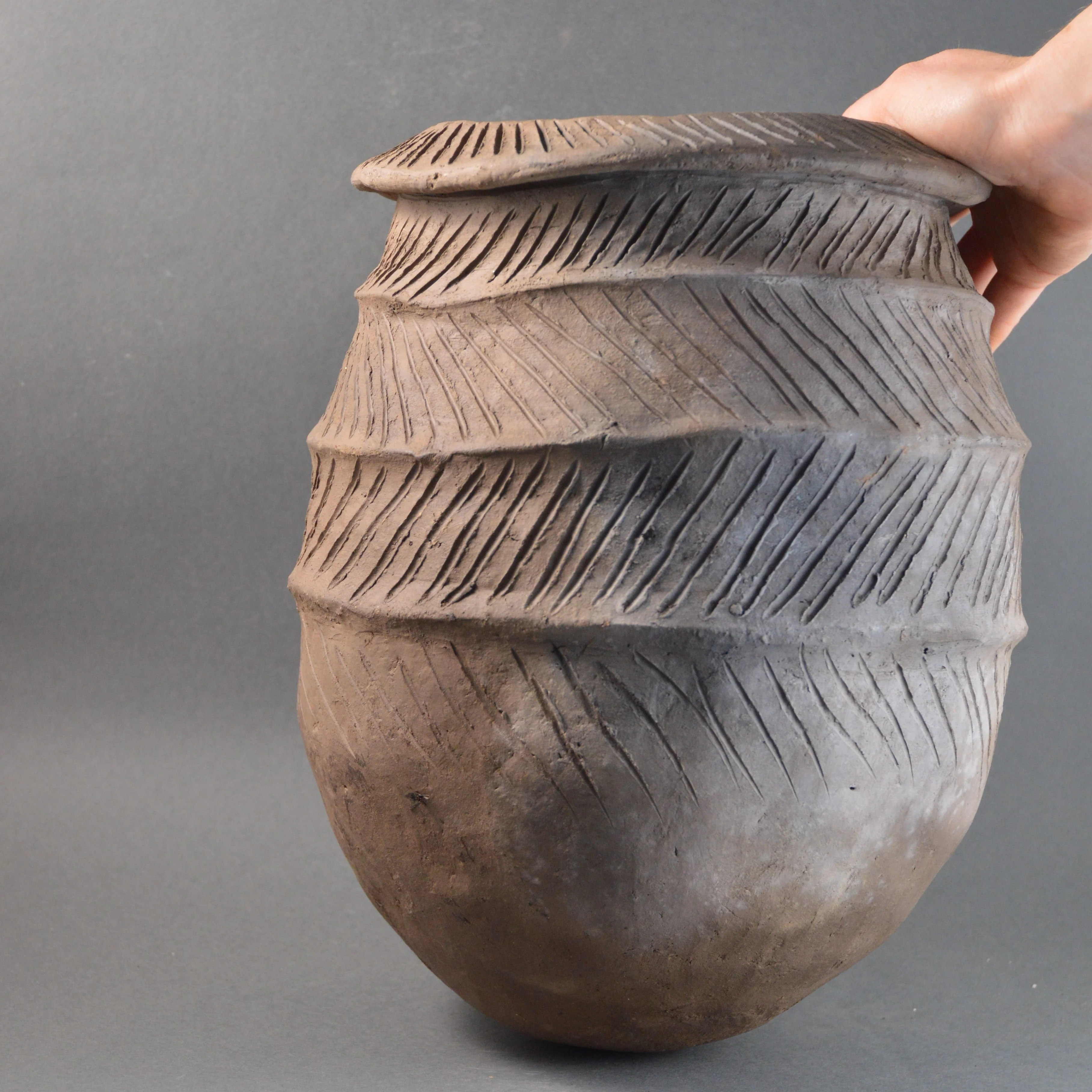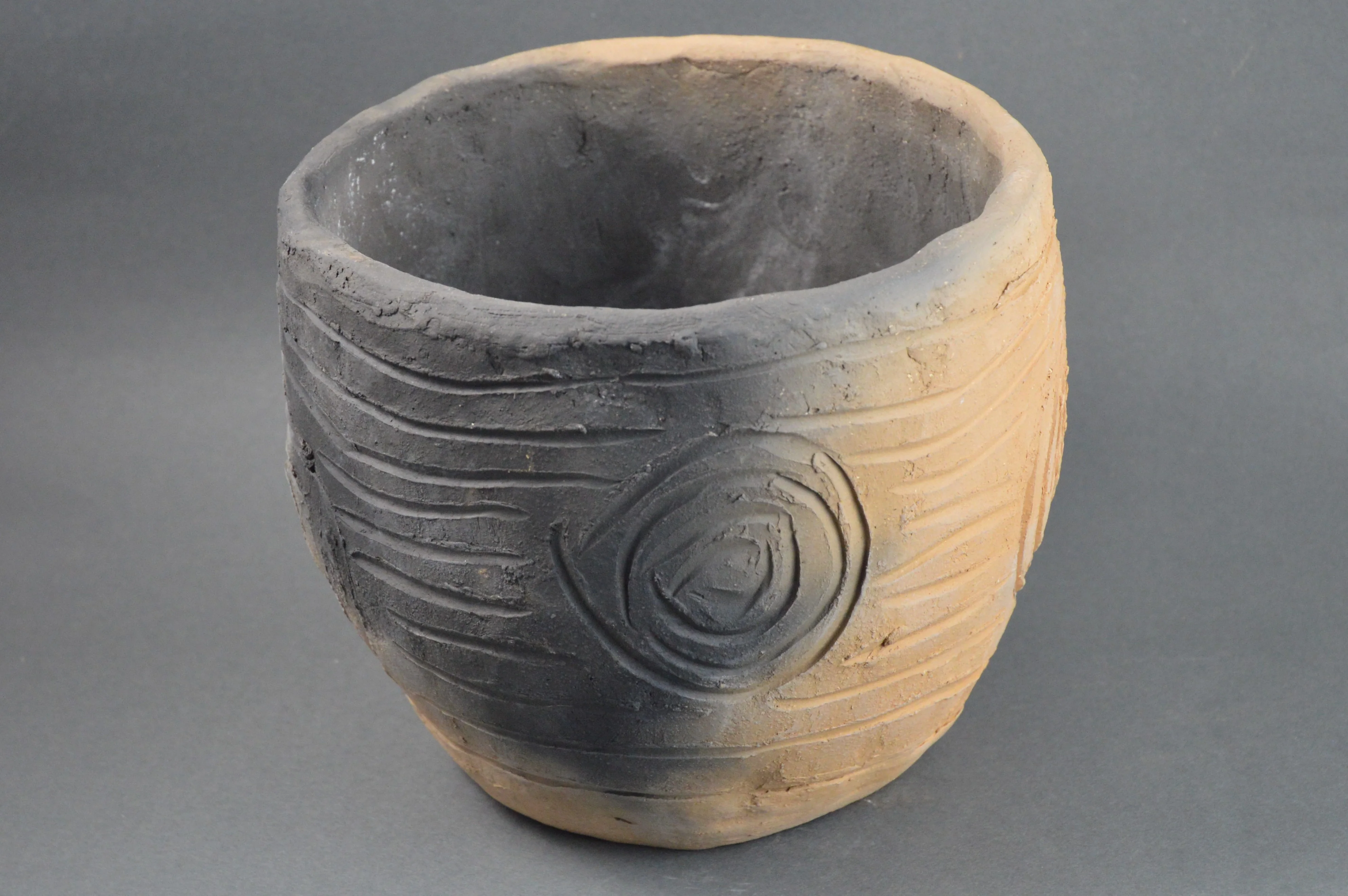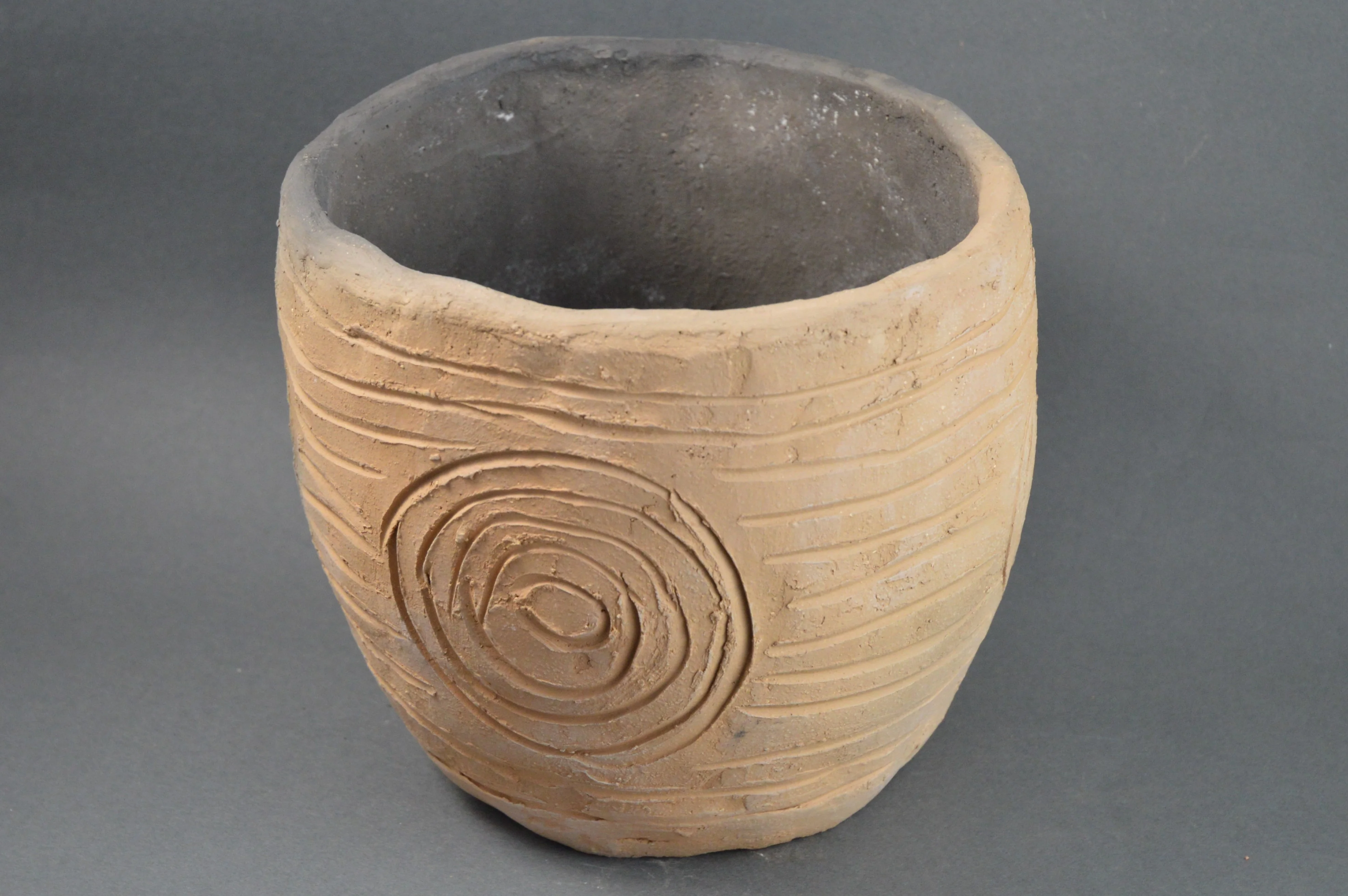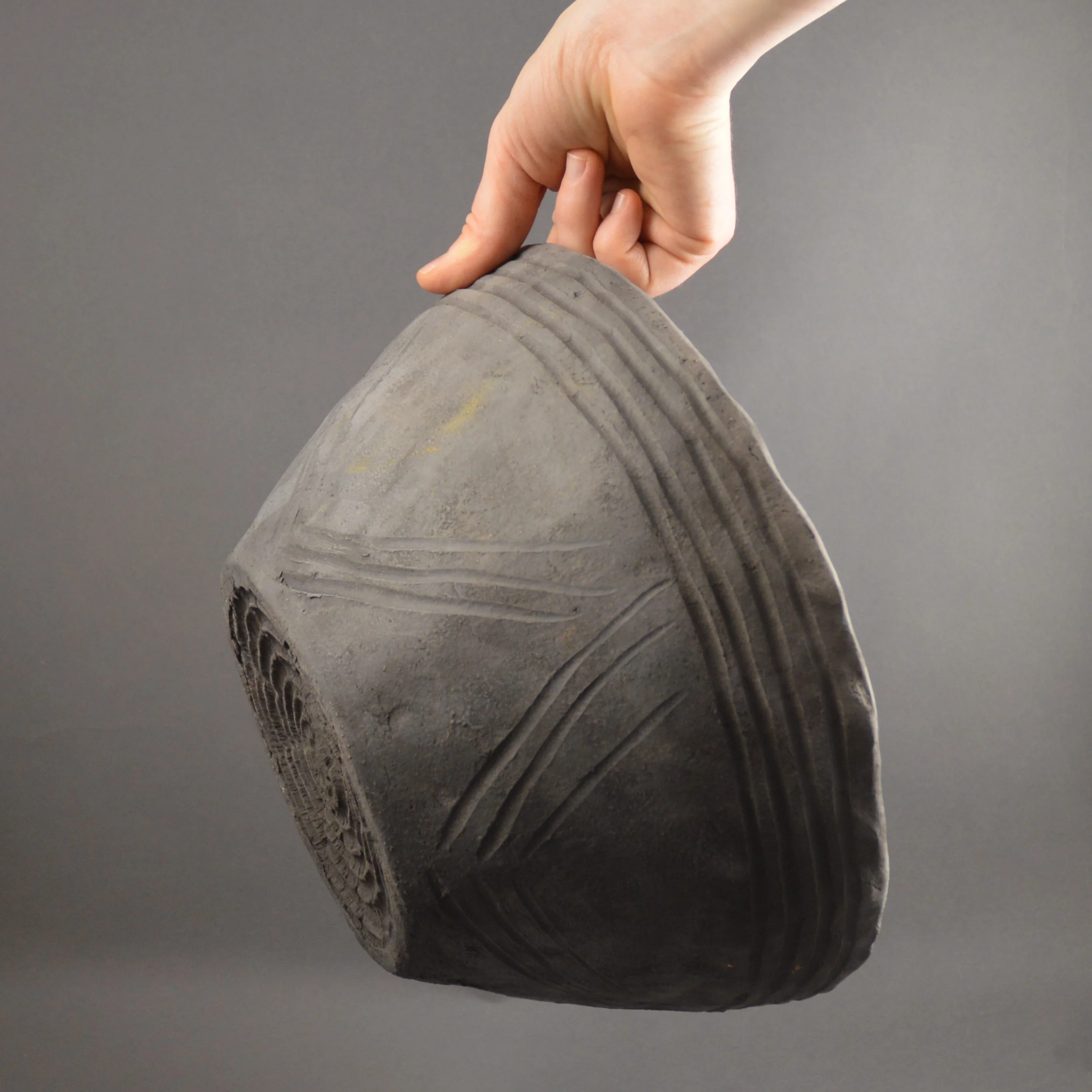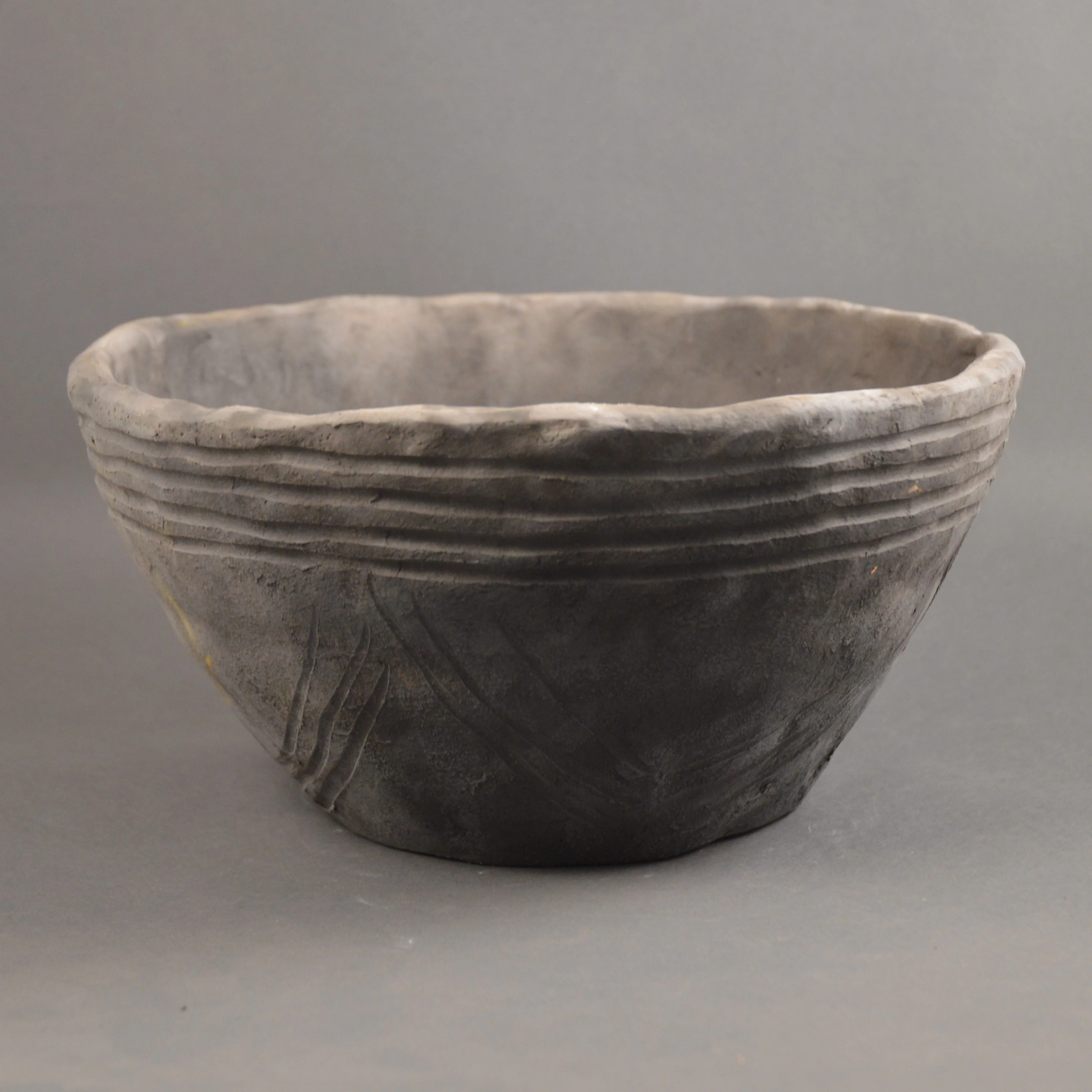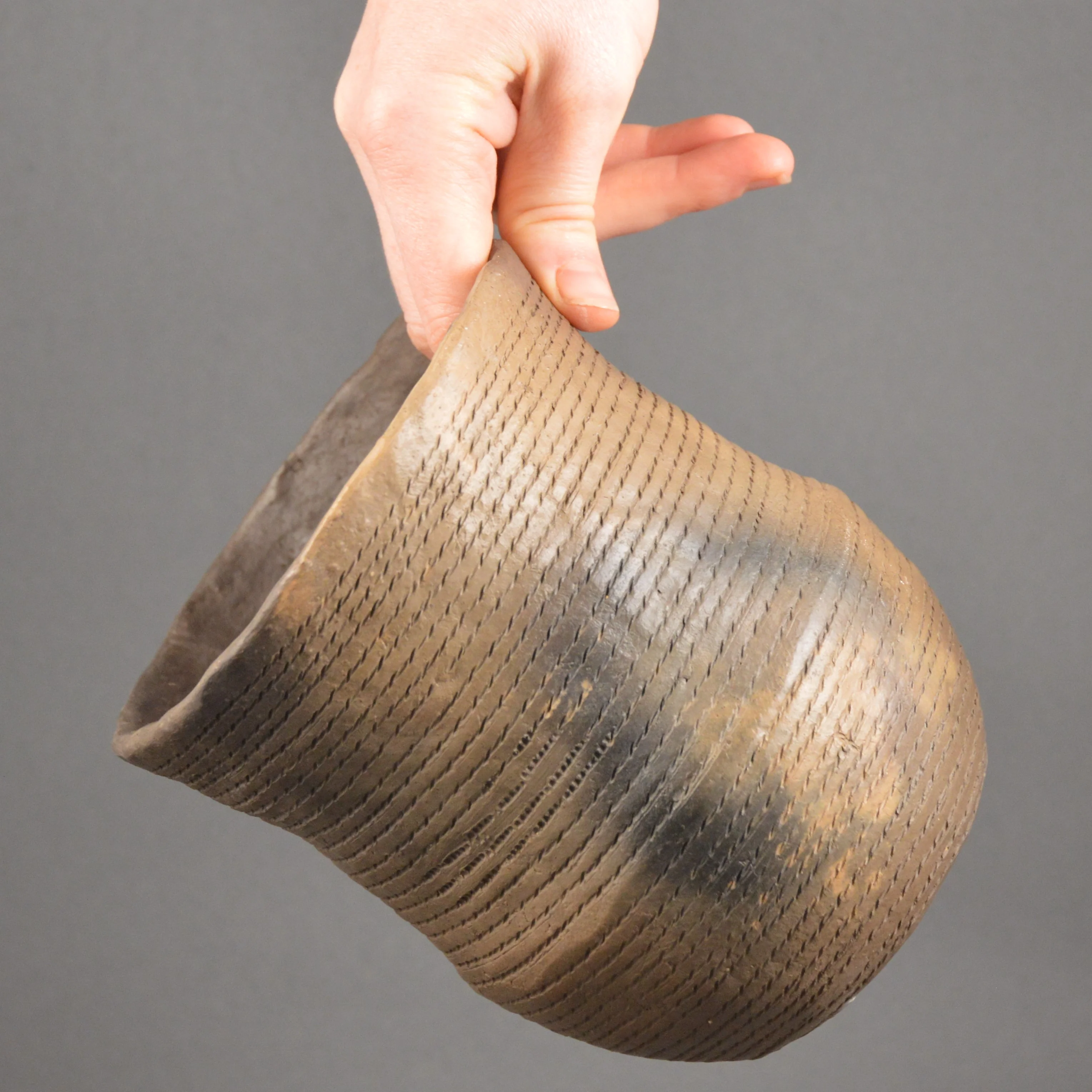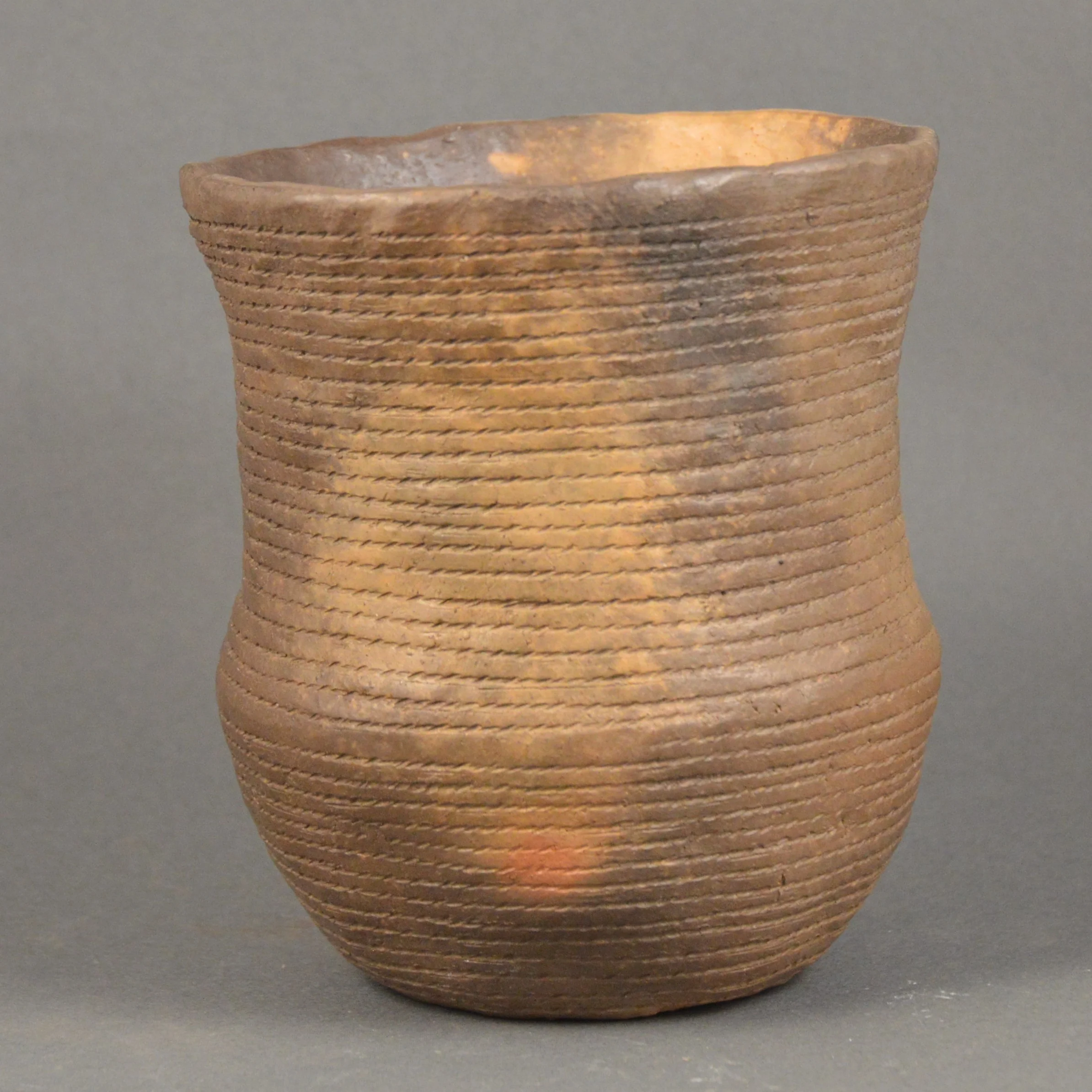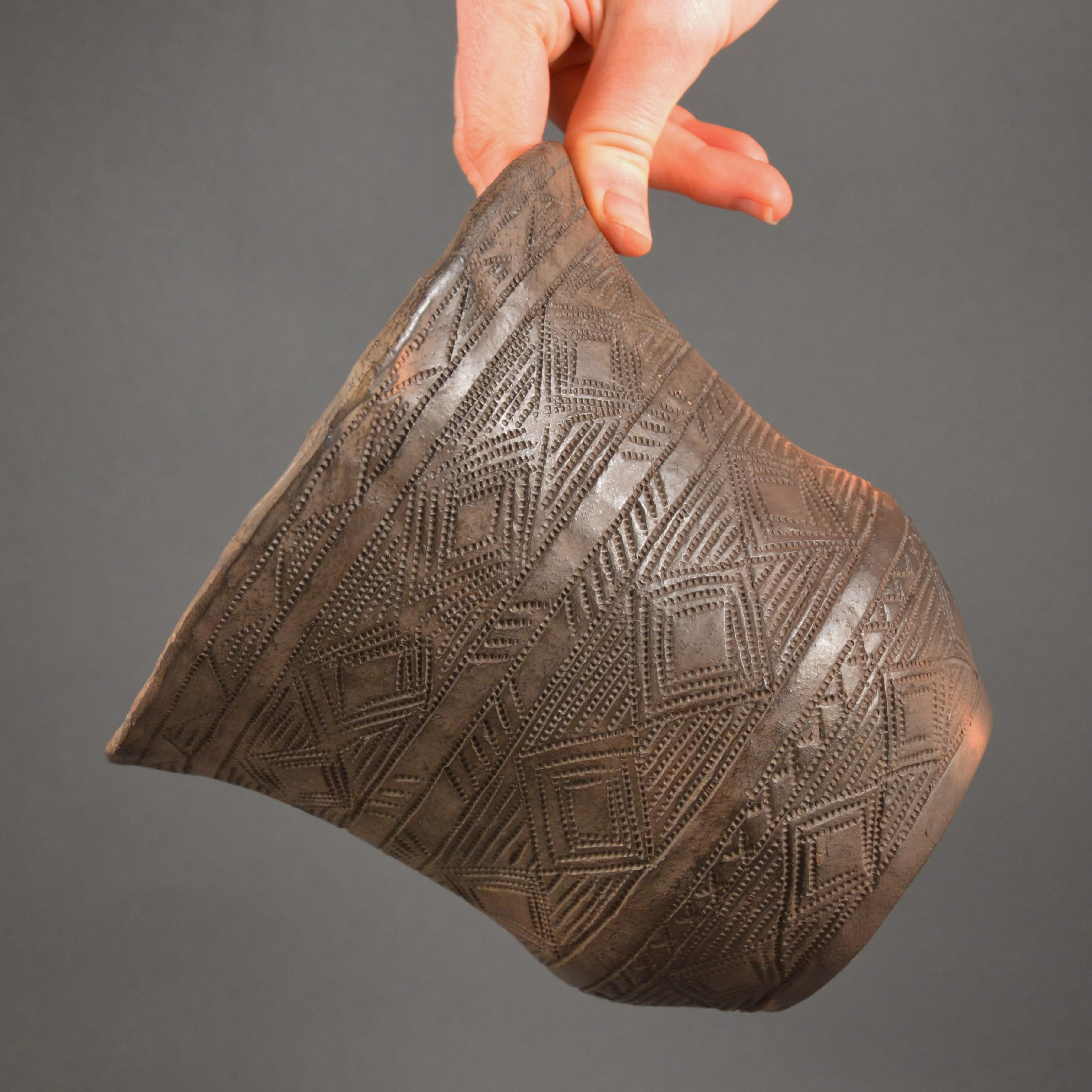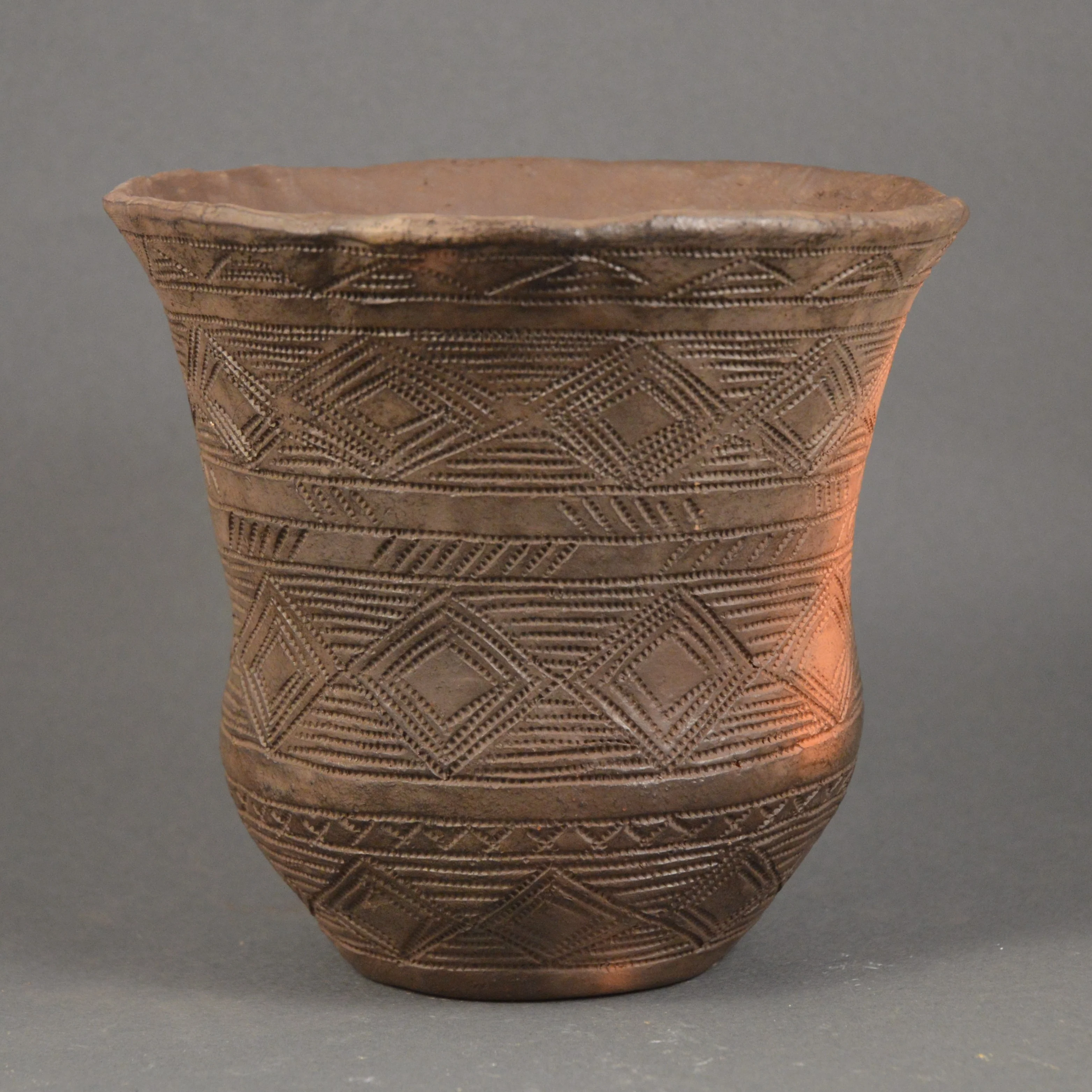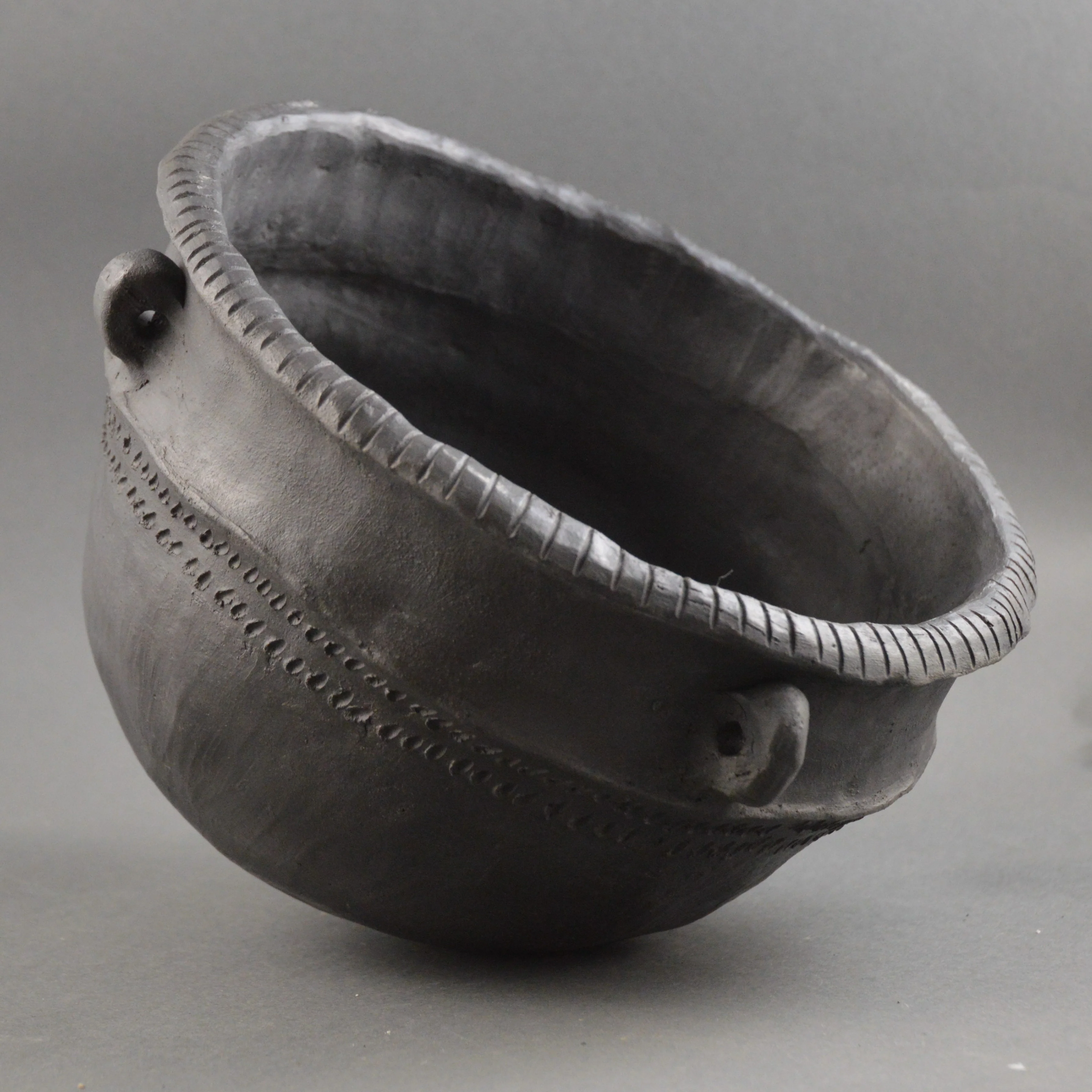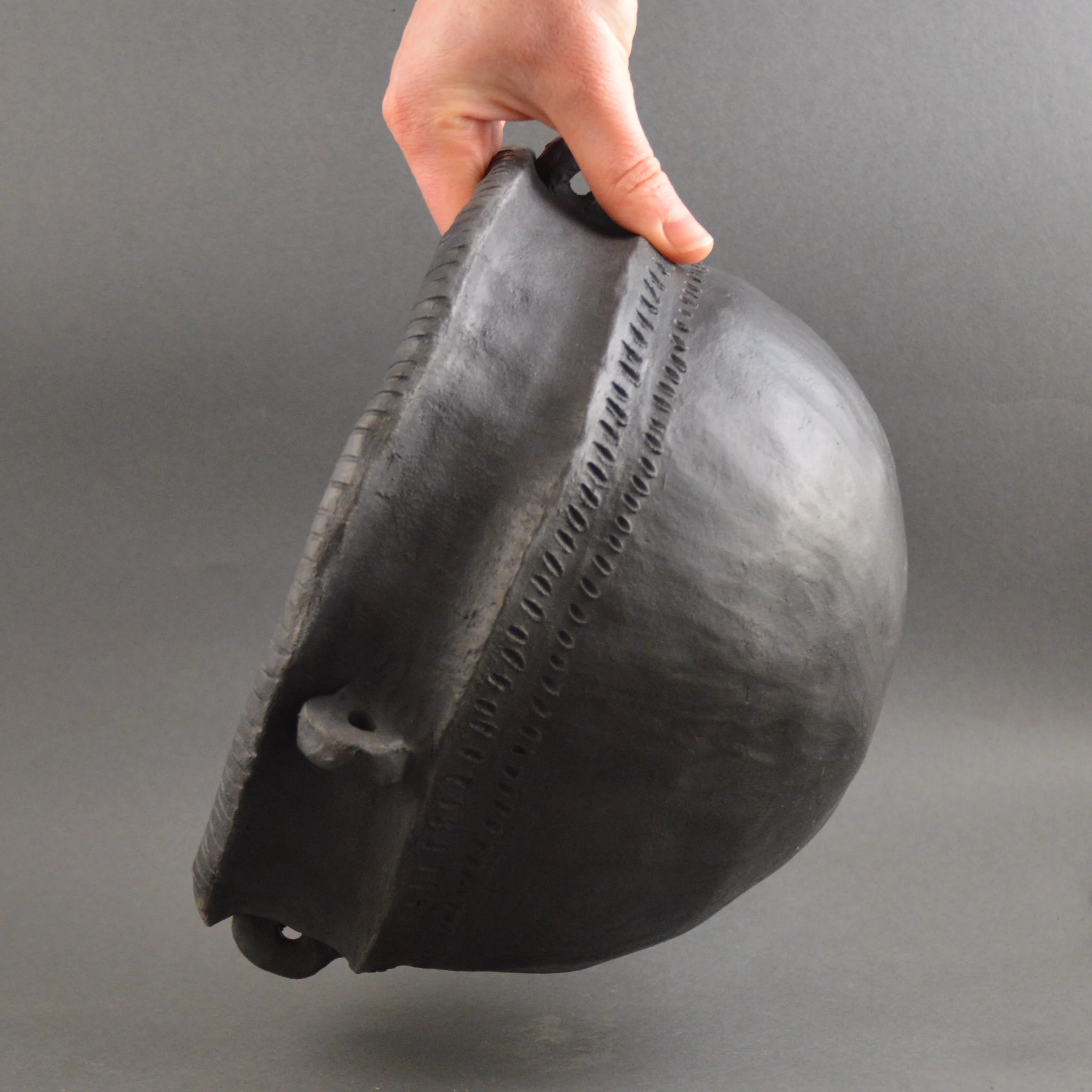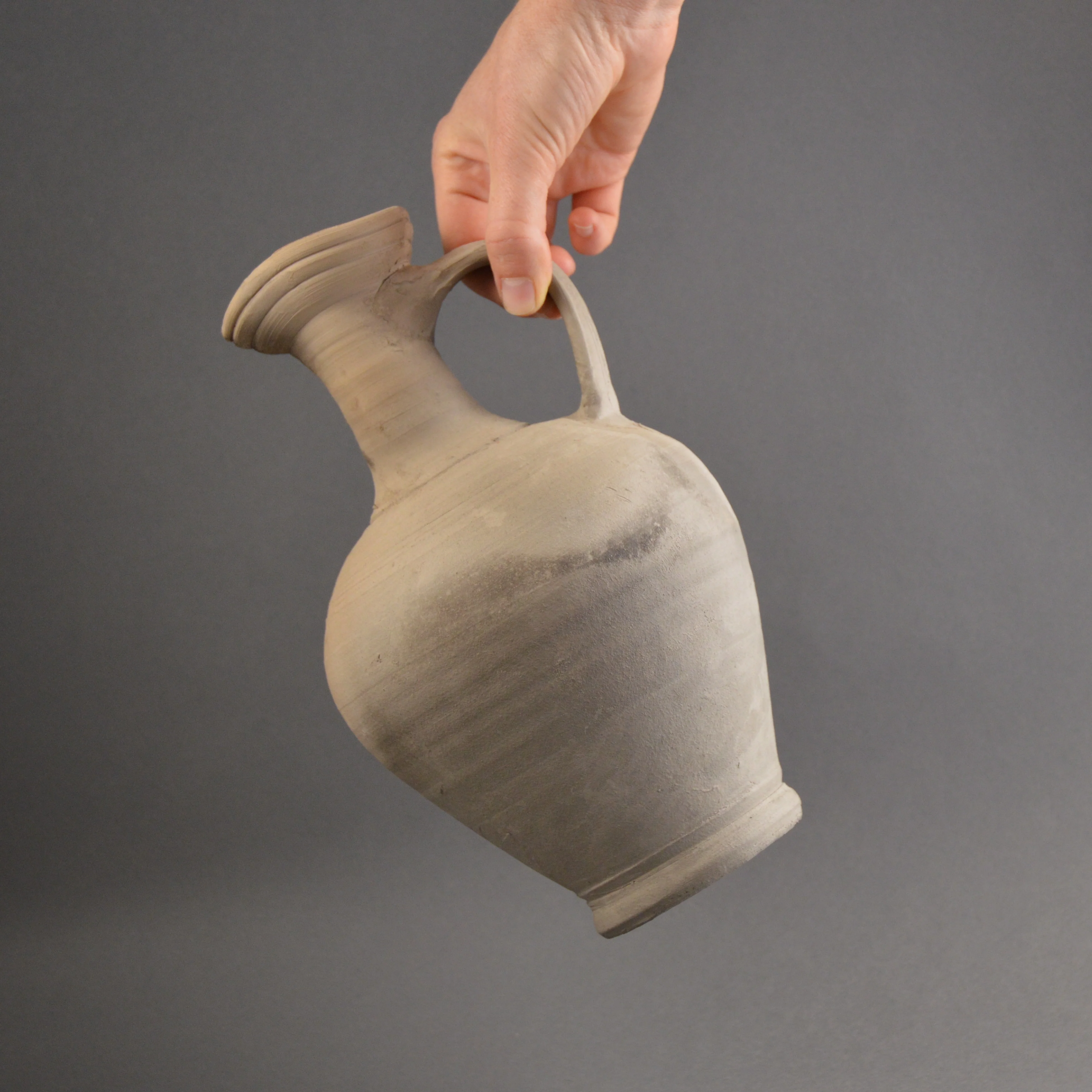
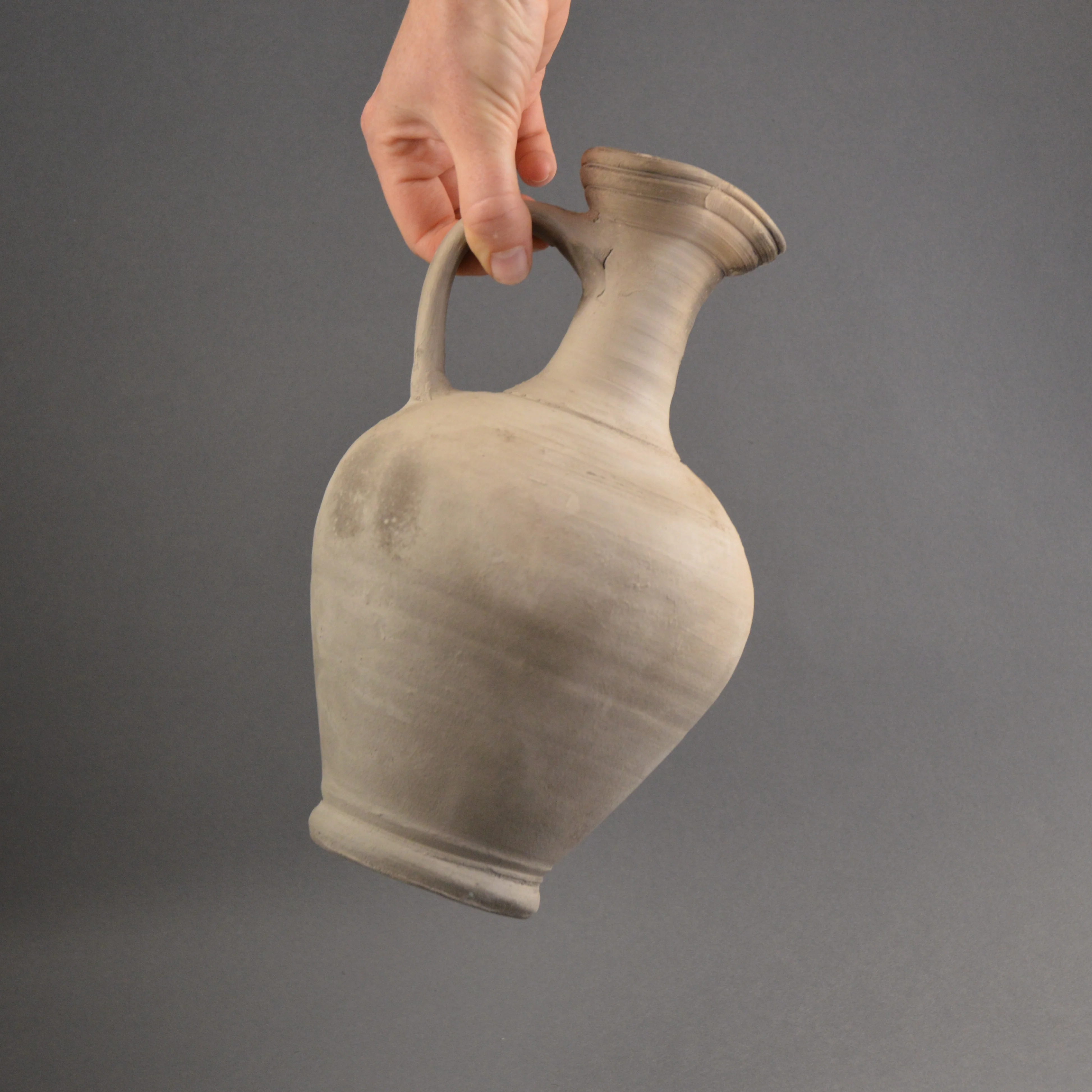
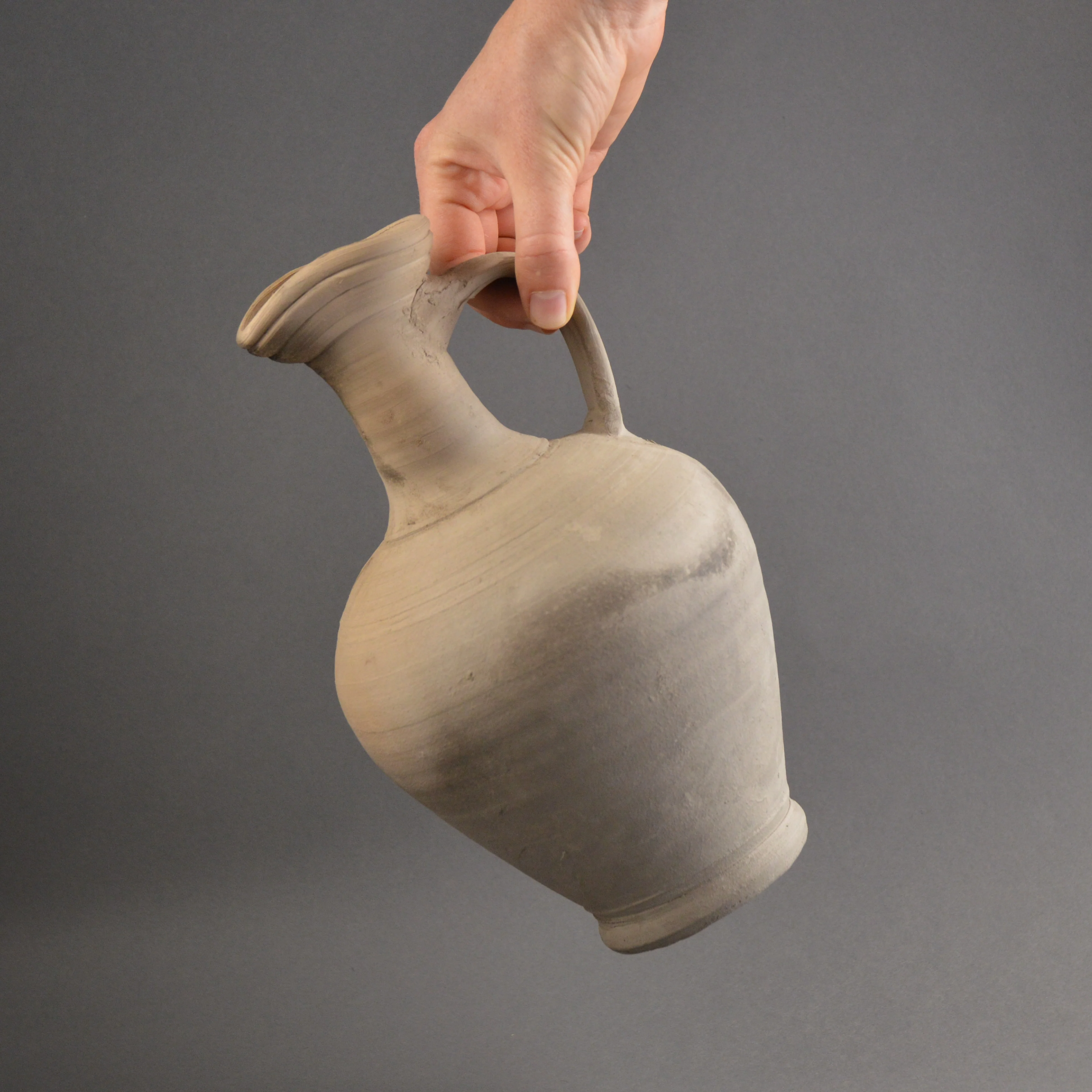
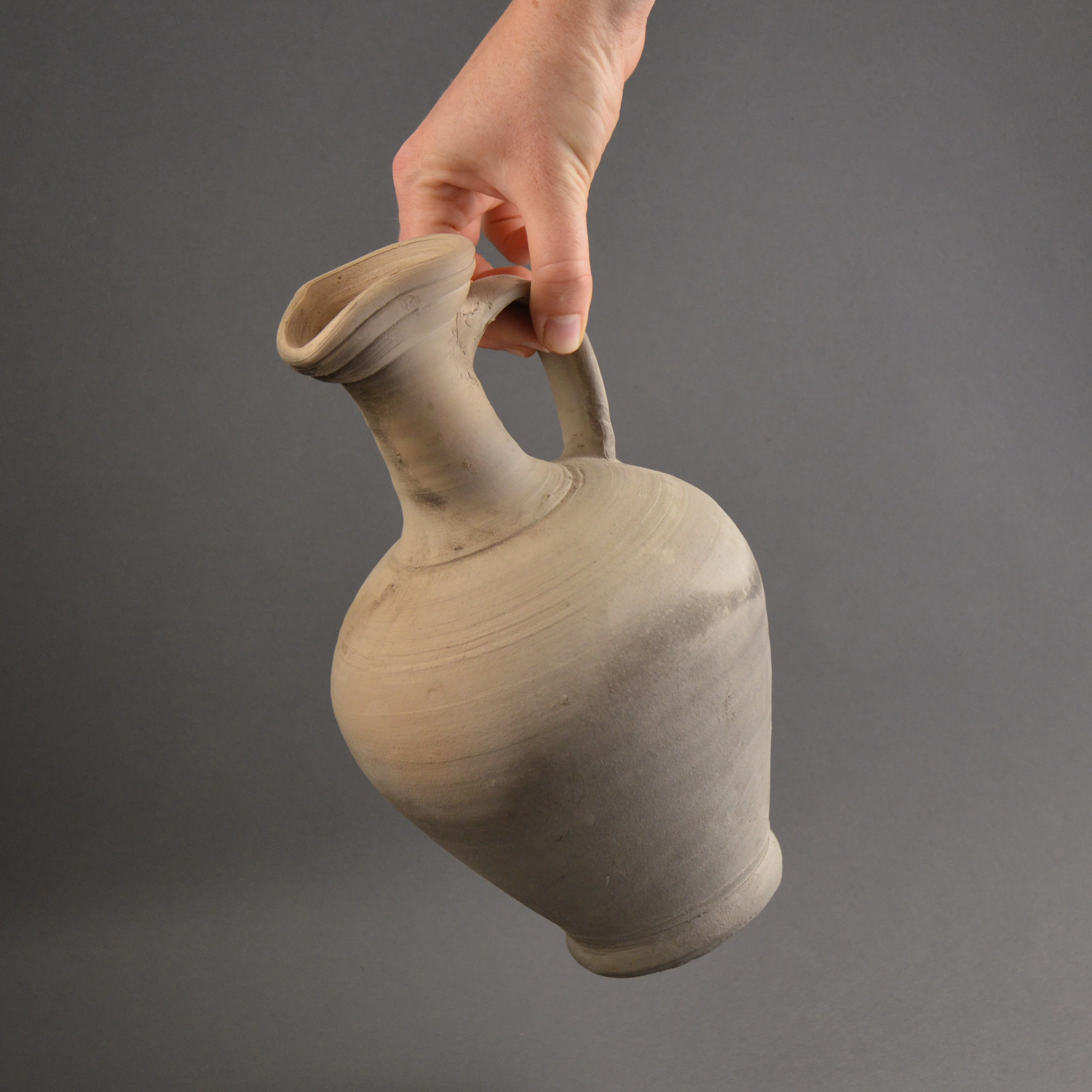
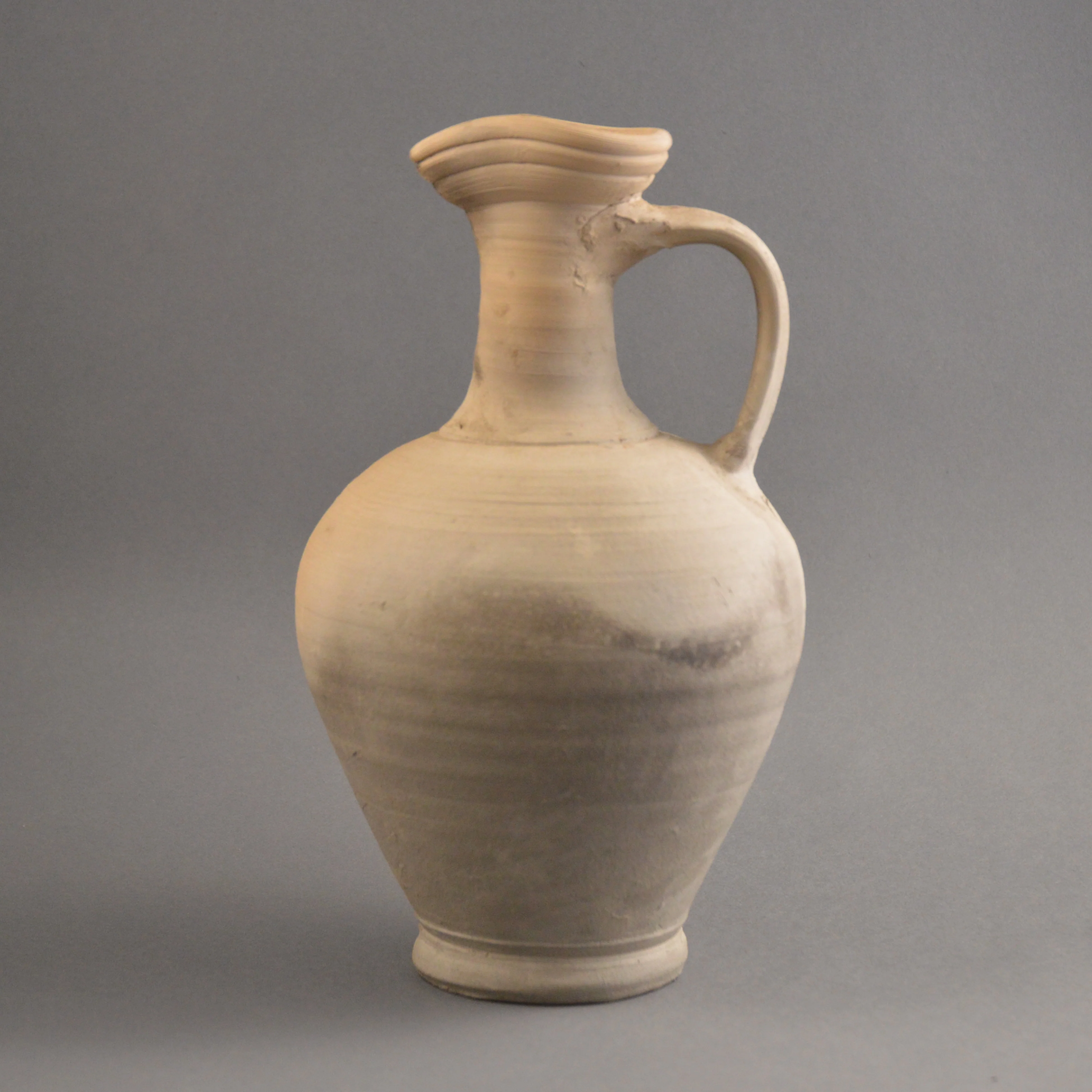
Pinched Flagon
Handcrafted Roman Flagon – A Daily Essential of the Ancient World
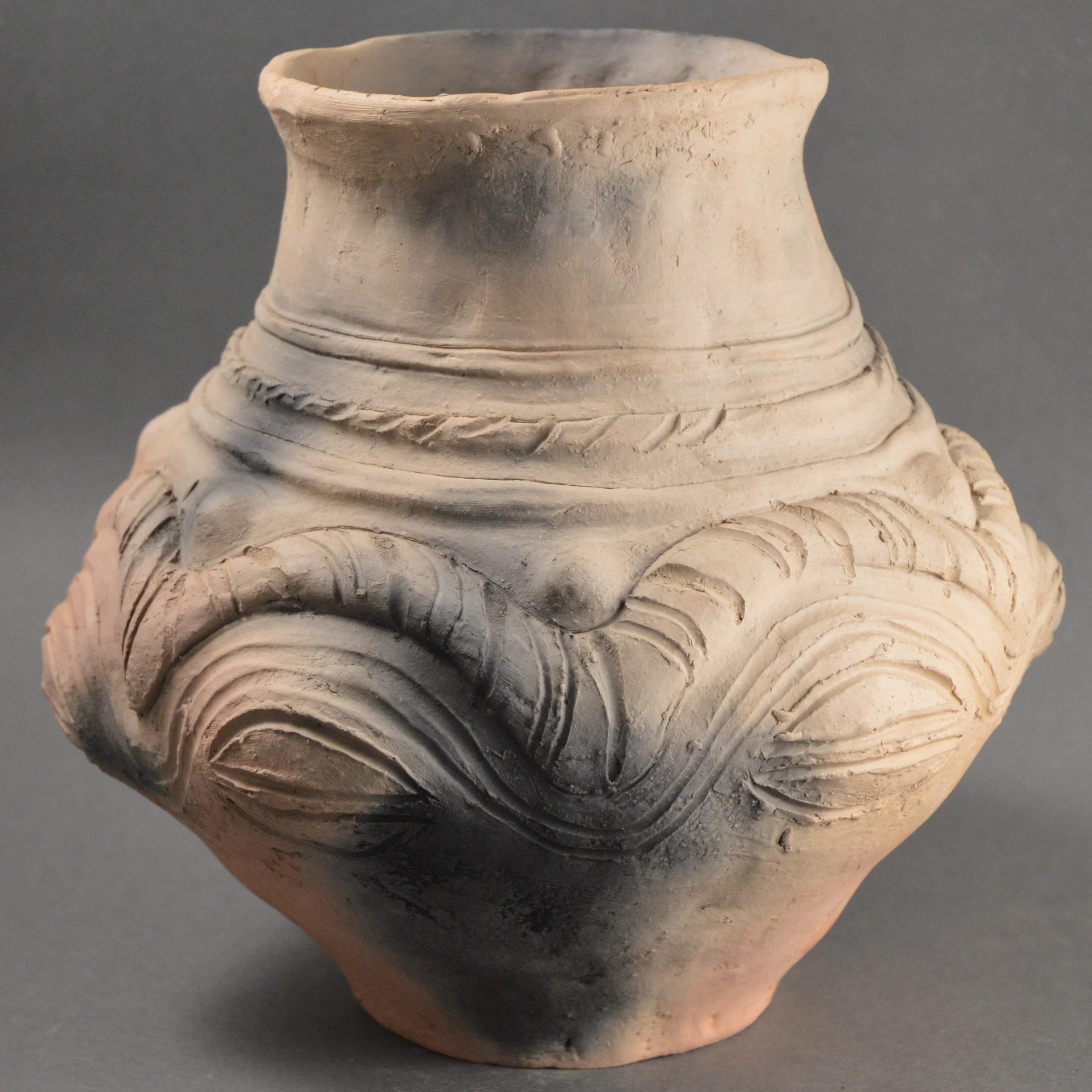
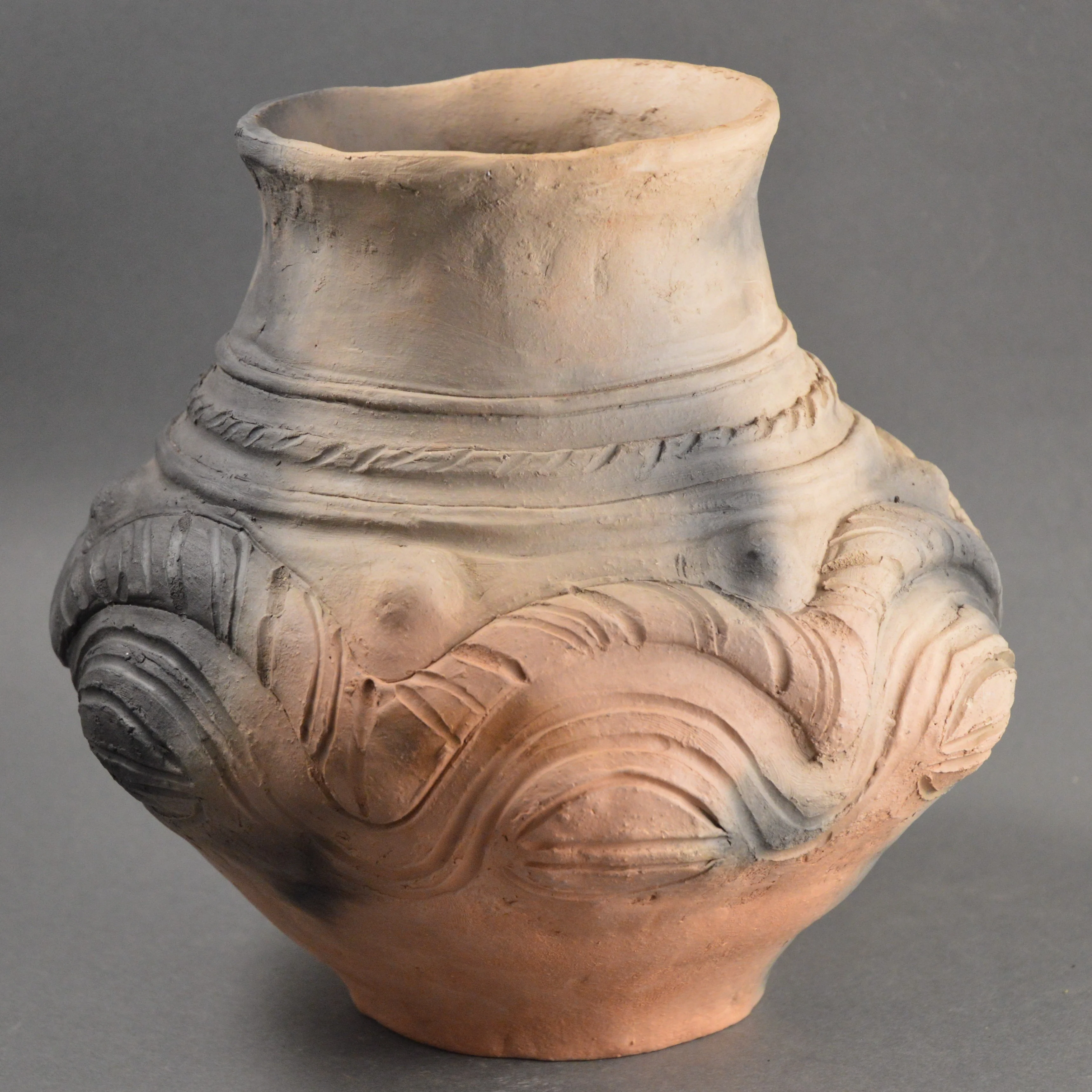
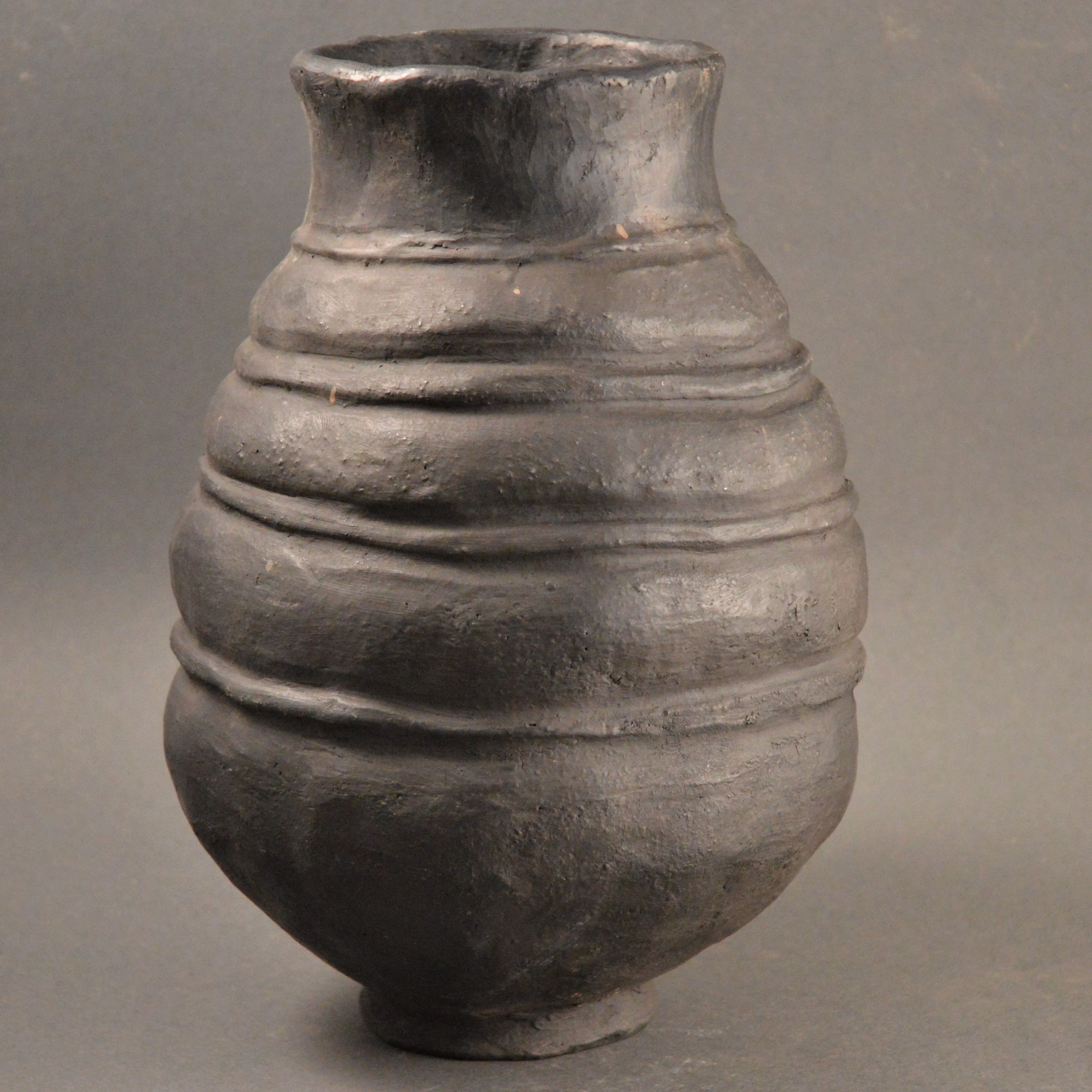
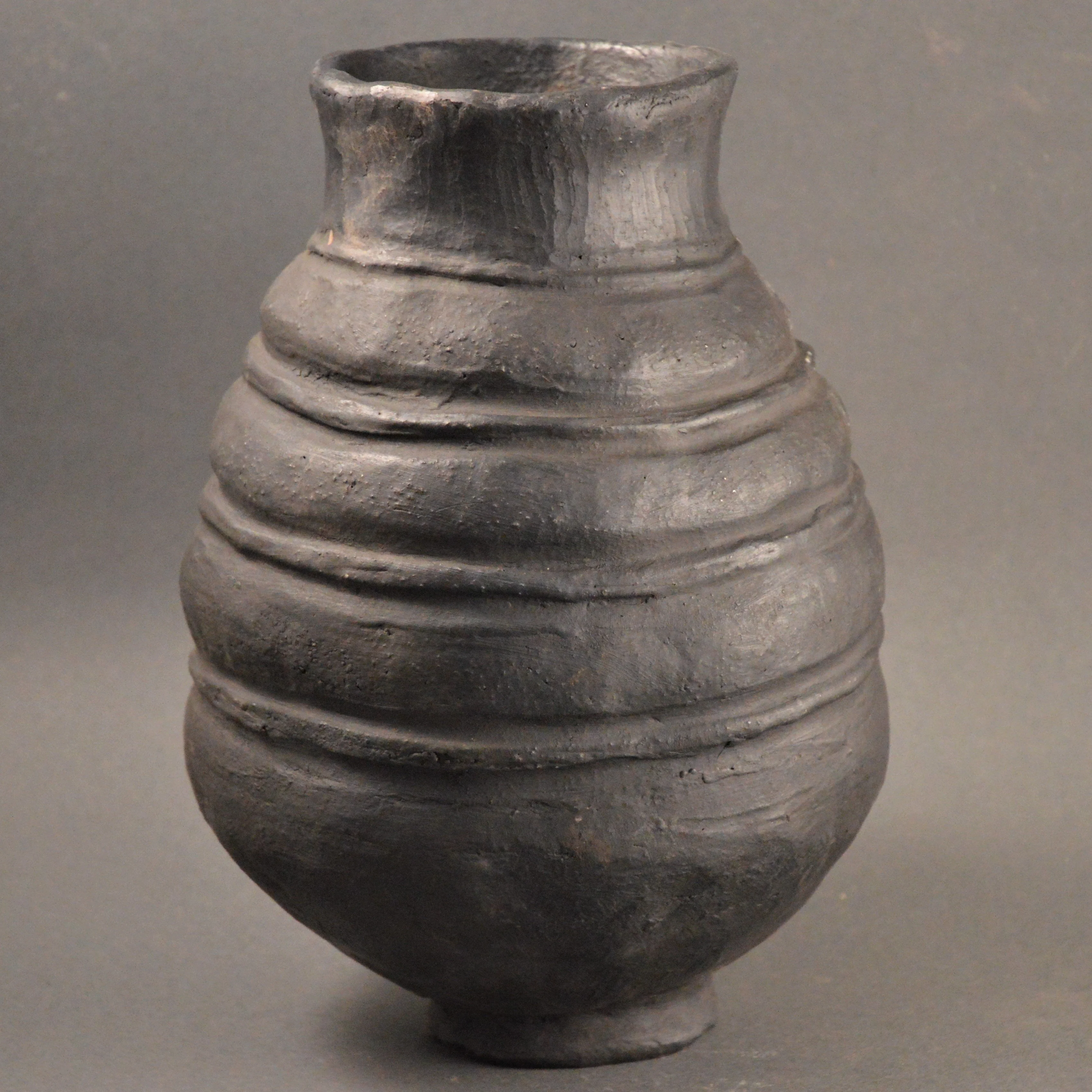
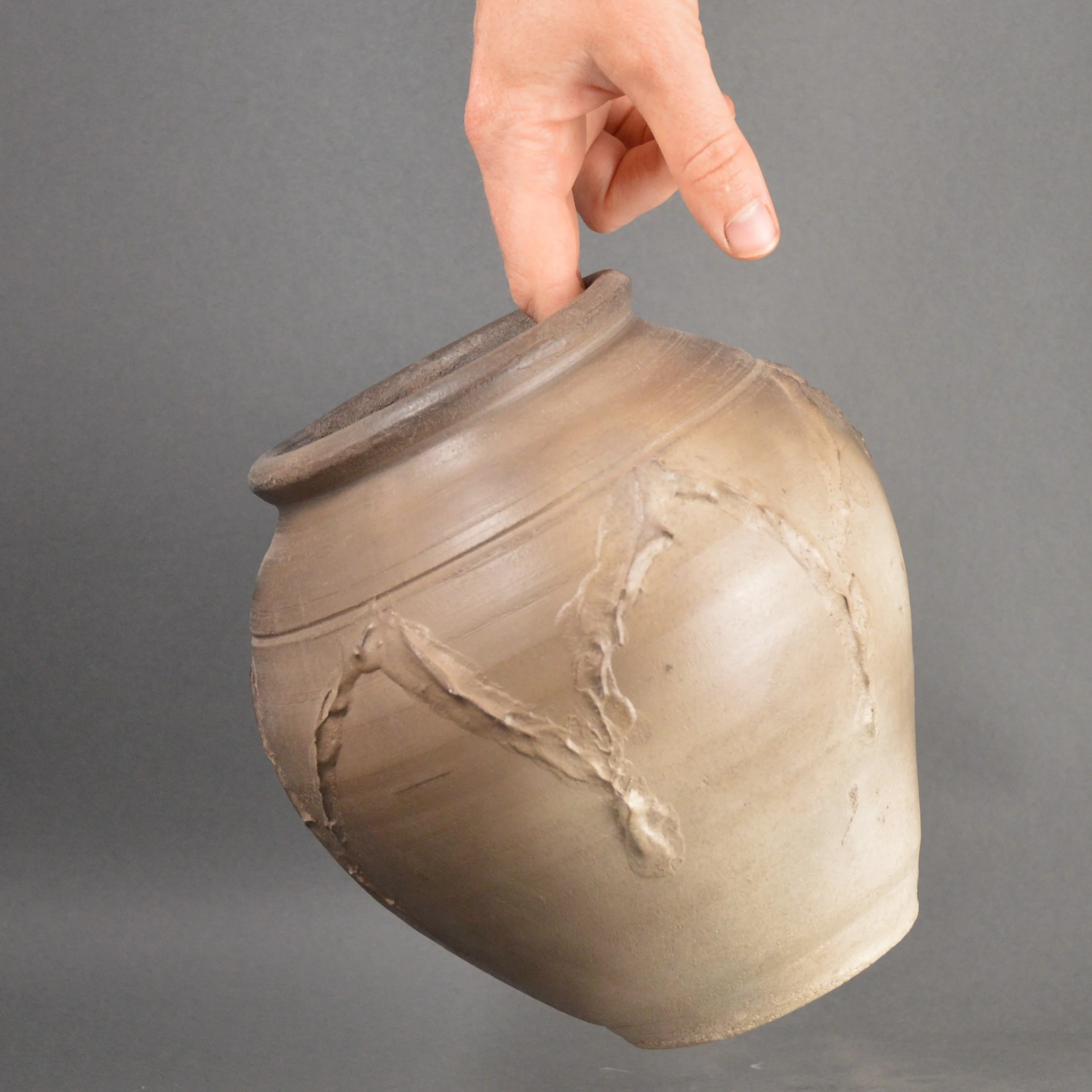
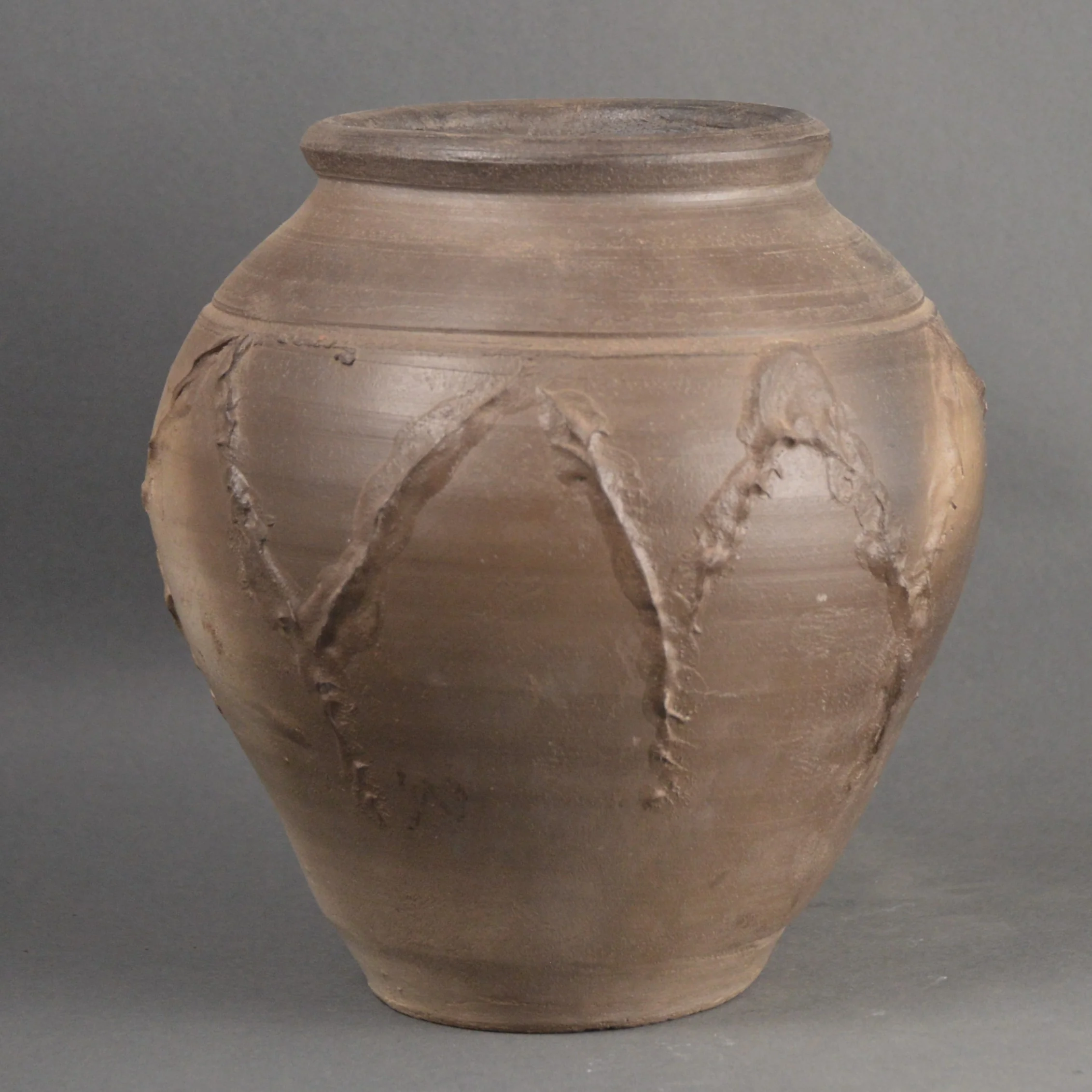
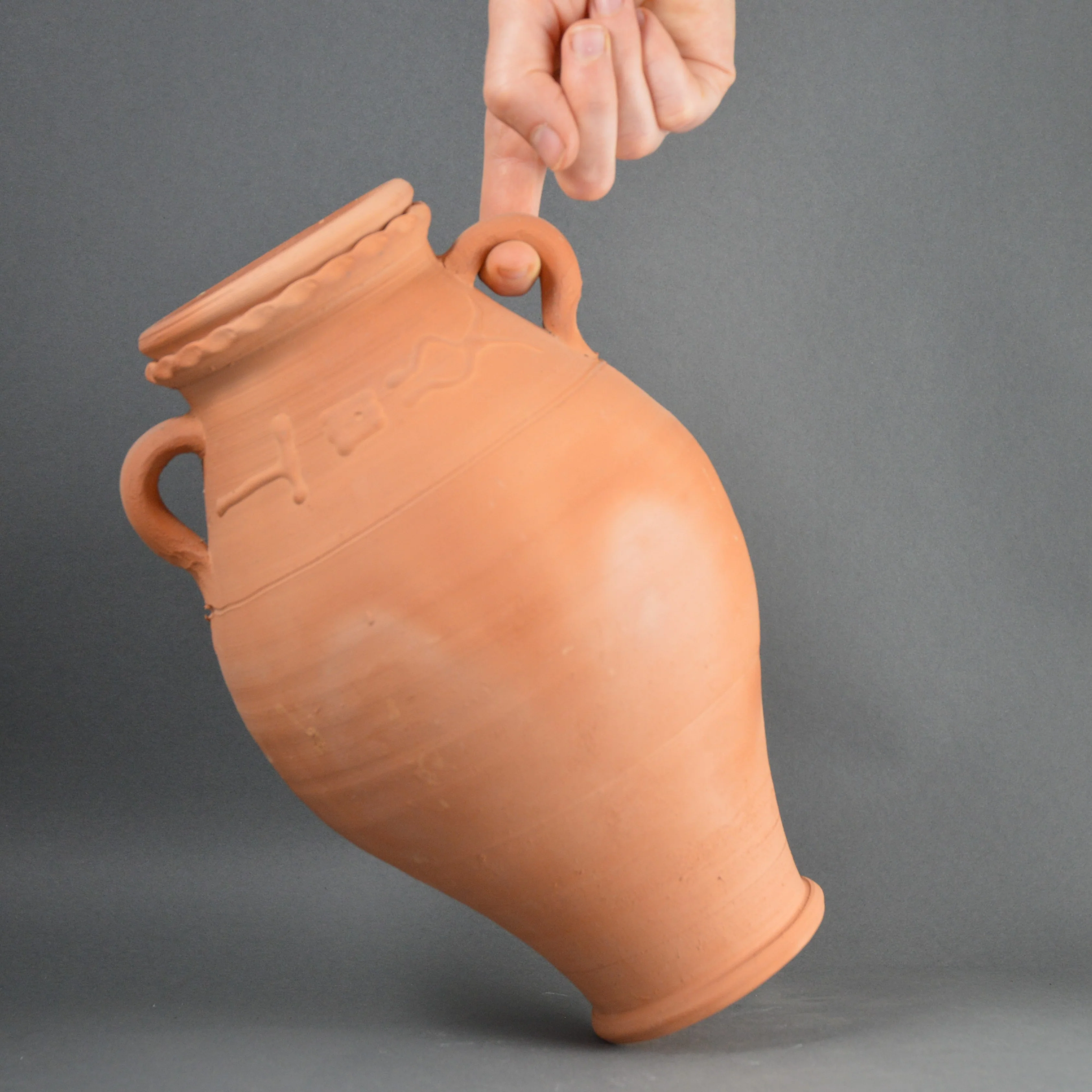
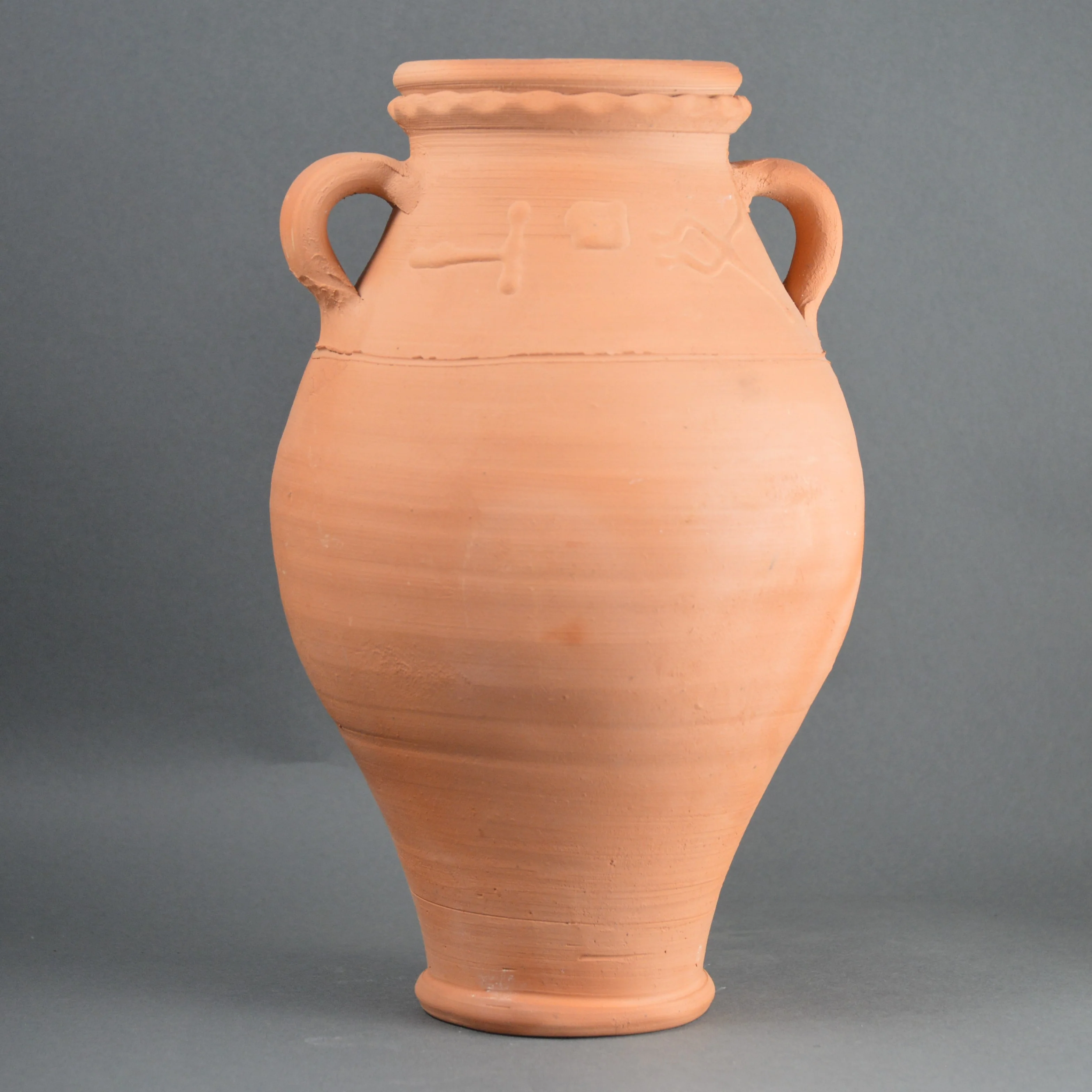
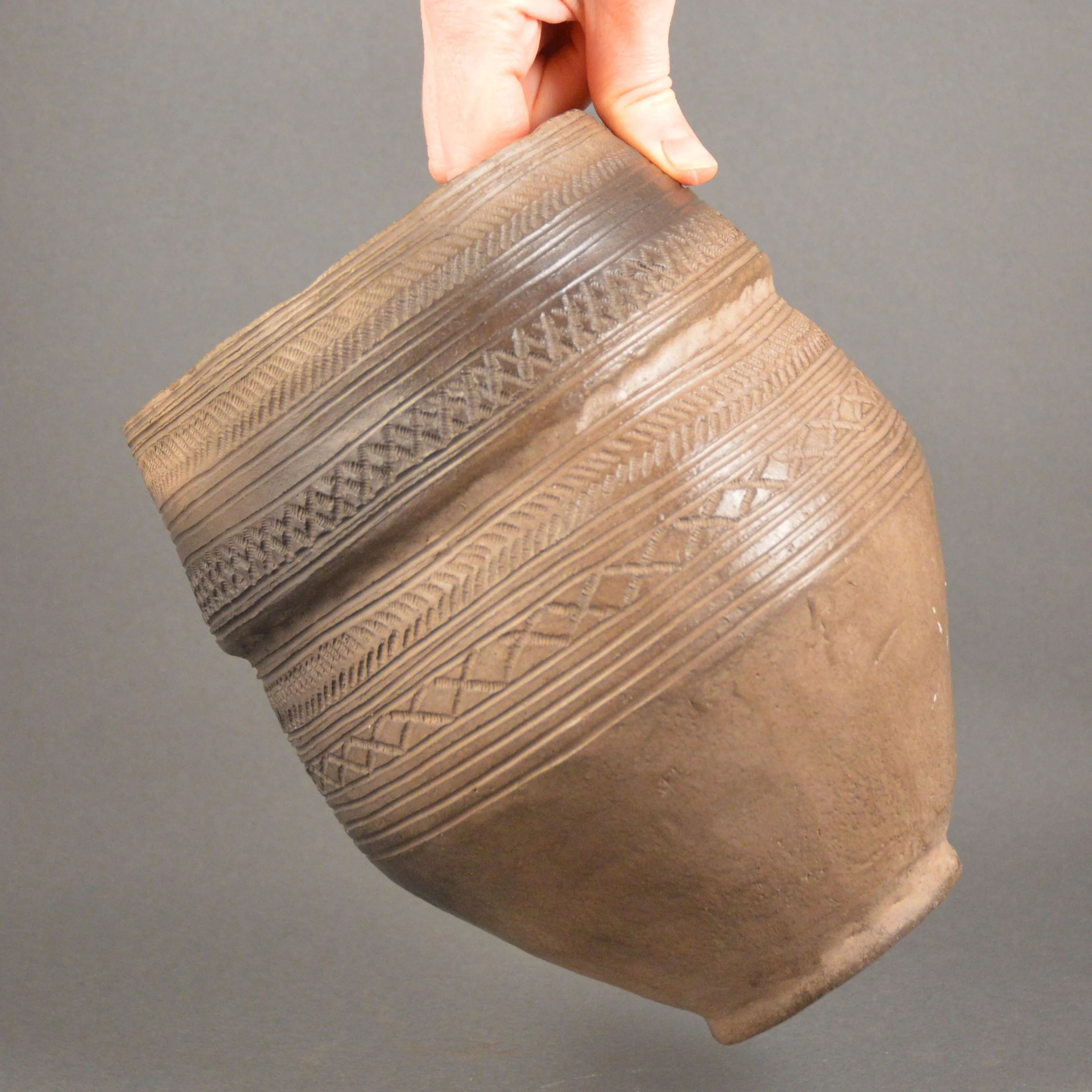
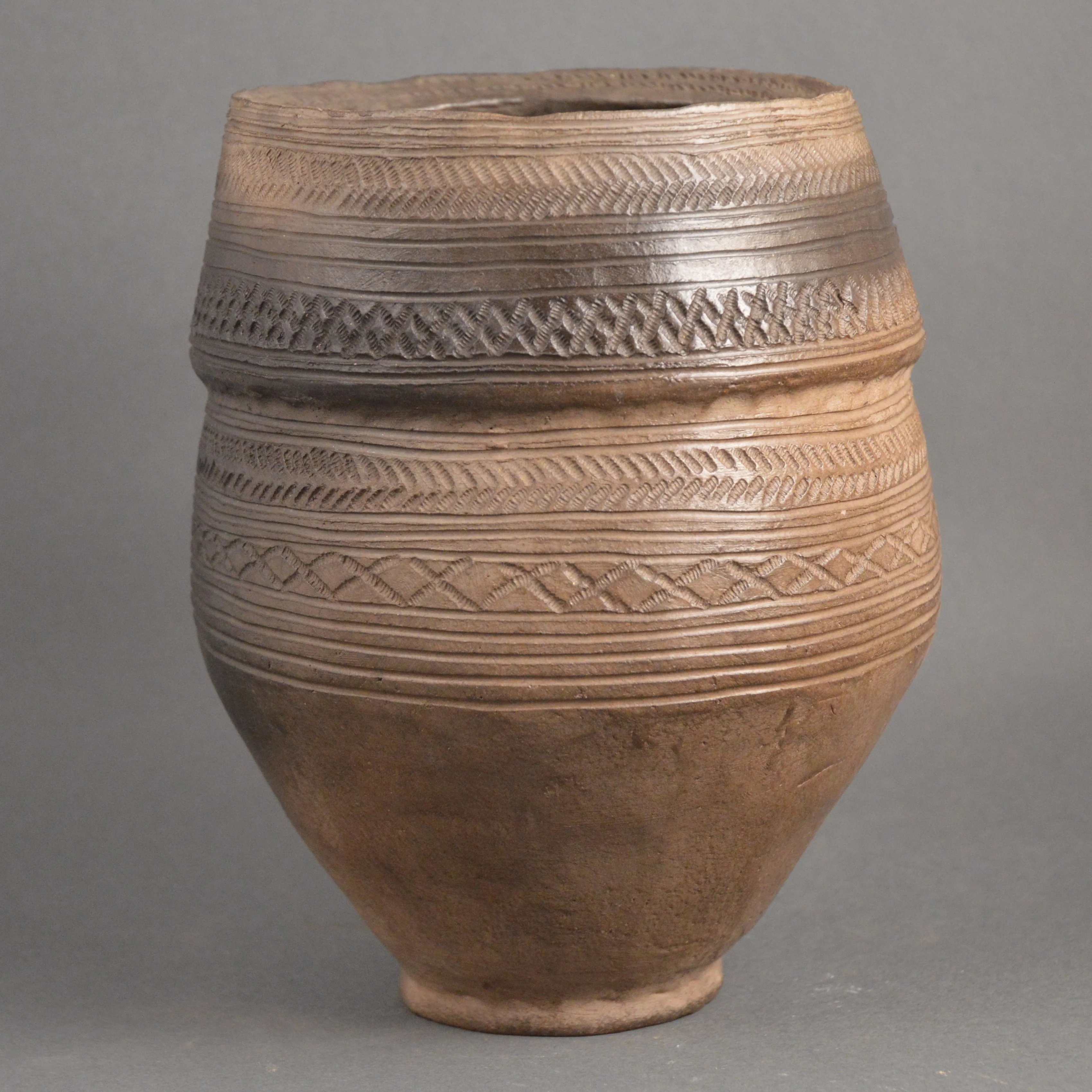
Throughout the Roman Empire, flagons like this would have been a common sight in homes, taverns and marketplaces. More than just a storage vessel, this type of pot was a vital part of daily life, used to collect, carry and store essential liquids such as wine, beer, olive oil or water.
If you were visiting your local vendor, you would be expected to bring your own flagon, ready to be filled straight from a large amphora. These practical containers offered an elegant solution to the everyday needs of Roman citizens, soldiers and traders alike.
Despite their utilitarian purpose, Roman flagons often reflected the aesthetic values of the time. This replica evokes the kind of vessel that would have stood on a kitchen shelf or banquet table, filled with something nourishing or celebratory.
Each flagon is handcrafted using traditional techniques, echoing the craftsmanship of Roman potters who worked in bustling workshops across the empire. The result is a vessel that feels authentic, with a surface texture and warmth that connects you directly to the past.
Materials
Earthenware clay
Dimensions
Approx. 270 mm tall, 155 mm diameter
Production
This museum-quality replica has been handmade in Northumberland by Potted History, inspired by original Roman artefacts. It has been fired to a temperature between 800°C and 1000°C, replicating the oxidised conditions used by Roman potters. This process produces natural surface variation in colour and texture, ensuring that each flagon is entirely unique, just like those from antiquity.
Health & Safety
This is a museum-quality replica, created using the authentic tools and techniques of ancient Roman potters. As with original vessels, it is unglazed and porous, meaning it absorbs liquids and flavours. While this quality adds charm and realism, it also means the vessel does not meet modern health and safety standards for food use.
We do not recommend using this flagon to store or serve food or drink. Historically, Romans ensured food safety by heating their vessels and contents to over 70°C for at least 10 minutes, which would have killed most harmful bacteria. Temperatures of 100°C or more would have been even more effective. Although safe practices like this were employed in the ancient world, for modern use we advise treating this pot as a decorative or educational object.
Ordering Information
'Add to Basket' Items: Ready to ship immediately
'Pre-order' Items: Handmade to order within 90 days (longer for international orders)
If your order includes both, they will be shipped together once all items are ready
Postage
All items are sent using a second-class postal service
If you wish to upgrade to first-class, please contact us for a quote. Many thanks
Step into the world of ancient Rome with this beautifully handmade flagon. Whether displayed on a shelf or used in educational settings, it brings the rhythms of Roman daily life into your hands.
Original: $79.83
-70%$79.83
$23.95Product Information
Product Information
Shipping & Returns
Shipping & Returns
Description
Handcrafted Roman Flagon – A Daily Essential of the Ancient World
Throughout the Roman Empire, flagons like this would have been a common sight in homes, taverns and marketplaces. More than just a storage vessel, this type of pot was a vital part of daily life, used to collect, carry and store essential liquids such as wine, beer, olive oil or water.
If you were visiting your local vendor, you would be expected to bring your own flagon, ready to be filled straight from a large amphora. These practical containers offered an elegant solution to the everyday needs of Roman citizens, soldiers and traders alike.
Despite their utilitarian purpose, Roman flagons often reflected the aesthetic values of the time. This replica evokes the kind of vessel that would have stood on a kitchen shelf or banquet table, filled with something nourishing or celebratory.
Each flagon is handcrafted using traditional techniques, echoing the craftsmanship of Roman potters who worked in bustling workshops across the empire. The result is a vessel that feels authentic, with a surface texture and warmth that connects you directly to the past.
Materials
Earthenware clay
Dimensions
Approx. 270 mm tall, 155 mm diameter
Production
This museum-quality replica has been handmade in Northumberland by Potted History, inspired by original Roman artefacts. It has been fired to a temperature between 800°C and 1000°C, replicating the oxidised conditions used by Roman potters. This process produces natural surface variation in colour and texture, ensuring that each flagon is entirely unique, just like those from antiquity.
Health & Safety
This is a museum-quality replica, created using the authentic tools and techniques of ancient Roman potters. As with original vessels, it is unglazed and porous, meaning it absorbs liquids and flavours. While this quality adds charm and realism, it also means the vessel does not meet modern health and safety standards for food use.
We do not recommend using this flagon to store or serve food or drink. Historically, Romans ensured food safety by heating their vessels and contents to over 70°C for at least 10 minutes, which would have killed most harmful bacteria. Temperatures of 100°C or more would have been even more effective. Although safe practices like this were employed in the ancient world, for modern use we advise treating this pot as a decorative or educational object.
Ordering Information
'Add to Basket' Items: Ready to ship immediately
'Pre-order' Items: Handmade to order within 90 days (longer for international orders)
If your order includes both, they will be shipped together once all items are ready
Postage
All items are sent using a second-class postal service
If you wish to upgrade to first-class, please contact us for a quote. Many thanks
Step into the world of ancient Rome with this beautifully handmade flagon. Whether displayed on a shelf or used in educational settings, it brings the rhythms of Roman daily life into your hands.