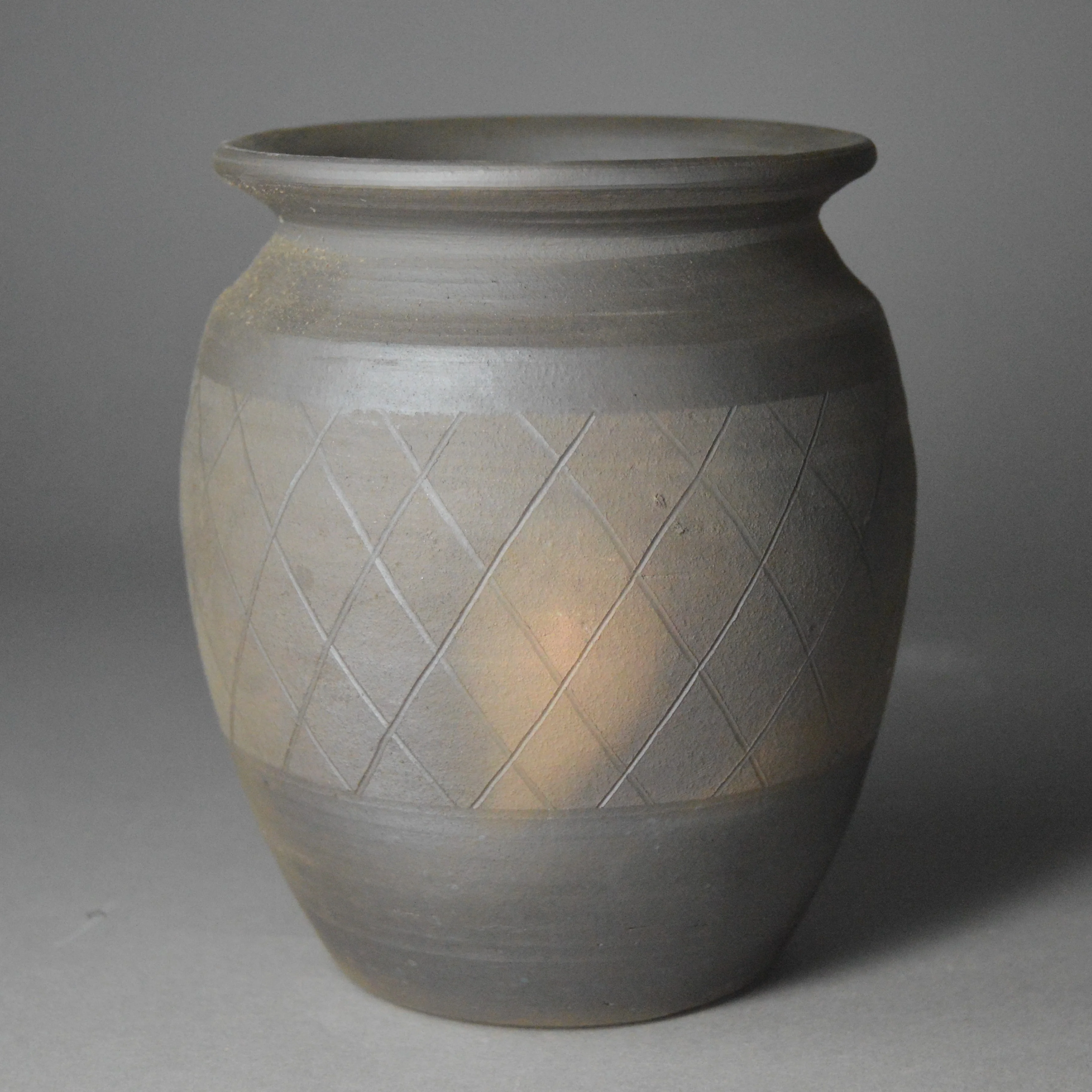
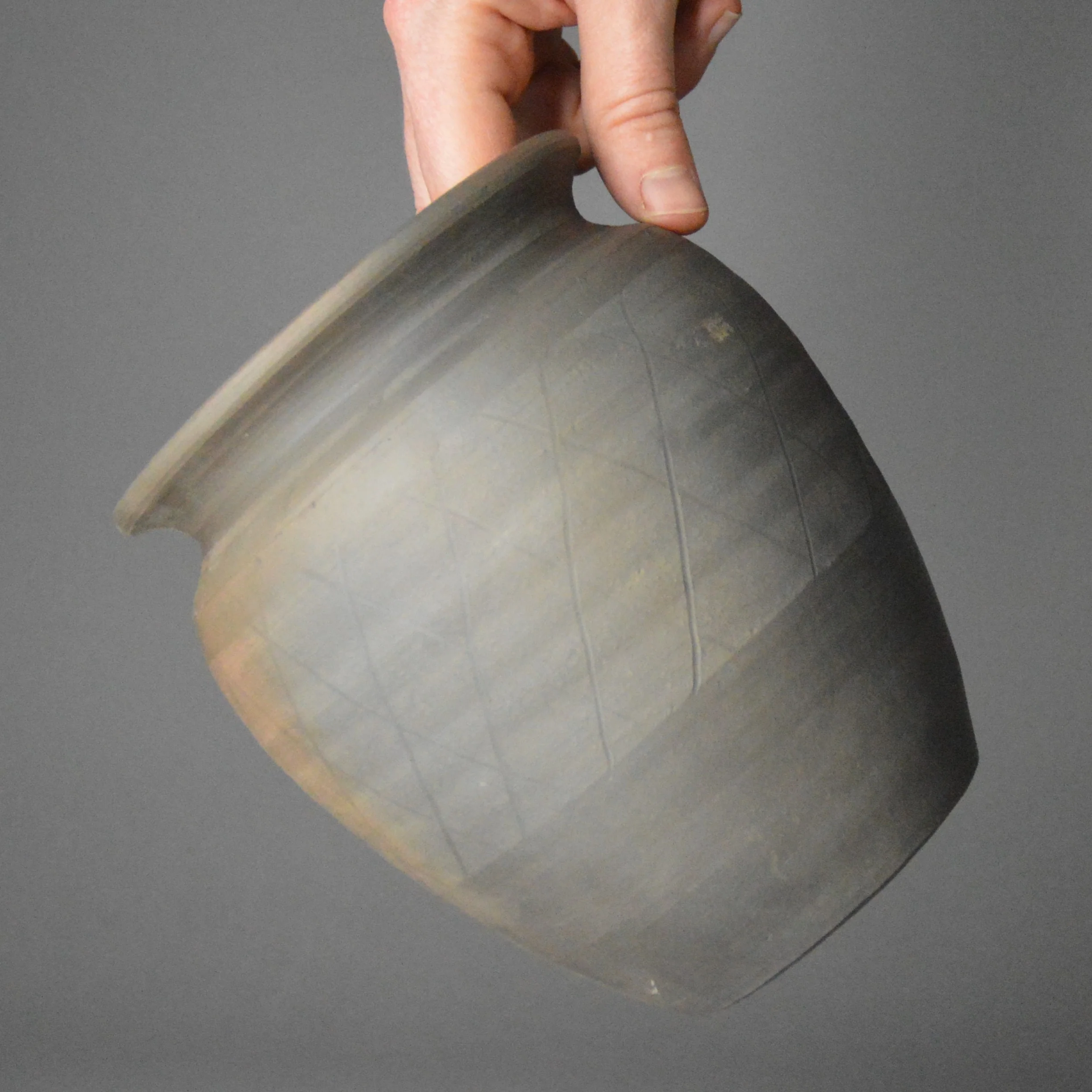
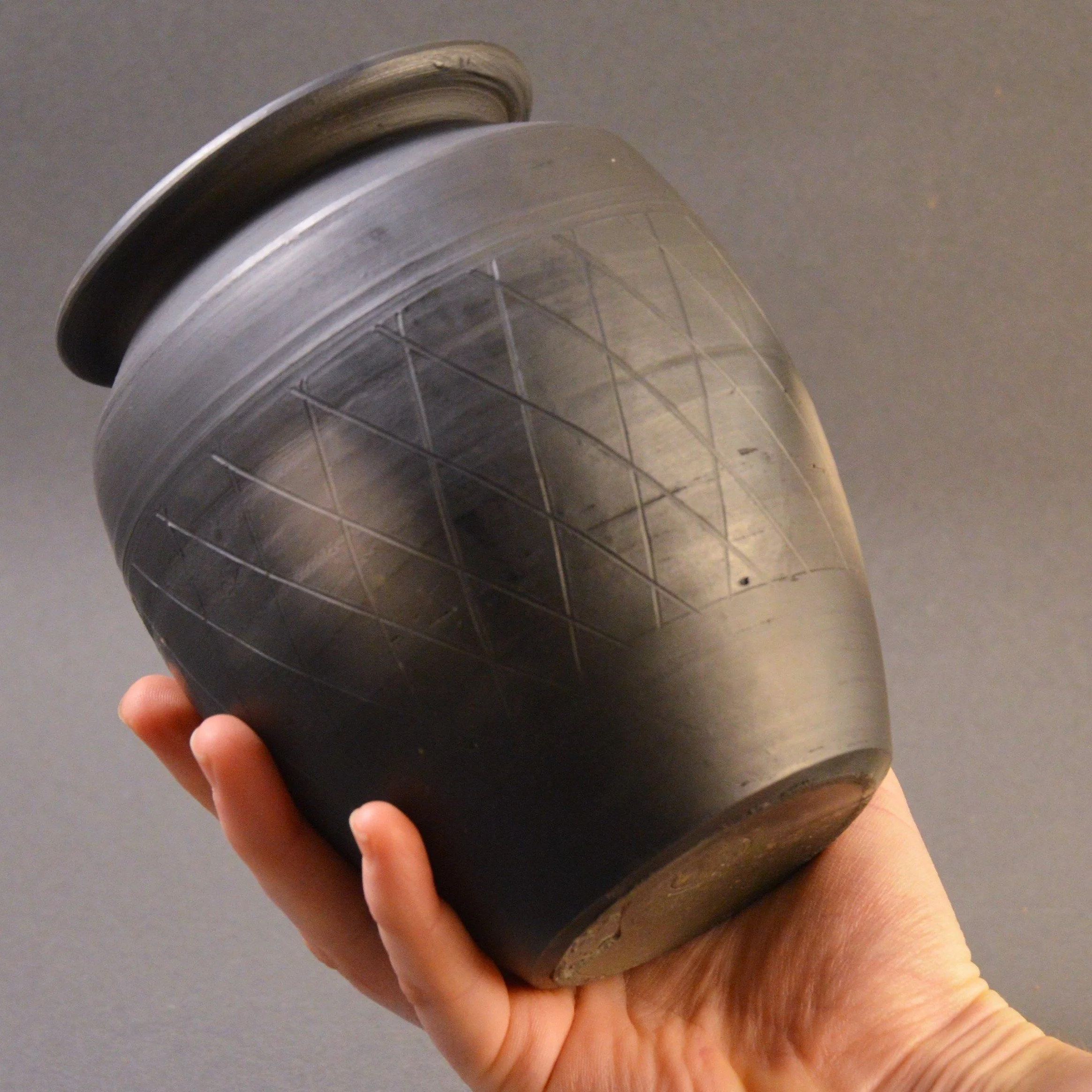
Black Burnish Cooking Jar, BB2
Details
Due to their functional nature, these wheel-thrown cooking pots were produced in large numbers and distributed throughout Roman Britain. They are sometimes termed BB2 wares to differentiate them from similar pots known as BB1, which were hand-formed rather than wheel-thrown.
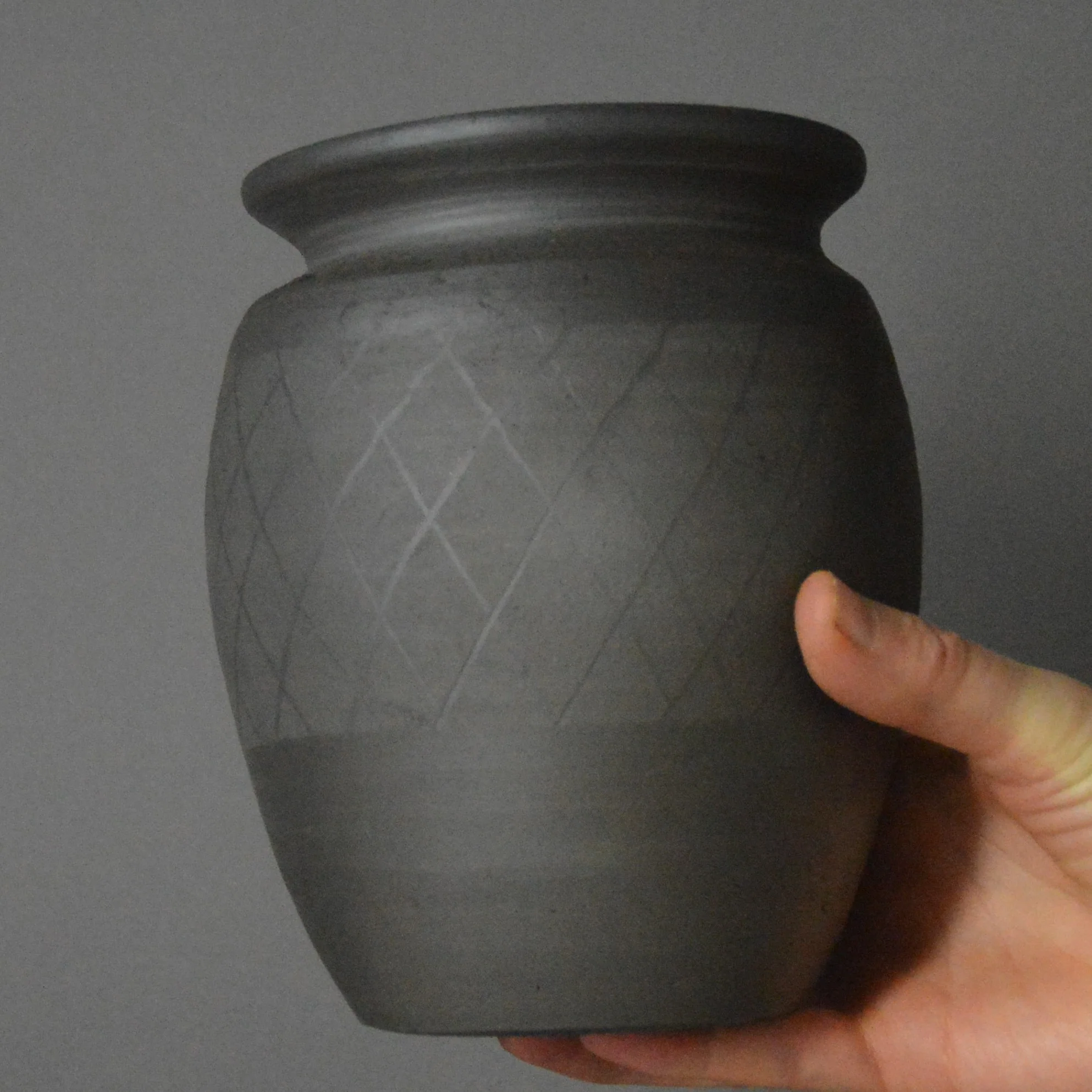
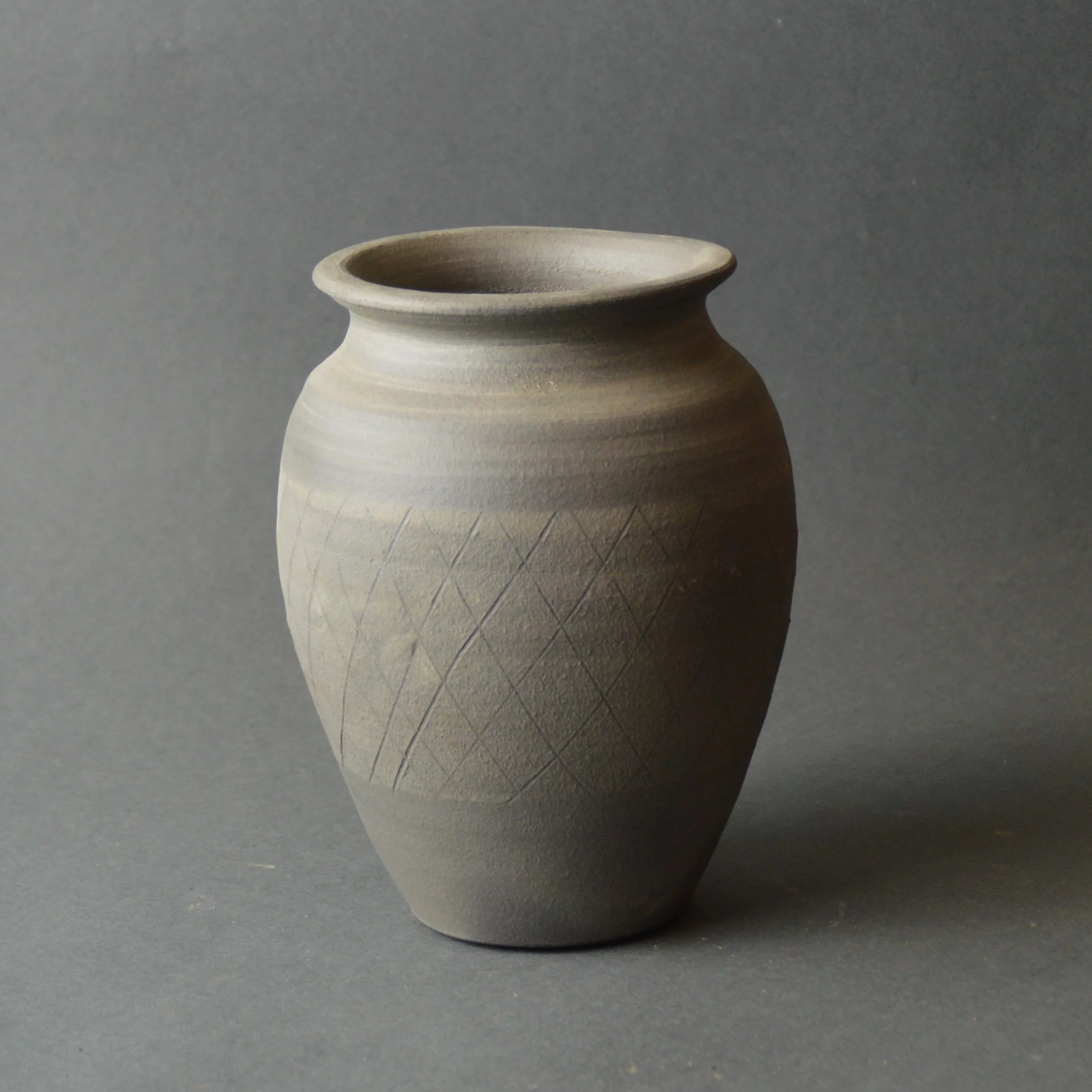
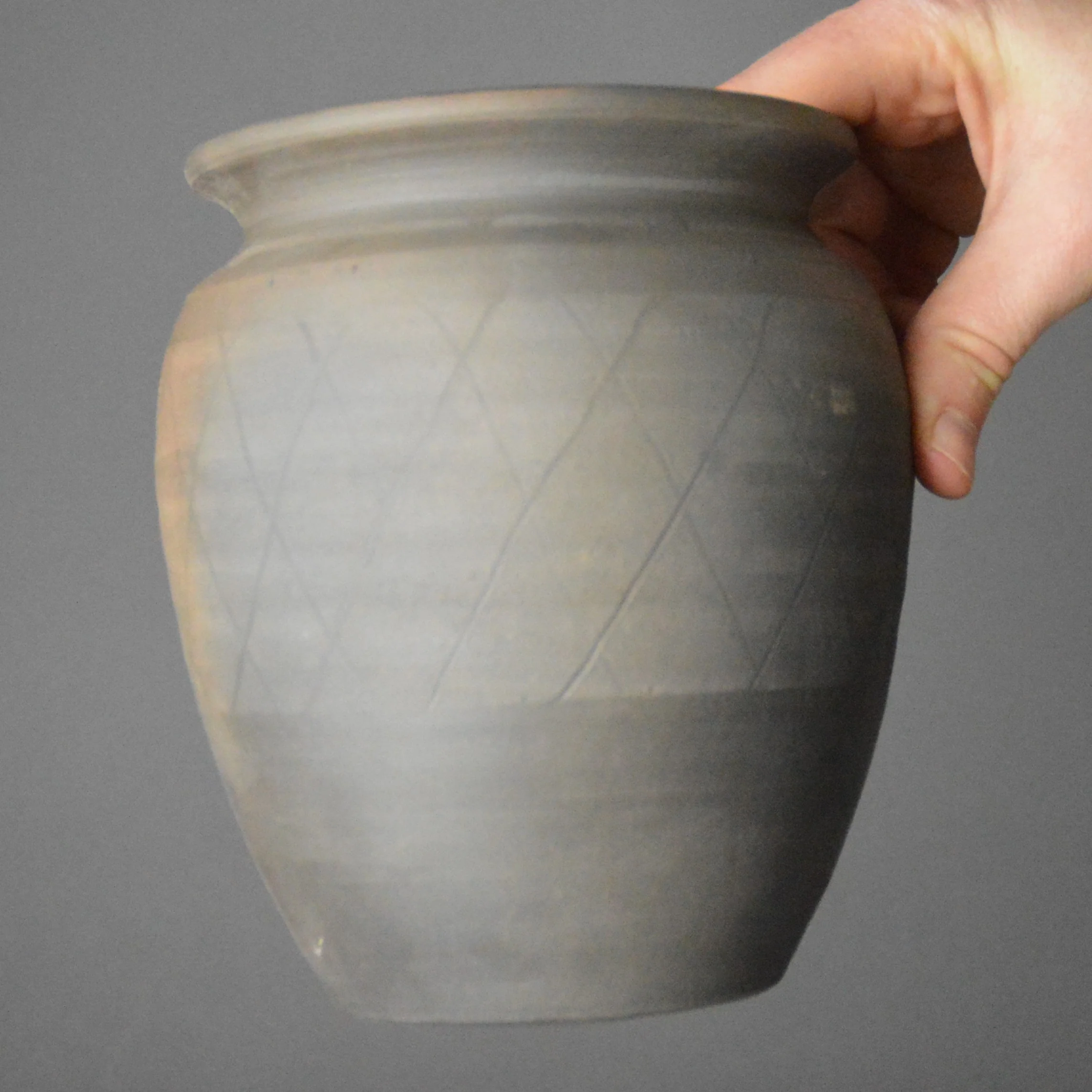
The term Black Burnished Ware comes from their distinctive polished and blackened surface often decorated with an incised lattice pattern. The black colouration is caused by the firing technique, which involves starving the kiln of oxygen during the final stages of firing.
Archaeological Significance
Archaeologically these vessels are a treasure trove of information as they have provided us with valuable information about the foods eaten during the Roman era. The residue of burnt food has been discovered on the inside of Black burnish ware from Dorset and Silchester, allowing chemical analysis to identify what the Romans had been cooking. Balanced on a metal trivet over a charcoal fire they would have been used to cook foods such as stewed meats, fruits and porridge.
Materials
Earthenware, terracotta
Dimensions
Approx. 155 mm tall, 130 mm diameter
Production
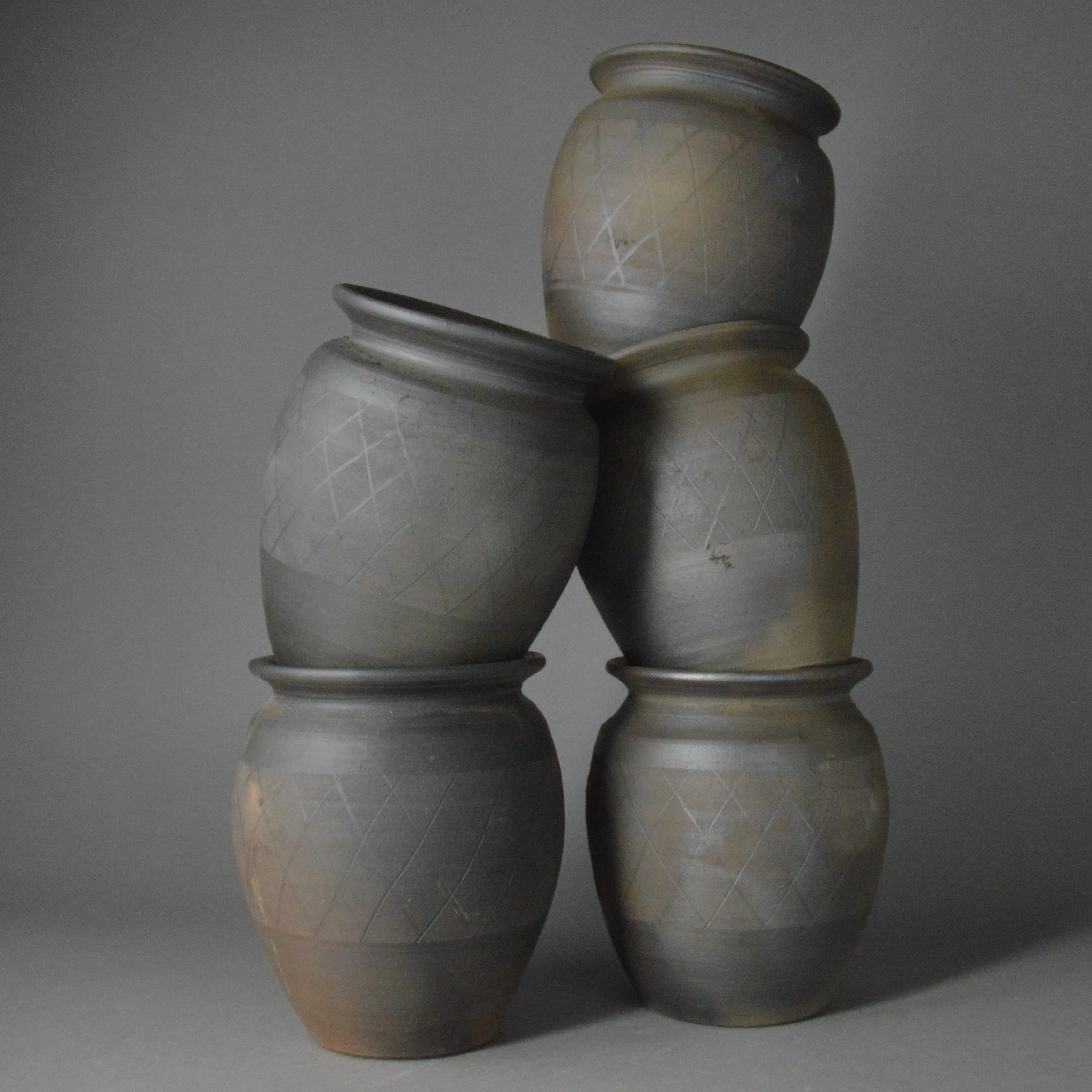
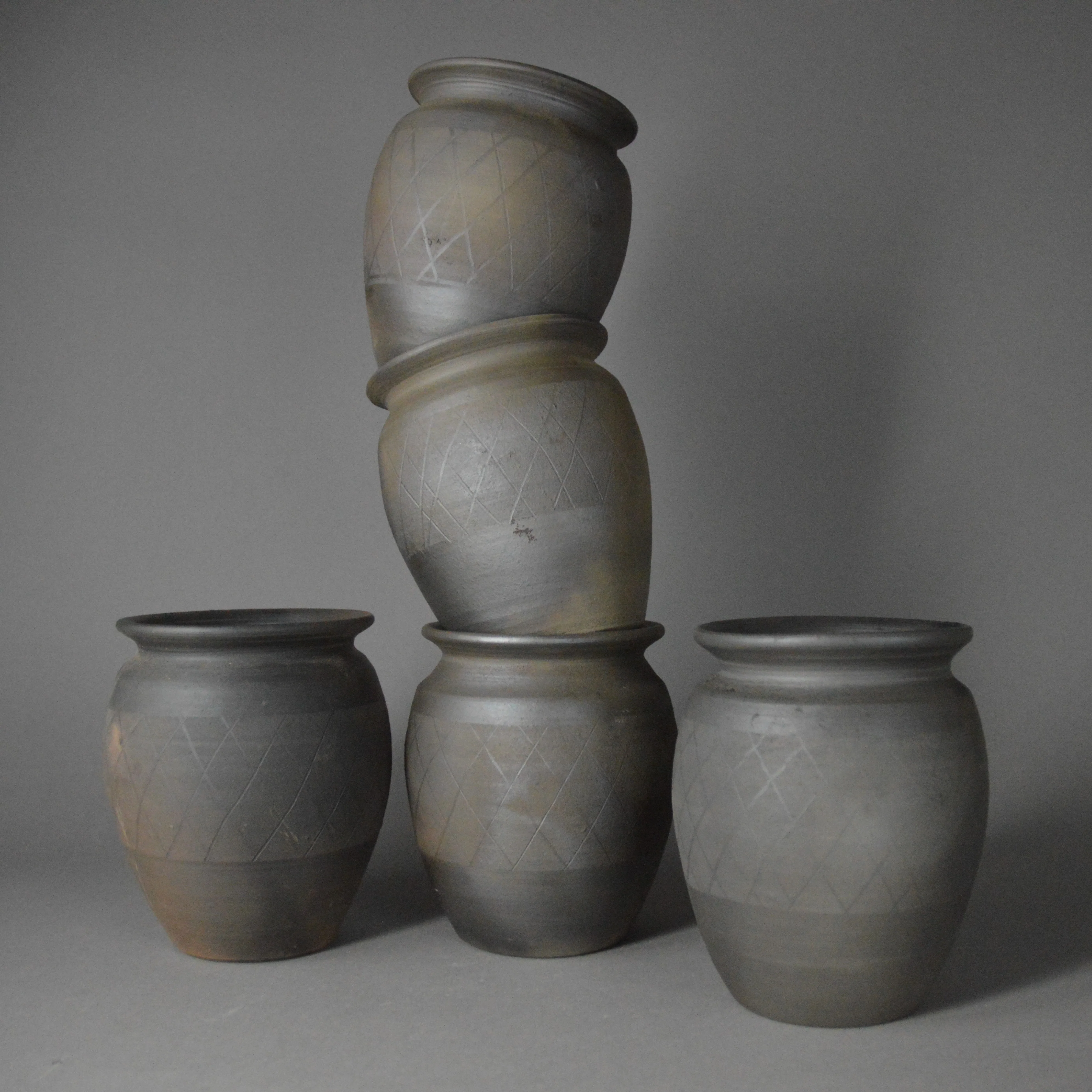
This replica Roman pot has been hand-made in Northumberland by Potted History and is based on an original artefact. It has been fired to a temperature between 800 & 1000 Centigrade to emulate the same techniques the original potters would have employed nearly two thousand years ago. This process often results in surface colour and texture variations, as is common with the original Roman pottery and gives each piece its unique character.
Health and Safety
This is a Museum Quality Replica made using the tools and techniques that would have been used during the Roman era. As this is an unglazed pot with a porous surface it will absorb some of the flavours during the cooking process, which does add to the flavour of future dishes. However, it does also mean that this pot does not meet modern Health and Safety standards and therefore we do not advise that it is used for cooking. When the Romans cooked in these pots they would rely on applying sufficient heat to the pot and contents to ensure that all bacteria were killed. Heating to over 70°C for at least 10 minutes would have killed most disease-causing bacteria and temperatures of 100°C would do even more.
Postage
All items are sent using a second class postal service, if you wish to have an item sent first class please contact me for a quote. Many Thanks
Product Information
Product Information
Shipping & Returns
Shipping & Returns
Description
Details
Due to their functional nature, these wheel-thrown cooking pots were produced in large numbers and distributed throughout Roman Britain. They are sometimes termed BB2 wares to differentiate them from similar pots known as BB1, which were hand-formed rather than wheel-thrown.
The term Black Burnished Ware comes from their distinctive polished and blackened surface often decorated with an incised lattice pattern. The black colouration is caused by the firing technique, which involves starving the kiln of oxygen during the final stages of firing.
Archaeological Significance
Archaeologically these vessels are a treasure trove of information as they have provided us with valuable information about the foods eaten during the Roman era. The residue of burnt food has been discovered on the inside of Black burnish ware from Dorset and Silchester, allowing chemical analysis to identify what the Romans had been cooking. Balanced on a metal trivet over a charcoal fire they would have been used to cook foods such as stewed meats, fruits and porridge.
Materials
Earthenware, terracotta
Dimensions
Approx. 155 mm tall, 130 mm diameter
Production
This replica Roman pot has been hand-made in Northumberland by Potted History and is based on an original artefact. It has been fired to a temperature between 800 & 1000 Centigrade to emulate the same techniques the original potters would have employed nearly two thousand years ago. This process often results in surface colour and texture variations, as is common with the original Roman pottery and gives each piece its unique character.
Health and Safety
This is a Museum Quality Replica made using the tools and techniques that would have been used during the Roman era. As this is an unglazed pot with a porous surface it will absorb some of the flavours during the cooking process, which does add to the flavour of future dishes. However, it does also mean that this pot does not meet modern Health and Safety standards and therefore we do not advise that it is used for cooking. When the Romans cooked in these pots they would rely on applying sufficient heat to the pot and contents to ensure that all bacteria were killed. Heating to over 70°C for at least 10 minutes would have killed most disease-causing bacteria and temperatures of 100°C would do even more.
Postage
All items are sent using a second class postal service, if you wish to have an item sent first class please contact me for a quote. Many Thanks