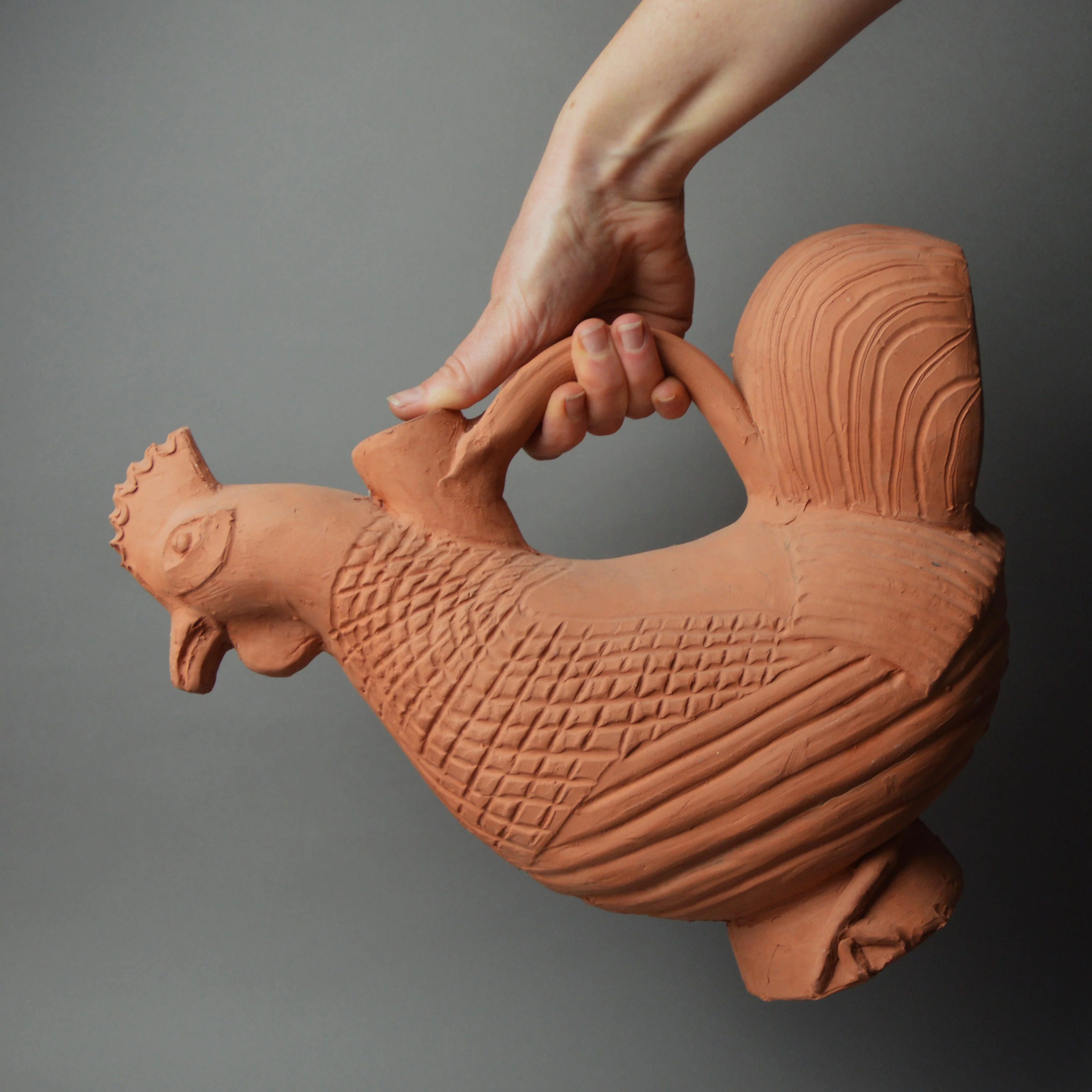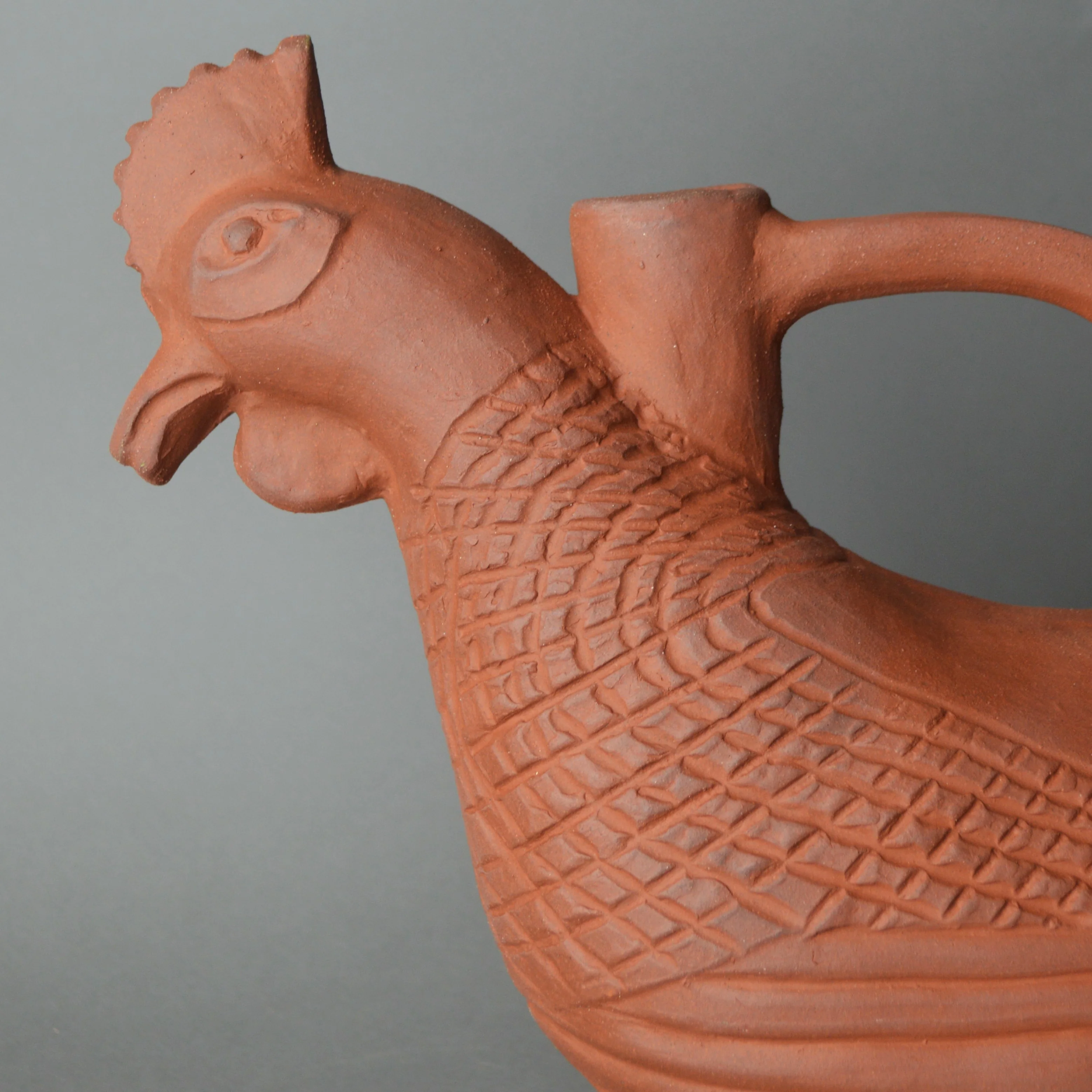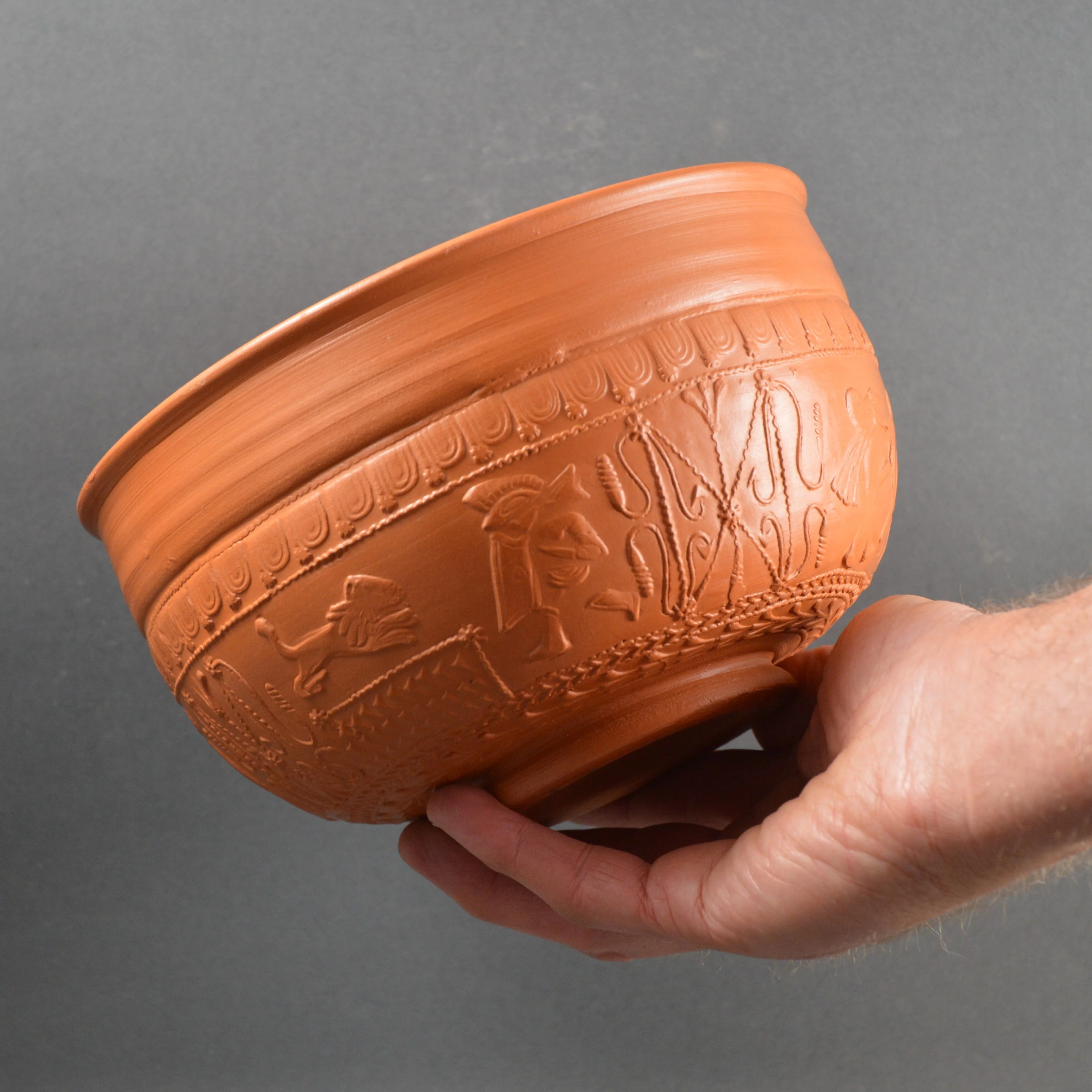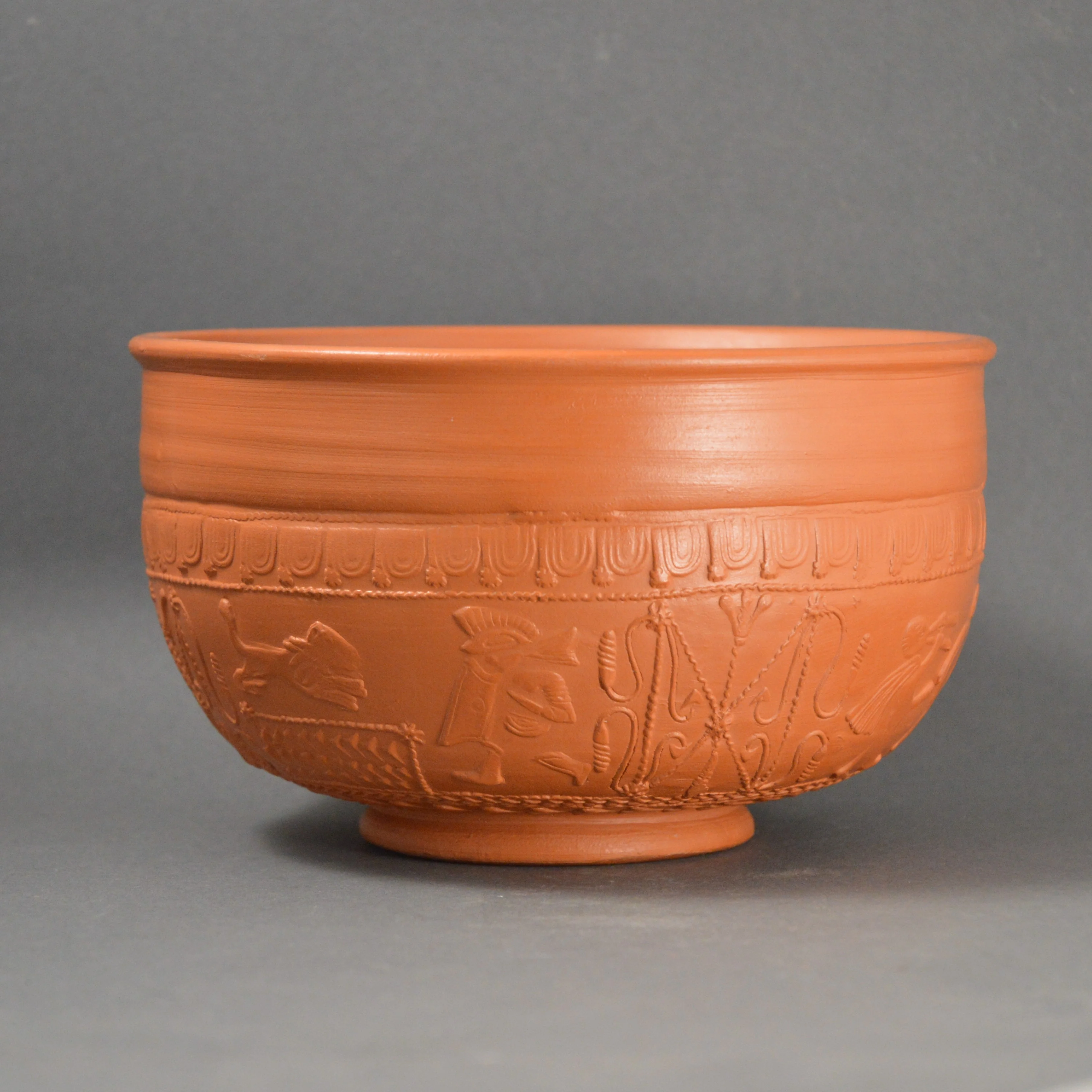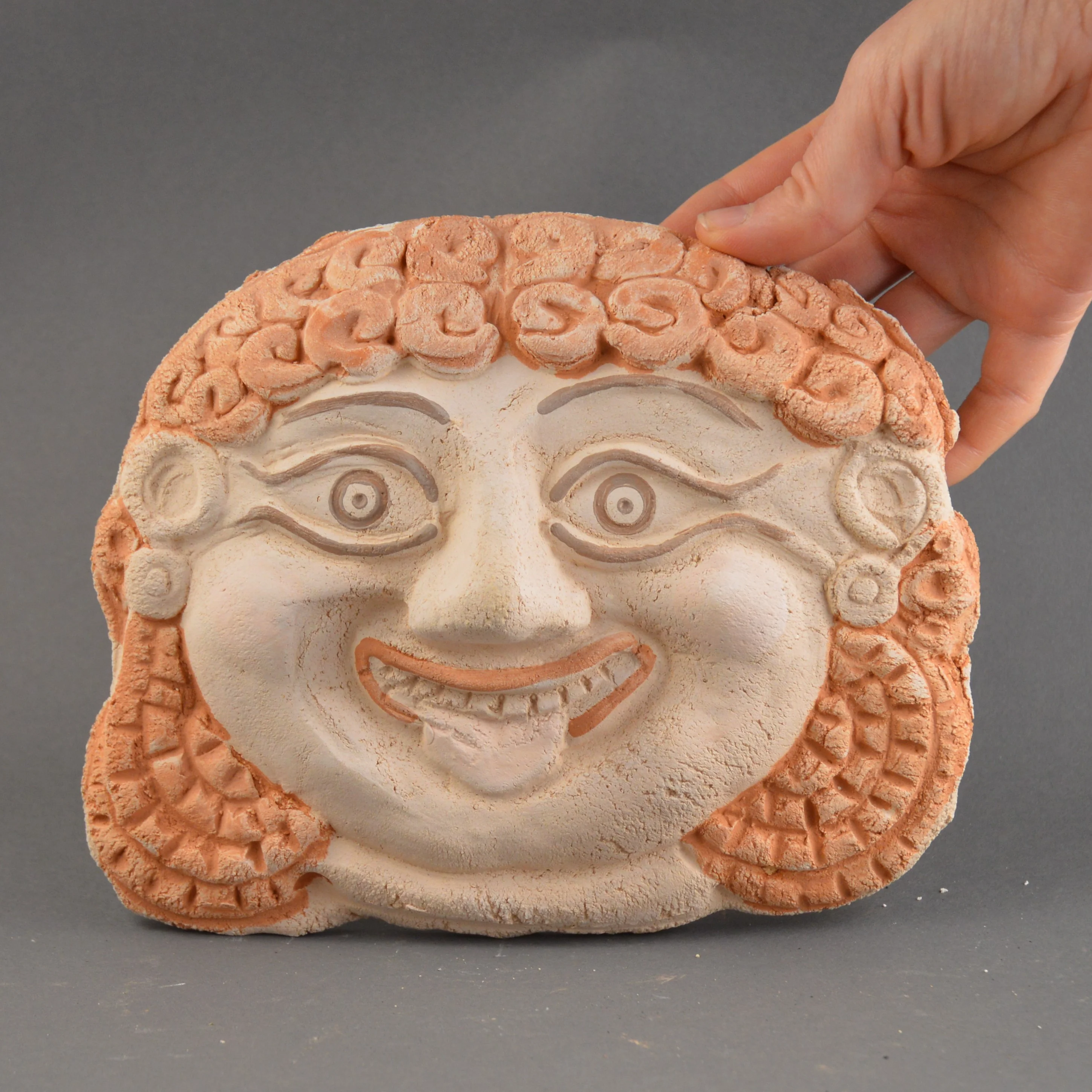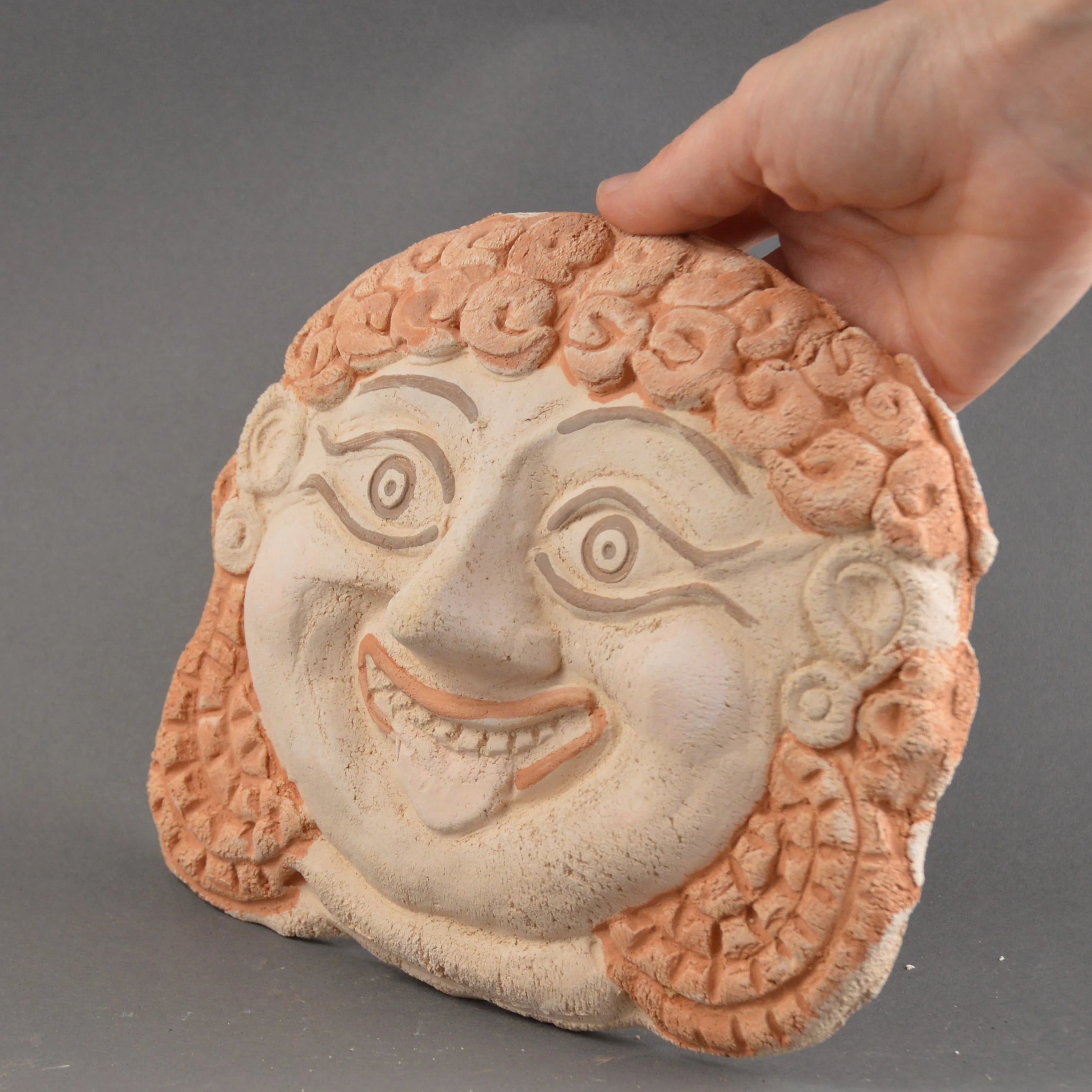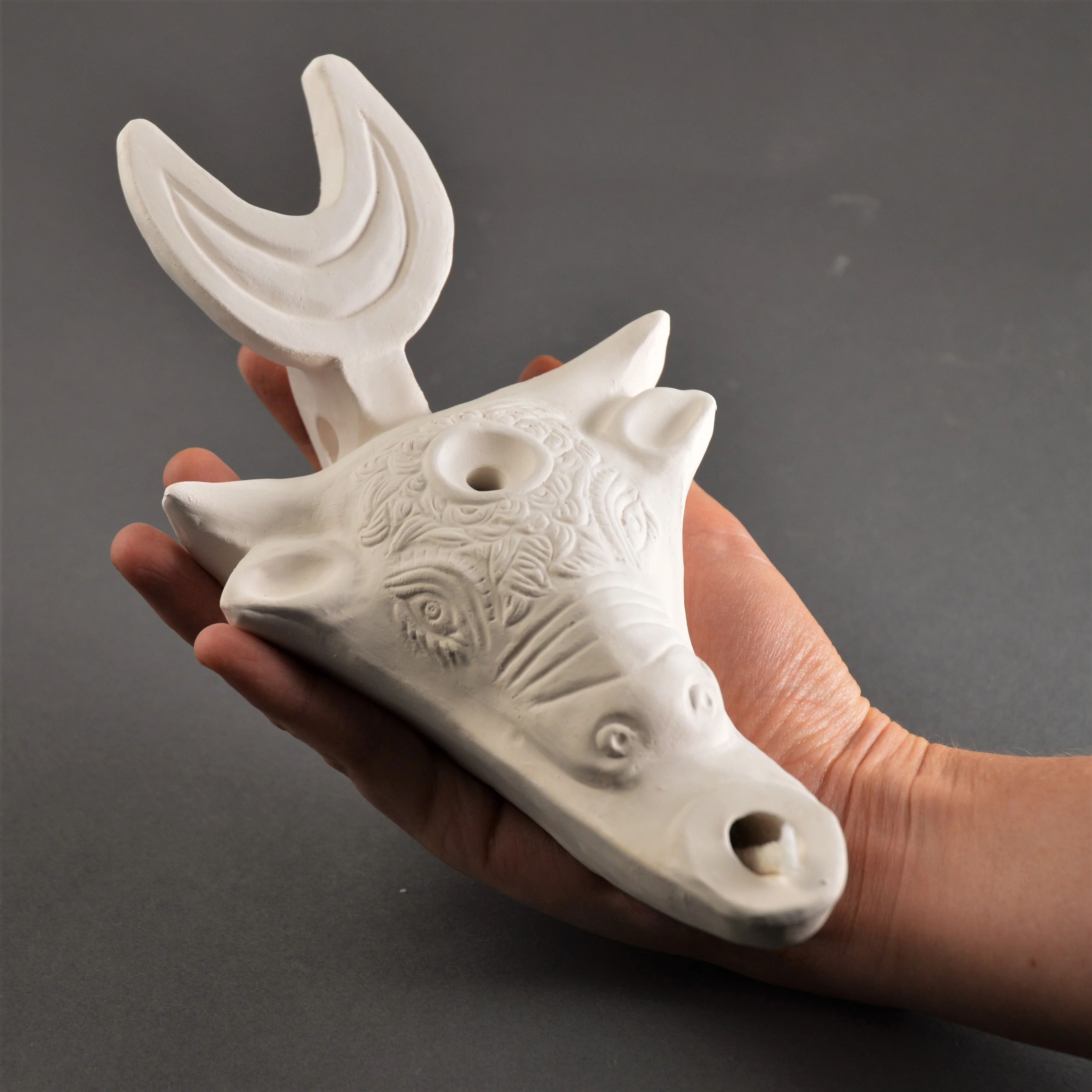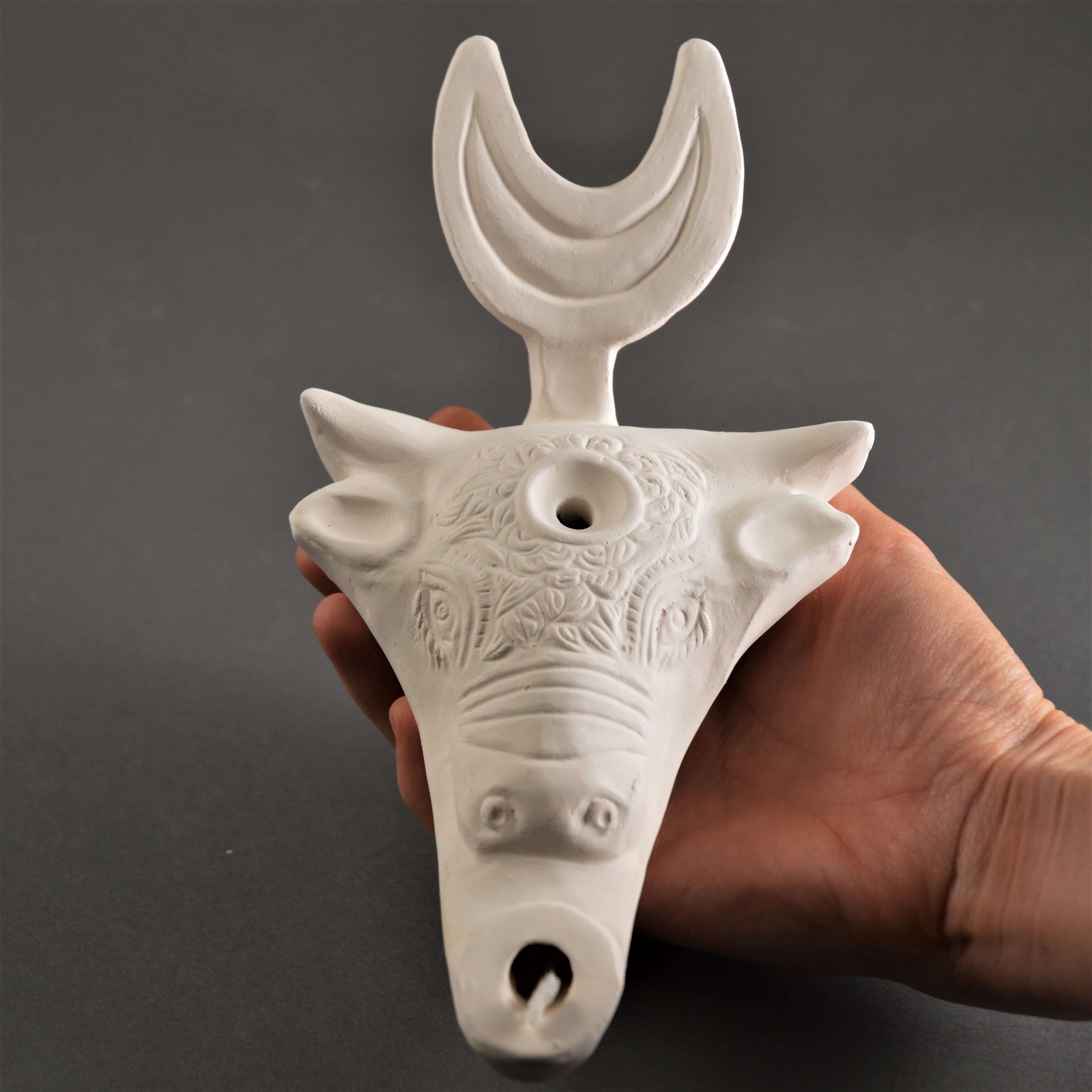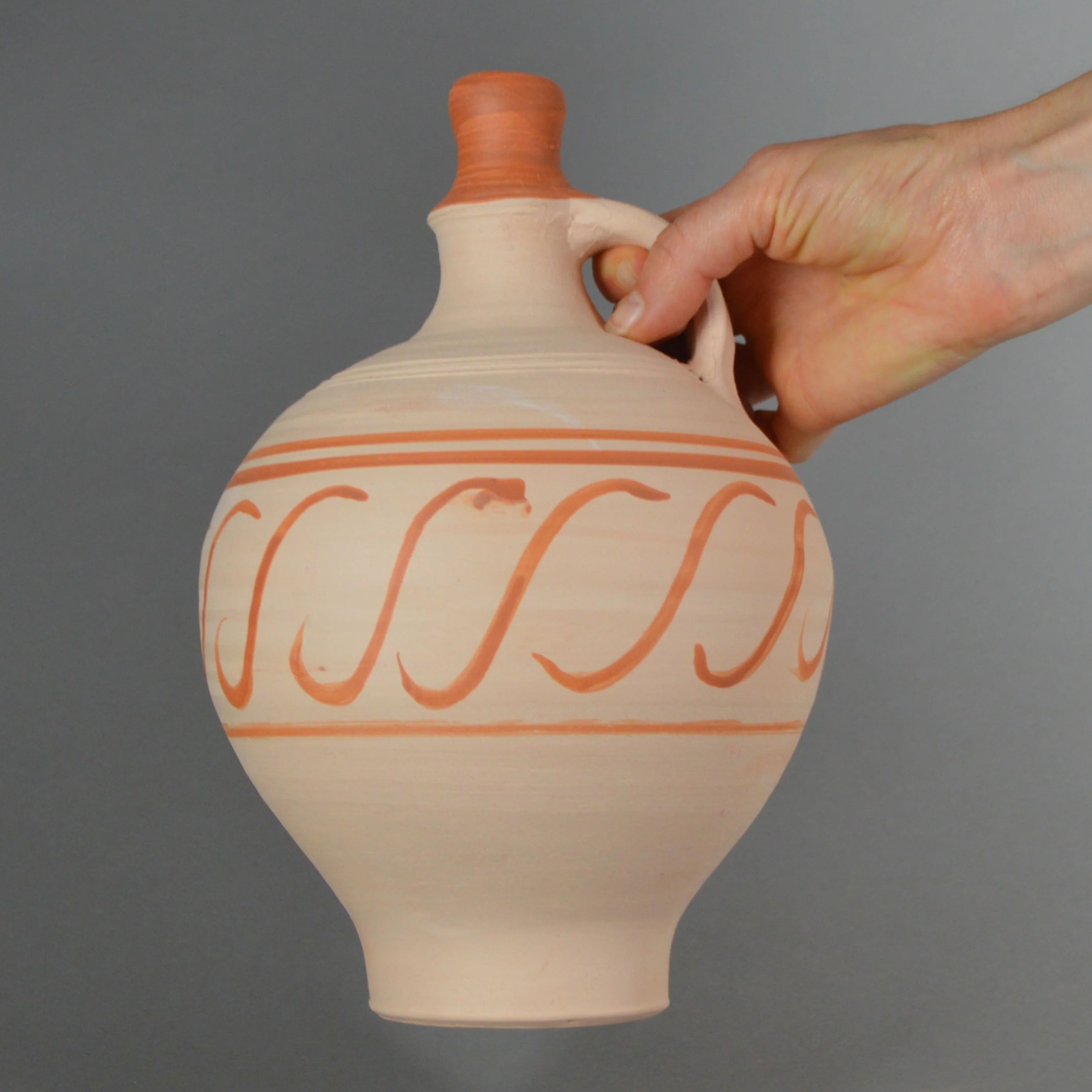
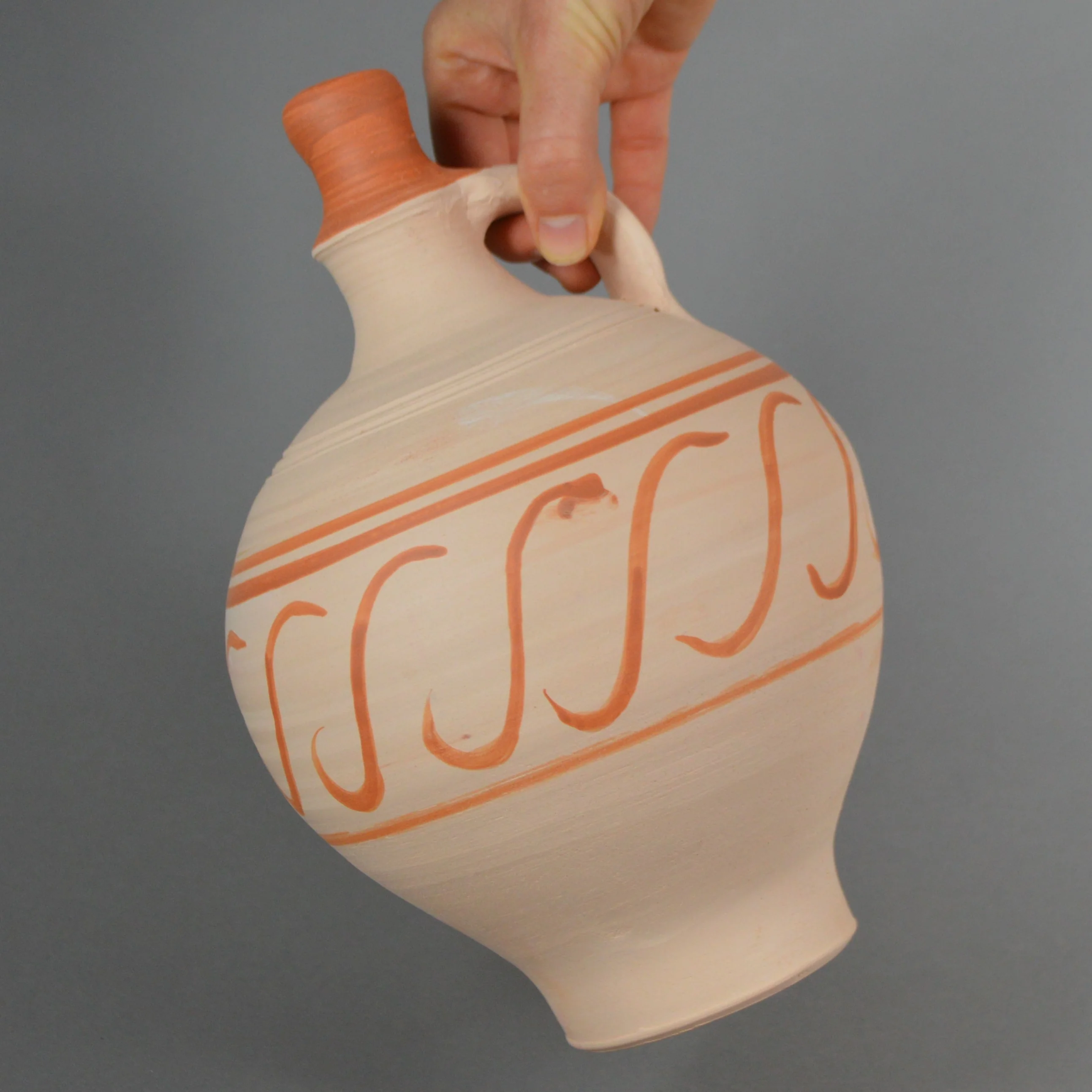
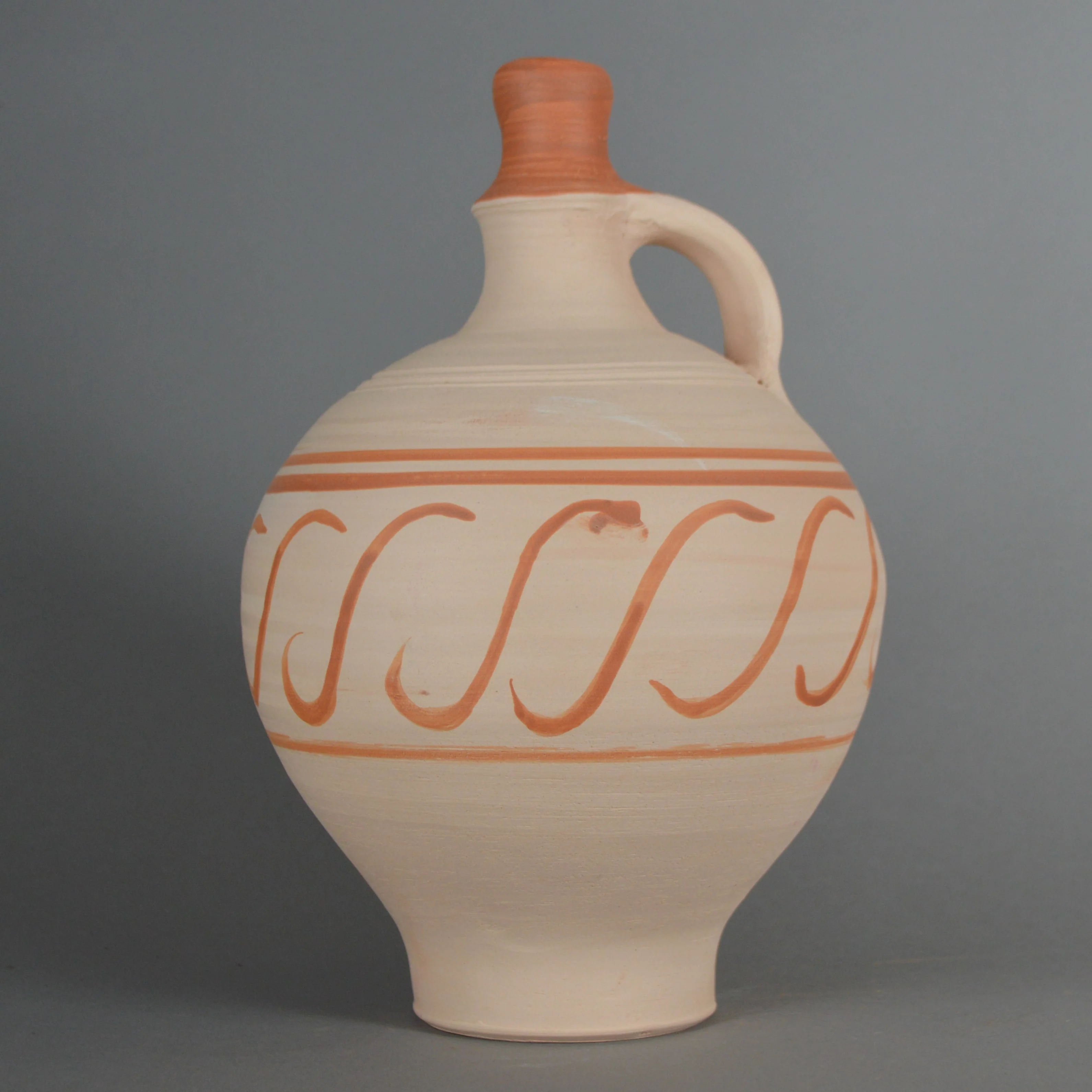
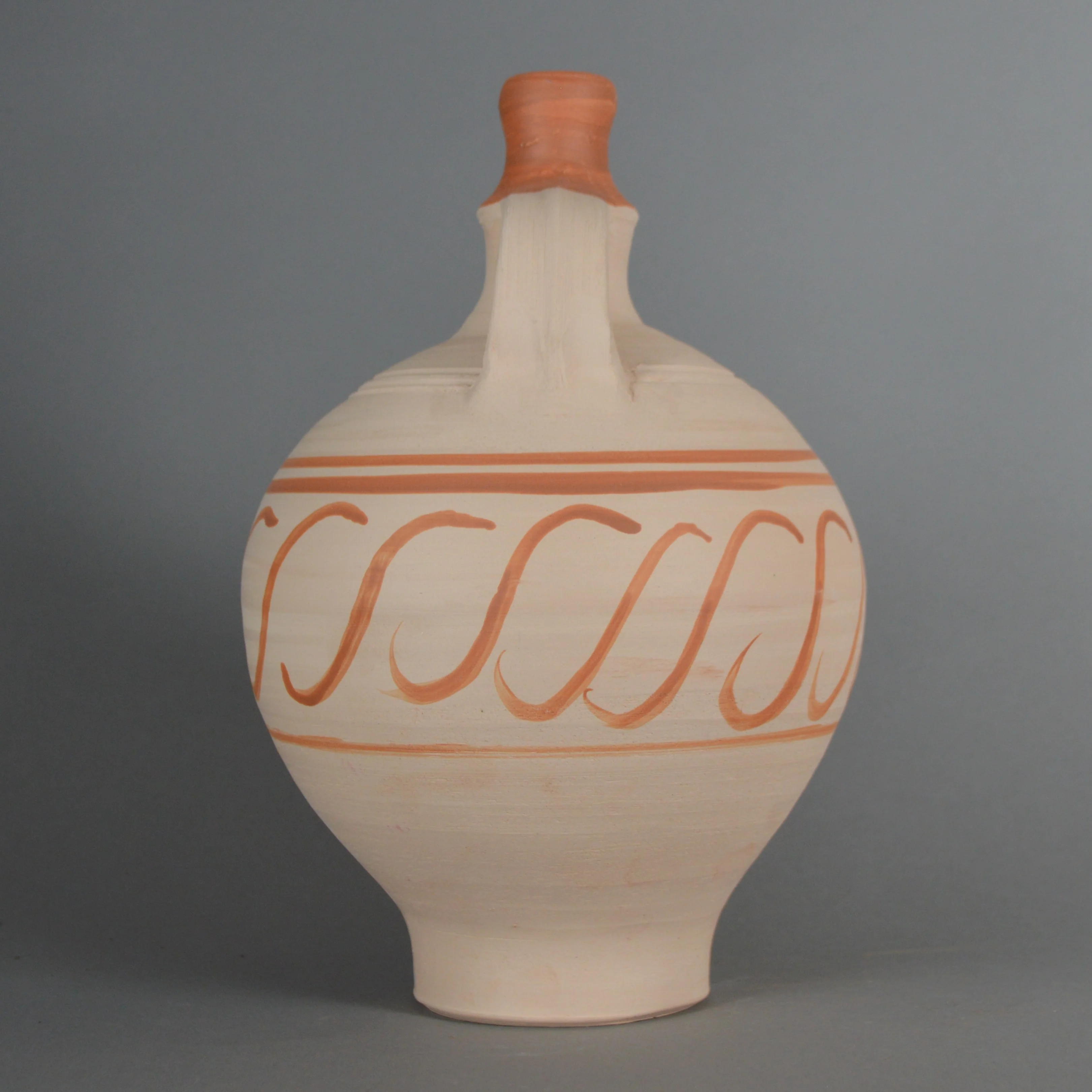
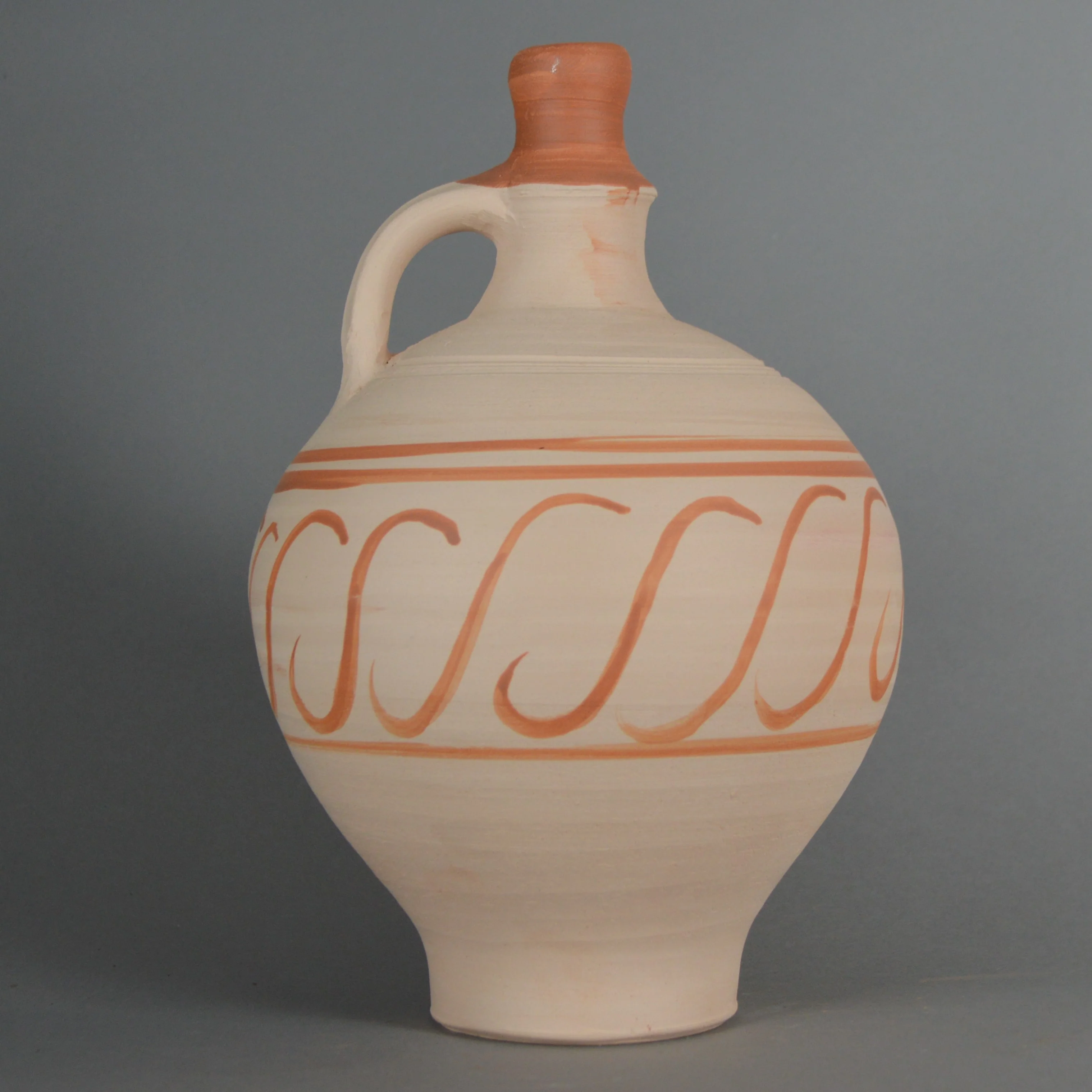
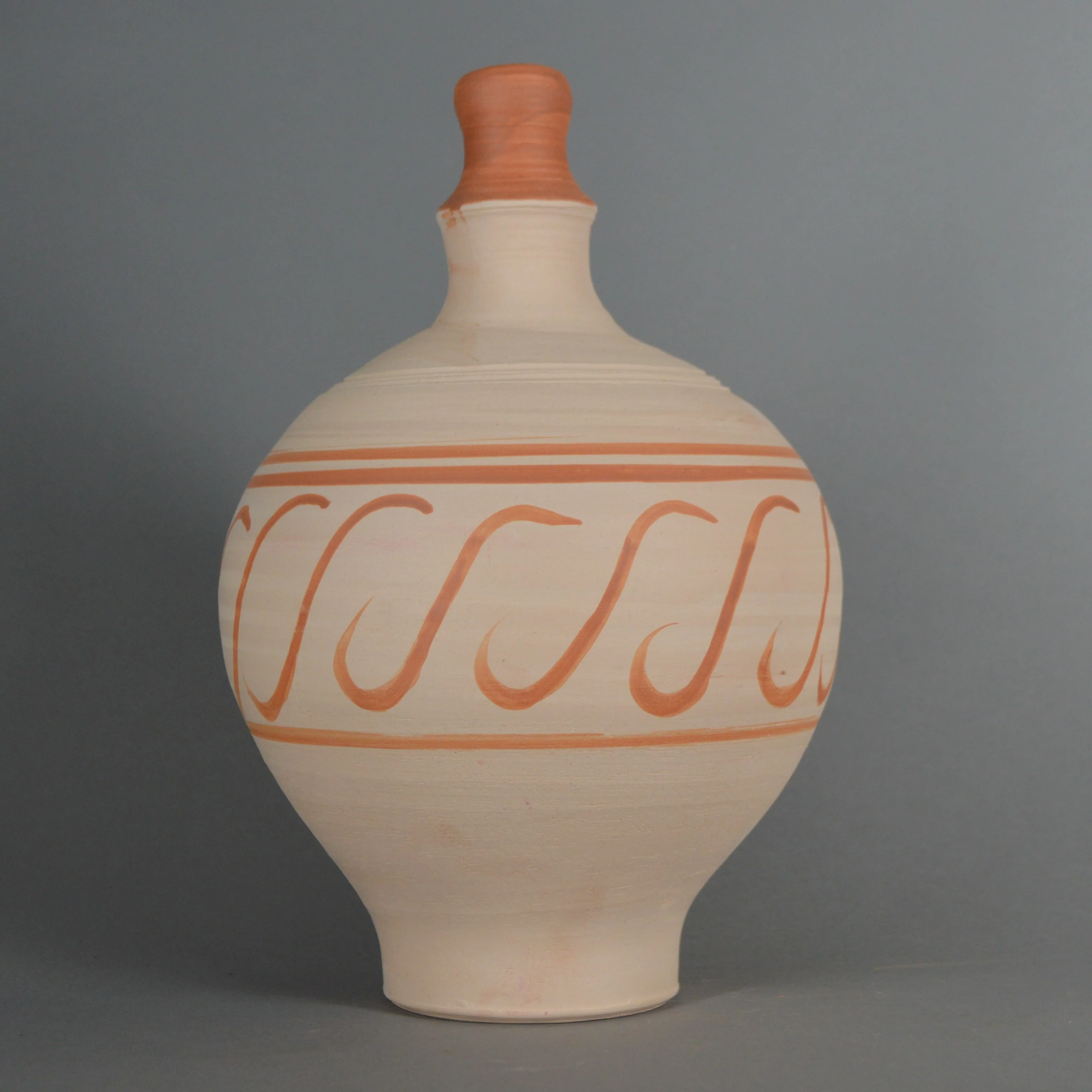
New Forest Decorative Flagon
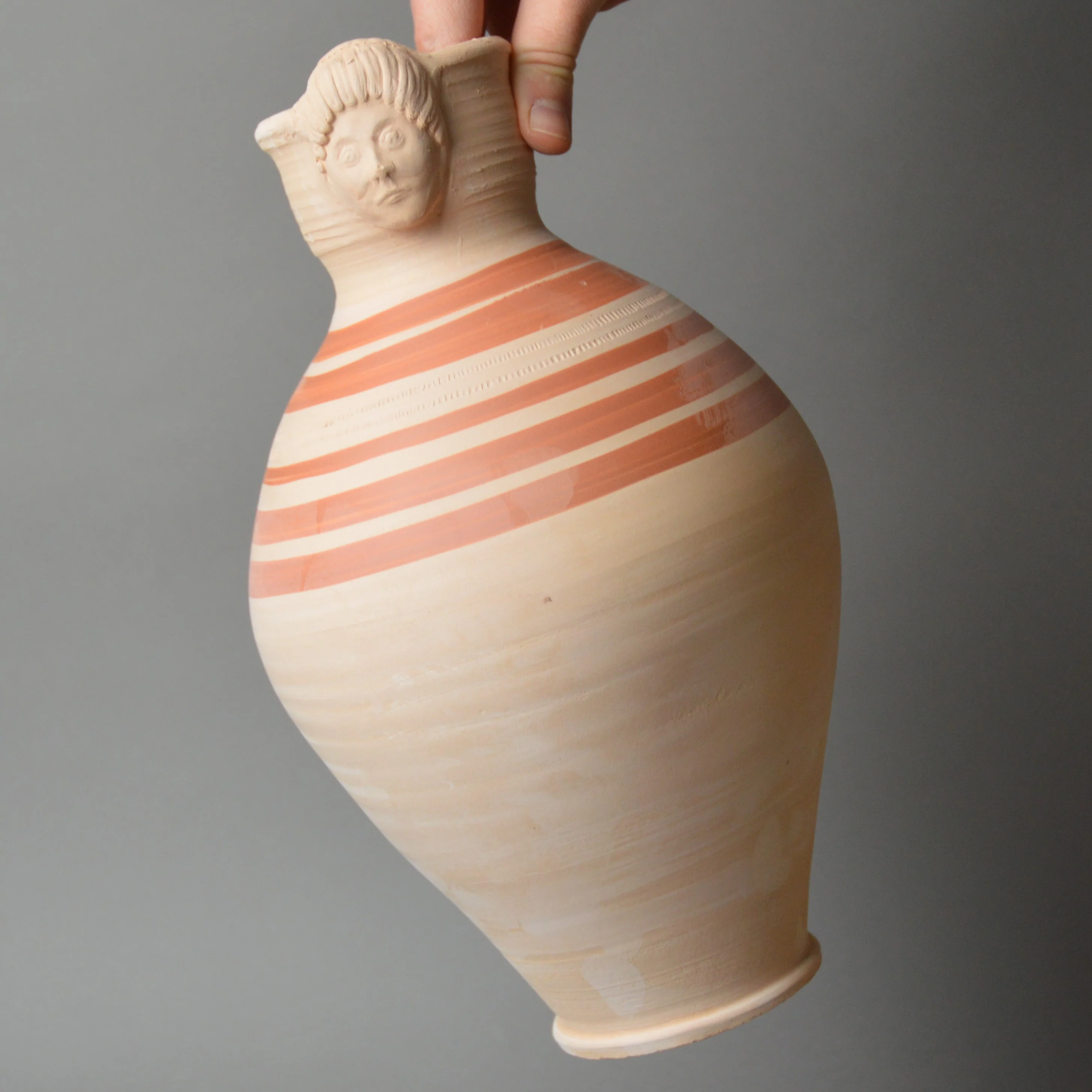
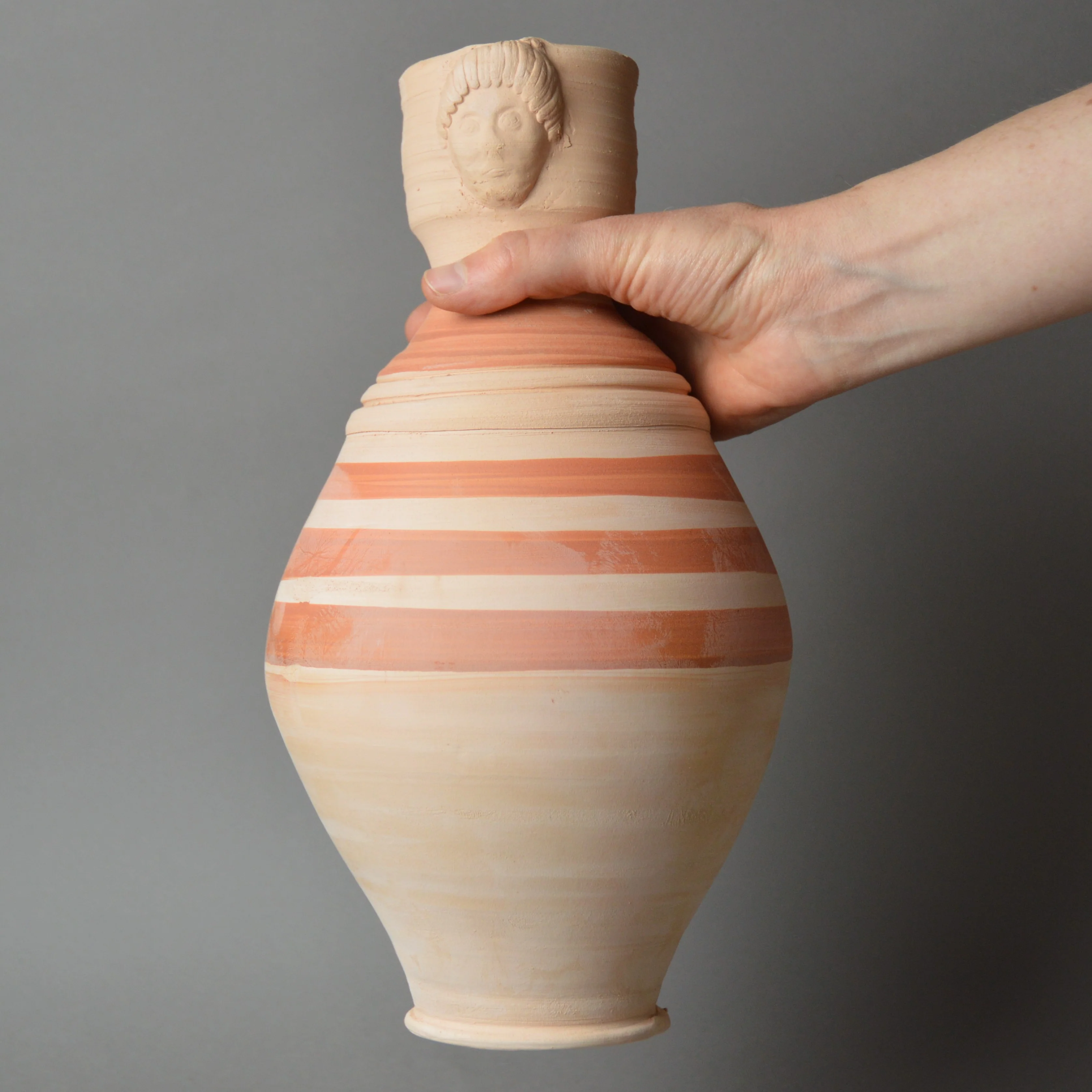
Handcrafted Roman Flagon – New Forest Ware Style
Details
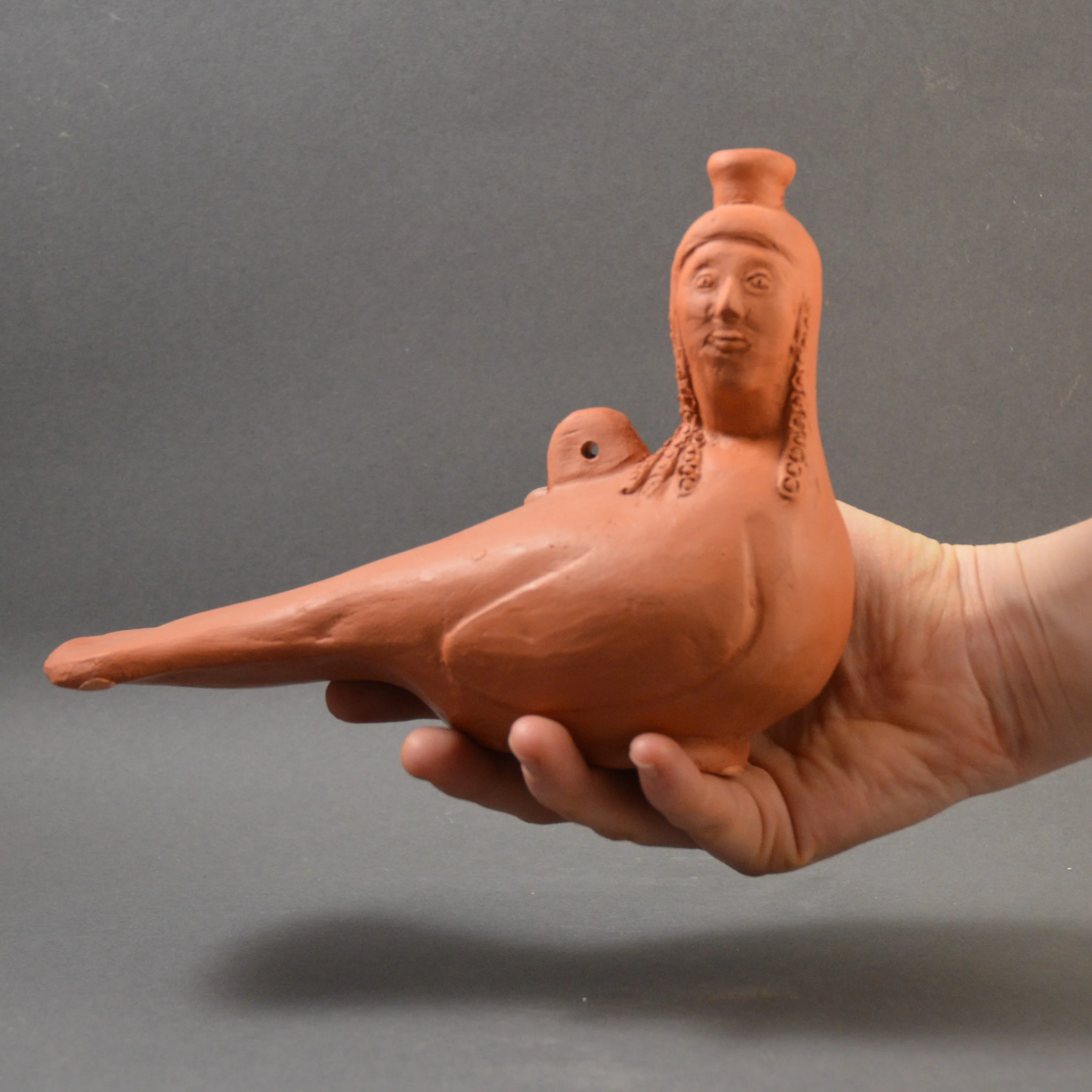
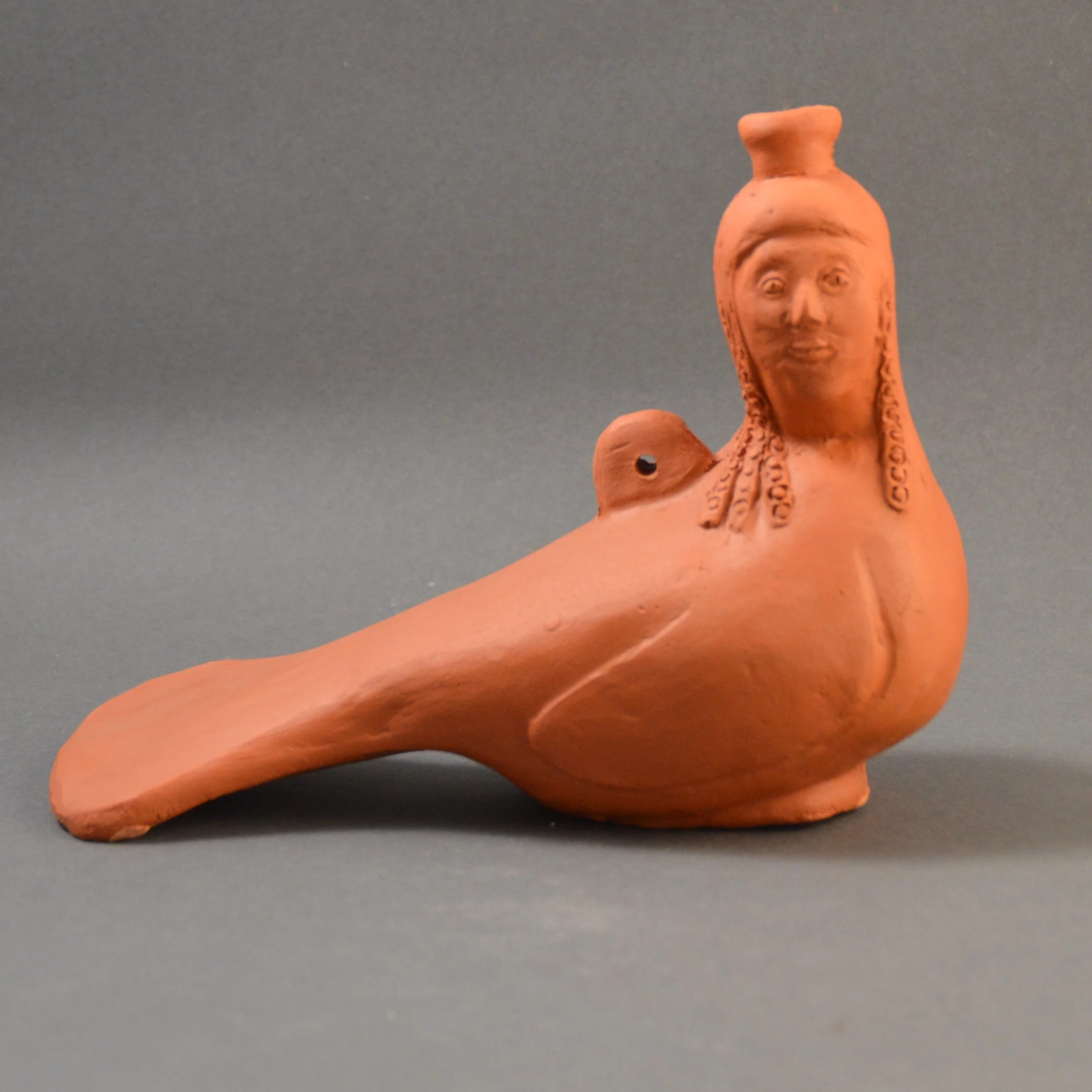
This Roman flagon has been handmade in the style of vessels discovered during excavations at the New Forest kilns in Hampshire—a site that flourished as a major pottery production centre during the late 3rd and early 4th centuries AD.
Flagons such as this would have been indispensable everyday items across the Roman Empire. Whether visiting a local tavern or an olive oil merchant, customers were expected to bring their own flagon to collect their purchase, which would have been carefully decanted from a large amphora into their own vessel. Functional and robust, these pots were made to be used daily—yet they often retained an understated elegance.
The New Forest kilns provided an ideal environment for pottery production, thanks to an abundant supply of high-quality clay, ample timber for fuel, and running water. Archaeological evidence reveals a network of kilns, often clustered together, suggesting that Roman potters worked in well-established communities. When older kilns became damaged from use, new ones were built close by, indicating continuous occupation and a sophisticated understanding of production efficiency.
New Forest pottery is characterised by its smooth finishes, red and white slip decoration, and a wide range of forms—from refined tableware to coarse domestic vessels. The flagon was a staple shape, valued not only for its utility but also as a testament to the craftsmanship of Romano-British potters.
Materials
Terracotta clay, fired under reduction conditions
Dimensions
Height: Approx. 260 mm
Diameter: Approx. 140 mm
Production
This replica has been handmade in Northumberland by Potted History, inspired by an original artefact and faithfully recreated using traditional tools and methods. It has been wood-fired to a temperature between 800°C and 1000°C, emulating the firing process used by Roman potters nearly two thousand years ago.
The firing process naturally results in subtle surface variation in tone and texture, making each flagon entirely unique. This gives the piece an authentic, time-worn appearance akin to original finds from the New Forest site.
Health & Safety
Museum-Quality Replica: Made using the tools and techniques that Roman potters would have used during the Roman era.
Not food safe: This vessel is unglazed and porous, meaning it will absorb the flavours, oils, and liquids of anything stored in it. While this would have been acceptable in Roman kitchens, it does not meet modern health and safety standards.
For display purposes only: While some use vessels like this in experimental archaeology, this is done at their own risk.
Roman households would heat their pots and contents to over 70°C for at least 10 minutes, which would kill most bacteria. 100°C or more would offer even greater protection.
Ordering Information
'Add to Basket' Items: Ready to ship immediately.
'Pre-order' Items: Handmade to order within 90 days (longer for international orders). If your order includes both 'Add to Basket' and 'Pre-order' items, they will be shipped together once all items are ready.
Shipping
All items are sent via second-class postal service as standard.
If you require first-class shipping, please contact us for a custom quote.
Postage Note: All items are carefully packaged to ensure they arrive in perfect condition.
A robust and elegant vessel that reflects the craftsmanship and ingenuity of Roman potters in the New Forest—this flagon offers a lasting link to everyday life in ancient Britain.
Product Information
Product Information
Shipping & Returns
Shipping & Returns
Description
Handcrafted Roman Flagon – New Forest Ware Style
Details
This Roman flagon has been handmade in the style of vessels discovered during excavations at the New Forest kilns in Hampshire—a site that flourished as a major pottery production centre during the late 3rd and early 4th centuries AD.
Flagons such as this would have been indispensable everyday items across the Roman Empire. Whether visiting a local tavern or an olive oil merchant, customers were expected to bring their own flagon to collect their purchase, which would have been carefully decanted from a large amphora into their own vessel. Functional and robust, these pots were made to be used daily—yet they often retained an understated elegance.
The New Forest kilns provided an ideal environment for pottery production, thanks to an abundant supply of high-quality clay, ample timber for fuel, and running water. Archaeological evidence reveals a network of kilns, often clustered together, suggesting that Roman potters worked in well-established communities. When older kilns became damaged from use, new ones were built close by, indicating continuous occupation and a sophisticated understanding of production efficiency.
New Forest pottery is characterised by its smooth finishes, red and white slip decoration, and a wide range of forms—from refined tableware to coarse domestic vessels. The flagon was a staple shape, valued not only for its utility but also as a testament to the craftsmanship of Romano-British potters.
Materials
Terracotta clay, fired under reduction conditions
Dimensions
Height: Approx. 260 mm
Diameter: Approx. 140 mm
Production
This replica has been handmade in Northumberland by Potted History, inspired by an original artefact and faithfully recreated using traditional tools and methods. It has been wood-fired to a temperature between 800°C and 1000°C, emulating the firing process used by Roman potters nearly two thousand years ago.
The firing process naturally results in subtle surface variation in tone and texture, making each flagon entirely unique. This gives the piece an authentic, time-worn appearance akin to original finds from the New Forest site.
Health & Safety
Museum-Quality Replica: Made using the tools and techniques that Roman potters would have used during the Roman era.
Not food safe: This vessel is unglazed and porous, meaning it will absorb the flavours, oils, and liquids of anything stored in it. While this would have been acceptable in Roman kitchens, it does not meet modern health and safety standards.
For display purposes only: While some use vessels like this in experimental archaeology, this is done at their own risk.
Roman households would heat their pots and contents to over 70°C for at least 10 minutes, which would kill most bacteria. 100°C or more would offer even greater protection.
Ordering Information
'Add to Basket' Items: Ready to ship immediately.
'Pre-order' Items: Handmade to order within 90 days (longer for international orders). If your order includes both 'Add to Basket' and 'Pre-order' items, they will be shipped together once all items are ready.
Shipping
All items are sent via second-class postal service as standard.
If you require first-class shipping, please contact us for a custom quote.
Postage Note: All items are carefully packaged to ensure they arrive in perfect condition.
A robust and elegant vessel that reflects the craftsmanship and ingenuity of Roman potters in the New Forest—this flagon offers a lasting link to everyday life in ancient Britain.