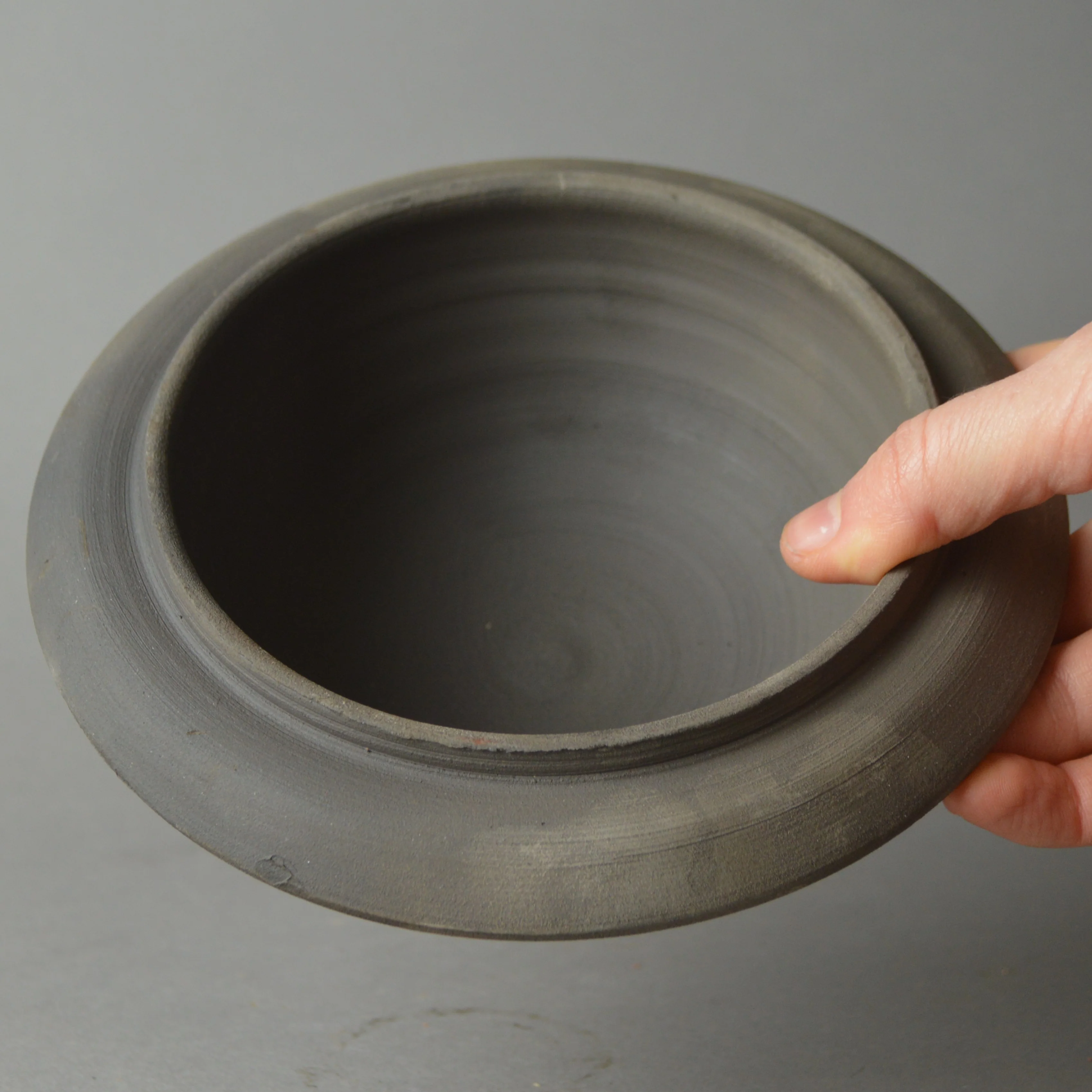
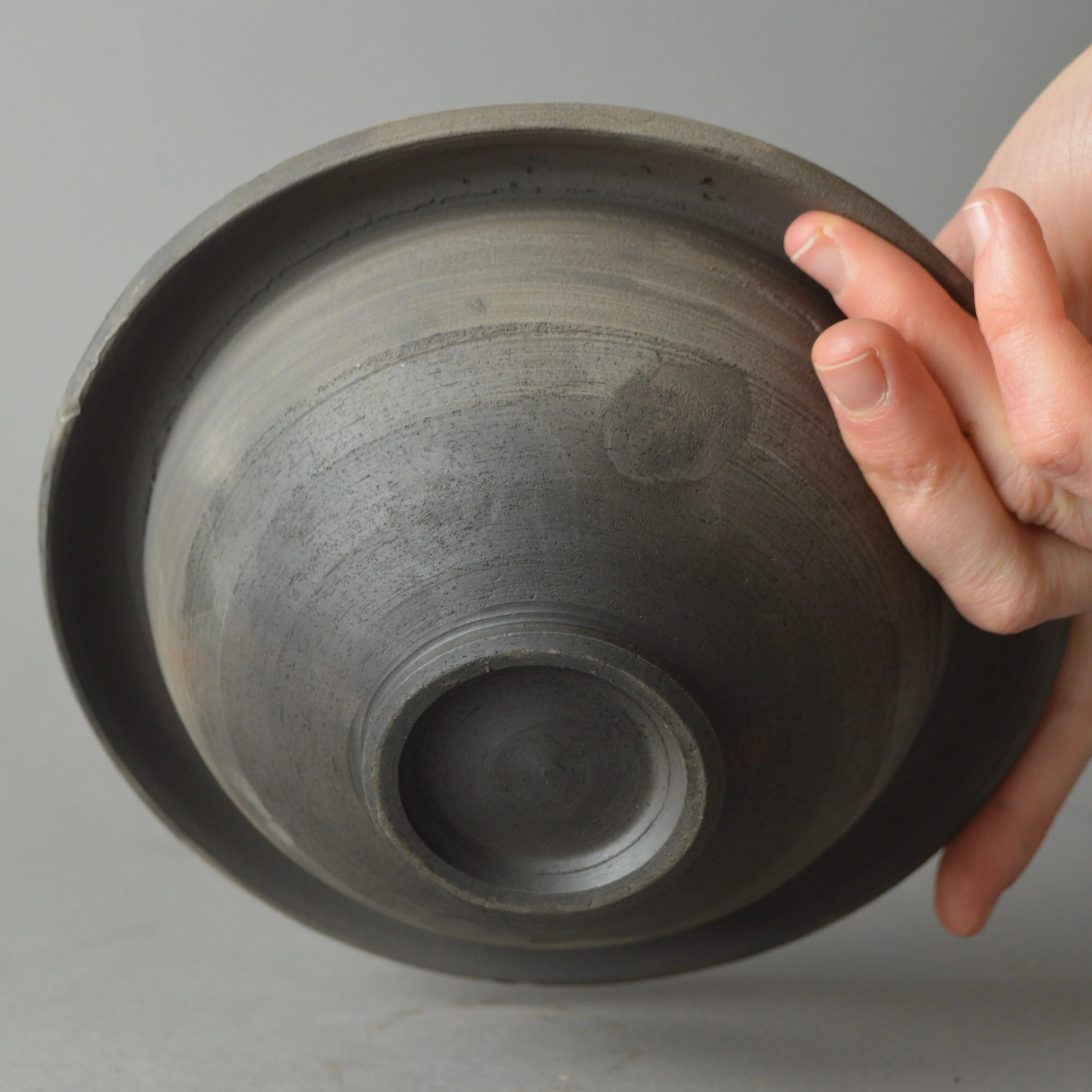
Roman Greyware Flanged Bowl
Details
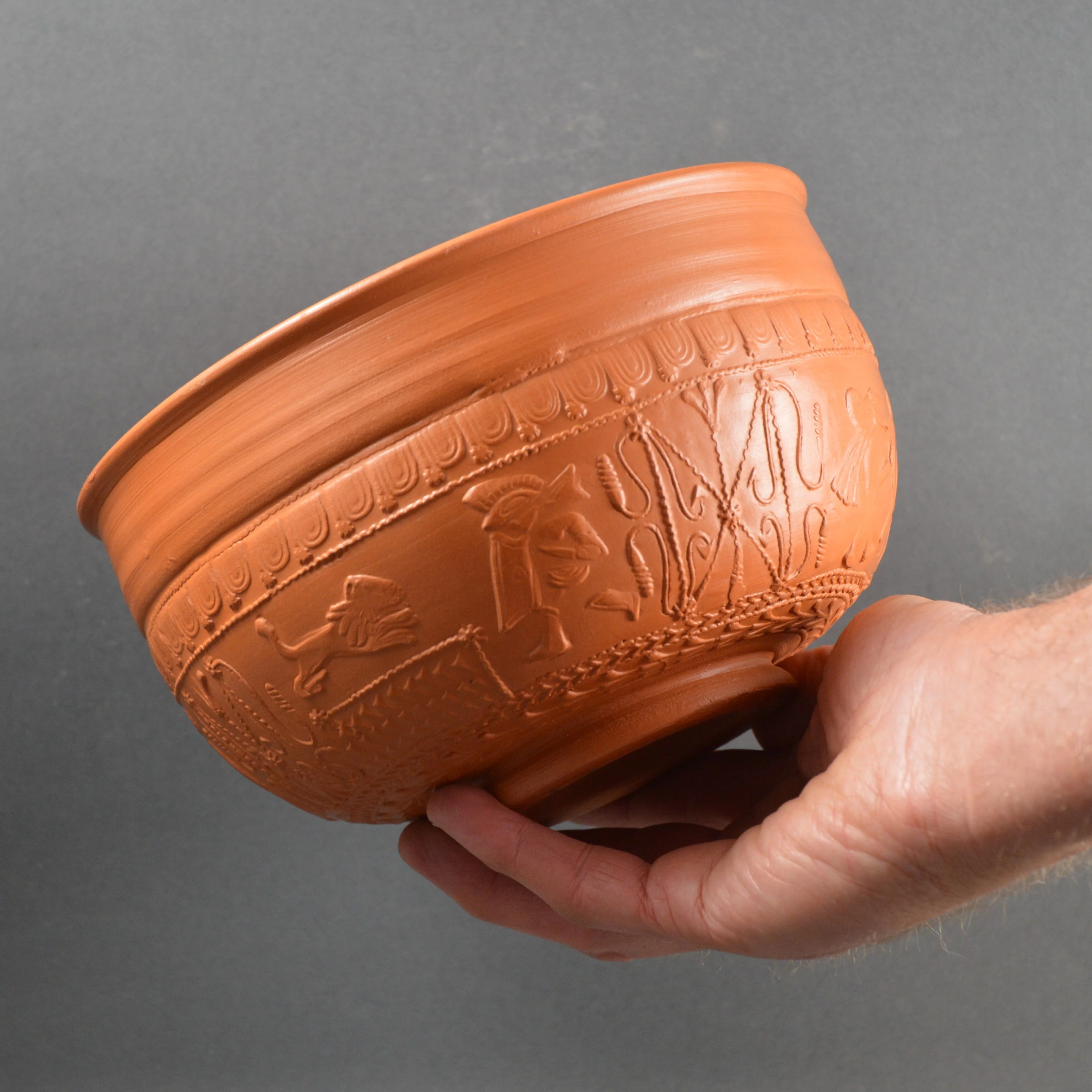
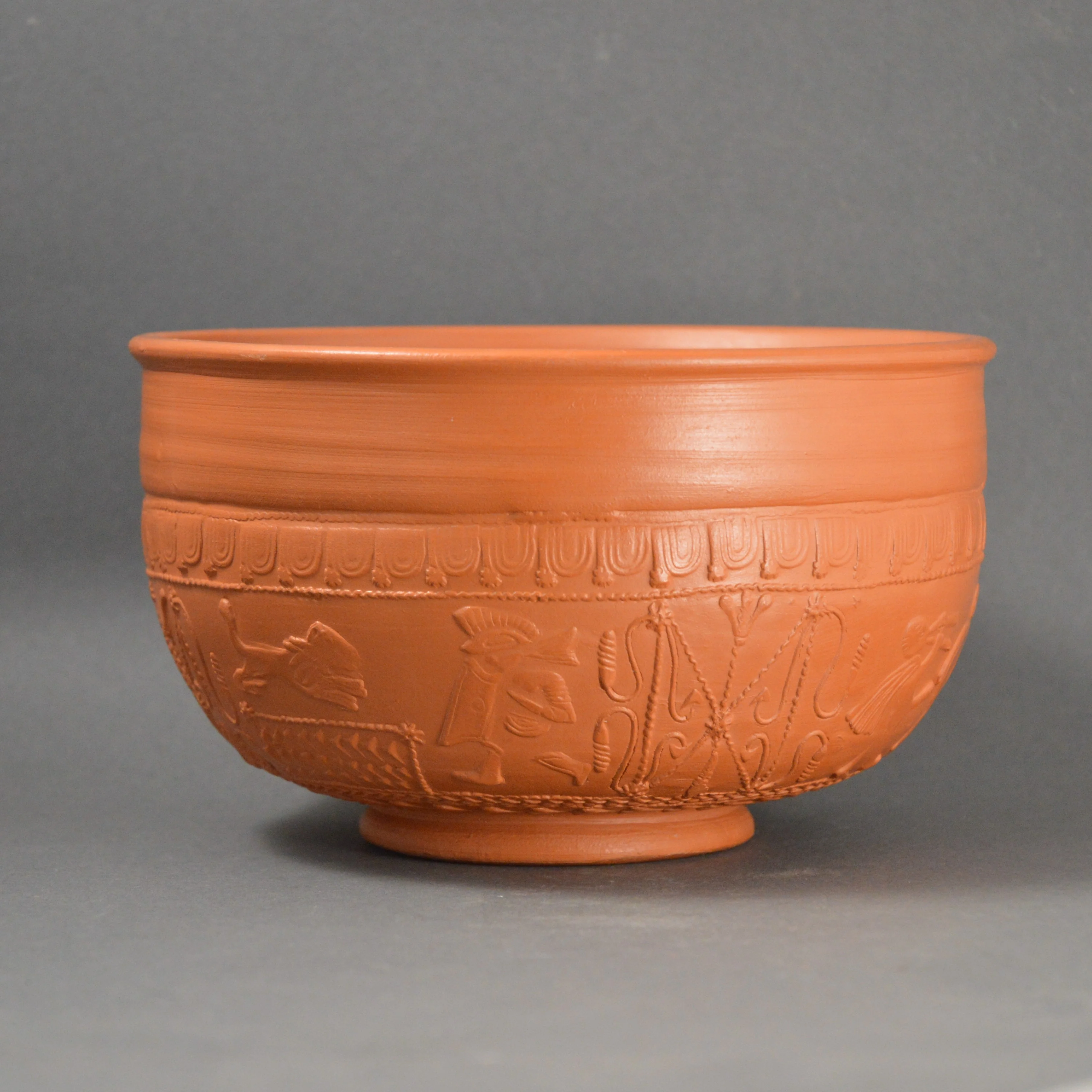
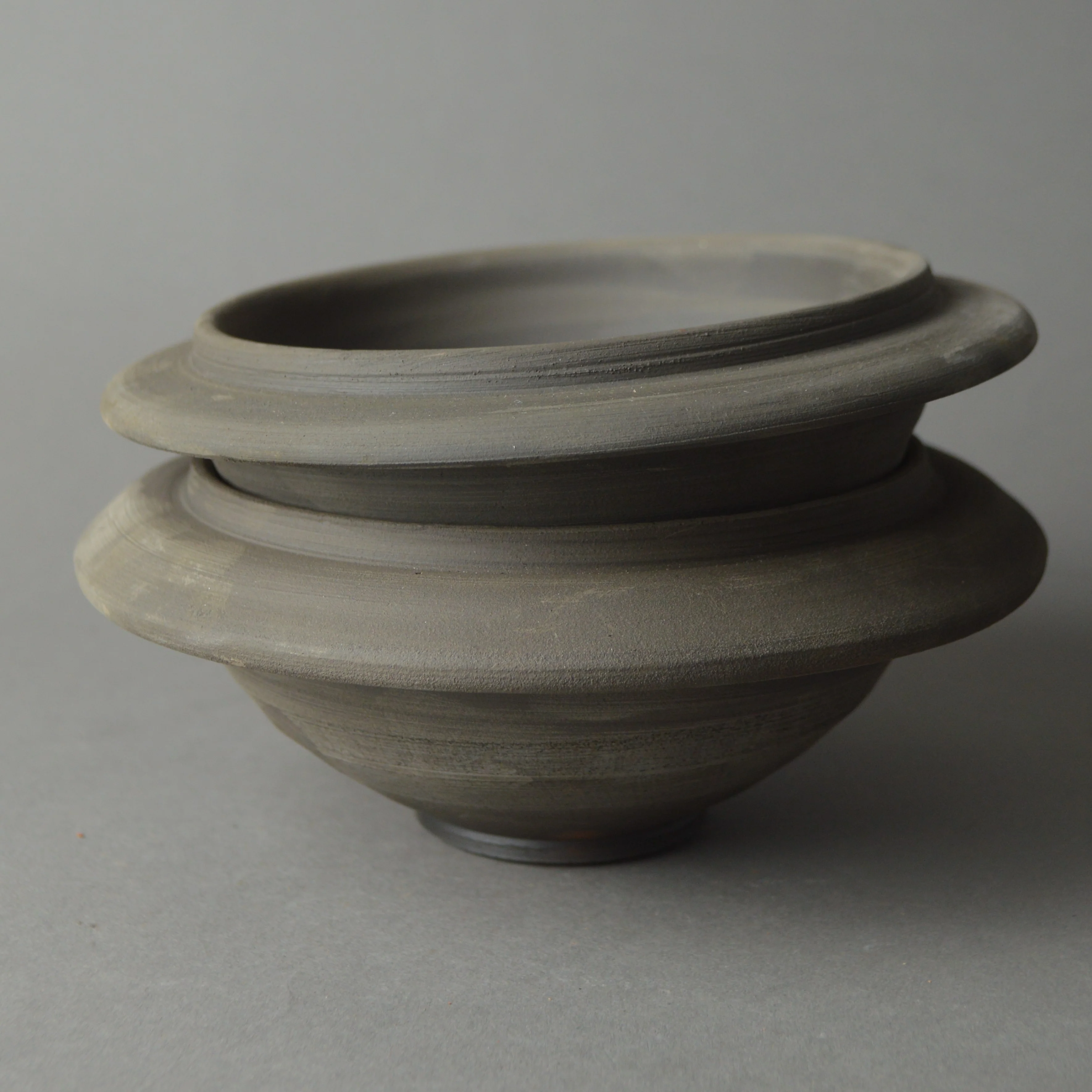
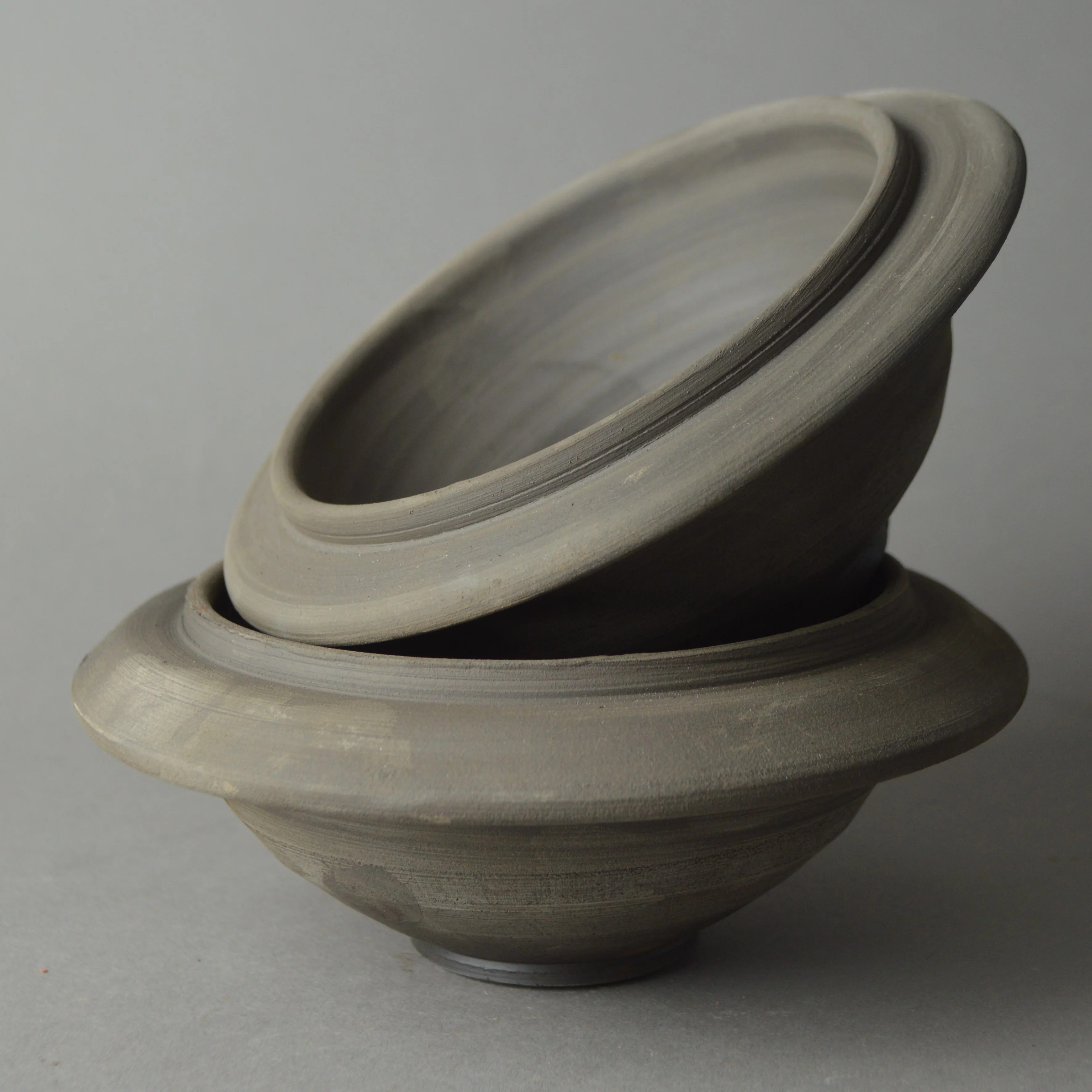
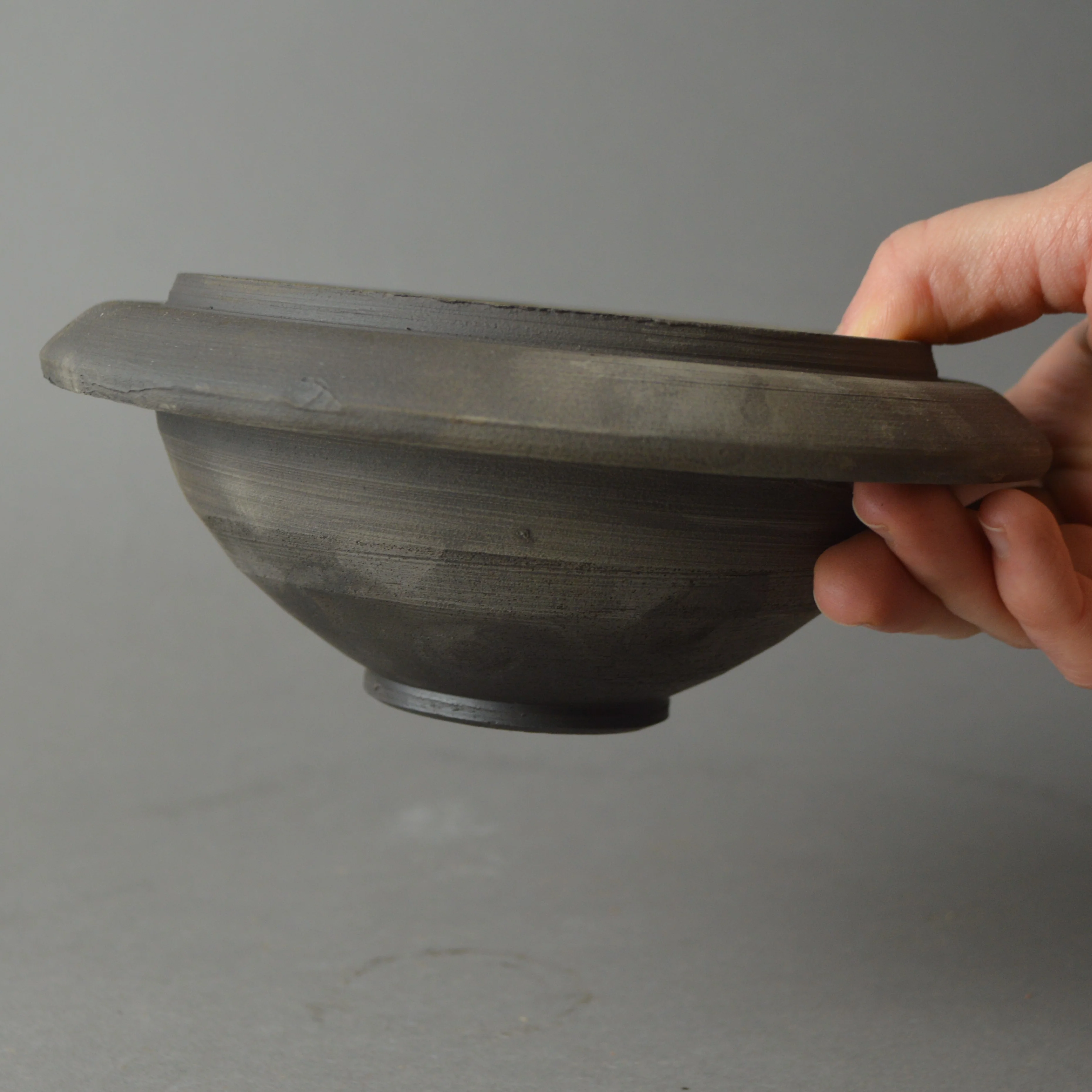
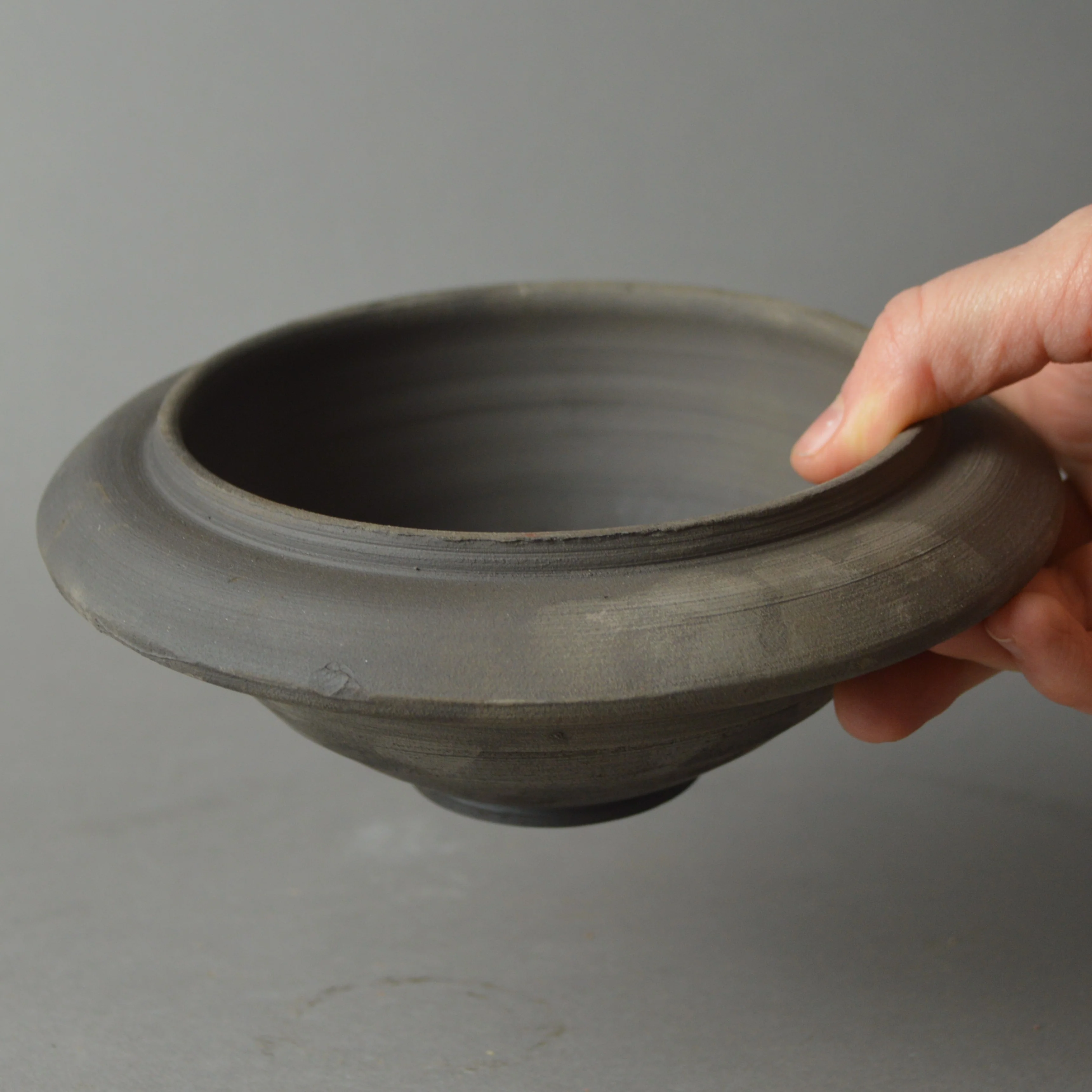
We have based this elegant bowl on an example excavated from the magnificent Hadrian's Wall in the heart of Northumberland. The Romans would have used this style of bowl to serve all manner of Roman delicacies, and although not considered high status at the time, it would have added a touch of class to any meal. The Romans did know a thing or two about beautiful objects.
Production
This replica Roman pot has been hand-made in Northumberland by Potted History, based on an original artefact. It has been fired to a temperature between 800 & 1000 Centigrade to emulate the same techniques the original potters would have employed nearly two thousand years ago. This process often results in surface colour and texture variations, as is common with the original Roman pottery and gives each piece its unique character.
Materials
Terracotta clay, fired under reduction conditions
Dimensions
Approx. 80 mm tall, 170 mm diameter
Production
We have hand-made this replica Roman pot in our studio in beautiful Northumberland and based on an original artefact. It has been to a temperature of between 800 & 1000 Centigrade, using the same techniques that the original potters employed. This process often results in variations of the surface colour and texture, emulating original Roman Pottery and giving each pot its unique character.
Health & Safety
This is a Museum Quality Replica made using the tools and techniques that Roman potters would have used during the Roman era. This is an unglazed pot with a porous surface, and therefore, it will absorb the flavours of the food being stored or served, which adds to the flavour of future dishes. However, it also means that this pot does not meet modern Health and Safety standards, so we do not advise that it be used for storing or serving food. When the Romans used these vessels, they applied sufficient heat to the cooking pot and its contents to kill all bacteria. Heating to over 70°C for at least 10 minutes would have killed most disease-causing bacteria, and temperatures of 100°C would do even more.
Postage
We send all items using a second-class postal service. If you wish to have an item sent first-class, please get in touch with us for a quote. Many Thanks
Original: $54.55
-70%$54.55
$16.36Product Information
Product Information
Shipping & Returns
Shipping & Returns
Description
Details
We have based this elegant bowl on an example excavated from the magnificent Hadrian's Wall in the heart of Northumberland. The Romans would have used this style of bowl to serve all manner of Roman delicacies, and although not considered high status at the time, it would have added a touch of class to any meal. The Romans did know a thing or two about beautiful objects.
Production
This replica Roman pot has been hand-made in Northumberland by Potted History, based on an original artefact. It has been fired to a temperature between 800 & 1000 Centigrade to emulate the same techniques the original potters would have employed nearly two thousand years ago. This process often results in surface colour and texture variations, as is common with the original Roman pottery and gives each piece its unique character.
Materials
Terracotta clay, fired under reduction conditions
Dimensions
Approx. 80 mm tall, 170 mm diameter
Production
We have hand-made this replica Roman pot in our studio in beautiful Northumberland and based on an original artefact. It has been to a temperature of between 800 & 1000 Centigrade, using the same techniques that the original potters employed. This process often results in variations of the surface colour and texture, emulating original Roman Pottery and giving each pot its unique character.
Health & Safety
This is a Museum Quality Replica made using the tools and techniques that Roman potters would have used during the Roman era. This is an unglazed pot with a porous surface, and therefore, it will absorb the flavours of the food being stored or served, which adds to the flavour of future dishes. However, it also means that this pot does not meet modern Health and Safety standards, so we do not advise that it be used for storing or serving food. When the Romans used these vessels, they applied sufficient heat to the cooking pot and its contents to kill all bacteria. Heating to over 70°C for at least 10 minutes would have killed most disease-causing bacteria, and temperatures of 100°C would do even more.
Postage
We send all items using a second-class postal service. If you wish to have an item sent first-class, please get in touch with us for a quote. Many Thanks