Roman Cooking Pot
Details
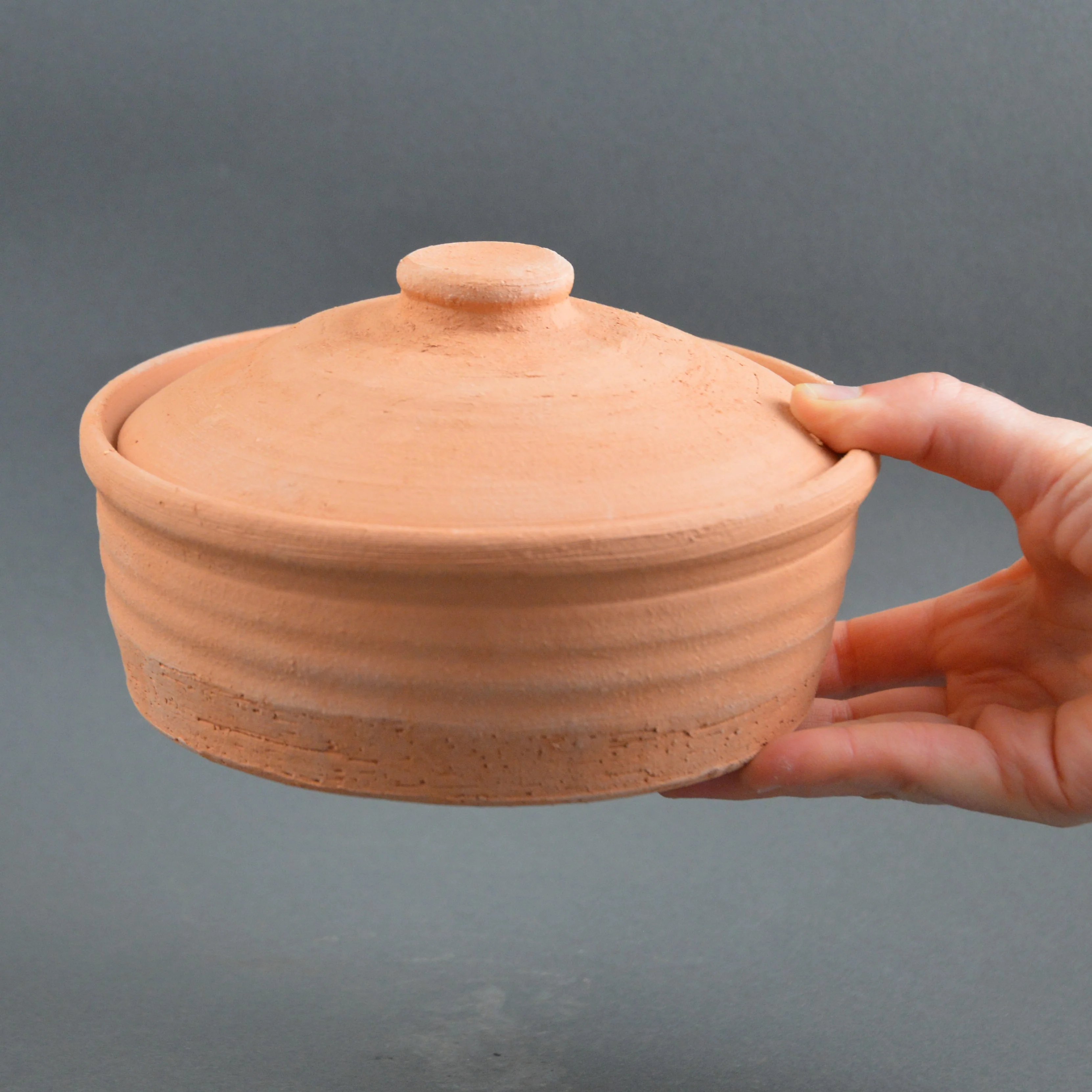
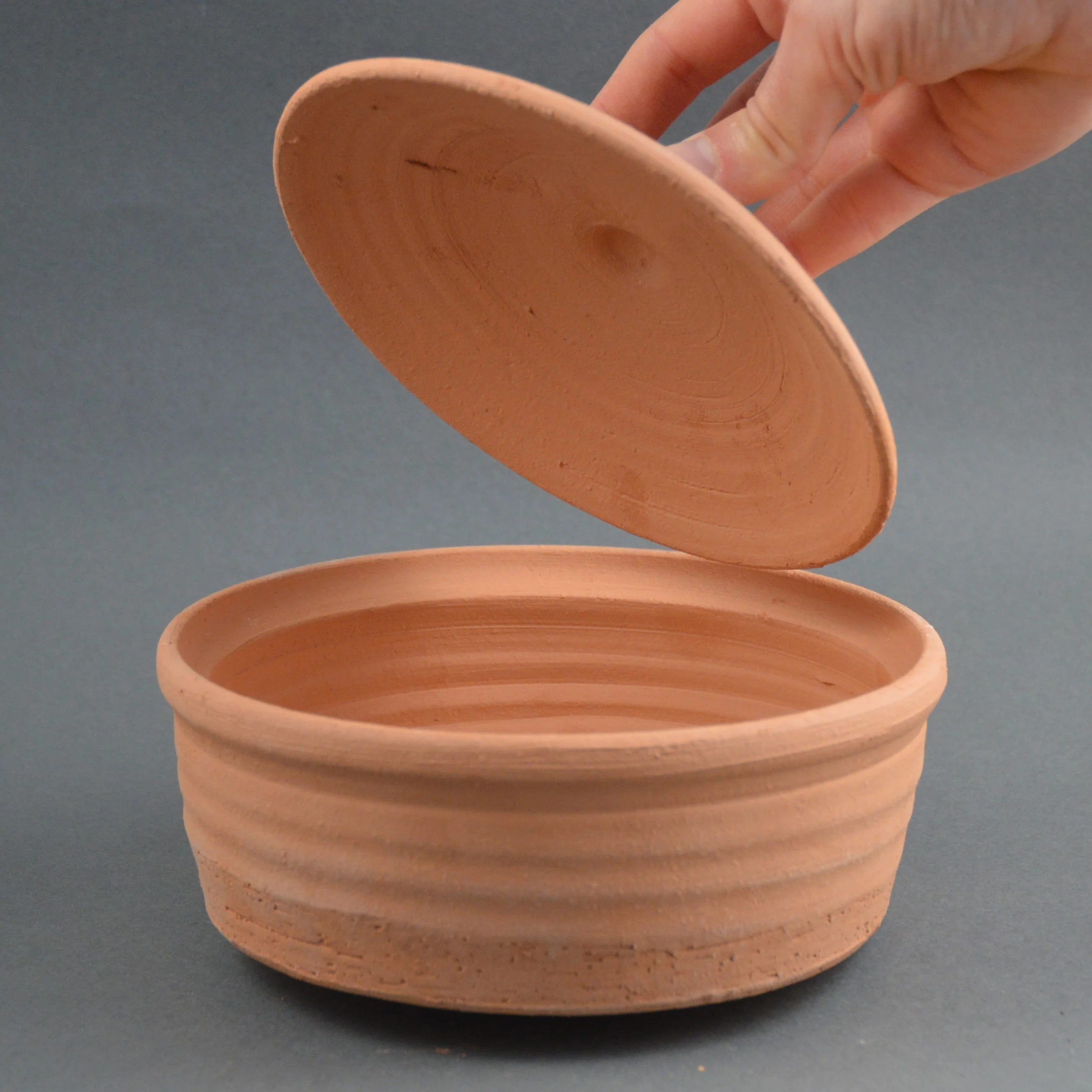
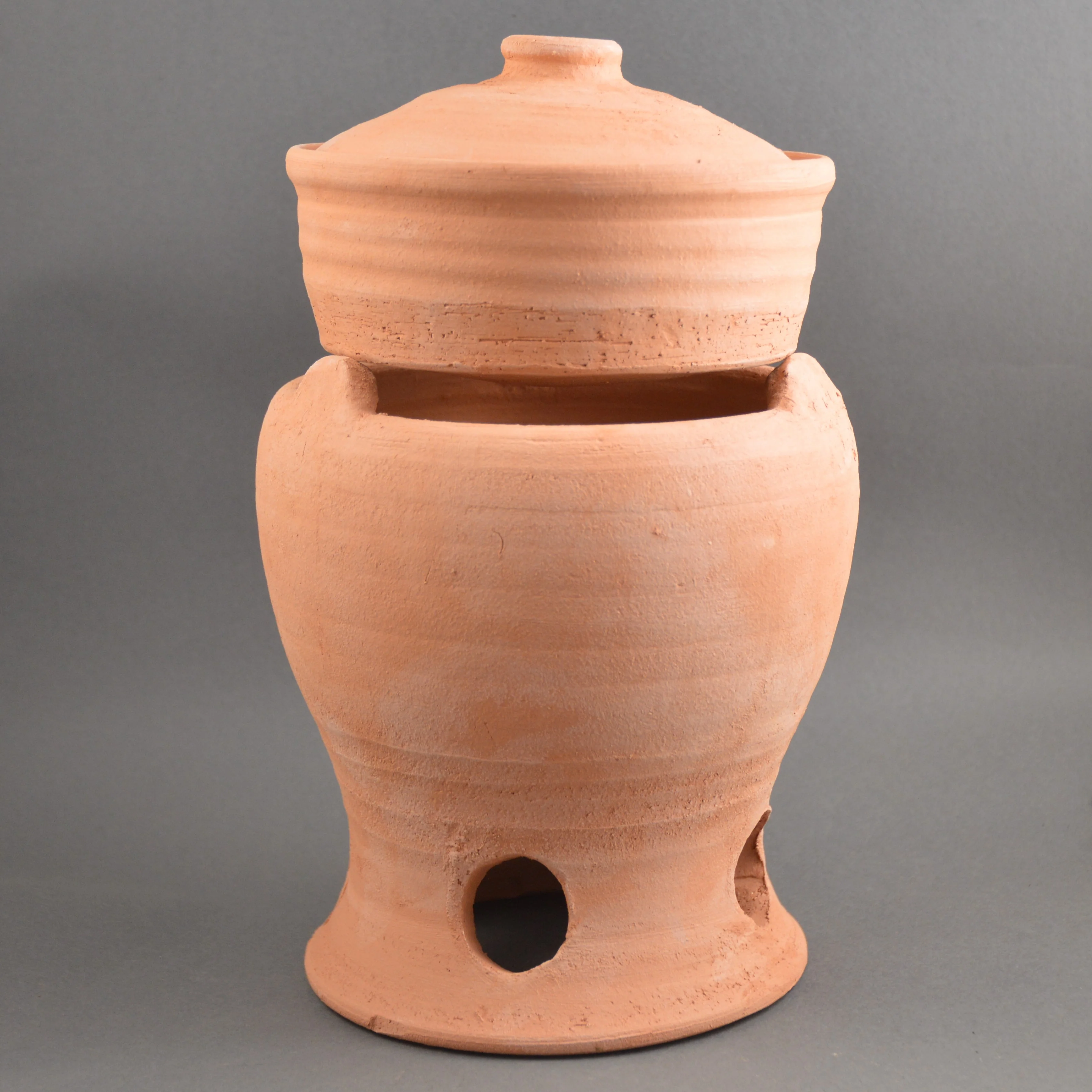
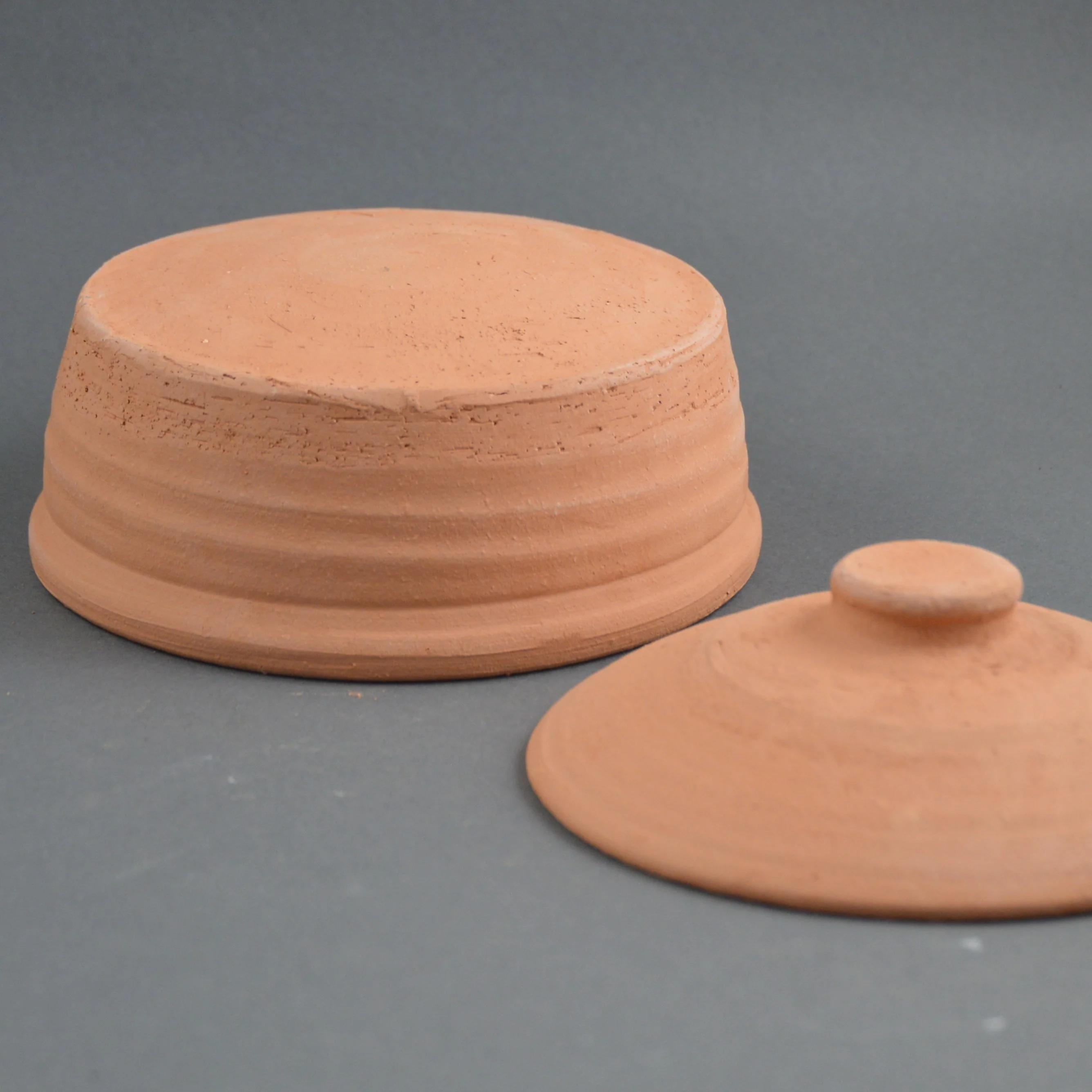
This cooking pot has been made to sit on a ceramic brazier* similar to the one photographed here. The cooking pot here has a slightly rounded base for better stability while cooking. However, it is still stable when placed on a flat-topped table. Like the originals, it is unglazed.
* The brazier is not included in this listing, but we do make and sell braziers. Details of the brazier are available here
'Add To Cart' items are ready to send straight away. Please be aware that if bought alongside 'Pre-order' items, your order will be sent when all items are ready.
'Pre-order' items are made to order, and we will dispatch them as soon as we have handcrafted them for you; this usually takes 90 days, but international orders can take a little longer.
Materials
Grogged terracotta
Dimensions
Cooking Pot - Approx. 135 mm tall (with lid on), 85 mm tall (without lid), 190 mm diameter
Production
This replica Roman pot has been hand-made in Northumberland by Potted History, based on an original artefact. It has been fired to emulate the authentic Roman firing conditions to a temperature of between 800°C & 1000°C, as the original potters would have done nearly two thousand years ago. This process often results in variations of the surface colour and texture, as is found with original Roman Pottery and giving each pot it's unique character.
Health and Safety Cooking Pot
This is a Museum Quality Replica made using the tools and techniques that would have been used during the Roman era. As this is an unglazed pot with a porous surface it will absorb some of the flavours during the cooking process, which does add to the flavour of future dishes. However, it does also mean that this pot does not meet modern Health and Safety standards and therefore we do not advise that it is used for cooking with. When the Romans cooked in these pots they would rely on applying sufficient heat to the pot and contents to ensure that all bacteria was killed. Heating to over 70°C for at least 10 minutes would have killed most disease-causing bacteria, and temperatures of 100°C would do even more.
Postage
All items are sent using a second-class postal service; if you wish to have an item sent first-class, please contact us for a quote. Many Thanks
Product Information
Product Information
Shipping & Returns
Shipping & Returns
Description
Details
This cooking pot has been made to sit on a ceramic brazier* similar to the one photographed here. The cooking pot here has a slightly rounded base for better stability while cooking. However, it is still stable when placed on a flat-topped table. Like the originals, it is unglazed.
* The brazier is not included in this listing, but we do make and sell braziers. Details of the brazier are available here
'Add To Cart' items are ready to send straight away. Please be aware that if bought alongside 'Pre-order' items, your order will be sent when all items are ready.
'Pre-order' items are made to order, and we will dispatch them as soon as we have handcrafted them for you; this usually takes 90 days, but international orders can take a little longer.
Materials
Grogged terracotta
Dimensions
Cooking Pot - Approx. 135 mm tall (with lid on), 85 mm tall (without lid), 190 mm diameter
Production
This replica Roman pot has been hand-made in Northumberland by Potted History, based on an original artefact. It has been fired to emulate the authentic Roman firing conditions to a temperature of between 800°C & 1000°C, as the original potters would have done nearly two thousand years ago. This process often results in variations of the surface colour and texture, as is found with original Roman Pottery and giving each pot it's unique character.
Health and Safety Cooking Pot
This is a Museum Quality Replica made using the tools and techniques that would have been used during the Roman era. As this is an unglazed pot with a porous surface it will absorb some of the flavours during the cooking process, which does add to the flavour of future dishes. However, it does also mean that this pot does not meet modern Health and Safety standards and therefore we do not advise that it is used for cooking with. When the Romans cooked in these pots they would rely on applying sufficient heat to the pot and contents to ensure that all bacteria was killed. Heating to over 70°C for at least 10 minutes would have killed most disease-causing bacteria, and temperatures of 100°C would do even more.
Postage
All items are sent using a second-class postal service; if you wish to have an item sent first-class, please contact us for a quote. Many Thanks