Roman Indented Beaker
Handcrafted Roman Indented Cup – Nene Valley Style
Details
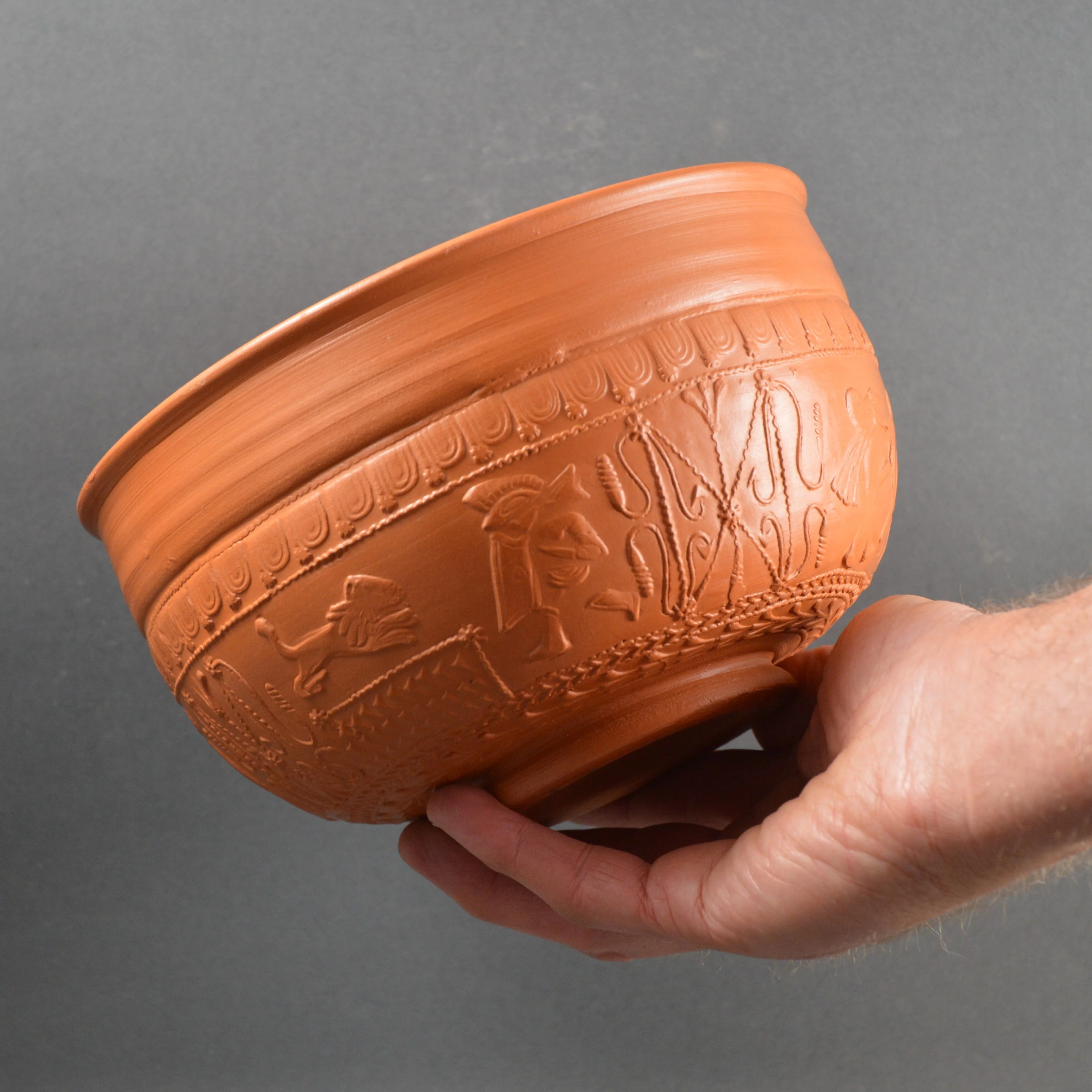
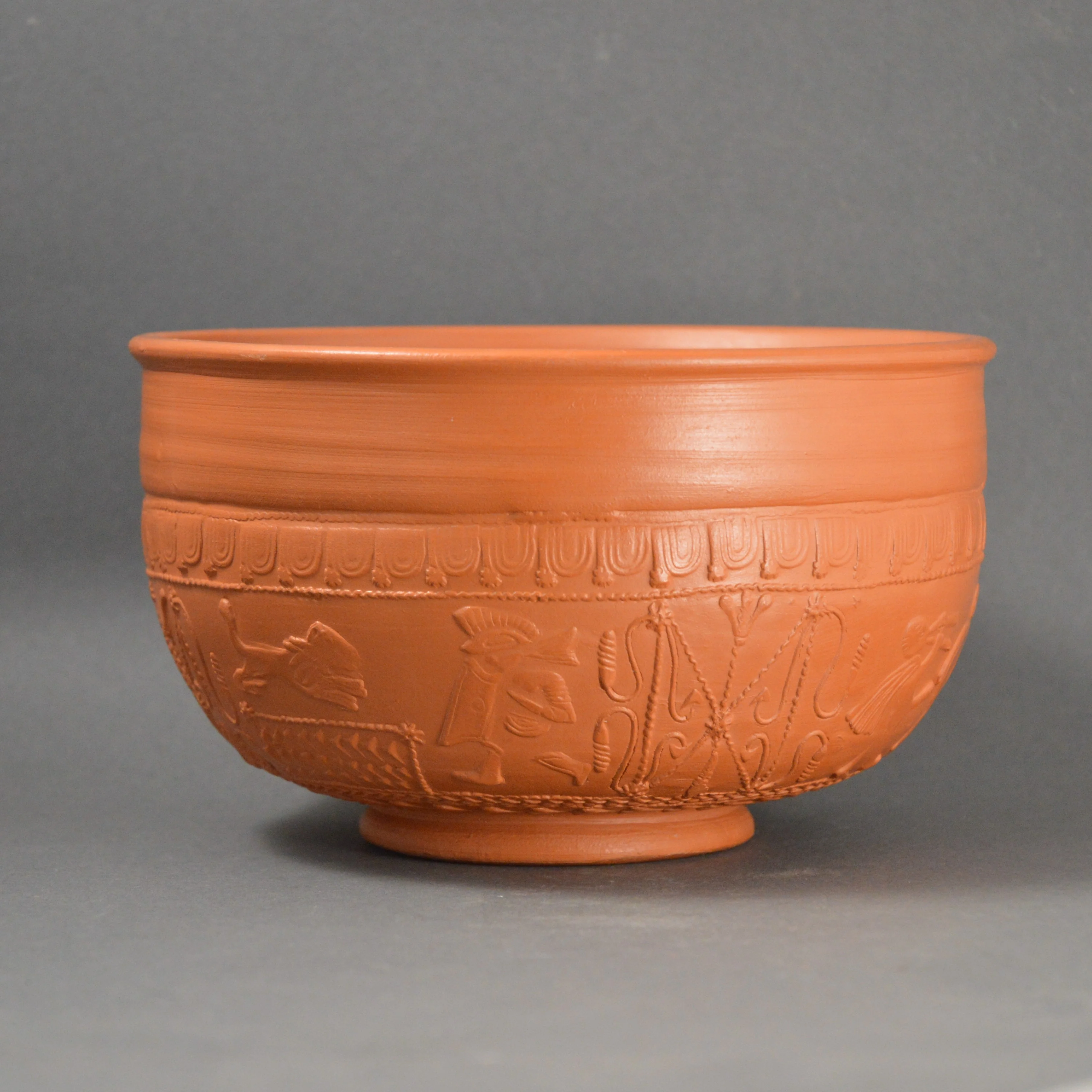
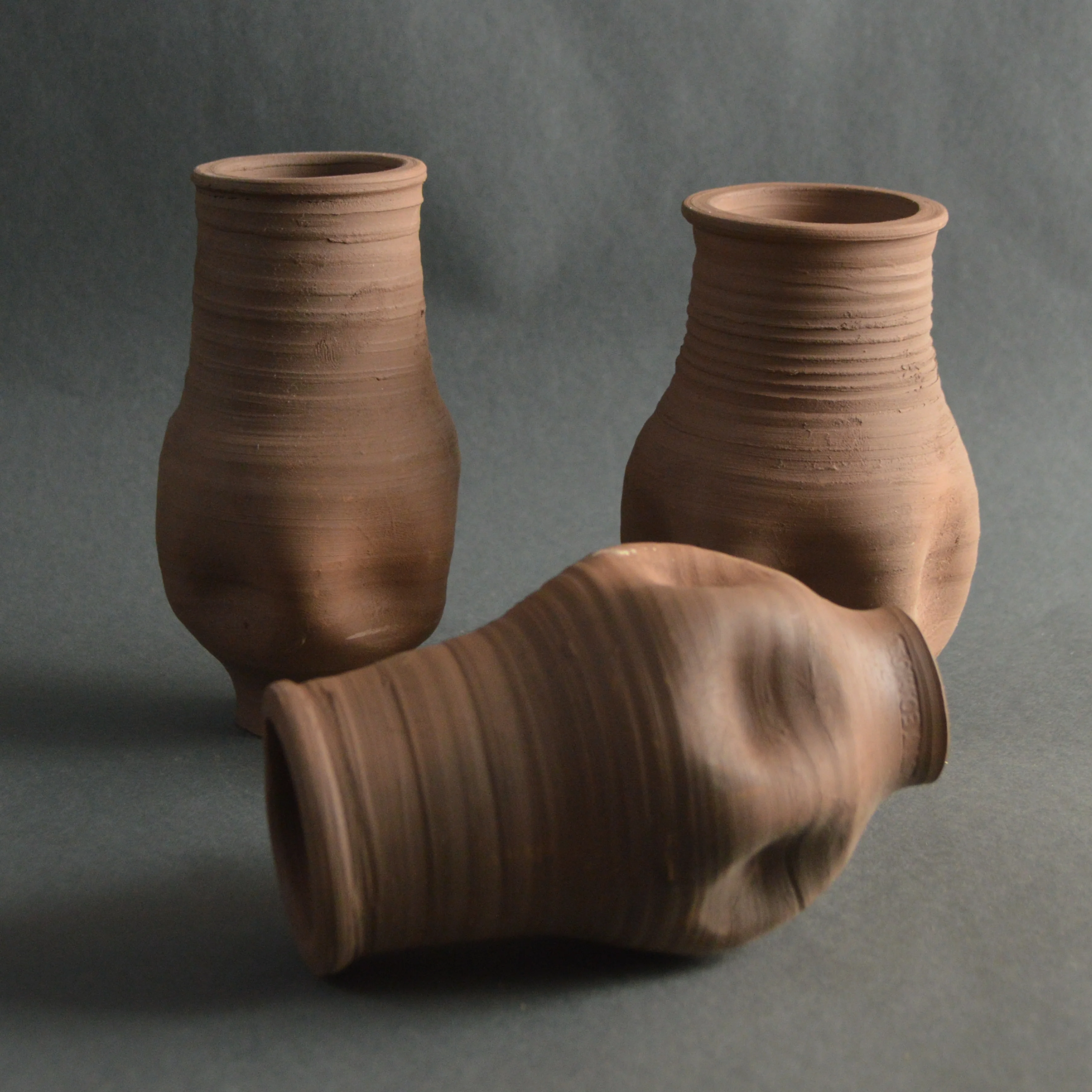
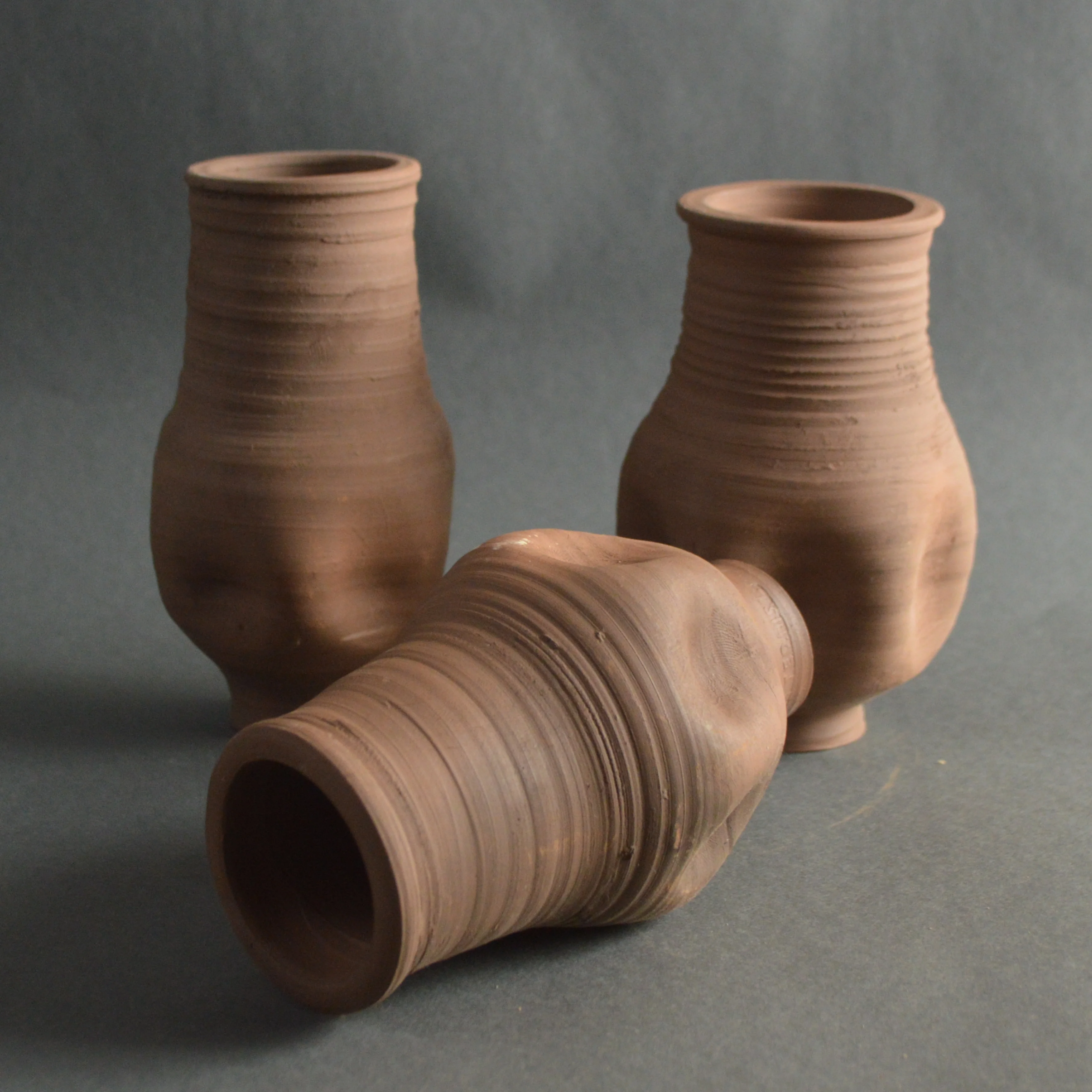
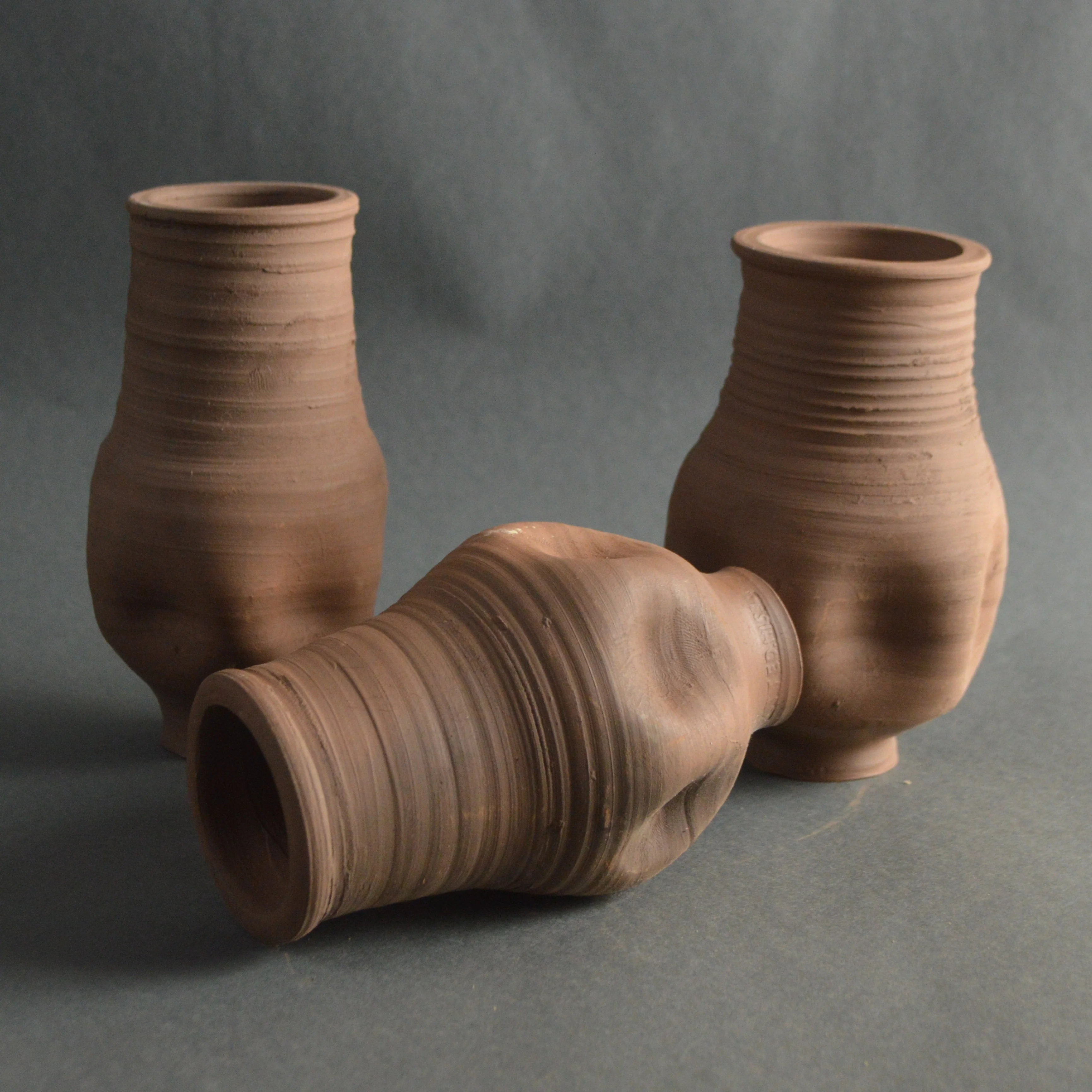
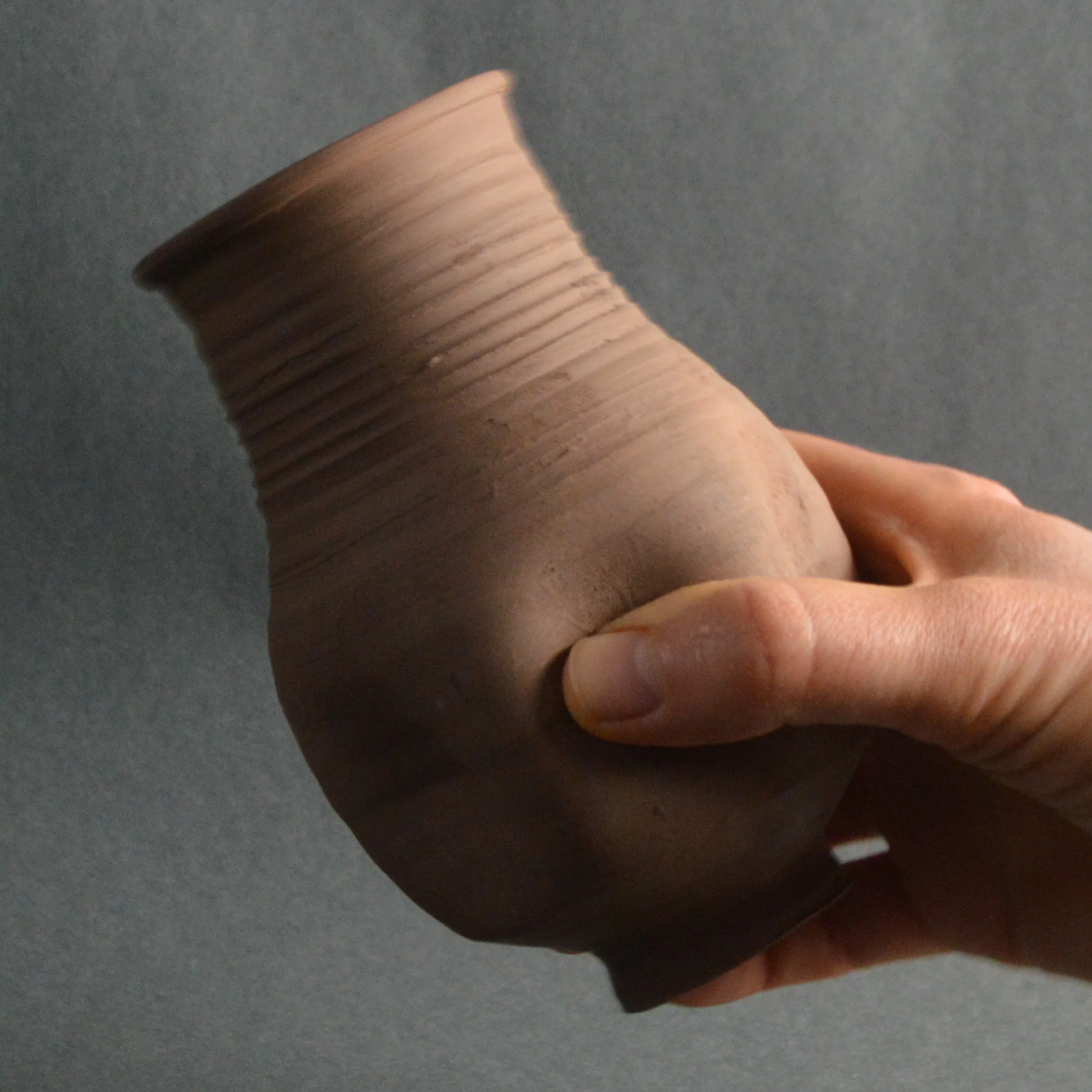
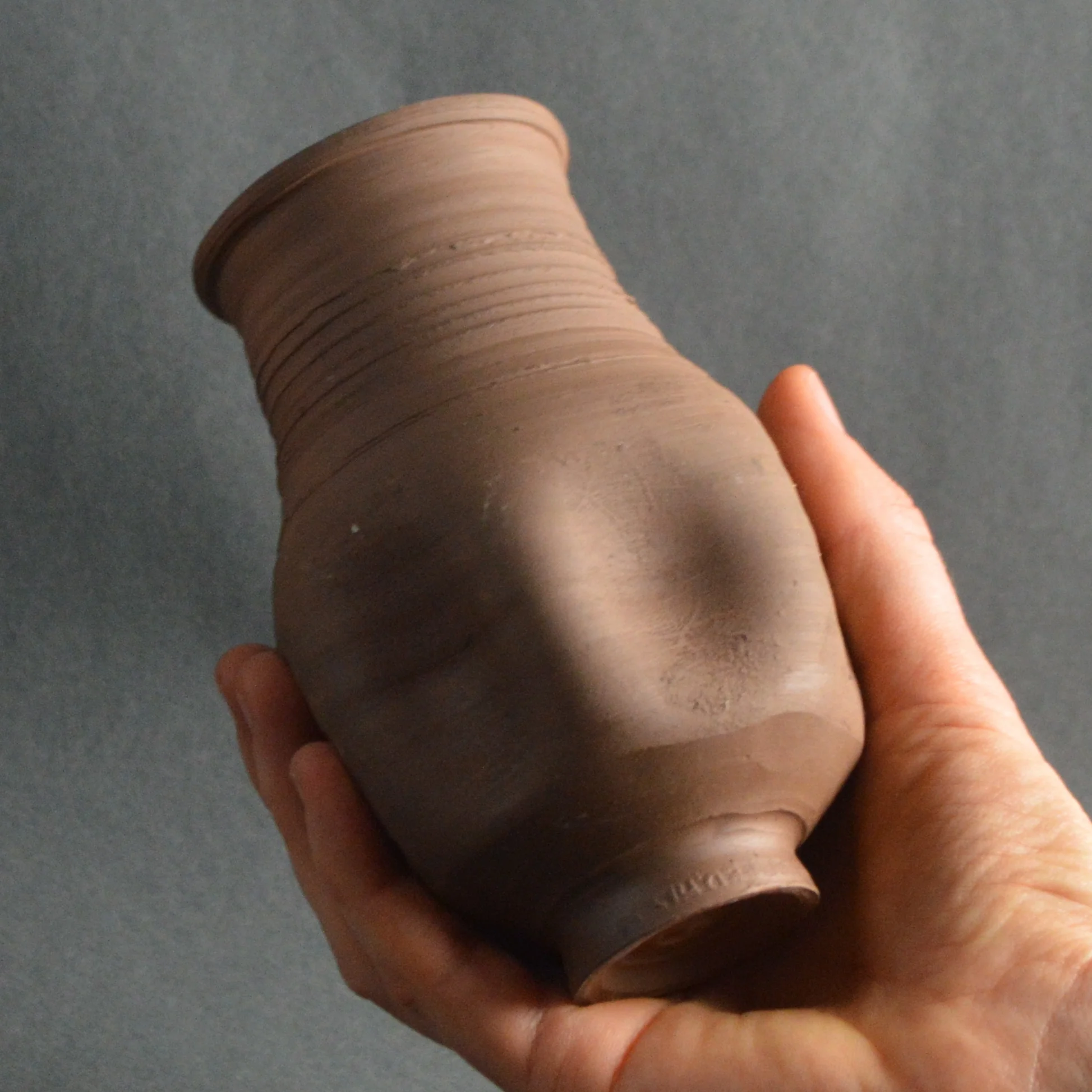
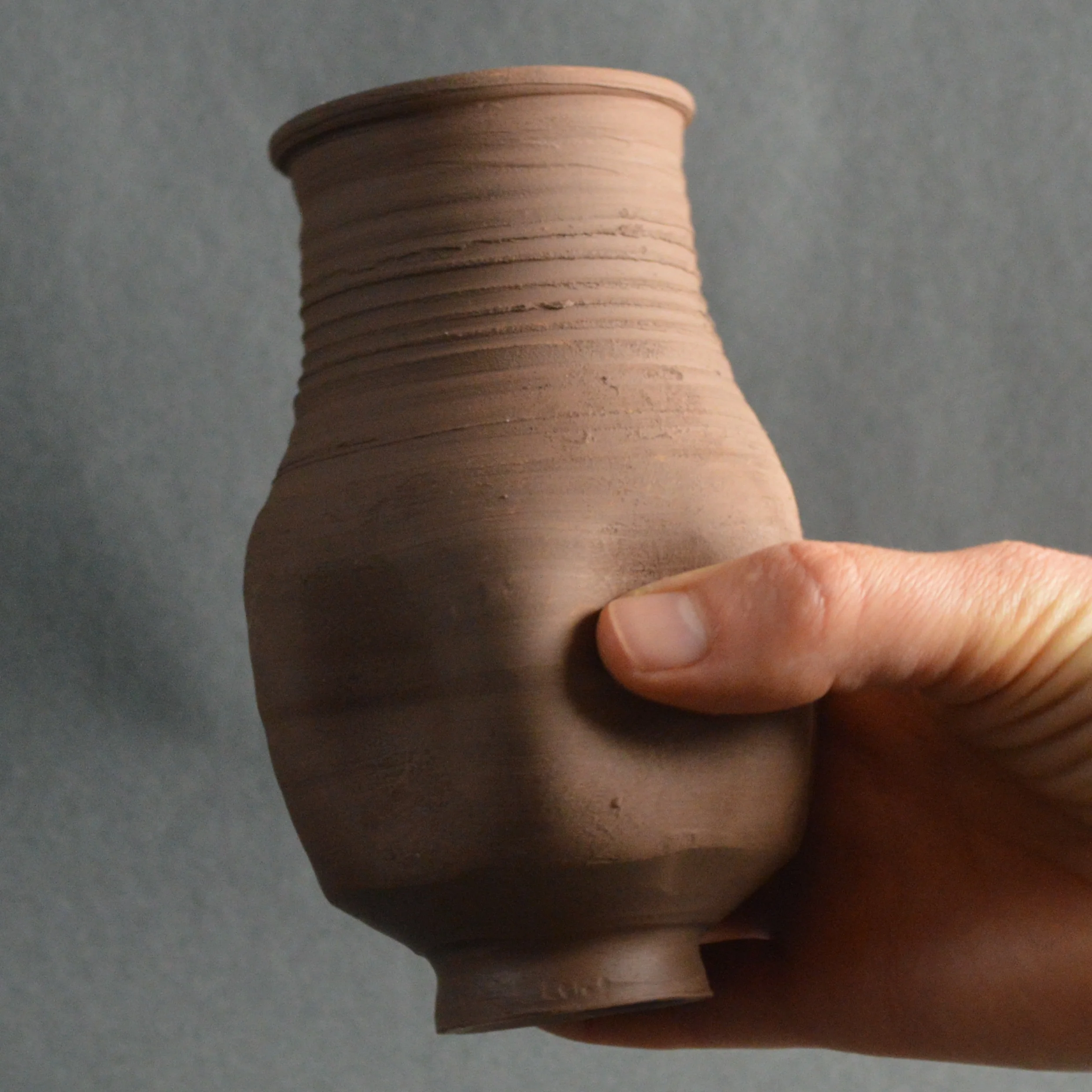
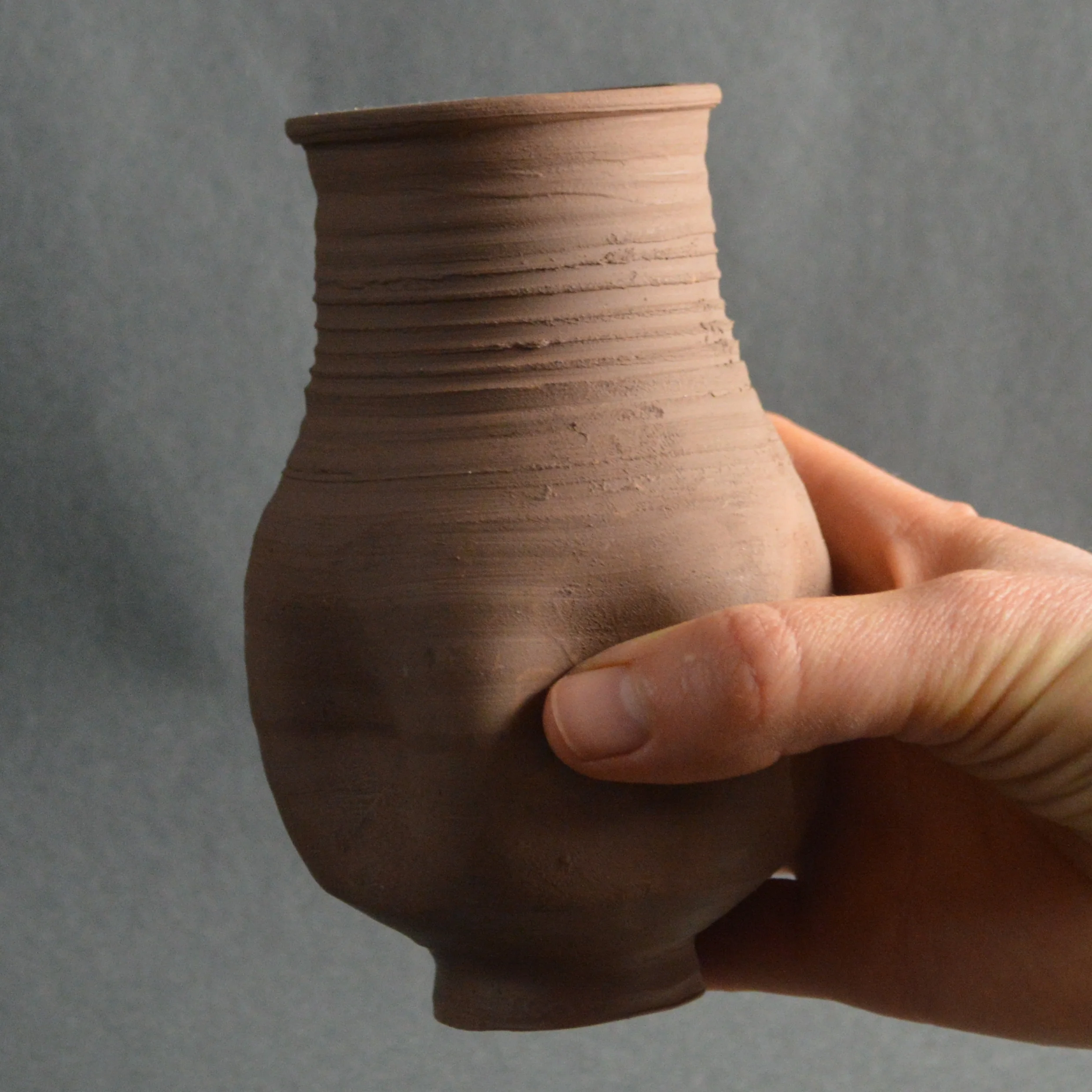
This charming type of pottery drinking cup was widespread throughout Roman Britain during the 3rd and 4th centuries AD. With its distinctive indented surface, it’s believed to have functioned as a wine cup, offering both elegance and practicality. The thumb-sized indentations served as natural grip points, making the cup easier to hold and use—particularly when filled with liquid.
Cups like these were produced primarily in the Nene Valley, near present-day Peterborough, and their distribution across Roman Britain was extensive. Numerous examples have been found along Hadrian’s Wall, highlighting their popularity among both civilian and military communities.
This replica has been faithfully recreated in our Northumberland studio, thrown on the wheel and then hand-shaped with care to recreate the indentations, just as Roman potters would have done.
Please note: This listing is for one cup.
Materials
Terracotta, reduction fired
Dimensions
Height: Approx. 135 mm
Diameter: Approx. 75 mm
Production
As with all our Museum Quality Replicas, this pot has been made entirely by hand using natural clay and replicas of the types of tools used by ancient potters. It has been fired between 800°C and 1000°C to replicate traditional firing conditions.
Due to the nature of handcrafting and historical firing methods, each cup is one of a kind, with slight variations in surface colour, shape, and texture—just like the originals.
Health & Safety
Museum-Quality Replica: Made using the tools and techniques that would have been used during the Roman period.
Not food safe: This cup is unglazed and porous, meaning it will absorb liquids, oils, and residues. While this feature added to the flavour of repeated use in the ancient world, it does not meet modern health and safety standards for storing or serving food or drink.
Display use only: Some enthusiasts may choose to use this replica in experimental archaeology or historical reenactment, but this is entirely at your own risk.
In antiquity, users relied on heating their pots and contents to over 70°C for at least 10 minutes to kill bacteria. 100°C or more offered greater protection. We do not advise using this cup for actual consumption today.
Ordering Information
'Add to Basket' Items: Ready to ship immediately
'Pre-order' Items: Handmade to order within 90 days (longer for international orders). Orders containing both 'Add to Basket' and 'Pre-order' items will be shipped together once all are ready
Shipping
All items are sent via second-class postal service as standard
If you require first-class shipping, please contact us for a custom quote
Postage Note: All items are carefully packaged to ensure they arrive in perfect condition
A tactile and practical link to life in Roman Britain, this Nene Valley indented cup captures the daily rituals of wine, conversation, and community from nearly two thousand years ago.
Original: $37.26
-70%$37.26
$11.18Product Information
Product Information
Shipping & Returns
Shipping & Returns
Description
Handcrafted Roman Indented Cup – Nene Valley Style
Details
This charming type of pottery drinking cup was widespread throughout Roman Britain during the 3rd and 4th centuries AD. With its distinctive indented surface, it’s believed to have functioned as a wine cup, offering both elegance and practicality. The thumb-sized indentations served as natural grip points, making the cup easier to hold and use—particularly when filled with liquid.
Cups like these were produced primarily in the Nene Valley, near present-day Peterborough, and their distribution across Roman Britain was extensive. Numerous examples have been found along Hadrian’s Wall, highlighting their popularity among both civilian and military communities.
This replica has been faithfully recreated in our Northumberland studio, thrown on the wheel and then hand-shaped with care to recreate the indentations, just as Roman potters would have done.
Please note: This listing is for one cup.
Materials
Terracotta, reduction fired
Dimensions
Height: Approx. 135 mm
Diameter: Approx. 75 mm
Production
As with all our Museum Quality Replicas, this pot has been made entirely by hand using natural clay and replicas of the types of tools used by ancient potters. It has been fired between 800°C and 1000°C to replicate traditional firing conditions.
Due to the nature of handcrafting and historical firing methods, each cup is one of a kind, with slight variations in surface colour, shape, and texture—just like the originals.
Health & Safety
Museum-Quality Replica: Made using the tools and techniques that would have been used during the Roman period.
Not food safe: This cup is unglazed and porous, meaning it will absorb liquids, oils, and residues. While this feature added to the flavour of repeated use in the ancient world, it does not meet modern health and safety standards for storing or serving food or drink.
Display use only: Some enthusiasts may choose to use this replica in experimental archaeology or historical reenactment, but this is entirely at your own risk.
In antiquity, users relied on heating their pots and contents to over 70°C for at least 10 minutes to kill bacteria. 100°C or more offered greater protection. We do not advise using this cup for actual consumption today.
Ordering Information
'Add to Basket' Items: Ready to ship immediately
'Pre-order' Items: Handmade to order within 90 days (longer for international orders). Orders containing both 'Add to Basket' and 'Pre-order' items will be shipped together once all are ready
Shipping
All items are sent via second-class postal service as standard
If you require first-class shipping, please contact us for a custom quote
Postage Note: All items are carefully packaged to ensure they arrive in perfect condition
A tactile and practical link to life in Roman Britain, this Nene Valley indented cup captures the daily rituals of wine, conversation, and community from nearly two thousand years ago.