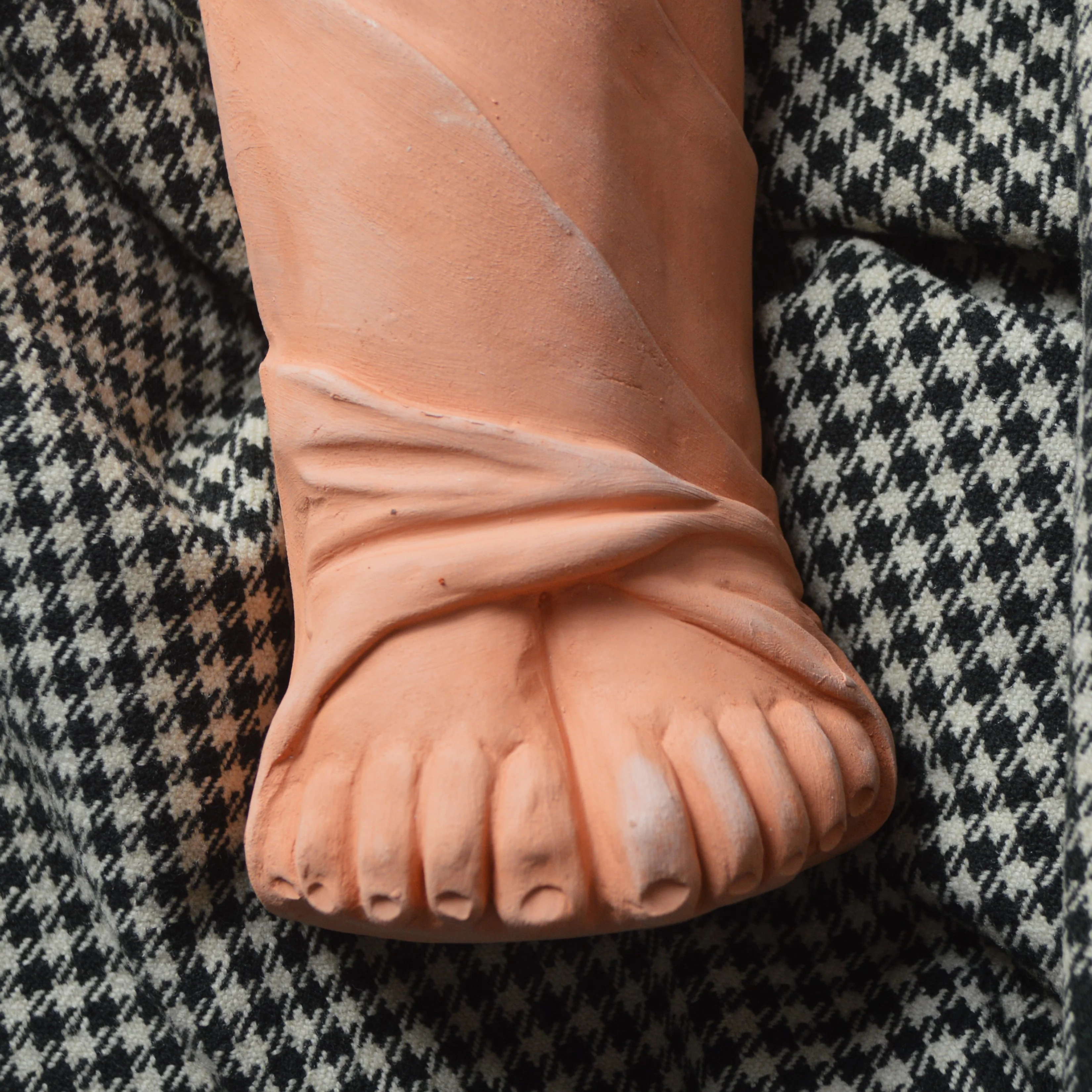
Roman Votive Baby
Details
In the ancient world, myths and legends were at the core of religious belief and in the Ancient Greek world, there was no illness until Pandora opened her jar and "let loose harsh tolis and grim sickness upon mankind" (Hesiod, poem c. late eighth century BC). Thus began the ever-continuing human journey into medical enquiry.
One of the earliest attempts to provide 'medical' aid to sufferers was using anatomical votives, which first appeared in Greece in the 4th century and quickly spread into Italy and later into other parts of the Roman Empire. These intriguing objects were left as offerings at temples, shrines and religious sites throughout the ancient world, dedicated to the important Gods and Goddesses. As well as being found in their thousands at some large shrines, anatomical offerings were also used in private homes as offerings to minor deities who watched over everyday life.
By the end of the Republican period (27 BCE), the use of these objects had declined and apparently disappeared from Italy due to the advances in medical practice. However, this more scientific approach to medicine did not entirely eliminate the importance of temple medicine, which continued to co-exist alongside modern medicine for a considerable time. In some of the more remote areas of the empire, anatomical offerings continued to be made and used after 27 BCE.
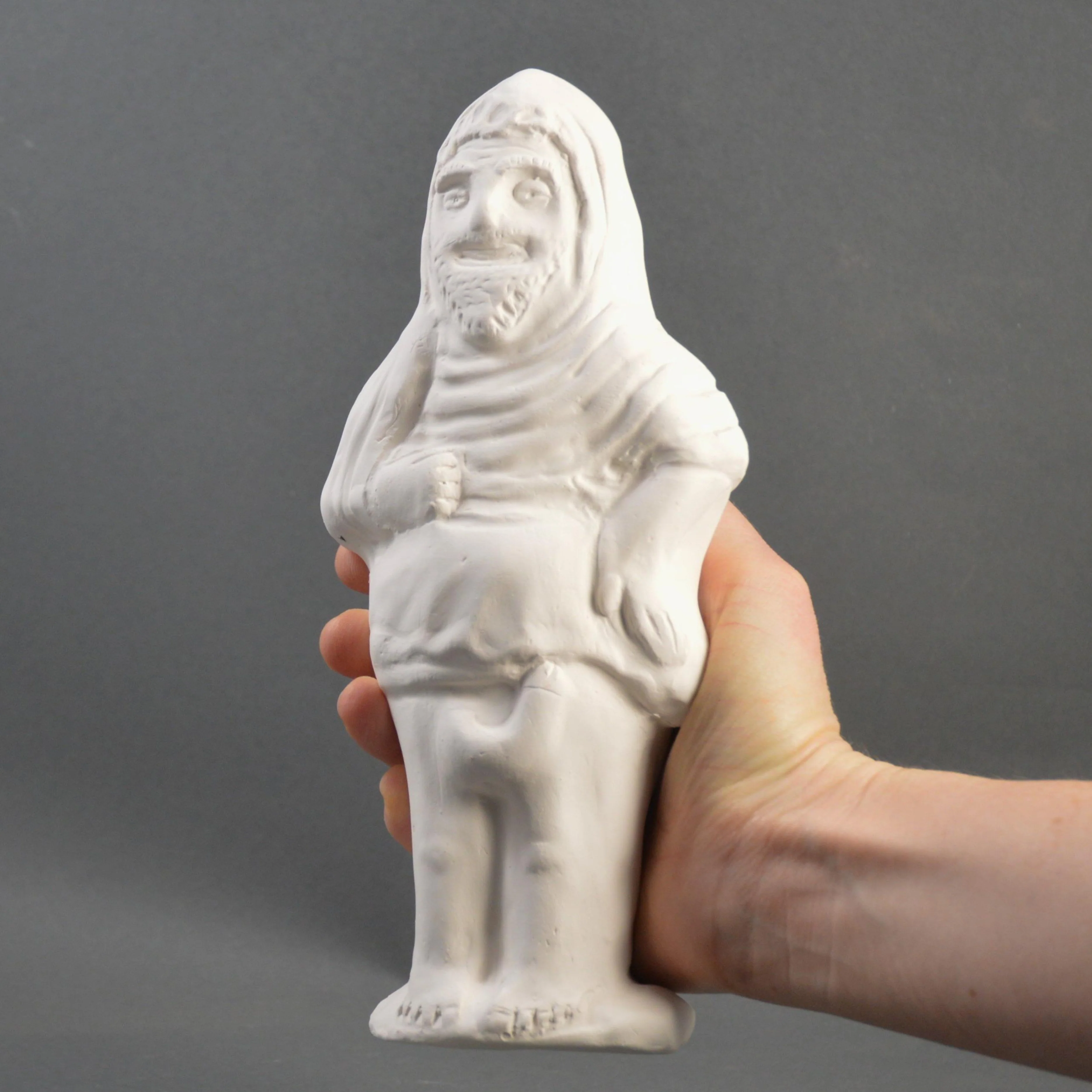
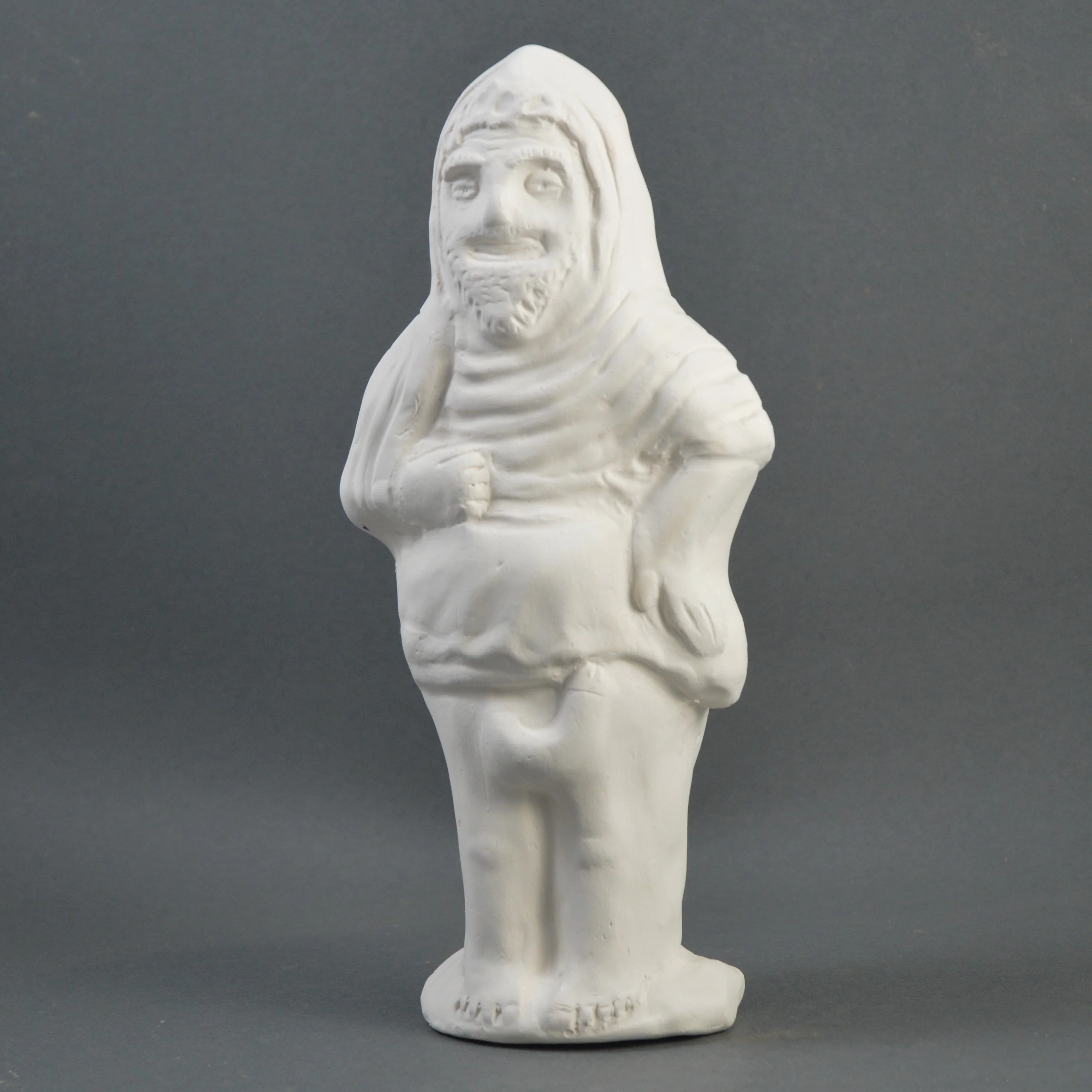
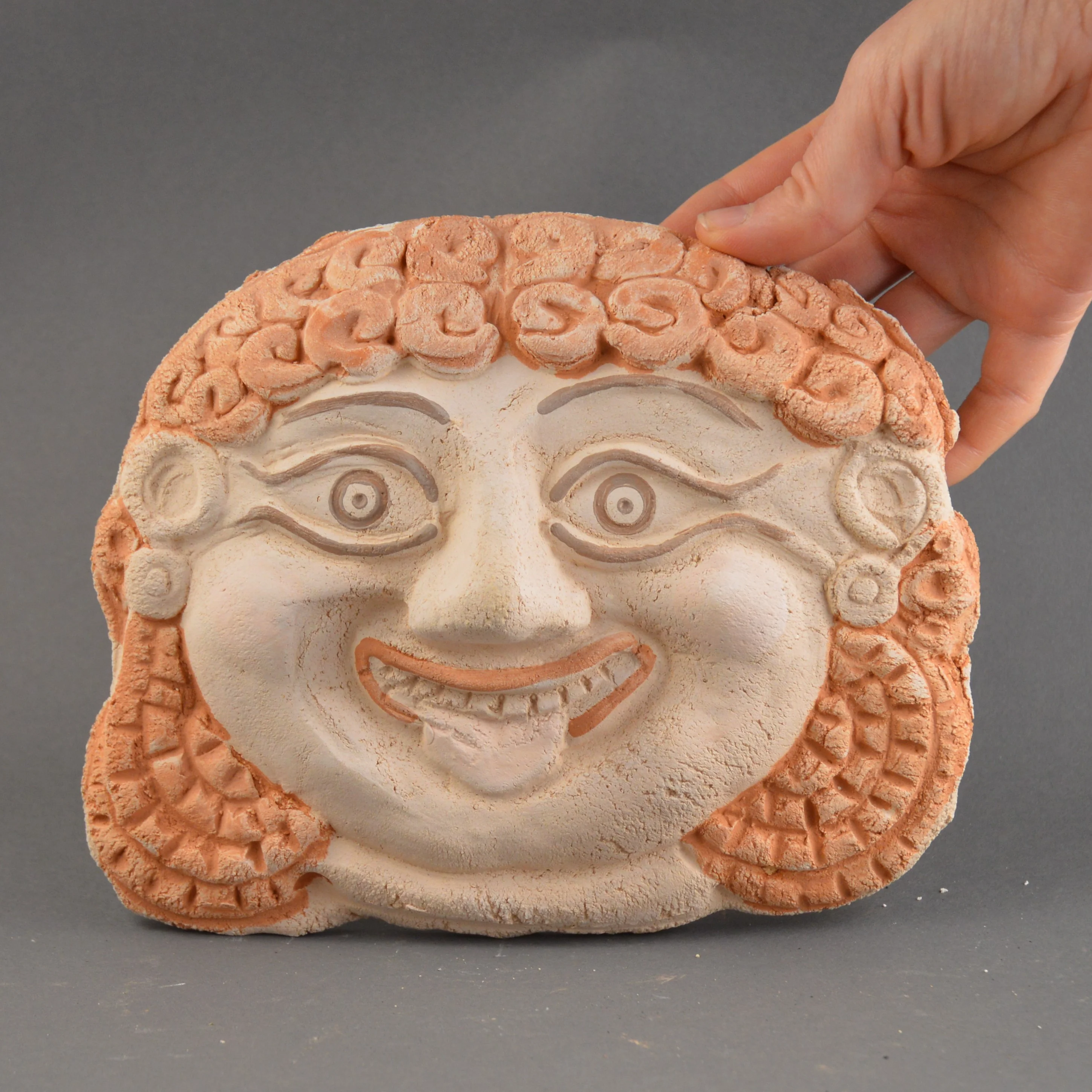
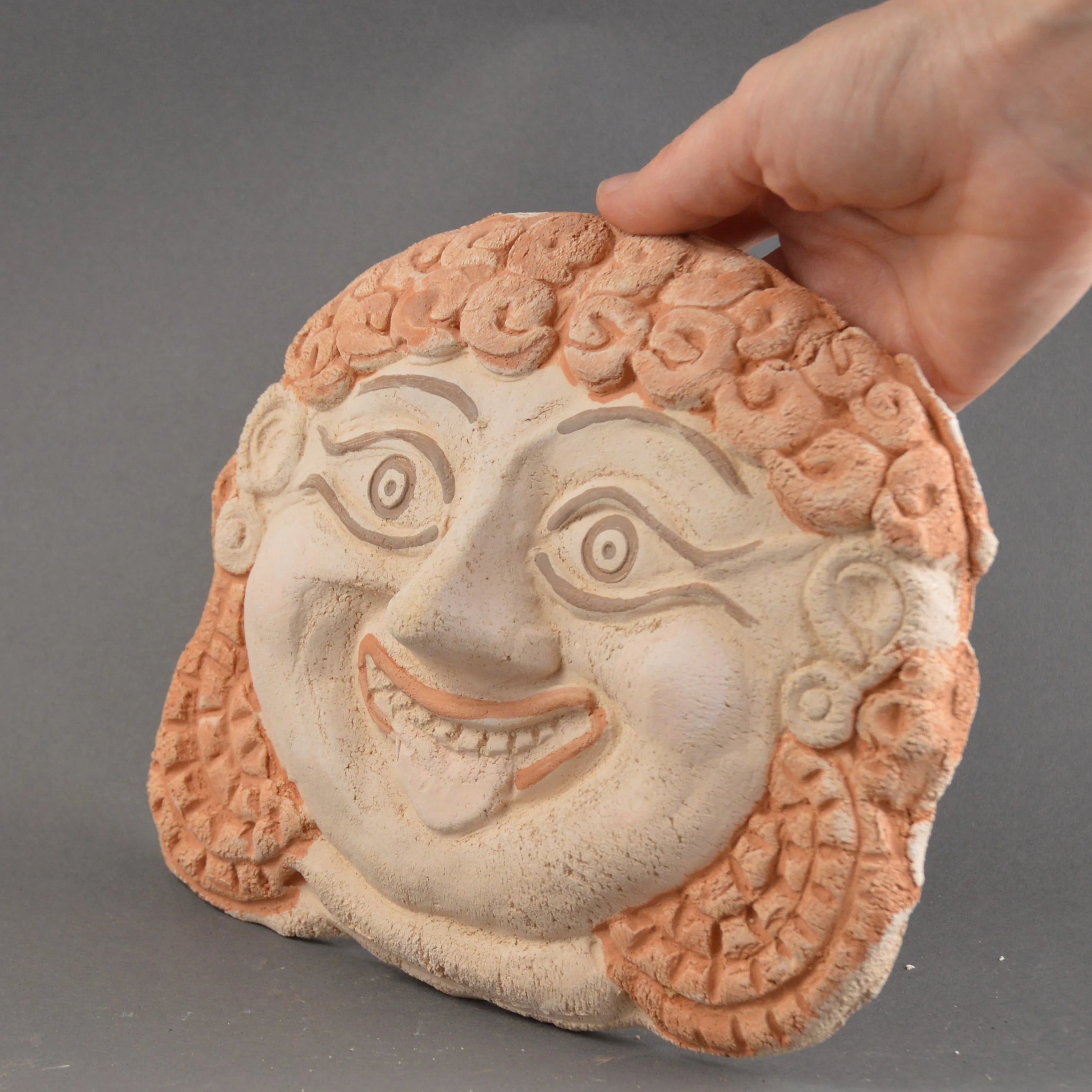
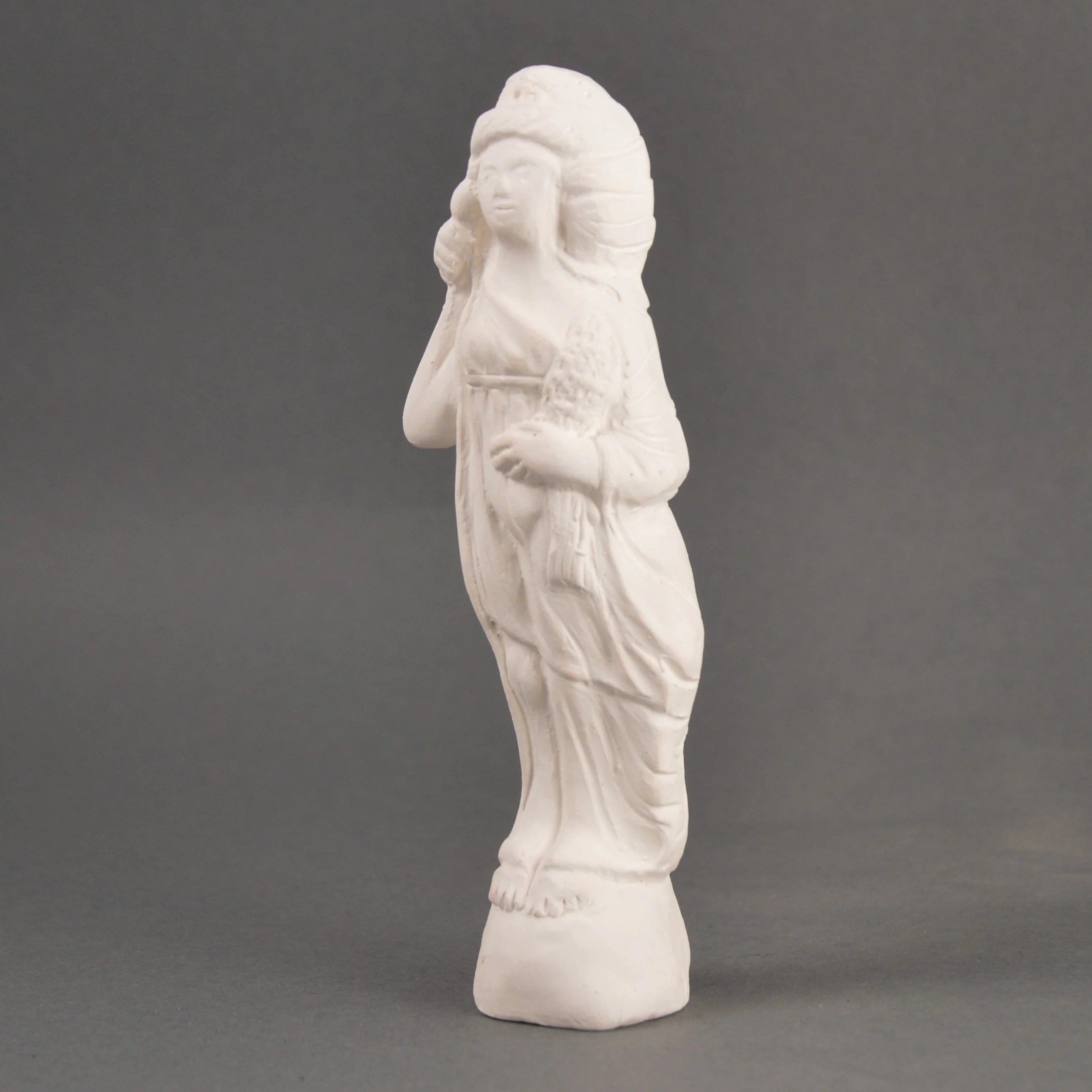
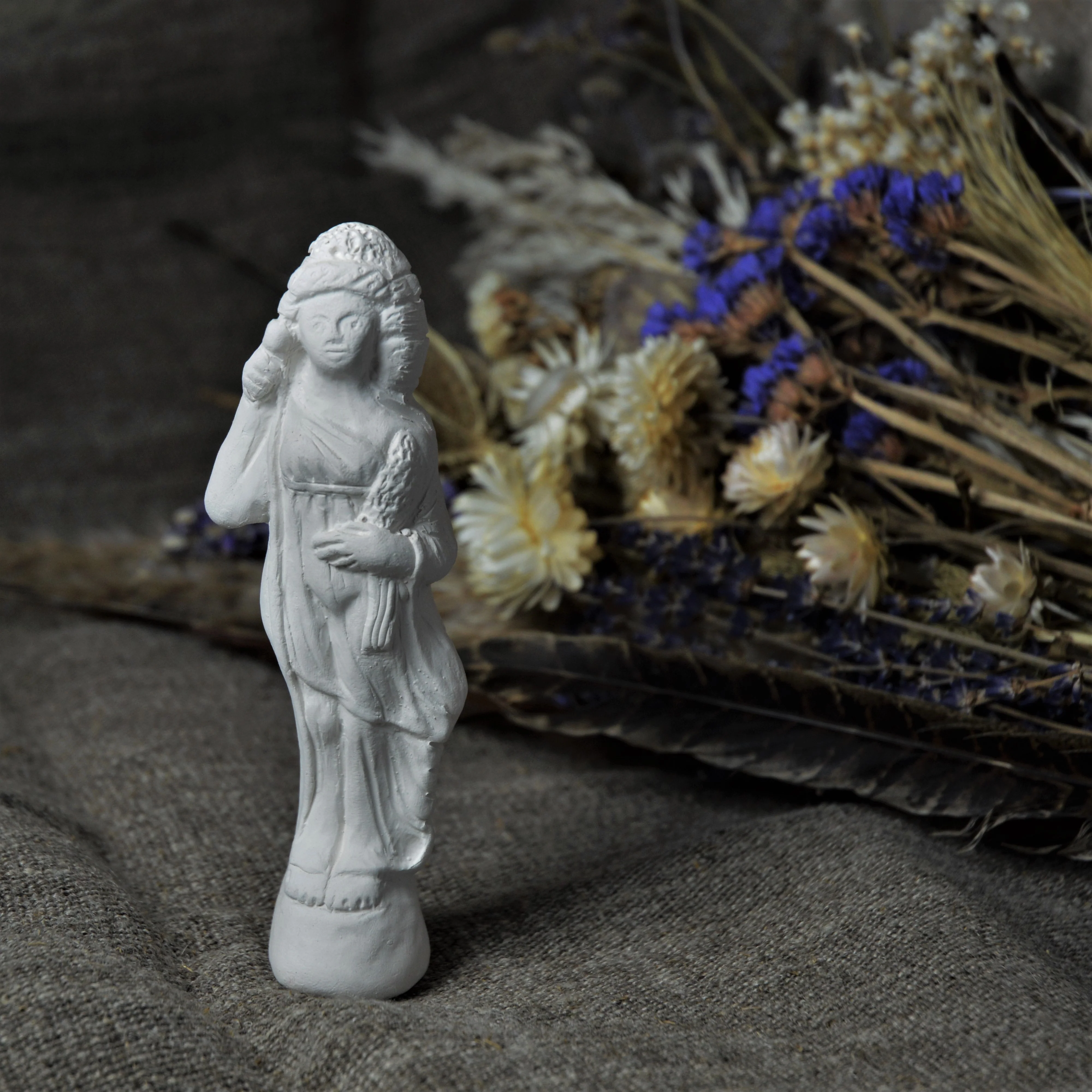
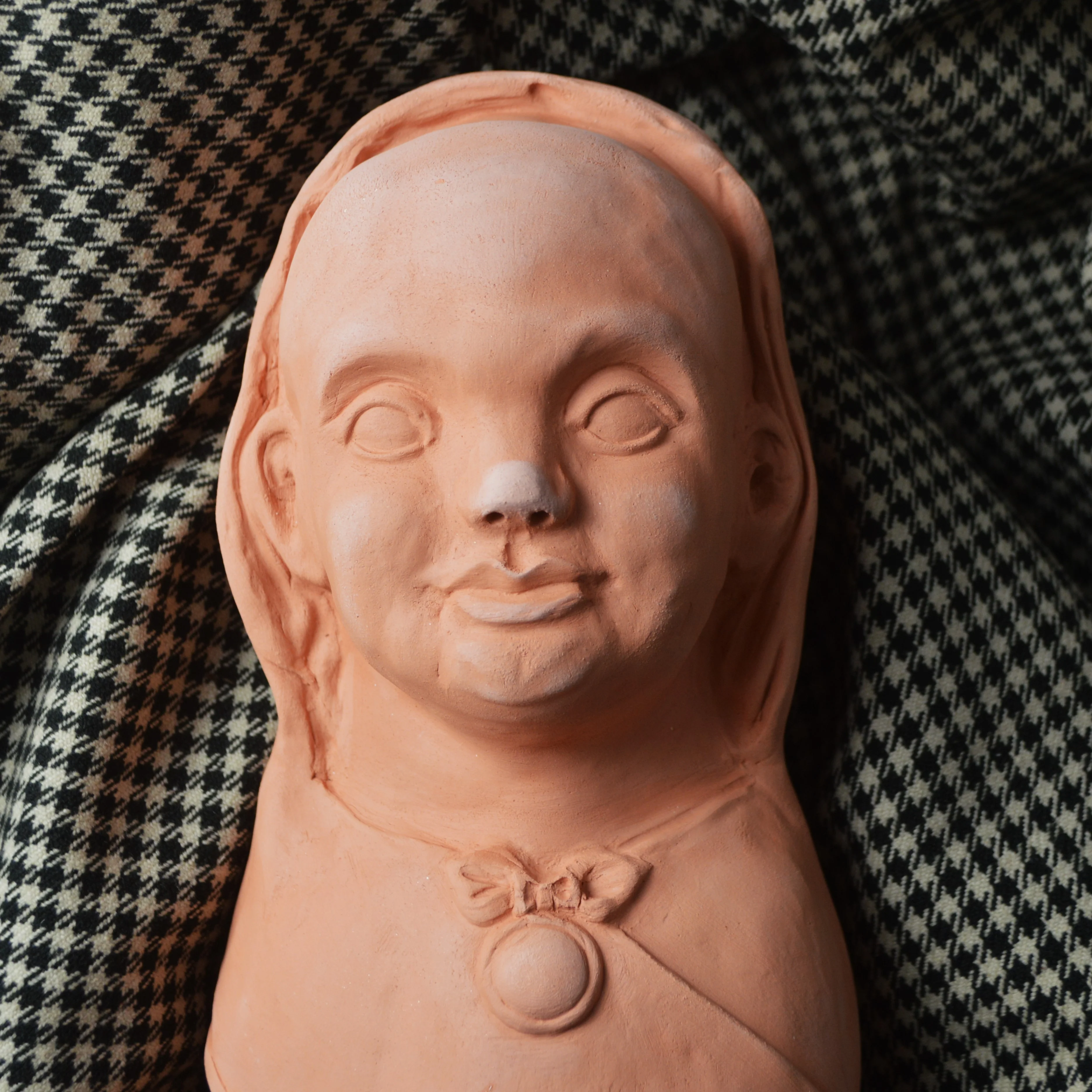
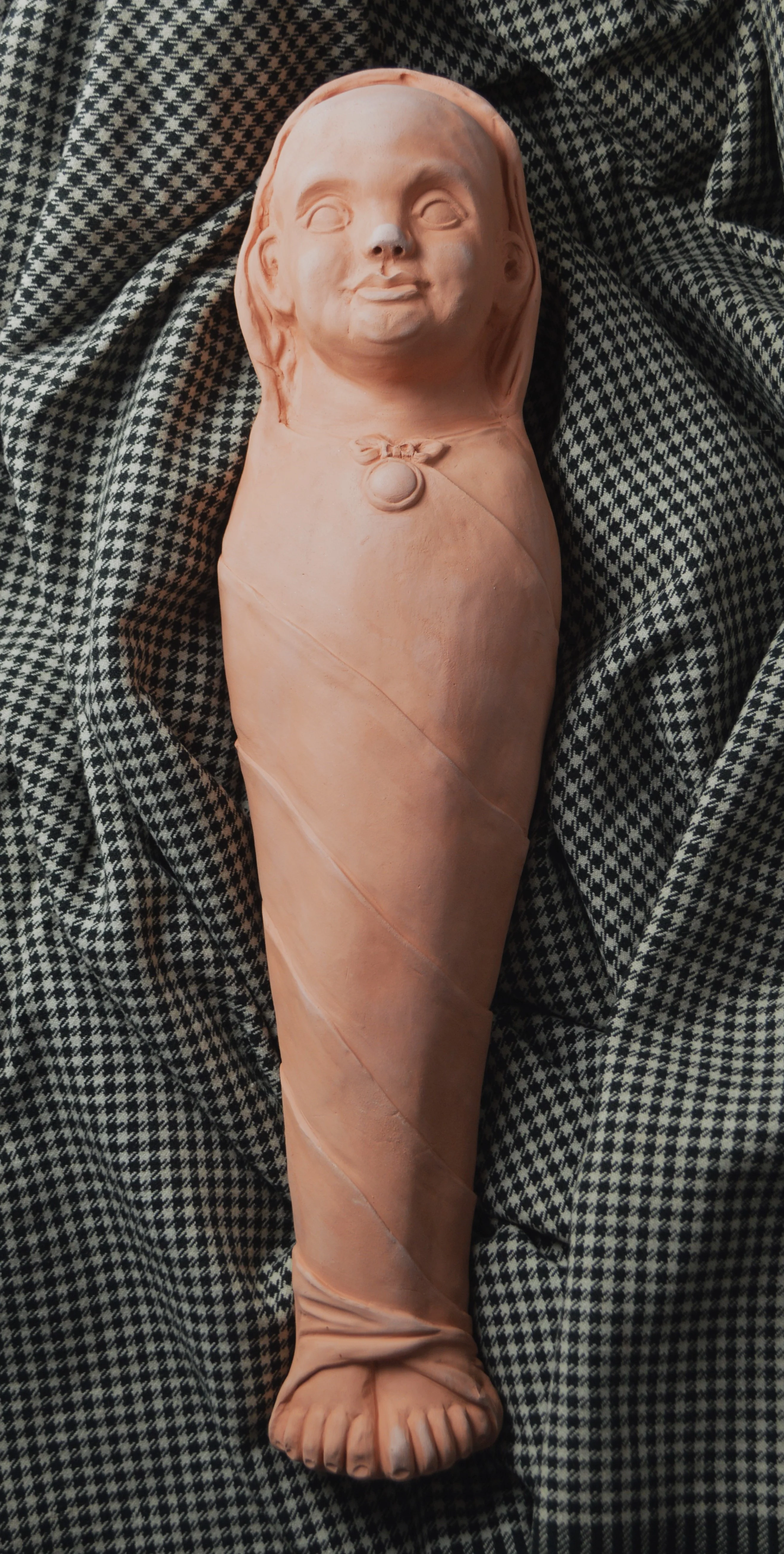
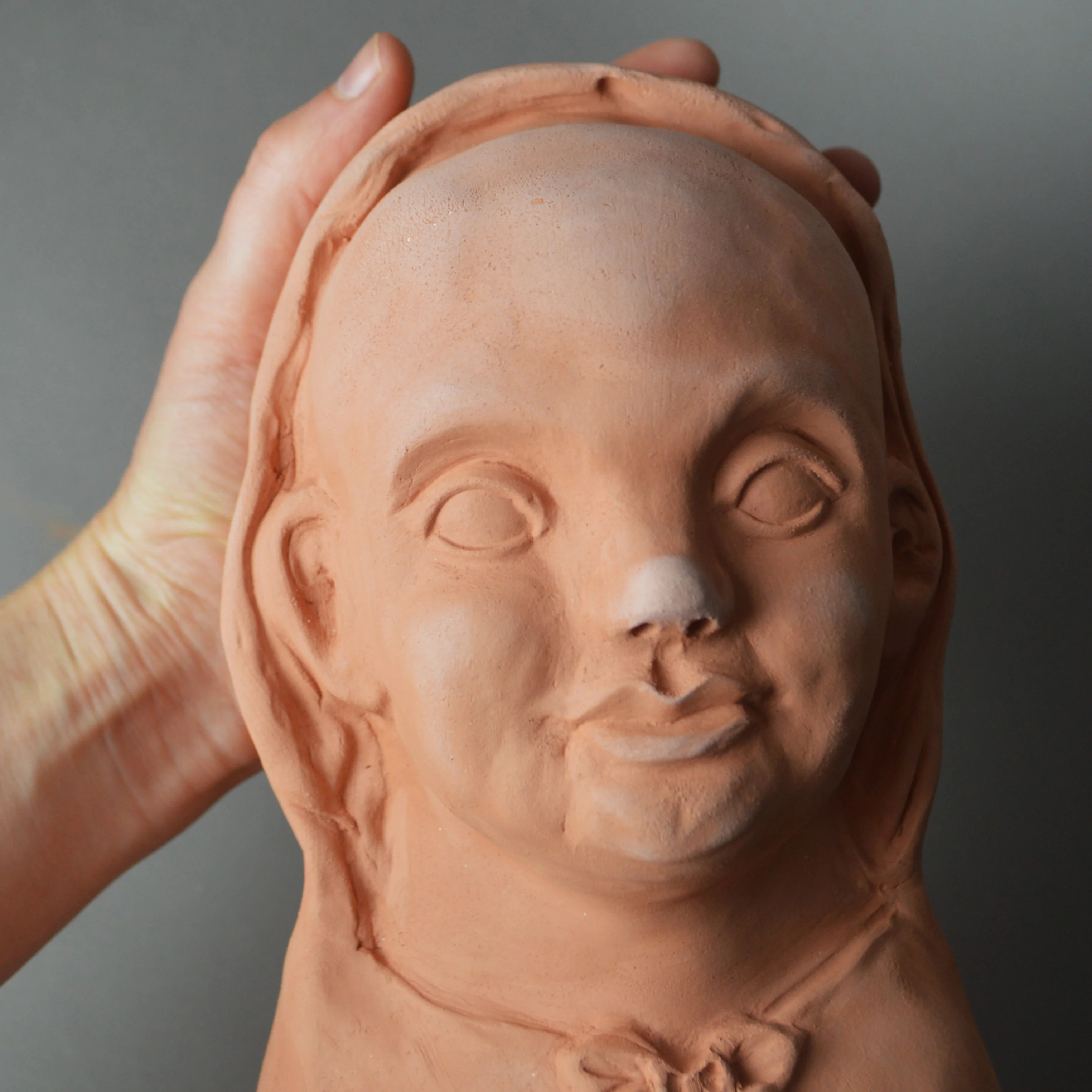
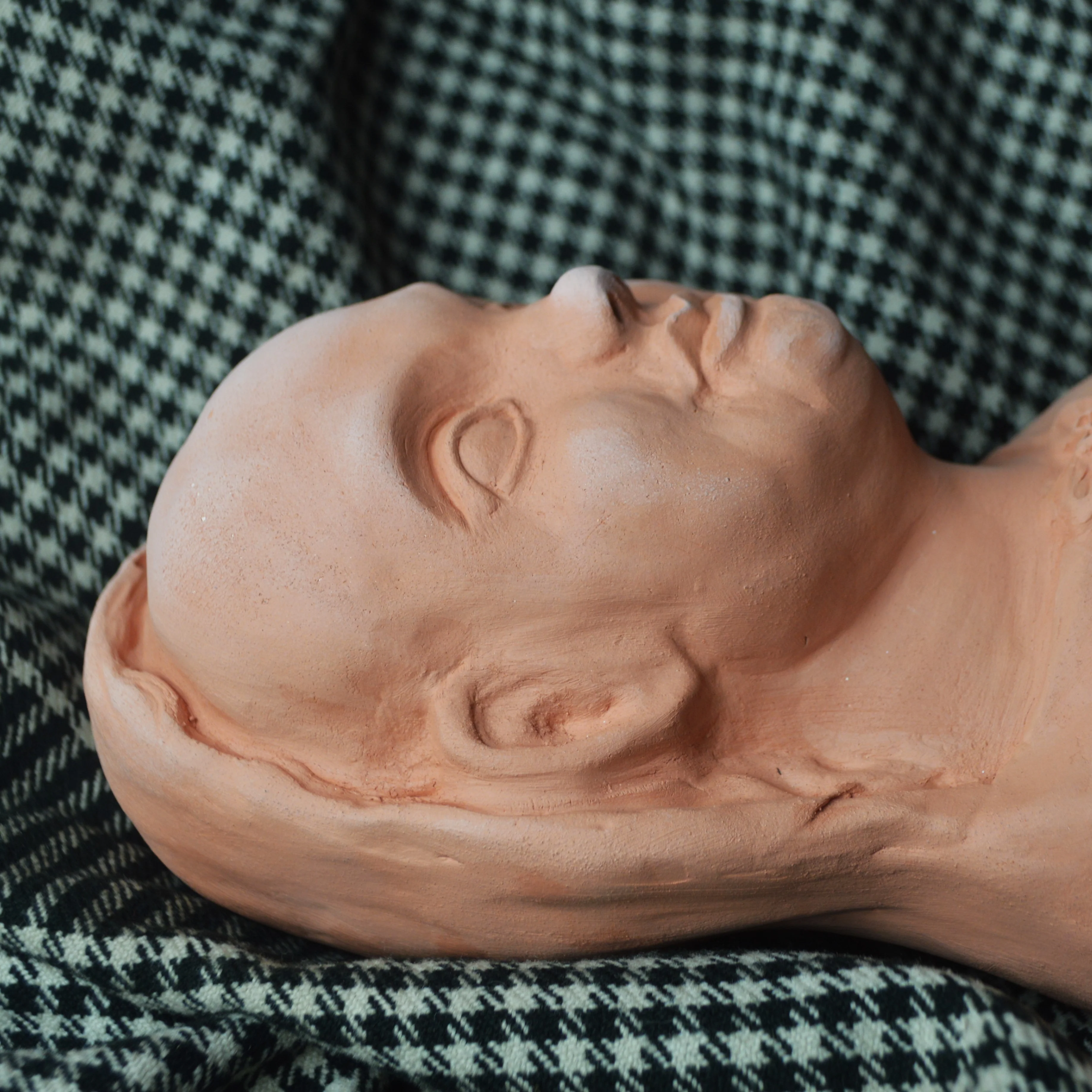
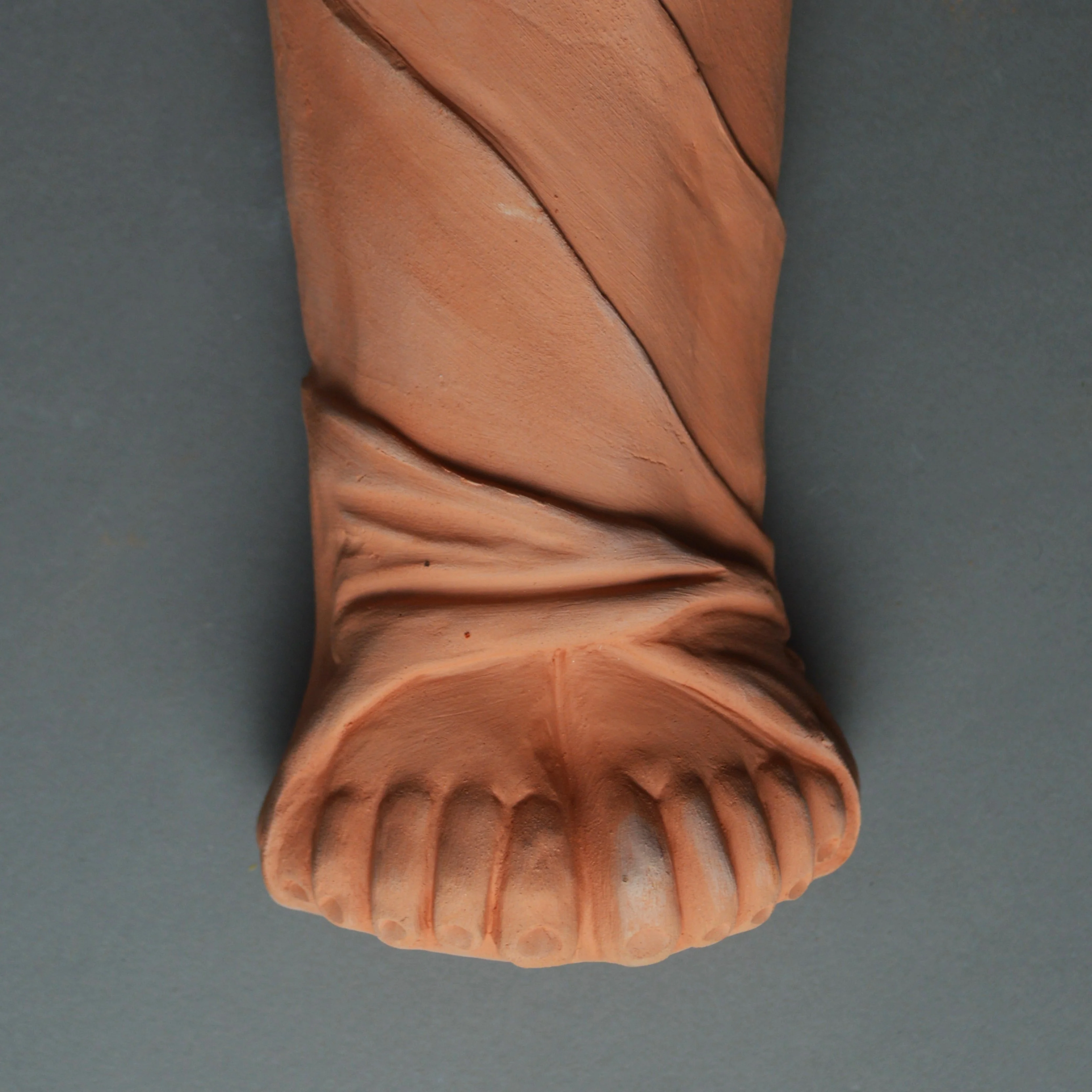
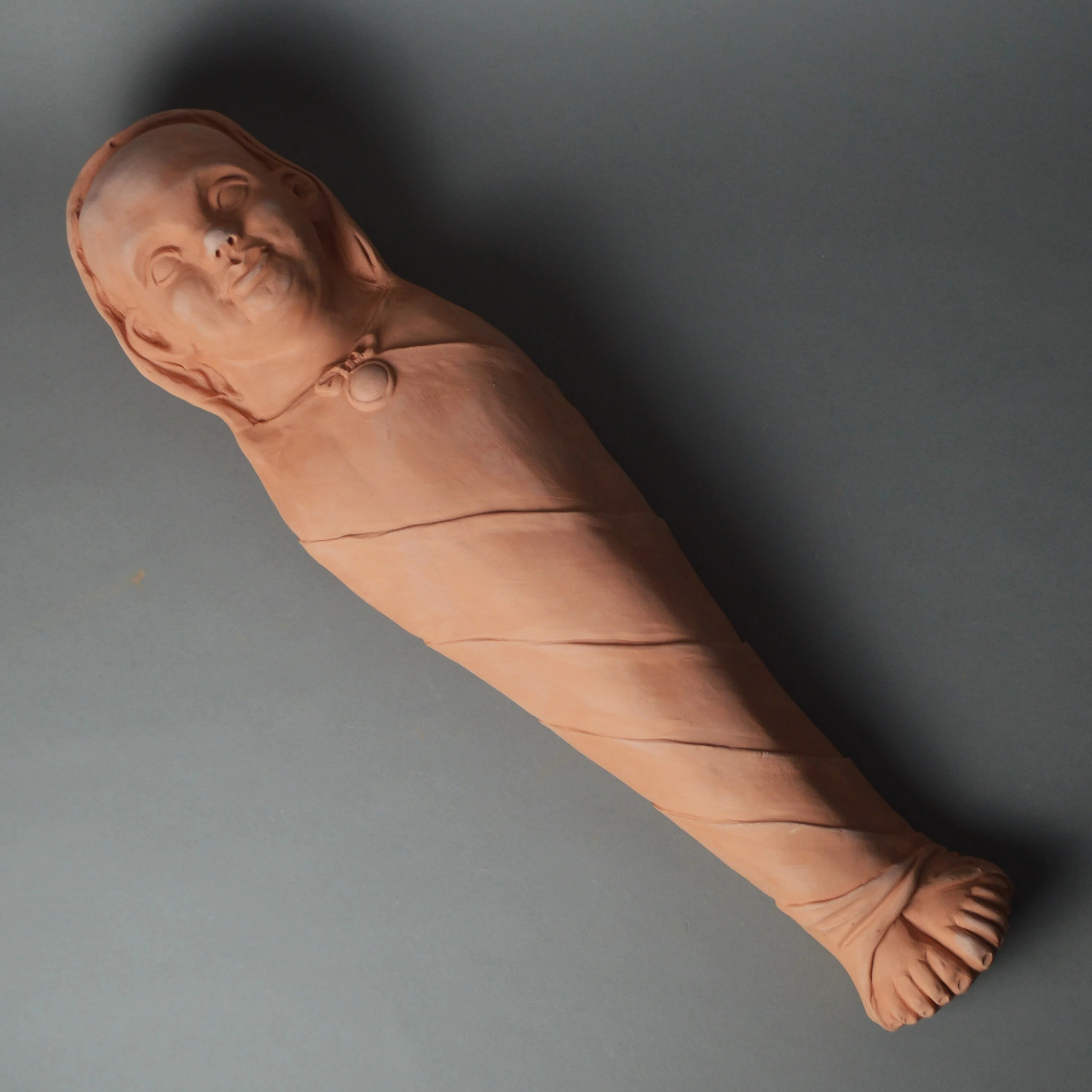
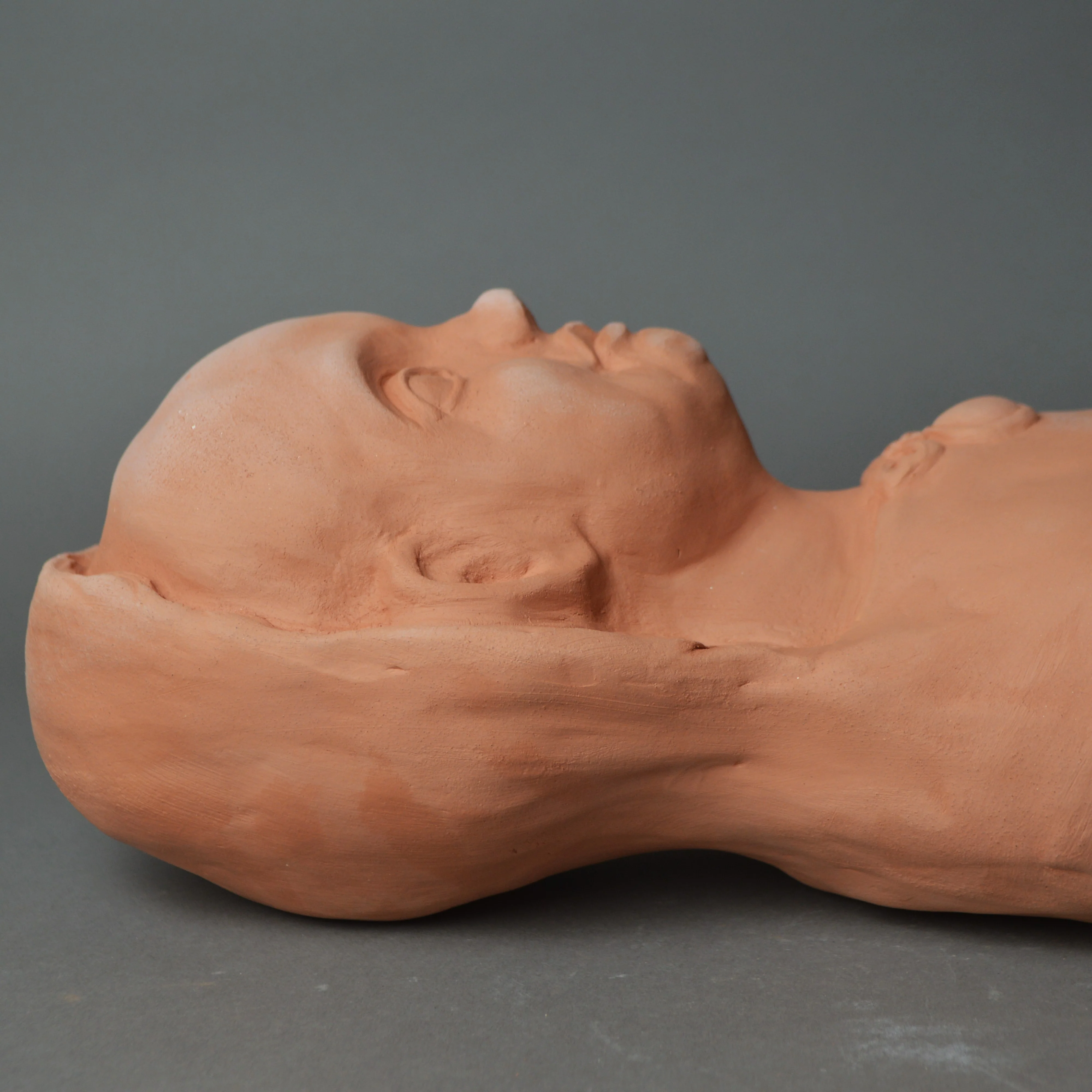
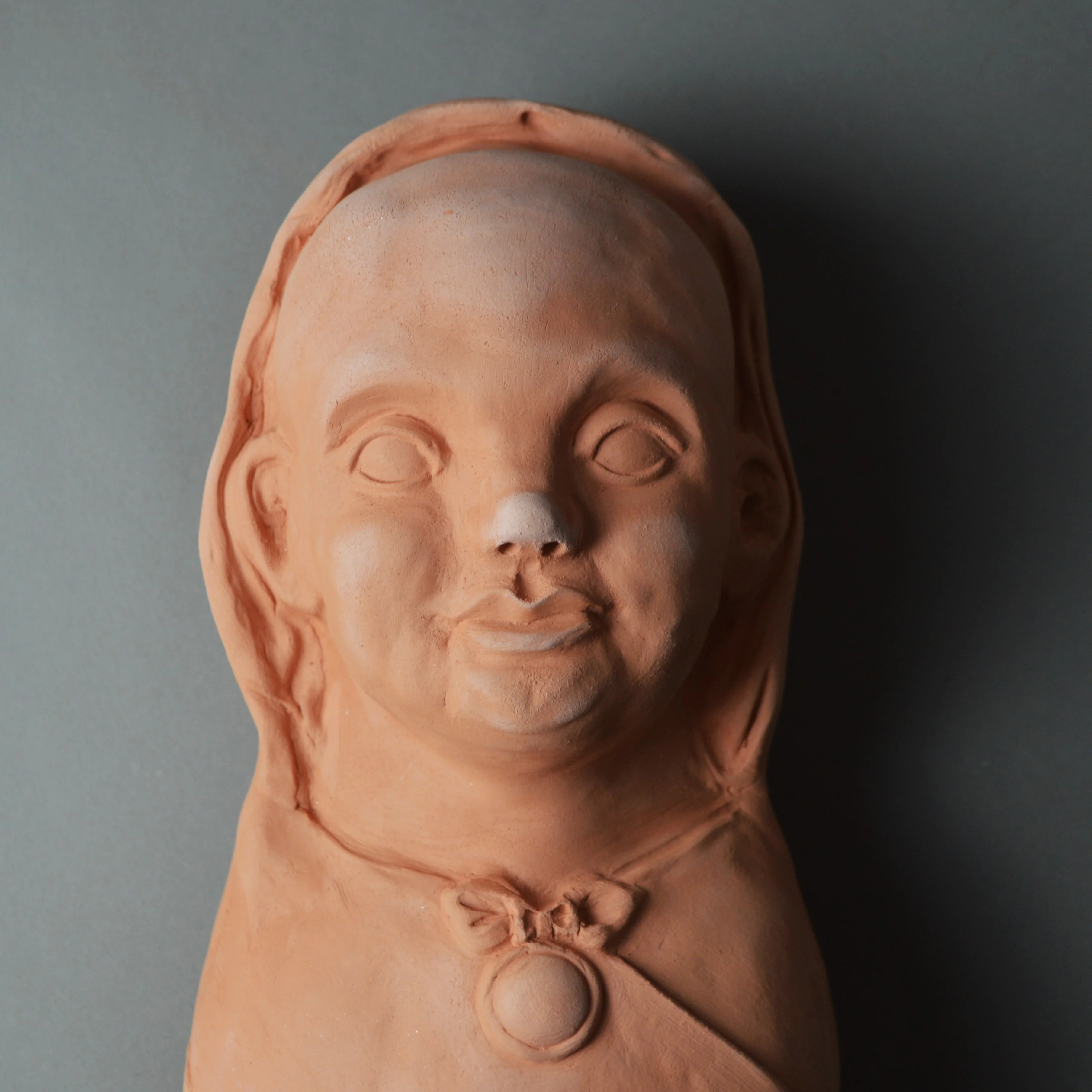
Votive babies were one of the many votive offerings in use during this period. The babies are often depicted swaddled with particular attention paid to the head, face and toes, and in many cases, the baby is life-sized, if not entirely in proportion. The popularity of this particular form of votive offering indicates the high mortality rate among children and babies. However, these votives may offer a small ray of sunshine as it is likely that they were left in thanks after a child recovered from an illness. Votive baby, 200 BC to 200AD.
'Add To Cart' items are ready to send straight away. Please be aware that if bought alongside 'Pre-order' items, your order will be sent when all items are ready.
'Pre-order' items are made to order, and we will dispatch them as soon as we have handcrafted them for you; this usually takes 90 days, but international orders can take a little longer.
Materials
White earthenware or terracotta earthenware
Dimensions
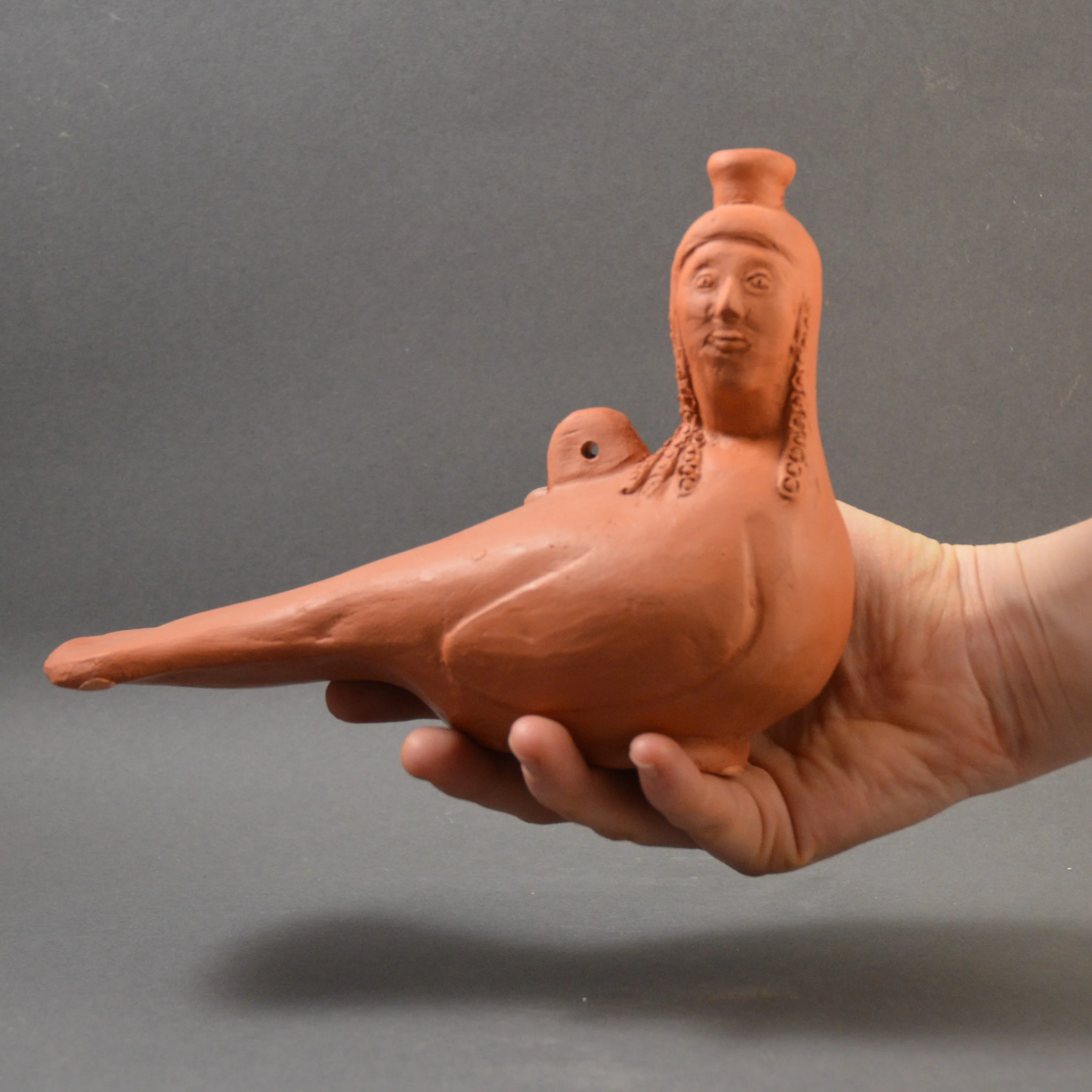
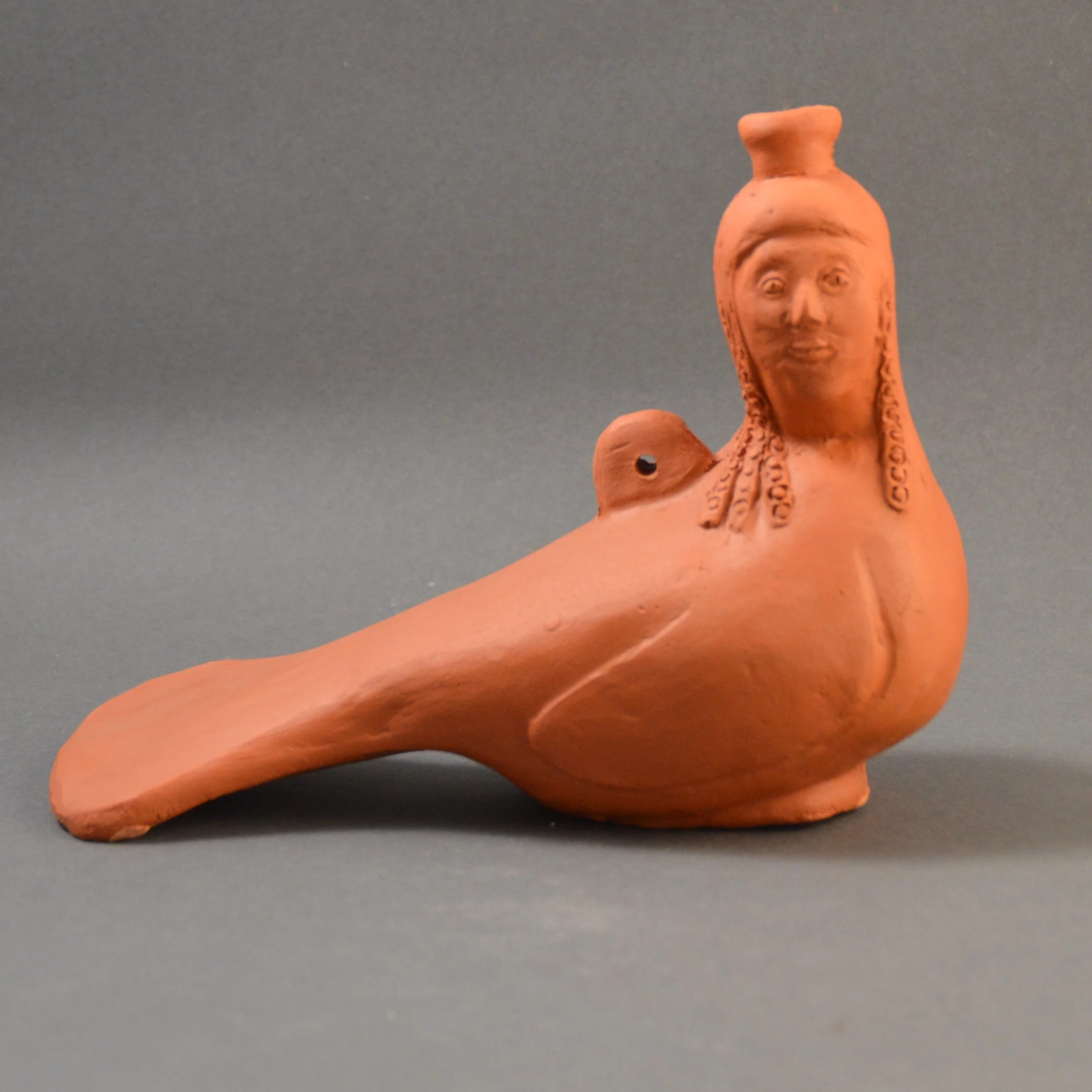
Approx. 120 mm high, 145 mm wide, 570 mm long (head to toe)
Production
This replica Roman pot has been hand-made in Northumberland by Potted History, based on an original artefact. It has been fired to a temperature between 800 & 1000 Centigrade to emulate the same techniques the original potters would have employed nearly two thousand years ago. This process often results in surface colour and texture variations, as is common with the original Roman pottery and gives each piece its unique character.
Postage
All items are sent using a second-class postal service; if you wish to have an item sent first-class, please get in touch with us for a quote. Many Thanks
Original: $465.70
-70%$465.70
$139.71Product Information
Product Information
Shipping & Returns
Shipping & Returns
Description
Details
In the ancient world, myths and legends were at the core of religious belief and in the Ancient Greek world, there was no illness until Pandora opened her jar and "let loose harsh tolis and grim sickness upon mankind" (Hesiod, poem c. late eighth century BC). Thus began the ever-continuing human journey into medical enquiry.
One of the earliest attempts to provide 'medical' aid to sufferers was using anatomical votives, which first appeared in Greece in the 4th century and quickly spread into Italy and later into other parts of the Roman Empire. These intriguing objects were left as offerings at temples, shrines and religious sites throughout the ancient world, dedicated to the important Gods and Goddesses. As well as being found in their thousands at some large shrines, anatomical offerings were also used in private homes as offerings to minor deities who watched over everyday life.
By the end of the Republican period (27 BCE), the use of these objects had declined and apparently disappeared from Italy due to the advances in medical practice. However, this more scientific approach to medicine did not entirely eliminate the importance of temple medicine, which continued to co-exist alongside modern medicine for a considerable time. In some of the more remote areas of the empire, anatomical offerings continued to be made and used after 27 BCE.
Votive babies were one of the many votive offerings in use during this period. The babies are often depicted swaddled with particular attention paid to the head, face and toes, and in many cases, the baby is life-sized, if not entirely in proportion. The popularity of this particular form of votive offering indicates the high mortality rate among children and babies. However, these votives may offer a small ray of sunshine as it is likely that they were left in thanks after a child recovered from an illness. Votive baby, 200 BC to 200AD.
'Add To Cart' items are ready to send straight away. Please be aware that if bought alongside 'Pre-order' items, your order will be sent when all items are ready.
'Pre-order' items are made to order, and we will dispatch them as soon as we have handcrafted them for you; this usually takes 90 days, but international orders can take a little longer.
Materials
White earthenware or terracotta earthenware
Dimensions
Approx. 120 mm high, 145 mm wide, 570 mm long (head to toe)
Production
This replica Roman pot has been hand-made in Northumberland by Potted History, based on an original artefact. It has been fired to a temperature between 800 & 1000 Centigrade to emulate the same techniques the original potters would have employed nearly two thousand years ago. This process often results in surface colour and texture variations, as is common with the original Roman pottery and gives each piece its unique character.
Postage
All items are sent using a second-class postal service; if you wish to have an item sent first-class, please get in touch with us for a quote. Many Thanks