Senhouse Samian Ware Bowl
Details
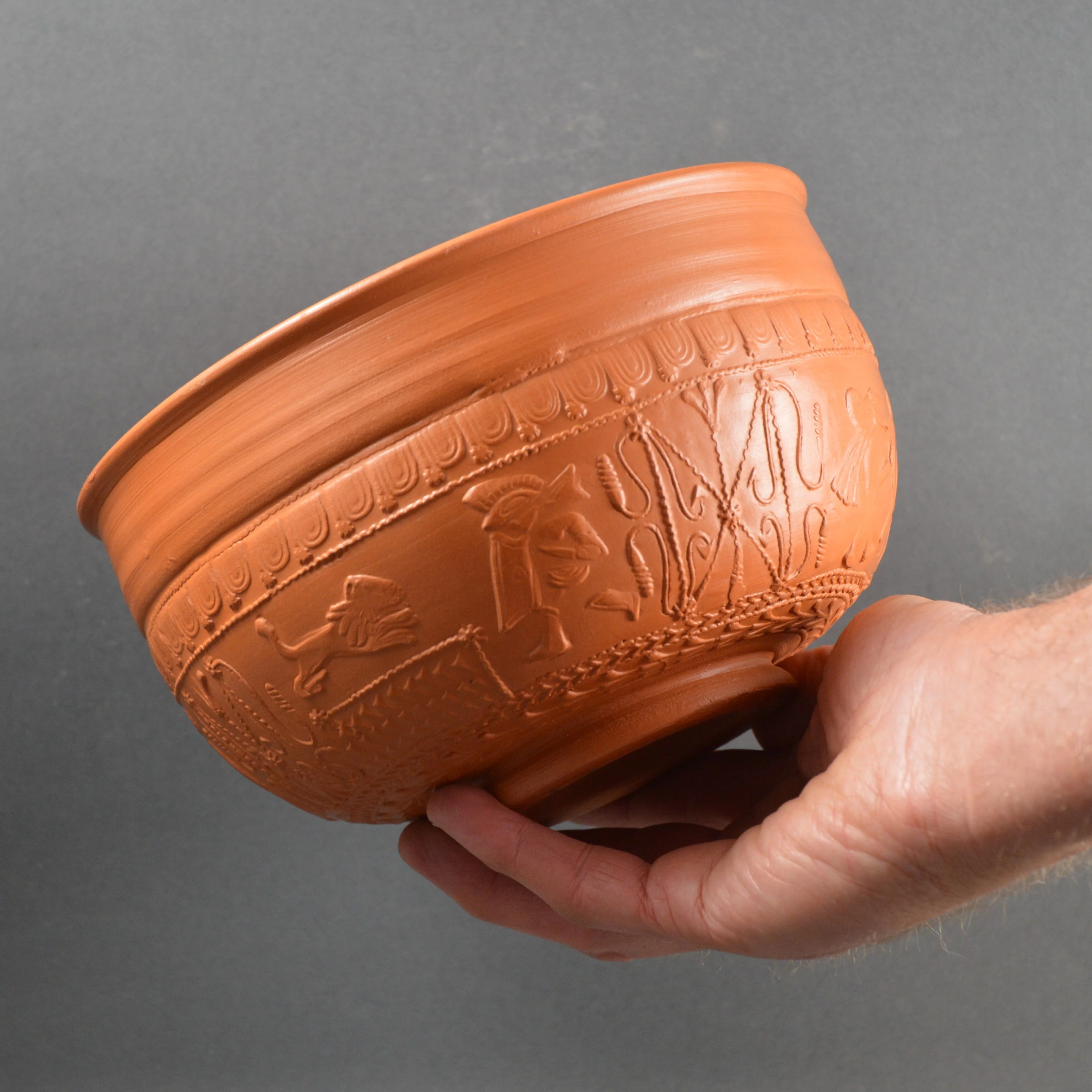
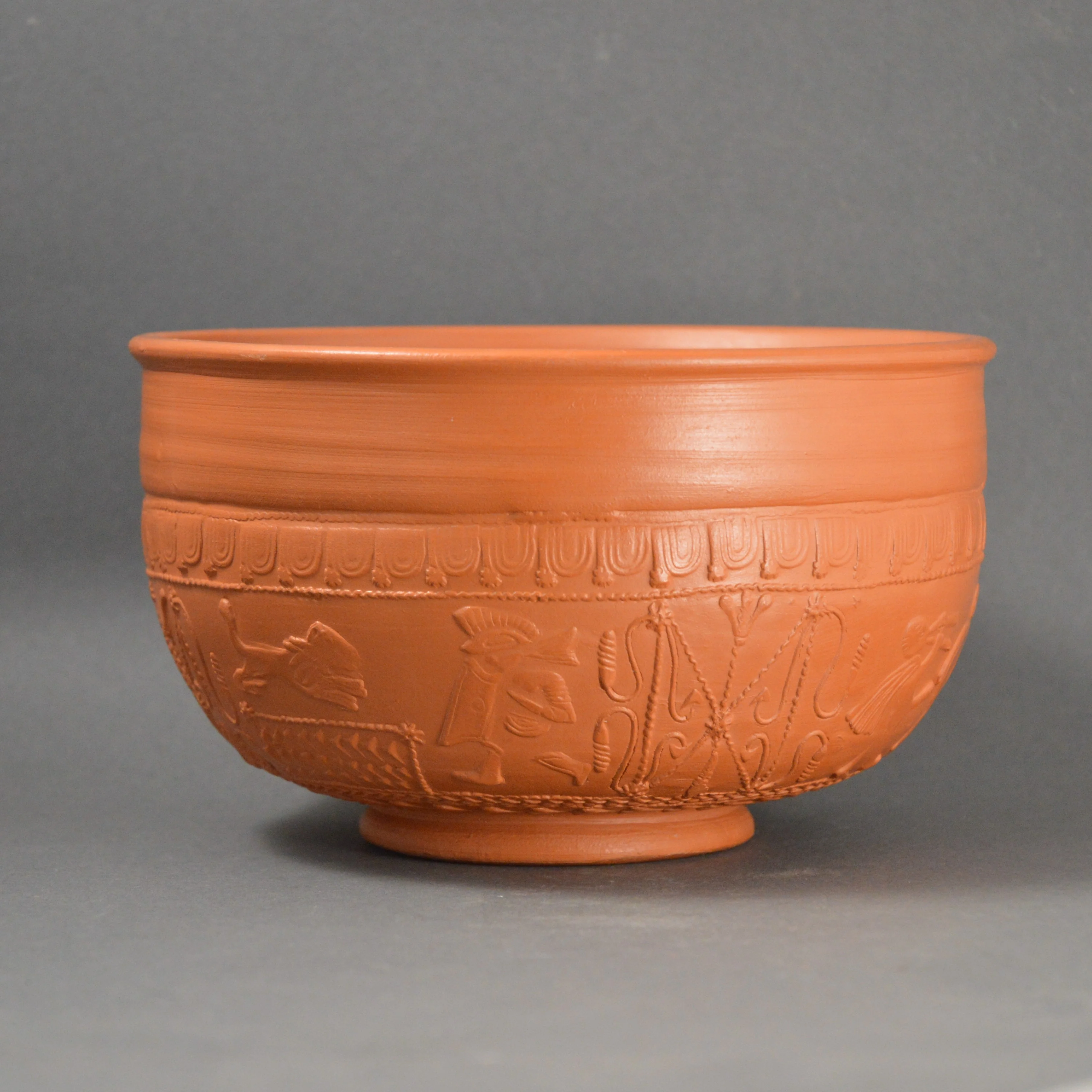
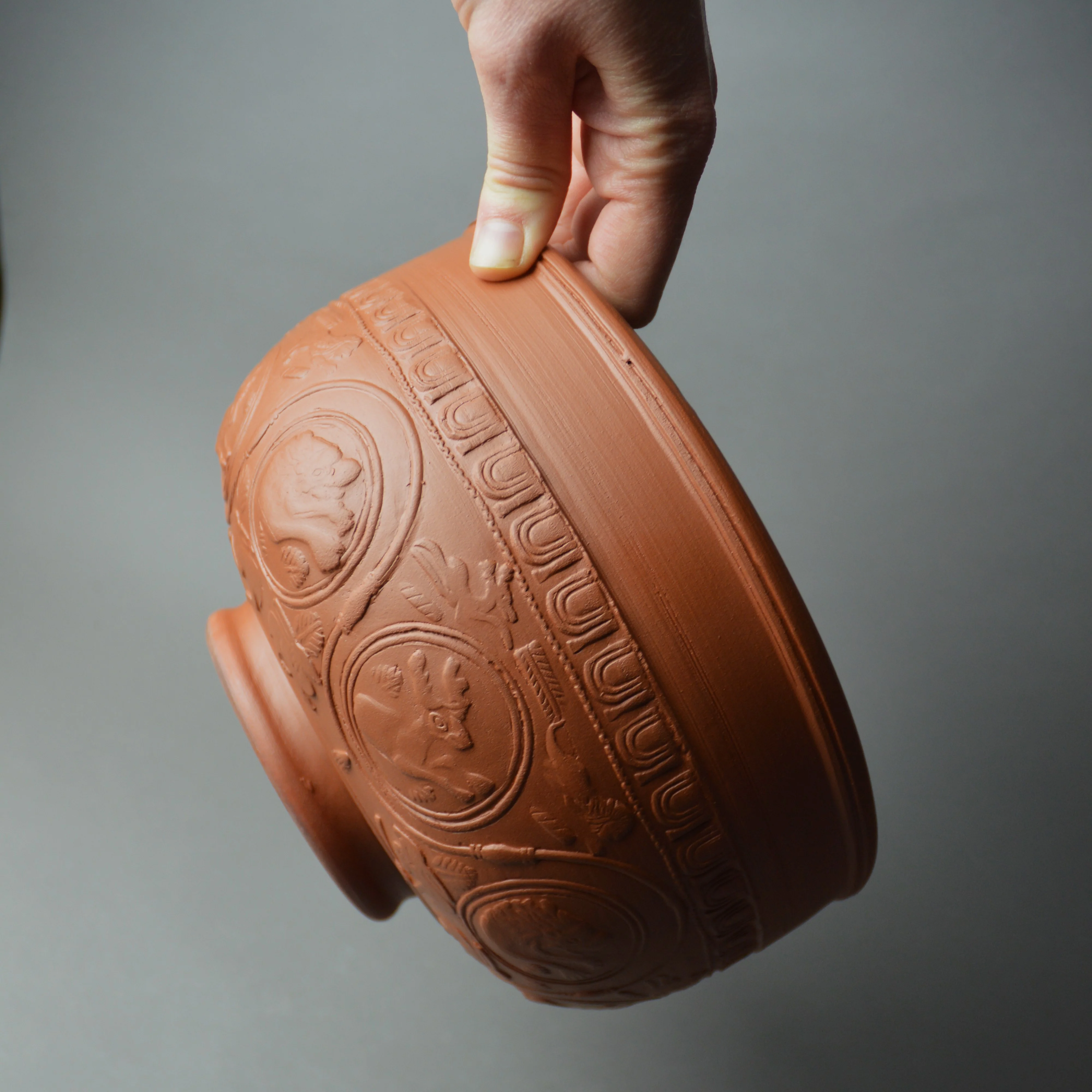
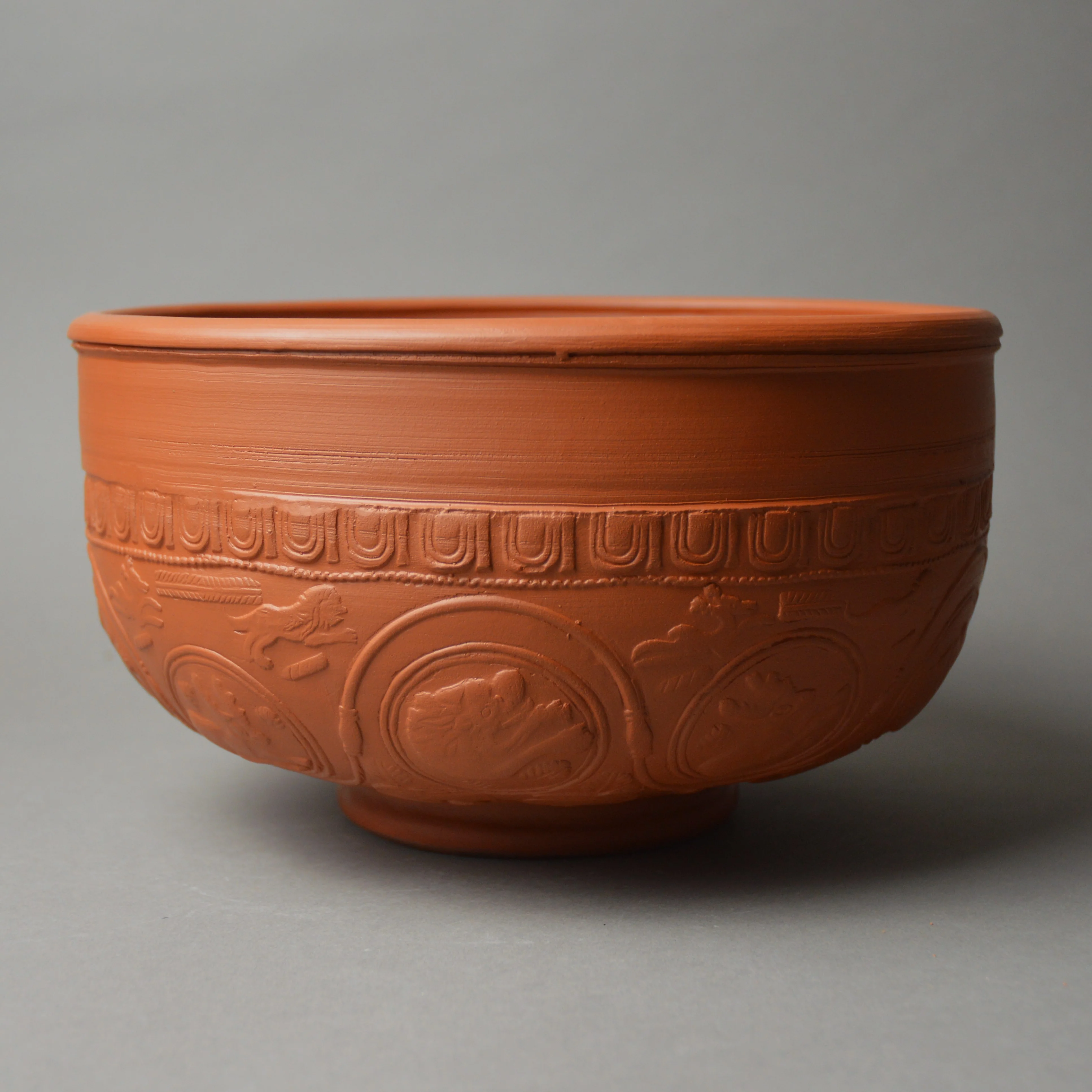
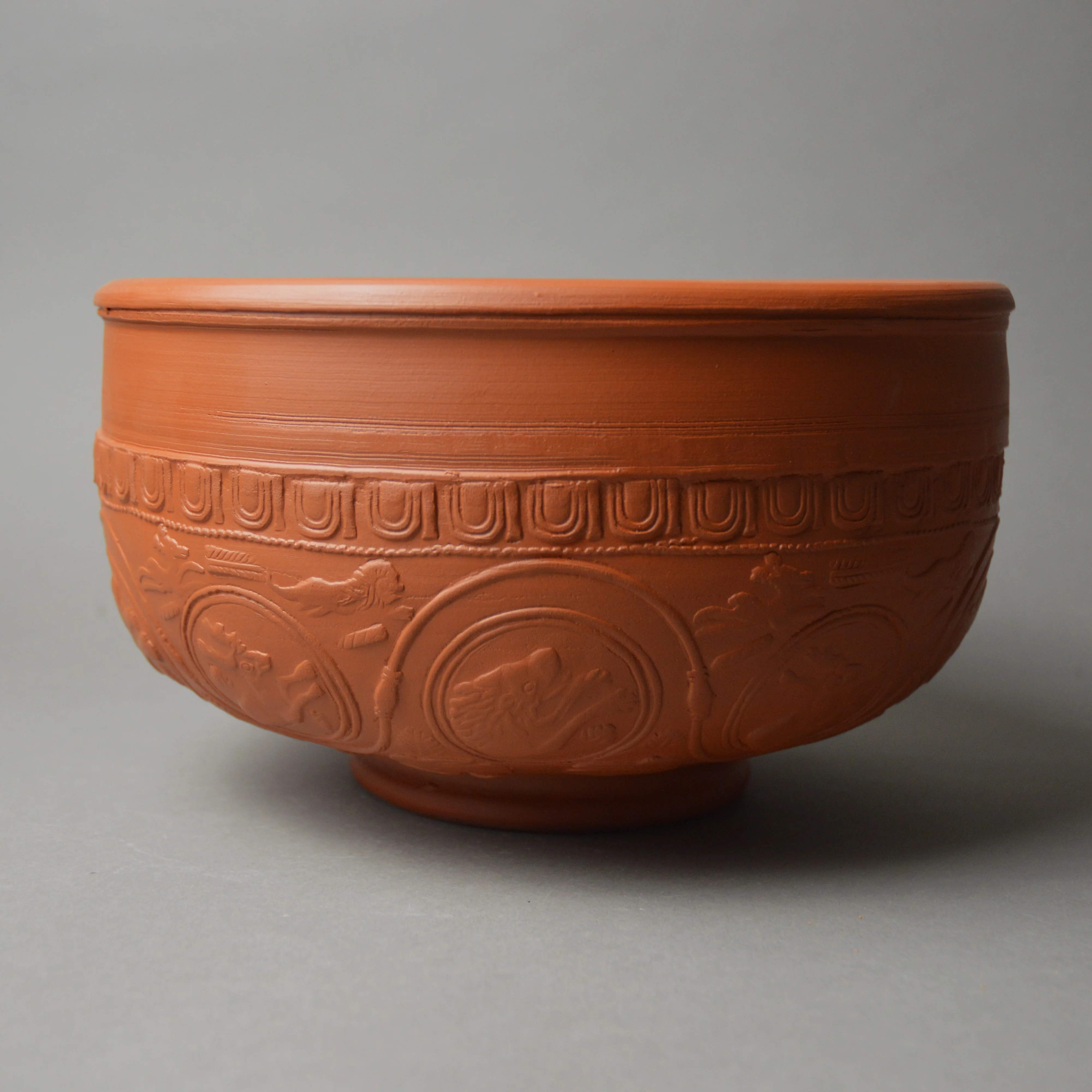
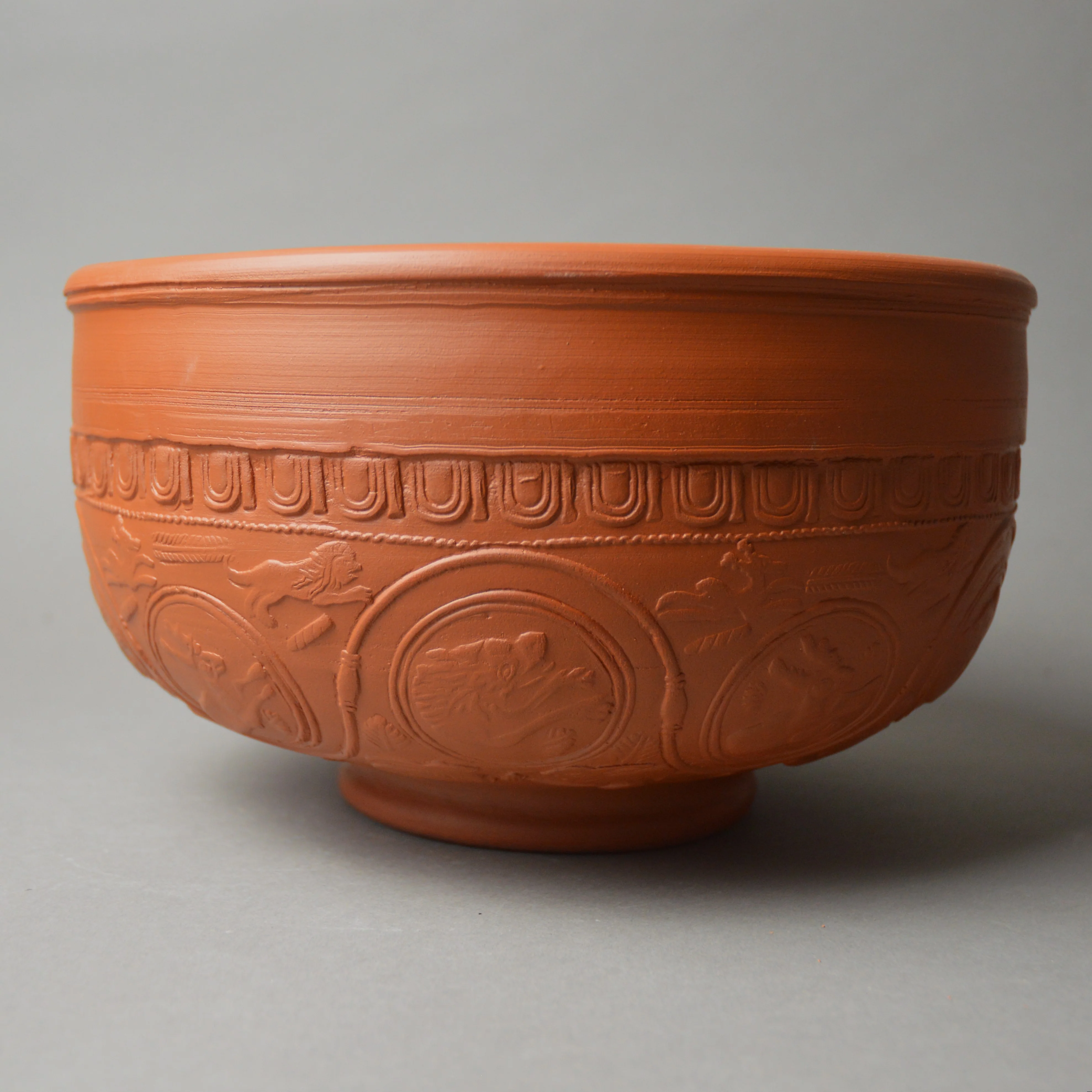
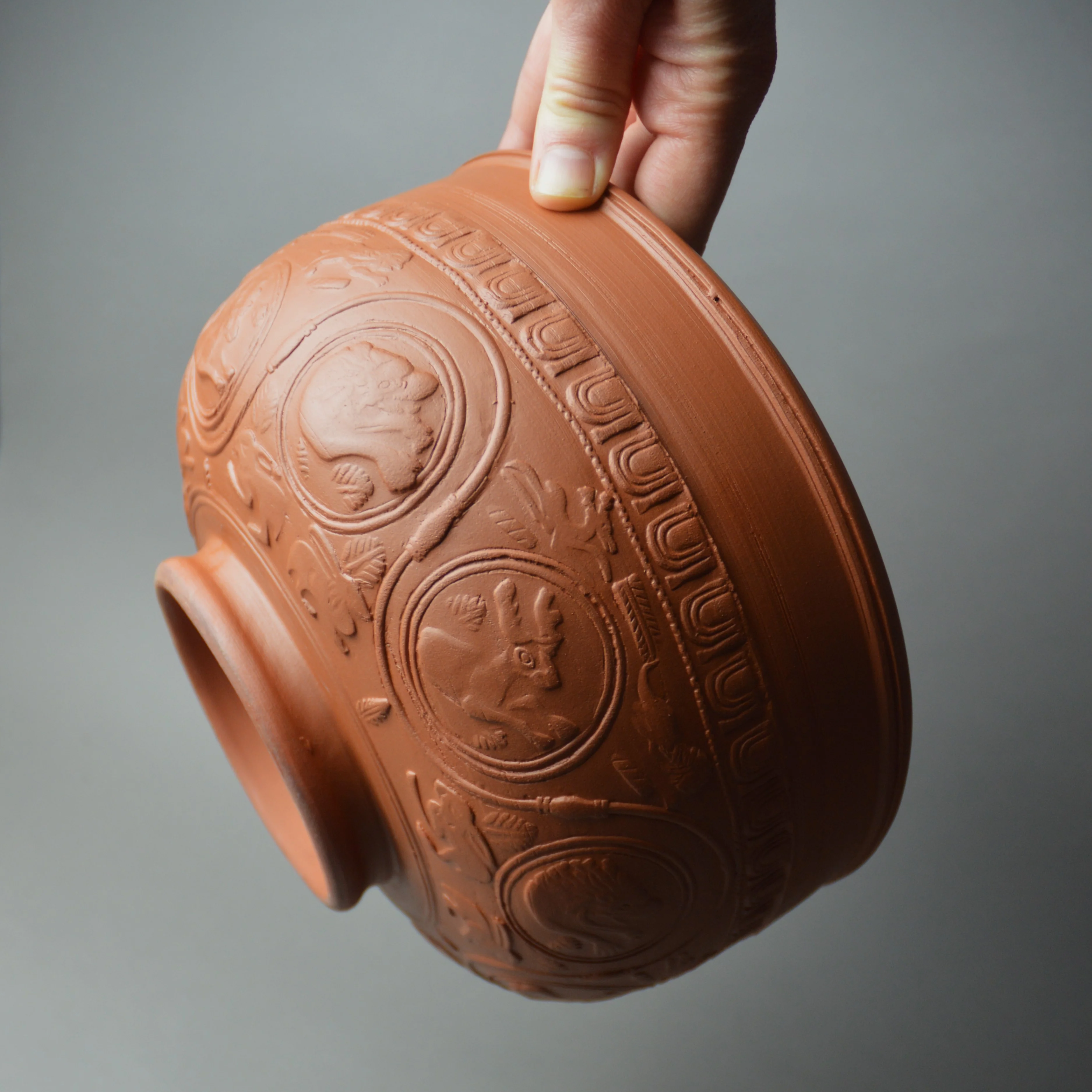
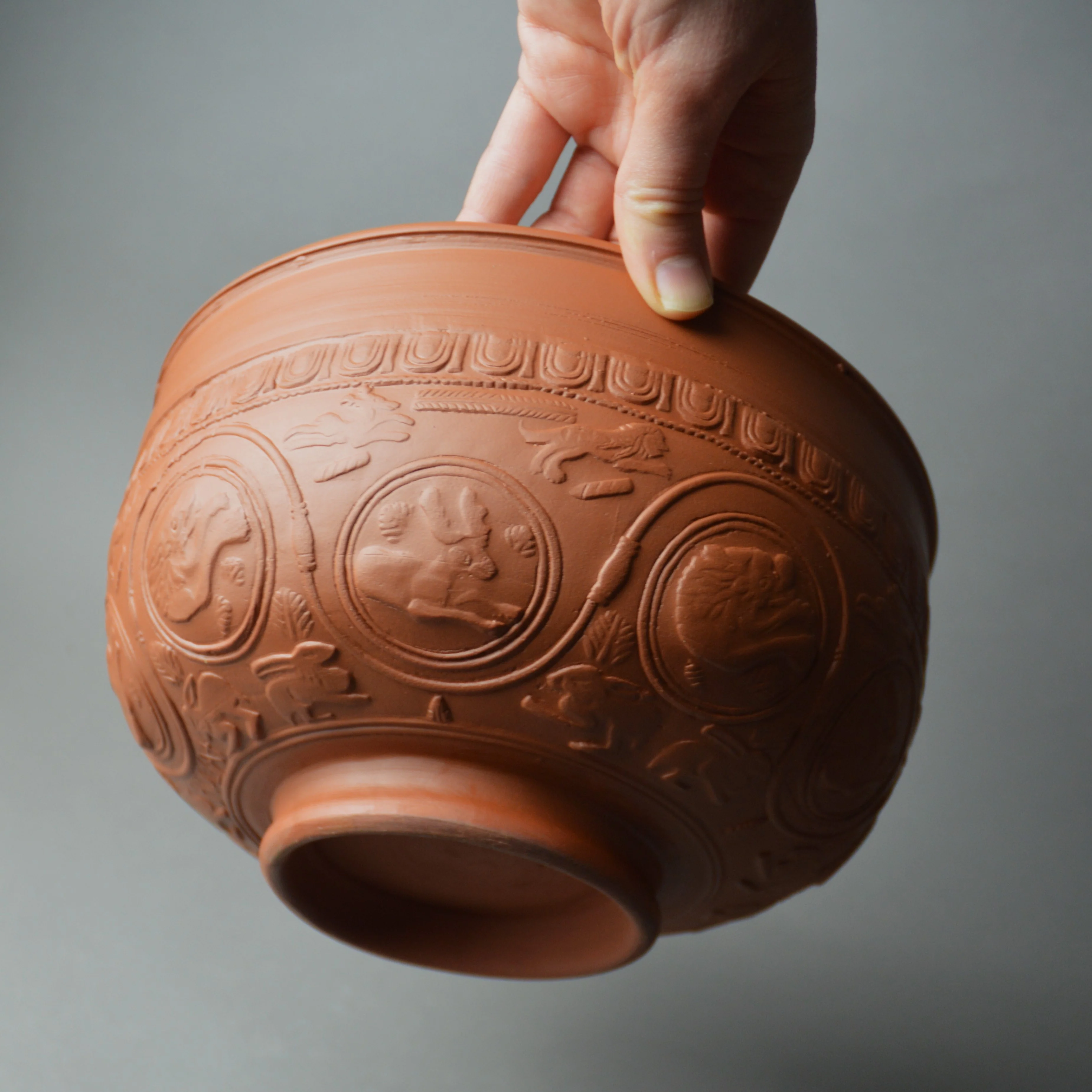
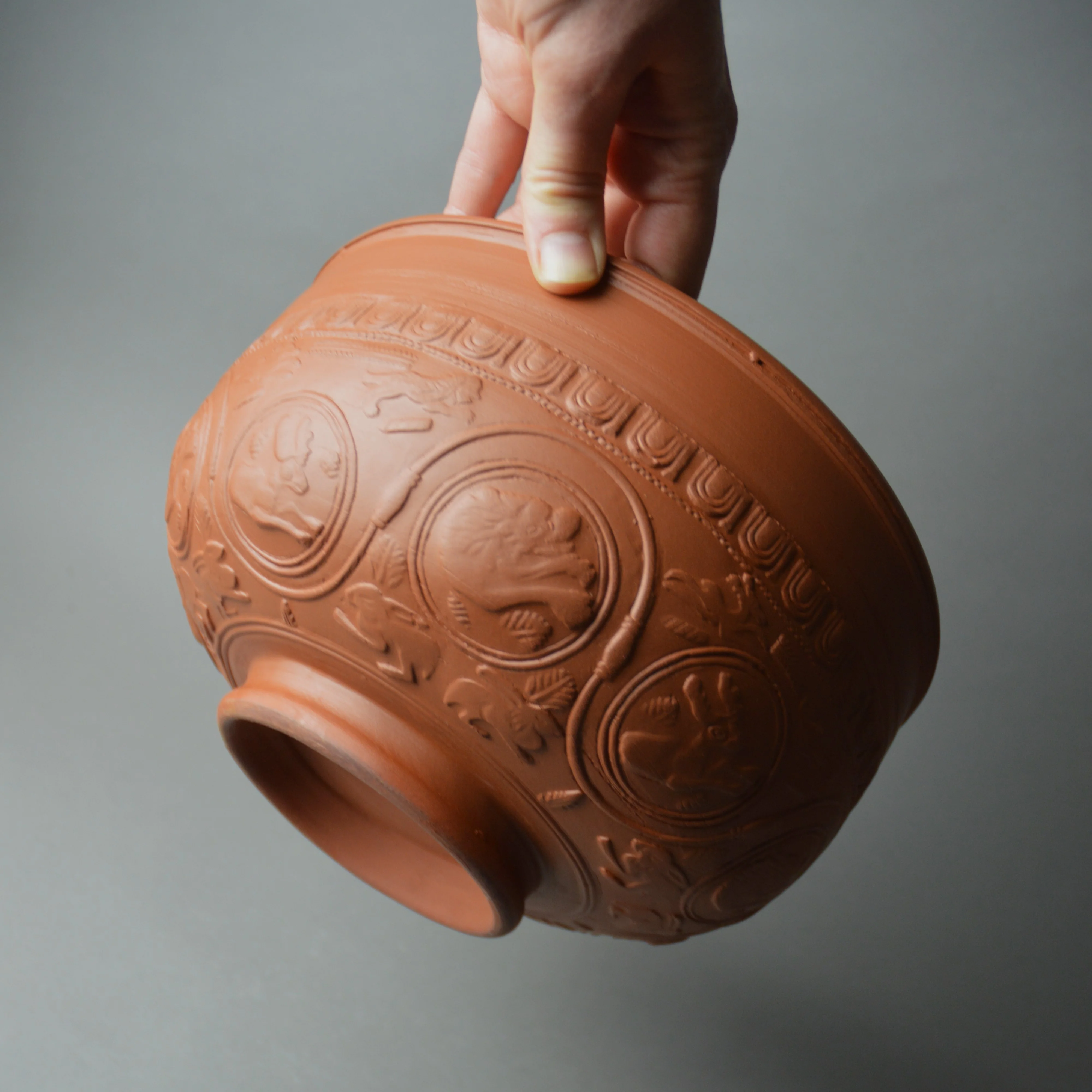
This large samian ware bowl was discovered by a father and son in Maryport whilst they were out walking their dog. They saw the stunning red decoration of the bowl emerging from the dark earth and decided to investigate, and removed the almost intact bowl and its contents from the ground*. It transpired that the bowl was part of a Roman cremation burial, and the contents were, in fact, ashes, bone fragments and hobnails, which remain part of the collections at Senhouse Museum. Sadly, the bowl is no longer at the museum, which is why we were asked by Senhouse Museum to create an accurate replica for their display case.
This replica has been made using the same hand and wheel forming techniques that would have been employed by the original Roman potter nearly one thousand, nine hundred years ago.
As with all such decorated Samian Ware bowls, the process of recreating it began with the making of a set of punches of exactly the same designs and dimensions as those used by the original mould maker. These were carved from fine terracotta clay and, once fired, were used to create the design within the bowl mould. This mould was, in turn, fired to a temperature of 1000°C, then mounted onto a potter's wheel, where, while spinning at speed, the final bowl was formed within it.
After drying for some hours, the bowl, having now shrunk by a few millimetres, could be removed from the mould, re-placed onto the wheel, and the foot ring added. After a further period of drying, the pot was dipped into the colloidal terra sigillata slip (liquid clay), which, when fired, gives the pot its characteristic colour and shine.
Finally, after drying for another week, the bowl was fired to nearly 1100°C. All of these processes are based on those used by Samian Ware workshops in Gaul during the first, second and third centuries.
*This is not normal procedure, and you should always seek advice from your local authority before disturbing important archaeological finds on public land. You must report treasures to the local coroner within 14 days of finding them.
Materials
Terracotta, red slip finish
Dimensions
Approx 235 mm diameter, 130 mm tall
Production
This replica Roman pot has been handmade in Northumberland by Potted History, inspired by the original, which we were lucky enough to view thanks to the support of the Senhouse Museum.
Health & Safety
As with all of our museum-quality replicas, this piece has been fired to achieve an authentic finish. Like the original, it is not glazed; as a result, this pot does not meet modern food safety standards, and although decorative, I would not recommend that this pot be used for its original purpose.
Postage
All items are sent using a second-class postal service; if you wish to have an item sent first class please contact us for a quote. Many Thanks
Product Information
Product Information
Shipping & Returns
Shipping & Returns
Description
Details
This large samian ware bowl was discovered by a father and son in Maryport whilst they were out walking their dog. They saw the stunning red decoration of the bowl emerging from the dark earth and decided to investigate, and removed the almost intact bowl and its contents from the ground*. It transpired that the bowl was part of a Roman cremation burial, and the contents were, in fact, ashes, bone fragments and hobnails, which remain part of the collections at Senhouse Museum. Sadly, the bowl is no longer at the museum, which is why we were asked by Senhouse Museum to create an accurate replica for their display case.
This replica has been made using the same hand and wheel forming techniques that would have been employed by the original Roman potter nearly one thousand, nine hundred years ago.
As with all such decorated Samian Ware bowls, the process of recreating it began with the making of a set of punches of exactly the same designs and dimensions as those used by the original mould maker. These were carved from fine terracotta clay and, once fired, were used to create the design within the bowl mould. This mould was, in turn, fired to a temperature of 1000°C, then mounted onto a potter's wheel, where, while spinning at speed, the final bowl was formed within it.
After drying for some hours, the bowl, having now shrunk by a few millimetres, could be removed from the mould, re-placed onto the wheel, and the foot ring added. After a further period of drying, the pot was dipped into the colloidal terra sigillata slip (liquid clay), which, when fired, gives the pot its characteristic colour and shine.
Finally, after drying for another week, the bowl was fired to nearly 1100°C. All of these processes are based on those used by Samian Ware workshops in Gaul during the first, second and third centuries.
*This is not normal procedure, and you should always seek advice from your local authority before disturbing important archaeological finds on public land. You must report treasures to the local coroner within 14 days of finding them.
Materials
Terracotta, red slip finish
Dimensions
Approx 235 mm diameter, 130 mm tall
Production
This replica Roman pot has been handmade in Northumberland by Potted History, inspired by the original, which we were lucky enough to view thanks to the support of the Senhouse Museum.
Health & Safety
As with all of our museum-quality replicas, this piece has been fired to achieve an authentic finish. Like the original, it is not glazed; as a result, this pot does not meet modern food safety standards, and although decorative, I would not recommend that this pot be used for its original purpose.
Postage
All items are sent using a second-class postal service; if you wish to have an item sent first class please contact us for a quote. Many Thanks