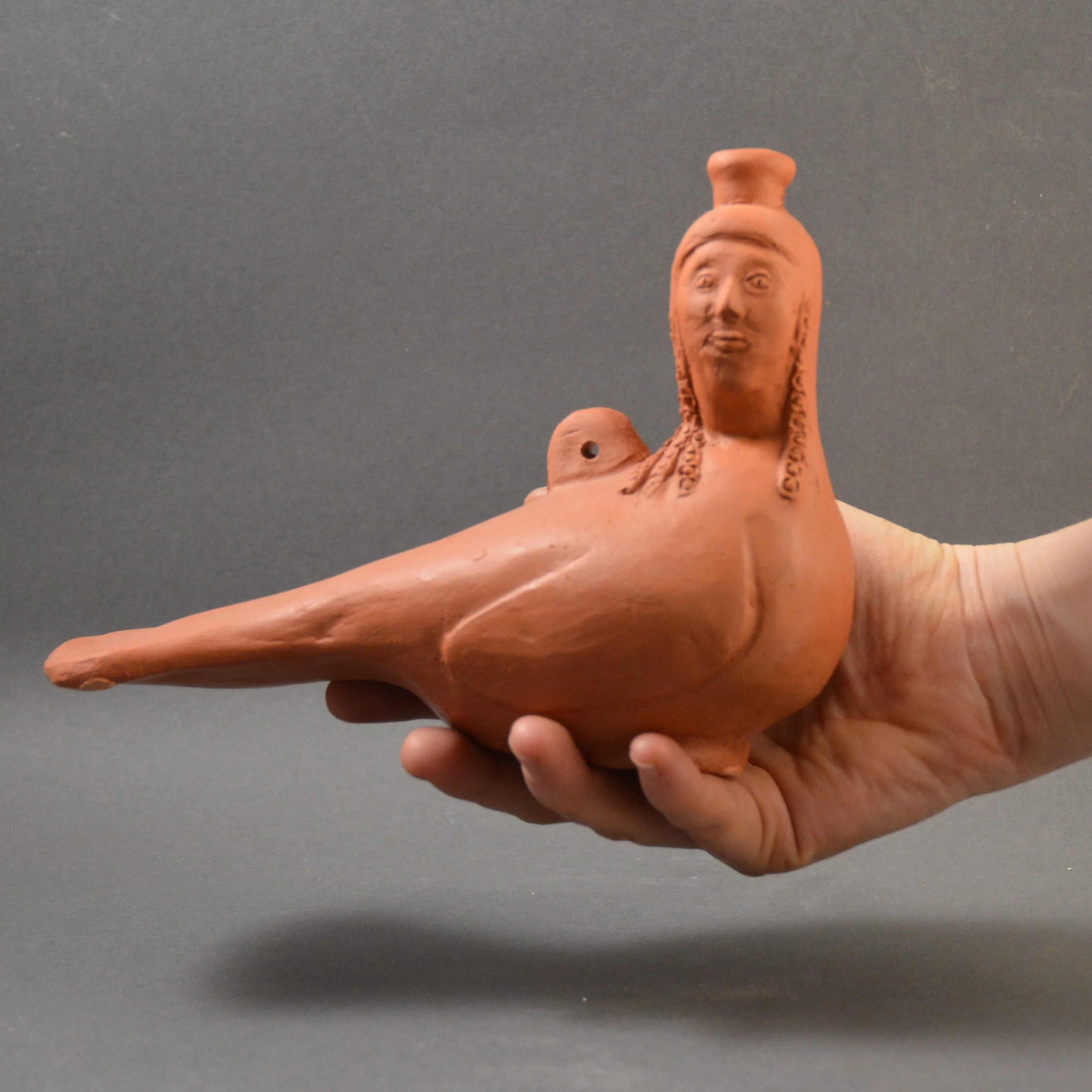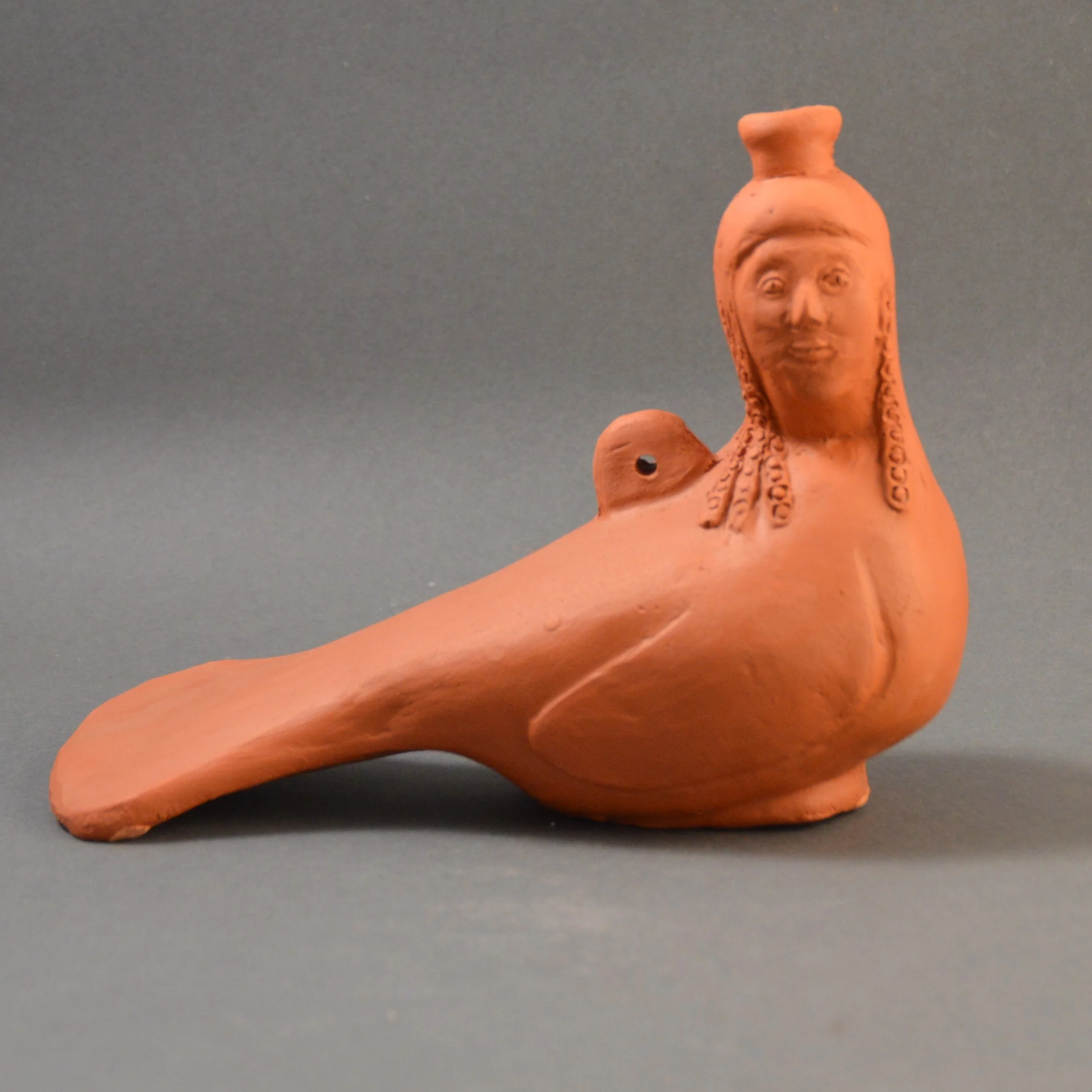
Female Face Pot - Fired at Vindolanda
Details
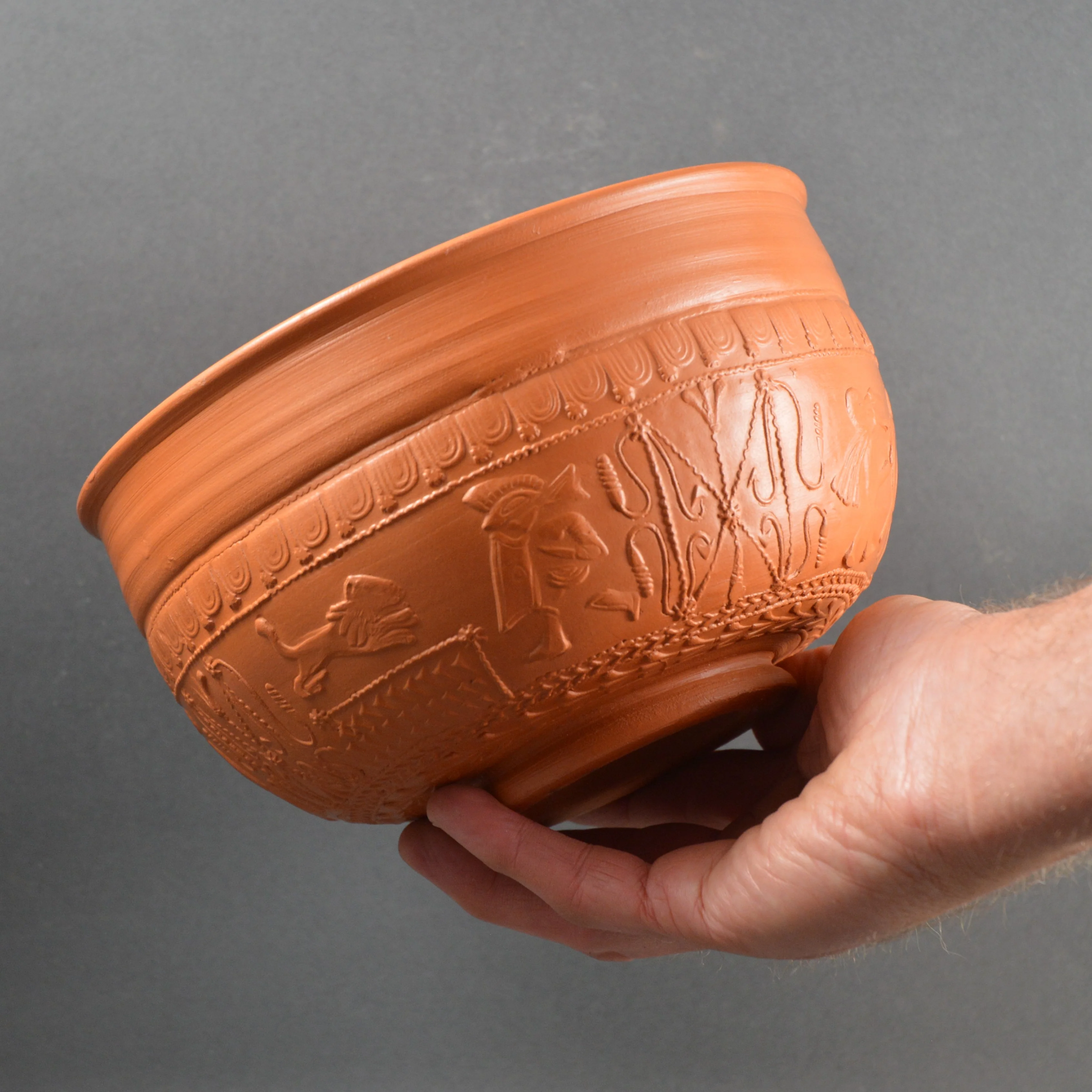
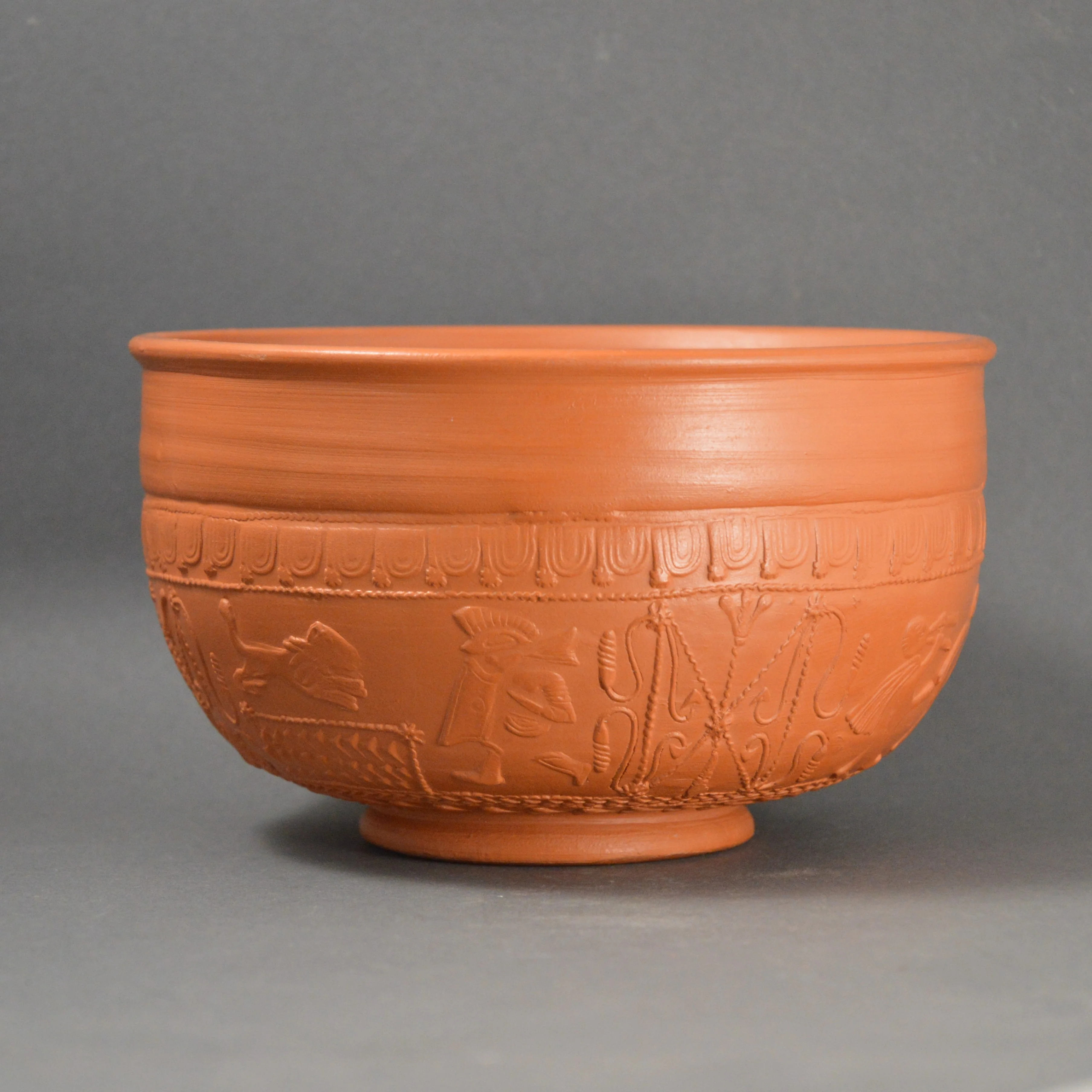
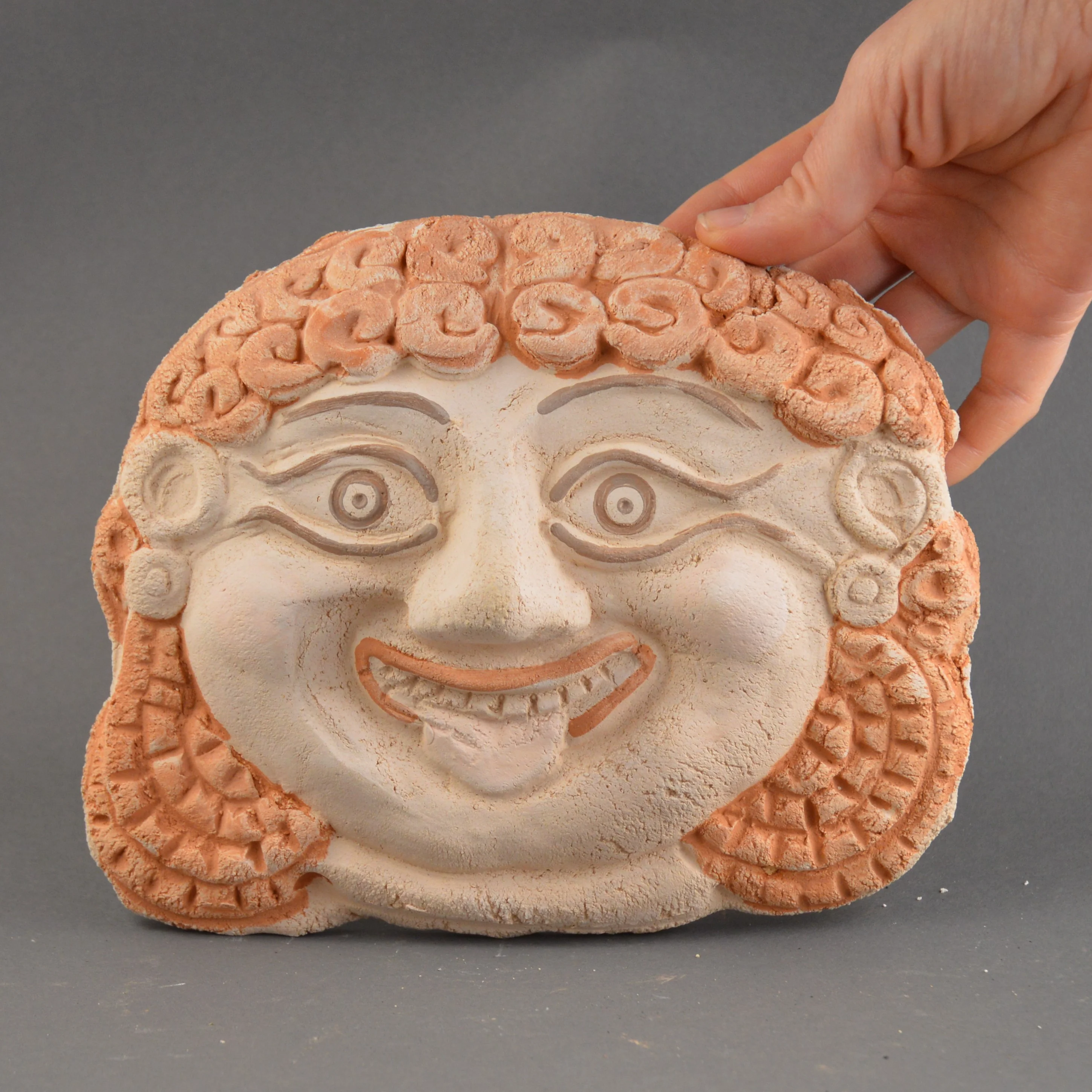
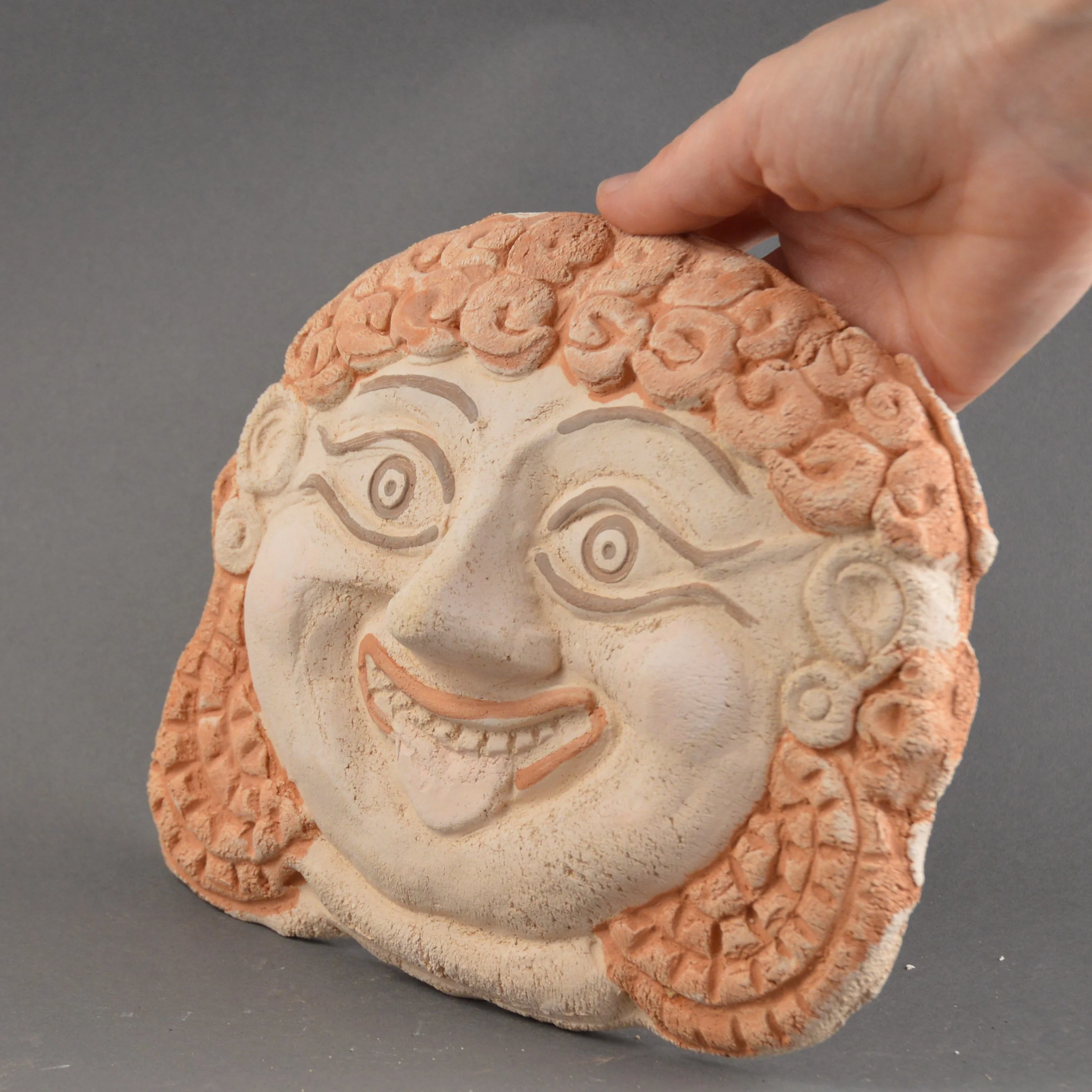
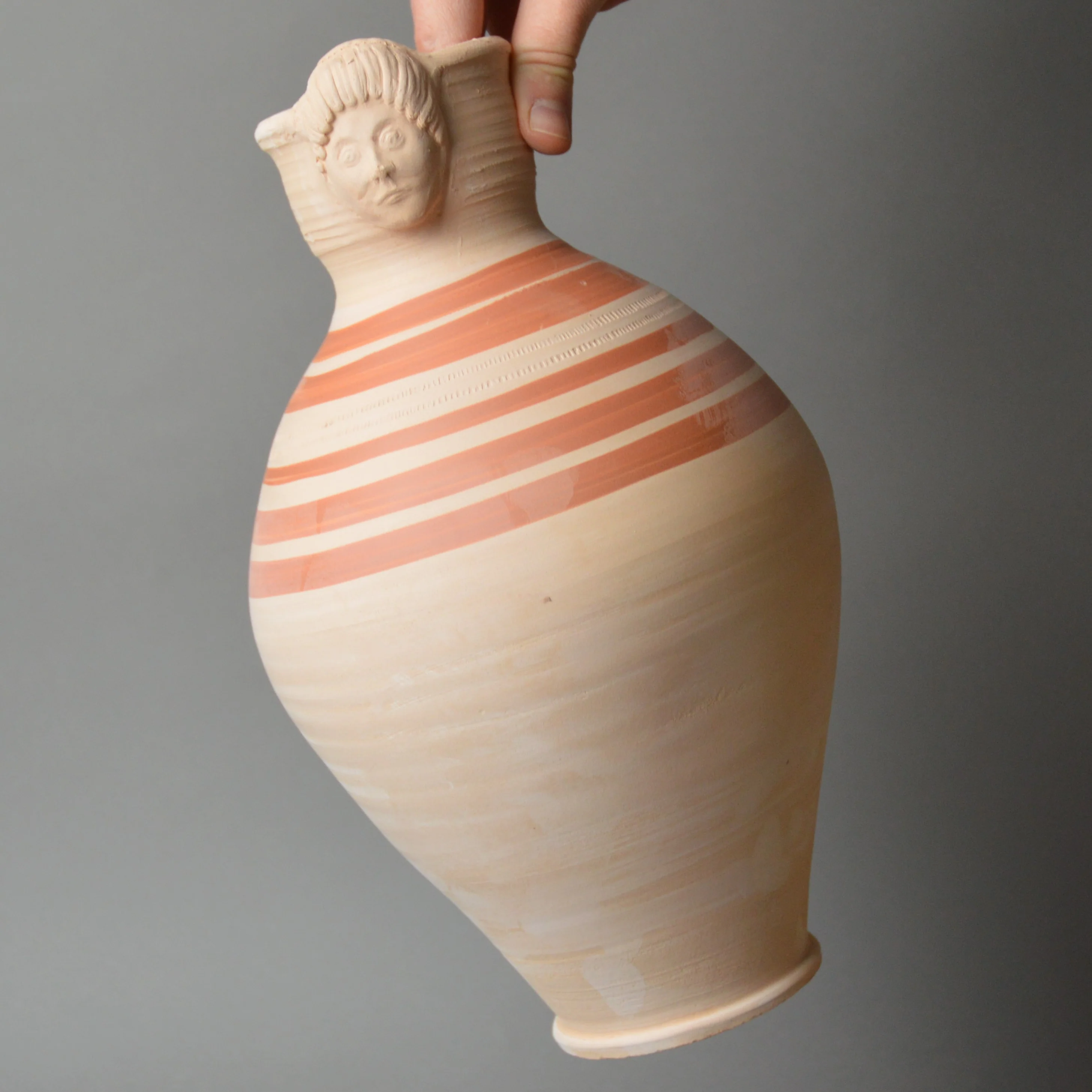
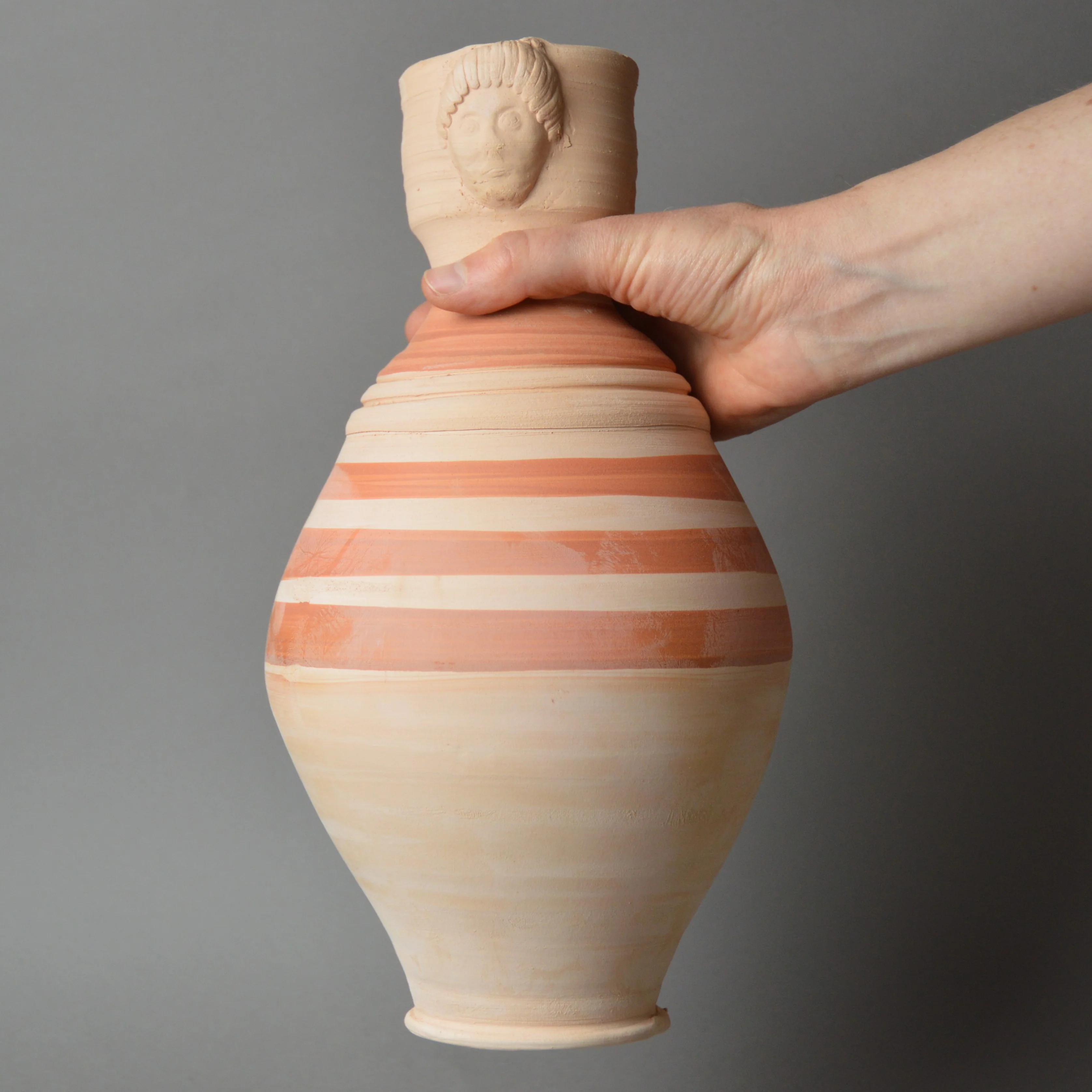
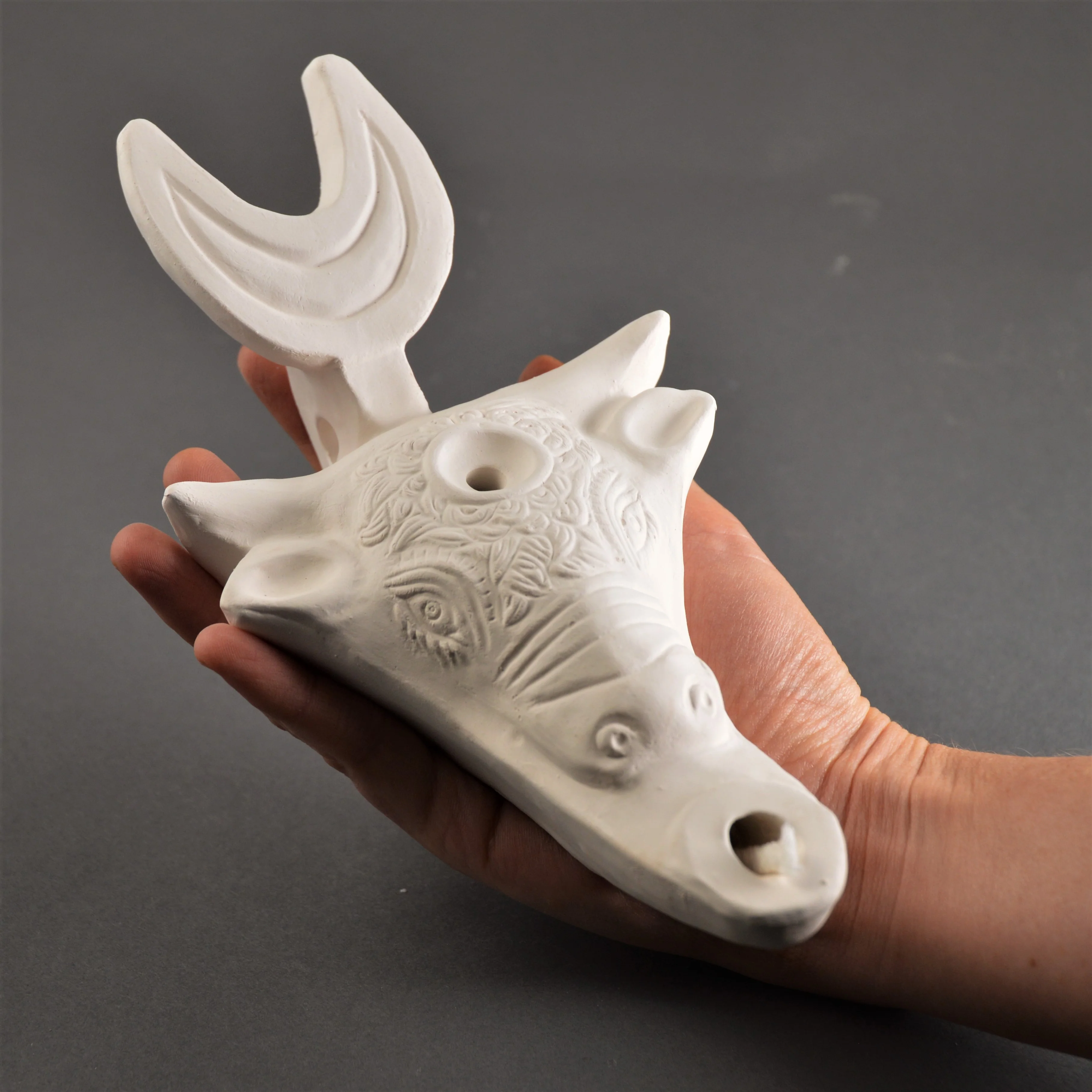
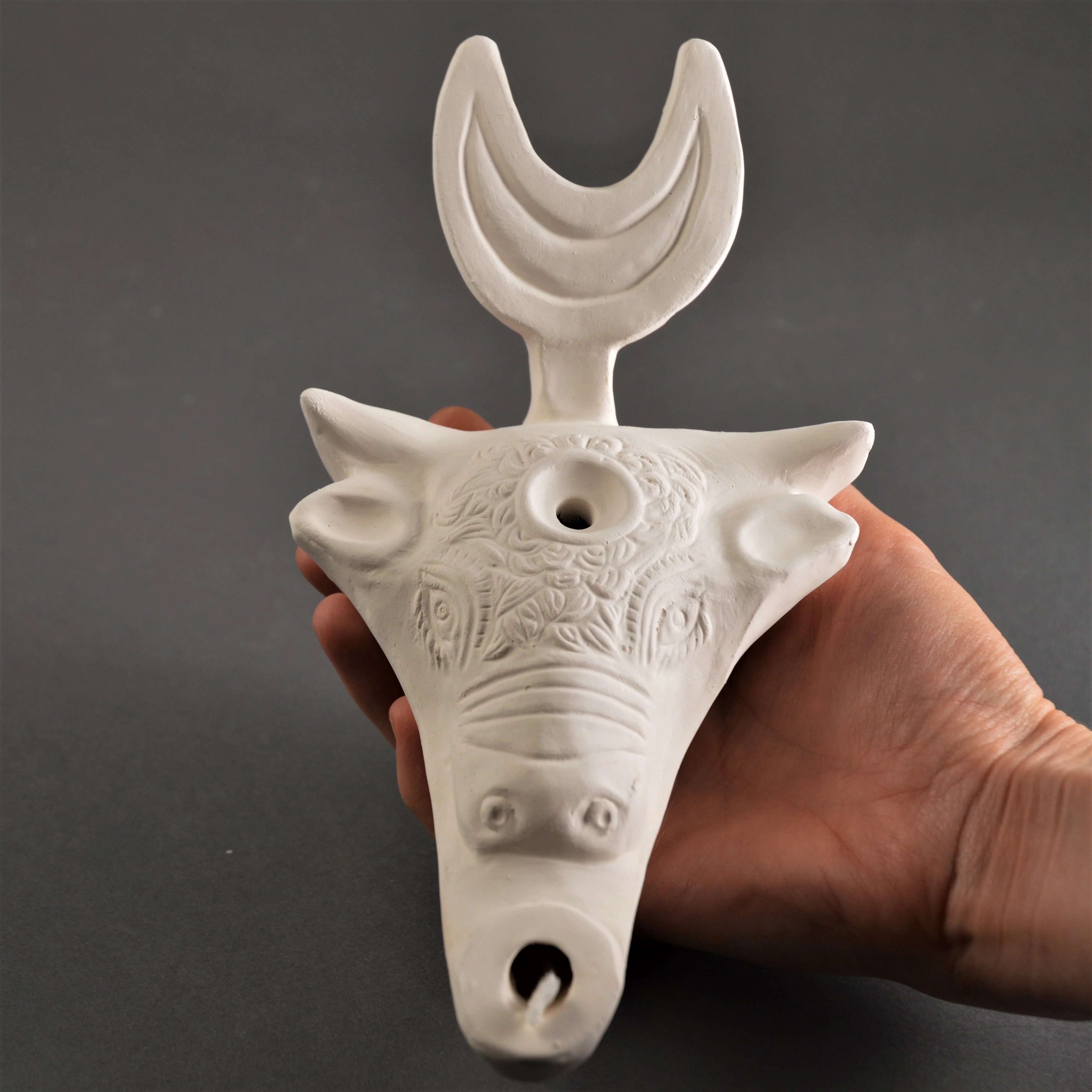
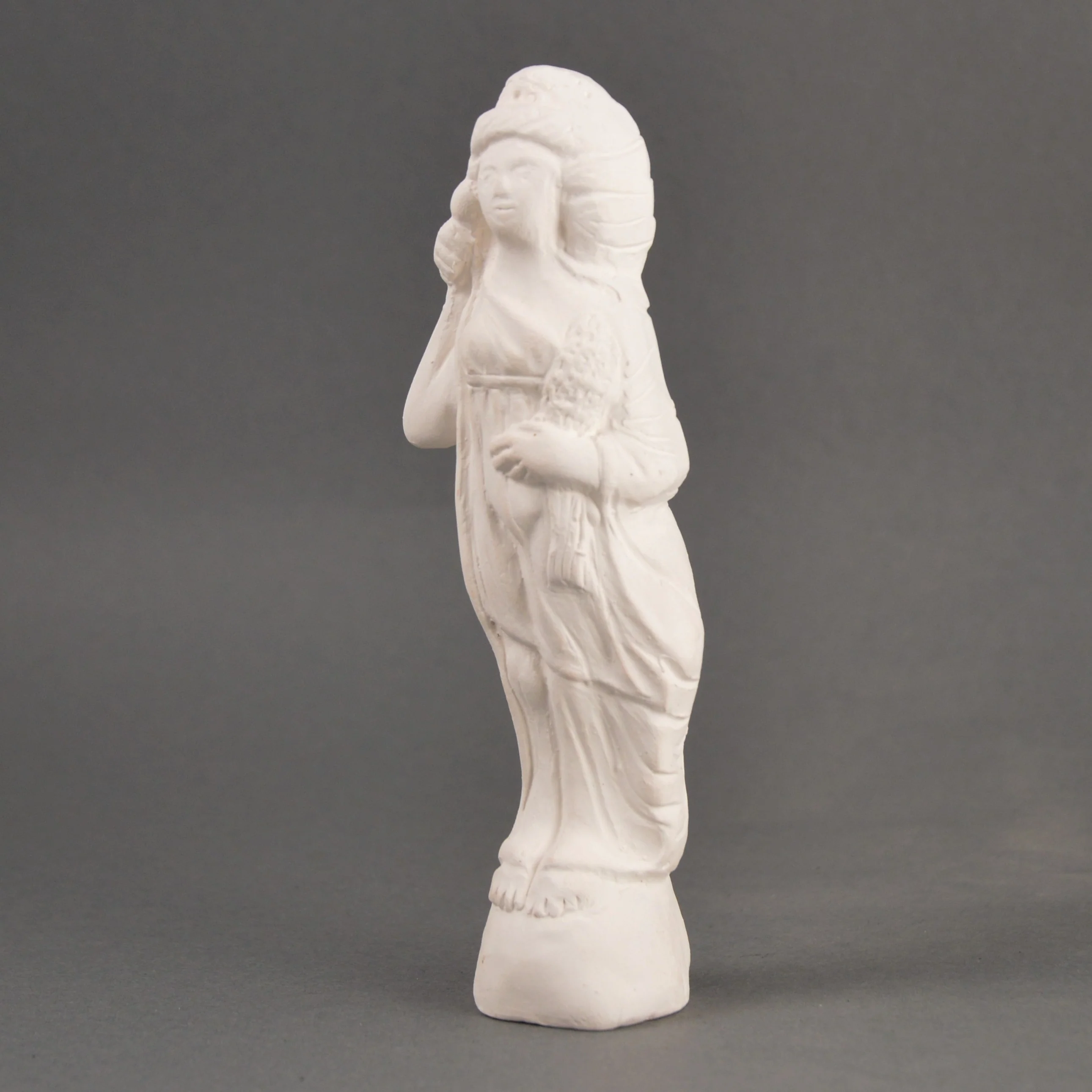
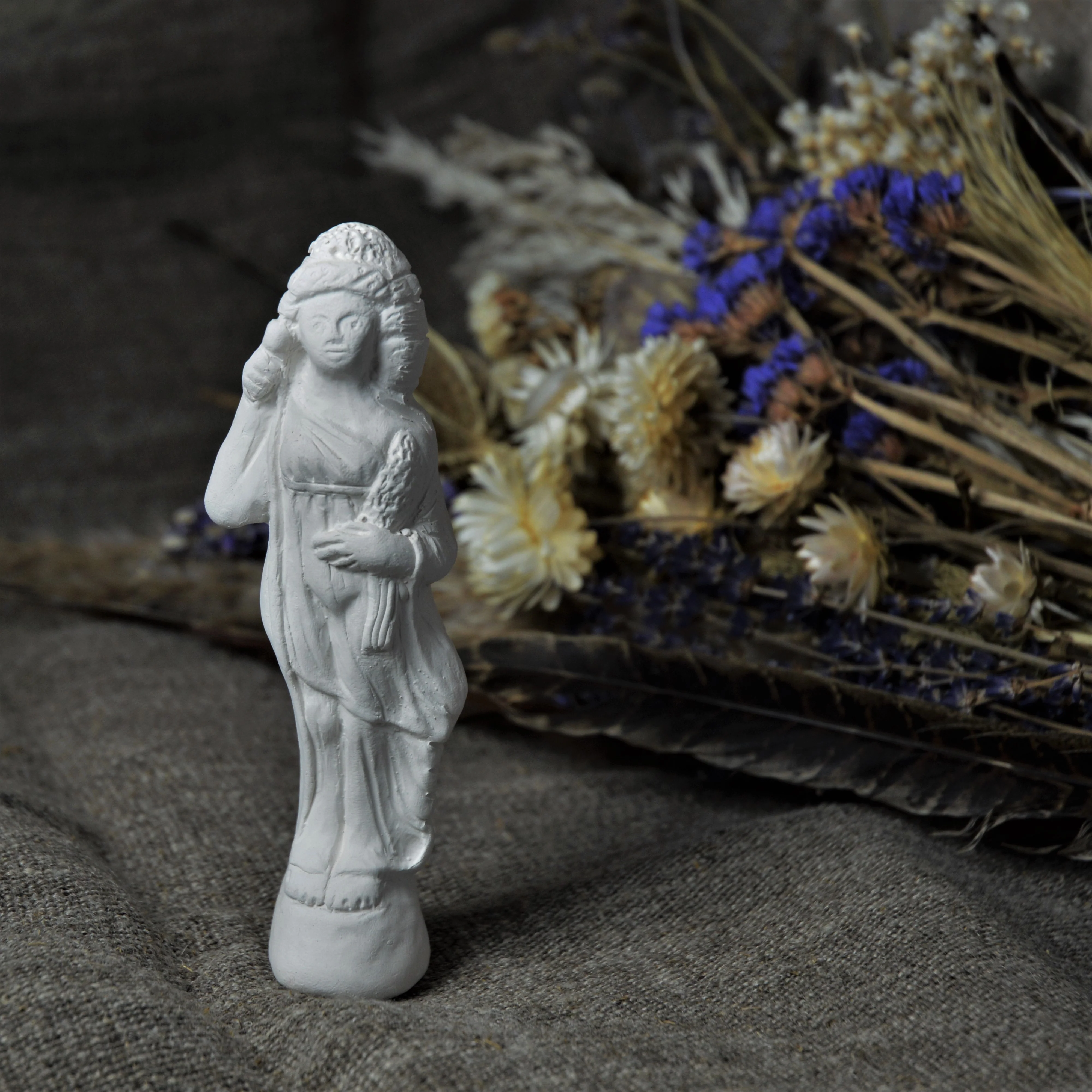
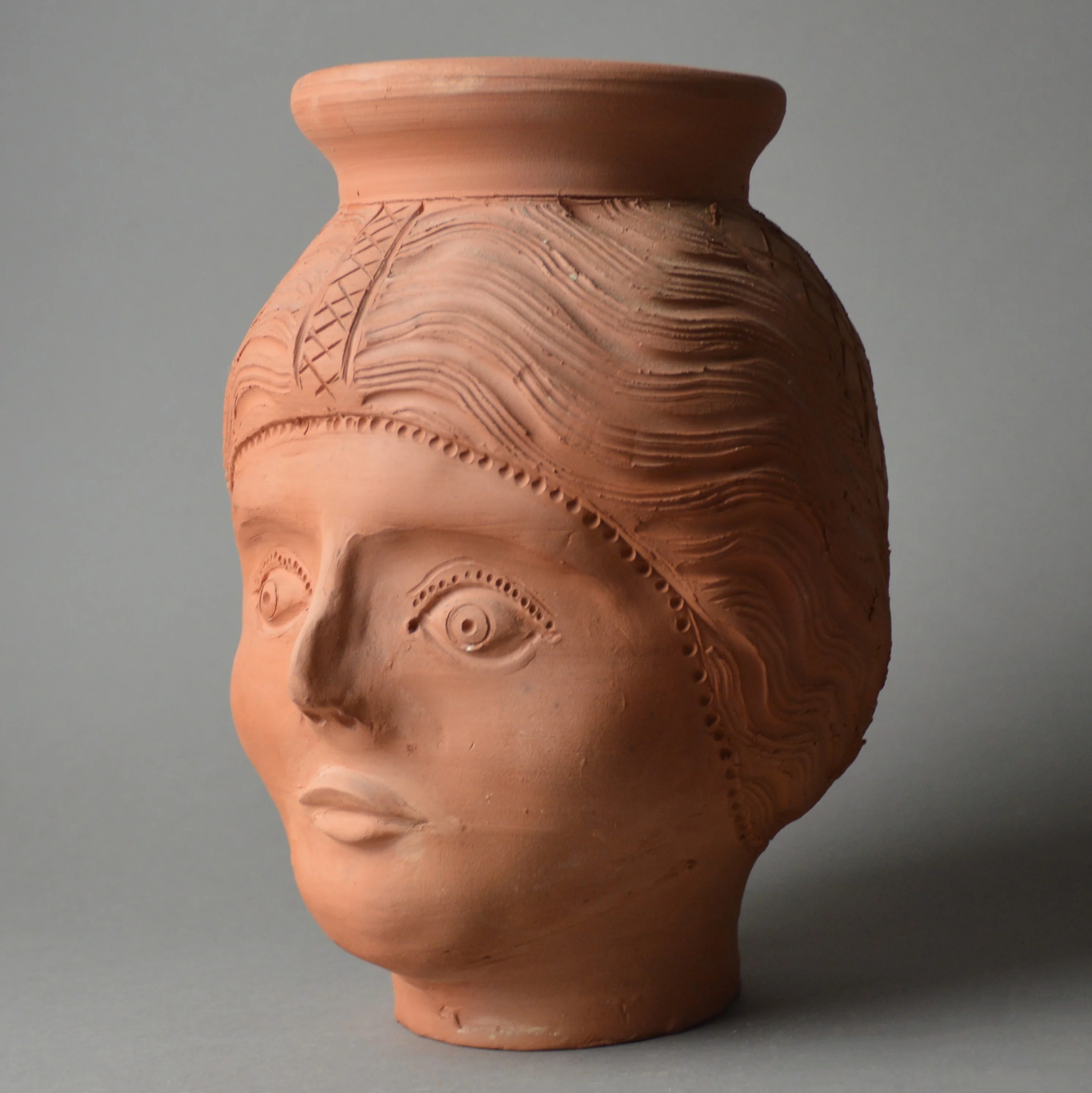
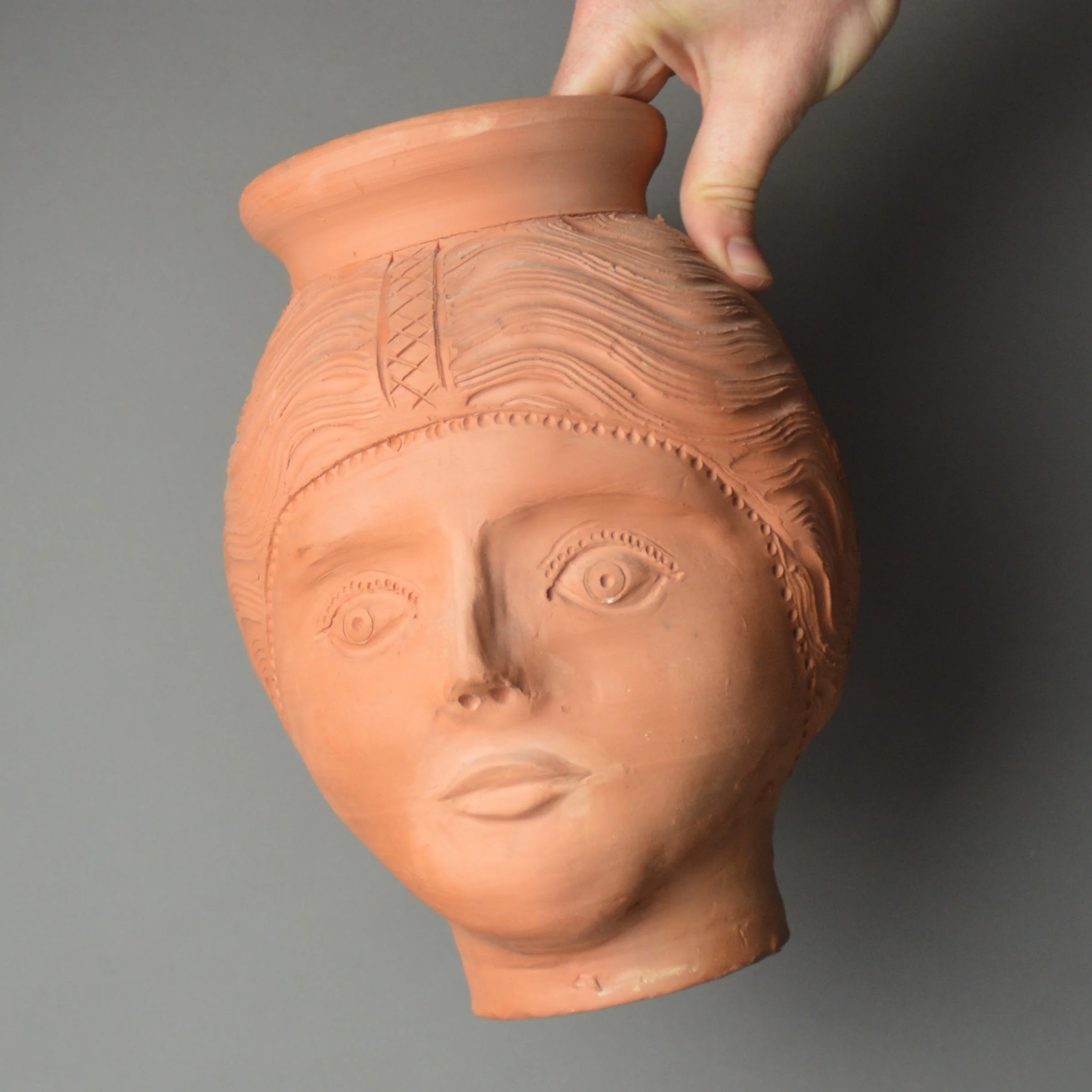
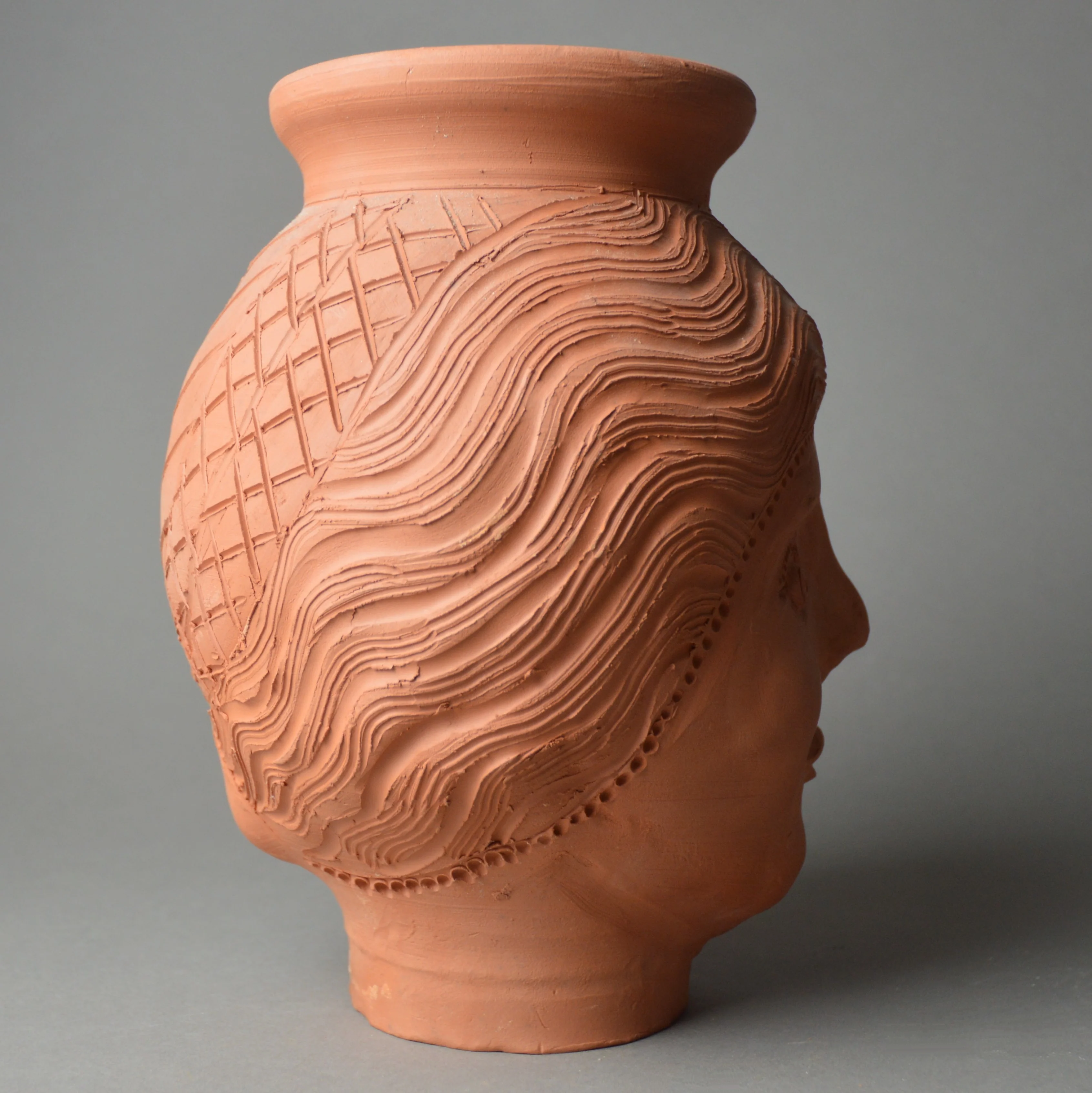
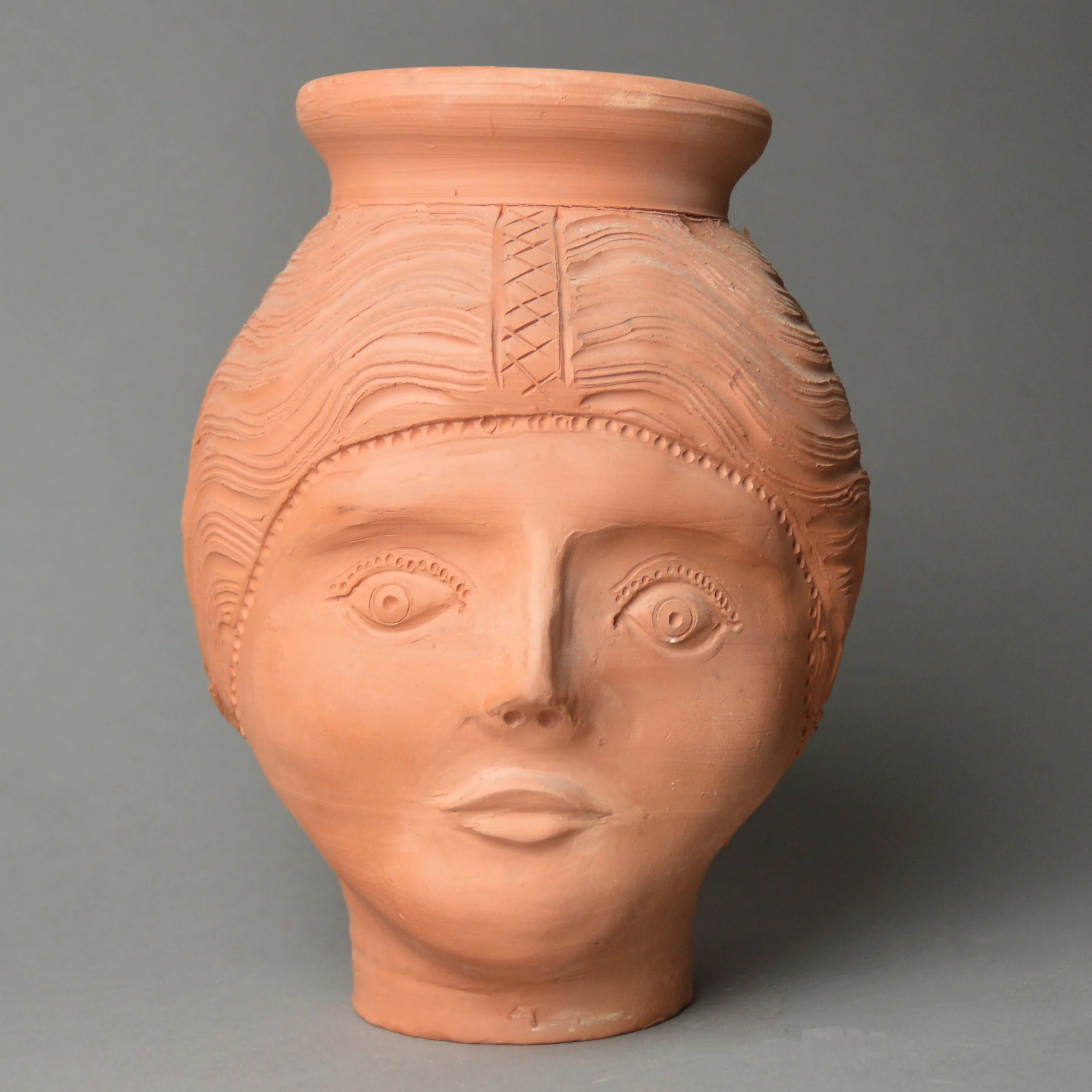
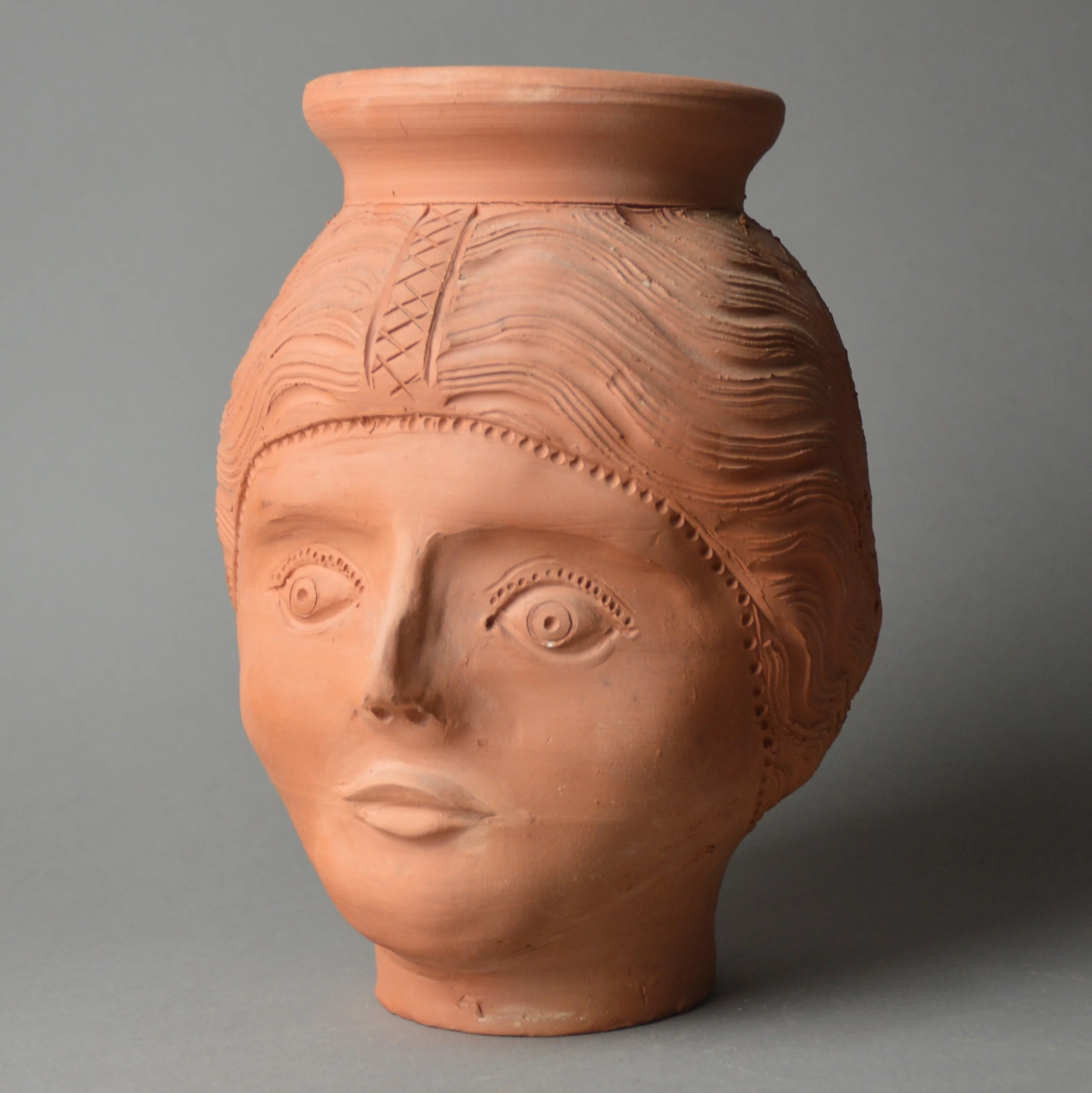
Seeing an ancient face staring back at you from a museum display is a real thrill; it is one of the main reasons we adore replicating this sought-after style of Roman pottery. Head pots were widely used throughout Roman Britain and are some of the most striking ceramic items produced during Roman rule, and seem to have been a speciality of Romano-British potters.
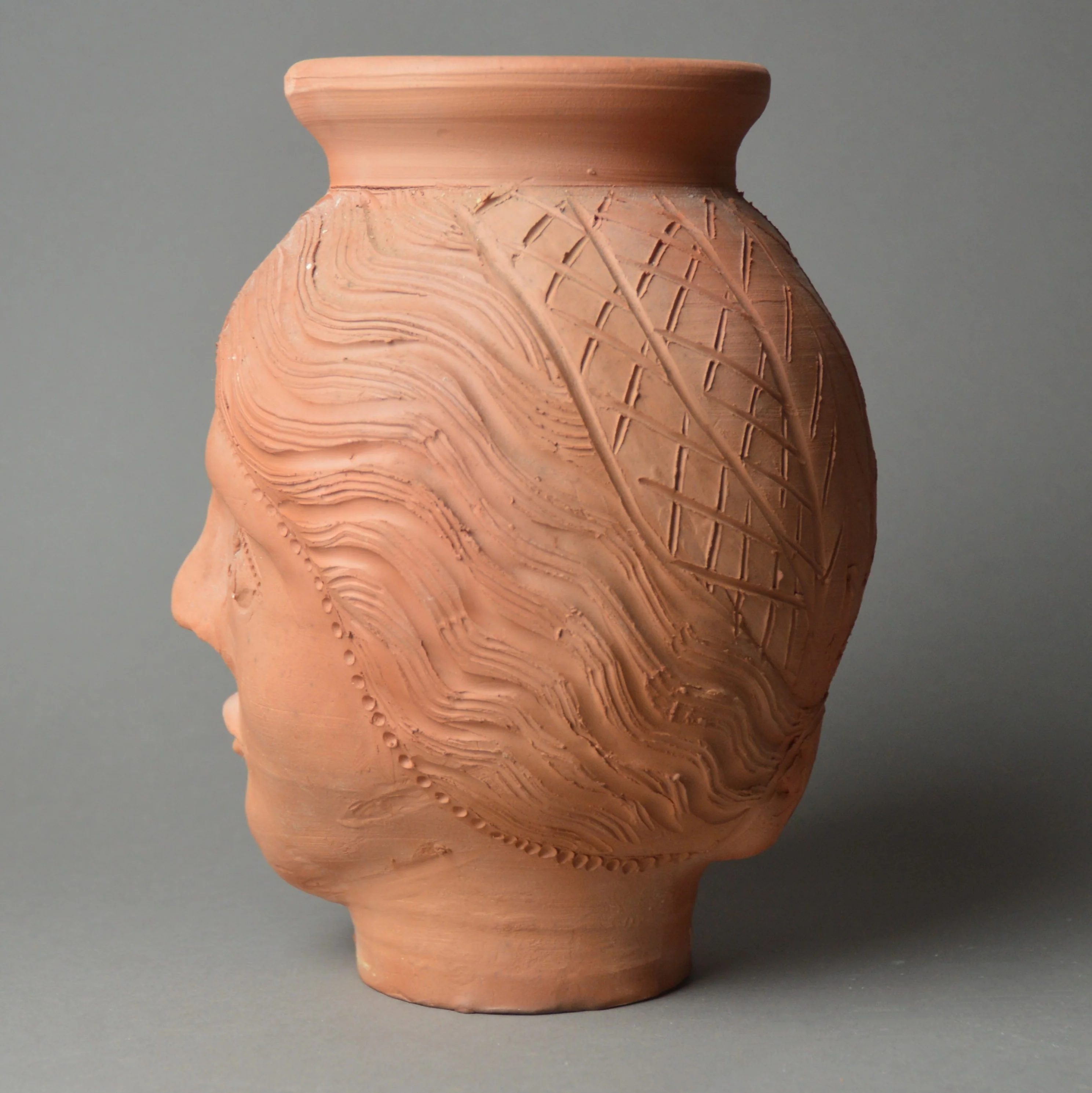
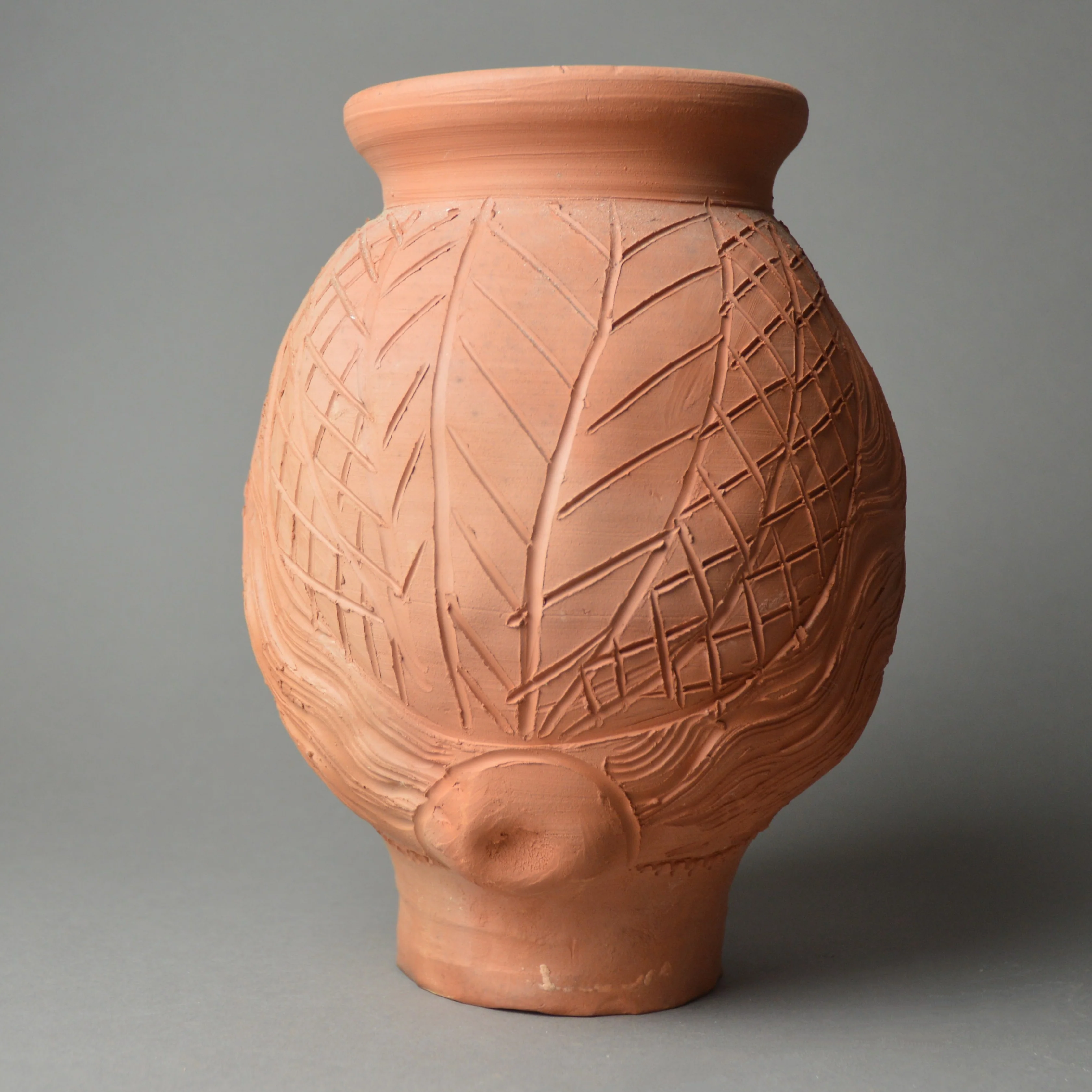
The almost caricature-like features of these pots were individually modelled onto beautifully wheel-thrown jars. Hand modelling was a relatively unusual method of working for the Romans, who often preferred the quicker convenience of mould decoration.
Believed to have been introduced to Britain by the Roman army, many head pots were discovered in the Colchester area, where there was likely a prolific production site.
Today you can see some truly superb examples of head pots on display in Colchester Museum, and we have used these rich examples to inspire this replica. However, they are not limited to Colchester, and a significant number of head potsherds were found along Hadrian's wall.
Their function and significance are, as of yet, not fully understood. Many, but by no means all, head pots have smith tools on them, suggesting a link to the God Vulcan. There have also been a number of these pots found in burial settings leading some to believe that this was their main usage. However, most have been found in settlement sites, so they were more likely to be used prominently in a domestic setting, perhaps for food storage.
Materials
Earthenware, terracotta
Dimensions
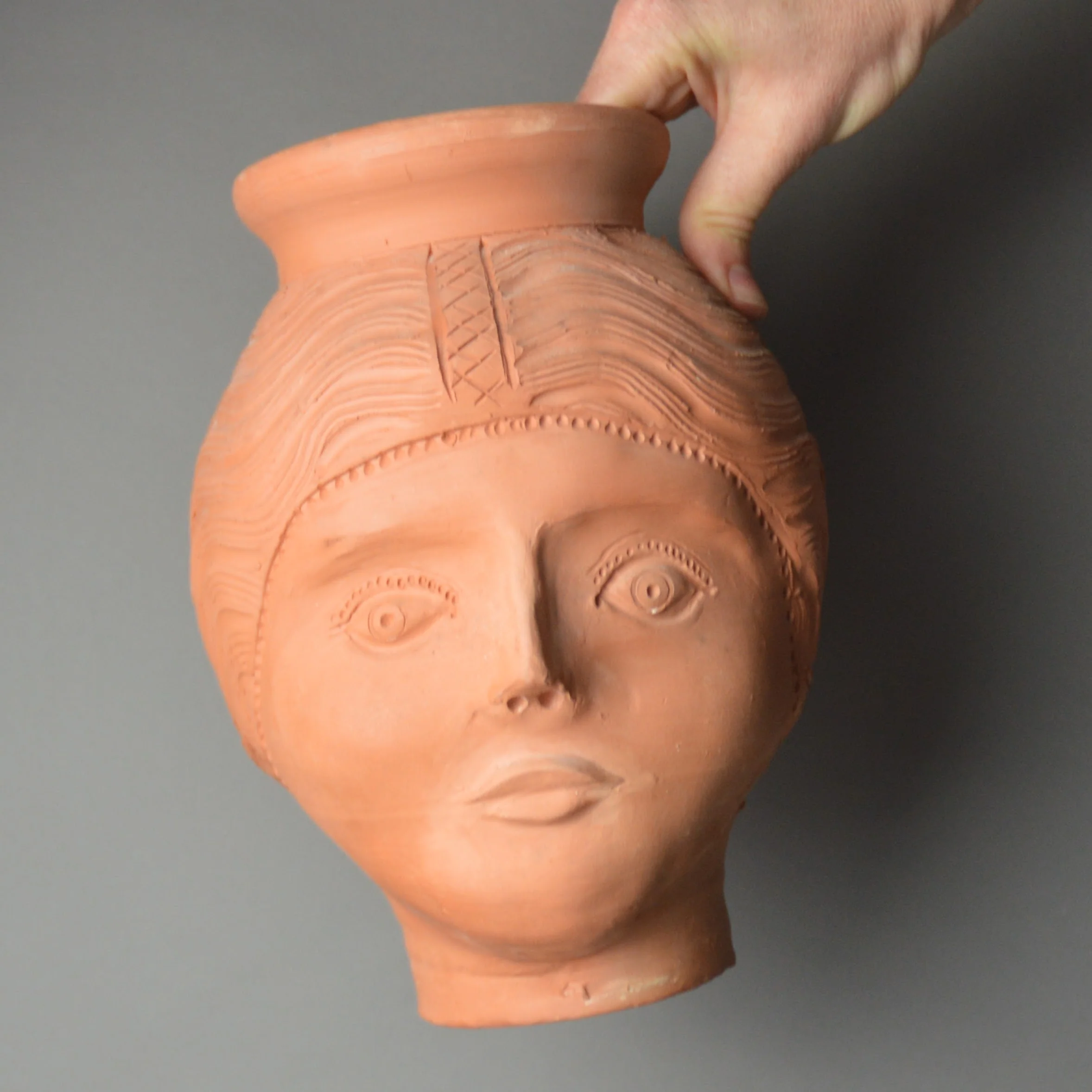
Approx. 230 mm tall, 150 mm diameter
Production - Vindolanda
This replica Roman pot has been hand-made in Northumberland by Potted History and is based on an original artefact. It has been fired to a temperature between 800 & 1000 Centigrade to emulate the same techniques the original potters would have employed nearly two thousand years ago. This process often results in surface colour and texture variations, as is common with the original Roman pottery and gives each piece its unique character. This item was fired at Vindolanda Roman Fort in our replica Roman kiln, adding an extra layer of authenticity.
Health and Safety
This is a Museum Quality Replica made using the tools and techniques that would have been used during the Roman era. This is an unglazed pot with a porous surface. It will absorb some of the flavours during the cooking process, adding to the flavour of future dishes. However, it also means that this pot does not meet modern Health and Safety standards, so we do not advise using it for cooking. When the Romans cooked in these pots, they applied sufficient heat to the pot and contents to ensure that all bacteria were killed. Heating to over 70°C for at least 10 minutes would have killed most disease-causing bacteria, and temperatures of 100°C would do even more.
Postage
All items are sent using a second-class postal service. If you wish to have an item sent first class, please contact us for a quote—many thanks.
Original: $360.58
-70%$360.58
$108.17Product Information
Product Information
Shipping & Returns
Shipping & Returns
Description
Details
Seeing an ancient face staring back at you from a museum display is a real thrill; it is one of the main reasons we adore replicating this sought-after style of Roman pottery. Head pots were widely used throughout Roman Britain and are some of the most striking ceramic items produced during Roman rule, and seem to have been a speciality of Romano-British potters.
The almost caricature-like features of these pots were individually modelled onto beautifully wheel-thrown jars. Hand modelling was a relatively unusual method of working for the Romans, who often preferred the quicker convenience of mould decoration.
Believed to have been introduced to Britain by the Roman army, many head pots were discovered in the Colchester area, where there was likely a prolific production site.
Today you can see some truly superb examples of head pots on display in Colchester Museum, and we have used these rich examples to inspire this replica. However, they are not limited to Colchester, and a significant number of head potsherds were found along Hadrian's wall.
Their function and significance are, as of yet, not fully understood. Many, but by no means all, head pots have smith tools on them, suggesting a link to the God Vulcan. There have also been a number of these pots found in burial settings leading some to believe that this was their main usage. However, most have been found in settlement sites, so they were more likely to be used prominently in a domestic setting, perhaps for food storage.
Materials
Earthenware, terracotta
Dimensions
Approx. 230 mm tall, 150 mm diameter
Production - Vindolanda
This replica Roman pot has been hand-made in Northumberland by Potted History and is based on an original artefact. It has been fired to a temperature between 800 & 1000 Centigrade to emulate the same techniques the original potters would have employed nearly two thousand years ago. This process often results in surface colour and texture variations, as is common with the original Roman pottery and gives each piece its unique character. This item was fired at Vindolanda Roman Fort in our replica Roman kiln, adding an extra layer of authenticity.
Health and Safety
This is a Museum Quality Replica made using the tools and techniques that would have been used during the Roman era. This is an unglazed pot with a porous surface. It will absorb some of the flavours during the cooking process, adding to the flavour of future dishes. However, it also means that this pot does not meet modern Health and Safety standards, so we do not advise using it for cooking. When the Romans cooked in these pots, they applied sufficient heat to the pot and contents to ensure that all bacteria were killed. Heating to over 70°C for at least 10 minutes would have killed most disease-causing bacteria, and temperatures of 100°C would do even more.
Postage
All items are sent using a second-class postal service. If you wish to have an item sent first class, please contact us for a quote—many thanks.